

Neurosurgery and Neurology · Jaipur Hospital
Brain and Spine Infections in Jaipur
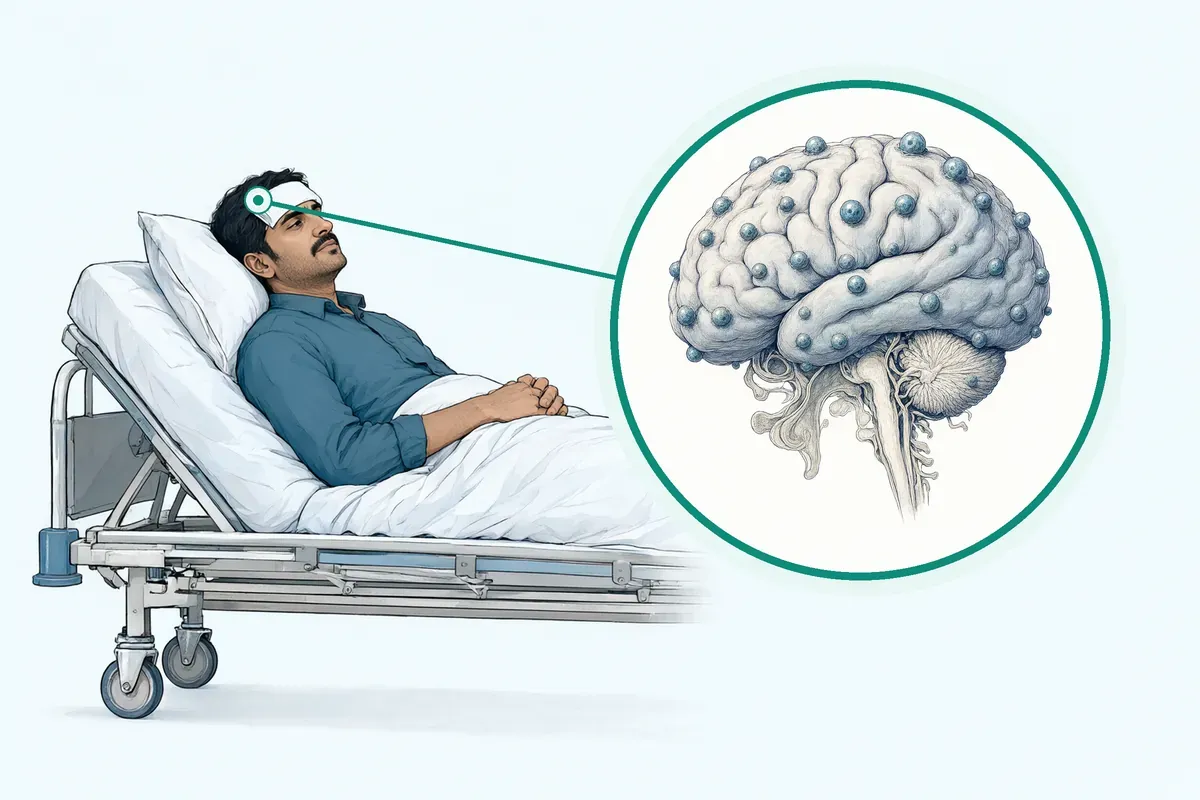
Persistent infection causing pain and weakness. We assess, plan and operate to remove the source.
- Serving Jaipur since 1991 (35 years)
- NABH accredited
- 24×7 emergency & ICU
- Cashless: RGHS, MAA Yojana, CGHS + 22 insurers
- Operation time
- 2 to 4 hours
- Anaesthesia
- General anaesthesia
- Recovery
- IV antibiotics 4 to 6 weeks, rehab months
- Price
- ₹1,80,000 to ₹5,00,000typical range in India; ask us for an estimate
Infection pressing on nerves
The infection is not settling with medicines alone
Pus or infected tissue presses on the brain or spinal cord. Pain, fever and weakness get worse. Delay can lead to lasting nerve damage or deformity.
-
Abscess not shrinking
Antibiotics cannot always penetrate the capsule. The mass stays or grows.
-
Spine instability
TB destroys bone. The spine may collapse and curve forward.
-
Rising pressure
Swelling in the skull causes headache, vomiting and drowsiness.
-
Drug resistance
TB or fungal strains may not respond to standard drugs.
Treatment delay is the strongest risk factor for death in tuberculous meningitis.
Why Jaipur Hospital
You worry about losing strength in your limbs, the cost of a long hospital stay and whether you will return to work.
Your care plan
Your first steps with us
- 1 Call or visit OPD for neurosurgery consultation
- 2 Complete in-house MRI, CT and lab tests
- 3 Undergo planned drainage or debridement surgery
- 4 Continue IV antibiotics and rehab at home
How the operation is done
Surgery removes pus and infected tissue, relieves pressure and stabilises the spine if needed. The approach depends on the site and extent of infection.
-
Stereotactic Aspiration
A small burr hole is made. A needle drains deep abscess pus under CT or MRI guidance.
-
Craniotomy for Abscess Excision
A bone flap is opened to remove multiloculated or large brain abscesses completely.
-
Posterior Spinal Decompression Fusion
Infected bone and abscess are cleared from the back. Screws and rods stabilise the spine.
-
Ventriculoperitoneal Shunt
A tube drains excess brain fluid into the abdomen when infection blocks normal flow.
Why patients trust us
- 1991 Serving Jaipur for 35 years
- NABH Accredited hospital
- 1 Neurosurgery and Neurology consultants
- 24×7 Emergency, ICU and ambulance
- 25 Cashless schemes and insurers
What research shows about surgical treatment
-
Case fatality rate fell from 40% to 10% over five decades
Large reviews of tuberculous meningitis patients show improving survival with modern care.
-
Steroids reduce deaths by about one quarter at six months
Nine trials with 1337 participants found lower mortality with adjunctive corticosteroids.
-
Infection eradication and bone fusion in all patients at 24 months
A surgical series of spinal TB with extensive abscess reported complete infection control with combined surgery and drugs.
If it is left untreated
Without drainage or debridement, the abscess can rupture, spread infection or compress vital centres. Spinal TB can collapse vertebrae, causing kyphosis and paralysis. Mortality remains high if treatment is delayed.
Life after treatment
Most people spend weeks in hospital, then months on antibiotics and rehab. Recovery speed varies with age, immunity and how early surgery was done.
-
Return to daily routine
Most people need 6 to 12 weeks at home before resuming work or study.
-
Long antibiotic course
IV antibiotics usually continue for 4 to 6 weeks after surgery.
-
Regular imaging follow-up
Scans check abscess resolution and spinal fusion over months.
-
Driving restriction
After brain surgery, you must inform the licensing authority and wait for medical clearance.
Frequently asked questions
Questions patients ask about brain and spine infections
Which problems are assessed under brain and spine infections?
In short
At Jaipur Hospital, our neurosurgery team assesses brain abscess, tuberculous meningitis, fungal brain infections, and Pott's spine (spinal tuberculosis) with associated abscesses. These infections may involve the brain tissue, the coverings of the brain, or the vertebrae and spinal cord. Each condition is evaluated for size, location, pressure effects, and neurological impact.
In detail
Brain abscesses are collections of pus within the brain, often caused by bacteria such as Streptococcus or Staphylococcus species, and may follow ear, sinus, or blood-borne spread.
Tuberculous meningitis is a severe form of TB affecting the meninges, classified by MRC staging from mild to comatose.
Pott's disease starts in the lungs and spreads via the bloodstream to the spine, where it destroys vertebrae, forms cold abscesses, and can cause kyphosis or paralysis. Fungal abscesses occur mainly in immunocompromised patients.
Surgical drainage or debridement is indicated when medical therapy alone fails, when abscesses are large or multiloculated, or when there is spinal instability or neurological decline.
A common belief
Many people think these infections only need medicines.
What actually happens
In reality, large or multiloculated abscesses, spinal instability, or worsening weakness often require surgical drainage or debridement alongside long-term antibiotics.
Your next step at Jaipur Hospital
If you have persistent headache, fever, back pain, weakness, or altered consciousness, visit our OPD for a neurosurgical opinion. The surgeon will order MRI or CT imaging, blood tests, and possibly CSF analysis to confirm the diagnosis. Early assessment improves outcomes.
How will the doctor decide which tests I need?
In short
The doctor at Jaipur Hospital selects tests based on your symptoms, examination findings, and the suspected site of infection. For brain infections, contrast MRI or CT is the primary imaging. For spinal TB, MRI of the whole spine shows vertebral destruction, abscess extent, and cord compression. CSF analysis by lumbar puncture confirms tuberculous meningitis. Blood tests include inflammatory markers, HIV status, and cultures.
In detail
Diagnosis of tuberculous meningitis is confirmed by microscopy, culture, or PCR of cerebrospinal fluid, though culture is insensitive and lengthy. Brain abscess diagnosis relies on imaging; stereotactic CT-guided aspiration can also provide pus for microbiology.
For Pott's disease, the provider uses physical exam, X-rays, MRI, and sometimes CT-guided biopsy to rule out other conditions. Spinal TB is rare, so many cases do not get an accurate diagnosis right away.
The team may also order GeneXpert MTB/RIF for rapid TB detection and drug-resistance screening. Test choice is tailored to avoid unnecessary invasive procedures while securing a microbiological diagnosis.
Your next step at Jaipur Hospital
After the OPD consultation, the surgeon will write the investigation list and schedule imaging and lab work, usually within 24 to 48 hours. Results are reviewed in a multidisciplinary meeting if the case is complex. You will then receive a clear explanation of the findings and the recommended treatment pathway.
How soon should I expect improvement after the chosen treatment?
In short
After surgical drainage or debridement at Jaipur Hospital, fever and headache often improve within the first few days. Neurological deficits such as limb weakness may take weeks to months to recover, depending on the duration and severity of compression. Full rehabilitation continues for several months after discharge.
In detail
Studies show that case fatality for brain abscess has fallen from 40% to 10% over five decades, and full recovery rates have risen from 33% to 70%. For tuberculous meningitis, steroids reduce deaths by about one quarter at six months.
In spinal TB cohorts, satisfactory neurological outcomes with improved ASIA scores were observed in all surgically treated patients at an average 24-month follow-up. However, persistent enhancement on MRI may last months without indicating active infection.
Antimicrobial therapy continues for 4 to 6 weeks after surgery, and up to 12 months for TB. Recovery speed varies with age, immune status, and how long the deficit existed before treatment.
Your next step at Jaipur Hospital
You will stay in hospital for 7 to 14 nights for monitoring and IV antibiotics. After discharge, plan for 6 to 12 weeks of rest at home before returning to work or education.
Outpatient physiotherapy and regular neurosurgical reviews are scheduled at 2 weeks, 6 weeks, and 3 months. Avoid contact sports for 12 months after craniotomy.
When does a fever need testing or hospital assessment during or after treatment for a brain or spine infection?
In short
Any fever above 38°C during or after treatment for a brain or spine infection needs urgent medical assessment at Jaipur Hospital. Fever can mean the infection is not controlled, an abscess has re-formed, or a new infection has started, especially while on long-term IV antibiotics.
In detail
In tuberculous meningitis, fever is a cardinal symptom and its persistence or recurrence suggests treatment failure or drug resistance. For brain abscess, antibiotics continue for 4 to 6 weeks; fever during this window may indicate inadequate penetration, resistant organisms, or a new focus.
Post-operative wound infection, line sepsis from the IV catheter, or drug fever are also possible. Evidence shows treatment delay is the strongest risk factor for death, so fever is never ignored. Blood cultures, CRP, repeat MRI or CT, and CSF analysis may be needed to find the cause.
A common belief
People often treat fever at home with paracetamol.
What actually happens
With these infections, masking a fever wastes critical time. Studies show treatment delay is the single biggest risk factor for death.
Your next step at Jaipur Hospital
If you record a temperature above 38°C, contact the surgical team or go to the emergency department the same day. Do not take paracetamol and wait. Bring your antibiotic chart and recent blood reports.
How can I decide whether to seek advice about brain abscess drainage?
In short
Seek neurosurgical advice promptly if you have a confirmed or suspected brain abscess, especially with worsening headache, fever, focal weakness, seizures, or altered consciousness. At Jaipur Hospital, the surgical team assesses whether drainage or excision is needed based on abscess size, location, and your clinical state.
In detail
Evidence shows surgical drainage is the most effective treatment for brain abscesses. Needle aspiration via stereotactic techniques is preferred for deep or single abscesses. Craniotomy is reserved for multiloculated abscesses, posterior fossa lesions, or failure to improve after aspiration.
Medicines alone are recommended for multiple small abscesses under 2.5 cm. Emergency surgery is warranted if neurologic signs worsen due to mass effect. Fungal abscesses need combined medical and surgical management.
A common belief
Many believe all abscesses need open surgery.
What actually happens
In fact, stereotactic aspiration through a burr hole is the common first step. Craniotomy is only for complex or multiloculated cases. Delaying drainage when indicated increases the risk of rupture and long-term deficit.
Your next step at Jaipur Hospital
Do not wait if you have new neurological deficits, persistent fever on antibiotics, or imaging showing an abscess larger than 2.5 cm. Contact the emergency department or OPD for urgent evaluation.
What changes in strength, sensation, speech, vision, or bladder control need urgent assessment?
In short
Any new or worsening weakness in limbs, numbness, difficulty speaking, vision loss, or loss of bladder or bowel control needs urgent assessment. At Jaipur Hospital, the neurosurgical team treats these as potential signs of increasing pressure, abscess expansion, or spinal cord compression that may require emergency surgery.
In detail
Evidence shows that emergent surgery is warranted if neurological signs related to a mass lesion worsen. In tuberculous meningitis, stage III disease includes coma, multiple cranial nerve palsies, hemiplegia, or paraplegia.
For spinal TB, vertebrae can break and collapse, making the spine unstable and leading to kyphosis and neurological deficit. Brain abscess rupture into ventricles can cause sudden deterioration. Corticosteroids are recommended for severe symptoms from perifocal oedema or impending herniation. Any acute change in neurological function should be treated as a surgical emergency until proven otherwise.
Your next step at Jaipur Hospital
If you or your attendant notice sudden weakness, inability to pass urine, slurred speech, double vision, or confusion, call the emergency department or ambulance immediately. Do not wait for a routine appointment. The team will perform urgent imaging and may proceed to surgery within hours.
Which symptoms should prompt me to see a specialist?
In short
You should see a specialist at Jaipur Hospital if you have persistent headache, fever, vomiting, neck stiffness, confusion, seizures, weakness in arms or legs, difficulty walking, or chronic back pain with night sweats and weight loss. These symptoms may signal a brain abscess, tuberculous meningitis, or spinal tuberculosis needing urgent evaluation.
In detail
The classic triad of fever, headache, and focal neurological deficits occurs in only a minority of brain abscess patients. Tuberculous meningitis typically presents with headache, fever, vomiting, altered consciousness, and sometimes convulsions.
Pott's disease causes chronic back pain, muscle weakness, kyphosis, and sometimes a visible swelling from a cold abscess. Symptoms often mimic common conditions, leading to delayed diagnosis. In spinal TB, the infection spreads from the lungs via the bloodstream, and lung symptoms may be absent. Early specialist review allows imaging and CSF testing before irreversible damage occurs.
A common belief
People often dismiss chronic back pain or recurring headaches as routine.
What actually happens
However, these can be the only signs of spinal tuberculosis or a deep brain abscess. Delay in diagnosis is the strongest risk factor for poor outcome.
Your next step at Jaipur Hospital
Do not wait for symptoms to worsen. Attend our neurosurgery OPD for clinical examination and imaging. The surgeon will decide if MRI, CT, blood tests, or lumbar puncture are needed. Prompt assessment can prevent long-term neurological injury.
How will the results change my care plan?
In short
Test results at Jaipur Hospital determine whether you need surgery, medicines alone, or a combination. Imaging showing a large or multiloculated abscess, spinal instability, or cord compression usually leads to an operation. CSF PCR positive for TB confirms tuberculous meningitis and starts a standard anti-TB regimen with possible adjunctive steroids. Culture and sensitivity guide the choice and duration of antibiotics.
In detail
If the abscess is smaller than 2.5 cm and single, medicines may be tried first with close imaging follow-up. Larger abscesses, multiloculated collections, or those in the posterior fossa typically need surgical drainage or excision.
For spinal TB, significant kyphosis, instability, or neurological deficit indicates posterior decompression and fusion. Drug-resistant TB on culture changes the antibiotic regimen to second-line agents for a longer duration. Fungal abscesses require combined antifungal therapy and surgical debridement. The care plan is adjusted at each follow-up based on clinical response and repeat imaging.
A common belief
A common belief is that all TB spine cases need surgery, but many respond to drugs alone if there is no instability or severe compression.
What actually happens
Imaging and culture results make that distinction clear.
Your next step at Jaipur Hospital
Once results are available, the surgeon will discuss the exact procedure, expected hospital stay of 7 to 14 nights, and the 4 to 6 week IV antibiotic course. You will receive a written schedule for medicines, wound care, and physiotherapy. Follow-up imaging is usually at 6 weeks and 3 months.
What should I do if symptoms persist or worsen after brain or spine infection surgery?
In short
If symptoms persist or worsen after surgery for a brain or spine infection, contact your surgeon or the emergency department at Jaipur Hospital immediately. Do not wait for a scheduled follow-up if you notice new fever, increasing headache, wound discharge, weakness, or confusion.
In detail
Persistent or worsening symptoms can signal that the infection is not fully controlled, that an abscess has re-accumulated, or that spinal hardware is failing.
Evidence shows treatment delay is the strongest risk factor for death in tuberculous meningitis, and re-accumulation of pus after aspiration is a recognised complication.
Craniotomy patients may develop headaches lasting months, but new or escalating pain, fever, or neurological change needs urgent imaging and possible repeat drainage or debridement. IV antibiotics are typically continued for 4 to 6 weeks; stopping early can lead to relapse.
A common belief
Some people think a bit of fever or headache is normal during recovery.
What actually happens
In these infections, new or worsening symptoms often mean the infection is still active or has returned. Delaying care is the biggest risk factor for a poor outcome.
Your next step at Jaipur Hospital
Keep your 24-hour emergency numbers handy. If you develop fever above 38°C, new limb weakness, worsening headache, wound redness or leakage, or altered consciousness, go to the emergency department at once. Bring your discharge summary and medication list. Your surgeon will arrange repeat MRI or CT and adjust antibiotics.
Which tests are useful at different stages of brain or spine infection?
In short
Diagnosis and monitoring of brain abscess or spinal tuberculosis rely on a sequence of tests. At Jaipur Hospital, the initial work-up usually includes blood counts, inflammatory markers, MRI with contrast, and CT scan. If tuberculous meningitis is suspected, lumbar puncture for CSF microscopy, culture, and PCR is done. During treatment, repeat imaging and blood tests guide antibiotic duration.
In detail
Evidence shows diagnosis of tuberculous meningitis is confirmed by microscopy, culture, or PCR of cerebrospinal fluid, but culture is insensitive and lengthy. For brain abscess, CT or MRI locates the lesion and guides stereotactic aspiration or craniotomy.
Intra-operative pus samples are sent for Gram stain, culture, and sensitivity. In spinal TB, MRI shows the extent of vertebral destruction, epidural abscess, and cord compression. X-rays and CT assess bony fusion after surgery. Serial CRP and ESR trends help decide when to stop intravenous antibiotics, typically after 4 to 6 weeks.
A common belief
A single negative CSF culture does not rule out TB meningitis because culture sensitivity is low.
What actually happens
PCR and clinical picture matter. For brain abscess, imaging alone cannot tell if the cavity is sterile; cultures from aspiration are essential. Spinal fusion is confirmed by CT, not just X-ray.
Your next step at Jaipur Hospital
Your surgeon will schedule MRI at 6 weeks and 3 months after surgery to check abscess resolution or spinal fusion. Blood tests are done weekly while on IV antibiotics. If you have a shunt for hydrocephalus, CT head is needed for any new headache or vomiting.
FAQ library
Questions and answers about brain and spine infections
When you contact us
Get a clear surgical plan
Contact Jaipur Hospital for a neurosurgery OPD consultation, in-house tests, a cost estimate and help with cashless schemes.
- A consultation with a neurosurgeon in the OPD
- Your scans and reports reviewed, with tests done in-house if you need them (laboratory, X-ray and imaging)
- Your options explained in plain words, including whether you need surgery at all
- A cost estimate before you decide
- Help with cashless treatment under RGHS, MAA Yojana, CGHS and empanelled insurers and TPAs
- Follow-up visits after your treatment
Overview
Brain and Spine Infections: what to know
What brain and spine infections are and how they happen
- Brain abscess
- Pocket of pus inside the brain
- Tuberculous meningitis
- TB affecting brain and spinal cord membranes
- Pott's disease
- TB spread to the spine
A brain abscess is a pocket of pus that forms inside the brain after bacteria or fungi enter the tissue. It is a medical emergency and you will need treatment in hospital until your condition is stable. Tuberculous meningitis (TBM) is a severe form of tuberculosis that affects the membranes covering the brain and spinal cord.
It accounts for many deaths worldwide. Pott's disease, also called Pott's spine or tuberculosis spondylitis, is tuberculosis that has spread to the spine. The infection usually starts in the lungs as pulmonary tuberculosis. From there, the bacteria travel through the bloodstream to reach the spine. By the time the spine is involved, the lungs may no longer show active infection.
You can catch TB by breathing in droplets from someone who has an active TB infection. Pott's disease itself is not contagious. Fungal brain abscesses also occur and usually need both medicine and surgery.
Symptoms and warning signs that need urgent care the same day
A brain abscess often presents with the classic triad of fever, headache, and focal neurologic deficits such as weakness or speech difficulty, though this triad is not seen in everyone.
Tuberculous meningitis usually brings:
- Headache
- Fever
- Vomiting
- Altered conscious level
- Sometimes convulsions
Pott's disease symptoms include:
- Chronic back pain
- Muscle weakness in the arms and legs
- A curved spine (kyphosis) that makes you look hunched over
These symptoms can look like other common back problems, which delays diagnosis. The bacteria create inflammation and pus-filled pockets (abscesses) in the spinal column. Vertebrae can break and collapse, making the spine unstable. Contact a healthcare provider right away if you notice any of these symptoms, especially if you have had TB exposure or a weakened immune system.
If you have had brain surgery and hold a driving licence, you are legally required to inform the licensing authority, as your licence may be suspended due to seizure risk.
Causes and who is at higher risk
- 10.6 million People affected by TB worldwide (2022)
- over 100,000 New TBM cases each year
- approaches 50% TBM mortality with HIV co-infection
The bacterium Mycobacterium tuberculosis causes Pott's disease. The most common bacteria found in brain abscesses are Streptococcus and Staphylococcus species. Fungal infections can also cause brain abscesses, especially in people with weak immune systems. Predisposing conditions such as diabetes, HIV, steroid use, or recent surgery are present in the majority of brain abscess patients.
You may be more at risk of Pott's disease if you have been exposed to someone with TB, live in a crowded area, or have limited access to healthcare. Certain health conditions increase the risk further. TB remains common in parts of the world with limited healthcare access. In 2022, an estimated 10.6 million people worldwide were affected by TB.
Tuberculous meningitis is the most lethal form of TB, with over 100,000 new cases estimated each year. In people co-infected with HIV, TBM mortality approaches 50%. Treatment delay is the strongest risk factor for death. Early diagnosis and prompt treatment are the main determinants of a good outcome.
How brain and spine infections are diagnosed: examination and tests
- Tuberculous meningitis
- CSF microscopy, culture, or PCR test
- Pott's disease
- Physical exam and tests to rule out similar conditions
- Brain abscess
- CT or MRI to locate the abscess
Diagnosis is often difficult because clinical features are non-specific and laboratory tests can be insensitive. For tuberculous meningitis, diagnosis is confirmed by microscopy and culture of cerebrospinal fluid or a polymerase chain reaction (PCR) test. The culture technique is lengthy and insensitive, which delays confirmation.
For Pott's disease, a healthcare provider will diagnose after a physical exam and testing to rule out conditions with similar symptoms. Spinal TB is rare, so many cases do not get an accurate diagnosis right away. For a brain abscess, imaging such as CT or MRI is used to locate the abscess and guide treatment.
If you have signs of increased intracranial pressure on clinical exam or imaging, adjunctive corticosteroids may be started. The British Medical Research Council (MRC) staging system classifies TBM into three stages based on consciousness level and neurological deficits.
Treatment options without surgery and when surgery is advised for brain and spine infections
- Abscess larger than 2.5 cm Size threshold for surgery
- Multiloculated abscesses Multiple pockets of pus
- No improvement with medicines alone Medical treatment fails
- Worsening neurological signs Clinical deterioration
Treatment with medicines often begins before a diagnosis is confirmed to reduce the risk of complications. For tuberculous meningitis, anti-tuberculous treatment is essential; without it, people die. Newer anti-tuberculous drugs are associated with better survival, but mortality remains high. Intensified antibiotic regimens and adjunctive corticosteroids are used in severe cases. Corticosteroids reduce deaths by almost one quarter in clinical trials.
They may decrease inflammation, reduce brain and spinal cord swelling, and lower intracranial pressure. A typical steroid regimen is an initial dose of 10 mg IV followed by 4 mg IV every 6 hours for 3 to 4 days. However, steroids can cause gastrointestinal bleeding, electrolyte imbalance, hyperglycaemia, hypertension, and increased risk of other infections.
Antiseizure medications are started if you have had a clinical seizure, but routine prophylaxis is not recommended. For brain abscesses, antibiotics are given for 4 to 8 weeks depending on the type of abscess and whether surgery was done.
Surgery is advised when the abscess is larger than 2.5 cm, when there are multiloculated abscesses, when the condition does not improve with medicines alone, or when there are worsening neurological signs. Simple aspiration (stereotactic drainage) is the preferred procedure for many abscesses. Craniotomy for open excision is reserved for multiloculated or posterior fossa abscesses.
For spinal TB with extensive abscess, instability, or neurological compromise, surgical debridement and stabilisation are indicated. In one surgical series, all patients received abscess debridement, spinal stabilisation, and concurrent anti-tuberculous chemotherapy, with infection eradication and bone fusion at 24-month follow-up. Satisfactory neurological outcomes were observed in all patients in that cohort.
Preparing for Brain and Spine Infection Surgery
Do
- Pack comfortable clothes and regular medicines
- Stop smoking before surgery
Before surgery, your surgical team will review your imaging and blood reports to plan the operation.
You will usually have:
- An MRI or CT scan
- Routine blood tests
- A chest X-ray
The anaesthetist will assess your fitness for general anaesthesia. Bring a list of every medicine you take, including supplements and over-the-counter drugs, so the team can advise which to stop or continue. If you take blood thinners, your surgeon will tell you when to pause them. You must not eat or drink for at least six hours before the procedure.
Pack comfortable clothes, any regular medicines, and an attendant who can stay with you during the hospital stay. If you smoke, stopping before surgery helps wound healing and lowers the risk of chest infection.
How Brain and Spine Infection Surgery Is Done
The operation is performed under general anaesthesia and usually takes two to four hours. Your surgeon will choose the technique based on the location, size, and type of infection. For a deep brain abscess, stereotactic aspiration uses a small burr hole and image guidance to drain pus with a needle.
If the abscess has many pockets or does not improve after aspiration, a craniotomy is done: the surgeon removes a bone flap, excises the abscess, and replaces the bone. For tuberculosis of the spine (Pott's spine), posterior spinal decompression and fusion removes infected tissue, drains abscesses, and stabilises the vertebrae with implants.
If infection has caused fluid build-up in the brain (hydrocephalus), a ventriculoperitoneal shunt diverts the fluid to the abdomen. On the day of surgery, you will be taken to the modular operation theatre, given anaesthesia, and positioned carefully. The surgical team uses intraoperative imaging when needed to confirm the target. After the procedure, you are moved to the intensive care unit for close monitoring.
Risks and Possible Complications of Brain and Spine Infection Surgery
All surgery carries risks. After craniotomy, swelling and bruising around the face are common and usually lessen with time. Headaches may last several months but generally settle. Some patients notice a stiff jaw or a clicking sensation from the bone flap; these are not dangerous and improve as the skull heals. Infection at the incision site is uncommon. Repeating a needle aspiration carries a risk of bleeding.
For spinal surgery, risks include:
- Wound infection
- Implant loosening
- Nerve injury
Corticosteroids, often given to reduce brain swelling, can cause:
- Gastrointestinal bleeding
- Electrolyte imbalance
- High blood sugar
- High blood pressure
- A higher chance of other infections
In studies, intensified antibiotic regimens did not increase toxicity. Antiseizure medicines are started only if you have had a seizure; routine prevention is not recommended. Your team will discuss the risks that apply to your situation.
Recovery and Aftercare After Brain and Spine Infection Surgery
You will stay in hospital for seven to fourteen nights. In the first days, nurses monitor your neurological status, wound, and intravenous antibiotics. Pain is managed with regular medication. Once stable, you move to a ward and begin gentle mobilisation with physiotherapy.
Intravenous antibiotics continue for four to six weeks in total; the duration depends on the infection type, whether drainage was by needle or open surgery, and your immune status. For tuberculosis of the spine, anti-tubercular drugs continue for many months. At discharge, you receive a medication schedule, wound care instructions, and follow-up dates.
Most people need six to twelve weeks of rest at home before returning to work or full activity. Avoid contact sports or any activity with a risk of head injury for at least twelve months.
If you hold a driving licence, you must inform the licensing authority; your licence may be suspended until your surgeon confirms it is safe to drive.
Call the hospital or visit the emergency department if you develop:
- Fever
- Worsening headache
- Wound redness or discharge
- New weakness
- Seizures
- Confusion
Results of Brain and Spine Infection Surgery
- rose from 33 percent to 70 percent Full recovery proportion (past five decades)
- about one quarter Corticosteroid death reduction (first six months)
Outcomes have improved over the past five decades. In large studies, the case fatality rate for tuberculous meningitis fell from 40 percent to 10 percent, and the proportion of patients making a full recovery rose from 33 percent to 70 percent.
Adjunctive corticosteroids reduce deaths by about one quarter in the first six months, though the survival benefit may not persist at five years. Steroids have little or no effect on disabling neurological deficit.
For spinal tuberculosis with extensive abscess, surgical debridement combined with anti-tubercular drugs achieved infection eradication and bone fusion in all patients at an average follow-up of twenty-four months, with satisfactory neurological improvement in every patient in one cohort. High-dose intravenous rifampicin was associated with substantially lower six-month mortality.
Early diagnosis and prompt treatment remain the strongest determinants of a good outcome. Results vary with age, immune status, drug resistance, and how advanced the infection is at the time of surgery. Your surgeon will discuss what the evidence means for your case.
Cost and Insurance for Brain and Spine Infection Surgery in Jaipur
The typical price range for this surgery in India is ₹1,80,000 to ₹5,00,000. The final cost depends on the technique used, the length of hospital stay, the type and duration of antibiotics, whether implants are needed for spinal fusion, and any intensive care requirements.
Jaipur Hospital is a NABH-accredited multispeciality hospital with modular operation theatres, an intensive care unit, in-house pharmacy, and diagnostic laboratory.
The hospital accepts:
- RGHS
- MAA Yojana
- CGHS
- A panel of private insurers and TPAs
If you are covered under one of these schemes, bring your card and authorisation letter. The billing team can help you understand what your plan covers and provide an estimate before admission. For patients without insurance, a deposit is usually required at admission and the balance settled at discharge. Ask the admissions office for a detailed estimate based on your planned procedure.