

Pulmonology · Jaipur Hospital
Chest Infection Treatment in Jaipur
You have a cough, fever or breathlessness that will not settle. Jaipur Hospital offers a clear assessment and a plan you can follow.
- Serving Jaipur since 1991 (35 years)
- NABH accredited
- 24×7 emergency & ICU
- Cashless: RGHS, MAA Yojana, CGHS + 22 insurers
- Treatment length
- 5 to 10 days (IV antibiotics course)
- Anaesthesia
- Not needed
- Recovery
- Symptom relief in 3 to 5 days, full recovery in 2 to 3 weeks
- Price
- ₹25,000 to ₹1,50,000typical range in India; ask us for an estimate
Chest infection that will not settle
This cough and fever will not settle
A chest infection can leave you coughing, feverish and short of breath. You may be worried about time off work, the cost of treatment, or caring for an elderly parent. You want clear answers, not guesswork.
-
Fever that returns
Your temperature keeps coming back, and you feel weak and tired.
-
Cough and phlegm
The cough lingers, your chest feels heavy, and breathing takes effort.
-
Time off work
You cannot manage your job or daily chores while you feel this unwell.
-
Cost worries
You want to know what tests and treatment may cost before you decide.
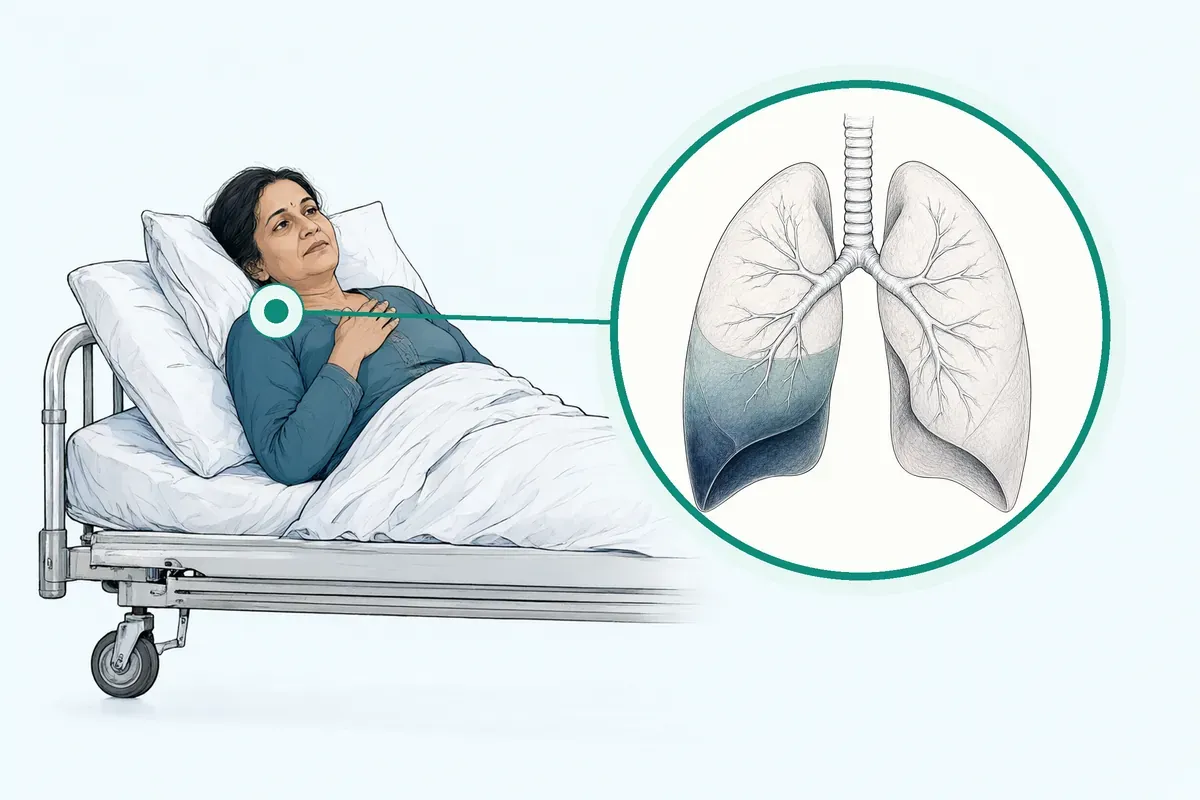
Pneumonia is inflammation of the lung tissue, usually caused by infection with bacteria or viruses.
Why Jaipur Hospital
You may be worried about missing work, the cost of treatment, or whether an elderly parent will need to stay in hospital.
Your care plan
Your first steps with us
- 1 Call us or visit the OPD
- 2 Meet the pulmonologist for an assessment
- 3 Get tests, scans and a clear treatment plan
- 4 Begin treatment and arrange follow-up
How chest infection treatment is done
Our team first assesses how severe the infection is. Treatment may include antibiotics, oxygen, breathing support or tests to find the cause. Your surgeon will discuss these options and review your progress.
-
Empiric IV Antibiotics
Usually started after cultures are taken, then adjusted once sensitivity results are available.
-
Non-Invasive Ventilation (NIV)
BiPAP or CPAP support for breathing difficulty, used to help some patients avoid intubation.
-
Bronchoscopy with BAL
A fluid sample from the lungs is collected to look for unusual or difficult-to-find infections.
-
ICU Support with Vasopressors
Intensive care with medicines to support blood pressure when severe infection causes septic shock.
Why patients trust us
- 1991 Serving Jaipur for 35 years
- NABH Accredited hospital
- 1 Pulmonology consultants
- 24×7 Emergency, ICU and ambulance
- 25 Cashless schemes and insurers
What research shows about recovery
-
48 to 72 hours
In studies, patients often begin to improve within this time after treatment starts.
-
2 to 4 weeks
In patient guidance, most people with pneumonia get better within this time.
-
15 to 30%
Reported non-response rate among ICU patients with severe community-acquired pneumonia, even with guideline-concordant care.
If it is left untreated
Some chest infections, especially severe pneumonia, can be life-threatening. If your fever or breathlessness is not improving after discharge, contact your doctor. If you cannot complete sentences because of breathlessness, have worsening chest pain, become drowsy, or feel dizzy when standing, seek urgent care.
Life after treatment
Most people begin to feel better within days and return to normal activities over a few weeks. Your recovery pace depends on your age, other conditions and how severe the infection was.
-
Breathing feels easier
Most people notice less breathlessness and a lighter chest over a few weeks.
-
Cough settles
Cough and phlegm usually reduce gradually as the infection clears.
-
Energy returns
Tiredness can linger, so plan rest and gentle activity as you recover.
-
Follow-up support
Your team checks your progress and tells you when to return.
Frequently asked questions
Questions patients ask about chest infection treatment
Which problems are assessed under chest infections?
In short
At Jaipur Hospital, chest infection assessment covers pneumonia, bronchitis and severe respiratory infections. The medical team evaluates the type of infection, its severity and whether you need hospital admission. They also check for complications such as pleural effusion, empyema or lung abscess, and identify any underlying conditions that may affect recovery.
In detail
The assessment follows established severity criteria. Doctors use tools like the Pneumonia Severity Index or CURB-65 to decide if you can be managed as an outpatient or need ward or ICU care.
They look for major criteria such as septic shock or need for mechanical ventilation, and minor criteria including respiratory rate, confusion, urea level and blood pressure.
Your comorbidities such as diabetes, immunosuppression, chronic lung disease or heart failure are reviewed because they change the likely pathogens and the risk of non-response.
Imaging with chest X-ray or CT shows the pattern and extent of lung involvement, while blood tests and cultures help identify the organism. In severe cases, bronchoscopy with lavage may be done for atypical or immunocompromised hosts.
A common belief
Many people think a chest infection is just a bad cough.
What actually happens
In reality, the type of bug, your oxygen levels, and any other illnesses you have completely change the treatment plan.
Your next step at Jaipur Hospital
If you have a persistent cough, fever or breathlessness, visit the OPD for evaluation. The doctor will decide on the same day whether you need admission, IV antibiotics or further tests. Typical hospital stay is 3 to 7 nights for severe cases.
How will the doctor decide which tests I need?
In short
At Jaipur Hospital, the doctor selects tests based on how sick you are, your risk factors and the likely setting of infection. For severe cases needing admission, blood cultures, sputum Gram stain and culture, chest X-ray or CT, and routine blood work are standard. In milder cases, fewer tests may be needed.
In detail
Guidelines recommend sputum Gram stain and culture for hospitalised patients with severe CAP and when risk factors for MRSA or Pseudomonas are present. Blood cultures are advised in the same two situations. For intubated patients, endotracheal aspirates are sent promptly.
A thorough history raises the possibility of uncommon bacterial or fungal causes that may not respond to usual empiric regimens. Imaging with chest X-ray or CT shows the pattern and extent of infiltrates.
In non-responding patients, the team re-evaluates clinical signs, biomarkers, microbiology and imaging at 48 to 72 hours. Bronchoscopy with lavage is reserved for atypical or immunocompromised hosts. The choice of tests is individualised and not every patient needs every test.
A common belief
It's not a fixed panel for everyone.
What actually happens
Guidelines say only do sputum and blood cultures for severe pneumonia or when resistant bugs are likely. Doing every test on every patient adds cost without helping.
Your next step at Jaipur Hospital
During your consultation, the doctor will examine you, review your history and order the appropriate tests. Most results are available within 24 to 48 hours. You may need a repeat X-ray at six weeks to confirm resolution.
How soon should I expect improvement after the chosen treatment?
In short
At Jaipur Hospital, symptom relief usually begins within 3 to 5 days of starting appropriate treatment. Temperature typically settles within 48 hours and should be gone within a week. Full recovery takes 2 to 3 weeks, though cough and fatigue may persist longer. Severe cases with septic shock or multilobar involvement need more time.
In detail
Evidence shows clinical improvement within 48 to 72 hours of appropriate antibiotic therapy in responding patients. Cough and fatigue can persist for up to two weeks even in those who are improving.
Temperature begins to settle within 48 hours of starting antibiotics and should resolve within a week. Chest discomfort and phlegm improve within four weeks. Breathlessness and cough reduce by six weeks. Tiredness may last up to three months.
Factors delaying recovery include diabetes, malignancy, immunosuppression, end-organ disease, COPD, malnutrition, chronic aspiration, alcoholism, neurological disorders, heart failure, and the causative organism. Tuberculosis, bacteraemic pneumococcal pneumonia and Legionella resolve more slowly. Non-response is assessed at 48 to 72 hours.
If no improvement, the diagnosis and treatment are re-evaluated. A follow-up chest radiograph at six weeks ensures resolution of consolidation.
A common belief
A common mistake is stopping antibiotics once the fever goes.
What actually happens
The bug may still be there, and stopping early makes resistance more likely. Also, feeling tired for weeks after is normal, not a sign treatment failed.
Your next step at Jaipur Hospital
If you do not feel better after 2 to 3 days of antibiotics, contact your doctor. Continue the full antibiotic course even if you feel better earlier. Attend the six-week follow-up X-ray. Gradually increase activity as tolerated.
When does a fever need testing or hospital assessment for a chest infection?
In short
A fever that lasts more than 48 hours despite starting antibiotics, or a fever above 38.5°C with breathlessness, confusion, or chest pain, needs urgent assessment at Jaipur Hospital. Our emergency department is open 24×7 for rapid evaluation and admission if required.
In detail
Evidence shows that temperature should settle within 48 hours of appropriate antibiotics. Persistent or recrudescent fever suggests treatment failure, resistant organisms, or complications such as empyema, lung abscess, or septic shock.
In older adults and those with diabetes, immunosuppression, or chronic lung disease, even a low-grade fever can signal severe infection. Guidelines recommend immediate hospital review for any patient with fever plus respiratory rate over 30, oxygen saturation below 92%, hypotension, or altered mental status.
Blood cultures, inflammatory markers, and chest imaging help identify the cause. Early admission allows IV antibiotics, oxygen therapy, and ICU support when needed, which improves outcomes in severe community-acquired pneumonia.
A common belief
Many patients treat fever at home for days.
What actually happens
Evidence shows that delayed admission in severe pneumonia increases mortality. A fever that does not drop by 48 hours often means the antibiotic is not covering the bug or a complication has developed.
Your next step at Jaipur Hospital
Do not ignore a fever that does not respond to oral antibiotics within two days. Call our ambulance service or come to the emergency department. Bring a list of current medicines and any recent test results. The team will start investigations and treatment without delay.
How can I decide whether to seek advice about community acquired pneumonia management?
In short
You should seek advice at Jaipur Hospital if you have a new cough with fever, breathlessness, or chest pain that lasts more than a few days, especially if you are over 65 or have diabetes, heart or lung disease, or a weakened immune system. Early assessment prevents complications.
In detail
Community-acquired pneumonia often starts with fever, cough with phlegm, shortness of breath, and chest discomfort. Guidelines recommend medical evaluation when symptoms persist beyond 48 to 72 hours, when fever is high, or when you cannot keep fluids down.
Risk factors that lower the threshold for seeking care include age over 65, chronic obstructive pulmonary disease, diabetes, malignancy, immunosuppression, recent antibiotic use, and alcohol excess.
The CURB-65 score helps clinicians decide if hospital admission is needed, but you do not need to calculate it yourself. If you feel unusually unwell, are breathing faster than normal, or feel confused, do not wait. Prompt empiric antibiotics within four hours of presentation improve outcomes in severe cases.
A common belief
People often wait too long, thinking it is just a bad cold.
What actually happens
Delaying antibiotics in severe pneumonia increases the risk of complications like septic shock or empyema. Early assessment changes the outcome.
Your next step at Jaipur Hospital
Monitor your temperature and breathing. If fever persists beyond two days, breathlessness worsens, or you cannot manage daily activities, visit the emergency department at Jaipur Hospital. Bring a list of current medicines and any recent test results.
Which changes in breathing, chest symptoms, or oxygen levels need urgent help?
In short
You need urgent help at Jaipur Hospital if you cannot complete sentences due to breathlessness, have worsening chest pain, become drowsy or confused, feel dizzy when standing, or your oxygen saturation drops below 92 percent. These signs may indicate respiratory failure or septic shock requiring immediate ICU care.
In detail
Guidelines highlight specific red flags: respiratory rate over 30 breaths per minute, oxygen saturation under 92 percent on room air, new confusion or drowsiness, systolic blood pressure below 90 mmHg, and inability to speak in full sentences.
Worsening chest pain may signal pleural involvement or empyema. In ventilated patients, a falling PaO2:FiO2 ratio within the first three days is the most reliable indicator of non-response. Persistent fever beyond 72 hours of antibiotics, rising inflammatory markers, and radiological progression also warrant urgent review.
Septic shock complicating severe pneumonia requires vasopressor support and critical care consultation. Non-invasive ventilation (BiPAP/CPAP) is used for alert patients with high work of breathing, while intubation is needed for respiratory acidosis or airway protection.
A common belief
Many people wait until they collapse.
What actually happens
But confusion, inability to talk, and low oxygen are late signs of respiratory failure. Acting at the first red flag allows non-invasive ventilation instead of intubation and improves survival.
Your next step at Jaipur Hospital
If any of these signs appear, call the 24-hour emergency line or bring the patient to the emergency department immediately. Do not wait for a scheduled appointment. Keep a pulse oximeter at home if you have chronic lung disease.
Which symptoms should prompt me to see a specialist?
In short
At Jaipur Hospital, you should see a specialist if you have a cough lasting more than three weeks, fever that does not settle, increasing breathlessness, chest pain when breathing, or coughing up blood. People with diabetes, chronic lung disease, weakened immunity or those over 65 should seek review earlier because their risk of severe pneumonia is higher.
In detail
Guidelines highlight that persistent fever, worsening cough with sputum, and shortness of breath are key features of community-acquired pneumonia.
In non-responding cases, patients show sustained fever, lack of improvement in oxygenation, and radiographic infiltrates that do not improve after 48 to 72 hours of appropriate antibiotics.
Underlying conditions such as diabetes, malignancy, immunosuppression, chronic alcoholism, COPD, heart failure and neurological disorders impair clearance of infection and delay recovery. Smoking is the most significant modifiable risk factor for impaired mucociliary clearance.
The very young, the elderly, those on immunosuppressive medicines, and heavy alcohol users are at greater risk. If you have any of these risk factors, a lower threshold for specialist review applies.
A common belief
People often wait too long, thinking it's just a viral cough.
What actually happens
But if you have diabetes, lung disease, or are over 65, the infection can become serious much faster.
Your next step at Jaipur Hospital
Visit the pulmonology OPD if symptoms persist beyond a week or worsen after initial treatment. Bring any previous X-rays, blood reports and a list of medicines. The doctor may order a chest X-ray, blood tests and sputum culture. Early review prevents complications.
How will the results change my care plan?
In short
At Jaipur Hospital, test results guide whether antibiotics are narrowed, changed or continued, whether you need ICU support, and if drainage or surgery is required. Culture sensitivities let the team switch from empiric to targeted therapy. Imaging and biomarkers show if the infection is resolving or if complications like empyema or abscess have developed.
In detail
Empiric IV antibiotics are started immediately after cultures are taken and adjusted once sensitivities are known, usually within 48 to 72 hours. If cultures grow resistant organisms such as MRSA or Pseudomonas, specific agents like vancomycin, linezolid or anti-pseudomonal beta-lactams are added.
Persistent fever, rising inflammatory markers, or worsening infiltrates at 48 to 72 hours signal non-response and prompt re-evaluation for resistant pathogens, unusual organisms, or non-infectious causes. If thoracentesis shows pus, positive Gram stain, or pH below 7.2, chest tube drainage is mandatory.
Video-assisted thoracoscopic surgery is preferred if there is no improvement in 48 to 72 hours. In non-responding ventilator-associated pneumonia, lack of improvement in PaO2:FiO2 ratio within three days is the most reliable indicator. Corticosteroids may be added for severe CAP in ICU based on recent trial evidence.
A common belief
A common mistake is thinking antibiotics are fixed from day one.
What actually happens
In reality, we start broad, then switch to targeted drugs once we know the bug and its sensitivities, usually by day two or three.
Your next step at Jaipur Hospital
Your doctor will review results daily while you are admitted and adjust treatment accordingly. After discharge, a follow-up X-ray at six weeks confirms clearance. If symptoms persist, further investigation is arranged.
What should I do if symptoms of chest infection persist or worsen?
In short
If your chest infection symptoms persist or worsen, contact Jaipur Hospital promptly. Our medical team will reassess your condition and adjust treatment as needed. Early review helps prevent complications and ensures you receive the right care at the right time.
In detail
Evidence shows that patients who do not improve within 48 to 72 hours of appropriate antibiotics may have resistant organisms, an unexpected pathogen, or a non-infectious cause. Persistent fever, worsening breathlessness, increasing sputum, or new chest pain are warning signs.
Blood tests such as CRP or procalcitonin that fail to fall, and chest imaging that shows no improvement or progression, also indicate treatment failure. In severe cases, complications such as parapneumonic effusion, empyema, or lung abscess can develop and require drainage or surgical referral.
Our pulmonology and critical care specialists follow guideline-based protocols for non-responding pneumonia, including repeat cultures, imaging review, and escalation of respiratory support from oxygen to non-invasive ventilation or ICU care when needed.
A common belief
Many people wait several days hoping symptoms will settle.
What actually happens
Evidence shows that lack of improvement by 48 to 72 hours can mean resistant bacteria, a missed diagnosis, or a complication like an abscess. Delaying review increases the risk of ICU admission.
Your next step at Jaipur Hospital
Do not wait if you feel worse. Call our 24×7 emergency line or visit the OPD for a same-day review. Bring your current medicines and any recent test reports.
The doctor may repeat blood tests, a chest X-ray, or sputum culture to guide the next step. Most patients who are reassessed early avoid prolonged illness.
Which tests are useful at different stages of a chest infection?
In short
At Jaipur Hospital, testing is tailored to illness stage. On admission we usually do chest X-ray, blood counts, CRP, procalcitonin, blood cultures, and sputum Gram stain and culture. During treatment we repeat inflammatory markers and gas exchange. At six weeks a follow-up chest X-ray checks resolution.
In detail
Guidelines recommend chest radiography for all suspected pneumonia. In severe cases, blood cultures and sputum cultures are sent before antibiotics but therapy starts within four hours. PCR panels for viruses including influenza, RSV, and SARS-CoV-2 are used when viral cause is suspected.
For non-responders at 48 to 72 hours, repeat cultures, CT chest, and sometimes bronchoscopy with lavage help identify resistant or atypical pathogens. Pleural fluid analysis with pH, LDH, and Gram stain guides drainage decisions. Serial CRP and procalcitonin trends assist in judging response. Our in-house laboratory and radiology provide rapid turnaround so that antibiotic adjustments are timely.
A common belief
Patients often ask for every test upfront.
What actually happens
Evidence supports staged testing: cultures before antibiotics, viral panels when indicated, and imaging for non-response or at six weeks. Unnecessary repeats add cost without changing management.
Your next step at Jaipur Hospital
Your doctor will order the right tests at each visit. Keep all reports for follow-up. A repeat chest X-ray at around six weeks is standard after significant pneumonia.
FAQ library
Questions and answers about chest infection treatment
When you contact us
What you get at Jaipur Hospital
Contact Jaipur Hospital to arrange a consultation and a clear plan for your chest infection.
- A consultation with a pulmonologist (chest physician) in the OPD
- Your scans and reports reviewed, with tests done in-house if you need them (laboratory, X-ray and imaging)
- Your options explained in plain words, including whether you need surgery at all
- A cost estimate before you decide
- Help with cashless treatment under RGHS, MAA Yojana, CGHS and empanelled insurers and TPAs
- Follow-up visits after your treatment
Overview
Chest Infection Treatment: what to know
What is a chest infection?
Jaipur Hospital is a NABH-accredited multispeciality hospital in Jaipur. This page covers pneumonia, bronchitis and severe respiratory infections.
Pneumonia is inflammation of the lung tissue, usually caused by bacteria or viruses. A fungal cause is possible but rare in healthy people. Some people get pneumonia after another infection.
Pneumonia affects up to 1 in every 100 adults each year. Most people with pneumonia recover fully with antibiotics and do not need more tests or treatment. In severe infections, pneumonia can be life-threatening.
Chest infection symptoms and warning signs
- Cannot finish a sentence Breathlessness stops you speaking
- Worsening chest pain Pain that is getting worse
- Becoming drowsy Unusual sleepiness or confusion
- Dizzy when standing Light-headed on standing up
Common chest infection symptoms include:
- Fever
- Tiredness
- A cough
- Breathlessness
In severe pneumonia, fever, cough, phlegm and breathlessness may persist or get worse.
Some symptoms need emergency care the same day. Get help at once if you cannot finish a sentence because of breathlessness, your chest pain is getting worse, you become drowsy, or you feel dizzy when standing.
Severe pneumonia can be life-threatening.
If your fever or breathlessness is not improving in the week after you leave hospital, contact your doctor.
Chest infection causes and who is at higher risk
Avoid
- Very young or older adults
- Low immunity
- Diabetes
- Heavy alcohol use
- Smoking
- Heart or lung disease
Pneumonia is usually caused by a bacterial or viral infection. A fungal cause is possible but rare in healthy people. Some cases follow another infection.
Some people are at higher risk. The very young and older adults are more likely to get pneumonia. People with low immunity are also at higher risk, including those taking medicines that suppress immunity. Diabetes and drinking too much alcohol raise the risk. Smoking is a major risk because it harms the lungs' natural clearance.
People with heart disease or a long-term lung condition may need hospital treatment. Adults over 65 may also need hospital care.
Some conditions slow recovery. Diabetes, cancer, a weakened immune system and organ disease can affect the body's response to infection. Long-term lung disease, poor nutrition and heart failure can also delay recovery.
Vaccines can lower the risk of some chest infections. Annual influenza and COVID-19 vaccination help reduce secondary bacterial infections. Some older adults and people with risk factors may be offered a pneumococcal vaccine.
How chest infection is diagnosed
- Health history and exam Doctor asks about symptoms and examines chest
- Chest X-ray and blood tests Standard tests for pneumonia
- Oxygen level check Given oxygen if below 92%
- Phlegm and blood cultures For severe pneumonia
To diagnose a chest infection, your doctor will ask about your health and symptoms and examine your chest. You may be sent for a chest X-ray and blood tests to check your lungs and look for other conditions. A chest X-ray is a standard test for pneumonia that starts outside hospital.
Your oxygen level is checked. If it is below 92%, you may be given oxygen.
In severe pneumonia, a phlegm sample may be tested for bacteria. Blood samples may also be tested for infection. The blood test results are most useful when they come back within 24 to 48 hours.
Tests do not always find the germ. Phlegm testing often has a low yield. In studies, blood cultures are positive in only about 2 to 9 in 100 people with non-severe pneumonia.
Doctors may use a scoring system to decide if you need hospital care. Some people need a repeat chest X-ray about 6 weeks after the infection to check that the lungs have cleared.
Jaipur Hospital has in-house diagnostic laboratory and imaging services, including a 24-hour laboratory, X-ray and ECG.
Chest infection treatment without surgery, and when surgery is needed
- IV antibiotics course Usually 5 to 10 days
- Symptoms start to ease In 3 to 5 days
- Hospital stay Typically 3 to 7 nights
- Full recovery Usually 2 to 3 weeks
Antibiotics are the main treatment for bacterial pneumonia. In hospital, antibiotics are usually given through a vein (IV), and sometimes steroids are added. Oxygen may be needed to help you breathe.
A course of IV antibiotics usually lasts 5 to 10 days. No anaesthesia is needed. Symptoms usually start to ease in 3 to 5 days, and full recovery usually takes 2 to 3 weeks. Hospital stay is typically 3 to 7 nights. Severe cases may need care in the ICU.
Treatment usually starts with IV antibiotics after samples are taken, often within 4 hours of arriving at hospital. The first choice is based on your risk factors and the likely infection. Our team usually adjusts the antibiotic when sensitivity results are ready.
Breathing support and tests may be needed during treatment. Non-invasive ventilation, such as CPAP or BiPAP, can support breathing in people who are alert but working hard to breathe. Bronchoscopy with BAL (a lung wash) can take a sample from the lungs when the cause is unclear. ICU support with vasopressors may be needed in septic shock. Your doctor will advise which option suits you.
Chest physiotherapy and breathing exercises can help clear secretions. Early movement helps lower the risk of clots, pressure sores and a longer hospital stay.
Take all antibiotics as prescribed, even if you feel better. If you stop too soon, the infection can return or become harder to treat. Do not take cough medicine unless your doctor advises it, because coughing helps clear the infection. Rest, drink fluids and avoid smoking.
If you do not feel better after 2 to 3 days of antibiotics, contact your doctor. A repeat X-ray may be needed to check that the infection has cleared.
Surgery is usually considered only for complications. The most common reason for a surgical review is a complicated collection of fluid around the lung or an empyema. If the fluid is infected, it must be drained. Surgery may be considered for a lung abscess or necrotising pneumonia that does not heal.
It is usually a last resort, for life-threatening problems such as massive coughing of blood, a leak between the airway and chest space, or an abscess that does not settle after 4 to 6 weeks of antibiotics.
If an infected fluid collection does not improve within 48 to 72 hours, video-assisted surgery may be considered. Your surgeon will advise whether an operation is needed.
The typical cost range in India is ₹25,000 to ₹1,50,000. The length of stay, ICU care, tests and medicines can change the cost. Ask us for an estimate.
Jaipur Hospital has a 24×7 emergency department, an Intensive Care Unit, and 24-hour laboratory and X-ray services.
Preparing for chest infection treatment at Jaipur Hospital
Chest infection treatment is usually medical, not surgical. Anaesthesia is not needed for the usual antibiotic course. Before treatment, the team checks how severe the infection is. This helps decide whether you need a ward or the intensive care unit (ICU).
Your doctor may ask for a chest X-ray and blood tests. In severe pneumonia, guidelines recommend a phlegm sample for testing, and blood cultures. These samples can help identify the germ and guide treatment. Culture results may take 24 to 48 hours.
Bring a list of all your regular medicines, your past reports and X-rays, and your insurance or scheme card. Tell your doctor about diabetes, heart disease, lung disease or any medicine that affects your immunity. These can change how quickly you recover. Do not stop any medicine on your own. Ask your doctor which ones you should continue.
Fasting is not part of the usual antibiotic course because anaesthesia is not needed. If you are booked for a test or procedure, ask the team about fasting. An attendant can help with paperwork and with getting meals from the hospital canteen.
How chest infection treatment is done
The main treatment is antibiotics. For a chest infection that needs hospital care, Jaipur Hospital usually gives antibiotics through a vein for 5 to 10 days. The hospital stay is usually 3 to 7 nights. Severe cases may need the ICU.
Treatment may include oxygen if your oxygen level is low. Fluids may be given if you are dehydrated or your blood pressure is low.
Common options include the following. Your doctor will advise which option suits you.
- Empiric IV antibiotics. These are antibiotics given through a vein before the exact germ is known. They are started after samples are taken and adjusted when sensitivity results come back. Guidelines advise starting treatment quickly, ideally within 4 hours of arrival.
- Non-invasive ventilation (NIV). A mask helps support breathing without a tube in some patients. It may be used for people with COPD or those who are alert but working hard to breathe.
- Bronchoscopy with BAL. A thin tube is passed into the airways to collect fluid for testing. This may help when the cause is unclear or the patient has a weak immune system.
- ICU support with vasopressors. For septic shock, ICU care may include medicines that support blood pressure.
On the day, the team checks your breathing, oxygen level, blood pressure and temperature. Samples may be taken before antibiotics. Treatment starts as soon as possible. You will usually be on a ward. If your infection is severe or your breathing needs support, you may be cared for in the ICU.
Risks and complications of chest infection
Chest infection can be serious. In severe infections, pneumonia can be life-threatening. Some people develop fluid or infected fluid around the lung, called a pleural effusion or empyema. Others may develop a lung abscess. Other complications include a secondary lung infection and necrotising pneumonia. Rarely, other serious infections can complicate the illness.
Some patients do not respond to the first treatment. In studies of ICU patients with severe pneumonia that started outside hospital, 15 to 30% did not respond even when they received recommended antibiotics and supportive care. In pneumonia that starts in hospital, including in people on a ventilator, studies report non-response in 20 to 40%.
One review found treatment failure in 30 to 45% of patients with hospital-acquired pneumonia not linked to a ventilator. In studies of ventilator-associated pneumonia, treatment failure was around 30%. These are study groups, not predictions for one person.
Delayed or unsuitable antibiotics, germs that resist many antibiotics, a weak immune system and severe illness can make non-response more likely. In one ICU study, 19% of patients admitted with pneumonia were later found to have a non-infectious condition. This is why the team reviews the diagnosis if you do not improve.
Surgery is not routine. The most common reason for a surgical review is a complicated pleural effusion or empyema. Surgery for a lung abscess or necrotising pneumonia is a last resort. It is usually considered for life-threatening complications or when an abscess does not settle after 4 to 6 weeks of targeted antibiotics. If surgery is needed, our surgical team can explain the options.
Recovery after chest infection treatment
- 3 to 5 days Start to feel better
- 2 to 3 weeks Full recovery usually
- 6 weeks Cough and breathing improve
- Up to 3 months Tiredness may last
Most people start to feel better within 3 to 5 days. Full recovery usually takes 2 to 3 weeks. In studies, many patients improve within 48 to 72 hours of treatment. Symptoms often start to improve 2 to 3 days after antibiotics, and temperature often settles within 48 hours.
Cough and tiredness can last longer. One patient information source says the chest feels better and phlegm reduces within 4 weeks, and cough and breathing improve over about 6 weeks. Tiredness can last up to 3 months, with most other symptoms improved by then.
Finish all your antibiotics, even if you feel better. If you stop early, the infection can return and the germ may become resistant. Rest, drink fluids, eat healthy meals and get enough sleep. Light activity can help you regain strength. Do not smoke, and avoid secondhand smoke. Avoid alcohol. Sit upright and take a few deep breaths several times a day.
Some patients need a repeat chest X-ray about 6 weeks later. If changes have not settled, the team may arrange a review. Ask your doctor when to book follow-up.
Contact your doctor if you do not feel better after 2 to 3 days of antibiotics. If fever or breathlessness is not improving in the week after discharge, contact your doctor. If you cannot complete sentences because of breathlessness, have worsening chest pain, become drowsy or feel dizzy when standing, seek emergency care at once. Jaipur Hospital has a 24×7 emergency department.
How well chest infection treatment works
Most people with pneumonia recover fully with antibiotics and do not need further tests or treatment. Many improve within 48 to 72 hours. Antibiotics are the main treatment.
Response can be slower in some people. A patient with severe pneumonia may be called a non-responder if there is no improvement within the first 72 hours of appropriate antibiotics. Doctors may also look for persistent fever, worsening oxygen levels, worsening X-ray changes or rising blood markers after 48 to 72 hours. If this happens, the team checks for other causes, including resistant germs, a different infection or a non-infectious condition.
Some infections respond more slowly. Pneumonia caused by tuberculosis responds more slowly than pneumonia caused by common bacteria such as Streptococcus pneumoniae. Severe cases with septic shock, pneumonia in more than one part of the lung, or breathing failure generally take longer to recover.
A single figure for how often a chest infection comes back is not available from the evidence used here. The evidence does show that most people recover with antibiotics, and that some severely ill patients do not respond to the first course. If your symptoms are not improving, contact your doctor for a review.
Chest infection treatment cost and insurance in Jaipur
- ₹25,000 to ₹1,50,000 Treatment cost range
- 3 to 7 nights Hospital stay
The typical range for chest infection treatment in India is ₹25,000 to ₹1,50,000. This is a range, not a fixed price. Ask us for an estimate for your case. The cost changes with the length of IV antibiotics, which is usually 5 to 10 days, and the length of hospital stay, which is usually 3 to 7 nights.
Severe cases may need ICU care, which adds to the cost. Tests, imaging and treatment of complications can also change the bill.
Jaipur Hospital is a privately run, NABH-accredited multispeciality hospital. It was established in February 1991. The hospital has a 24×7 emergency department, intensive care unit, in-house laboratory and imaging, and a canteen with dietary meals. It works with RGHS, MAA Yojana, CGHS and a panel of private insurers and TPAs. Coverage depends on your scheme or policy. Please check your eligibility before admission.
Bring your scheme or insurance card and any referral papers. The final bill depends on the care you need.