

Orthopaedics · Jaipur Hospital
Clubfoot Treatment (Ponseti Method) in Jaipur
Your baby's foot turns inward. We assess, explain and plan weekly casting and bracing.
- Serving Jaipur since 1991 (35 years)
- NABH accredited
- 24×7 emergency & ICU
- Cashless: MAA Yojana + 32 insurers
- Session length
- 30 to 45 minutes per cast change
- Anaesthesia
- Not needed (feeding/sucrose for comfort)
- Recovery
- Full correction in 6 to 8 weeks, then bracing for 3 to 4 years
- Price
- ₹15,000 to ₹40,000 (complete series including braces)typical range in India; ask us for an estimate
Foot turned inward at birth
My baby's foot points down and in
Clubfoot makes the foot stiff and turned inward. Without correction, walking becomes painful and limited. Early casting gently guides the foot into a better position.
-
One or both feet affected
The deformity can involve a single foot or both feet from birth.
-
Stiffness increases with time
Soft tissues tighten as the baby grows, making later correction harder.
-
Walking on the side of the foot
Untreated clubfoot leads to abnormal gait, skin breakdown and joint damage.
-
Relapse risk without bracing
The relapse rate varies widely and rises without consistent brace use.
Clubfoot fixes the foot in adductus, varus and equinus with soft tissue anomalies.
Why Jaipur Hospital
You worry whether your child will walk normally and how the weekly visits will fit your routine.
Your care plan
Your first steps with us
- 1 Call or visit OPD for first assessment
- 2 Weekly above-knee casts applied for 5 to 7 weeks
- 3 Minor Achilles release if needed, then final cast
- 4 Boots-and-bar brace worn full-time then nights for years
how the treatment is done
Gentle weekly manipulation and plaster casting correct the foot over weeks, followed by long-term bracing to hold the position.
-
Ponseti Serial Casting
Weekly above-knee plaster casts for 5 to 7 weeks gradually turn the foot outward.
-
Percutaneous Tenotomy
Minor Achilles tendon release under local anaesthesia if the ankle remains tight.
-
Foot Abduction Brace
Boots-and-bar brace worn 23 hours daily for 3 months, then nights only until age 4 to 5.
Why patients trust us
- 1991 Serving Jaipur for 35 years
- NABH Accredited hospital
- 4 Orthopaedics consultants
- 24×7 Emergency, ICU and ambulance
- 33 Cashless schemes and insurers
what research shows about this treatment
-
primary correction rate very high
Studies report a very high initial correction rate with the Ponseti method.
-
relapse rate 1.9% to 45%
Relapse varies widely across studies and increases with longer follow-up.
-
major surgery 1.4% to 53.3%
Rates of major surgery rise with follow-up time; good bracing lowers this risk.
If it is left untreated
Untreated clubfoot leads to long-term disability, deformity and pain when walking.
life after treatment
Most children walk, run and play normally after completing casting and bracing.
-
Normal walking pattern
Most people develop a functional, plantigrade foot that fits regular shoes.
-
Sports and daily activity
Usually no restriction on play, school sports or everyday movement.
-
Ongoing check-ups until skeletal maturity
Regular reviews catch early drift so a short recast keeps the foot corrected.
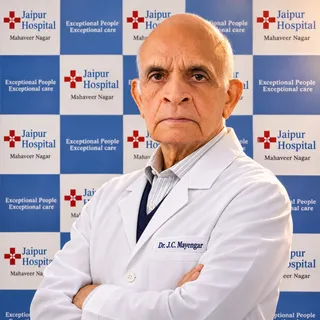
Meet the team
Your orthopaedics doctors
Explore our orthopaedic hospital in Jaipur: every treatment, the doctors and what to expect at your visit.



Frequently asked questions
Questions patients ask about clubfoot treatment (ponseti method)
What is clubfoot Ponseti treatment?
In short
Clubfoot Ponseti treatment at Jaipur Hospital is a non-surgical method that corrects a baby's turned-in foot through weekly plaster casts and a long-term brace. The foot is gently stretched a little further each week and held in a new above-knee cast. Most babies need five to eight casts over six to eight weeks, followed by a boots-and-bar brace worn full-time for three months and then at night until about age four.
In detail
The Ponseti method corrects the four components of clubfoot in a set order: the high arch (cavus) and inward forefoot (adductus) first, then the heel tilt (varus), and finally the pointed ankle (equinus).
Because the Achilles tendon is often too short to stretch fully, a small percutaneous tenotomy under local anaesthesia is done in most infants before the final cast.
Evidence shows this approach achieves a very high initial correction rate and avoids open joint surgery in almost all cases when the bracing protocol is followed. Adverse events in casting are mainly cast slippage, plaster sores and skin irritation.
A common belief
Many people think clubfoot needs major surgery with wires and open cuts.
What actually happens
The Ponseti method avoids that in almost all cases by using the foot's natural flexibility and holding the correction with a brace while the child grows.
Your next step at Jaipur Hospital
Treatment usually starts within the first one to two weeks of life. You will attend weekly outpatient visits for cast changes, each lasting 30 to 45 minutes. After the final cast comes off, the brace is fitted the same day. Regular follow-ups continue through the bracing years to check fit and watch for any drift.
Which specialist should my child see for this problem?
In short
Your child should see a paediatric orthopaedic surgeon who is trained in the Ponseti method. At Jaipur Hospital, the orthopaedics department manages clubfoot from the first cast through the bracing years.
In detail
The Ponseti method is a specific technique of manipulation, serial casting, possible tenotomy and long-term bracing. It requires a clinician who follows the correct sequence of correction and monitors for relapse.
Evidence shows that relapse after Ponseti treatment is more often corrected with further casting, whereas other techniques more often lead to major surgery. A specialist familiar with the protocol ensures the casting order, tenotomy decision and brace regimen are followed precisely.
A common belief
A general doctor or physiotherapist alone cannot apply the above-knee casts or perform the tenotomy.
What actually happens
The method depends on a precise sequence that only a trained orthopaedic surgeon should direct.
Your next step at Jaipur Hospital
The first visit usually occurs within the first one to two weeks of life. The surgeon examines both feet, checks hips and spine, scores the foot using the Pirani scale, and applies the first cast if appropriate. Weekly outpatient visits follow.
What treatment options are available for my child's clubfoot?
In short
The main treatment at Jaipur Hospital is the Ponseti method: weekly above-knee plaster casts for about six to eight weeks, a small Achilles tendon release under local anaesthesia if the ankle remains tight, then a boots-and-bar brace worn 23 hours a day for three months and at night until around age four. This is the standard approach for idiopathic clubfoot in infants. Surgery to open the joints is kept for feet that do not respond to casting or that relapse despite good brace use.
In detail
The Ponseti method follows a fixed sequence: correct the high arch and inward forefoot first, then the heel tilt, and finally the ankle pointing down. Most children need the tenotomy because the Achilles tendon is too short to stretch fully.
The brace holds the correction while the child grows. Evidence shows a very high initial correction rate and that following the full bracing programme prevents open joint surgery in almost all cases.
Relapse rates in studies vary from about 2% to 45%, strongly linked to brace adherence. For syndromic or neglected cases, the surgeon may adapt the casting or consider tendon transfers later.
A common belief
Some families hear about older methods like the Kite technique or early major surgery.
What actually happens
Studies show those lead to more relapse and more open joint operations. The Ponseti sequence and brace routine give the most suitable long-term outcome with the least surgery.
Your next step at Jaipur Hospital
Treatment usually starts within the first two weeks. Weekly visits take 30 to 45 minutes. The casting phase lasts around six to eight weeks, then bracing for years. The typical cost range for the complete series including braces is ₹15,000 to ₹40,000. The surgeon will explain the exact schedule for your child.
What can my child safely do at home to manage clubfoot symptoms?
In short
During the casting phase you keep the plaster dry, check that the toes are pink and warm, and watch that the cast has not slipped down the leg. After the final cast comes off, the boots-and-bar brace is fitted the same day. The heel must sit flat in the boot; check it at every change. Jaipur Hospital gives written instructions for each phase.
In detail
Evidence shows that a slipped cast loses a week of progress and must be reapplied. Mild redness at the cast edges is common; pressure marks that do not fade, blisters or broken skin are not and are addressed before the next cast.
During the first three months the brace is worn about 23 hours a day, off only for bathing, skin checks and stretching. After that it moves to sleep hours only until about age four to five.
Nightly skin checks for red marks that do not fade within 20 minutes of removal are essential. Boots need replacing as feet grow, and the bar width increases with the child. The team checks fit every few months.
A common belief
Some parents think a little looseness in the brace is fine or that the child needs a break from it.
What actually happens
Evidence shows the heel must stay flat on the sole; if it lifts, the strap is loose or the boot is too big. Skipping brace hours sharply raises relapse risk.
Your next step at Jaipur Hospital
You can soak the cast off at home shortly before the appointment if the team advises it, which shortens the time the foot is unsupported.
Dress the child in a long onesie under the boots, tuck a folded blanket under the bar to stop rattling, and make the brace part of the bedtime routine.
How does the term CTEV relate to clubfoot Ponseti treatment?
In short
CTEV stands for congenital talipes equinovarus, the medical name for clubfoot. The Ponseti method is the standard treatment for CTEV at Jaipur Hospital. Our orthopaedic team uses weekly above-knee plaster casts to correct the foot position gently over several weeks.
In detail
Congenital talipes equinovarus describes a foot fixed in a turned-in position with a high arch. The Ponseti method corrects this by stretching the foot a little each week and holding the new position in a cast.
Evidence shows the primary rate of correction is very high with this approach. Most infants need five to eight weekly casts, and many need a small Achilles tendon release before the final cast. The foot abduction brace then maintains the correction while the child grows.
A common belief
Some people think CTEV needs major surgery straight away.
What actually happens
In fact, gentle weekly casting corrects most feet without opening the joints.
Your next step at Jaipur Hospital
Treatment usually starts within the first one to two weeks of life. A short, planned delay does not compromise the result. The casting phase takes about six to eight weeks, followed by bracing for three to four years. You can bring your baby to the orthopaedic OPD at Jaipur Hospital for an assessment and a cost estimate.
Is clubfoot part of normal growth or does it need treatment?
In short
Clubfoot is not part of normal growth; it is a congenital deformity that needs treatment. Without correction, the foot stays turned in and down, leading to long-term disability, deformity and pain. Jaipur Hospital provides the Ponseti method as the standard treatment.
In detail
The foot is fixed in an abnormal position from birth. It does not straighten on its own as the child grows. Evidence shows untreated clubfoot results in walking on the side of the foot, severe limitation of movement and chronic pain.
The Ponseti method uses weekly gentle stretching and above-knee casts to bring the foot into a corrected position. Most infants achieve full correction in six to eight weeks, followed by bracing to maintain the result while the child grows.
A common belief
Some families hope the foot will straighten with time.
What actually happens
It will not. Early casting corrects the shape before walking age.
Your next step at Jaipur Hospital
Treatment should begin in the first weeks of life. A short delay for feeding or weight gain does not affect the outcome. The casting phase is outpatient with weekly visits. After correction, the brace is worn for three to four years.
How will clubfoot Ponseti treatment affect my child's walking, movement, or independence?
In short
With successful Ponseti treatment, most children walk, run and play normally. The goal is a plantigrade, flexible foot that allows full independence. Jaipur Hospital follows the standard Ponseti protocol to achieve this outcome.
In detail
Evidence shows the primary correction rate is very high. When the method is followed completely, including the bracing phase, open joint surgery is prevented in almost all cases.
The corrected foot may be slightly smaller and the calf slightly thinner on the affected side, but function is typically excellent. Children who complete the programme reach normal motor milestones.
Relapse can occur if bracing is not maintained, but early detection and a short return to casting usually restores the position.
A common belief
The casts and brace look restrictive, but they are temporary.
What actually happens
The long-term result is a functional foot that supports independence.
Your next step at Jaipur Hospital
Walking usually begins at the normal age. The brace is worn during sleep and naps, so it does not restrict daytime activity. Regular follow-up continues until the treating team confirms stability.
Which symptoms or changes should prompt my child to seek medical advice?
In short
You should seek medical advice if your newborn has a foot that turns inward and downward, looks stiff, or cannot be moved easily into a normal position. The deformity may affect one or both feet. A high arch and a deep crease on the inner side of the foot are also typical signs. Jaipur Hospital assesses these features at the first visit.
In detail
Clubfoot (congenital talipes equinovarus) is characterised by the foot fixed in cavus (high arch), adductus (inward curve of the forefoot), varus (heel tilted inward) and equinus (ankle pointing down).
The Pirani score, ranging from zero to six, grades severity; a higher score means a stiffer, more deformed foot. If left untreated, the condition leads to long-term disability, deformity and pain. Early assessment lets the team start casting while the tissues are most responsive.
A common belief
Some families wait, hoping the foot will straighten on its own.
What actually happens
It does not. Without treatment the bones and joints grow in the wrong shape, leading to a lifelong limp and pain. Early casting works with the baby's natural flexibility.
Your next step at Jaipur Hospital
The first orthopaedic visit typically happens within the first one to two weeks after birth. A short delay for feeding, weight gain or a minor illness does not affect the outcome. At the visit the doctor examines both feet, checks the hips and spine, and asks about family history.
What will the doctor ask and check at the first visit for clubfoot?
In short
At the first visit to Jaipur Hospital, the surgeon will ask about family history of clubfoot, details of the pregnancy, any maternal smoking or diabetes, and whether the baby has other health issues. The doctor examines both feet, checks the hips for dysplasia, and looks at the spine. The Pirani score is recorded to grade severity. If the baby is stable, the first above-knee cast is often applied the same day.
In detail
The examination follows a set pattern. The surgeon feels for the talus head, checks the heel crease, the empty heel sign, and the rigidity of the forefoot and ankle. These four signs make up the Pirani score from zero to six.
Hips are screened because developmental dysplasia can occur together. The spine is checked for signs of spina bifida or other neural tube issues. The baby's weight and general condition are noted; a premature baby may need to reach a safe weight before casting starts. Parents are shown how to check toe colour, warmth and cast position at home.
A common belief
Some parents expect X-rays or MRI at the first visit.
What actually happens
Clubfoot is a clinical diagnosis; scans are not routine. The Pirani score and hands-on exam give all the information needed to start casting.
Your next step at Jaipur Hospital
Plan to spend about an hour at the first appointment. Bring the birth discharge summary, any scan reports, and a list of questions. The surgeon will explain the casting schedule, the likely need for a tenotomy, and the bracing commitment. You will get written instructions on cast care.
Can this problem improve without a procedure or operation?
In short
Clubfoot does not correct itself without treatment. The foot remains turned inward and downward, leading to long-term disability, deformity and pain if left untreated. The Ponseti method at Jaipur Hospital is a non-operative procedure using casts and a brace, not open surgery, but it is a structured medical treatment that must be started early.
In detail
Conservative interventions such as splinting or stretching alone have not been shown to achieve full correction.
The Ponseti method's specific sequence of manipulation and above-knee casting, followed by strict bracing, is what produces a high initial correction rate and avoids major surgery in almost all cases.
Without any treatment, the bones and joints grow in the deformed position, making later correction much harder and often requiring extensive surgery.
A common belief
Some families hope gentle massage or waiting will work.
What actually happens
The deformity involves tight ligaments and tendons that do not stretch on their own. The Ponseti method uses the baby's natural tissue flexibility in a precise order that passive stretching cannot replicate.
Your next step at Jaipur Hospital
The first cast is usually applied within the first one to two weeks of life. Weekly outpatient visits continue for six to eight weeks, then bracing for several years. Delaying treatment does not help; the tissues become less responsive with age.
FAQ library
Questions and answers about clubfoot treatment (ponseti method)
When you contact us
Get a clear plan for your baby
Contact Jaipur Hospital for an orthopaedic OPD assessment, cost estimate and insurance help.
- A consultation with an orthopaedic surgeon in the OPD
- Your scans and reports reviewed, with tests done in-house if you need them (laboratory, X-ray and imaging)
- Your options explained in plain words, including whether you need surgery at all
- A cost estimate before you decide
- Help with cashless treatment under MAA Yojana, various government health care schemes and empanelled insurers and TPAs
- Follow-up visits after your treatment
Overview
Clubfoot Treatment (Ponseti Method): what to know
What is Clubfoot (Congenital Talipes Equinovarus)
- 1.29 per 1,000 live births Overall rate
- 0.76 to 3.49 per 1,000 Regional range
- Twice as common in boys Boys vs girls
Clubfoot, medically called congenital talipes equinovarus (CTEV), is a condition a baby is born with where one or both feet turn inward and downward.
The foot has:
- High arch (cavus)
- Forefoot curves inward (adductus)
- Heel tilts inward (varus)
- Ankle points down (equinus)
It is a common congenital orthopaedic condition, occurring in about 1.29 per 1,000 live births overall, with rates in different regions ranging from 0.76 to 3.49 per 1,000. In Europe, it is twice as common in boys as in girls. The deformity can affect one foot or both. If left untreated, it leads to long-term disability, deformity and pain when the child starts to walk.
Symptoms of Clubfoot and When to Seek Urgent Care
The main sign is visible at birth: the foot or feet are turned inward and downward, with a high arch and a deep crease on the sole. The affected foot and calf may be smaller than the other side. The foot is stiff and does not move easily into a normal position. Clubfoot itself is not painful for the baby.
There are no urgent warning signs that need same-day emergency care for the clubfoot alone. However, if your baby has a skin infection, a heart problem under investigation, or another urgent medical issue, the orthopaedic team may defer casting by a couple of weeks until the baby is stable.
Causes and Risk Factors for Clubfoot
- Family history
- Siblings have 2–4% chance
- Both parents and previous child
- Risk rises to 10–20%
- Maternal smoking
- Odds ratio 1.28 to 1.34
- Smoking plus family history
- Adjusted odds ratio 20.30
- Maternal diabetes
- Significant association shown
The exact cause of clubfoot is not fully understood. It involves an interaction between genetic factors and environmental exposures. A family history increases the risk: siblings of a child with clubfoot have a 2–4% chance of also having it. If both parents and a previous child have clubfoot, the probability for another child rises to 10–20%.
Maternal smoking during pregnancy is a significant risk factor, with odds ratios around 1.28 to 1.34. The combination of maternal smoking and a family history raises the odds dramatically, with an adjusted odds ratio of 20.30. Maternal diabetes has also shown a significant association.
How Clubfoot is Diagnosed: Examination and Tests
Diagnosis is clinical. The orthopaedic specialist examines the baby's feet, checking the position, flexibility and the depth of the sole crease. The hips and spine are also checked to rule out associated conditions. The Pirani score is the most commonly used grading system; it rates the severity from 0 to 6, where a higher score means a more severe deformity.
No routine imaging is needed for a typical newborn clubfoot. An ultrasound may be used to monitor the response to treatment. If the clubfoot is part of a neuromuscular condition such as spina bifida or arthrogryposis, further assessment is planned accordingly.
Non-Surgical Treatment Options and When Surgery is Advised for Clubfoot
- Weekly casts 4 to 10 weeks, 5 to 8 casts
- Achilles tenotomy Small release under local anaesthesia
- Full-time bracing 23 hours a day for 3 months
- Night-time bracing Until age 4 to 5 years
The Ponseti method is the gold-standard treatment worldwide. It is a non-surgical approach using weekly gentle manipulation and above-knee plaster casts for about 4 to 10 weeks. Most children need 5 to 8 casts. A minor Achilles tenotomy (a small release of the heel cord under local anaesthesia) is needed in the majority of children before the final cast.
After the final cast comes off, a foot abduction brace (boots and bar) is worn 23 hours a day for about 3 months, then at night and nap times until age 4 to 5 years. This bracing phase is crucial to prevent relapse.
Surgery to release the joints was once the main treatment but is now generally reserved for feet that do not respond to casting or that relapse repeatedly despite good brace use. The decision on the pathway rests with the treating orthopaedic team.
In older children with a persistent inward swing of the foot, a tibialis anterior tendon transfer may be suggested to balance the pull. For syndromic or neuromuscular clubfoot, the Ponseti method is still the first choice, though the foot may be stiffer and more prone to recurrence.
Your first visit and tests for clubfoot treatment
The first visit usually takes place in the first one to two weeks after birth. This is not an emergency, and a short delay while the baby feeds and settles does not change the outlook.
The doctor will examine both feet, check the hips and spine, and ask about family history, because clubfoot occurs slightly more often when a parent or sibling had it. The severity is often recorded with the Pirani score, a scale from zero to six where a higher score means a more severe foot.
Bring any birth records, discharge summary, and a list of medicines the baby is taking. If the baby was born prematurely or has a heart problem under investigation, the doctor may advise waiting a couple of weeks until the baby is stable enough for handling and heavy casts. A newborn with a skin infection may also have casting deferred. The doctor will explain the Ponseti method, the expected number of weekly visits, and the bracing schedule that follows.
How clubfoot treatment works at Jaipur Hospital
The Ponseti method is the standard treatment for congenital clubfoot.
It unfolds in three phases: weekly gentle stretching and above-knee plaster casting for about 4 to 10 weeks, a brief Achilles tenotomy if needed followed by roughly three weeks in a final holding cast, then a boots-and-bar brace worn almost full time for about three months and during sleep until roughly age 4 to 5.
Each cast change takes 30 to 45 minutes and is done as an outpatient visit. No anaesthesia is needed; feeding or sucrose is given for comfort. The sequence of correction matters: the high arch (cavus) and inward curve of the forefoot (adductus) are addressed first, then the heel that tilts inward (varus).
The pointing-down position of the ankle (equinus) is left until last because the Achilles tendon is usually too short to stretch fully. Most children need a small release of that tendon before the final cast. The tenotomy is a tiny cut through the tendon just above the heel, done under local anaesthesia.
The skin incision is a few millimetres, closed with a small dressing rather than stitches. The foot goes straight into a holding cast in its new position so the tendon heals at its longer length. Not every child needs a tenotomy; the decision is made foot by foot on the day.
After the final cast comes off, the brace is fitted the same day. The brace holds the corrected foot turned outward while the child grows. It is worn 23 hours a day for about three months, then at night and nap times until around age 4 to 5.
Boots are replaced as feet grow, and the bar width increases with the child. If the foot begins to turn back during the brace years, the team may recommend a short return to weekly casting, often two to four casts, and sometimes a repeat tenotomy.
Surgery to release the joints is generally reserved for feet that do not respond to casting or that relapse repeatedly despite good brace use. In older children with a persistent tendency to swing the foot inward, a tendon transfer is sometimes suggested. Your surgeon will advise which approach suits your child.
Risks and possible complications of clubfoot treatment
- 1.9% to 45% Relapse rate range
- 1.4% to 53.3% Major surgery rate range
- 0.6% to 48.8% Minor surgery rate range
During serial casting, adverse events can include cast slippage needing replacement, plaster sores (pressure areas) and skin irritation. Mild redness at the cast edges is common; pressure marks that do not fade, blisters or broken skin are addressed before the next cast. If a cast slips it has to be reapplied, sometimes losing a week of progress.
After a tenotomy, the wound is very small and usually heals without trouble. In studies, adverse events following surgical procedures included infection and the need for skin grafting. The risk of the foot drifting back toward its original position, called relapse, rises sharply without bracing.
Relapse rates in studies varied between 1.9% and 45%, and rates of major surgery (1.4% to 53.3%) and minor surgery (0.6% to 48.8%) both increased with follow-up time. Only 57% of studies defined relapse in the same way, which contributes to variability in outcome.
Relapse following Ponseti treatment was more likely to be corrected with further serial casting compared to other techniques which more often required major surgery. A child who started later, whose foot is unusually stiff, or whose cast slipped may need more casts; extra weeks are common and are not a sign that the method is failing.
Recovery and aftercare for clubfoot treatment
Do
- Keep plaster dry
- Check toes are pink and warm
- Watch for cast slippage
- Check heel sits flat in boot
- Check skin for red marks
After each cast change, keep the plaster dry and check the toes are pink and warm. Watch that the cast has not slid down the leg. A slipped cast needs to be reapplied promptly. During the three weeks in the final holding cast after tenotomy, there are no weekly appointments.
The main tasks are the same: keep the plaster dry, check the toes, and watch for cast slippage. Some swelling and dry, flaky skin are normal after weeks in plaster; a bath and gentle moisturiser sort most of it. The brace is fitted on the same day the final cast comes off.
In the first few nights the baby may kick and protest at having the legs linked together; most settle within a week or two. Dress the child in a long onesie under the boots, tuck a folded blanket under the bar to stop it rattling, and treat the brace like a favourite toy rather than a punishment.
Check heel position at every change: the heel must sit flat against the sole of the boot; if it lifts, the strap is too loose or the boot too large. Skin should be checked nightly for red marks that do not fade within about 20 minutes of removal.
Boots need replacing as feet grow, and the bar width increases with the child; most programmes check fit every few months. Call the hospital if you see pressure marks that do not fade, blisters, broken skin, a slipped cast, or if the heel lifts in the boot despite tightening the strap.
Regular follow-up visits are necessary to detect early signs of recurrence and prevent full relapse by enforcing bracing, recasting or performing tibialis anterior tendon transfer.
Results of clubfoot treatment: how well it works and how often the problem comes back
The primary rate of correction with the Ponseti method is very high. Recommendations on how to correct complex clubfoot have resulted in an almost 100 percent initial correction rate in studies. Recent midterm outcome studies have shown that by following the Ponseti treatment regime in all aspects it is possible to prevent open joint surgery in almost all cases.
At initial presentation, one trial reported that the Ponseti technique significantly improved foot alignment compared to the Kite technique. After 10 weeks of serial casting, the average total Pirani score of the Ponseti group was 1.15 lower than that of the Kite group.
A second trial found the Ponseti technique superior to a traditional technique, with average total Pirani scores 1.50 lower after serial casting and Achilles tenotomy. Despite advances in treatment, disability often persists in some children. Relapse is the biggest variable.
If the foot begins to turn back during the brace years, the team may recommend a short return to weekly casting, often two to four casts, and sometimes a repeat tenotomy. None of these detours mean the method has failed; they are part of what long-term follow-up is for.
The relapse rate in studies varied between 1.9% and 45%, and rates of major and minor surgery both increased with follow-up time. Good brace adherence is the main factor that lowers relapse risk.
Cost and insurance for clubfoot treatment in Jaipur
The typical price range for the complete series including braces is ₹15,000 to ₹40,000. The final cost depends on the number of casts needed, whether a tenotomy is done, the type of brace supplied, and how many brace replacements are required as the child grows. Jaipur Hospital is a NABH-accredited multispeciality hospital established in February 1991.
It accepts MAA Yojana, various government health care schemes, and a panel of private insurers and TPAs. The hospital has a 24×7 emergency department, 24×7 ambulance service, intensive care unit, in-house pharmacy, in-house diagnostic laboratory and imaging (X-ray; no CT or MRI scanner, no DEXA machine), modular operation theatres, and physiotherapy.
For an estimate, contact the hospital on 0141-2551500, 0141-2554139, or 7414 001 001, or email [email protected]. The hospital is at S16A-17, Mahaveer Nagar, Near Gopalpura Flyover, Main Tonk Road, Jaipur, Rajasthan 302018.
