

Orthopaedics · Jaipur Hospital
Osteomyelitis Treatment in Jaipur
Bone infection causing pain and fever; Jaipur Hospital gives a clear plan with surgery and antibiotics.
- Serving Jaipur since 1991 (35 years)
- NABH accredited
- 24×7 emergency & ICU
- Cashless: MAA Yojana + 32 insurers
- Operation time
- 1 to 3 hours
- Anaesthesia
- Spinal or General anaesthesia
- Recovery
- Full healing in 6 to 12 weeks with antibiotics
- Price
- ₹80,000 to ₹2,50,000typical range in India; ask us for an estimate
Infection deep in the bone
Pain, swelling and fever that will not go away
Bacteria reach the bone through the blood or an open wound. The area becomes hot, swollen and painful. You may feel feverish or notice a wound that leaks fluid. Antibiotics by mouth often cannot reach the infection inside the bone.
-
Deep bone pain
Ache inside the bone that worsens at night and with movement.
-
Swelling and heat
The skin over the bone feels hot, looks red and feels tight.
-
Fever and chills
High temperature, night sweats and feeling generally unwell.
-
Wound that leaks
An open sinus or cut that drains pus or fluid for weeks.
-
Antibiotics not working
Oral courses finish but the pain and swelling return.
Infection spreads from skin or bloodstream into the bone marrow, causing osteomyelitis.
Why Jaipur Hospital
You are tired of the pain, the fevers and the worry that the infection could cost you your limb or your job.
Your care plan
Your first steps with us
- 1 Call or visit OPD for surgeon review
- 2 Admit for surgery and IV antibiotics
- 3 Stay 5 to 10 nights for wound care
- 4 Continue oral antibiotics at home for 6 to 12 weeks
How the operation is done
Under spinal or general anaesthesia, the surgeon opens the area, takes samples for culture, removes all dead bone and tissue, washes the cavity thoroughly, may place local antibiotic beads, and stabilises the bone if needed. The wound is closed or dressed for later flap cover.
-
Surgical Debridement
Removal of infected dead bone and tissue to allow antibiotics to work.
-
IV Antibiotic Therapy
4 to 6 weeks of culture-specific antibiotics given through a drip.
-
Bone Grafting
Filling the defect with bone graft after infection is controlled.
-
External Fixator
Stabilisation with a frame if bone loss makes the limb unstable.
Why patients trust us
- 1991 Serving Jaipur for 35 years
- NABH Accredited hospital
- 4 Orthopaedics consultants
- 24×7 Emergency, ICU and ambulance
- 33 Cashless schemes and insurers
What research shows about this treatment
-
4 to 6 weeks IV antibiotics
Standard antibiotic course after surgical debridement for bone infection.
-
Full healing in 6 to 12 weeks
Typical recovery timeline with combined surgical and antibiotic treatment.
-
Recurrence risk remains
Infection can return, especially if present for a long time before treatment.
If it is left untreated
Without surgery to remove dead bone, antibiotics cannot reach the infection. The infection can spread, destroy more bone, enter the bloodstream and cause sepsis. In severe cases with vascular disease, amputation may become necessary to save life.
Life after treatment
Most people finish antibiotics, the wound heals and they return to daily activities over several months.
-
Infection controlled
Pain, fever and drainage usually stop after the full antibiotic course.
-
Bone heals
The bone knits over 6 to 12 weeks with protected weight-bearing.
-
Back to work
Most people resume light duties once the wound is sound and antibiotics finish.
-
Ongoing watch
Regular follow-up checks for any sign the infection has returned.
Meet the team
Your orthopaedics doctors
Explore our orthopaedic hospital in Jaipur: every treatment, the doctors and what to expect at your visit.
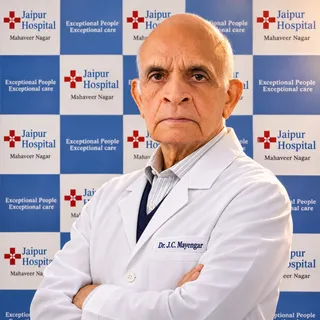
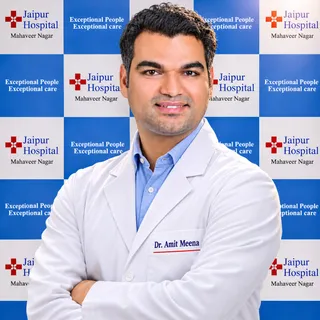
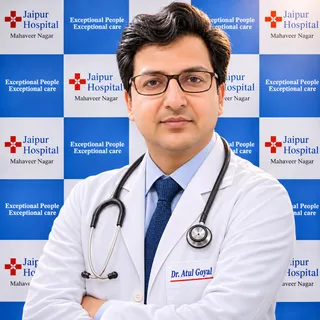
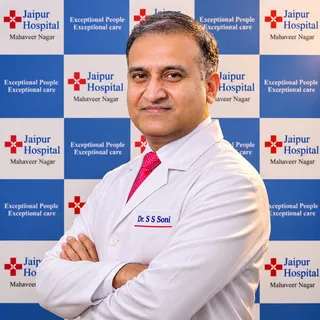
Frequently asked questions
Questions patients ask about osteomyelitis treatment
What is osteomyelitis treatment?
In short
Osteomyelitis treatment at Jaipur Hospital combines surgical debridement with intravenous antibiotics to clear bone infection. The operation takes one to three hours under spinal or general anaesthesia. A typical hospital stay is five to ten nights. Full healing with antibiotics usually takes six to twelve weeks.
In detail
The procedure removes infected and dead bone and soft tissue, a step called debridement. Bone and tissue samples are sent for culture so antibiotics can target the specific bacteria. The wound is thoroughly irrigated.
Local antibiotic carriers such as cement beads may be placed in the bone. If the bone is unstable or at risk of fracture, an external fixator is applied for stability. Broad-spectrum antibiotics are started during surgery and continued intravenously for 24 to 48 hours.
Once culture results are available, treatment switches to targeted oral or intravenous antibiotics for four to six weeks or longer, guided by the microbiology team.
A common belief
Some people think antibiotics alone can clear a deep bone infection.
What actually happens
In chronic cases, dead bone blocks the medicine from reaching the bacteria, so surgical cleaning is usually needed first.
Your next step at Jaipur Hospital
You will meet an orthopaedic surgeon who will examine the limb, review any imaging, and plan the surgery. Pre-operative blood tests and a fitness check are done before admission. After discharge, you will need regular dressing changes and follow-up visits. The full antibiotic course must be completed even if you feel better.
Which specialist should I see for osteomyelitis?
In short
You should see an orthopaedic surgeon for osteomyelitis. At Jaipur Hospital, the orthopaedic team manages bone infections with surgical debridement, antibiotic therapy, and reconstruction when needed. If the infection involves the jaw, an oral and maxillofacial surgeon may be involved. Complex wounds may need a plastic surgeon for flap coverage.
In detail
Bone infection treatment is usually surgical and aims to fully remove all infection. This requires meticulous debridement, bone stabilisation if needed, and good soft tissue cover.
The orthopaedic surgeon leads the multidisciplinary team, which includes microbiologists for antibiotic selection, anaesthetists, and sometimes plastic surgeons for flap reconstruction. If the infection is related to a fracture or implant, the same team handles hardware removal or exchange.
For spinal osteomyelitis with neural compression, a neurosurgeon may operate. The orthopaedic OPD at Jaipur Hospital is the first point of contact.
A common belief
Some patients first see a general physician or a dermatologist for a wound that will not heal.
What actually happens
But bone infection needs surgical removal of dead bone, which only an orthopaedic surgeon does. Delaying the right referral lets the infection spread deeper.
Your next step at Jaipur Hospital
Visit the orthopaedic OPD at Jaipur Hospital for an initial assessment. Bring any previous X-rays, MRI or CT reports, and a list of antibiotics you have taken.
The surgeon will examine the limb, order fresh imaging if needed (MRI or CT at an outside centre), and plan surgery with the microbiology team. If a flap is likely, a plastic surgeon will be consulted early. To start, book a consultation at Jaipur Hospital.
What treatment options are available for my osteomyelitis?
In short
Treatment options at Jaipur Hospital include surgical debridement to remove infected and dead bone and tissue, followed by culture-specific intravenous antibiotics for four to six weeks or longer. Local antibiotic carriers such as antibiotic-impregnated cement beads may be placed during surgery. If bone is unstable, an external fixator is applied. Bone grafting to fill defects is done after infection control. Flap coverage by a plastic surgeon may be needed for large soft tissue defects. In selected cases where surgery is not possible, long-term suppressive oral antibiotics may be considered.
In detail
The standard approach is radical debridement with meticulous sampling for microbiology, thorough irrigation, local antibiotic delivery, and systemic antibiotics. Broad-spectrum IV antibiotics start in theatre and continue for 24 to 48 hours until culture results guide targeted therapy.
Most patients then switch to a six-week oral course; if no suitable oral antibiotic exists, prolonged IV therapy can be given as an outpatient. For chronic infection with biofilm on implants, hardware removal is usually required.
The Ilizarov technique or bone transport can reconstruct large bone gaps. Multiple debridements are sometimes needed. Vacuum-assisted closure dressings help manage wound drainage and prepare for closure. Hyperbaric oxygen is an adjunct used in some centres but is not available at Jaipur Hospital.
A common belief
Some people hope a long course of antibiotics alone will work.
What actually happens
But without removing dead bone, antibiotics cannot penetrate the necrotic tissue, and the infection almost always returns. Also, platelet-rich plasma or similar injections are not used here because they are unproven for bone infection. The evidence supports surgery plus antibiotics.
Your next step at Jaipur Hospital
The orthopaedic team will discuss which combination fits your infection type, bone loss, soft tissue condition, and overall health. You will stay in hospital for five to ten nights after surgery. Antibiotics continue at home or as an outpatient for weeks to months.
Regular follow-up monitors wound healing, blood markers, and bone union. If a flap or complex reconstruction is planned, the plastic surgeon will see you before surgery. To review your options, book a consultation at Jaipur Hospital.
What can I safely do at home to manage osteomyelitis symptoms?
In short
Home care supports medical treatment but does not replace surgery and antibiotics. Jaipur Hospital advises keeping the wound clean and dry, taking all prescribed antibiotics on time, eating a balanced diet with enough protein and vitamin D, and moving gently as allowed by your surgeon.
In detail
You should keep the dressing intact and dry for at least two weeks unless the team tells you otherwise. Take the full course of intravenous and oral antibiotics exactly as prescribed; stopping early lets surviving bacteria multiply and develop resistance.
Drink plenty of water and eat fibre-rich foods such as wholemeal bread, fruit, and vegetables to prevent constipation from pain medication. Include a source of protein in each meal to help bone and wound healing.
Your vitamin D level will be checked and supplemented if low. Do the physiotherapy exercises given to you to prevent joint stiffness and muscle loss. Raise the limb on a pillow when resting to reduce swelling. Avoid smoking and vaping because nicotine delays bone healing.
A common belief
Some people stop antibiotics once the pain eases, but that lets the infection come back stronger.
What actually happens
Smoking or vaping slows bone healing. Skipping physio leads to stiff joints that are harder to recover later.
Your next step at Jaipur Hospital
Follow the discharge instructions for wound care, medication times, and activity limits. Attend your first outpatient appointment for wound review and dressing advice. Contact the hospital if you develop fever, increasing pain, redness, numbness, or a change in wound discharge.
How does the term "bone infection" relate to osteomyelitis treatment?
In short
Bone infection is the plain-language name for osteomyelitis, and the treatment at Jaipur Hospital targets the same condition. Whether the doctor calls it bone infection or osteomyelitis, the approach is surgical debridement to remove dead and infected tissue followed by culture-specific intravenous antibiotics for four to six weeks, sometimes longer for chronic cases.
In detail
Osteomyelitis means bacteria or fungi have reached the bone marrow, often spreading from a nearby wound, surgery site, or through the bloodstream. The infection creates areas of dead bone called sequestra that antibiotics alone cannot penetrate.
That is why surgery to open the bone, take samples for culture, and remove all infected material is the first step. After debridement, intravenous antibiotics are started immediately and adjusted once culture results identify the exact organism.
In chronic or implant-related infections, treatment may also involve an external fixator for stability, antibiotic-impregnated cement beads for local delivery, or a flap to cover soft tissue defects. The same principles apply whatever term is used.
A common belief
Some patients think a "bone infection" might be milder and need only tablets.
What actually happens
In fact, once bacteria are inside the bone, dead tissue blocks antibiotics, so surgery plus weeks of IV antibiotics is standard, not optional.
Your next step at Jaipur Hospital
If you have been told you have a bone infection, ask your surgeon whether debridement and a prolonged antibiotic course are planned. The team will explain the expected hospital stay of five to ten nights and the total recovery period of six to twelve weeks. To get a clear plan for your case, book a consultation at Jaipur Hospital.
Will a sample be needed before selecting antibiotics for osteomyelitis treatment?
In short
Yes, bone and soft tissue samples are taken during surgery at Jaipur Hospital and sent for microbiology and histology analysis before targeted antibiotics are chosen. The surgeon collects at least three bone samples to increase the chance of identifying the bacteria. Broad-spectrum antibiotics are started in theatre, then switched to culture-specific drugs once results are available.
In detail
Bone biopsy provides the most definitive diagnosis and identifies the exact organism with susceptibility testing. In acute osteomyelitis, polymorphonuclear leukocytes predominate; in chronic forms, lymphocytes, osteoblasts and osteoclasts are seen. Sonication of any removed implants significantly increases pathogen detection.
Patients should stop antibiotics two weeks before sampling if possible. Empirical therapy covers likely organisms until culture results guide definitive treatment.
A common belief
Starting antibiotics without a culture is guesswork.
What actually happens
Broad-spectrum drugs are used only for the first 24 to 48 hours. Once the lab identifies the bacteria and its sensitivities, the treatment is narrowed to the most effective targeted antibiotic.
Your next step at Jaipur Hospital
The operation includes meticulous sampling, debridement, irrigation, and local antibiotic delivery if needed. You will receive intravenous antibiotics for 24 to 48 hours after surgery, then the regimen is adjusted based on the lab report. Most patients continue oral antibiotics for 6 weeks.
How will osteomyelitis treatment affect my walking, movement, or independence?
In short
After surgery at Jaipur Hospital, your walking and movement will depend on which bone was operated on, whether an external fixator was applied, and how much bone was removed. You may need crutches or a walker for several weeks. The team encourages early, safe mobilisation to prevent muscle loss and promote bone healing.
In detail
Evidence shows that bone requires weight bearing to heal, so if you are cleared to put weight on the limb, it is important to do so as advised.
If there is a risk of fracture or instability, an external fixator may be applied and you will use walking aids until the bone unites. Joint stiffness and soft tissue tightness can occur and may affect mobility; physiotherapy helps maintain joint range.
Reduced mobility can limit social activity and increase dependence on others for daily needs during recovery. Pain is managed with prescribed analgesia. Most patients return to light activity within weeks, but full independence depends on the extent of surgery and your home environment.
A common belief
Staying completely still causes muscle wasting and stiff joints.
What actually happens
The team will get you moving safely as soon as possible, even if it is just partial weight bearing with a frame.
Your next step at Jaipur Hospital
The physiotherapy team will give you specific exercises and weight-bearing instructions before discharge. A fit note can be provided for work adjustments. Discuss your home setup and job demands at your consultation so the team can plan realistic mobility goals.
Which symptoms or changes should prompt me to seek medical advice for osteomyelitis?
In short
You should seek medical advice at Jaipur Hospital if you notice increasing pain, warmth, redness, or swelling over a bone, especially near a previous wound, surgery site, or fracture. An open wound or sinus that drains pus, fever, chills, or night sweats are also warning signs. These symptoms suggest the infection may have reached the bone.
In detail
Osteomyelitis symptoms arise when bacteria or fungi infect the bone marrow. Acute infection typically causes local signs such as pain, heat, swelling, and redness, along with systemic signs like fever and malaise within two weeks.
Chronic infection may show intermittent local symptoms such as redness, swelling, and fistulas, often without fever. A sinus tract draining discharge that looks like toothpaste can indicate chronic osteomyelitis.
People with diabetes, on steroids, or with weakened immunity are at higher risk and should act quickly on any new bone pain or wound changes.
A common belief
Some people wait because the pain is mild or comes and goes.
What actually happens
But chronic bone infection can smoulder for years with only occasional flare-ups. Ignoring a draining sinus or recurring swelling lets the infection destroy more bone and makes later surgery more extensive.
Your next step at Jaipur Hospital
If you have any of these signs, visit the emergency department or orthopaedic OPD at Jaipur Hospital without delay. The doctor will examine the area, ask about recent injuries or surgeries, and order blood tests and X-rays.
MRI or CT may be needed for deeper assessment; these are done at an outside imaging centre. Early diagnosis allows prompt surgery and antibiotics, which improves the chance of clearing the infection.
What will the doctor ask and check at the first visit for osteomyelitis?
In short
At the first visit to Jaipur Hospital, the orthopaedic surgeon will ask about your symptoms, when they started, any recent injury, surgery, dental infection, or urinary infection, and what antibiotics you have already taken. They will examine the limb for pain, warmth, redness, swelling, open wounds, or sinus tracts, and check your temperature and general condition.
In detail
The doctor needs a full picture to plan treatment. They will ask if you have diabetes, take steroids or chemotherapy, or smoke or vape, as these affect healing and infection risk. They will review any previous X-rays, MRI or CT scans, and blood reports.
If you are on antibiotics, they may ask you to stop them two weeks before a planned bone biopsy to improve culture yield. The surgeon will also assess bone stability and whether you might need an external fixator or flap coverage. The multidisciplinary team, including microbiologists, will be involved early to guide antibiotic choice.
A common belief
Patients often forget to mention a dental abscess or a course of antibiotics taken weeks ago.
What actually happens
Both matter: a tooth infection can seed bone, and recent antibiotics can hide bacteria in cultures. The surgeon needs the full timeline to order the right tests and plan surgery.
Your next step at Jaipur Hospital
Bring all old records, imaging CDs, and a list of current medicines. The surgeon may order fresh X-rays at the hospital and MRI or CT at an outside imaging centre. Blood tests including inflammatory markers will be done in-house.
Based on findings, the team will discuss whether surgery is needed now or after further tests. You will receive a clear plan for the next steps.
Can osteomyelitis improve without a procedure or operation?
In short
Osteomyelitis is a serious bone infection that usually needs surgical debridement and intravenous antibiotics to be controlled. At Jaipur Hospital our surgical team assesses each case to decide if non‑operative care is possible. Some patients with early or limited infection may be managed with antibiotics alone, but most chronic cases require an operation to remove dead bone.
In detail
Evidence shows that acute osteomyelitis treated within three to five days often clears completely with antibiotics alone, but chronic infection with dead bone (sequestrum) or a sinus tract rarely resolves without surgery. Antibiotics cannot penetrate necrotic bone well, and biofilm on implants protects bacteria.
In studies, suppressive antibiotic therapy without surgery controls symptoms in some patients but recurrence is common, especially when risk factors such as poor circulation or diabetes persist. The multidisciplinary team reviews imaging, culture results and your overall health before recommending a non‑operative plan.
A common belief
Many people hope a long course of tablets will heal the problem, but antibiotics do not reach dead bone well and bacteria in biofilm survive.
What actually happens
Without debridement the infection often comes back.
Your next step at Jaipur Hospital
If you have fever, increasing pain, swelling or a draining wound, seek review promptly. The surgeon will order blood tests, X‑ray and usually an MRI at an outside imaging centre to see the extent of infection. A bone biopsy for culture guides antibiotic choice.
FAQ library
Questions and answers about osteomyelitis treatment
When you contact us
Get a clear plan and cost estimate
Contact Jaipur Hospital for an OPD consultation with an orthopaedic surgeon who will review your scans, explain your options and give a cost estimate before you decide.
- A consultation with an orthopaedic surgeon in the OPD
- Your scans and reports reviewed, with tests done in-house if you need them (laboratory, X-ray and imaging)
- Your options explained in plain words, including whether you need surgery at all
- A cost estimate before you decide
- Help with cashless treatment under MAA Yojana, various government health care schemes and empanelled insurers and TPAs
- Follow-up visits after your treatment
Overview
Osteomyelitis Treatment: what to know
What osteomyelitis is and how it happens
- Bone marrow infection
- Bacteria or fungi reach the bone through blood or nearby tissue
- Tibia vulnerability
- Front shin bone lies just under the skin and is easily injured
- Chronic infection
- Can persist for a long time and may return after treatment
Osteomyelitis is a serious infection that reaches the bone marrow. It happens when bacteria or fungi spread from another part of the body through the bloodstream, or when an infection on the skin at a wound or surgery site travels deeper into the bone. The infection can also spread from nearby tissue or start after an injury or fracture. In some cases the exact cause is not known.
The tibia is especially vulnerable because it lies just under the skin on the front and inner side of the leg, making it easy to injure. Infections that begin in the bone marrow cause painful swelling. If the infection is in the spine it usually causes low back pain.
Chronic osteomyelitis can persist for a long time and may return after initial treatment. Some people with chronic infection have no symptoms at all.
Symptoms and warning signs that need urgent care the same day
- Deep cut or puncture wound Any deep wound needs urgent review
- Infection around surgery site Warmth, pus or discharge after recent surgery
- Fever with bone symptoms New fever may mean spreading infection
- Acute compartment syndrome Severe pain, tingling, pale cold tense skin, reduced movement
Common symptoms include:
- Increased pain
- Warmth
- Redness
- Swelling over the affected bone
An open wound called a sinus may develop and drain fluid. You may also have fever, chills or night sweats. In acute infection these signs can appear within two weeks of the start of the infection.
In chronic infection the systemic symptoms are often absent and local signs such as redness, heat, swelling and a draining sinus may come and go, sometimes years after the infection began.
Go to the emergency department the same day if you have a deep cut or puncture wound, or if you notice signs of infection around a recent surgery site such as warmth, pus or discharge, or if you develop a fever.
Acute compartment syndrome is a medical emergency: severe constant pain that worsens when the muscles are stretched, tingling or burning, pale cold tense skin, and reduced strength or movement mean you must attend the nearest accident and emergency department immediately.
Causes and who is at higher risk
- Bloodstream spread
- Bacteria travel through blood from another infection
- Biofilm on implants
- Some bacteria form a protective layer on metal hardware
- Higher risk conditions
- Diabetes, steroids, chemotherapy weaken the immune system
- Smoking and vaping
- Nicotine delays bone healing and raises complication risk
Infections reach the bone through the bloodstream or by spreading from nearby tissue. They can arise after a previous injury or fracture, or from an infection elsewhere in the body such as a tooth infection or urinary tract infection. Hospital-acquired infections are often caused by methicillin-resistant staphylococci. Infections caught outside hospital are frequently polymicrobial with gram-negative bacteria.
Some bacteria such as Staphylococcus epidermidis form a biofilm on implants that protects them from the immune system and antibiotics.
Anyone can develop osteomyelitis but the risk is higher for people with health conditions or treatments that weaken the immune system, including those taking steroid treatment, chemotherapy or people with diabetes. Nicotine delays bone healing and increases the risk of complications, so you should avoid smoking and vaping. If you have any known allergies, especially to antibiotics, tell the team so an alternative can be chosen.
How osteomyelitis is diagnosed: examination and tests
- X-ray
- Changes appear after about two weeks in acute infection
- MRI
- Detects infection as early as three to five days
- CT scan
- Shows dead bone and helps plan surgery
- Bone biopsy
- At least three samples taken for culture and pathology
A doctor will ask about your symptoms, when they started, and whether you have had recent surgery, an injury or new treatments for other conditions. The physical examination looks for pain, warmth, redness, swelling and any draining sinus.
Blood tests and imaging are used to confirm the diagnosis and plan treatment. Plain X-ray changes appear only after about two weeks in acute infection. MRI can detect osteomyelitis as early as three to five days and is considered the main imaging test for bone infection.
CT is of little use for acute infection but is important for seeing dead bone (sequestra) and planning surgery. Bone scintigraphy and PET-CT are other imaging options that may be used.
A bone biopsy gives the most definitive diagnosis by providing infected bone tissue for culture and pathology. At least three bone samples are usually taken to increase the chance of identifying the organism. Culture results show the specific bacteria and which antibiotics will works well, a process called susceptibility testing.
If possible, antibiotics should be stopped two weeks before collecting culture samples. Sonication of removed implants can significantly increase the identification of pathogens when hardware is present.
Treatment options without surgery, and when surgery is advised
Antibiotics are the main non-surgical treatment. They are chosen based on the organism found in cultures and usually given intravenously at first, then switched to oral tablets once results are known. A typical course lasts four to six weeks, but it may be longer for severe or chronic infection.
It is essential to finish the full course even if you feel better, because stopping early allows surviving bacteria to multiply and develop resistance. If no suitable oral antibiotic exists, intravenous treatment may continue on an outpatient basis or at home.
Surgery is usually needed when there is a build-up of pus that must be drained, when the infection presses on important structures such as the spinal cord, or when dead or damaged bone must be removed. Debridement removes all dead and infected bone, contaminated tissue and any colonised hardware. The area is then thoroughly irrigated.
Local antibiotic carriers such as antibiotic-impregnated cement or beads may be placed in the defect. If the bone is unstable or at risk of fracture, an external fixator may be applied. Soft tissue cover may need a flap or skin graft, planned with plastic surgeons. More than one operation is sometimes required.
Vacuum-assisted closure dressings can help manage drainage and prepare the wound for closure. Bone grafting or advanced reconstruction techniques may fill defects after the infection is controlled. In severe chronic cases with extensive bone destruction or repeated recurrence despite aggressive treatment, reconstruction or amputation may become necessary.
Preparing for osteomyelitis surgery
Before the operation your surgeon will review your blood tests, kidney and liver function, and any imaging you already have such as X-rays or an MRI done at an imaging centre. The team will ask about every medicine you take, especially blood thinners, steroids, or drugs that affect your immune system.
If you are on antibiotics, the doctor may ask you to stop them for about two weeks before surgery so that bone cultures taken during the operation are more reliable. You will be told when to stop eating and drinking, usually from midnight the night before the procedure.
Bring your regular medicines, a list of allergies, any recent test reports, and comfortable clothes for discharge. An attendant should plan to stay with you during the hospital stay of five to ten nights.
How osteomyelitis surgery is done
- Debridement and sampling Infected and dead bone removed; samples sent for culture
- Local antibiotic delivery Cement beads or carriers placed in bone defect
The operation takes one to three hours under spinal or general anaesthesia. Your surgeon will discuss which of the following techniques suits your case:
- Surgical debridement: the surgeon opens the area, removes all infected and dead bone and soft tissue, and sends samples to the laboratory for culture and histology.
- Local antibiotic delivery: antibiotic-impregnated cement beads or other carriers such as Stimulan, Osteoset or Cerament may be placed in the bone defect to give high local drug levels.
- Bone grafting: once the infection is controlled, the defect can be filled with your own bone or processed donor bone.
- External fixator: if the bone is unstable or there is a risk of fracture, an external frame is applied to hold the limb while it heals.
On the day of surgery the affected limb is cleaned, an incision is made, and the steps above are carried out. The wound is thoroughly irrigated with saline. If the soft tissue can be closed directly, dissolvable stitches are used; if a flap or skin graft is needed, the plastic surgery team will plan the closure.
Broad-spectrum IV antibiotics are started in the operating theatre and continued for 24 to 48 hours after surgery until culture results allow targeted therapy.
Risks and possible complications of osteomyelitis surgery
- Wound discharge
- Local antibiotics may cause toothpaste-like discharge that dries up
- Joint stiffness
- Soft tissue tightness can affect movement
- Infection recurrence
- More likely with long-standing infection or ongoing risk factors
- Bone healing problems
- Smoking, low vitamin D or weak fixation can delay bone formation
Common milder side effects include nausea and reflux. Some local antibiotics can create a wound discharge that looks like toothpaste; this is not a cause for concern and usually dries up without intervention. Dressings may need to be changed more often if there is wound ooze. Joint stiffness and soft tissue tightness can affect your ability to move. Rarely, nerves and blood vessels can be damaged during surgery or later during bone healing.
Tell the nursing or medical staff at once if you have:
- Pain
- Numbness
- Pins and needles
Acute compartment syndrome is a medical emergency. Its signs are severe constant pain that worsens on movement, tingling or burning, pale cold tense skin, and reduced strength. If you notice any of these, inform the team or go to the nearest emergency department immediately.
There is a risk of deep vein thrombosis (a blood clot). Your risk factors will be assessed and you may be placed on blood-thinning medication. Pressure ulcers can form where bone presses on the skin; keep your limb elevated and ensure dressing clips are not tight.
Even with thorough surgery and antibiotics, the infection can recur. Recurrence is more likely when the infection was present for a long time before treatment or when there are ongoing risk factors such as poor circulation or chronic wounds. In severe uncontrolled cases with damage to arteries, nerves or blood supply to muscles, amputation of the limb may become necessary.
Bone may fail to form or take a long time to mature, especially if you smoke or vape, have low vitamin D, or the fixation is not strong enough. If a fracture occurs after surgery, further surgery may be needed.
Recovery and aftercare after osteomyelitis surgery
- Hospital stay Five to ten nights
- IV antibiotics 24 to 48 hours after surgery
- Oral antibiotic course Most patients take six weeks
- Full healing Typically six to twelve weeks with antibiotics
You will stay in hospital for five to ten nights. Pain relief is given on the ward and you will receive advice on painkillers for home, including NSAIDs such as diclofenac, ibuprofen or naproxen. The wound is dressed in theatre and usually checked on day two before discharge.
If you have a flap, the plastics team follows a specific dressing protocol. Keep the dressing clean and dry; we usually advise covering the wound for at least the first two weeks. The team will tell you at your first outpatient visit when the dressing is no longer needed. Contact the hospital if you have any concerns about the wound after discharge.
IV antibiotics continue for 24 to 48 hours after surgery, then may be switched to oral antibiotics once culture results are known. Most patients take a six-week course of oral antibiotics; if no suitable oral option exists, IV antibiotics may continue on an outpatient or home basis. Finish the full course even if you feel better.
Eat a balanced diet with protein, fibre, fruit and vegetables to help bone and wound healing and to relieve constipation. Your vitamin D level will be checked and supplemented if needed. Stay as active as possible; bone needs weight-bearing to heal. Do the physiotherapy exercises and wear any splints as instructed. Sleep with a pillow between your legs or arm and trunk for comfort.
Return to work depends on your job, travel, whether you have an external fixator, and whether you are on oral or IV antibiotics. Discuss arrangements with your employer and ask your surgeon for a fit note if you need special requirements such as limb elevation or regular physiotherapy. Full healing typically takes six to twelve weeks with antibiotics.
If you notice increased pain, warmth, redness, swelling, fever, chills, night sweats, or a new wound discharge, call the hospital straight away.
Results of osteomyelitis treatment
In studies, most people with osteomyelitis recover without long-term complications when the infection is diagnosed and treated early. If treatment starts within three to five days of symptom onset, the infection often clears completely. Success depends on extensive surgical debridement and adequate antibiotic therapy guided by culture results.
In one series the mean disease-free time after abscess resolution was 29 months, ranging from 4 to 60 months. The recurrence rate for odontogenic infection was 8 percent in 200 cases. For chronic cases with implants, suppressive antibiotic regimens of six to nine months have shown no recurrence in 50 to 67 percent of patients after stopping antibiotics.
In severe chronic cases with extensive bone destruction or repeated recurrence despite aggressive treatment, reconstruction or amputation may be necessary. Osteomyelitis does not go away on its own; antibiotics or antifungals are required to kill the infection.
Cost and insurance for osteomyelitis treatment in Jaipur
The typical price range for surgical debridement and IV antibiotic treatment of osteomyelitis in India is ₹80,000 to ₹2,50,000.
The final cost depends on:
- Complexity of the surgery
- Length of hospital stay (five to ten nights)
- Type of anaesthesia
- Whether an external fixator or bone graft is needed
- Choice of antibiotics
- Any plastic surgery flap closure
Jaipur Hospital is a NABH-accredited multispeciality hospital established in February 1991. We accept MAA Yojana, various government health care schemes, and a panel of private insurers and TPAs.
The hospital has a 24×7 emergency department, ICU, in-house pharmacy, diagnostic laboratory and X-ray (CT and MRI are done at an outside imaging centre), modular operation theatres, and a canteen with dietary meals. For an estimate, contact us on 0141-2551500, 0141-2554139, or 7414 001 001, or email [email protected].
