

Physiotherapy · Jaipur Hospital
Musculoskeletal Pain Physiotherapy in Jaipur
Joint and muscle pain limiting daily life. Clear assessment and a structured plan at Jaipur Hospital.
- Serving Jaipur since 1991 (35 years)
- NABH accredited
- 24×7 emergency & ICU
- Cashless: RGHS, MAA Yojana, CGHS + 22 insurers
- Session length
- 30 to 45 minutes per session
- Anaesthesia
- Not needed
- Recovery
- Acute: 2 to 6 weeksChronic: 8 to 12+ weeks with home programme
- Price
- ₹700 to ₹2,000 per sessiontypical range in India; ask us for an estimate
Pain that stops normal life
Joint and muscle pain makes simple tasks hard
Stiffness, aching or sharp pain can make walking, lifting or sitting difficult. Rest alone often does not help and the problem can return.
-
Morning stiffness
Joints feel locked after rest, easing slowly with movement.
-
Pain with activity
Walking, climbing stairs or lifting triggers discomfort.
-
Recurring episodes
Pain settles then returns after weeks or months.
-
Sleep disturbance
Discomfort at night affects rest and next-day energy.
-
Reduced confidence
Fear of flare-ups leads to avoiding normal tasks.
For nearly all people with low back pain, it is not possible to identify a specific nociceptive cause.
Why Jaipur Hospital
You worry the pain will keep you from work, caring for family, or sleeping through the night.
Your care plan
Your first steps with us
- 1 Call or visit OPD for first appointment
- 2 Physiotherapist assesses movement, strength and pain
- 3 Start guided sessions with home exercise plan
- 4 Review progress and adjust plan until recovery
How a physiotherapy session works
Sessions last 30 to 45 minutes. Your physiotherapist uses hands-on techniques and guided exercises, then gives you a home programme to continue between visits.
-
Manual Therapy
Mobilisation, manipulation and soft tissue release to improve joint movement and reduce muscle tension.
-
Therapeutic Exercise
Strengthening, stretching and motor control retraining to restore function and prevent recurrence.
-
Electrotherapy
IFT, TENS or ultrasound used for pain modulation when appropriate.
-
Dry Needling and Taping
Trigger point release and kinesio taping for support during movement.
Why patients trust us
- 1991 Serving Jaipur for 35 years
- NABH Accredited hospital
- 1 Physiotherapy consultants
- 24×7 Emergency, ICU and ambulance
- 25 Cashless schemes and insurers
What research shows about physiotherapy outcomes
-
Most recover quickly
Most people with new low back pain recover quickly, though recurrence is common.
-
Exercise appropriate for all
Land-based and water-based exercise is an appropriate treatment for all individuals with knee osteoarthritis.
-
Strength training appropriate
Strength training is an appropriate treatment modality for all individuals with knee osteoarthritis.
If it is left untreated
If left untreated, acute pain can become persistent and disabling. Low back pain is the leading cause of disability worldwide and years lived with disability have increased over decades.
Life after a structured physiotherapy programme
Most people regain movement, return to daily tasks and feel confident managing their condition with a home routine.
-
Easier movement
Walking, bending and lifting become less effortful over weeks.
-
Better sleep
Reduced night pain allows more restful sleep for most people.
-
Return to work
Usual duties resume as strength and endurance improve.
-
Self-management
A simple home programme helps keep flare-ups short and infrequent.
Frequently asked questions
Questions patients ask about musculoskeletal pain physiotherapy
What does musculoskeletal pain physiotherapy involve?
In short
Musculoskeletal pain physiotherapy at Jaipur Hospital involves assessment and treatment of joint, muscle and soft tissue pain using manual therapy and therapeutic exercise. The programme may also include electrotherapy, dry needling or taping depending on your presentation. Each session is tailored to your symptoms and functional goals.
In detail
The therapist begins with a detailed history and physical examination to understand the nature of your pain and movement restrictions.
Treatment typically combines manual therapy such as mobilisation, manipulation and soft tissue release with a progressive exercise programme that includes strengthening, stretching and motor control retraining. Electrotherapy modalities like IFT, TENS and ultrasound may be used for pain modulation.
Dry needling and kinesio taping are available for trigger point release and support.
Evidence shows that exercise, strength training and biomechanical interventions are appropriate for all individuals with knee osteoarthritis, and that nonpharmacologic treatments such as exercise and multidisciplinary rehabilitation are recommended first line for chronic low back pain.
A common belief
Many people think physiotherapy is only massage or machines.
What actually happens
In reality, active exercise and movement retraining are the core components supported by evidence for lasting improvement.
Your next step at Jaipur Hospital
You can expect an initial assessment followed by a personalised plan. Acute conditions often improve within two to six weeks while chronic problems may need eight to twelve weeks or more with a home programme. Sessions last thirty to forty five minutes.
To start, book a consultation at Jaipur Hospital where the physiotherapy team will evaluate your needs and outline a treatment schedule.
What happens during the first session of musculoskeletal pain physiotherapy?
In short
The first session at Jaipur Hospital begins with a comprehensive assessment including history taking and physical examination. The therapist will explain the findings, discuss your goals and start treatment which may include manual therapy, initial exercises and education. You will receive a home programme to begin immediately.
In detail
A physical therapy session includes manual therapy, patient counselling and education. The therapist uses joint mobilisations, manual therapy, strength training and mobility training based on your assessment. For acute or subacute low back pain, nonpharmacologic treatments such as superficial heat, massage and acupuncture are recommended.
For chronic low back pain, exercise, multidisciplinary rehabilitation, mindfulness based stress reduction, tai chi, yoga, progressive relaxation, electromyography biofeedback, low level laser therapy and spinal manipulation are first line options. The therapist will also advise on activity modification and self management strategies.
A common belief
The first visit is not just assessment.
What actually happens
You leave with active strategies to begin managing your pain immediately, not just a list of things to avoid.
Your next step at Jaipur Hospital
The session lasts thirty to forty five minutes. You should wear loose clothing and bring any relevant medical reports. The therapist will outline the expected frequency and duration of treatment.
Acute conditions typically need two to six weeks while chronic problems may require eight to twelve weeks or more with a home programme.
How soon should I notice an improvement with musculoskeletal physiotherapy?
In short
Many people notice small changes such as less stiffness or easier movement within the first few sessions at Jaipur Hospital. For acute problems, meaningful improvement often appears in two to six weeks. Chronic conditions usually need eight to twelve weeks or more with consistent home exercise. Progress depends on the diagnosis, how long you have had the pain, and how regularly you do the prescribed programme.
In detail
Evidence shows most people with new low back pain recover quickly, though recurrence is common. Exercise is appropriate for all individuals with knee osteoarthritis, and strength training, weight management, and biomechanical interventions are also recommended.
Tissue adaptation takes time; muscles need weeks to strengthen, and nervous system changes need repeated practice. The therapist tracks objective measures like range of motion, strength tests, and functional tasks to confirm progress even when day-to-day pain varies.
A common belief
People expect instant relief, but tissues need repeated loading to adapt.
What actually happens
Pain can fluctuate day to day, so the therapist measures strength, range, and function to show real progress even when soreness varies.
Your next step at Jaipur Hospital
Sessions are 30 to 45 minutes each. You will receive a home programme to do between visits. If you see no change after three to four sessions, the therapist will reassess and adjust the plan.
How can I decide whether to seek advice about manual therapy for my pain?
In short
Consider seeking manual therapy at Jaipur Hospital if you have joint stiffness, muscle tightness, or movement restriction that limits daily activities. Evidence supports spinal manipulation, mobilisation, and soft tissue techniques for acute, subacute, and chronic low back pain. If pain has lasted more than a few weeks, or if you avoid certain movements because they hurt, an assessment can clarify whether manual therapy fits your plan.
In detail
Guidelines recommend non-pharmacologic options such as superficial heat, massage, acupuncture, and spinal manipulation for acute or subacute low back pain. For chronic low back pain, exercise, multidisciplinary rehabilitation, and spinal manipulation are initial choices.
Manual therapy helps restore joint mobility and reduce muscle guarding, making it easier to start therapeutic exercise. The physiotherapist will screen for contraindications and combine hands-on techniques with a home programme for lasting benefit.
A common belief
People often wait until pain is severe.
What actually happens
Early assessment catches movement loss before it becomes a habit, and the therapist can blend manual therapy with exercise for longer relief.
Your next step at Jaipur Hospital
An initial assessment takes 30 to 45 minutes. If appropriate, manual therapy is included in the session alongside exercise. Acute problems often improve in two to six weeks; chronic conditions may need eight to twelve weeks.
What Could Be Causing My Musculoskeletal Pain?
In short
Musculoskeletal pain often arises from strain, overuse, joint irritation, or nerve sensitivity without a single identifiable structural cause. At Jaipur Hospital, a physiotherapist conducts a detailed assessment in a 30 to 45 minute outpatient session to identify contributing factors and rule out serious pathology.
In detail
Evidence shows that for nearly all people with low back pain, a specific nociceptive cause cannot be identified. Only a small proportion have a clear pathological cause such as fracture, malignancy, or infection.
Risk factors include physically demanding work, smoking, obesity, psychological distress, and pain at multiple body sites. Central pain-modulating mechanisms and pain cognitions play important roles in persistent disabling pain. The therapist examines movement patterns, muscle strength, joint mobility, and psychosocial factors to build a clinical picture.
A common belief
Imaging rarely explains everyday back or joint pain.
What actually happens
Overuse of scans, opioids, and surgery is a recognised problem. The focus shifts to modifiable factors like strength, movement habits, stress, and sleep.
Your next step at Jaipur Hospital
If pain persists beyond a few weeks, worsens, or affects sleep and function, book an assessment. The therapist will screen for red flags, evaluate biomechanical and lifestyle contributors, and design a plan that may include manual therapy, therapeutic exercise, education, and activity pacing.
Acute episodes often improve in 2 to 6 weeks; chronic pain may need 8 to 12 weeks with a structured home programme.
How will the therapist adapt treatment to my home, work, and activity goals?
In short
The therapist tailors your programme by linking exercise selection, load progression, and pacing strategies to the specific demands of your home, work, and leisure activities. At Jaipur Hospital, this individualisation begins during the first 30 to 45 minute assessment and continues through each session.
In detail
Evidence supports a stepped approach where care is matched to patient risk profile and functional goals. The therapist analyses tasks you find difficult such as lifting, prolonged sitting, overhead work, or caregiving. Exercises are chosen to mirror those movement patterns and energy systems.
Education covers ergonomic adjustments, activity modification, and flare-up management. Manual therapy and modalities are used only to enable active participation. Progress is measured against your personal benchmarks, not generic standards.
A common belief
Generic exercise sheets often fail because they ignore your real-world demands.
What actually happens
A tailored programme builds capacity for the exact movements you need, with strategies to manage flare-ups at work or home.
Your next step at Jaipur Hospital
Bring a description of your typical day, work tasks, and activities you want to return to. The therapist will set short-term and long-term goals, prescribe a home programme, and review progress at each visit.
Acute conditions often improve in 2 to 6 weeks; chronic conditions may need 8 to 12 weeks with ongoing self-management. Session fees typically range from ₹700 to ₹2,000.
Who is likely to benefit from musculoskeletal pain physiotherapy?
In short
Patients of any age with joint, muscle or soft tissue pain can benefit from musculoskeletal pain physiotherapy at Jaipur Hospital. This includes acute injuries such as sprains and strains, chronic conditions like osteoarthritis and tendinopathy, and post surgical rehabilitation. The therapy is also suitable for neck pain, back pain and sports injuries.
In detail
Evidence indicates that low back pain is a leading cause of disability worldwide and affects all age groups from children to the elderly. People with physically demanding jobs, smokers, those with obesity or multiple comorbidities are at higher risk of persistent pain.
Exercise, strength training, weight management and biomechanical interventions are appropriate for all individuals with knee osteoarthritis. Orthopaedic physical therapy treats injuries to muscles, tendons, ligaments, bones and fascia. Geriatric physical therapy helps older adults with arthritis, osteoporosis, balance issues and after joint replacement. Neurological physical therapy can assist with conditions such as stroke, Parkinson's disease and spinal cord injury.
A common belief
It is not only for athletes or the elderly.
What actually happens
Evidence shows that exercise and strength training help all individuals with knee osteoarthritis, and that low back pain affects every age group.
Your next step at Jaipur Hospital
If you have persistent pain, restricted movement or are recovering from injury or surgery, an assessment will determine if this therapy is right for you. The physiotherapist will design a programme based on your diagnosis, fitness level and goals.
How long does a musculoskeletal pain physiotherapy session last?
In short
A musculoskeletal pain physiotherapy session at Jaipur Hospital typically lasts 30 to 45 minutes. The exact duration depends on the complexity of your condition and the treatments included in that visit.
In detail
Within this time, the therapist completes a focused reassessment, delivers manual therapy such as mobilisation or soft tissue release, applies electrotherapy modalities like IFT, TENS or ultrasound if indicated, and progresses your therapeutic exercise programme.
You will also receive guidance on home exercises and activity modification. The session length allows enough time for hands-on treatment, exercise instruction and education without rushing. Evidence supports that adequate session time is needed to address both physical and psychosocial factors influencing pain.
A common belief
Some clinics offer very short slots that only allow a quick modality or a few exercises.
What actually happens
A proper session needs enough time for manual therapy, exercise coaching and education — all of which improve outcomes.
Your next step at Jaipur Hospital
Most patients attend one to three sessions per week initially, reducing frequency as they improve. Acute conditions often resolve in two to six weeks; chronic problems may need eight to twelve weeks or more with consistent home practice. The typical price range is ₹700 to ₹2,000 per session.
How will progress be measured during musculoskeletal physiotherapy?
In short
Your physiotherapist at Jaipur Hospital tracks progress using objective measures such as joint range of motion, muscle strength testing, functional movement tests, and validated questionnaires for pain and disability. These are recorded at the first visit and repeated at regular intervals, usually every two to three weeks, to guide treatment decisions.
In detail
Evidence supports exercise, strength training, and biomechanical interventions for knee osteoarthritis, and multidisciplinary rehabilitation for chronic low back pain. Measuring outcomes ensures the programme matches the evidence.
Range of motion shows joint mobility, strength tests show muscle capacity, and functional tasks like sit-to-stand or walking speed reflect daily ability. Questionnaires capture how pain affects life. Together they tell whether the load needs to increase, decrease, or change direction.
A common belief
Relying only on how you feel that day can miss real gains.
What actually happens
Objective numbers show if tissues are adapting even when pain fluctuates, so the programme stays on track.
Your next step at Jaipur Hospital
Each session lasts 30 to 45 minutes. You will also receive a home programme. The therapist reviews the numbers with you so you see the trend. If goals are not met, the plan is adjusted.
How can I decide whether to seek advice about dry needling?
In short
Dry needling targets trigger points in muscles to reduce pain and improve movement. At Jaipur Hospital, a physiotherapist assesses your condition to decide if this technique suits you. It is one option among several manual therapy methods offered during outpatient sessions.
In detail
Dry needling uses thin needles inserted into tight muscle bands to release tension and modulate pain signals. Evidence shows it can help with myofascial pain when combined with exercise. The therapist checks for contraindications such as needle phobia, infection risk, or bleeding disorders.
It is typically used alongside strengthening and stretching rather than as a standalone treatment. Your physiotherapist will explain the sensation, expected response, and any soreness that may follow a session.
A common belief
It is not for everyone.
What actually happens
People with needle fear, skin infections, or bleeding issues may need other options. Needling alone rarely fixes the problem; it works well combined with exercise and posture correction.
Your next step at Jaipur Hospital
Book an assessment at Jaipur Hospital to discuss whether dry needling fits your plan. The first visit lasts 30 to 45 minutes and includes history, examination, and goal setting. Sessions cost ₹700 to ₹2,000 each.
Acute issues often improve in 2 to 6 weeks; chronic conditions may need 8 to 12 weeks with a home programme.
FAQ library
Questions and answers about musculoskeletal pain physiotherapy
When you contact us
Start your assessment this week
Contact Jaipur Hospital to book a physiotherapy assessment in the OPD and get a clear plan with a cost estimate.
- A consultation with a physiotherapist in the OPD
- Your scans and reports reviewed, with tests done in-house if you need them (laboratory, X-ray and imaging)
- Your options explained in plain words, including whether you need surgery at all
- A cost estimate before you decide
- Help with cashless treatment under RGHS, MAA Yojana, CGHS and empanelled insurers and TPAs
- Follow-up visits after your treatment
Overview
Musculoskeletal Pain Physiotherapy: what to know
What musculoskeletal pain is and how it happens
- 3.8% Knee osteoarthritis
- 0.85% Hip osteoarthritis
- 54% Low back pain disability increase
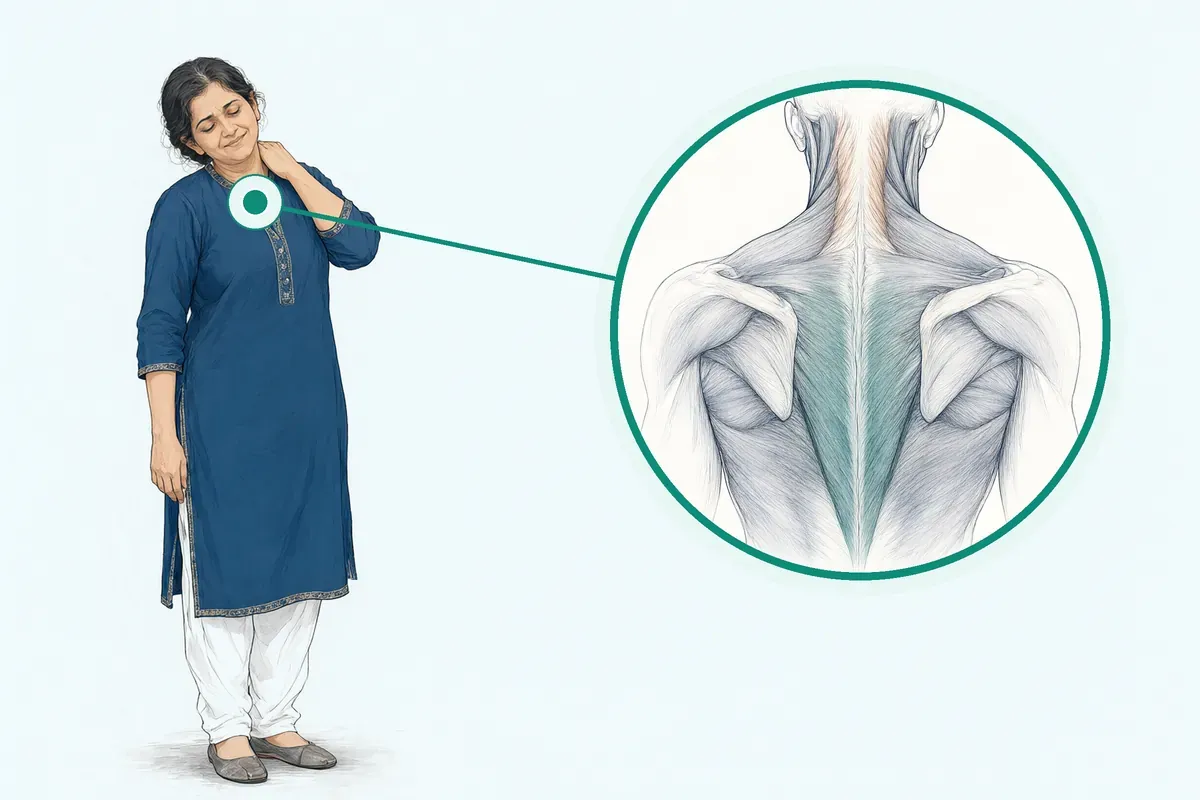
Musculoskeletal pain is pain that comes from the joints, muscles, tendons, ligaments, or other soft tissues. It can affect the back, neck, shoulders, knees, hips, or any other part of the body that moves. Low back pain is a very common symptom that occurs in all age groups and in every country.
In nearly all people with low back pain, it is not possible to identify a specific structural cause such as a fracture, infection, or tumour. Instead, the pain often relates to how the nervous system processes signals and how a person thinks about and responds to pain.
For knee and hip osteoarthritis, the global age-standardised prevalence of knee osteoarthritis is about 3.8% and hip osteoarthritis about 0.85%. Prevalence is higher in females than in males. Years lived with disability from low back pain increased by 54% between 1990 and 2015, mainly due to population growth and ageing. Low back pain is now the leading cause of disability worldwide.
Symptoms and warning signs that need urgent care the same day
- Loss of bladder or bowel control
- Numbness in saddle area
- Sudden severe leg or foot weakness
- Fever with back pain
- Cancer history with new back pain
Common symptoms include:
- Aching
- Stiffness
- Sharp pain with certain movements
- Swelling around a joint
- Reduced range of motion
- Muscle weakness
Pain may be felt in one spot or spread to a wider area. For low back pain, the definition used in studies covers pain from the lower margin of the twelfth ribs to the lower gluteal folds, with or without pain referred into one or both lower limbs, lasting at least one day.
Warning signs that need urgent medical attention the same day include loss of bladder or bowel control, numbness in the saddle area (inner thighs and buttocks), sudden severe weakness in a leg or foot, fever with back pain, a history of cancer with new back pain, or trauma such as a fall or road accident. If you notice any of these, go to the emergency department at Jaipur Hospital or the nearest hospital immediately.
Causes and who is at higher risk
- Physically demanding jobs
- Increases risk of low back pain
- Age
- Strong factor for osteoarthritis; prevalence rises with age
- Female sex
- Higher prevalence of low back pain and osteoarthritis
Musculoskeletal pain can start after an injury, overuse, or without any clear trigger.
Risk factors for low back pain include:
- Physically demanding jobs
- Physical and mental comorbidities
- Smoking
- Obesity
Disabling low back pain is over-represented among people with low socioeconomic status. High initial pain intensity, psychological distress, and pain at multiple body sites increase the risk of persistent disabling low back pain. For osteoarthritis, age is a strong factor; prevalence and burden increase with age. Women have higher prevalence than men.
The highest prevalence of low back pain is among females aged 40 to 80 years. A patient of any age can benefit from physical therapy to manage ongoing pain and reduce the chance of new injuries.
How musculoskeletal pain is diagnosed: examination and tests
Diagnosis begins with a detailed history and physical examination. Your physiotherapist will ask about the location, type, and behaviour of your pain, what makes it better or worse, and how it affects your daily activities. They will check your posture, movement, strength, flexibility, and nerve function. Special tests may be used to identify which structures are involved.
Imaging such as X-ray or MRI is not needed for most people with low back pain; overuse of imaging remains a widespread problem. Guidelines recommend imaging only when red flags suggest fracture, infection, malignancy, or nerve compression that may need surgery. For knee osteoarthritis, clinical assessment is usually sufficient.
Blood tests may be ordered if an inflammatory or systemic condition is suspected. At Jaipur Hospital, the physiotherapy team works closely with orthopaedics, neurosurgery, and general medicine so that any further tests or specialist opinions can be arranged quickly.
Treatment options without surgery and when surgery is advised
Do
- Exercise and strength training
- Weight management
- Manual therapy and mobilisation
- Mindfulness and relaxation
Avoid
- Avoid relying only on opioids
Non-surgical treatment is the first line for most musculoskeletal pain. For acute or subacute low back pain, guidelines recommend non-pharmacologic options such as superficial heat, massage, acupuncture, or spinal manipulation. If medication is desired, non-steroidal anti-inflammatory drugs or skeletal muscle relaxants are suggested.
For chronic low back pain, initial non-pharmacologic treatment should include:
- Exercise
- Multidisciplinary rehabilitation
- Mindfulness-based stress reduction
- Tai chi
- Yoga
- Progressive relaxation
- Electromyography biofeedback
- Low-level laser therapy
If non-pharmacologic therapy is inadequate, NSAIDs are first-line pharmacologic therapy, with tramadol or duloxetine as second-line options. Opioids are considered only when other treatments have failed and after a discussion of risks and benefits.
For knee osteoarthritis, appropriate treatments for all individuals include:
- Land-based or water-based exercise
- Strength training
- Weight management
- Biomechanical interventions
- Intra-articular corticosteroids
- Self-management with education
Several studies have linked core-strengthening exercise programmes to improvements in lower back pain. Having a strong core is linked to reduced lower back pain because the core stabilises the spine. Stretching and strengthening exercises can go a long way in recovery from neck and back pain. A physical therapy session includes manual therapy, patient counselling, and education.
Orthopaedic physical therapy treats injuries to muscles, tendons, ligaments, bones, and fascia, and is appropriate for fractures, sprains, tendinitis, bursitis, chronic illnesses, and recovery after orthopaedic surgery. Techniques available include joint mobilisations, manual therapy, strength training, and mobility training.
Surgery is advised only when there is a clear structural problem such as a fracture, severe nerve compression with progressive weakness, instability, or when non-surgical care has been tried adequately without sufficient improvement. The decision is made by your surgeon after reviewing your imaging, examination, and response to conservative treatment.
Preparing for musculoskeletal pain physiotherapy
Do
- Recent X-ray, MRI, or blood reports
- Loose, comfortable clothing
- Water bottle and small towel
You do not need any special tests before your first physiotherapy session. The physiotherapist will ask about your pain, how it started, and what makes it better or worse. They will also ask about any past injuries, surgeries, or medical conditions you have. Bring any recent X-ray, MRI, or blood reports if you have them.
Wear loose, comfortable clothing that lets you move freely, such as a tracksuit or shorts and a T-shirt. You may want to bring a water bottle and a small towel. No fasting is needed and you can take your regular medicines as usual.
If you are on blood thinners or have a bleeding disorder, tell your physiotherapist before any manual therapy or dry needling. An attendant can come with you if you wish.
How a musculoskeletal pain physiotherapy session is done
- Assessment Movement, strength, posture, and pain area checked
- Plan agreed Findings explained and treatment plan set with you
- Treatment given Manual therapy, exercise, electrotherapy, dry needling, or taping as needed
- Home programme Exercises to continue between visits
Each session lasts 30 to 45 minutes and is done as an outpatient visit. No anaesthesia is needed. On your first visit, the physiotherapist will assess your movement, strength, posture, and the area of pain. They will explain what they find and agree a plan with you. Treatment may include one or more of the following options.
Manual therapy uses hands-on techniques such as joint mobilisation, manipulation, and soft tissue release to improve movement and reduce pain. Therapeutic exercise includes strengthening, stretching, and motor control retraining; you will be taught exercises to do in the session and at home. Electrotherapy such as IFT, TENS, or ultrasound may be used for pain modulation.
Dry needling or kinesio taping can be offered for trigger point release and support. Your surgeon or physiotherapist will advise which techniques suit your condition. You will usually be given a home exercise programme to continue between visits.
Risks and possible complications of musculoskeletal pain physiotherapy
Physiotherapy is generally safe. You may feel mild soreness or tiredness after a session, especially when starting new exercises. This usually settles within a day or two. Bruising can occasionally happen with manual therapy or dry needling. Serious complications are rare.
If you have severe osteoporosis, a recent fracture, infection, or cancer in the treatment area, certain techniques may not be suitable; your physiotherapist will screen for these. Stop any exercise that causes sharp or worsening pain and tell your physiotherapist. In studies, prolonged static stretching of 60 seconds or more has been shown to temporarily reduce muscular strength and performance.
The overuse of imaging, opioids, and surgery remains a widespread problem in low back pain care, which is why guided physiotherapy is often recommended first.
Recovery and aftercare for musculoskeletal pain physiotherapy
- Acute pain Improvement often over 2 to 6 weeks
- Chronic pain Programme of 8 to 12 weeks or longer with regular home exercise
Recovery time depends on whether your pain is acute or chronic. For acute problems, improvement often occurs over 2 to 6 weeks. For chronic conditions, a programme of 8 to 12 weeks or longer with a regular home exercise plan is typical. After each session, you can return to your normal activities unless advised otherwise.
You should gradually increase your home exercises from once to three times a day as ability and comfort allow. If you experience any problems with the exercises, stop and consult your physiotherapist or doctor.
A good sign of progress is when you can do normal household tasks and daily activities with little to no pain and have a full or almost full range of motion. Most people with new episodes of low back pain recover quickly, though recurrence is common and in a small proportion the pain becomes persistent and disabling.
Contact the hospital if your pain worsens, you develop new numbness or weakness, or you feel unwell after a session.
Results of musculoskeletal pain physiotherapy
In studies, exercise including land-based and water-based programmes is an appropriate treatment for all individuals with knee osteoarthritis. Strength training is also appropriate for all individuals with knee osteoarthritis. Weight management and biomechanical interventions are similarly appropriate for all individuals with knee osteoarthritis. Self-management and education are appropriate treatment modalities for all individuals with knee osteoarthritis.
For chronic low back pain, guidelines recommend initial nonpharmacologic treatment with exercise, multidisciplinary rehabilitation, mindfulness-based stress reduction, tai chi, yoga, progressive relaxation, electromyography biofeedback, low-level laser therapy, or spinal manipulation. Several studies have linked core-strengthening exercise programmes to improvements in lower back pain.
Having a strong core has been linked to reduced lower back pain because the core is involved in stabilising the spine. Stretching and strengthening exercises can go a long way in recovery from neck and back pain. Low back pain is the leading cause of disability worldwide, and hip and knee osteoarthritis is the 11th highest contributor to global disability. Outcomes vary between individuals; your physiotherapist will review your progress at each visit and adjust the plan as needed.
Cost and insurance for musculoskeletal pain physiotherapy in Jaipur
The typical price range for a physiotherapy session in India is ₹700 to ₹2,000. The exact cost depends on the techniques used, the duration of the session, and whether any specialised equipment is needed. Jaipur Hospital is a NABH-accredited multispeciality hospital established in February 1991.
The hospital accepts:
- RGHS
- MAA Yojana
- CGHS
- A panel of private insurers and TPAs
If you are covered under one of these schemes, bring your card and any authorisation letter. The physiotherapy department works with the hospital's insurance desk to help with pre-authorisation and claims. Ask the reception for an estimate before you start your course of treatment.