

Physiotherapy · Jaipur Hospital
Women's Health Physiotherapy in Jaipur
Leaks, pain or weakness? Get a clear assessment and a guided exercise plan.
- Serving Jaipur since 1991 (35 years)
- NABH accredited
- 24×7 emergency & ICU
- Cashless: RGHS, MAA Yojana, CGHS + 22 insurers
- Session length
- 45 to 60 minutes
- Anaesthesia
- Not needed
- Recovery
- Varies by condition, typically 6 to 12 weeks
- Price
- ₹1,000 to ₹2,000 per sessiontypical range in India; ask us for an estimate
Body changes that limit daily life
You leak when you cough, feel a bulge, or hurt during intimacy
Pelvic floor muscles can weaken after childbirth, with age, or during hormonal shifts. This leads to urine leaks, urgency, a sensation of something coming down, back pain, or discomfort during sex. Many women wait years before asking for help.
-
Urine leaks with activity
Coughing, sneezing, lifting or exercise causes accidental loss of urine.
-
Sudden urge to go
You cannot hold urine long enough to reach the toilet.
-
Pelvic heaviness or bulge
A feeling of something dropping down, often worse at day end.
-
Tummy gap after birth
Abdominal muscles stay separated, leaving a soft bulge and weak core.
-
Pain with intimacy
Tight or scarred pelvic tissues make sex uncomfortable or impossible.
Urinary incontinence affects 25 to 45 percent of women and becomes more common with age.
Why Jaipur Hospital
You worry that leaks will embarrass you at work or family gatherings, that pain will keep you from your children, or that surgery is the only answer.
Your care plan
Your first steps with us
- 1 Call or visit OPD for an appointment
- 2 Assessment of pelvic floor strength and goals
- 3 Guided exercise and manual therapy sessions
- 4 Home programme and follow-up reviews
How the sessions work
A women's health physiotherapist assesses your pelvic floor, posture and breathing. Sessions last 45 to 60 minutes and use guided exercises, biofeedback or gentle manual techniques. No anaesthesia or hospital stay is needed.
-
Pelvic Floor Muscle Training
Biofeedback and guided exercises to strengthen muscles that control urine and support pelvic organs.
-
Prenatal Exercise Programme
Safe strengthening, breathing and birth preparation tailored to each trimester.
-
Postnatal Rehabilitation
Core restoration and diastasis recti management after vaginal or caesarean birth.
-
Manual Therapy
Internal and external release techniques for tight or painful pelvic tissues.
Why patients trust us
- 1991 Serving Jaipur for 35 years
- NABH Accredited hospital
- 1 Physiotherapy consultants
- 24×7 Emergency, ICU and ambulance
- 25 Cashless schemes and insurers
What research shows about pelvic floor muscle training
-
8 times more likely to report heal
Women with stress incontinence doing pelvic floor muscle training were eight times more likely to report heal than those with no treatment.
-
5 times more likely to report heal
Across all incontinence types, pelvic floor muscle training made women five times more likely to report heal compared to inactive controls.
-
Leakage episodes reduced by one
On average, women with stress incontinence had one fewer leak episode per day after pelvic floor muscle training.
If it is left untreated
Without treatment, leaks often worsen with age, prolapse can progress to a stage needing surgery, and pelvic pain may become chronic, limiting work, travel and intimacy.
Life after a course of physiotherapy
Most women gain better bladder control, less heaviness, stronger core muscles and confidence to return to exercise and intimacy.
-
Fewer urgent trips to the toilet
Most people report longer gaps between bathroom visits and fewer accidents.
-
Less pelvic heaviness
The dragging sensation usually eases as support muscles get stronger.
-
Stronger tummy and back
Core stability improves, making lifting, carrying and daily chores easier.
-
Comfort during intimacy
Pain often reduces when tight tissues are released and muscles coordinate better.

Frequently asked questions
Questions patients ask about women's health physiotherapy
What does women's health physiotherapy involve?
In short
Women's health physiotherapy at Jaipur Hospital involves specialised assessment and treatment for pelvic floor, prenatal, postnatal and menopausal concerns. The programme uses pelvic floor muscle training, prenatal exercise, postnatal rehabilitation and manual therapy techniques. Sessions last 45 to 60 minutes and are delivered on an outpatient basis without anaesthesia.
In detail
The therapy addresses urinary incontinence, pelvic organ prolapse, diastasis recti, pelvic pain and birth preparation. Pelvic floor muscle training with biofeedback is a first-line conservative approach for stress urinary incontinence.
In studies, women with stress urinary incontinence who received pelvic floor muscle training were eight times more likely to report symptom resolution than those receiving no treatment. Prenatal programmes focus on safe strengthening and birth preparation. Postnatal rehabilitation targets core restoration and abdominal separation. Manual therapy includes internal and external release techniques for muscle tension and discomfort.
A common belief
Many people think it is only for incontinence after childbirth.
What actually happens
In fact, it also helps with prolapse symptoms, urgency, pelvic pain and menopausal changes, and evidence shows it can significantly reduce leakage episodes.
Your next step at Jaipur Hospital
A typical course lasts 6 to 12 weeks depending on your condition. The physiotherapist will set goals after the initial assessment and review progress at each visit. You will receive a home exercise plan to support recovery between sessions.
What happens during the first session of women's health physiotherapy?
In short
The first session at Jaipur Hospital combines assessment and initial treatment. The therapist takes a detailed history, discusses your goals, performs a physical examination including pelvic floor assessment with your consent, explains findings, and starts you on a home exercise programme. You receive education on bladder habits, fluid intake and posture.
In detail
The session follows a structured approach. First, the therapist understands the effect of your symptoms on quality of life, your goals and preferences, previous treatment results, and any concomitant conditions. Infection and haematuria are ruled out.
The physical exam covers posture, breathing, abdominal separation (diastasis recti), and with consent, an internal vaginal examination for pelvic floor muscle function. Biofeedback may be introduced.
Based on findings, the therapist teaches correct pelvic floor muscle contraction and relaxation, gives a tailored home programme, and advises on lifestyle modifications such as weight management, adequate hydration, avoiding excessive fluids, and regular voiding intervals.
If urgency incontinence is present, medications can be started without extensive evaluation per guidelines, but this would involve a doctor. The session is 45 to 60 minutes, outpatient, no anaesthesia needed.
A common belief
Many expect only exercises.
What actually happens
The first session is broader: it rules out infection, checks your quality of life impact, assesses abdominal separation and pelvic floor internally if you agree, and teaches you how to contract and relax correctly. You leave with a personalised home plan, not just a list of exercises.
Your next step at Jaipur Hospital
Wear comfortable clothes. Bring any medical reports. The cost is ₹1,000 to ₹2,000. You will leave with a clear home plan and follow-up schedule. Typical programmes run 6 to 12 weeks.
How soon should I notice an improvement with women's health physiotherapy?
In short
Many women notice small changes — such as better awareness of the pelvic floor or less urgency — within the first few sessions at Jaipur Hospital. Meaningful improvement in leakage, prolapse symptoms or pain typically appears after six to twelve weeks of regular therapy. The timeline varies with the condition, its duration and how consistently you do the home programme.
In detail
Studies on pelvic floor muscle training show significant reduction in leakage episodes and improved quality of life over a treatment period of several weeks. Muscle re-education takes time; fibres need repeated loading to gain strength and coordination.
Prenatal and postnatal programmes follow a similar pattern, with progress tracked at each visit. Consistency with the prescribed home exercises is the strongest predictor of speed.
A common belief
A common mistake is expecting dry nights after one week.
What actually happens
Muscles need repeated loading to change, just like any strength training. Skipping home exercises slows progress more than anything else.
Your next step at Jaipur Hospital
Your physiotherapist will review objective measures — such as muscle endurance, pad test weight or symptom questionnaires — every two to four weeks. If there is no measurable change by six weeks, the plan is adjusted or further investigation is discussed.
How can I decide whether to seek advice about pelvic floor strengthening?
In short
You should consider pelvic floor strengthening advice if you leak urine when you cough, sneeze, laugh or exercise, feel a sudden urge to pass urine, or sense heaviness in the vagina. Jaipur Hospital offers women's health physiotherapy to assess these symptoms and guide you through a structured programme.
In detail
Pelvic floor muscle training is the first-line conservative management for stress urinary incontinence and is also used for mixed and urgency incontinence.
In studies, women with stress incontinence who did pelvic floor muscle training were eight times more likely to report heal than those who did no treatment, and five times more likely for any type of incontinence.
Training reduces leakage episodes and the amount of urine lost on pad tests. It also improves quality of life and sexual outcomes. The therapist uses biofeedback and guided exercises to ensure you contract the correct muscles. An initial assessment rules out infection or serious pathology and focuses on your goals and quality of life impact.
Your next step at Jaipur Hospital
If you notice any leakage, urgency or vaginal heaviness, book an assessment at Jaipur Hospital. Sessions last 45 to 60 minutes and a typical course runs for 6 to 12 weeks. The cost is usually ₹1,000 to ₹2,000 per session. Your therapist will design a home programme and review your progress at each visit.
Do you have any additional questions that were not addressed in the women's health physiotherapy FAQ above?
In short
If your question is not covered here, you can ask about menopausal pelvic health, pessary fitting, bowel dysfunction, sexual pain, post-surgical rehabilitation, or return to high-impact exercise. Jaipur Hospital welcomes all women's health physiotherapy enquiries and will address your specific concern at a consultation.
In detail
Women's health physiotherapy covers a broad range of conditions across the lifespan. Beyond incontinence, prolapse, pregnancy and diastasis recti, the service also manages menopausal genitourinary syndrome, faecal incontinence, constipation, dyspareunia, vulvodynia, and rehabilitation after gynaecological or colorectal surgery.
The therapist can also advise on pessary fitting for prolapse support and guide return to running or sports.
Each assessment follows the same principle: understanding the effect on your quality of life, your goals, previous treatments, and ruling out infection or pathology that needs medical referral. Treatment techniques include pelvic floor muscle training, manual therapy, biofeedback, exercise prescription and lifestyle advice.
A common belief
Women often think physio is only for incontinence or pregnancy.
What actually happens
In fact, it addresses the full spectrum of pelvic health across all life stages, including conditions many are embarrassed to mention.
Your next step at Jaipur Hospital
Write down your questions and book a consultation at Jaipur Hospital. Sessions last 45 to 60 minutes and a typical course is 6 to 12 weeks. The cost is usually ₹1,000 to ₹2,000 per session. Your therapist will listen, assess and create a plan for your specific needs.
How will the therapist adapt treatment to my home, work, and activity goals?
In short
The therapist designs your programme around your daily routine, job demands and the activities you want to return to, whether that is caring for a baby, desk work, lifting, or running. Jaipur Hospital ensures each plan is practical and fits your life.
In detail
During the initial assessment, the therapist asks about your typical day, work posture, lifting requirements, childcare tasks, and sport or fitness goals. Exercises are then selected and progressed to match these demands.
For example, a mother who lifts a toddler needs different core loading than a desk worker with urgency incontinence. Home programmes are kept short and integrated into existing habits. Manual therapy and biofeedback sessions in the clinic complement the home plan.
The therapist reviews your progress at each visit and adjusts the difficulty, frequency or type of exercise based on how you are managing at home and work. Lifestyle advice on hydration, voiding schedules and weight management is also tailored to your schedule.
A common belief
Generic exercise sheets often fail because they do not account for your specific lifting, posture or time constraints.
What actually happens
A tailored plan that progresses with your real-life tasks leads to better adherence and outcomes.
Your next step at Jaipur Hospital
Share your routine and goals at your first visit to Jaipur Hospital. Sessions last 45 to 60 minutes and a typical course is 6 to 12 weeks. The cost is usually ₹1,000 to ₹2,000 per session. Your therapist will give you a realistic home plan and check its fit at every follow-up.
Who is likely to benefit from this therapy?
In short
Women experiencing urinary incontinence, pelvic organ prolapse symptoms, pelvic pain, diastasis recti, or those who are pregnant or postnatal can benefit from women's health physiotherapy at Jaipur Hospital. It also supports women during menopause with pelvic floor changes. The therapy is suitable for a wide range of ages and fitness levels.
In detail
Urinary incontinence affects 25 to 45 percent of women in many studies, and pelvic organ prolapse may occur in up to 50 percent of parous women.
Pelvic floor muscle training is the most commonly used physical therapy for stress urinary incontinence and is also recommended for mixed and urgency incontinence. Prenatal programmes help with birth preparation and safe strengthening. Postnatal rehabilitation addresses abdominal separation and core weakness.
Manual therapy assists with pelvic discomfort from injuries, surgery or other factors. Risk factors such as parity, vaginal delivery, age and body mass index are associated with these conditions.
A common belief
A common belief is that only older women need this care.
What actually happens
In reality, young women after childbirth, athletes with leakage, and women with pelvic pain from surgery or injury also benefit, and studies show pelvic floor muscle training improves symptoms across age groups.
Your next step at Jaipur Hospital
If you have leakage, urgency, a sensation of heaviness, pelvic pain or abdominal separation, an assessment can clarify whether physiotherapy is appropriate. The physiotherapist will review your history and goals. Most programmes run for 6 to 12 weeks with weekly or fortnightly sessions.
How long does a women's health physiotherapy session last?
In short
Each women's health physiotherapy session at Jaipur Hospital lasts 45 to 60 minutes. This applies to the initial assessment and all follow-up sessions. The time allows for thorough evaluation, hands-on treatment, exercise progression and education.
In detail
The 45 to 60 minute duration is standard for pelvic floor rehabilitation.
It provides enough time for the therapist to review your progress since the last visit, perform any manual therapy techniques (internal or external release), supervise pelvic floor muscle training with or without biofeedback, advance your exercise programme, and discuss lifestyle modifications such as fluid management, voiding schedules and weight management.
Longer sessions may be needed for complex cases or when combining prenatal or postnatal exercises with pelvic floor work. The session is outpatient and does not require anaesthesia. You can attend during OPD hours. The cost per session ranges from ₹1,000 to ₹2,000.
A common belief
Some clinics rush through in 20 minutes.
What actually happens
A proper pelvic floor session needs time for reassessment, manual therapy, supervised exercises with biofeedback, progression of your home programme, and discussion of bladder habits and lifestyle. Shorter sessions often miss these elements.
Your next step at Jaipur Hospital
Plan for about an hour per visit. Most people attend once or twice a week initially, then less often as they improve. A typical course is 6 to 12 weeks. Wear comfortable clothing.
How will progress be measured in women's health physiotherapy?
In short
Progress at Jaipur Hospital is tracked using validated symptom questionnaires, bladder diaries, pad weight tests, and biofeedback readings. Your physiotherapist also assesses muscle strength, endurance, and coordination during each 45 to 60 minute session. Functional goals such as lifting your child or exercising without leakage are recorded. These measures guide programme changes and show improvement over the 6 to 12 week period.
In detail
Evidence recommends using valid, reliable, and responsive symptom questionnaires and condition-specific quality of life instruments. Studies show pelvic floor muscle training improves quality of life scores and reduces urine loss on short pad tests. Biofeedback provides objective data on muscle activation patterns.
Subjective success is defined by the absence of bothersome symptoms, not just anatomical change. Your therapist selects tools that match your specific condition — incontinence, prolapse, or pelvic pain.
A common belief
People often judge progress only by whether they leak.
What actually happens
But muscle coordination, endurance, and quality of life scores change first. Those early wins keep you motivated.
Your next step at Jaipur Hospital
Expect a formal re-assessment at week 4 and week 8, with a final review at discharge. Bring your completed bladder diary and symptom log to each visit. If goals are not met, the therapist discusses options including onward referral.
How can I decide whether to seek advice about antenatal and postnatal exercise?
In short
You should seek antenatal exercise advice if you want safe strengthening and birth preparation during pregnancy, and postnatal advice if you have abdominal separation, core weakness, incontinence or pelvic pain after delivery. Jaipur Hospital provides structured prenatal and postnatal programmes led by women's health physiotherapists.
In detail
The prenatal programme focuses on safe strengthening, breathing techniques and birth preparation to support the changing body. Postnatal rehabilitation addresses diastasis recti, core restoration, pelvic floor recovery and return to activity. Early guided exercise helps prevent long-term issues such as incontinence or prolapse.
The therapist assesses your abdominal separation, pelvic floor function and movement patterns before prescribing exercises. Lifestyle modifications such as weight management, adequate hydration and regular voiding intervals are also discussed. The initial assessment focuses on your goals, previous treatments and any concomitant conditions that may need referral.
A common belief
Waiting until problems become severe can delay recovery.
What actually happens
Guided exercise early on reduces the risk of long-term incontinence, prolapse and abdominal separation.
Your next step at Jaipur Hospital
You can book an assessment at any stage of pregnancy or after your six-week postnatal check. Sessions last 45 to 60 minutes and a typical course is 6 to 12 weeks. The cost is usually ₹1,000 to ₹2,000 per session. Your therapist will give you a home programme and progress you safely.
FAQ library
Questions and answers about women's health physiotherapy
When you contact us
Start with a clear assessment
Contact Jaipur Hospital to book a women's health physiotherapy consultation in the OPD and get a plan tailored to you.
- A consultation with a physiotherapist in the OPD
- Your scans and reports reviewed, with tests done in-house if you need them (laboratory, X-ray and imaging)
- Your options explained in plain words, including whether you need surgery at all
- A cost estimate before you decide
- Help with cashless treatment under RGHS, MAA Yojana, CGHS and empanelled insurers and TPAs
- Follow-up visits after your treatment
Overview
Women's Health Physiotherapy: what to know
What women's health physiotherapy treats and how it works
- 45 to 60 minutes Session length
- 6 to 12 weeks Course duration
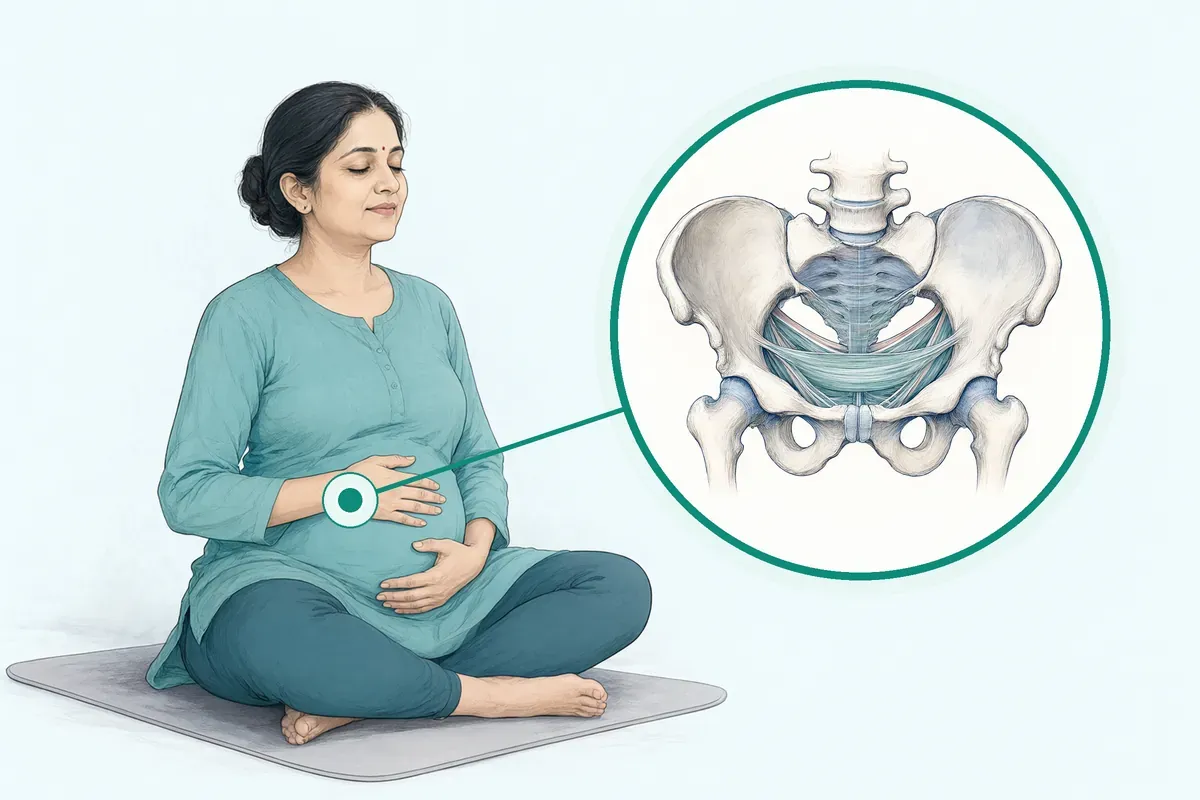
Women's health physiotherapy is a branch of physiotherapy that focuses on the muscles, ligaments and connective tissue that support the bladder, bowel and uterus. These structures form the pelvic floor.
When the pelvic floor becomes weak, tight or uncoordinated, it can lead to urine leakage, a feeling of heaviness or bulge in the vagina, difficulty emptying the bladder or bowel, and pain in the pelvic area. The therapy uses guided exercises, manual techniques and education to restore normal function.
It is delivered as an outpatient service at Jaipur Hospital and does not need anaesthesia. A typical session lasts 45 to 60 minutes and a course of treatment usually runs for 6 to 12 weeks, depending on the condition.
Common symptoms and when to seek care the same day
- Cannot pass urine at all
- Blood in urine
- Severe pelvic pain with fever
- Painful bulge that does not reduce
You may notice leaking urine when you cough, sneeze, laugh or exercise. This is called stress urinary incontinence. You may also feel a sudden, strong urge to pass urine that is hard to control, known as urgency urinary incontinence. Some women have a mix of both.
Other symptoms include a sensation of something coming down in the vagina, which can be a sign of pelvic organ prolapse, pain during intercourse, lower back or pelvic pain, and difficulty starting or fully emptying the bladder or bowel.
In studies, the prevalence of any urinary incontinence in women ranges from about 25% to 45%, and it becomes more common with age. Pelvic organ prolapse may be found on examination in up to 50% of women who have given birth.
Seek care on the same day if you suddenly cannot pass urine at all, if you see blood in your urine, if you have severe pelvic pain with fever, or if you notice a sudden, painful bulge at the vaginal opening that does not reduce when you lie down. These can indicate infection, blockage or other conditions that need urgent medical assessment.
Why pelvic floor problems develop and who is more likely to be affected
- Pregnancy and delivery
- Stretch or tear pelvic floor muscles
- Age and body weight
- Higher BMI and ageing weaken support tissues
- Hormonal changes
- Menopause reduces tissue elasticity and muscle tone
- Other factors
- Previous surgery, chronic cough, neurological conditions
Pregnancy and vaginal delivery are the most common reasons the pelvic floor stretches or tears. Age, higher body mass index and chronic straining from constipation or heavy lifting also weaken the support tissues. In research, parity, vaginal delivery, age and body mass index were significantly associated with pelvic organ prolapse in multiple studies.
For urinary incontinence, the prevalence is strongly related to age and increases through life. Hormonal changes around menopause can reduce tissue elasticity and muscle tone, making symptoms more noticeable. Previous pelvic surgery, chronic cough and neurological conditions can also contribute. Not everyone with these risk factors develops symptoms, but they make it more likely.
How the condition is assessed: questions, examination and tests
Do
- Symptom history and goals
- Physical examination
- Internal vaginal examination
- Bladder diary
- Pad test
- Urine analysis
At the first visit, the physiotherapist asks how the symptoms affect your daily life, what your goals are and what treatments you have tried before. A physical examination checks posture, breathing, abdominal muscle separation and the strength, tone and coordination of the pelvic floor muscles.
This may include an internal vaginal examination with your consent, which gives the clearest picture of muscle function and any prolapse. The clinician also rules out urinary infection and other serious causes such as cancer or neurological disease.
Simple tests may include:
- A bladder diary to track fluid intake and voiding patterns
- A pad test to measure leakage over a set time
- Urine analysis
If advanced prolapse or other conditions are suspected, the physiotherapist will refer you to a gynaecologist or urologist for further evaluation.
Non-surgical treatment options and when surgery may be considered
Pelvic floor muscle training is the first-line conservative treatment for stress urinary incontinence and is also used for mixed and urgency incontinence. In studies, women with stress incontinence who did pelvic floor muscle training were eight times more likely to report heal compared with no treatment, and five times more likely for any type of incontinence.
They also had fewer leakage episodes and less urine loss on pad tests. Quality of life and sexual outcomes improved as well.
The programme at Jaipur Hospital includes:
- Biofeedback-guided exercises
- Manual therapy for tight or painful muscles
- A prenatal or postnatal exercise plan tailored to your stage
Lifestyle changes such as weight management, adequate hydration, avoiding excessive fluids and timed voiding are also advised. The cost-effectiveness of pelvic floor muscle training has been described as promising.
If conservative care does not give enough relief after a supervised trial, or if prolapse is advanced and causing significant symptoms, your surgeon may discuss surgical options such as native tissue repair or mesh-augmented procedures. Surgery for prolapse carries a reoperation rate of about 3% after native tissue repair and 11% after transvaginal mesh repair in some series.
Mesh erosion has been reported in up to 18% of mesh cases, with some needing surgical correction. The decision for surgery is made jointly with you after reviewing the risks, benefits and your preferences.
Preparing for women's health physiotherapy
Do
- Wear comfortable clothing Allows easy movement during assessment
- Bring recent investigation reports Urine tests or imaging if available
- Continue regular medicines No need to stop any regular medicines
- Bring an attendant if you wish Family member may stay with you
Your first visit is an assessment that usually lasts 45 to 60 minutes. The physiotherapist will ask about your symptoms, medical history, previous treatments, and what you hope to achieve. They may also check for any signs of infection or other conditions that need a doctor's review before starting therapy.
You do not need to fast or stop any regular medicines for this appointment. Wear comfortable clothing that allows easy movement. If you have recent investigation reports, such as urine tests or imaging, bring them along. An attendant may stay with you if you wish.
The therapist will explain the findings and discuss a plan that fits your daily routine. They may suggest simple lifestyle changes such as weight management, adequate hydration, avoiding excessive fluids, and regular voiding intervals to help with urgency.
How women's health physiotherapy sessions are done
- Pelvic Floor Muscle Training Guided exercises with biofeedback
- Prenatal Exercise Programme Safe strengthening and breathing
- Postnatal Rehabilitation Core restoration and return to activity
- Manual Therapy Gentle release techniques
Each session takes place in a private treatment room. The physiotherapist uses one or more of the following approaches, depending on your condition and goals:
- Pelvic Floor Muscle Training: Guided exercises, often with biofeedback, to strengthen the muscles that support the bladder, bowel, and uterus. This is the most common physical therapy for stress urinary incontinence.
- Prenatal Exercise Programme: Safe strengthening, breathing, and posture work to prepare for labour and reduce strain on the pelvic floor during pregnancy.
- Postnatal Rehabilitation: Exercises and advice for diastasis recti, core restoration, and return to activity after delivery.
- Manual Therapy: Gentle internal or external release techniques to relieve pelvic discomfort and improve muscle function.
Your surgeon or gynaecologist may refer you, or you can book directly. The therapist will decide which techniques suit you after the assessment. No anaesthesia is needed and you go home the same day.
Risks and possible complications of women's health physiotherapy
- Mild soreness or fatigue
- Similar to starting any new exercise programme
- Temporary discomfort
- From internal manual therapy
- No surgical risks
- No mesh erosion, infection, or anaesthesia complications
- Active infection or bleeding
- Therapist will refer you to a doctor first
Physiotherapy is non-invasive and adverse events are rare. In trials that reported them, any events were minor.
Some women feel mild soreness or fatigue after exercises, similar to starting any new exercise programme. Internal manual therapy may cause temporary discomfort. There is no risk of mesh erosion, surgical infection, or anaesthesia complications because no surgery or implant is involved.
If you have an active urinary infection, unexplained bleeding, or a serious neurological condition, the therapist will ask you to see a doctor before continuing.
Recovery and aftercare after women's health physiotherapy
You can return to normal activities immediately after each session. The therapist will give you a home exercise programme to practise daily. Consistency matters more than intensity.
A typical course lasts 6 to 12 weeks, with visits spaced one to two weeks apart. Progress is reviewed at each visit and the programme is adjusted.
Contact the hospital if you develop new pain, bleeding, fever, or a sudden worsening of urinary symptoms. These are not expected from physiotherapy and may need medical assessment.
Results of women's health physiotherapy in studies
In studies, women with stress urinary incontinence who did pelvic floor muscle training were eight times more likely to report that their leakage stopped completely compared with those who had no treatment (56% versus 6%). For women with any type of urinary incontinence, the training groups were five times more likely to report complete resolution (35% versus 6%).
Women in the training groups also reported significant improvement in symptoms and quality of life more often than controls. Leakage episodes decreased by about one per day on average, and the amount of urine lost on short pad tests was significantly less.
Satisfaction with treatment was higher and sexual outcomes were better in the training groups. These results come from groups of women in clinical trials; individual results vary. Pelvic floor muscle training is recommended as a first-line conservative option for stress urinary incontinence. It is also used for mixed and urgency incontinence, though evidence is more limited for those types.
Cost and insurance for women's health physiotherapy in Jaipur
A typical session costs ₹1,000 to ₹2,000. The exact amount depends on the techniques used, the duration of the session, and whether any equipment such as biofeedback is needed. A full course of 6 to 12 weeks will cost more than a single visit.
Jaipur Hospital accepts:
- RGHS
- MAA Yojana
- CGHS
- A panel of private insurers and TPAs
Coverage for physiotherapy varies by scheme and policy, so check with your insurer or the hospital's insurance desk before starting. The hospital is a NABH-accredited multispeciality hospital with in-house pharmacy, laboratory, and imaging facilities on the same campus.