

Plastic Surgery · Jaipur Hospital
Acute Burn Care in Jaipur
The burn is fresh and you are scared. We offer a clear assessment, a calm plan and a team that stays with you.
- Serving Jaipur since 1991 (35 years)
- NABH accredited
- 24×7 emergency & ICU
- Cashless: RGHS, MAA Yojana, CGHS + 22 insurers
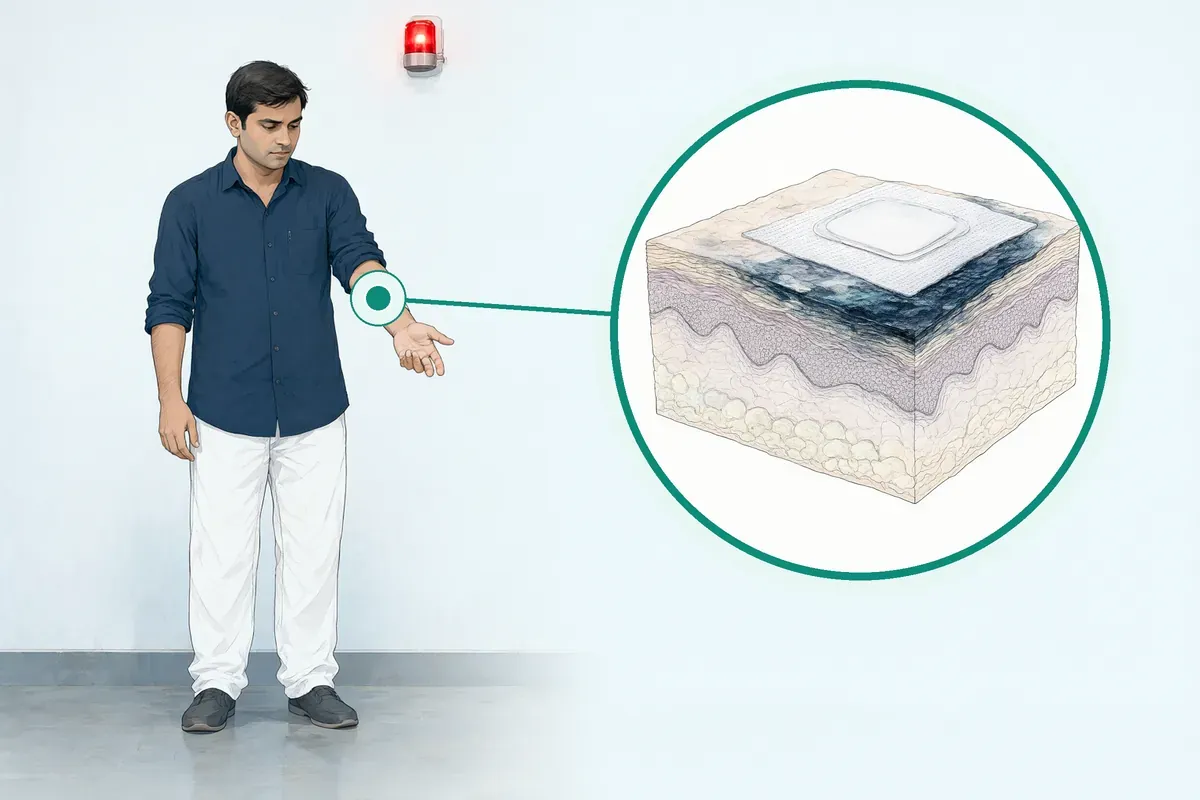
- Treatment length
- Days to weeks (multiple sessions)
- Anaesthesia
- General or sedation for procedures
- Recovery
- Weeks to months depending on %TBSA
- Price
- ₹50,000 to ₹5,00,000+typical range in India; ask us for an estimate
A burn changes the next hour
It happened fast, and you do not know what to do next
A fresh burn brings pain, fear and a hundred questions. You may worry about the scar, the cost, or time away from work. The first hours matter, and you need someone to tell you clearly what is happening and what comes next.
-
Pain and shock
A fresh burn is painful and frightening. You may not think clearly, and the attendant may feel helpless.
-
Worry about the scar
You may think about how the skin will look later, and whether you can cover it while it heals.
-
Time off work
Treatment can take days to weeks. You may worry about your job, your family and who will stay with you.
-
What will it cost
You may not know the bill in advance. Hospital stay can range from 5 to 30+ nights.
The effective treatment of severe burns is interdisciplinary, involving general practitioners and emergency physicians as well as plastic surgeons and physicians of other specialties.
Why Jaipur Hospital
You are likely worried about the pain, the scar and the cost, and whether your family can manage while you heal.
Your care plan
Your first steps with us
- 1 Call us or come to the emergency department
- 2 Meet the surgical team for an assessment
- 3 Get tests, imaging and wound care in-house
- 4 Decide the plan, then return for follow-up
How the operation is done
Not every burn needs surgery. Your surgeon will assess the depth and size of the burn, then explain the options. Some wounds heal with dressings and monitoring. Deep burns may need early excision and grafting. The plan is set with you, not for you.
-
Initial resuscitation and stabilisation
Fluids, airway management and close monitoring in the first hours. Your surgeon will discuss the fluid plan and watch your response.
-
Tangential excision and grafting
For deep burns, early excision within 72 hours may be an option, followed by split-thickness skin grafting. Your surgeon will discuss timing.
-
Biological and synthetic dressings
Collagen, amniotic membrane or silver dressings can cover a wound for a time. Your surgeon will discuss which option suits your burn.
-
Nutritional and metabolic support
High-protein enteral feeds and vitamin supplementation support healing. Your team will adjust this to your needs and tolerance.
Why patients trust us
- 1991 Serving Jaipur for 35 years
- NABH Accredited hospital
- 1 Plastic Surgery consultants
- 24×7 Emergency, ICU and ambulance
- 25 Cashless schemes and insurers
What research shows about this treatment
-
14.3 days
Average hospital stay among burn patients in one study.
-
20.5%
Fluid overload occurred in this share of patients given aggressive resuscitation in one trial.
-
37.2%
Share of burn patients who had signs of inhalation injury in one study.
If it is left untreated
Without treatment, scars on exposed skin and tight bands across joints can form, and these often need surgery later. In one study, patients with burns over 41 to 60% of the body had a mortality rate of 50%.
Life after treatment
Healing usually takes weeks to months, depending on how much of the body is burned. Most people need follow-up visits and scar care. The aim is to return to daily life at a pace your body allows.
-
Scar care that continues
Most people need ongoing scar care after the wound closes. Your team will show you how to look after the skin.
-
Back to work
Many people return to work once the wound is stable. The timing depends on the burn and your job.
-
Movement and physiotherapy
Physiotherapy can help you keep movement in joints near the burn. Most people are given exercises to do at home.
Frequently asked questions
Questions patients ask about acute burn care
Which problems are assessed under acute burn care?
In short
Jaipur Hospital assesses fresh burns through emergency resuscitation, wound management and ICU support. The team evaluates the percentage of total body surface area burned, depth of injury, airway status, inhalational injury, fluid balance and any associated trauma.
In detail
Assessment follows standard protocols. The Parkland formula guides initial fluid resuscitation based on body weight and burn extent. Airway examination looks for soot, singed nasal hair or voice change suggesting inhalational injury. Depth is judged clinically and sometimes with laser Doppler or biopsy.
Studies show that around 37 percent of patients present with signs of inhalational injury and the mean burn size in admitted cohorts is about 21 percent TBSA.
Early excision within 72 hours is considered for deep burns, while biological or synthetic dressings such as collagen, amniotic membrane or silver products may temporise wounds. Nutritional needs are calculated early because hypermetabolism begins immediately.
A common belief
Many people think only the visible wound matters.
What actually happens
In reality, airway compromise and fluid shifts can become life threatening within hours, so systematic assessment comes before any dressing change.
Your next step at Jaipur Hospital
If you have a fresh burn, attend the 24×7 emergency department at Jaipur Hospital without delay. An attendant should bring any referral notes and insurance details for schemes such as RGHS, MAA Yojana or CGHS.
The surgical team will stabilise you, estimate the TBSA and plan the first dressing or operation within the first 24 to 72 hours.
How will the doctor decide which tests I need for acute burn care?
In short
The doctor at Jaipur Hospital orders tests based on burn size, depth, mechanism, and your clinical condition. All patients with significant burns get baseline haemoglobin, electrolytes, renal function, coagulation profile, and blood group. Inhalation injury prompts arterial blood gas and chest X-ray. Electrical burns need CK-MB, ECG, and urine myoglobin. Sepsis suspicion adds blood cultures and inflammatory markers.
In detail
Evidence shows that fluid resuscitation guided by urine output and haemodynamics reduces complications. High-chloride crystalloids are associated with higher acute kidney injury rates, so electrolyte monitoring is essential. The Parkland formula provides a starting point, but serial haematocrit and lactate measurements guide adjustments.
Inhalational injury, present in 37% of admissions, requires repeated blood gas analysis. Electrical burns cause hidden muscle damage, so creatine kinase trends inform fluid volume to prevent renal failure. Nutritional assessment includes pre-albumin and nitrogen balance for high-protein feed planning.
- Inhalational injury, present in 37% of admissions, requires repeated blood gas analysis.
A common belief
Some think tests are the same for all burns, but an electrical burn needs CK-MB and ECG to catch heart rhythm problems, while a flame burn with smoke inhalation needs repeated blood gases.
What actually happens
The doctor tailors tests to the specific risks of your injury.
Your next step at Jaipur Hospital
Tests are done in the in-house laboratory with 24-hour service. Results are usually available within a few hours. The surgeon reviews them daily and adjusts fluids, ventilation, antibiotics, or nutrition accordingly. Your attendant can collect reports from the lab counter.
How soon should I expect improvement after the chosen acute burn care treatment?
In short
At Jaipur Hospital, improvement after acute burn care treatment begins within the first few days as resuscitation stabilises your fluid balance and vital signs. Wound healing progresses over weeks, with graft take usually assessed at 5 to 7 days post-surgery. Full functional recovery and scar maturation take months, varying with the percentage of total body surface area burnt and the need for staged procedures.
In detail
Initial resuscitation using the Parkland formula corrects shock within 24 to 48 hours. Early excision and grafting, typically done within 72 hours for deep burns, show graft adherence by day 5 to 7.
Evidence indicates average hospital stay is around 14 days, but ranges from 5 to 30 nights or more depending on burn extent. Nutritional support with high-protein enteral feeds aids wound healing. Physiotherapy starts early to prevent contractures.
Scar management including pressure garments and silicone begins once wounds epithelise. Long-term complications such as contractures may need further surgery later.
A common belief
Patients often expect skin to look normal in weeks.
What actually happens
In reality, grafts need time to vascularise, and scars remodel for a year or more. Early physiotherapy and pressure garments shape the final result.
Your next step at Jaipur Hospital
You will be monitored daily in the ICU and ward for graft take, infection, and nutritional status. Discharge planning includes outpatient follow-up for dressing changes, physiotherapy, and scar review. Expect multiple visits over several months. Return to work or exercise depends on burn location and healing, guided by your surgeon.
How are burn depth, size, location, and inhalation risk assessed?
In short
At Jaipur Hospital, burn depth is assessed clinically by examining colour, capillary refill, sensation, and blister characteristics. Size is calculated as a percentage of total body surface area using the Rule of Nines or Lund and Browder charts. Location is mapped for functional risk. Inhalation risk is evaluated by history of enclosed space exposure, facial burns, singed nasal hair, carbonaceous sputum, and voice changes, often confirmed by bronchoscopy.
In detail
Accurate assessment guides resuscitation volume, surgical planning, and prognosis. The Parkland formula uses TBSA percentage to calculate fluid needs. Deep burns on hands, face, joints, or perineum prioritise early excision and grafting.
Studies show around 37 percent of patients have signs of inhalational injury, and 12 percent of burns occur in enclosed spaces. The mean TBSA in one series was 21 percent.
Mortality correlates strongly with TBSA: 50 percent for 41 to 60 percent TBSA and 100 percent above 60 percent. Age and comorbidities further modify risk. The interdisciplinary team combines clinical examination with laboratory monitoring of haemoglobin, lactate, and base deficit to track resuscitation adequacy.
- The mean TBSA in one series was 21 percent.
A common belief
Patients sometimes guess burn size by the wound they see.
What actually happens
Doctors use standard charts because underestimating TBSA leads to under-resuscitation. Inhalation injury can be silent initially; waiting for breathing trouble delays life-saving intubation.
Your next step at Jaipur Hospital
Assessment begins on arrival in the 24×7 emergency department and continues in the ICU. Serial examinations track burn conversion in the first 48 hours. Bronchoscopy may be performed within 24 hours if inhalation injury is suspected. The surgical team uses these findings to schedule excision and grafting.
How can I decide whether to seek advice about emergency burn resuscitation?
In short
Seek emergency burn resuscitation advice immediately if the burn covers more than 10% of the body surface area in an adult or more than 5% in a child, if the burn is deep, involves the face, hands, feet, genitalia, or major joints, or if there is any suspicion of inhalational injury. Jaipur Hospital runs a 24×7 emergency department with ICU support for such cases.
In detail
Initial resuscitation follows the Parkland formula for fluid calculation, with airway management and continuous monitoring.
Studies show aggressive fluid resuscitation uses a bolus of 20 ml per kilogram followed by 3 ml per kilogram per hour, while moderate resuscitation uses 10 ml per kilogram bolus then 1.5 ml per kilogram per hour.
High-chloride fluids are associated with increased acute kidney injury, longer ventilation time, and more blood transfusions. Starches probably slightly increase the need for renal replacement therapy and blood transfusion. Early intubation, analgesia, and careful fluid balance are critical elements.
Around 37% of burn patients have signs of inhalational injury, and 12% of injuries occur in enclosed spaces, raising the risk of airway compromise.
A common belief
People often wait to see if blisters form.
What actually happens
But inhalational injury can close the airway in hours, and fluid loss from large burns causes shock quickly. Early resuscitation with the right fluids reduces kidney injury and ventilation time.
Your next step at Jaipur Hospital
If you are unsure about the severity, call the 24×7 ambulance service or come directly to the emergency department. An attendant should bring any clothing or chemical containers. The team will assess %TBSA, depth, and airway status within minutes.
How will appearance, function, and realistic expectations be discussed for acute burn care?
In short
The surgical team at Jaipur Hospital discusses appearance, function, and realistic expectations during the initial consultation and at each follow-up. They explain the likely scar pattern, range of movement, and whether further reconstructive procedures may help. The conversation is based on burn depth, location, and your healing progress.
In detail
Evidence shows long-term complications such as disfiguring scars on exposed areas and functionally significant contractures often require surgical treatment. Early measures for scar care may improve the outcome. The team uses pressure garments, silicone sheets, physiotherapy, and timed surgical releases to optimise function and appearance. They do not promise a specific cosmetic result but give an honest range based on similar cases.
A common belief
Patients sometimes expect the skin to look exactly as before.
What actually happens
Burns heal with scars, and some tighten over time. The team focuses on function first, then appearance, and plans staged treatments if needed.
Your next step at Jaipur Hospital
Ask your surgeon about the expected scar maturity timeline, which is usually 12 to 18 months. Request a physiotherapy review early to maintain joint mobility.
Which symptoms should prompt me to see a specialist?
In short
Jaipur Hospital advises you to see a burn specialist for any deep burn, burns larger than the size of your palm, burns on the face, hands, feet, joints or genitals, chemical or electrical burns, and any burn with increasing pain, swelling, foul smell or fever.
In detail
Deep burns destroy the dermis and will not heal without grafting. Burns over joints risk contracture that limits movement. Chemical and electrical injuries often cause deeper tissue damage than they appear on the surface.
In studies, females had a higher mortality rate of 23.9 percent compared to 16 percent in males, and patients with TBSA above 40 percent had mortality rates of 50 to 100 percent. Early specialist review allows timely excision, appropriate dressings and referral for rehabilitation to reduce long-term stiffness and scarring.
A common belief
People often treat small deep burns at home, not realising they will scar and contract.
What actually happens
Electrical burns can look minor but damage muscle and nerves underneath. Early specialist input changes the outcome.
Your next step at Jaipur Hospital
Do not wait for a routine appointment if you notice any of these features. Go directly to the emergency department at Jaipur Hospital, which operates 24×7 with ambulance support. Bring an attendant and your insurance card for RGHS, MAA Yojana, CGHS or private TPAs. The plastic surgery team will assess you on arrival.
How will the results change my care plan for acute burn care?
In short
Test results at Jaipur Hospital directly guide fluid rates, ventilation settings, antibiotic choice, surgery timing, and nutrition targets. Rising creatinine or falling urine output may shift fluid type or rate to protect kidneys. High lactate or base deficit suggests under-resuscitation. Arterial blood gases determine ventilator adjustments for inhalation injury. Haemoglobin trends guide transfusion thresholds. Electrolyte abnormalities trigger specific replacement.
In detail
Studies show high-chloride fluids increase acute kidney injury risk, so chloride levels influence crystalloid selection. Hydroxyethyl starch is linked to higher renal replacement therapy needs, so colloid choice matters. Coagulation abnormalities may delay excision and grafting. Positive blood cultures narrow antibiotic therapy.
Pre-albumin and nitrogen balance guide high-protein enteral feed rates. The median hospital stay in studies is around 14 days, but fluid overload prolongs ventilation and ICU stay.
Serial assessment allows the team to move from resuscitation to wound closure at the right time, typically within 72 hours for deep burns requiring tangential excision.
A common belief
People assume the treatment plan is fixed after admission, but burns are dynamic.
What actually happens
A rising creatinine today changes tomorrow's fluid prescription. A new bacteria in blood culture changes today's antibiotics. The plan evolves daily based on numbers.
Your next step at Jaipur Hospital
Results are reviewed each morning on ward rounds and ICU rounds. The surgeon will explain any changes to your plan. Your attendant should be present for updates. Adjustments may include new medications, altered fluid charts, or brought-forward surgery.
What should I do if symptoms persist or worsen after acute burn care?
In short
If symptoms persist or worsen after acute burn care at Jaipur Hospital, you should contact the surgical team or visit the 24×7 emergency department immediately. Warning signs include increasing pain, spreading redness, foul-smelling discharge, fever, graft discoloration, or difficulty breathing. Early reporting allows prompt intervention for infection, graft failure, or contracture development.
In detail
Burn wounds are prone to infection, which can delay healing and lead to sepsis. Graft loss may occur due to haematoma, seroma, or infection underneath the graft. Contractures can develop over joints if splinting and physiotherapy are not maintained.
Inhalational injury may cause delayed airway complications. Long-term complications such as disfiguring scars and functionally significant contractures often require surgical treatment later. The interdisciplinary team monitors for these issues during follow-up visits. Nutritional deficits can also impair healing, so ongoing high-protein supplementation is important.
A common belief
Some patients try home remedies or wait days hoping it settles.
What actually happens
Burns can deteriorate fast: infection spreads quickly, grafts can fail, and contractures form silently. Early action saves tissue and function.
Your next step at Jaipur Hospital
Do not wait for the next scheduled appointment if you notice any warning signs. Use the hospital's 24×7 ambulance service if travel is difficult. Keep the wound clean and follow dressing instructions exactly. Continue prescribed physiotherapy and splinting at home.
What first aid is appropriate, and what should I avoid putting on a burn?
In short
Appropriate first aid for a burn is to cool the area with running cool (not ice-cold) water for 15 to 20 minutes, remove constricting items like rings or tight clothing before swelling starts, and cover loosely with a clean, non-stick cloth. Do not apply ice, butter, oil, toothpaste, egg whites, or any home remedies. Do not break blisters. Seek emergency care at Jaipur Hospital for burns larger than a palm, on the face, hands, joints, or genitals, or if the person is a child or elderly.
In detail
Cooling reduces tissue damage and pain. Ice causes vasoconstriction and can deepen the injury. Greasy substances trap heat and increase infection risk. Home remedies introduce contaminants. Blisters act as a biological dressing; breaking them exposes raw tissue.
Early fluid resuscitation using the Parkland formula begins on hospital arrival. Airway management takes priority if inhalation injury is suspected. Analgesia, careful fluid balance, and early intubation are important elements of initial emergency treatment. The 24×7 ambulance service can provide en-route care.
A common belief
Many households reach for toothpaste, butter, or ice.
What actually happens
These trap heat or damage tissue further. Cool water is the only proven first aid. Removing rings early prevents them from cutting off circulation when swelling comes.
Your next step at Jaipur Hospital
Start cooling immediately and continue while arranging transport. Call the hospital's ambulance service at 0141-2551500 or 0141-2554139. Do not delay referral for specialist assessment. The emergency department is open round the clock.
FAQ library
Questions and answers about acute burn care
When you contact us
What you get when you contact us
Call us or visit the OPD, and we will look at your burn, explain your options and give you a cost estimate before you decide.
- A consultation with a plastic surgeon in the OPD
- Your scans and reports reviewed, with tests done in-house if you need them (laboratory, X-ray and imaging)
- Your options explained in plain words, including whether you need surgery at all
- A cost estimate before you decide
- Help with cashless treatment under RGHS, MAA Yojana, CGHS and empanelled insurers and TPAs
- Follow-up visits after your treatment
Overview
Acute Burn Care: what to know
What Is Acute Burn Care?
A burn is damage to the skin and, in deeper burns, the tissue below it. Even after the wound closes, scars can form on exposed skin, and tight bands called contractures can limit movement. Severe burns affect more than the skin. They can disturb body fluids and breathing, so care involves several specialties rather than one doctor.
The size of a burn is described as a percentage of total body surface area, or TBSA. This helps the team judge how serious the injury is and how much support you may need. A small burn may need only dressing and pain relief. A larger or deeper burn may need fluids, close monitoring and care in an intensive care unit.
Acute burn care at Jaipur Hospital covers the first hours and days after a fresh burn. The aim is to stabilise you, clean and cover the wound, treat pain, and watch for problems such as fluid loss and breathing difficulty. Treatment usually runs for days to weeks and may need more than one session. Jaipur Hospital has a 24×7 emergency department for patients who need urgent care.
Acute Burn Symptoms and Warning Signs
- Trouble breathing or noisy breathing
- Hoarse voice
A fresh burn is often painful, and pain relief is part of initial emergency treatment. The wound may look red, blistered or pale. Deep burns can look white or charred. A clinical examination is still needed, because the way a burn looks does not always show its depth.
Some burn patients need urgent care the same day. In one study, 37.2% of patients had signs of inhalational injury. Inhalational injury can be serious, and early intubation is an important part of emergency treatment. Go to the emergency department the same day if you or the person with the burn has:
- trouble breathing, noisy breathing or a hoarse voice
- burns around the mouth, nose, face or neck
- a burn that happened in a closed room or other enclosed space
- a large or deep burn, or a burn that covers a wide area
- severe pain that is not controlled
Severe burns need an interdisciplinary team, so same-day review is important. Fluid loss is another reason for close review. Do not wait for the wound to settle.
Causes of Acute Burns and Who Needs Extra Care
- 34.5 years Mean age
- 62% Males
- 37.2% Signs of inhalational injury
- 12.4% Injuries in enclosed spaces
Burns can happen from:
- Heat
- Hot liquids
- Steam
- Flame
- Electricity
- Chemicals
- Smoke
Smoke is a concern when a fire happens in an enclosed space.
In one study of 121 burn patients, 22.3% were aged ten years or below. The mean age was 34.5 years. Males made up 62% and females 38%. These figures describe one group of patients and do not predict who will be affected in another setting.
In one study of burn patients, 37.2% had signs of inhalational injury, and 12.4% of injuries occurred in enclosed spaces. A skin burn can be part of a larger injury when smoke has been breathed in.
Burns on exposed skin can leave disfiguring scars, and burns across a joint can cause contractures that need surgery. This is why burns in these areas need careful review.
How Jaipur Hospital Diagnoses an Acute Burn
When you arrive, the emergency team examines the burn and records its size as a percentage of TBSA. They also check your airway, breathing and fluid balance. This is because a burn can cause fluid loss and airway problems, even when the skin wound looks limited.
The team looks for signs of inhalational injury, such as:
- Burns around the mouth
- A hoarse voice
- Breathing difficulty
In one study, the mean TBSA was 21.2%, and 37.2% of patients had signs of inhalational injury. These are group results, not a forecast for an individual patient.
Severe burns need input from several specialties, including emergency physicians and plastic surgeons. Jaipur Hospital has an in-house diagnostic laboratory and imaging service, and an intensive care unit for patients who need close monitoring. These facilities support the assessment and ongoing care.
Your surgeon will explain which tests you need and why. The choice depends on your examination, your general condition and whether other injuries are suspected. The hospital's laboratory and imaging services are used when the team needs more information.
Acute Burn Treatment Without Surgery and When Surgery Is Needed
- Hospital stay Typical range for acute burn care
- Recovery period Weeks to months depending on %TBSA
The first stage of treatment is resuscitation and stabilisation. This typically includes intravenous fluids, pain relief, airway support and close monitoring. The type and amount of fluid are chosen by the team and adjusted to your response. This is not something to manage at home.
Wound care usually involves cleaning the burn and covering it with a dressing. Biological or synthetic dressings, such as collagen, amniotic membrane or silver dressings, are sometimes used to cover the wound for a time. Your surgeon will advise whether one of these suits your burn.
Nutrition is also important. Jaipur Hospital typically provides nutritional support for burn patients, often with high-protein enteral feeds and vitamin supplements.
Non-surgical care can continue for days to weeks. Smaller or superficial burns may heal with dressings and regular review. Deeper burns may need surgery.
Surgery is considered for deep or large burns, and for scars or contractures that limit movement. Early excision and split-thickness skin grafting are common options for deep burns. Some patients need one operation, while severe burns may need multiple stages. The surgery may be done in stages depending on the severity of the burns and the areas affected. Procedures are usually done under general anaesthesia or sedation.
Not every burn needs surgery. Your surgeon will assess the depth, size and site of the burn, your general health and how the wound is healing. They will explain the options and advise which one suits you. Recovery usually takes weeks to months, depending on the percentage of TBSA involved. Hospital stay is typically 5 to 30+ nights. Scars may need treatment later, even after the first wound has healed.
Preparing for acute burn care at Jaipur Hospital
Do
- Previous prescriptions and reports
- List of your medicines
- Your ID
- Insurance or scheme card
- Family member or attendant
Acute burn care often starts before any operation. In the first hours, our team focuses on pain relief, careful fluid balance and, when needed, help with breathing. Severe burns are treated by a team that includes emergency doctors, plastic surgeons and other specialists.
Before a procedure, our team will usually ask about your health and examine the burn. You may have blood tests, an X-ray or an ECG. These are done in our in-house laboratory and imaging department.
Tell your surgeon about every medicine you take, including blood thinners, and about any allergies. Do not stop or change a medicine on your own. Ask your doctor which medicines you should continue before surgery.
You will usually be told when to stop eating and drinking before anaesthesia. Follow those instructions exactly. Most burn procedures use general anaesthesia or sedation.
Bring your previous prescriptions and reports, a list of your medicines, your ID, and any insurance or scheme card. Bring a family member or attendant who can stay with you and speak for you.
Treatment for burns usually takes days to weeks and may need more than one session. A hospital stay of 5 to 30+ nights is typical.
How burn surgery is done
Burn surgery is planned around how deep the burn is, how much of your body it covers and where it is. No single method suits every patient. Our surgical team will advise which option fits your case.
Common options include:
- Initial resuscitation and stabilisation. This means fluids, airway care and close monitoring in the first hours. The Parkland formula is one common way to plan fluids. Your surgeon will decide what is right for you.
- Tangential excision and split-thickness grafting. For deep burns, early excision is often done within 72 hours, followed by grafting. Your surgeon will advise if this suits your burn.
- Biological or synthetic dressings. Collagen, amniotic membrane or silver dressings may be used to cover the wound for a time.
- Nutritional and metabolic support. High-protein enteral feeds and vitamin supplements help support healing.
The operation may be done in stages, depending on the severity of the burn and the areas affected. Some patients need one surgery, while severe burns may need multiple stages.
On the day of surgery, you will meet the anaesthesia team. They will usually explain the plan and check your fitness. Our modular operation theatres and ICU are used for these procedures.
Risks and complications of burn treatment
- 20.5% Fluid overload with aggressive fluids
- 6.3% Fluid overload with moderate fluids
- 18.0% Death with hydroxyethyl starch
- 17.0% Death with saline
- 5.3% Serious adverse events with starch
- 2.8% Serious adverse events with saline
Every burn treatment has risks. Some come from the burn itself, and some from surgery and from the fluids and medicines used in care.
Scars and contractures are long-term problems. Disfiguring scars on exposed skin and contractures that limit movement often need surgery later.
Fluid resuscitation can cause fluid overload. In one trial, this happened in 20.5% of patients given aggressive fluids and 6.3% of those given moderate fluids. Studies of intravenous fluids have linked high-chloride fluids to a higher risk of acute kidney injury, higher blood chloride levels, more blood transfusion and longer time on a ventilator.
Starches probably slightly increase the need for blood transfusion and for renal replacement therapy. In one large trial of fluid resuscitation, 18.0% of patients given hydroxyethyl starch died compared with 17.0% given saline. The relative risk of death was 1.06, with a confidence interval of 0.96 to 1.18. Serious adverse events were more common with starch, 5.3% versus 2.8%.
Burn size affects risk. In one study of 121 patients, the overall mortality was 19%. Patients with 41% to 60% TBSA had a mortality of 50%.
Your surgeon will talk to you about your own risks before any procedure.
Recovery after acute burn care
- After surgery Cared for in ICU; breathing, blood pressure, urine output and pain watched
- First weeks Team checks healing and movement; early scar care and physiotherapy available
- Weeks to months Recovery time depends on %TBSA burned; average hospital stay 14.3 days
After surgery, you will usually be cared for in the Intensive Care Unit for a time. Our ICU team watches your breathing, blood pressure, urine output and pain. Pain relief and careful fluid balance are important parts of early care.
Good nutrition supports healing. High-protein feeds and vitamin supplements are a common option. Our canteen provides dietary meals, and our in-house pharmacy supplies prescribed medicines.
Recovery usually takes weeks to months, depending on the percentage of total body surface area (%TBSA) burned. In one study, the average hospital stay was 14.3 days. Patients with 21% to 40% TBSA stayed longest on average, at 19.4 days.
In the first weeks, our team will usually check how the treated areas are healing and whether movement is returning. Early scar care may improve the outcome. Physiotherapy is available to help you regain movement.
Call the hospital if pain or fever gets worse, if the wound becomes more red or starts to smell, or if you have trouble breathing. Do not wait for your next appointment. Keep the wound clean and follow your dressing instructions.
Results of burn treatment in studies
Results vary from person to person. They depend on burn size, depth, your age and your general health.
Studies of intravenous fluids used in intensive care show that several choices work in a similar way. Moderate-certainty evidence found probably little or no difference in mortality between starches and crystalloids. The same was found for dextrans, gelatins, and albumin or plasma protein fraction.
Surgery may be needed in stages. Some patients need one operation, while severe burns may need multiple stages. The surgery may be done in stages depending on the severity of burns and the areas affected.
Some problems may persist or return. Contractures and disfiguring scars often need further surgical treatment. Early scar care may improve the outcome.
No one can promise a particular result. Your surgeon will explain what is realistic for your burn and what follow-up you may need.
Cost of acute burn care in Jaipur and insurance
- 57.7% Staff salaries
- 36.3% Medicines
- 3.8% Nutrition
- 2.0% Investigations
- 0.2% Instruments
The typical range for acute burn care in India is ₹50,000 to ₹5,00,000 or more. Ask us for an estimate for your case.
Several things change the cost. These include the severity and extent of the burn, how complex the case is, the type of procedure, your overall health and age, and the choice of hospital. A longer stay of 5 to 30+ nights and more than one session also add to the cost.
A study of burn care costs found that staff salaries made up 57.7% of the total provider cost. Medicines made up 36.3%, nutrition 3.8%, investigations 2.0% and instruments 0.2%.
Reconstruction surgery later may be charged separately. A published estimate for burn reconstruction in Mohali was ₹2,06,486 to ₹2,94,980, and the cost varies with severity and procedure.
Jaipur Hospital works with RGHS, MAA Yojana, CGHS and a panel of private insurers and TPAs. Bring your scheme card and policy details so our team can check what applies to you. Medicines are available from our in-house pharmacy, and tests are done in our in-house laboratory and imaging department.