
Plastic Surgery · Jaipur Hospital
Beard and Eyebrow Transplant in Jaipur
Patchy beard or thin brows? Get a clear assessment and a simple plan from our plastic surgery team.
- Serving Jaipur since 1991 (35 years)
- NABH accredited
- 24×7 emergency & ICU
- Cashless: MAA Yojana + 32 insurers
- Operation time
- 4 to 6 hours
- Anaesthesia
- Local anaesthesia
- Recovery
- Scabs fall in 7 to 10 days
- Price
- ₹35,000 to ₹1,00,000typical range in India; ask us for an estimate
Facial hair that will not fill in
You have patches, gaps or thin brows that do not improve with time or products
Genetics, over-plucking, scarring, hormonal changes or medical conditions can leave the beard, moustache or eyebrows sparse. The gaps stay the same year after year and cosmetics only cover them temporarily.
-
Patchy beard or moustache
Cheeks, chin or upper lip stay thin while the rest of the face grows normally.
-
Thin or missing eyebrows
Over-plucking, thyroid issues, alopecia or scars leave brows uneven or absent.
-
Scarred skin without hair
Burns, surgery, acne or cleft repairs leave smooth patches where hair will not grow.
-
Hormone therapy plateau
Testosterone may not give the density or coverage you expected after one to two years.
Eyebrow hair loss can arise from genetics, over-plucking, trauma, nutritional imbalances, scarring or thyroid disorders.
Why Jaipur Hospital
You worry the gaps will never close, that you will keep hiding your face, and that a procedure might cost too much or look unnatural.
Your care plan
Your first steps with us
- 1 Call or visit for an OPD consultation with a plastic surgeon
- 2 Get your design mapped and a graft estimate based on your donor area
- 3 Undergo the day-care procedure under local anaesthesia
- 4 Follow simple aftercare and return for scheduled reviews
How the operation is done
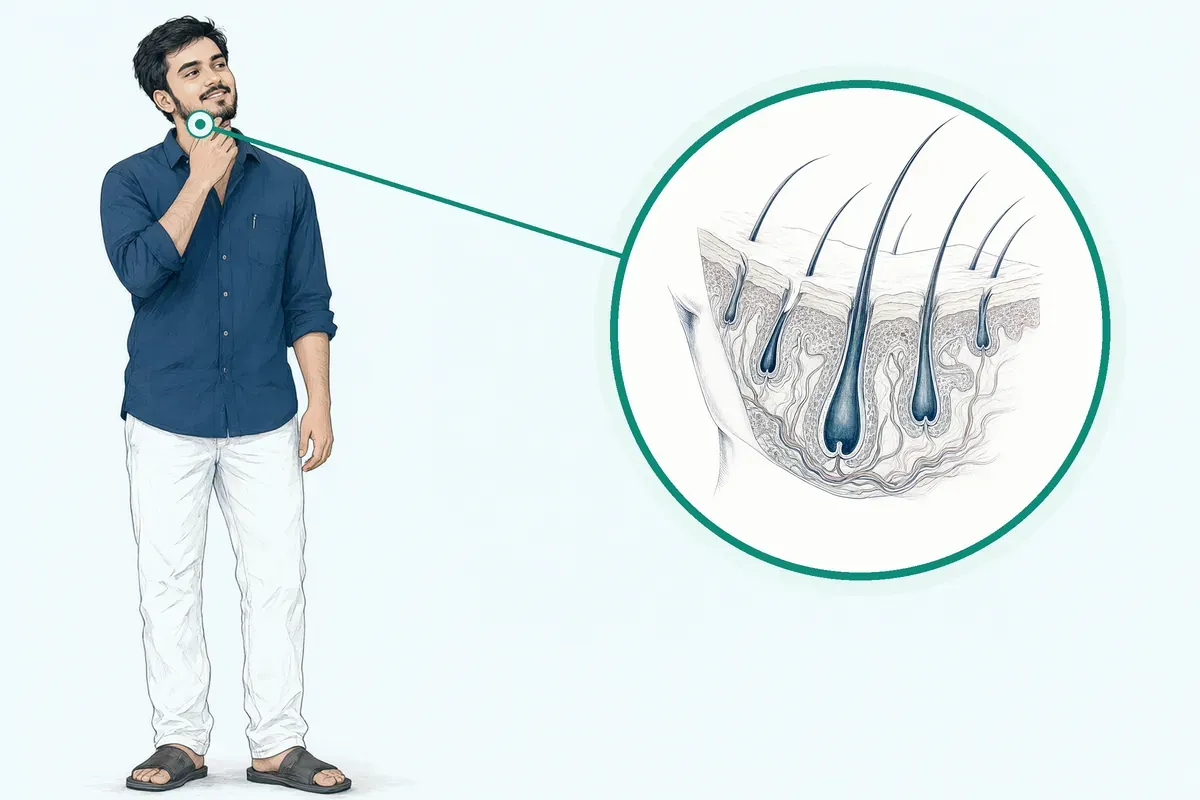
Individual follicles are taken from the back of your scalp and placed one by one into the beard, moustache or eyebrow area at the natural angle and direction.
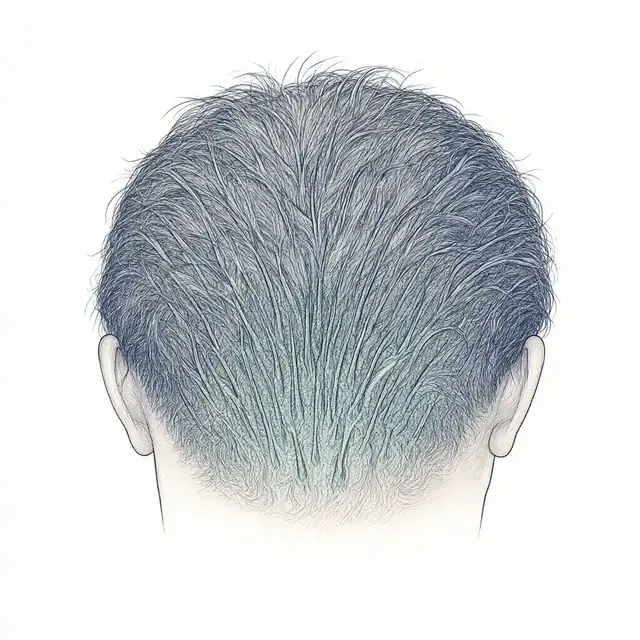 Donor folliclesHealthy follicles taken from the back of the scalp
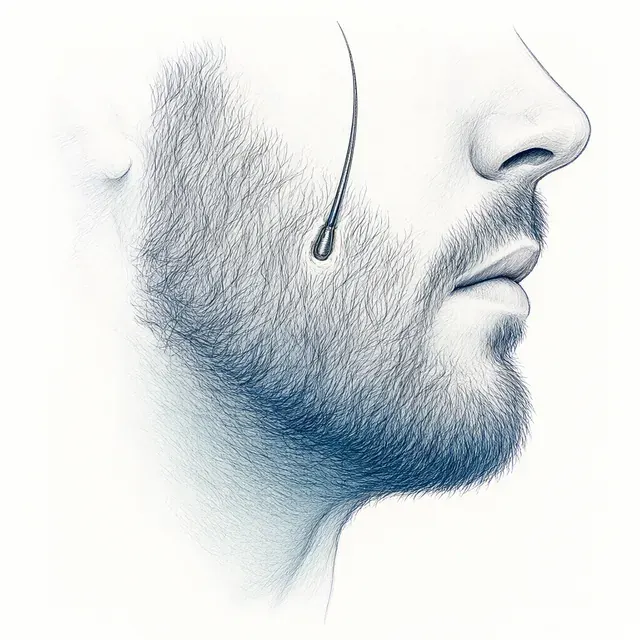 Follicle placedEach graft is placed at the natural angle and direction
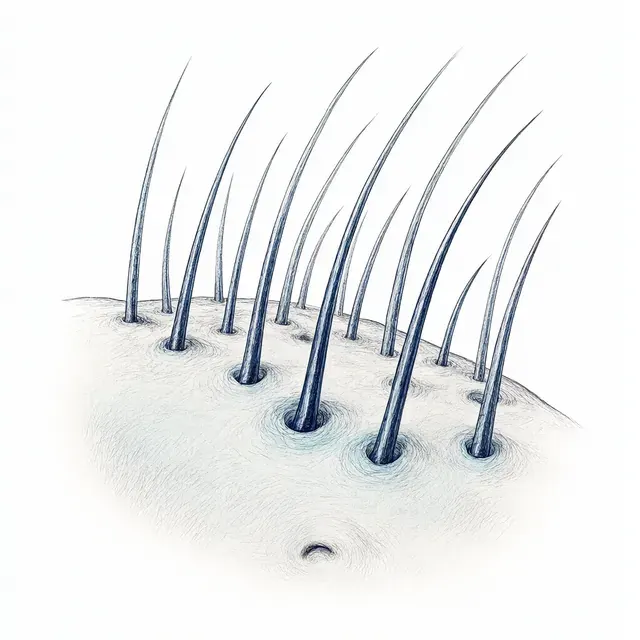 Grown resultTransplanted hair grows permanently with natural direction
-
Beard Transplant: Density and shape design
Grafts are placed to match your natural cheek line, jawline and moustache flow for an even look.
-
Moustache Transplant: Upper lip reconstruction
Single-hair grafts fill the gap under the nose and define the lip border at the correct angle.
-
Eyebrow Transplant: Natural hair direction and angle
Follicles are implanted flat against the skin, following the upward, outward and downward zones of a natural brow.
-
Scar Camouflage: Hair grafts into facial scars
Grafts are placed into stable scar tissue from burns, surgery or acne to restore hair where none grows.
Why patients trust us
- 1991 Serving Jaipur for 35 years
- NABH Accredited hospital
- 1 Plastic Surgery consultants
- 24×7 Emergency, ICU and ambulance
- 33 Cashless schemes and insurers
What research shows about this treatment
-
Over 95% graft survival
Studies report that usually more than 95% of transplanted follicles take root and grow.
-
Patient satisfaction above 85%
A 2022 systematic review of beard and moustache transplants found satisfaction rates above 85% in the analysed studies.
-
Final result at 9 to 12 months
Transplanted hairs shed in the first weeks; new growth starts around month four and final density appears by 9 to 12 months.
If it is left untreated
Without treatment the patches, gaps or thin brows remain unchanged. Cosmetic products need daily reapplication and do not restore hair. Scarring alopecia or active autoimmune conditions can destroy follicles permanently if not assessed.
Life after treatment
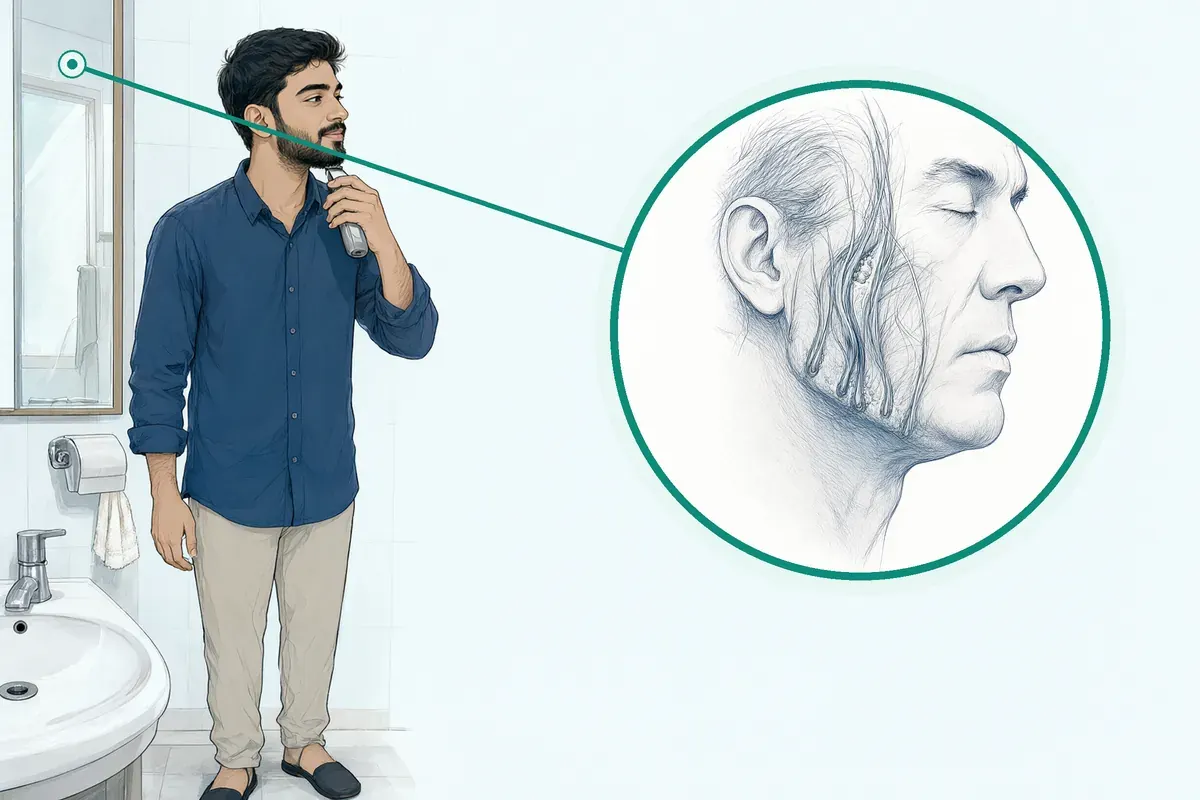
Most people see a fuller, even beard or brow that they can trim and style like natural facial hair.
-
No daily make-up or fibres
You stop using pencils, powders or concealers because the hair is really there.
-
Shave and trim normally
Once established, the transplanted hair grows like the rest of your beard and needs regular trimming.
-
Eyebrows that stay in place
Transplanted brow hairs grow permanently; you trim them every few weeks instead of redrawing them.
-
Scars covered by real hair
Grafts into stable scar tissue produce hair that hides the smooth patch.
Meet the team
Your plastic surgery doctors
Explore our plastic surgery hospital in Jaipur: every treatment, the doctors and what to expect at your visit.
Frequently asked questions
Questions patients ask about beard and eyebrow transplant
What does beard and eyebrow transplant involve?
In short
A beard and eyebrow transplant at Jaipur Hospital moves individual hair follicles from your scalp to the face using follicular unit extraction. The procedure takes four to six hours under local anaesthesia. You go home the same day. Scabs fall off in seven to ten days. The typical price range in India is ₹35,000 to ₹1,00,000.
In detail
The surgeon designs the shape and density for your beard, moustache or eyebrows, then harvests grafts one by one from the back or sides of your scalp with a small punch tool. Each graft contains one to three hairs.
The team creates tiny recipient sites at precise angles so the new hair follows the natural growth direction of facial hair. For eyebrows, the angle changes across the brow to mimic the upward, outward and downward flow. The grafts are placed individually.
Because the face has a rich blood supply, healing is usually fast. Transplanted hairs shed within weeks, then regrow over nine to twelve months.
Scalp hair keeps its original growth characteristics, so transplanted beard hair grows faster and needs regular trimming, while eyebrow hair also requires frequent trimming.
A common belief
Many people think it is like a tattoo or that the hair never grows long.
What actually happens
In reality, the transplanted follicles keep their scalp behaviour, so beard hair grows fast and needs trimming, and eyebrow hair also needs regular cutting. The result is living hair, not pigment.
Your next step at Jaipur Hospital
You will have a consultation where the surgeon checks your donor area, discusses the design and explains the expected graft count. If you decide to proceed, you stop blood thinners and certain supplements one to two weeks before surgery as advised.
On the day, you arrive in the morning and leave by evening. Plan for a week off work because the face looks red and crusty at first. New growth starts around month three or four. Final density appears by nine to twelve months.
Which tests and scans do I need before a beard and eyebrow transplant?
In short
There is no fixed list of scans for a beard and eyebrow transplant at Jaipur Hospital. The surgeon decides based on your medical history. Common checks include a complete blood count, bleeding and clotting times, blood sugar, and thyroid function tests if you have symptoms. If you have an autoimmune condition, the surgeon may want recent inflammatory markers or a letter from your treating doctor confirming six to twelve months of stability.
In detail
The procedure uses local anaesthesia and is done as day care, so extensive cardiac or imaging work-ups are not routine. The surgeon focuses on ruling out conditions that could affect healing or graft survival. A haemoglobin check ensures you are not anaemic.
Coagulation tests confirm normal clotting, especially if you take blood thinners or supplements. Thyroid disorders like hypothyroidism or hyperthyroidism can cause eyebrow loss, so thyroid levels may be checked if not recently done.
For patients with alopecia areata, lichen planopilaris or frontal fibrosing alopecia, the surgeon needs evidence the disease is quiet. Transgender men on testosterone should have stable hormone levels. The surgeon also reviews any medications you take. No special facial scans or imaging are required.
The assessment is clinical: examining the donor area density, scalp laxity, and the recipient zones. All of this happens during the consultation and pre-operative work-up.
A common belief
People often expect MRI or CT scans.
What actually happens
Those are not needed for this day-care procedure under local anaesthesia. The important checks are blood safety and making sure any underlying condition is under control.
Your next step at Jaipur Hospital
Bring any recent blood reports to your consultation. The surgeon will tell you exactly which tests, if any, you need before the procedure day. Most are simple blood draws done at the hospital's in-house laboratory.
How painful is the beard and eyebrow transplant procedure and the early recovery?
In short
At Jaipur Hospital, a beard and eyebrow transplant is performed under local anaesthesia. You stay awake but the donor and recipient areas are numb. Most patients feel little to no pain during surgery. Afterward, mild tenderness, swelling, and tightness are common for a few days and are usually managed with simple measures.
In detail
Evidence confirms that because the procedure uses local anaesthesia, patients typically feel little to no pain during surgery. You are awake but numb. The face has excellent blood supply, so swelling can be more dramatic in the first days, especially around the cheeks and eyes.
Mild redness, swelling, and tiny scabs around each graft are common and usually resolve within a week. Some mild tenderness can occur as the area heals. Over-the-counter painkillers are usually permitted after the procedure.
Sleeping with the head elevated for the first few nights reduces swelling. Most people take a week off work because the face looks like a bad rash during early healing.
A common belief
People often expect severe pain because it is surgery.
What actually happens
In reality, the face heals quickly thanks to its strong blood supply. Most patients manage with simple pain relief and are back to light activity within a day or two.
Your next step at Jaipur Hospital
Expect mild swelling and crusting for seven to ten days. Scabs fall off in that period. Take prescribed or recommended pain relief as needed. Keep your head raised while sleeping for the first few nights. Avoid touching or rubbing the grafts. Contact the surgical team if pain worsens or does not improve.
How long does recovery usually take after a beard and eyebrow transplant?
In short
Recovery after a beard and eyebrow transplant at Jaipur Hospital is usually quick. Scabs fall off in seven to ten days. Most people return to light activity within one to two days and to work within a week. The transplanted hairs shed between weeks two and eight, then new growth starts around month three to four. Full density and final appearance take nine to twelve months.
In detail
Days one to three: pink dots at each graft site, mild swelling around the cheeks and jaw. Sleep with head raised, avoid touching the face. Days four to seven: tiny crusts, swelling fading; gentle washing as instructed.
Week two: crusts falling away, redness softening; most return to normal social plans. Weeks three to four: face looks close to normal, some transplanted hairs start to fall out — this is expected. Months one to two: shedding, then a quiet period.
Months three to four: new hairs break through, often fine at first. Months five to six: coverage fills in and hairs thicken. Months seven to nine: density keeps building. Months ten to twelve: result is close to final.
Transplanted beard hairs grow like scalp hair and need regular trimming. Eyebrow grafts need trimming every two to three weeks.
A common belief
Many people think the result is done when the crusts heal.
What actually happens
The real timeline is the hair cycle: shed at three weeks, quiet for two months, then slow regrowth. The final density is not visible until month ten or twelve.
Your next step at Jaipur Hospital
Plan for about a week off work if you want to avoid visible crusts. Avoid sun exposure on the face for the first month or two to prevent hyperpigmentation. Shaving is usually fine after three to four weeks. Follow the washing and activity guidance from your surgeon.
How is the decision about starting dialysis made?
In short
The decision to start dialysis is made by a nephrologist based on your kidney function tests, symptoms, and overall health. It is not based on a single number alone. At Jaipur Hospital, the medical team reviews blood urea, creatinine, estimated glomerular filtration rate, fluid overload, electrolyte imbalance, and uraemic symptoms such as nausea, confusion, or pericarditis before recommending dialysis.
In detail
Guidelines suggest considering dialysis when the estimated glomerular filtration rate falls below 15 millilitres per minute per 1.73 metre squared, or earlier if severe symptoms appear. The team also assesses your nutritional status, ability to tolerate the procedure, and personal preferences.
Some patients with slowly declining function may be managed conservatively for a time with medication, diet, and close monitoring. The choice between haemodialysis and peritoneal dialysis depends on lifestyle, home support, vascular access, and medical suitability. The nephrologist explains each option so you can decide with your family.
A common belief
Many people believe dialysis starts automatically at a certain lab value.
What actually happens
In practice, some patients feel well at low filtration rates and can wait with careful medical management, while others need it earlier because of symptoms. The decision is individualised, not a fixed threshold.
Your next step at Jaipur Hospital
If your recent blood tests show worsening kidney function or you have new symptoms like breathlessness, swelling, or persistent nausea, ask your doctor for a nephrology review.
The team at Jaipur Hospital will arrange the necessary investigations, discuss the timing and modality options, and help you prepare vascular access if haemodialysis is chosen.
How will appearance, function, and realistic expectations be discussed for a beard or eyebrow transplant?
In short
At Jaipur Hospital, the surgeon discusses appearance, function, and realistic expectations during a detailed pre-operative consultation. You review the proposed design, graft distribution, and the natural growth characteristics of scalp hair moved to the face. The surgeon explains that transplanted hair grows permanently and requires regular trimming, especially for eyebrows.
In detail
The consultation covers the shape and density you want, the donor hair available, and the limits of what a single session can achieve. For beards, the surgeon maps cheek lines, moustache, jawline, and neck border, grading density so the result looks natural.
For eyebrows, the angle and direction of each graft are planned to mimic the natural brow pattern, which changes across the medial, arch, and tail zones.
The surgeon explains that scalp hair has a longer growth cycle than native facial hair, so transplanted eyebrows need trimming every few weeks. You also learn that final density takes nine to twelve months, with a shedding phase in the first weeks. No specific outcome is promised; the discussion focuses on achievable ranges based on your donor supply and facial anatomy.
A common belief
Patients sometimes expect a photo-perfect match or instant density.
What actually happens
In reality, scalp hair grows faster and longer than facial hair, so eyebrows need regular trimming. Final density takes up to a year, and a second session is sometimes needed for full coverage. The consultation is where those realities are set out clearly.
Your next step at Jaipur Hospital
Bring reference photos if you have a particular style in mind, but understand they guide the design rather than ensure a copy. The surgeon will mark the proposed outline on your face for your approval before surgery. Ask about the number of grafts planned, the possibility of a second session, and the long-term maintenance.
Why might my doctor recommend a beard and eyebrow transplant?
In short
Your doctor may recommend a beard and eyebrow transplant at Jaipur Hospital if you have patchy or missing facial hair that is stable and not actively changing. Common reasons include genetics, over-plucking, scars from burns or surgery, alopecia areata with a stable pattern, or gender-affirming goals for transgender men. You must have a healthy donor area on the scalp.
In detail
The procedure suits men whose beard is genuinely sparse in fixed areas such as the cheeks, moustache gap or chin, and women who need eyebrow restoration. Transgender men often seek it after one to two years of testosterone therapy when the beard pattern has plateaued.
Scarring from acne, cleft repair or burns can also be camouflaged with hair grafts. The key requirement is a settled situation: if hair loss is ongoing or you are young and the pattern is still developing, the surgeon will usually advise waiting.
A healthy donor area at the back and sides of the scalp is essential because grafts come from there. Body hair can sometimes substitute but differs in texture and growth rate. The surgeon also checks for active autoimmune conditions like alopecia areata or lichen planopilaris, which could attack transplanted follicles.
A common belief
It is not for everyone.
What actually happens
If your hair loss is still active, if you are very young and the pattern is not set, or if your donor area is thin, the surgeon will usually tell you to wait. Active autoimmune conditions can also make it unsuitable.
Your next step at Jaipur Hospital
At the consultation, the surgeon examines your donor supply, reviews your medical history and discusses whether your hair loss pattern is stable. If you are on testosterone, the surgeon typically waits at least one year after starting therapy.
You will get a design plan and a graft estimate. The typical price range in India is ₹35,000 to ₹1,00,000.
How should I prepare in the days before a beard and eyebrow transplant?
In short
In the days before your beard and eyebrow transplant at Jaipur Hospital, you stop blood thinners, aspirin, and supplements like fish oil, vitamin E, and certain herbal products one to two weeks prior as advised by the surgeon. Avoid alcohol and smoking because they impair healing. Arrange for an attendant to take you home. Wash your hair and face with mild soap on the morning of surgery. Wear a button-down shirt so you do not pull anything over the grafts.
In detail
The surgeon gives you a written list of medications to pause. Common items include aspirin, clopidogrel, warfarin, apixaban, ibuprofen, fish oil, vitamin E, ginkgo, garlic supplements, and other herbal products that increase bleeding risk.
You must discuss every medicine and supplement you take, including prescription drugs, so the surgeon can adjust safely. Do not stop any prescription medicine without the surgeon's approval. Stop smoking at least a week before and after, as nicotine reduces blood flow to the grafts.
Avoid alcohol for 48 hours before surgery. On the day before, sleep well and stay hydrated. On the morning of the procedure, shower and wash your hair and face with a gentle shampoo or soap. Do not apply oils, gels, or creams.
Wear loose, comfortable clothing that opens at the front. Have a light breakfast unless told otherwise. Bring your regular medicines to take after the procedure if the surgeon allows.
Plan for a week off work because the face will look red and crusty for the first seven to ten days.
A common belief
A common mistake is stopping a prescription blood thinner on your own.
What actually happens
Never do that without the surgeon's sign-off. Another mistake is thinking a drink the night before is fine. Alcohol increases bleeding and swelling. Follow the list exactly.
Your next step at Jaipur Hospital
Follow the surgeon's specific list exactly. If you are unsure about any medicine or supplement, call the hospital before stopping it. The typical price range in India is ₹35,000 to ₹1,00,000.
What are the common side effects and the less common serious complications of a beard and eyebrow transplant?
In short
Common side effects after a beard and eyebrow transplant at Jaipur Hospital include mild swelling, redness, tiny crusts around each graft, and temporary shedding of the transplanted hairs within two to eight weeks. Less common serious complications include infection, excessive bleeding, graft failure above the expected rate, and an unnatural growth angle that may need corrective surgery.
In detail
The face heals quickly because of its strong blood supply, but that also means swelling can be dramatic in the first days. Folliculitis, which looks like small pimples, can appear in the first weeks and usually clears on its own or with topical antibiotics.
Shock loss of existing hair in the recipient area may occur but often regrows. Graft failure happens to some percentage of grafts in every procedure; rates above 10 to 15 percent suggest a technical issue. An unnatural growth angle does not resolve on its own.
FUE leaves tiny dot scars at the donor area that are usually hidden once hair grows a few centimetres. The recipient sites on the face generally heal without visible scarring.
A common belief
People often panic when the transplanted hairs fall out at week three.
What actually happens
That shed is expected. The follicle stays alive and regrows. What matters is the angle set during surgery — that cannot be fixed later without another procedure.
Your next step at Jaipur Hospital
Follow the washing and activity instructions given by your surgeon. Contact the hospital if you develop worsening pain, spreading redness, fever, persistent bleeding, or unusual drainage. Most side effects settle within two weeks.
Which symptoms are expected after a beard and eyebrow transplant, and which need urgent medical attention?
In short
At Jaipur Hospital, expected symptoms after a beard and eyebrow transplant include mild redness, swelling, tiny scabs around each graft, mild tenderness, and shedding of transplanted hairs between weeks two and eight. Urgent symptoms are worsening pain, spreading redness, fever, persistent bleeding, unusual drainage, or concerning skin colour changes.
In detail
Evidence confirms that in the first days, mild redness, swelling, and tiny scabs are common and usually resolve within a week. The face has excellent blood supply, so swelling can be more dramatic, especially around the eyes and cheeks.
Transplanted hairs shed within the first six weeks; this shock loss is a normal and expected phase. Folliculitis, which looks like small pimples, can appear during the first few weeks and usually clears on its own or with a short course of topical antibiotics.
Worsening pain, spreading redness, fever, persistent bleeding, unusual drainage, or concerning changes in skin colour require prompt medical assessment. Severe bleeding, collapse, chest pain, or difficulty breathing require emergency care. Patients should also contact the surgical team if healing appears abnormal or inflammation does not follow the expected pattern.
A common belief
Patients often mistake the shedding phase for failure.
What actually happens
It is not. The follicles stay alive under the skin. What is not normal is increasing pain, heat, or pus, which signal infection and need quick treatment.
Your next step at Jaipur Hospital
Monitor the donor and recipient areas daily. Keep the face clean per aftercare instructions. Do not pick at crusts. Take prescribed medications as directed. Contact the surgical team immediately for any urgent symptoms. For severe bleeding, collapse, chest pain, or breathing difficulty, seek emergency care.
FAQ library
Questions and answers about beard and eyebrow transplant
When you contact us
Get your assessment and plan
Contact Jaipur Hospital for an OPD consultation with a plastic surgeon, a graft estimate and help with cashless schemes.
- A consultation with a plastic surgeon in the OPD
- Your scans and reports reviewed, with tests done in-house if you need them (laboratory, X-ray and imaging)
- Your options explained in plain words, including whether you need surgery at all
- A cost estimate before you decide
- Help with cashless treatment under MAA Yojana and empanelled insurers and TPAs
- Follow-up visits after your treatment
Overview
Beard and Eyebrow Transplant: what to know
What a beard and eyebrow transplant is and how it works
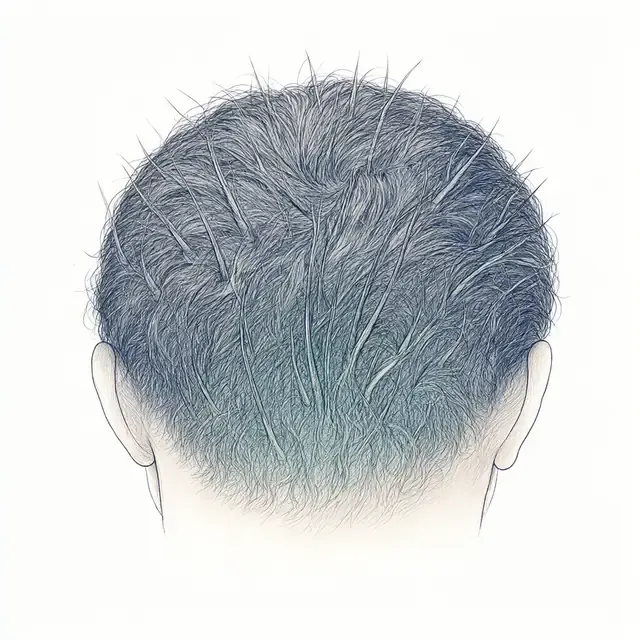 Donor scalp hairFollicles taken from back of scalp
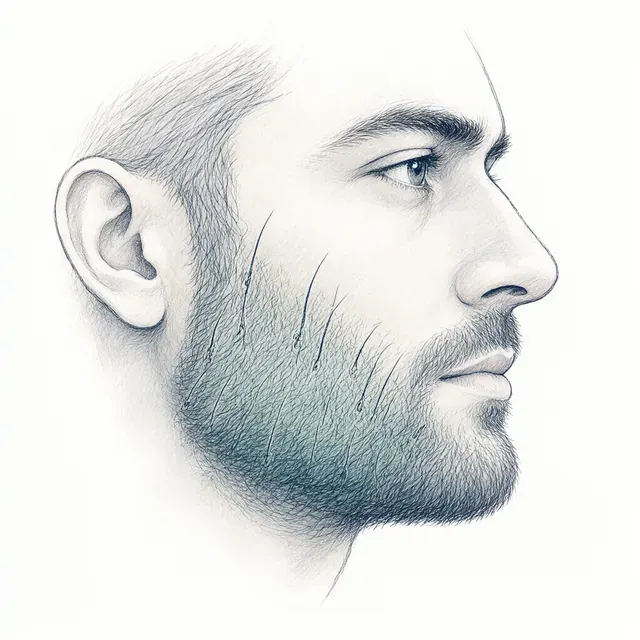 Transplanted graftsPlaced one by one at natural angle
- Technique
- Follicular unit extraction (FUE)
- Donor area
- Back or sides of the scalp
- Hair behaviour
- Grows like scalp hair, needs trimming
A beard and eyebrow transplant moves living hair follicles from a donor area on your scalp to the face. The procedure is called follicular unit extraction, or FUE. It takes individual follicles one by one from the back or sides of the head and places them into the beard, moustache or eyebrow area.
The relocated follicles keep the biology of the scalp hair they came from. This means the transplanted hair continues to grow over time and needs regular trimming, just like the hair on your head. Because the follicles are your own, the result is a long-term addition of real hair rather than pigment or filler.
The same FUE technique is used for beard, moustache and eyebrow work, with the angle and density adjusted for each zone.
Symptoms and warning signs that need urgent care the same day
- After surgery Worsening pain, spreading redness, fever, persistent bleeding, unusual drainage, or concerning skin colour changes
- Emergency Severe bleeding, collapse, chest pain, or difficulty breathing
The condition itself is visible thinning or absence of hair on the beard, moustache or eyebrows.
You may notice:
- Patchy growth
- A cheek line that will not connect
- A gap under the nose
- Brows that are thin, uneven or missing altogether
After a transplant, some signs need medical attention on the same day. Contact the surgical team if you have worsening pain, spreading redness, fever, persistent bleeding, unusual drainage, or concerning changes in skin colour. Severe bleeding, collapse, chest pain or difficulty breathing require emergency care.
If the donor area begins to separate, healing looks abnormal, or inflammation does not follow the expected pattern, call the hospital promptly.
Causes and who is at higher risk of facial hair loss
- Eyebrow loss
- Genetics, over-plucking, trauma, diet, scarring, thyroid disorders
- Beard loss
- Scarring, alopecia areata, hormone therapy plateau
- Higher transplant risk
- Thin donor area, active autoimmune disease, blood thinners
Eyebrow hair loss can arise from genetics, over-plucking or waxing, physical trauma, poor diet or nutritional imbalances, scarring, and thyroid disorders such as hypothyroidism or hyperthyroidism. In women, thinning often results from years of over-plucking, autoimmune conditions like alopecia areata, thyroid disorders, or ageing. Beard growth varies widely.
Testosterone therapy promotes beard growth, but the distribution and density differ substantially between individuals. Some trans men reach a plateau that still leaves significant patches or very sparse coverage. Scarring from burns, surgery, injury or cleft repair can destroy follicles in fixed areas. Conditions like alopecia areata can cause focal beard loss.
You are at higher risk of poor transplant outcomes if the scalp donor area is already thin or depleted from previous transplants. Active autoimmune conditions such as alopecia areata, lichen planopilaris or frontal fibrosing alopecia can attack transplanted follicles. Being on blood thinners, aspirin, fish oil, vitamin E or certain herbal compounds increases bleeding risk.
How facial hair loss is diagnosed: examination and tests
The surgeon examines the pattern of hair loss on your face and checks the density and quality of the donor area at the back and sides of your scalp. They ask about your medical history, including any thyroid disorders, autoimmune conditions, past trauma, surgery, or hormone therapy.
For transgender men, the surgeon will discuss how long you have been on testosterone and whether you plan facial masculinisation surgery, because that can change the position of transplanted hairs. The cause of hair loss is determined by considering biological limitations, the stability of the condition, and whether expectations are realistic.
If the hair loss is ongoing or the pattern is still developing — for example in a very young person — the surgeon may advise waiting until the situation is settled. For scarring alopecia or autoimmune conditions, surgeons typically want to see at least six to twelve months of disease stability before operating.
Non-surgical options and when a beard or eyebrow transplant is advised
Medical treatment for androgenetic alopecia can help retain existing hair and maintain the appearance of a transplant. When medically appropriate, treatment to slow further hair loss is strongly recommended, although no treatment can ensure long-term stabilisation. Microblading is a semi-long-term cosmetic tattoo that deposits pigment into the skin to mimic brow hairs; it typically fades within a few years.
An eyebrow transplant introduces real growing follicles and is considered a long-term solution. For beard and moustache, topical or oral medications may be tried first, but they do not create new follicles where none exist.
A transplant is advised when you have fixed areas of missing or sparse facial hair — such as cheek patches, a moustache gap, or a thin chin — and a healthy donor area on the scalp. It also works well over stable scar tissue from acne, cleft repair, burns or injury.
Good candidates have:
- Patchy or uneven facial hair that is not actively changing
- Sufficient donor hair that matches the needed texture
- Realistic expectations about density and the need for regular trimming
If the donor area is thin or the hair loss is ongoing, the surgeon may advise waiting or exploring other options.
Preparing for a beard and eyebrow transplant
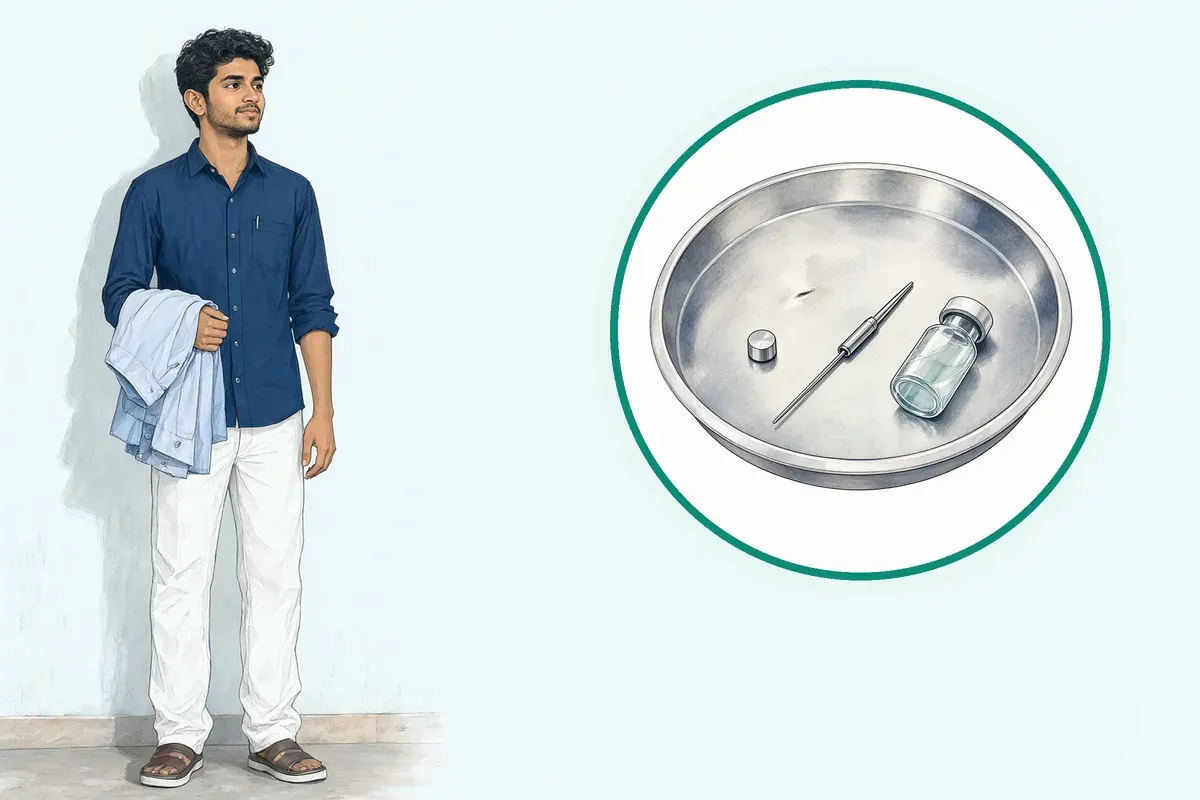
Your surgeon will review your medical history and any medicines you take, including blood thinners, aspirin, or supplements such as fish oil or vitamin E, because these can increase bleeding risk during the procedure. You may be asked to stop these one to two weeks before the operation after discussion with your prescribing doctor.
The surgeon will also check whether you have any active skin or autoimmune condition such as alopecia areata or lichen planopilaris, since ongoing follicle destruction can affect transplanted grafts.
If you are a transgender man on testosterone, surgeons usually recommend waiting at least one to two years after starting hormone therapy so the natural beard pattern can stabilise before planning the transplant. You should bring a list of current medicines, any previous surgical records, and photographs that show the beard or eyebrow shape you prefer.
On the day of the procedure you will have a light breakfast and wear a button-down shirt so you do not need to pull clothing over your head afterward. The hospital provides a day-care bed and all sterile drapes and gowns.
How a beard and eyebrow transplant is done
- 0.7 to 1.0 mm Punch tool size
- One to four Hairs per graft
- 20 to 40 grafts per sq cm Eyebrow density
- Four to six hours Operation time
The procedure uses follicular unit extraction (FUE), which removes individual hair follicles from the back or sides of your scalp using a small punch tool typically 0.7 to 1.0 mm in diameter. Each graft contains one to four hairs.
The grafts are kept in a chilled holding solution while your surgeon creates tiny recipient sites on the face at angles and spacing that match natural beard or eyebrow growth direction.
For eyebrows, the angle changes across the brow:
- Medial hairs point slightly upward and outward
- Arch hairs point outward
- Tail hairs angle downward
The density required for a natural eyebrow is about 20 to 40 grafts per square centimetre. For a beard, the surgeon maps cheek lines, moustache, neckline, and the transition to sideburns, grading density so the beard looks lighter at the edges and fuller through the body. Single-hair grafts are placed along the outer lines for softness.
The operation takes four to six hours under local anaesthesia; you are awake but numb and typically feel little to no pain during surgery. The hospital's modular operation theatres and in-house pharmacy support the procedure.
Your surgeon will advise which technique suits you, whether standard FUE or direct hair implantation (DHI) using an implanter pen for finer control of angle and depth on the face.
Risks and possible complications of beard and eyebrow transplant
- Shock loss
- Hairs shed in first six weeks, follicle stays alive
- Infection and folliculitis
- Rare infection; pimples may appear and clear on their own
- Graft failure
- Some grafts do not survive; above 10-15% suggests a problem
- Unnatural angle
- Does not resolve on its own, needs corrective surgery
Transplanted hairs shed within the first six weeks; this is a normal and expected phase called shock loss and does not mean the procedure has failed. The follicle remains alive under the skin and will produce new hair. Infection at graft sites is possible but relatively rare when post-operative care instructions are followed.
Folliculitis, which looks like small pimples, can appear during the first few weeks and usually clears on its own or with a short course of topical antibiotics.
Graft failure, meaning grafts that do not survive and produce no hair, happens to some percentage of grafts in every procedure; failure rates above 10 to 15% suggest a problem with technique, handling, or post-operative care. An unnatural growth angle does not resolve on its own and would require corrective surgery. Getting the eyebrow growth direction wrong is immediately visible.
The face has excellent blood supply, so it heals faster than the scalp, but swelling can be more dramatic in the first days. FUE leaves tiny punch scars at the donor area that are typically invisible once hair grows back to a few centimetres.
Recipient sites on the face generally heal without visible scarring because the implant sites are so small. Worsening pain, spreading redness, fever, persistent bleeding, unusual drainage, or concerning changes in skin colour require prompt medical assessment. Severe bleeding, collapse, chest pain, or difficulty breathing require emergency care.
Recovery and aftercare after beard and eyebrow transplant
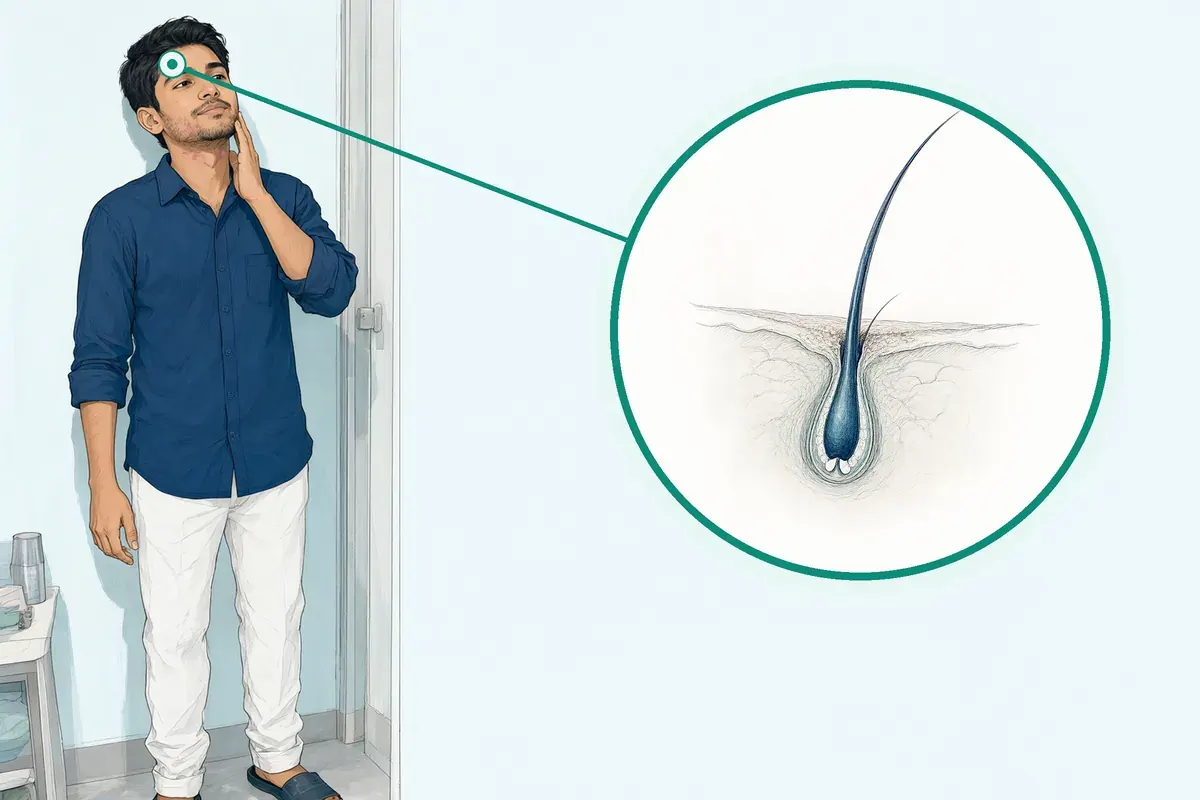
In the first three days you may have pink dots at each graft site and mild swelling around the cheeks and jaw; sleep with your head raised and avoid touching or rubbing the face.
Days four to seven bring tiny crusts around each hair while swelling fades; gentle washing as instructed begins around day three or four using diluted baby shampoo or a specific post-operative wash. By day seven to ten the crusts start to fall off. Most people take a week off work because the face can look like a bad rash.
Week two: crusts fall away, redness softens, and most men return to normal social plans; avoid shaving near the grafts. Weeks three to four: the face looks close to normal, some transplanted hairs start to fall out — this is expected and temporary.
Between week two and week six many transplanted hairs shed; the follicle rests and then starts producing a new hair. Months one to two: shedding, then a quiet period where little seems to change. Months three to four: new hairs break through, often fine and light at first.
Months five to six: coverage fills in and hairs thicken; most men can see the new shape clearly. Months seven to nine: density keeps building and texture matures. Months ten to twelve: the result is close to final for most patients. Shaving is normally fine after at least three to four weeks.
Transplanted beard hairs grow like scalp hair, so they grow faster than native beard hair and need more frequent trimming and shaping. Transplanted eyebrow hairs need trimming regularly, often every two to three weeks. Avoid sun exposure to the recipient sites for the first month or two because hyperpigmentation at graft sites is a real risk.
Contact the surgical team if you have worsening pain, spreading redness, fever, persistent bleeding, unusual drainage, or concerning skin colour changes.
Results of beard and eyebrow transplant
- Above 85% Patient satisfaction
- Over 95% Growth rate
- 100 to 400 per brow Eyebrow grafts
- Nine to twelve months Final result
Transplanted follicles keep the growth characteristics of their donor site, so once established they grow permanently. This principle, called donor dominance, has been understood since the 1950s. Scalp hair follicles moved to the face will keep growing scalp-style hair indefinitely because the characteristic that makes a follicle resistant to DHT is coded into the follicle itself.
The relocated follicles behave like the scalp hair they came from, which means the transplanted hair continues to grow over time and requires regular trimming. For eyebrows, this means the transplanted hair does not stop at a fixed length like natural brow hair, so you will need to trim it.
Most men are happy with the look at around six months and consider the beard complete at roughly a year. Final density and appearance take nine to twelve months. In studies, patient satisfaction rates for beard and moustache transplantation were above 85%. Growth rates of transplanted hairs are usually over 95%.
A single eyebrow usually requires roughly 100 to 400 grafts depending on the area to be rebuilt. Hair transplantation generally cannot restore the density that existed before significant hair loss occurred. Transplanted hair can continue growing for many years, although long-term stability depends on the characteristics of the donor hair and your underlying pattern of hair loss.
Continued thinning of your existing hair can reduce the overall appearance of density even when transplanted grafts are growing successfully. A secondary grafting procedure may be needed a year after the initial transplant to achieve desired density.
Cost and insurance for beard and eyebrow transplant in Jaipur
- ₹35,000 to ₹1,00,000 Typical price
- 300 to 500 grafts Moustache fill
- 2,000 to 3,000 grafts Full beard
The typical price range in India is ₹35,000 to ₹1,00,000. The final cost depends mainly on the number of grafts required, which varies with the size of the area you want to fill and the density you prefer. A moustache fill of 300 to 500 grafts takes less time than a full beard of 2,000 to 3,000 grafts.
Customised designs such as a specific eyebrow arch or a defined cheek line cost more because they require more time and skill. Surgeon experience and reputation is the biggest factor pushing cost up or down. The hospital stay is day care. This is a cosmetic procedure and is typically not covered by health insurance.
If hair loss is due to a medical condition or trauma, some coverage may be available. Jaipur Hospital is empaneled under MAA Yojana and a panel of private insurers and TPAs; you can check with your scheme administrator whether any portion applies. Ask the hospital for an estimate based on your graft count and design.