
Plastic Surgery · Jaipur Hospital
Breast Reconstruction After Cancer in Jaipur
You have finished cancer treatment, but your body feels changed. Jaipur Hospital offers a detailed assessment and a clear surgical plan.
- Serving Jaipur since 1991 (35 years)
- NABH accredited
- 24×7 emergency & ICU
- Cashless: RGHS, MAA Yojana, CGHS + 32 insurers
- Operation time
- 2 to 4 hours
- Anaesthesia
- General anaesthesia
- Recovery
- Daily activities in 2 to 3 weeks, full recovery in 6 to 8 weeks
- Price
- ₹2,00,000 to ₹4,50,000typical range in India; ask us for an estimate
Coping with changes after cancer
Facing the changes left by mastectomy
Losing a breast to cancer alters your physical balance and self-image. Adapting to clothing and prostheses can bring daily strain and worry about the future.
-
Uneven body balance
Clothing may fit awkwardly after a mastectomy, leaving you feeling physically unbalanced during ordinary daily activities.
-
A change in self-image
Looking in the mirror can serve as a persistent reminder of cancer and medical treatment.
-
Uncertainty about reconstruction
You may wonder whether reconstruction is safe after cancer or how further operations will affect your routine.
Studies found no evidence of an increased frequency of local cancer recurrence with immediate reconstruction compared with mastectomy alone.
Why Jaipur Hospital
We understand the worry about facing further operations and taking time away from your family or work after cancer.
Your care plan
Your first steps with us
- 1 Book an OPD consultation with our surgical team.
- 2 Review your cancer history, scans, and reconstructive options.
- 3 Undergo surgery in our modular theatre under general anaesthesia.
- 4 Follow your guided recovery plan with regular clinic reviews.
How breast reconstruction is done
Your surgeon will discuss surgical approaches based on your body, cancer treatment history, and whether you require radiation therapy.
-
Immediate implant reconstruction
Done at the same time as your mastectomy, rebuilding the breast shape in a single operation under general anaesthesia.
-
Delayed implant reconstruction
Performed months or years after mastectomy, often starting with a tissue expander to prepare the skin.
-
Tissue expander to implant
A staged approach where a temporary expander stretches the chest skin gradually before being swapped for an implant.
-
Acellular dermal matrix (ADM) support
A biologic mesh placed to cover the lower pole, providing internal physical support to hold the implant.
Why patients trust us
- 1991 Serving Jaipur for 35 years
- NABH Accredited hospital
- 1 Plastic Surgery consultants
- 24×7 Emergency, ICU and ambulance
- 35 Cashless schemes and insurers
Clinical findings on breast reconstruction
-
0.98
Odds ratio for local cancer recurrence after immediate breast reconstruction compared to mastectomy alone, showing no increase.
-
5.7%
Infection rate reported across pooled studies of patients undergoing matrix-assisted breast reconstruction procedures.
-
0.6%
Capsular contracture rate found in a pooled meta-analysis of acellular dermal matrix breast reconstructions.
If it is left untreated
Leaving a mastectomy site unreconstructed carries no cancer danger, but some women experience ongoing asymmetry, posture strain, or distress from an altered body contour.
Life after breast reconstruction
Reconstruction rebuilds breast shape to help clothing fit normally, though the reconstructed breast will not feel identical to natural tissue.
-
Gradual settling of shape
Implants usually take up to three months to settle into place as swelling subsides.
-
Fading surgical scars
Surgical incision lines typically lighten over three to six months and continue to fade over one to two years.
-
Return to regular routine
Most people return to daily activities within two to three weeks, with full recovery taking six to eight weeks.
Meet the team
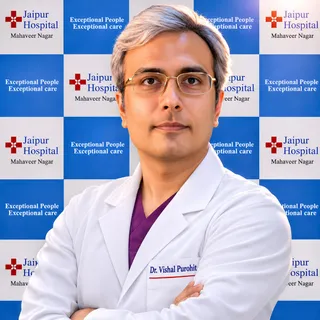
Your plastic surgery doctors
Explore our plastic surgery hospital in Jaipur: every treatment, the doctors and what to expect at your visit.
Frequently asked questions
Questions patients ask about breast reconstruction after cancer
What does implant based breast reconstruction involve?
In short
Implant based breast reconstruction rebuilds the breast shape using a silicone implant. At Jaipur Hospital the operation takes two to four hours under general anaesthesia. You usually stay in hospital for two to four nights. Recovery to daily activities takes two to three weeks, with full recovery in six to eight weeks.
In detail
The surgeon places a silicone implant either at the same time as the mastectomy (immediate reconstruction) or months later (delayed reconstruction).
In delayed cases a tissue expander is often inserted first to stretch the skin gradually over eight to twelve weeks before it is swapped for the final implant.
An acellular dermal matrix (ADM) made from pig or cow skin, or a synthetic mesh, may be used to support the lower part of the implant. The implant can be placed under the chest muscle (sub pectoral) or on top of it (pre pectoral).
Studies show ADM can lower capsular contracture rates but may raise the risk of infection, seroma and skin flap necrosis.
A common belief
Many people think the implant is always put in straight away.
What actually happens
In delayed cases a tissue expander stretches the skin first over several weeks. ADM mesh can help support the implant but may increase infection or fluid collection risks.
Your next step at Jaipur Hospital
Your surgeon will explain which approach suits your cancer treatment plan and body shape. If radiotherapy is needed a two stage reconstruction with an expander is often preferred. You will have a pre anaesthetic check and routine blood tests before surgery.
Which tests and scans do I need before implant based breast reconstruction?
In short
Before implant based breast reconstruction at Jaipur Hospital you usually need routine blood tests, a chest X ray, an ECG and recent breast imaging such as mammography or MRI. The surgeon may also ask for a CT scan if radiotherapy planning is involved.
In detail
Standard pre operative workup checks your fitness for general anaesthesia. Blood tests include haemoglobin, kidney and liver function, and clotting profile. A chest X ray and ECG screen heart and lung health. Recent mammogram or MRI of the opposite breast helps plan symmetry.
If you have had neoadjuvant chemotherapy, imaging confirms tumour response. For patients with genetic mutations like BRCA, a breast MRI may be recommended. The anaesthetist reviews all results at the pre anaesthesia check up.
No special scans beyond these are routinely required unless your medical history suggests otherwise. The hospital has an in house diagnostic laboratory and imaging department so most tests can be done on site.
A common belief
Patients often expect a long list of special scans.
What actually happens
In reality the workup is standard for any general anaesthetic. The key imaging is for surgical planning and symmetry, not for the implant itself.
Your next step at Jaipur Hospital
Arrange the tests a week before your planned admission so results are ready for the anaesthetist. Bring previous reports and a list of current medicines. The pre anaesthesia check up is usually the day before surgery.
How painful is the breast reconstruction after cancer procedure and the early recovery?
In short
At Jaipur Hospital, breast reconstruction after cancer is done under general anaesthesia so you feel no pain during the operation. After surgery, discomfort, muscle spasm and mild to moderate pain are common for the first few days, especially with tissue expander placement. The team gives regular pain relief and most patients find the pain manageable and decreasing each day.
In detail
Evidence shows that after tissue expander placement or final reconstruction, symptoms include minor swelling and bruising for up to eight weeks, tightness across the chest, and shooting electrical sensations as nerves heal. Numbness or lack of sensitivity may last a few months or longer.
Crusting along incision lines and scar redness that lightens within three to six months are also typical. If an acellular dermal matrix (ADM) is used, the breast might feel very tight and uncomfortable for about 48 hours each time fluid is added during expansion.
Pain is usually controlled with oral analgesics; stronger medication is available if needed. The surgical team encourages early mobilisation and breathing exercises, which also reduce discomfort.
Most people do not need formal physical therapy, but it may start three to four weeks after surgery if the surgeon advises it.
A common belief
Some people think the pain is severe for weeks.
What actually happens
In reality, the worst discomfort is usually the first 48 to 72 hours, especially with tissue expanders. Numbness and shooting sensations can last months but are not usually described as pain. Strong opioids are rarely needed beyond the first few days.
Your next step at Jaipur Hospital
Take prescribed pain medicine on schedule for the first 48 hours, then as needed. Wear a supportive, non-underwired front-fastening bra day and night.
Sleep on your back with extra pillows for at least one week; side sleeping is allowed after three to four weeks if drains are out and it feels comfortable. Avoid soaking in a bathtub or pool until incisions heal.
Contact the hospital if pain suddenly worsens, you develop a fever, or the wound becomes red, hot or leaks fluid.
How long does recovery usually take after breast reconstruction after cancer?
In short
At Jaipur Hospital, recovery after breast reconstruction after cancer usually allows daily activities in 2 to 3 weeks and full recovery in 6 to 8 weeks. Hospital stay is typically 2 to 4 nights. The exact timeline depends on whether you have immediate implant, delayed expander-to-implant, or tissue-based reconstruction.
In detail
For tissue expander placement, you usually go home the day after surgery. Expansion begins after 2 to 3 weeks and continues every couple of weeks for 8 to 12 weeks.
The expander-to-implant exchange takes about an hour and may be a day case or one overnight stay. For tissue-based or flap reconstruction, the hospital stay is 1 to 4 days.
Most people are ready to drive and return to desk work around 4 to 6 weeks after either expander or flap surgery. Heavy lifting may need longer restrictions. Drains, if placed, must be removed before driving or sleeping on your side.
You can shower daily once home but avoid soaking in a bathtub or pool until incisions heal. Arm and shoulder exercises start soon after surgery with guidance from a physiotherapist or nurse. Scars fade over 1 to 2 years. Implants settle within 3 months. Nipple reconstruction and revisions are usually done after 3 months.
A common belief
Patients often think they will bounce back in a few days.
What actually happens
In reality, tissue expansion takes months, and even after the final implant, the breast takes three months to settle. Driving and heavy lifting wait until drains are out and pain medicine is stopped. Rushing can cause seroma or wound breakdown.
Your next step at Jaipur Hospital
Plan for 2 to 4 weeks off work for desk jobs, longer for physical work. Sleep on your back with pillows for at least one week. Wear a supportive front-fastening bra day and night.
Attend follow-ups at 1 to 2 weeks, then every 1 to 2 weeks for two months. Do not drive until off prescription pain medicine for 24 hours, drains are out, and you can operate a vehicle safely. Contact the hospital if you develop fever, increasing pain, sudden swelling or wound problems.
How will size, shape, and symmetry be planned for breast reconstruction?
In short
Your surgeon at Jaipur Hospital will discuss size, shape, and symmetry with you before surgery. They will examine your remaining breast, take measurements, and talk about your goals. The plan may include adjusting the other breast later to improve the match.
In detail
Planning starts with a clinical assessment of your chest wall, skin envelope, and the opposite breast. The surgeon will explain the options: immediate or delayed reconstruction, implant-based or tissue-based, and whether a tissue expander is needed first.
Studies show that the reconstructed breast will not look exactly the same as the natural breast. It is likely to be firmer, less mobile, and may not droop naturally with age. Over time, the natural breast changes with weight and ageing, so asymmetry often increases.
Surgeons often recommend surgery on the other breast — such as a lift, reduction, or augmentation — to improve symmetry. This is usually done as a separate procedure after the reconstruction has settled. The final appearance also depends on whether you need radiotherapy, which can tighten the skin and affect the result.
A common belief
Many people expect the new breast to look identical to the old one.
What actually happens
Evidence shows it will be firmer, less mobile, and age differently. Symmetry often needs a second procedure on the natural breast, not just the reconstruction.
Your next step at Jaipur Hospital
Expect a detailed discussion at your consultation. The surgeon will show you implant sizers and explain typical outcomes. You may need a second operation on the other breast for symmetry, usually three to six months later. Radiotherapy timing will be factored into the plan.
How will appearance, function, and realistic expectations be discussed for breast reconstruction?
In short
At Jaipur Hospital, your surgeon will discuss appearance, function, and realistic expectations during your consultation. They will explain what reconstruction can and cannot achieve, show typical results, and outline the likely need for future procedures.
In detail
The conversation covers the fact that the reconstructed breast will not look or feel exactly like the original breast. Evidence shows it is likely to be firmer, less mobile, and feel colder. It will not droop naturally with age.
Scars will be visible and may take one to two years to fade, but they often remain noticeable. Asymmetry with the other breast is common and may increase over time as the natural breast changes.
Further surgery is often needed — to adjust the implant, revise scars, reconstruct the nipple, or operate on the other breast for symmetry. If you need radiotherapy, the surgeon will explain how it can affect the final shape and hardness.
The goal is to give you a clear picture so you can decide what matters most to you. No outcome is certain.
A common belief
Patients often expect the reconstruction to look exactly like the breast they lost.
What actually happens
Evidence shows it will not match perfectly in feel, movement, or ageing. Understanding this early prevents disappointment later.
Your next step at Jaipur Hospital
Expect a 30 to 45 minute consultation with time for questions. Bring photos of your desired outcome if helpful. The surgeon will outline the staged timeline, possible complications, and the likelihood of revision surgery.
Why might my doctor recommend implant based breast reconstruction?
In short
Your doctor may recommend implant based breast reconstruction at Jaipur Hospital to restore breast shape after mastectomy when you prefer a shorter operation and avoid donor site scars from tissue flap surgery. It can be done at the same time as the mastectomy or months later depending on your cancer treatment.
In detail
Implant reconstruction uses a silicone implant with or without a tissue expander and sometimes acellular dermal matrix for support. It avoids the longer surgery and abdominal or back scars that come with autologous tissue flaps.
In studies, surgical site infection was significantly lower with implant reconstruction compared to abdominal tissue flaps. The procedure allows you to wake from surgery with a formed breast when done immediately. It may provide psychological and aesthetic benefits by restoring body image.
The implant can remain in place for many years if no problems arise. Your surgeon will consider your breast size, skin quality, need for radiotherapy and overall health.
If you have small breasts, tissue expansion alone can give a good appearance without a major flap operation. The reconstructed breast will be firmer, less mobile and feel cooler than a natural breast and will not droop with age.
A common belief
Some patients expect the result to feel exactly like a natural breast.
What actually happens
Implant reconstruction feels firmer, cooler and does not droop with age. It also carries a small risk of capsular contracture and may need future surgery.
Your next step at Jaipur Hospital
The decision balances cancer safety, cosmetic goals and recovery time. If radiotherapy is planned, a delayed two stage approach with a tissue expander is often advised. You will need follow up for implant monitoring and possible future surgery for symmetry or implant exchange.
How should I prepare in the days before implant based breast reconstruction?
In short
In the days before implant based breast reconstruction at Jaipur Hospital you should stop smoking completely as it impairs wound healing and increases infection risk. Follow your surgeon's instructions on stopping blood thinners or herbal supplements. Arrange for an attendant to stay with you during the two to four night hospital stay and help at home for the first two to three weeks. Prepare loose front opening clothing and a supportive non underwired bra.
In detail
Smoking cessation is critical because nicotine reduces blood flow to the skin flaps and raises the risk of mastectomy flap necrosis, which occurs in about 10.9 percent of cases in studies. Infection and seroma rates are also higher in smokers.
Your surgeon will give a specific timeline for stopping medications such as aspirin, clopidogrel or herbal products that affect bleeding. You will need to fast from midnight before surgery for general anaesthesia.
Complete any pending blood tests, chest X ray and ECG at the in house laboratory. Pack toiletries, regular medications, and comfortable clothes that do not need to go over your head. The hospital provides a canteen with dietary meals but you may bring preferred snacks. Plan for limited arm movement and no heavy lifting for four to six weeks after discharge.
- Smoking cessation is critical because nicotine reduces blood flow to the skin flaps and raises the risk of mastectomy flap necrosis, which occurs in about 10.9 percent of cases in studies.
A common belief
Many patients underestimate how much smoking raises flap necrosis and infection risk.
What actually happens
They also forget they cannot lift their arms fully or drive for weeks, so home help is essential.
Your next step at Jaipur Hospital
Confirm your admission time with the hospital the day before surgery. Your attendant should be ready to assist with drains, dressings and daily activities at home. The surgeon will mark the surgical site and answer final questions on the morning of the operation.
What are the common side effects and the less common serious complications of breast reconstruction after cancer?
In short
At Jaipur Hospital, common side effects after breast reconstruction after cancer include swelling, bruising, tightness, numbness, shooting nerve sensations, crusting along incisions and scar redness that fades over three to six months. Less common serious complications are infection, seroma, haematoma, skin flap necrosis, capsular contracture, implant malposition and reconstructive failure requiring further surgery.
In detail
Pooled data from multiple studies show seroma in about 6.9% of cases, infection in 5.7%, skin flap necrosis in 10.9%, haematoma in 1.3%, capsular contracture in 0.6% and reconstructive failure in 5.1%.
Using acellular dermal matrix (ADM) lowers capsular contracture and implant malposition but raises the risk of infection, seroma and mastectomy flap necrosis. ADM does not change the risk of implant loss, unplanned reoperation or total complications. Radiation therapy can increase implant hardening and shape distortion.
Textured implants carry a rare risk of BIA-ALCL, a lymphoma usually treated by removing the implant and capsule. Autologous abdominal tissue reconstruction has lower surgical-site infection but higher flap necrosis compared with tissue expander or implant reconstruction.
Capsular contracture can make the breast feel hard and uncomfortable years later and may need surgery to revise the implant or the other breast for symmetry.
A common belief
Patients often worry most about implant rupture or cancer returning.
What actually happens
The evidence shows reconstruction does not increase cancer recurrence. The more frequent issues are seroma, infection and flap healing problems. Textured implants have a rare lymphoma link, but smooth implants are now standard at many centres.
Your next step at Jaipur Hospital
Watch for fever above 38°C, spreading redness, increasing pain, sudden swelling, wound breakdown or fluid leaking from the incision. These need urgent review. Routine follow-up is scheduled at one to two weeks, then regularly for the first two months.
Scars fade over one to two years but may always be noticeable. Implants can remain in place for many years if no problems arise, but replacement may be needed later.
Which symptoms are expected afterwards, and which need urgent medical attention after breast reconstruction after cancer?
In short
At Jaipur Hospital, expected symptoms after breast reconstruction after cancer include minor swelling and bruising for up to eight weeks, discomfort, muscle spasm, mild to moderate pain, crusting along incisions, itching, shooting electrical sensations as nerves heal, numbness, scar redness that lightens in three to six months, tightness across the chest, upper body weakness, and a contour that is not yet smooth with a tissue expander. Urgent symptoms are fever above 38°C, spreading redness, sudden severe pain, rapid swelling, wound breakdown, fluid leaking from the incision, or shortness of breath.
In detail
Evidence lists these expected symptoms after tissue expander placement or final reconstruction. The breast may feel very tight and uncomfortable for about 48 hours each time saline is added during expansion. Numbness or lack of sensitivity may last a few months or longer.
Scars start to fade within one to two years but may always be noticeable.
Serious complications such as infection (5.7%), seroma (6.9%), haematoma (1.3%), skin flap necrosis (10.9%), capsular contracture (0.6%) and reconstructive failure (5.1%) usually present with fever, spreading redness, increasing pain, sudden swelling, wound opening or drainage.
Shortness of breath or chest pain could indicate a pulmonary embolus and needs immediate emergency care. Textured implants carry a rare risk of BIA-ALCL, which may appear as late swelling or a lump around the implant. Any new lump, persistent asymmetry or hardening should be reported at follow-up.
A common belief
Patients often mistake normal nerve sensations for nerve damage, or normal tightness during expansion for infection.
What actually happens
Conversely, they may ignore a low-grade fever or slow wound leak thinking it's part of healing. Both can delay treatment. Know the red flags and act fast.
Your next step at Jaipur Hospital
Keep the hospital's contact number handy. For urgent symptoms, go to the 24×7 emergency department at Jaipur Hospital or call an ambulance. For expected symptoms, use prescribed pain relief, wear a supportive non-underwired front-fastening bra, do prescribed arm exercises, and attend all follow-ups. Do not soak in a bathtub or pool until the surgeon clears it.
FAQ library
Questions and answers about breast reconstruction after cancer
When you contact us
Consult our surgical team in Jaipur
Reach out to Jaipur Hospital to arrange an OPD assessment and discuss your reconstructive choices.
- A consultation with a plastic surgeon in the OPD
- Your scans and reports reviewed, with tests done in-house if you need them (laboratory, X-ray and imaging)
- Your options explained in plain words, including whether you need surgery at all
- A cost estimate before you decide
- Help with cashless treatment under RGHS, MAA Yojana, CGHS and empanelled insurers and TPAs
- Follow-up visits after your treatment
Overview
Breast Reconstruction After Cancer: what to know
What is breast reconstruction after cancer?
- Immediate reconstruction
- Reconstruction done at the same time as your mastectomy.
- Delayed reconstruction
- Reconstruction taking place months or years later.
- Tissue expander
- A temporary device used to stretch skin before placing an implant.
Breast reconstruction after cancer is an operation that rebuilds the breast shape after a mastectomy. A mastectomy is a surgical procedure that removes breast tissue to treat cancer. This operation can use an artificial implant, living tissue from your own body, or both to form a new breast. Reconstructive surgery may be performed as a single operation or divided into stages over time.
When an implant is chosen, the outer shell is typically made of silicone. In some cases, the surgeon places a temporary expander first to gradually stretch the skin and chest muscles. Sterile saline water is added into the expander over several weeks until enough skin is created. Later, an operation replaces the expander with a long-term silicone implant.
Reconstruction can happen at the same time as your mastectomy, which is called an immediate reconstruction. It can also take place months or years later, which is known as a delayed reconstruction. A supportive mesh, called an acellular dermal matrix or ADM, can be placed during surgery to support the lower pole and hold the implant.
In women with large or droopy breasts, your surgeon can also use spare skin as a dermal sling to support the implant.
Reconstruction restores breast contour and helps address your quality of life and self-image after cancer treatment. A reconstructed breast feels firmer, less mobile, and cooler than natural tissue. It will not look completely identical to your other breast. Your surgeon can explain the available methods and help you decide which approach suits your body.
Symptoms after reconstruction and warning signs that need urgent care
- Sudden swelling or bleeding Contact the team straight away for urgent examination.
- Signs of wound infection Increasing heat, expanding redness, spreading tenderness, or fever.
- Skin flap breakdown Sudden breakdown or darkening of the skin flap.
After surgery to place a tissue expander or an implant, it is normal to notice mild to moderate pain, muscle spasms, and chest discomfort. You may have minor swelling and bruising that can take up to 8 weeks to settle. Redness along the scar typically lightens within 3 to 6 months. Scars start to fade within 1 to 2 years, though they may always stay noticeable.
Healing nerves in the chest wall can cause itching, shooting electrical sensations, or numbness that lasts for months or longer. Crusting along your incisions and chest tightness are also common during early healing. When you have a tissue expander, each saline filling may make the breast feel tight and uncomfortable for about 48 hours.
The shape may feel uneven or firm until the final implant is placed and settles. Implants typically settle into position over 3 months.
Some symptoms require urgent medical care on the same day.
Contact our surgical team or visit the OPD straight away if you experience:
- Sudden swelling
- Bleeding
- Wound reopening
- Fluid build-up around the breast
These signs can indicate a haematoma, seroma, or wound separation that requires timely examination.
Signs of wound infection, such as increasing heat, expanding redness, spreading tenderness, or fever, also need urgent assessment. In a study of acellular dermal matrix procedures, complications included seroma in 6.9%, infection in 5.7%, and wound cellulitis in 2.0% of cases. Sudden breakdown or darkening of the skin flap must also be checked without delay.
Causes of reconstruction needs and who is at higher risk of complications
The need for breast reconstruction arises after a woman undergoes a mastectomy or skin-sparing mastectomy to treat breast cancer or manage a high-risk gene mutation. Removing the breast tissue alters the natural contour of the chest wall. Rebuilding the breast helps restore self-image and symmetry.
Certain medical factors can raise the risk of healing difficulties or surgical complications. Women who have had radiation therapy to the chest area face higher chances of complications. Radiation makes the skin less stretchy, may slow tissue healing, and increases the chance that scar tissue around an implant will harden and change the breast shape.
In clinical trials, acellular dermal matrix used with implants did not show higher infection or overall complication rates in irradiated patients, but surgical planning must be carefully tailored.
Over time, your body forms a layer of scar tissue around any silicone implant. In some women, this capsule contracts and tightens over many years. This condition, known as capsular contracture, makes the breast feel hard, uncomfortable, or misshapen.
Studies show acellular dermal matrix reduces the risk of capsular contracture, but it can increase the risk of seroma, infection, and skin flap necrosis.
Women who receive textured breast implants carry a small risk of developing breast implant-associated anaplastic large cell lymphoma, known as BIA-ALCL. This is a rare cancer of the immune system linked primarily to textured surfaces rather than smooth surfaces.
In studies in the United States, only a small percentage of patients with textured implants have been found to develop this condition. When identified, it is usually easy to treat by surgically removing the lymphoma and the implant.
How breast reconstruction is evaluated: examination and tests
- Chest wall examination
- Checks skin elasticity, skin thickness, and muscle strength.
- Cancer history review
- Reviews cancer stage and planned chemotherapy or radiotherapy.
- Diagnostic tests
- Blood tests, chest X-rays, and ECG checks for general anaesthesia.
Before planning breast reconstruction after cancer, your surgeon conducts a thorough physical examination in the OPD. The surgical team checks your chest wall, the elasticity and thickness of your skin, and the strength of your pectoral muscles. If you had a radical mastectomy where chest muscles were removed, an implant reconstruction placed under the muscle cannot be done.
Your cancer history is evaluated alongside your surgical oncologist. The surgical team reviews your cancer stage, previous surgery records, and planned oncology treatments such as chemotherapy and radiotherapy. In published clinical reviews, cancer recurrence after immediate breast reconstruction showed an odds ratio of 0.98 compared with mastectomy alone, showing no evidence of increased local cancer recurrence.
Diagnostic tests include imaging studies to evaluate the opposite breast and chest wall. An in-house diagnostic laboratory and imaging radiology unit provides pre-operative blood tests, chest X-rays, and ECG evaluations to ensure you are fit for general anaesthesia. If you had an implant placed previously, imaging checks for fluid collections or capsule tightness.
Regular screening mammograms continue on your natural breast after surgery. You will not need routine mammograms on your reconstructed breast unless some residual breast tissue was preserved. You can always ask your nurse or doctor if you are unsure whether your remaining tissue requires imaging.
Non-surgical alternatives and when surgery is advised
Non-surgical options
- External breast prosthesis Worn inside a bra to give shape under clothes.
- Remaining flat Choosing not to rebuild the breast contour.
Surgical options
- Breast reconstruction Using an implant or your own body tissue.
Breast reconstruction is entirely voluntary and is not required for cancer control. Non-surgical options exist for every woman after a mastectomy. You may choose to wear an external breast prosthesis inside a supportive bra to give shape under clothing. Alternatively, you may decide not to reconstruct the breast at all and remain flat on the chest wall.
Surgical reconstruction is advised when a woman wishes to restore her breast shape and self-image after cancer surgery. If you choose surgical reconstruction, your surgeon will discuss whether immediate or delayed surgery suits you. An immediate reconstruction combines the mastectomy and reconstruction into a single anaesthetic, while delayed reconstruction is done months or years later.
Your surgeon will also help you choose between an implant, a tissue expander, or living tissue from your abdomen. In studies comparing methods, autologous abdominal living tissue had lower rates of surgical-site infection and lower reconstructive failure than implants, but had higher rates of skin flap necrosis.
Implants provide good results without taking tissue from another part of your body, but they may need replacement in future years if problems arise.
Jaipur Hospital typically conducts breast reconstruction under general anaesthesia, with the operation usually taking 2 to 4 hours. Patients typically stay in the hospital for 2 to 4 nights. Return to light daily activities usually occurs in 2 to 3 weeks, with full recovery in 6 to 8 weeks.
The cost typically ranges from ₹2,00,000 to ₹4,50,000 depending on the technique, implant type, and hospital stay; ask us for an estimate.
Preparing for breast reconstruction surgery
Do
- Discuss all medicines Share your vitamins, supplements, and regular medicines.
- Arrange a family attendant Have an attendant stay with you during your hospital stay.
- Bring front-fastening bra Bring a supportive, comfortable bra with no underwire.
Avoid
- Do not drive yourself You cannot drive while taking prescription pain medicines.
When you plan for breast reconstruction after cancer, our surgical team will check your overall health and previous cancer treatments. Women eligible for immediate reconstruction are typically adults who have had breast cancer or carry a gene mutation linked with the disease and plan for skin-sparing mastectomy.
If you have had a radical mastectomy where the chest muscles were removed, you cannot have this type of reconstruction. Your surgeon will also check whether you need radiotherapy, as radiation can make the skin less stretchy and increases the risk of implant hardening.
Before the operation, you will attend the OPD for tests and an assessment by our anaesthesia team. You should discuss all your regular medicines, vitamins, and supplements with your doctor. If you take prescription pain medicines, you must plan ahead with an attendant because you cannot drive while taking them. You will receive clear instructions on fasting before surgery, as the operation is carried out under general anaesthesia.
You should arrange for a family attendant to stay with you during your hospital stay. Pack loose, comfortable clothing to wear on discharge. It is helpful to bring a supportive, comfortable bra that fastens at the front and has no underwire. If you have any temporary swelling, you may need a slightly larger bra size than usual. You will also need to bring your government identity proof, insurance papers, and past oncology records.
How breast reconstruction after cancer is done
- Placing the expander An empty silicone shell is placed under the chest wall.
- Filling with saline Gradually filled with sterile saline over several weeks.
- Exchanging for implant A short operation swaps the expander for a silicone implant.
At Jaipur Hospital, breast reconstruction is an operation performed under general anaesthesia. The surgery typically takes 2 to 4 hours, and your hospital stay is usually 2 to 4 nights. On the day of your operation, our surgical team prepares you for the theatre. Your surgeon will discuss the reconstructive techniques that suit your anatomy, medical history, and personal preference.
One option is immediate implant reconstruction, which is carried out during the same operation as your mastectomy. Your surgeon removes the breast tissue while preserving the skin and places an implant into the empty space to form a new breast shape. The implant may be positioned under the chest muscle or on top of the muscle.
During the procedure, your surgeon may use an acellular dermal matrix (ADM), which is a biologic mesh made from pig or cow skin, or a synthetic mesh, to support the implant and create a natural lower breast droop. If you do not wish to use animal-derived mesh, your surgeon can discuss other options.
In women with larger or droopy breasts, the surgeon can create a supportive dermal sling from your own spare lower skin and chest muscle, or reduce the opposite breast to help create symmetry.
Another technique is delayed implant reconstruction, which is performed months or years after your mastectomy. The surgeon places an expander through your existing mastectomy scar to gradually create space. A staged approach using a tissue expander to implant is commonly used when your skin needs time to stretch.
In this two-stage reconstruction, an empty silicone shell is placed under the chest wall and slowly filled with sterile saline water over several weeks. Once the skin is stretched, a second short operation of about an hour is done to swap the expander for a long-term silicone implant.
Sometimes, a combined device is used that has a front silicone section and a back saline compartment, which only requires a minor procedure later to remove the filling port. Your surgeon will advise which reconstructive option is right for you.
Risks and possible complications of breast reconstruction
- 6.9% Seroma rate
- 5.7% Infection rate
- 10.9% Skin flap necrosis rate
Most women do not experience serious complications during their reconstructive procedures, but every surgery carries known risks. Early complications seen soon after surgery include bleeding, wound reopening, infection, and fluid build-up known as a seroma.
In a systematic review of 16 studies examining implant reconstruction with acellular dermal matrix, pooled complication rates were 6.9% for seroma, 5.7% for infection, 2.0% for cellulitis, 1.3% for haematoma, 10.9% for skin flap necrosis, 0.6% for capsular contracture, and 5.1% for reconstructive failure.
In a larger analysis of 23 studies covering 6,199 cases, the use of acellular dermal matrix was associated with a higher risk of infection, seroma, and skin flap necrosis, but it did not increase the overall risk of implant loss or unplanned reoperation.
Over time, your body forms scar tissue around the implant, which is called a capsule. If this tissue hardens, it can cause capsular contracture, making the breast feel tight, hard, and uncomfortable, and altering its shape. In studies, acellular dermal matrix significantly reduced the rate of capsular contracture and implant displacement.
When comparing techniques, autologous abdominal tissue reconstruction showed a lower rate of surgical-site infection but a higher rate of skin necrosis compared to tissue expanders and implants. Further surgery is needed more often after implant reconstruction than after reconstruction using living tissue.
People sometimes worry about silicone causing autoimmune or connective tissue diseases like arthritis. Large reviews and medical studies have found no evidence linking silicone gel implants to connective tissue illnesses. A rare lymphoma of the immune system linked to textured implants, called breast implant-associated anaplastic large cell lymphoma (BIA-ALCL), has been identified. In studies, the overall risk remains low.
Textured surfaces carry a higher risk than smooth surfaces, and when diagnosed, BIA-ALCL is usually managed by surgically removing the implant and its surrounding capsule. If you feel concerned about implants, you can discuss these safety points with your surgeon.
Recovery and aftercare following surgery
Following breast reconstruction at Jaipur Hospital, your recovery begins in the ward. Patients typically stay 2 to 4 nights in the hospital, while minor expander-to-implant exchanges are often done as day cases or with a single night stay. In the first few days, you should sleep resting on your back propped up with extra pillows.
Do not sleep on your stomach until your surgeon advises it is safe. If you wish to sleep on your side, you should wait until 3 to 4 weeks after surgery and only after surgical drains are removed. You can shower daily once you return home, but you must not soak in a bathtub or pool until your wounds heal.
During the first few weeks, normal symptoms include minor bruising, swelling, crusting along incisions, upper body weakness, and chest tightness. You may feel mild to moderate pain, muscle spasms, numbness, or tingling sensations as nerves heal. Redness along the scar typically lightens within 3 to 6 months.
If you have a tissue expander, you will return to the hospital OPD every couple of weeks for saline fills, which usually begin 2 to 3 weeks after surgery and take 8 to 12 weeks to complete. Each fill may cause your chest to feel tight and uncomfortable for about 48 hours. Most patients resume daily activities in 2 to 3 weeks and achieve full recovery in 6 to 8 weeks.
You should wear a comfortable, non-underwired supportive bra to hold the breast shape and reduce swelling. Your nurse or physiotherapist will show you gentle shoulder and arm exercises to restore your movement.
Most patients can drive and return to desk work in 4 to 6 weeks, provided they have stopped prescription painkillers for at least 24 hours and have had drains removed. Jobs requiring heavy lifting take longer.
You should contact the hospital OPD or emergency department immediately if you notice severe bleeding, spreading wound redness, high fever, sudden painful swelling, or fluid leaking from incisions.
Results and long-term outcomes in studies
Breast reconstruction rebuilds the shape of your breast, though an implant will not feel entirely the same as natural living tissue. An implant-reconstructed breast is likely to feel firmer, move less, feel cooler to the touch, and will not droop naturally with ageing. It takes about 3 months for breast implants to settle into their final position after surgery. Surgical scars will start to fade over 1 to 2 years, though scars remain noticeable.
Your surgeon will work to match the reconstructed breast to your natural breast, but they will not look identical. Over time, your natural breast will change shape with ageing or weight shifts, meaning the two breasts may gradually look uneven. Some women choose a minor balancing operation on the opposite natural breast to improve symmetry.
Additional procedures to reconstruct the nipple or fine-tune results can be performed after 3 months. Specific surgical techniques can also be used to help restore sensation to the reconstructed breast skin. Implants can stay in place for many years without issue, though a replacement operation may be needed in the future.
Immediate breast reconstruction does not compromise cancer safety. In a systematic review and meta-analysis of observational studies, the odds ratio for local breast cancer recurrence in patients having immediate breast reconstruction compared to mastectomy alone was 0.98, demonstrating no evidence of increased cancer recurrence.
You will continue to have regular mammograms on your natural breast, but you do not need mammograms on the reconstructed breast unless some natural breast tissue remains.
Cost of breast reconstruction and insurance in Jaipur
At Jaipur Hospital, the typical cost of breast reconstruction after cancer ranges from ₹2,00,000 to ₹4,50,000. This is the typical price range in India for this operation.
The total charge varies depending on the reconstructive technique selected, whether you choose a single-stage direct implant or a two-stage expander procedure, the type of implant and acellular dermal matrix used, and whether balancing surgery is performed on your other breast. The length of your stay in the hospital and your room category will also alter the final bill. You can ask our team in the OPD for a personalised cost estimate based on your surgical plan.
Jaipur Hospital is a NABH-accredited multispeciality hospital. We accept major health insurance policies and corporate third-party administrators (TPAs). Many private insurance providers cover breast reconstruction following mastectomy for cancer. In addition, our hospital is empanelled under state and central government healthcare schemes, including the Rajasthan Government Health Scheme (RGHS), MAA Yojana, and the Central Government Health Scheme (CGHS). Our billing team can assist you with pre-authorisation and claim formalities before your planned surgery.