

Plastic Surgery · Jaipur Hospital
Laser and Skin Treatments in Jaipur
Uneven tone, acne scars or pigmentation? Get a clear assessment and a simple treatment plan.
- Serving Jaipur since 1991 (35 years)
- NABH accredited
- 24×7 emergency & ICU
- Cashless: RGHS, MAA Yojana, CGHS + 22 insurers
- Session length
- 20 to 45 minutes
- Anaesthesia
- Topical anaesthesia cream
- Recovery
- 1 to 7 days depending on laser type
- Price
- ₹3,000 to ₹25,000 per sessiontypical range in India; ask us for an estimate
Skin marks that linger
Pigmentation, scars and uneven tone affect how you look and feel
Dark patches, acne pits, fine lines or old tattoos can make you self-conscious. Creams often fail. You worry about downtime, cost and whether a procedure will suit your skin type.
-
Melasma and dark patches
Hormonal or sun-induced pigmentation that resists creams and returns after fading.
-
Acne scars and pits
Depressed or raised marks left after breakouts that affect skin texture.
-
Sun damage and redness
Freckles, age spots, broken capillaries and diffuse redness from years of exposure.
-
Unwanted tattoos
Ink that has faded unevenly or no longer fits your life, needing safe removal.
Laser treatment is an effective procedure for tattoos, acne marks, lesions and hyperpigmentation.
Why Jaipur Hospital
You want clearer skin without a long recovery that keeps you away from work or family events.
Your care plan
Your first steps with us
- 1 Call or visit OPD for a skin assessment
- 2 Review options and receive a cost estimate
- 3 Have the laser session with topical anaesthesia
- 4 Follow post-care advice and attend review visits
How the laser session is done
A session usually lasts 20 to 45 minutes. Topical anaesthesia cream is applied first. The laser targets the specific skin layer. Recovery takes 1 to 7 days depending on the laser type. It is an outpatient procedure.
-
Fractional CO2 Laser
Deep resurfacing for acne scars, wrinkles and skin tightening by creating controlled micro-injuries.
-
Q-Switched Nd:YAG Laser
Targets pigmentation, melasma and tattoo ink with short high-energy pulses.
-
IPL / BBL Photofacial
Broadband light treats vascular lesions, sun damage, diffuse redness and reduces hair.
-
Picosecond Laser
Ultra-short pulses break stubborn pigment and tattoo ink with less heat damage.
Why patients trust us
- 1991 Serving Jaipur for 35 years
- NABH Accredited hospital
- 1 Plastic Surgery consultants
- 24×7 Emergency, ICU and ambulance
- 25 Cashless schemes and insurers
What research shows about laser skin treatment
-
Inflammatory markers IL-17A and IL-6 decreased significantly
In a study of IPL for dry eye due to meibomian gland dysfunction, inflammatory markers in tears dropped significantly after treatment.
-
Symptom scores improved from baseline
Patients reported reduced visual analog scale symptom scores after IPL sessions in a clinical study.
-
Lipid layer grade improved by Day 45
Tear film lipid layer quality showed significant improvement from baseline to Day 45 post-treatment.
If it is left untreated
Untreated pigmentation and scars can deepen over time. Sun damage accumulates, raising the risk of pre-cancerous lesions. Active acne scarring becomes harder to treat the longer it is left.
Life after treatment
Most people see gradual improvement over weeks as collagen rebuilds and pigment clears.
-
More even skin tone
Dark patches and sun spots usually fade, giving a more uniform complexion.
-
Smoother texture
Acne scars and fine lines often soften as new collagen forms.
-
Less cover-up needed
Many patients find they use less concealer or foundation day to day.
-
Confidence in photos
You stop avoiding cameras because your skin looks clearer in natural light.
Frequently asked questions
Questions patients ask about laser and skin treatments
Which problems are assessed under laser and skin treatments?
In short
At Jaipur Hospital, laser and skin treatments assess acne scars, wrinkles, skin laxity, pigmentation such as melasma, sun damage, vascular lesions, diffuse redness, unwanted tattoos, and unwanted hair. The dermatology team evaluates the type, depth, and extent of each concern before suggesting a suitable laser type.
In detail
Fractional CO2 laser targets deep resurfacing for acne scars, wrinkles, and skin tightening by creating controlled micro-injuries that stimulate collagen remodelling. Q-Switched Nd:YAG laser addresses pigmentation, melasma, and tattoo removal through selective photothermolysis of melanin or ink particles.
IPL or BBL photofacial treats vascular lesions, sun damage, diffuse redness, and reduces hair by targeting haemoglobin and melanin with broad-spectrum light. Picosecond laser offers stubborn pigmentation and tattoo removal with less thermal damage due to ultra-short pulses. Evidence shows these modalities improve skin texture, tone, and clarity across multiple sessions.
A common belief
Many people think one laser fixes everything.
What actually happens
In reality, each laser type targets a specific chromophore — melanin, haemoglobin, or water — so the doctor must match the device to your exact concern.
Your next step at Jaipur Hospital
You will attend an outpatient consultation where the doctor examines your skin, reviews medical history, and discusses goals. A patch test may be done to check skin response.
The doctor then outlines a treatment plan, number of sessions, and expected recovery of one to seven days per session. Typical price range is ₹3,000 to ₹25,000 per session.
How will the doctor decide which tests I need for laser and skin treatments?
In short
At Jaipur Hospital, the doctor decides on tests based on your skin type, the condition being treated, medical history, and the laser modality planned. Most patients need only a clinical examination and a patch test. Additional tests are ordered only if an underlying disorder is suspected.
In detail
For routine laser resurfacing, pigmentation, or hair reduction, a Wood's lamp examination may help assess pigment depth. If melasma is hormonal, thyroid function or hormonal profile may be checked. For vascular lesions, a Doppler study is rarely needed but can confirm flow.
If a pigmented lesion looks suspicious, a dermatoscopic evaluation or biopsy is done before any laser. The in-house diagnostic laboratory supports blood tests if required. The doctor follows a stepwise approach: clinical assessment first, targeted tests only when findings change management.
A common belief
Patients often expect a long list of investigations.
What actually happens
In aesthetic laser work, the skin itself tells the story. Tests are reserved for ruling out thyroid-driven melasma or confirming a lesion is benign before laser.
Your next step at Jaipur Hospital
Expect the doctor to explain why each test is suggested. Results are usually available within a day from the in-house lab. The test outcomes refine the laser settings, number of sessions, and safety precautions. You will receive a clear plan before any procedure.
How soon should I expect improvement after laser skin treatment?
In short
After laser skin treatment at Jaipur Hospital, initial changes such as reduced redness or a brighter tone may be visible within a few days once the skin heals. Deeper improvements in scars, wrinkles, or pigmentation usually appear gradually over several weeks as collagen rebuilds and pigment clears. The timeline varies with the laser type, the condition treated, and your skin's healing response.
In detail
Fractional CO2 resurfacing typically involves five to seven days of downtime with redness and peeling; noticeable tightening and scar softening develop over one to three months.
Q-Switched Nd:YAG for pigmentation or tattoos shows fading after each session, with most suitable results after multiple treatments spaced four to six weeks apart. IPL or BBL photofacials often give a more even tone within one to two weeks.
Picosecond lasers can clear stubborn pigment faster with less inflammation. Evidence indicates that collagen remodelling and pigment clearance are progressive processes. Your surgeon will set realistic expectations based on the chosen protocol.
A common belief
A common mistake is expecting one session to erase years of damage.
What actually happens
Fractional CO2 needs weeks for collagen remodelling. Q-switched and picosecond lasers fade pigment gradually over several sessions. IPL shows tone improvement in about two weeks. Rushing or skipping sessions reduces the final outcome.
Your next step at Jaipur Hospital
Plan for a recovery period of one to seven days depending on the laser used. Protect the treated area from sun exposure, apply prescribed moisturisers, and attend follow-up visits to monitor progress. Most patients need a series of sessions for optimal results.
Is laser skin treatment suitable for my skin type and pigmentation risk?
In short
Laser skin treatment at Jaipur Hospital can be adapted for most skin types, including darker Indian skin tones that carry a higher risk of post-inflammatory hyperpigmentation. The surgeon selects the laser wavelength, energy, and cooling based on your Fitzpatrick skin type and the specific concern. A test patch or detailed assessment is often performed before the full session to minimise risk.
In detail
Darker skin (Fitzpatrick IV-VI) absorbs more laser energy, raising the chance of burns or pigment changes. Q-Switched Nd:YAG at 1064 nm and picosecond lasers are safer for pigmentation and tattoos in these skin types because they target pigment with less heat diffusion.
Fractional CO2 and IPL require lower densities and aggressive cooling for darker tones. Evidence indicates that appropriate parameter selection reduces adverse events across skin types. The surgical team evaluates your history of keloids, melasma, and recent sun exposure before recommending a protocol.
A common belief
A common mistake is using IPL or high-density CO2 on Fitzpatrick IV-VI skin, which can cause burns and dark patches.
What actually happens
The team tests a small area first and adjusts energy and cooling for your skin type.
Your next step at Jaipur Hospital
During your consultation at Jaipur Hospital, the surgeon will analyse your skin type, review medical history, and may perform a test spot.
You will receive a clear explanation of the risks, the number of sessions expected, and the typical cost range of ₹3,000 to ₹25,000 per session.
How can I decide whether to seek advice about laser hair removal?
In short
You may want advice about laser hair removal if unwanted hair affects your daily routine, causes skin irritation from shaving or waxing, or if you have a condition such as hirsutism. A consultation at Jaipur Hospital helps you understand whether your hair colour, skin tone, and medical history make you a suitable candidate.
In detail
Laser hair reduction works well when there is contrast between hair pigment and skin colour because the laser targets melanin in the hair follicle. Evidence from IPL and diode laser studies shows that multiple sessions are needed because hair grows in cycles.
People with very light, red, or grey hair may see less reduction. Hormonal conditions like polycystic ovary syndrome can cause regrowth, so a medical review is useful.
Your surgeon will also check for skin infections, recent sun exposure, or medicines that increase light sensitivity before recommending a plan.
A common belief
Many people believe one session removes hair permanently.
What actually happens
In fact, hair grows in cycles, so several sessions are needed. Light or grey hair responds less, and hormonal issues can cause regrowth. A medical review helps set realistic expectations.
Your next step at Jaipur Hospital
At the first visit the surgeon examines the area, discusses the number of sessions usually required, and explains the typical cost range. You will receive a pre‑care guide that includes avoiding sun and plucking for several weeks. If you decide to proceed, appointments are scheduled four to eight weeks apart.
How will appearance, function, and realistic expectations be discussed for laser and skin treatments?
In short
At Jaipur Hospital the surgeon discusses appearance, function, and realistic expectations during the consultation by examining your skin, reviewing photographs, and explaining what each laser can and cannot achieve for your specific concern. You will receive a clear summary of the likely number of sessions, downtime, and the degree of improvement typically seen.
In detail
The conversation covers the natural history of your condition — for example, melasma often needs maintenance, acne scars improve gradually over months as collagen remodels, and hair reduction requires multiple cycles.
Evidence from laser studies shows that results vary by skin type, depth of the problem, and adherence to sun protection. The surgeon outlines the typical range of improvement seen in clinical experience without promising a specific outcome.
Potential temporary changes such as redness, darkening, or crusting are explained so you know what to expect during healing. Any functional concerns, such as skin texture affecting shaving or makeup, are also addressed.
A common belief
Many people expect instant or complete correction.
What actually happens
In reality, melasma needs ongoing care, scars improve slowly over months, and hair reduction takes several cycles. Temporary redness or darkening is normal during healing. The surgeon makes sure you understand this timeline.
Your next step at Jaipur Hospital
You are encouraged to ask questions and share photos of your goals. A written aftercare plan and follow‑up schedule are provided. If you decide to proceed, the first session can be booked at a convenient time.
Which symptoms should prompt me to see a specialist for laser and skin treatments?
In short
You should see a specialist at Jaipur Hospital if you notice persistent acne scars, worsening pigmentation such as melasma, fine lines or wrinkles that bother you, sun spots, visible blood vessels, diffuse facial redness, an unwanted tattoo, or excessive hair growth that does not respond to standard methods.
In detail
These symptoms indicate conditions that respond well to laser energy. Acne scars and wrinkles benefit from fractional CO2 resurfacing which stimulates new collagen. Pigmentation and melasma improve with Q-Switched Nd:YAG or picosecond lasers that break down excess melanin.
Vascular lesions and redness respond to IPL or BBL targeting haemoglobin. Tattoo ink particles are shattered by Q-Switched or picosecond wavelengths. Unwanted hair is reduced by IPL or BBL damaging the follicle. Evidence supports improvement in texture, tone, and clearance when the correct modality is chosen for the specific symptom.
A common belief
Patients often wait until a problem becomes severe.
What actually happens
Early assessment allows milder settings and fewer sessions. Over-the-counter creams rarely reach the dermal depth that laser energy achieves.
Your next step at Jaipur Hospital
Schedule an OPD appointment for a clinical examination. The doctor will assess skin type, lesion depth, and medical history including any photosensitising medicines. A patch test may be performed.
You will receive a proposed session plan, recovery timeline of one to seven days, and a cost estimate within the typical range of ₹3,000 to ₹25,000 per session.
How will the results change my care plan for laser and skin treatments?
In short
At Jaipur Hospital, test results directly influence the laser choice, energy settings, session intervals, and total number of sessions. If tests reveal hormonal imbalance, the doctor may advise medical stabilisation before laser. A suspicious biopsy result shifts care to surgical excision instead of laser.
In detail
Normal results allow the planned protocol to proceed — for example, fractional CO2 for scars at a depth and density suited to your skin type. Abnormal thyroid or hormonal levels in melasma may lead to combined medical and laser therapy for better clearance.
A positive patch test for sensitivity may lower fluence or switch modality. If a lesion biopsies as malignant, laser is contraindicated and oncology referral follows. The doctor integrates each finding into a revised plan discussed with you before the first session.
A common belief
Patients assume laser settings are fixed.
What actually happens
In reality, fluence, wavelength, and session spacing are tailored to each report. Ignoring a thyroid result in melasma leads to quick recurrence.
Your next step at Jaipur Hospital
You will review the updated plan with the doctor, including any new medications, revised session count, and adjusted cost estimate within the typical range of ₹3,000 to ₹25,000 per session. Follow-up intervals are set to monitor response.
What should I do if symptoms persist or worsen after laser and skin treatment?
In short
If you notice increasing pain, spreading redness, pus, fever, blistering, or unexpected pigmentation changes after laser and skin treatment at Jaipur Hospital, contact the hospital promptly. These may indicate infection, a reactive pigmentation response, or a burn that needs medical attention.
In detail
Mild redness, swelling, and a sunburn-like sensation are normal for one to seven days depending on the laser used. Fractional CO2 may cause crusting and peeling. Q-Switched and picosecond lasers can cause temporary darkening of pigment before it fades. IPL may cause mild swelling.
Evidence notes that inflammatory markers in skin typically decline after treatment, but a paradoxical increase in pigmentation can occur, especially in darker skin types, if post-care sun protection is inadequate.
A common belief
Some patients mistake post-inflammatory hyperpigmentation for a burn.
What actually happens
This darkening can happen in darker skin tones if sunscreen is not used strictly. It is usually treatable but needs early review. Do not self-medicate with steroid creams.
Your next step at Jaipur Hospital
Follow the post-procedure instructions given by your surgeon: apply prescribed creams, avoid sun exposure, use broad-spectrum sunscreen, and do not pick at crusts. If symptoms worsen after 48 hours or new symptoms appear, call the hospital or visit the emergency department.
Will a test patch or skin assessment be needed before laser skin treatment?
In short
Yes, a skin assessment is standard before any laser skin treatment at Jaipur Hospital. The surgeon evaluates your skin type, the condition being treated, medical history, medications, and recent sun exposure. A test patch may be performed, especially for darker skin tones or when using fractional CO2 or IPL, to check how your skin reacts before the full session.
In detail
The assessment identifies contraindications such as active infection, isotretinoin use within the past six months, history of keloids, or uncontrolled melasma. The test spot uses the proposed laser settings on a small hidden area; the reaction is reviewed after a few days.
This step reduces the risk of burns, hyperpigmentation, or unexpected scarring. Evidence supports parameter optimisation through test spots for safer outcomes across diverse skin types. The surgical team documents the findings and adjusts the protocol accordingly.
A common belief
Skipping the test patch to save time can lead to burns or pigment changes that take months to fade.
What actually happens
The assessment also catches issues like recent isotretinoin use or active acne that would delay treatment.
Your next step at Jaipur Hospital
Allow 20 to 30 minutes for the initial assessment and possible test patch. If a test spot is done, you may wait a few days for the reaction check before scheduling the first full session.
The consultation also covers the expected number of sessions, recovery time of one to seven days, and the typical cost range of ₹3,000 to ₹25,000 per session.
FAQ library
Questions and answers about laser and skin treatments
When you contact us
Get your skin assessed and a plan
Contact Jaipur Hospital to book an OPD consultation with a plastic surgeon and receive a clear cost estimate before you decide.
- A consultation with a plastic surgeon in the OPD
- Your scans and reports reviewed, with tests done in-house if you need them (laboratory, X-ray and imaging)
- Your options explained in plain words, including whether you need surgery at all
- A cost estimate before you decide
- Help with cashless treatment under RGHS, MAA Yojana, CGHS and empanelled insurers and TPAs
- Follow-up visits after your treatment
Overview
Laser and Skin Treatments: what to know
What laser and skin treatments are and how they work
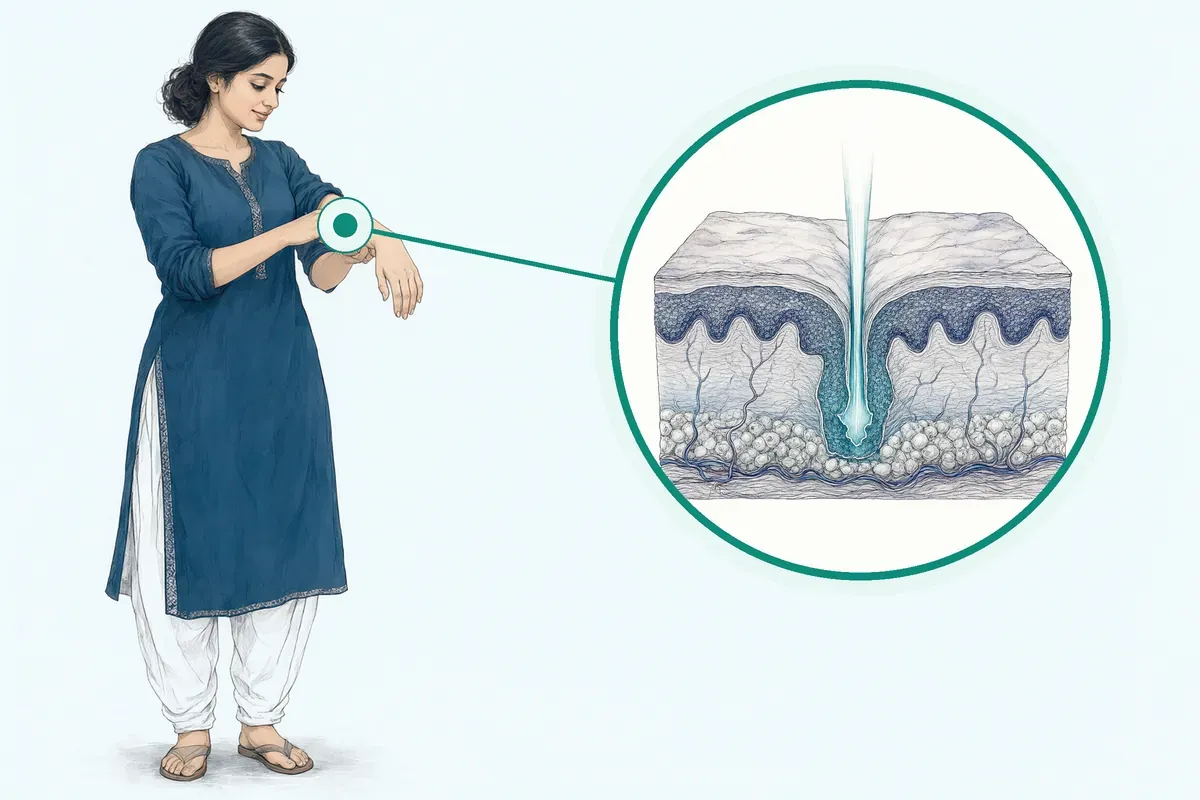
Laser and skin treatments use focused light energy to target specific skin concerns without surgery. The light passes through the outer layer of skin and is absorbed by pigments, blood vessels, or water in the deeper layers.
This creates a controlled injury that stimulates the body's natural healing response and boosts collagen production, which helps the skin appear smoother and more even over time.
Different lasers are chosen based on the problem being treated. Fractional CO2 laser reaches deeper layers for acne scars, wrinkles, and skin tightening. Q-switched Nd:YAG laser targets pigmentation, melasma, and tattoo ink. IPL or BBL photofacial uses broad-spectrum light for vascular lesions, sun damage, diffuse redness, and hair reduction. Picosecond laser delivers ultra-short pulses for stubborn pigmentation and tattoo removal with less heat damage to surrounding tissue.
These procedures are done as outpatient visits at Jaipur Hospital. A session typically lasts 20 to 45 minutes. Topical anaesthesia cream is applied beforehand to keep you comfortable. Recovery ranges from 1 to 7 days depending on the laser type and the area treated.
Common skin concerns treated and when to seek urgent care
- Increasing pain
- Spreading redness
- Pus
- Fever
- Worsening blistering after 24 hours
People consider laser and skin treatments for:
- Acne scars
- Fine lines and wrinkles
- Uneven pigmentation such as melasma or sun spots
- Unwanted tattoos
- Vascular lesions like spider veins
- Diffuse redness
- Sun damage
The treatments can also help with overall skin tone and texture.
Most side effects are mild and temporary. You may notice redness, swelling, or a sunburn-like sensation that settles within a few days. Contact your surgeon the same day if you develop increasing pain, spreading redness, pus, fever, or blistering that worsens after the first 24 hours. These could signal an infection or a reaction that needs prompt attention.
If you have a history of cold sores, tell your surgeon before treatment because laser procedures can trigger an outbreak; preventive medication may be advised.
Why skin changes happen and who is more likely to need treatment
- Genetics
- Inherited traits affect skin ageing and pigmentation
- Sun exposure
- UV light breaks down collagen and elastin
- Hormonal shifts
- Pregnancy or oral contraceptives can trigger melasma
- Past injuries or inflammation
- Acne inflammation often leaves scars or dark marks
Skin changes result from a mix of:
- Genetics
- Sun exposure
- Ageing
- Hormonal shifts
- Past injuries or inflammation
Ultraviolet light breaks down collagen and elastin, leading to wrinkles and pigmentation. Hormonal changes during pregnancy or with oral contraceptives can trigger melasma. Acne inflammation often leaves behind scars or dark marks. Repeated friction or trauma can thicken skin or cause discolouration.
You may be at higher risk of developing these concerns if you have:
- Fair skin that burns easily
- A family history of pigmentation disorders
- Frequent sun exposure without protection
- A history of severe acne
- Certain medical conditions that affect healing
People with darker skin tones are more prone to post-inflammatory hyperpigmentation after any skin injury, including laser treatment itself, so laser settings must be chosen carefully.
Active skin infections, recent isotretinoin use (usually within the past 6 to 12 months), a tendency to form keloid scars, and certain photosensitising medications are relative contraindications. Your surgeon will review your medical history and current medicines before advising treatment.
How a skin condition is assessed before laser treatment
Assessment starts with a detailed history and a physical examination of the skin in good lighting.
Your surgeon will ask about:
- The onset and progression of the concern
- Previous treatments
- Sun exposure habits
- Medications
- Any history of abnormal scarring or herpes simplex
A dermatoscope (a handheld magnifier with light) may be used to examine pigment patterns and vascular structures more closely. For pigmentation, a Wood's lamp can help distinguish epidermal from dermal pigment. Photographs are usually taken for baseline documentation and to track progress.
No routine blood tests or imaging are needed for cosmetic laser procedures. If an underlying medical condition is suspected — such as a hormonal disorder causing melasma or a connective tissue disease — your surgeon may refer you for relevant investigations before proceeding.
Non-surgical treatment options and when surgery may be considered
Non-surgical options include the laser and light-based procedures described above, as well as topical prescription creams (such as hydroquinone, retinoids, or azelaic acid for pigmentation), chemical peels, microneedling, and medical-grade skincare. Sun protection with broad-spectrum sunscreen (SPF 30 or higher) is essential for all conditions and helps maintain results.
The choice depends on the specific concern, skin type, downtime you can accept, and budget. Multiple sessions are often needed; studies note that a typical course may involve 5 to 6 sessions for many indications. Your surgeon will explain the expected number of sessions and the interval between them.
Surgery such as scar revision, excision, or facelift is generally reserved for deep scars, significant skin laxity, or lesions that need histopathological examination. Laser treatment may still be used after surgery to refine the result. Your surgeon will discuss whether a surgical or non-surgical approach suits your goals.
Preparing for laser and skin treatments
Do
- Tell doctor about cold sores
- Bring medicine list
- Come with clean skin
- Wear loose clothing
Avoid
- Sunbathing and tanning beds
- Strong skin products
Your surgeon will review your medical history and any medicines you take. Some medicines, such as blood thinners or isotretinoin, can affect healing and may need to be stopped for a short time before the session. Tell the doctor about any history of cold sores, keloid scarring, or recent sun exposure.
You will be asked to avoid sunbathing, tanning beds, and strong skin products such as retinoids or glycolic acid for about two weeks before the appointment. On the day of the session, come with clean skin and no makeup, lotion, or perfume on the area to be treated. Wear loose clothing that does not rub the treated site.
You do not need to fast because only topical anaesthesia cream is used. Bring a list of your current medicines, your insurance card if you have one, and an attendant if you would like company. The hospital provides a gown and protective eyewear for the procedure.
How laser and skin treatments are done
- Skin cleaned and numbed Topical anaesthesia cream applied for 20 to 30 minutes
- Laser type chosen Based on your skin concern
- Treatment delivered Handpiece moved in overlapping passes
- Cooling and soothing cream applied After the treatment
The procedure is performed in an outpatient setting and usually takes 20 to 45 minutes. First, the skin is cleaned and a topical anaesthesia cream is applied for 20 to 30 minutes to numb the area. Your surgeon will choose the laser type based on your skin concern.
Fractional CO2 laser is used for deep resurfacing of acne scars, wrinkles, and skin tightening. Q-Switched Nd:YAG laser targets pigmentation, melasma, and tattoo removal. IPL or BBL photofacial treats vascular lesions, sun damage, diffuse redness, and can reduce hair. Picosecond laser is an option for stubborn pigmentation and tattoo removal with less thermal damage.
During the session you will feel a warm or snapping sensation. The doctor moves the handpiece over the skin in overlapping passes. After the treatment a cooling gel or cold pack is applied and a soothing cream is placed on the skin. You can go home the same day.
Risks and possible complications of laser and skin treatments
- Temporary redness and swelling
- Settles in a few days for most people
- Temporary darkening or lightening
- More likely with darker skin tones or sun exposure after session
- Blistering, crusting, or infection
- Uncommon when aftercare instructions are followed
- Scarring
- Rare
Most people have temporary redness, swelling, and a sunburn-like sensation that settles in a few days. Some patients develop temporary darkening or lightening of the treated skin, especially if they have darker skin tones or get sun exposure after the session. Blistering, crusting, or infection can occur but are uncommon when aftercare instructions are followed. Scarring is rare.
In studies of low-level laser therapy, inflammatory markers such as IL-6 and PGE2 decreased after treatment, suggesting a low inflammatory response. Photobiomodulation has been found safe in head and neck cancer patients. However, the effect of laser therapy on tumour behaviour has not been fully studied and in vitro results are conflicting.
Your surgeon will discuss whether any of these risks apply to you based on your skin type and medical history.
Recovery and aftercare after laser and skin treatments
- First few days Skin feels tight, appears red, peels lightly
- First 48 hours Avoid hot showers, saunas, swimming, strenuous exercise
- Next day Return to routine work for lighter treatments
- 1 to 7 days Full recovery depending on laser type and depth
Recovery usually takes 1 to 7 days depending on the laser type and the depth of treatment. In the first few days the skin may feel tight, appear red, and peel lightly. Keep the area clean and apply the prescribed healing cream as directed.
Avoid direct sunlight and use a broad-spectrum sunscreen of SPF 30 or higher once the skin has closed. Do not pick at crusts or peeling skin. Avoid hot showers, saunas, swimming, and strenuous exercise for the first 48 hours. You can return to routine work the next day for lighter treatments; deeper resurfacing may need a few days off.
Attend any follow-up appointment so the doctor can check healing. Call the hospital if you notice increasing pain, spreading redness, pus, fever, or a sudden worsening of the treated area.
Results of laser and skin treatments
Improvement is gradual. After fractional CO2 resurfacing, collagen remodelling continues for several months and the skin appears smoother and tighter. Pigmentation treated with Q-Switched Nd:YAG or picosecond laser usually lightens over a series of sessions. IPL photofacial reduces redness and sun spots progressively.
In studies, low-level laser therapy increased proliferation of fibroblasts, keratinocytes, and lymphocytes in vitro, and most studies showed increased cell proliferation rates. Photobiomodulation reduced inflammatory markers in tears and improved symptoms in dry eye disease after treatment. The number of sessions needed varies; one source notes that 5 to 6 sessions are common for many skin conditions.
Results depend on skin type, the condition being treated, and how well you protect your skin from the sun afterwards. Some conditions such as melasma can recur and may need maintenance sessions.
Cost and insurance for laser and skin treatments in Jaipur
The typical price range in India is ₹3,000 to ₹25,000 per session.
The final cost depends on:
- The type of laser used
- The size of the area treated
- The number of sessions required
- The doctor's experience
Hospitals with more advanced equipment may charge more. Jaipur Hospital is a NABH-accredited multispeciality hospital and accepts RGHS, MAA Yojana, CGHS, and a panel of private insurers and TPAs.
Laser procedures for cosmetic reasons are usually not covered by insurance; if the treatment is for a medical indication such as a scar revision or a vascular lesion, check with your insurer and the hospital's insurance desk about pre-authorisation. Ask the hospital for an estimate before you start the series of sessions.