

Plastic Surgery · Jaipur Hospital
Post Burn Reconstruction and Scar Care in Jaipur
Stiff scars limit movement; we assess, plan, and guide you through release, laser, and rehab.
- Serving Jaipur since 1991 (35 years)
- NABH accredited
- 24×7 emergency & ICU
- Cashless: RGHS, MAA Yojana, CGHS + 22 insurers
- Operation time
- 1 to 4 hours per stage
- Anaesthesia
- General or regional anaesthesia
- Recovery
- Physiotherapy for 3 to 6 months
- Price
- ₹60,000 to ₹3,00,000 per stagetypical range in India; ask us for an estimate
Scars that bind and hurt
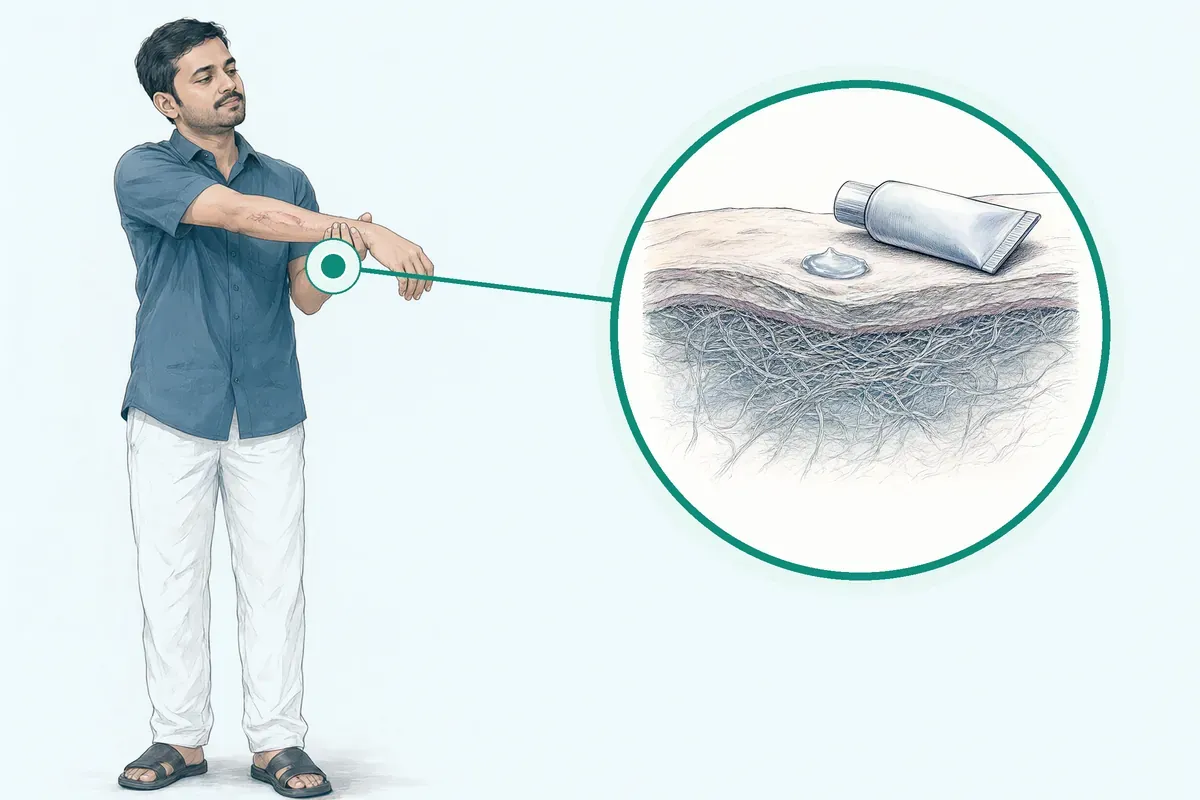
Burn scars tighten joints, itch constantly, and make simple tasks hard
Healed burns often leave contracted skin that pulls joints out of position, causes chronic itching, and leads to unstable skin that breaks down easily.
-
Joint stiffness
Contractures reduce range of motion, making dressing, eating, or walking difficult.
-
Persistent itching
Hypertrophic scars stay inflamed and itchy, disturbing sleep and focus.
-
Skin breakdown
Unstable scars ulcerate with minor trauma, risking infection and chronic wounds.
-
Appearance concerns
Raised, discoloured scars affect confidence and social comfort.
Sustained TGF-β/Smad activation drives fibroblast overactivity and excess collagen in hypertrophic scars.
Why Jaipur Hospital
You worry that surgery might mean more hospital time, more pain, and bills you cannot predict.
Your care plan
Your first steps with us
- 1 Book an OPD consultation with a plastic surgeon
- 2 Get scans and reports reviewed with in-house tests if needed
- 3 Agree a staged plan: release, grafting or laser, then rehab
- 4 Attend follow-up visits and physiotherapy for 3 to 6 months
How the operation is done
Surgery releases tight bands under general or regional anaesthesia; defects are covered with grafts or flaps. Laser and non-surgical therapies run alongside.
-
Contracture release with skin grafts or flaps
Z-plasty, full-thickness grafts, or local flaps cover the defect after release; your surgeon will discuss which suits your scar.
-
Hypertrophic scar management
Silicone sheets, pressure garments, and intralesional steroids flatten and soften raised scars over months.
-
Fractional CO2 laser resurfacing
Laser creates microscopic channels to improve pliability, texture, and redness of mature scars.
-
Tissue expansion for large defects
Staged expansion generates like-for-like skin to resurface extensive contracture areas.
Why patients trust us
- 1991 Serving Jaipur for 35 years
- NABH Accredited hospital
- 1 Plastic Surgery consultants
- 24×7 Emergency, ICU and ambulance
- 25 Cashless schemes and insurers
What research shows about this treatment
-
Recontracture 10% with flaps vs 27% with grafts at long-term follow-up
In a 10-year cohort, flap reconstruction showed significantly lower recontracture rates than full-thickness skin grafts.
-
Pressure garment success rates reported 60% to 85% for hypertrophic scar regression
Studies note pressure therapy achieves regression in a majority of burn-related hypertrophic scars when compliance is maintained.
-
Fractional laser improves elasticity and appearance toward normal skin
Ablative fractional resurfacing restores more normal collagen deposition and breaks down scar stiffness in traumatic scars.
If it is left untreated
Untreated contractures can shorten muscles and tendons, deform growing bones, cause joint ankylosis, and lead to chronic ulcers that rarely may turn malignant.
Life after treatment
Most people regain useful movement, see softer scars, and return to daily routines with ongoing therapy.
-
Better joint movement
Staged release and physiotherapy usually improve range of motion for dressing, eating, and walking.
-
Softer, flatter scars
Laser, silicone, and pressure garments typically reduce thickness, redness, and itching over months.
-
Fewer skin breakdowns
Stable skin cover lowers the risk of recurrent ulcers and infections.
-
Return to work and home life
With consistent rehab, most people resume daily activities and livelihood within the recovery period.
Frequently asked questions
Questions patients ask about post burn reconstruction and scar care
Which problems are assessed under post burn reconstruction and scar care?
In short
Post burn reconstruction and scar care at Jaipur Hospital assesses contractures that limit joint movement, hypertrophic and keloid scars, unstable scars with repeated breakdown, pigment changes, and deeper tissue involvement such as joint stiffness or bone deformity. The surgical team evaluates functional loss, cosmetic appearance, and the maturity of the scar before planning treatment.
In detail
Evidence shows that post-burn scars are inevitable after deep dermal and full-thickness burns and may be immature, mature, atrophic, hypertrophic, keloid, stable, unstable, depigmented or hyperpigmented.
Contractures replace normal skin with pathological scar tissue that has insufficient length, reducing range of motion or misaligning anatomical structures. Deeper tissues may be affected by the initial injury or by prolonged contracture leading to shortening of musculotendinous units and neurovascular structures.
Joint ankylosis involves bone, cartilage and joint capsules and cannot be resolved by scar release alone. The team therefore assesses skin quality, joint range, nerve and vessel status, and any bone or joint deformity to decide the appropriate reconstructive approach.
A common belief
Many people think only the skin surface is checked.
What actually happens
In reality, the surgeon must evaluate muscles, tendons, nerves, vessels and even bones because long-standing contractures shorten these deeper structures and simple skin release may not restore full movement.
Your next step at Jaipur Hospital
You will attend an OPD consultation where the surgeon examines the scar, checks joint movement, and may request photographs or imaging. A plan is then discussed, which may include non-surgical therapy, staged surgery, or both. Physiotherapy often starts before any operation.
How will the doctor decide which tests I need?
In short
At Jaipur Hospital, the surgeon decides tests after a detailed history and examination of scar maturity, range of motion, joint stability, neurovascular status, and any deeper tissue involvement. Most patients need only clinical assessment, photography and measurements. Imaging or blood tests are ordered only if deeper structures or systemic issues are suspected.
In detail
Clinical examination determines whether the scar is immature (vascular, red, itchy) or mature (soft, pale, supple). Joint range of motion is measured with a goniometer. If the contracture is long-standing, the surgeon checks for muscle, tendon, nerve or joint capsule shortening.
X-ray or CT may be needed if bone deformity or joint ankylosis is suspected, especially in children with neck or limb contractures. Nerve conduction studies are considered if neurovascular compromise is evident. Blood tests are routine before anaesthesia. The protocol emphasises that surgical timing depends on scar maturity, so the main decision is clinical, not investigative.
A common belief
Patients often expect a long list of scans.
What actually happens
In practice, the decision to operate rests on whether the scar is mature and how much it limits function. Imaging is reserved for suspected joint ankylosis, bone deformity or neurovascular compromise, not for every scar.
Your next step at Jaipur Hospital
Expect a thorough examination at your first visit. Photographs and measurements are standard. Further tests are explained if required. The surgeon then outlines whether non-surgical care, laser, or staged surgery is appropriate.
How soon should I expect improvement after post burn reconstruction treatment?
In short
Improvement after post burn reconstruction varies by the type of treatment and the severity of the contracture. At Jaipur Hospital, surgical release usually shows immediate gain in joint range, but full functional recovery needs months of physiotherapy. Laser therapy and silicone or pressure treatments produce gradual change over weeks to months. Your surgeon will give a realistic timeline at the consultation.
In detail
Surgical contracture release with grafts or flaps corrects the mechanical shortening at once, yet the deeper muscles, tendons and nerves adapt slowly. Evidence shows that physiotherapy for three to six months is standard to maintain the release and remodel scar tissue.
Fractional CO2 laser improves pliability and texture through collagen remodelling, which takes several sessions spaced weeks apart. Silicone sheets and pressure garments work by hydration and occlusion; studies report benefit when worn 12 to 24 hours daily for six to twelve months.
Intralesional steroids reduce thickness and itch over repeated four-weekly injections. Because scars mature over a year or more, final cosmetic and functional results are judged at long-term follow-up.
A common belief
Many people expect the scar to look normal right after surgery.
What actually happens
In reality, scar maturation continues for a year or more, and consistent therapy is what prevents recontracture.
Your next step at Jaipur Hospital
You will start gentle movement exercises within days of surgery and wear pressure garments or silicone as advised. Laser sessions are usually spaced four to six weeks apart. Plan for regular physiotherapy visits for at least three months.
Keep the treated area clean, moisturised and protected from sun. Attend all review appointments so the team can adjust the plan.
How are burn depth, size, location, and inhalation risk assessed?
In short
At Jaipur Hospital, burn assessment begins with a systematic clinical examination. Depth is judged by appearance, sensation and capillary refill. Size is calculated using the rule of nines or the patient's palm area. Location is recorded for functional and cosmetic impact. Inhalation risk is assessed by history of enclosed space fire, facial burns, soot in the airway, voice change and stridor. Fibreoptic bronchoscopy may be used.
In detail
Burn depth determines healing potential. Superficial dermal burns may heal by restitution. Deep dermal and full-thickness burns heal by scarring and contracture. The total body surface area burned guides fluid resuscitation and transfer criteria.
Involvement of face, hands, feet, perineum, major joints or circumferential burns increases morbidity. Inhalation injury is a major predictor of mortality. Early intubation is considered for airway compromise. Electrical burns may cause deep tissue damage not visible on the surface. Associated injuries are excluded. Nutritional needs are calculated from burn size.
A common belief
A burn can look superficial at first and deepen over days.
What actually happens
Relying on a single early examination can miss worsening depth or inhalation injury.
Your next step at Jaipur Hospital
Assessment is repeated at each dressing change as depth can evolve over 48 to 72 hours. Photographs document progress. Referral to a burn specialist is advised for burns exceeding 10% in adults, 5% in children, or involving critical areas.
How can I decide whether to seek advice about post burn contracture release?
In short
Seek advice if a healed burn pulls a joint out of position, limits daily activities, or causes pain, itching, or skin breakdown. Jaipur Hospital evaluates contractures that restrict neck rotation, mouth opening, hand function, elbow, knee, or ankle movement. Early review helps plan the right timing for release and reconstruction.
In detail
Contractures form when scar tissue shortens across a joint, reducing range of motion. Functional limits include difficulty dressing, eating, walking, or working. In children, untreated neck or knee contractures can deform growing bones.
Surgery is usually delayed until the scar matures and becomes soft, supple, and avascular, except for urgent cases like eyelid ectropion threatening vision, severe microstomia affecting nutrition, or crippling hand contractures.
The surgeon checks for deeper involvement of tendons, nerves, vessels, or joint ankylosis, which may need orthopaedic input. Staged release with grafts, flaps, or tissue expansion is planned based on defect size and tissue quality.
A common belief
Waiting until the contracture is severe makes release harder because muscles, tendons, and nerves shorten over time.
What actually happens
Early review does not mean immediate surgery; it means planning the right time and method.
Your next step at Jaipur Hospital
If you notice progressive tightening, inability to straighten a joint fully, or raw areas over the scar, book an OPD visit. The surgeon will measure range of motion, assess scar maturity, and discuss whether non-surgical stretching or splinting can help first. Surgery typically needs one to five nights stay per stage and three to six months of physiotherapy.
How will appearance, function, and realistic expectations be discussed?
In short
At Jaipur Hospital, your surgeon will discuss appearance, function, and realistic expectations during the consultation. The team examines scar maturity, joint range, skin quality, and any deeper involvement. They explain what surgery, laser, or non-surgical therapy can achieve and what limitations remain.
In detail
Evidence shows that post-burn scars vary widely in behaviour. Some improve with time and therapy alone. Surgery can release contractures and resurface defects, but colour match may not be exact and some stiffness can persist.
Studies report functional satisfaction scores higher with flaps than full-thickness grafts, while aesthetic scores are similar. Recontracture rates differ by technique.
The surgeon outlines the likely number of stages, recovery duration of three to six months of physiotherapy, and the need for long-term silicone or pressure use. They also discuss risks such as graft loss, infection, nerve injury, and rare malignant change in chronic scars. Your goals for work, daily activities, and appearance guide the plan.
A common belief
Patients often expect perfect skin after one operation.
What actually happens
Evidence shows scars improve but rarely vanish. Multiple stages, months of therapy, and lifelong scar care are normal. Honest discussion prevents disappointment.
Your next step at Jaipur Hospital
Bring photos of the scar over time if you have them. The surgeon will show before-and-after examples of similar cases. You will receive a written summary of the proposed plan, timeline, and follow-up schedule.
Which symptoms should prompt me to see a specialist?
In short
You should see a specialist at Jaipur Hospital if you have a burn scar that limits joint movement, causes persistent itching or pain, shows raised or thickened tissue, changes colour, breaks down repeatedly, or affects daily activities like dressing, eating or walking. Numbness, tingling or colour change in fingers or toes also warrants review.
In detail
Common and distressing complications in patients with hypertrophic scars are abnormal appearance, pruritus and pain. Contractures cause functional problems because scar tissue has reduced or unstable range of motion. Joints may be subluxated or dislocated with tight capsules and ligaments.
Unstable scars are single-celled, fragile and break with minor trauma. Depigmented or vitiligo patches cause psychosocial distress. Nerve or vessel compromise may present as numbness, tingling, pallor or coldness distal to the contracture.
These symptoms indicate that the scar is affecting deeper structures and needs specialist evaluation for possible surgical or non-surgical intervention.
A common belief
Patients often wait until a contracture is severe.
What actually happens
Early signs like increasing stiffness, persistent itch or subtle colour change are easier to treat with non-surgical methods. Delaying review can lead to fixed joint deformity and longer rehabilitation.
Your next step at Jaipur Hospital
Contact the OPD for an appointment if you notice any of these symptoms. The surgeon will examine the scar, assess joint range, check sensation and circulation, and discuss treatment options. Early review allows timely physiotherapy or surgery before deformity becomes fixed.
How will the results change my care plan?
In short
At Jaipur Hospital, test results directly guide whether you continue non-surgical care, proceed to laser therapy, or need staged surgical release with grafts or flaps. Mature scar status and full range-of-motion measurements favour surgery. Imaging showing joint ankylosis or bone deformity adds orthopaedic procedures. Neurovascular findings may require staged release with traction before cover.
In detail
If clinical examination shows an immature, vascular scar, the plan is silicone sheets, pressure garments, physiotherapy and review. Mature, stable scars with fixed contractures move to surgical planning. X-ray or CT confirming bony ankylosis or mandibular deformity means joint release or osteotomy is added.
Nerve studies showing compromise mean gradual traction release before grafting. Blood results only affect anaesthesia fitness. The Vancouver Scar Scale and functional scores track progress.
Evidence shows flaps have lower recontracture rates than full-thickness grafts for joint contractures, so defect size and location after release guide the reconstruction choice.
A common belief
Patients sometimes think every test leads to a new treatment.
What actually happens
In reality, most scars are managed clinically. Imaging and nerve studies only add steps when deeper structures are involved. The main switch is scar maturity: immature means non-surgical, mature means surgical.
Your next step at Jaipur Hospital
After tests, your surgeon explains the stage-wise plan: non-surgical phase, laser sessions if indicated, then surgery with 1 to 5 nights stay per stage and 3 to 6 months physiotherapy. Costs typically range from ₹60,000 to ₹3,00,000 per stage.
What should I do if symptoms persist or worsen after post burn reconstruction treatment?
In short
If pain, swelling, redness, discharge, fever or increasing tightness develop after treatment, contact the surgical team at Jaipur Hospital without delay. These signs may indicate infection, graft compromise, haematoma or early recontracture. Do not wait for the next scheduled visit. Early review allows prompt dressing change, antibiotics or further intervention if needed.
In detail
Post-operative complications such as wound infection, graft loss or haematoma usually appear in the first two weeks. Evidence notes that a highly vascular immature scar bleeds more and heals with further contraction if not managed early.
Recontracture rates in studies range from 10 to 27 percent depending on technique. Persistent itch, neuropathic pain or new ulceration over a scar may signal Marjolin's change and needs biopsy.
Pressure garment intolerance, silicone maceration or steroid side effects like skin atrophy also require adjustment of the regimen. The team will assess whether the problem is a normal healing variation or a complication needing active treatment.
Your next step at Jaipur Hospital
Keep the emergency numbers handy. If the dressing becomes soaked, the limb turns cold or numb, or you develop fever above 38°C, go to the 24×7 emergency department at Jaipur Hospital.
For less urgent concerns such as increasing itch, tightness or garment discomfort, call the OPD for an earlier appointment. Continue prescribed physiotherapy unless told to stop.
What first aid is appropriate, and what should I avoid putting on a burn?
In short
Cool the burn under running tap water at 15–20°C for 15 to 20 minutes. Remove clothing and jewellery unless stuck. Cover loosely with clean cling film or a sterile non-adherent dressing. Do not apply ice, butter, oil, toothpaste, egg white, ink, coloured antiseptics or home pastes. Do not break blisters. Take paracetamol for pain and seek medical help if the burn is larger than a palm, deep, on the face, hands, joints or genitals, or if the person is a child or elderly.
In detail
Evidence shows that immediate cooling limits depth progression and reduces pain. Ice causes vasoconstriction and can deepen the injury. Greasy substances trap heat and increase infection risk. Coloured agents like gentian violet obscure depth assessment.
Blisters act as a biological dressing; leaving them intact reduces pain and infection. The emergency department at Jaipur Hospital will assess depth accurately only if the wound is not contaminated with opaque materials. Early fluid resuscitation for large burns follows the Parkland formula. Tetanus prophylaxis is updated if needed. Avoid traditional remedies that delay definitive care.
A common belief
Home remedies like toothpaste or ink hide the true depth and introduce bacteria.
What actually happens
Ice feels good but damages tissue further. Clean water and cling film are the only safe first steps.
Your next step at Jaipur Hospital
Keep a basic burns first-aid kit at home: cling film, sterile gauze, paracetamol, and the hospital emergency numbers. If the burn meets any high-risk criterion, call the 24×7 ambulance or go directly to Jaipur Hospital.
Do not wait to see if it “heals on its own” — deep burns convert to full thickness over days.
FAQ library
Questions and answers about post burn reconstruction and scar care
When you contact us
Get a clear plan and cost estimate
Contact Jaipur Hospital for an OPD consultation; we review your scans, explain options, and help with cashless paperwork.
- A consultation with a plastic surgeon in the OPD
- Your scans and reports reviewed, with tests done in-house if you need them (laboratory, X-ray and imaging)
- Your options explained in plain words, including whether you need surgery at all
- A cost estimate before you decide
- Help with cashless treatment under RGHS, MAA Yojana, CGHS and empanelled insurers and TPAs
- Follow-up visits after your treatment
Overview
Post Burn Reconstruction and Scar Care: what to know
What post burn reconstruction and scar care is
- Contracture
- Tight scar pulls on joint and limits movement
- Hypertrophic scar
- Raised, red, itchy or painful scar within wound edges
- Keloid
- Scar grows beyond the original wound edges
Post burn reconstruction and scar care treats the long-term effects of healed burns. When a burn damages the deeper layers of skin, the wound heals by forming scar tissue instead of normal skin. This scar tissue is tighter and shorter than the original skin. As it matures, it can pull on the surrounding area and limit movement.
This pulling is called a contracture. Contractures often affect joints such as the neck, elbow, wrist, knee or ankle, making it hard to straighten or bend the limb. Scars may also become raised, red, itchy or painful. These are known as hypertrophic scars. Some scars grow beyond the original wound edges; these are called keloids.
Both types can cause discomfort and affect appearance. The colour of healed skin may also be lighter or darker than the surrounding area. Post burn reconstruction aims to release tight scar bands, replace scar tissue with healthier skin, and improve both function and appearance. Scar care includes non-surgical treatments to soften, flatten and reduce symptoms of existing scars. The goal is to help you move more freely and feel more comfortable in daily life.
Symptoms and warning signs that need urgent care the same day
- Pus or foul-smelling discharge
- Fever with infected-looking wound
- Sudden loss of movement or sensation
Common symptoms of post burn scars include:
- Tightness that limits joint movement
- Raised or thickened scar tissue
- Persistent itching
- Pain
- Changes in skin colour
The scar may feel firm or hard and appear red or dark. Itching can be severe enough to disturb sleep. Some scars break down repeatedly, forming open sores that do not heal easily. These are called unstable scars. Joints may become stiff or even dislocated if the contracture is severe.
In children, a tight scar across a growing joint can affect bone development. Warning signs that need medical attention on the same day include sudden increase in pain, swelling or redness around the scar, pus or foul-smelling discharge from an open area, fever with a wound that looks infected, and sudden loss of movement or sensation in a limb.
If an eyelid is pulled down or turned out by a scar and the eye becomes red, painful or watery, seek care immediately to protect vision. A scar that bleeds easily with minor trauma or develops a new lump should also be checked without delay. These signs may indicate infection, ulceration or, rarely, malignant change in a long-standing scar.
Causes and who is at higher risk
- Darker skin tones
- More likely to develop thick or raised scars
- Children and young adults
- Higher tendency for problematic scarring
- Chest, shoulders, neck, joints
- Body sites at higher risk for contractures
- Burns healing over two weeks
- Higher chance of problematic scarring
Post burn scars and contractures result from the body's healing response to deep burns. When a burn destroys the full thickness of skin, the wound closes by contraction and coverage with scar tissue. This process is driven by cells called fibroblasts and myofibroblasts that produce excess collagen.
The collagen in scars is arranged differently from normal skin, making it less elastic. Prolonged inflammation and mechanical tension on the healing wound increase the risk of hypertrophic scars and contractures.
People with darker skin tones, children and young adults are more likely to develop thick or raised scars.:
- Darker skin tones
- Children
- Young adults
Scars on the chest, shoulders, neck and joints are also at higher risk.:
- Chest
- Shoulders
- Neck
- Joints
Burns that take more than two weeks to heal, or that need skin grafts, have a higher chance of problematic scarring. Electrical burns often damage deeper tissues, leading to more severe contractures. Long-standing contractures can shorten muscles, tendons and nerves, making later release more difficult.
In India, the incidence of post burn contractures is high due to the large number of burn injuries and limited access to early specialised care.
How it is diagnosed: examination and tests
- Clinical examination
- Surgeon checks scar thickness, colour, pliability and joint range of motion
- Vancouver Scar Scale
- Tool used to grade scar severity
- X-rays for long-standing contractures
- Check for bone deformity or joint dislocation
- Biopsy for non-healing ulcers
- Rule out malignant change in chronic wounds
Diagnosis is mainly clinical. Your surgeon will examine the scar and the affected joint. They will measure the range of motion and compare it with the other side. They will assess the scar's thickness, colour, pliability and whether it is stable or breaks down easily. The Vancouver Scar Scale or a similar tool may be used to grade the scar.
Photographs are taken for records and to track progress. If a joint contracture is long-standing, X-rays may be needed to check for bone deformity, joint subluxation or dislocation. In children with neck contractures, the jaw and teeth alignment may be assessed. If there is an ulcer that does not heal, a biopsy may be done to rule out malignant change.
Nerve function is tested if there is numbness or weakness. No routine blood tests are required for the scar itself, but they may be ordered before any planned surgery. The surgeon will also ask about your symptoms, such as itching, pain and difficulty with daily activities, to understand how the scar affects your life.
Treatment options without surgery, and when surgery is advised
- Silicone gel sheets or gel 12 to 24 hours a day for 6 to 12 months
- Pressure garments Worn 24 hours a day for 9 to 12 months
- Steroid injections Every 4 weeks for raised scars
- Fractional CO2 laser For mature scars to improve pliability
- Physiotherapy stretching Gentle sustained stretching for joint motion
Non-surgical treatment is the first step for most scars. Silicone gel sheets or silicone gel are applied to the scar for 12 to 24 hours a day, often for 6 to 12 months. They work by hydrating the scar and reducing collagen buildup.
Pressure garments are custom-made elastic garments worn 24 hours a day, except during bathing, for 9 to 12 months or longer. They are most effective when started early, before the scar becomes thick. They help flatten and soften the scar by limiting blood flow and collagen production. Intralesional steroid injections, usually triamcinolone, are given every 4 weeks for raised scars.
They reduce inflammation, fibroblast activity and scar thickness. Fractional CO2 laser therapy improves scar pliability, texture and redness by creating microscopic treatment zones that stimulate remodelling. It is used for mature scars. Physiotherapy with gentle, sustained stretching helps lengthen scar bands and maintain joint range of motion. Moisturisers keep the scar supple and reduce itching.
Sun protection with clothing and sunscreen (SPF 20–25) prevents hyperpigmentation. Antihistamines or gabapentin may be prescribed for severe itching. Surgery is advised when a contracture limits function significantly, such as inability to straighten a joint, eat, close the eye or walk upright.
It is also considered for unstable scars, chronic ulcers, or when non-surgical measures have not improved the scar after adequate time. Surgery is usually delayed until the scar is mature, soft and pale, which takes about a year. Exceptions include eyelid contractures threatening vision, severe neck contractures, microstomia affecting nutrition, and crippling hand contractures.
Surgical options include:
- Contracture release with skin grafts (full-thickness or split-thickness)
- Local flaps such as Z-plasty
- Tissue expansion for large defects
- Free flaps for complex cases
The choice depends on the site, size and depth of the contracture, and the condition of surrounding skin. Your surgeon will discuss which option suits you.
Preparing for Post Burn Reconstruction and Scar Care surgery
Do
- Tell surgeon about all medicines
- Bring pressure garments and silicone sheets
- Fast for at least six hours
- Pack loose front-opening clothing
- Bring an attendant
Your surgeon will examine the contracture and the surrounding skin, and may ask for photographs or measurements of the joint range of motion. Blood tests, a chest X-ray and an ECG are usually done to check fitness for anaesthesia.
Tell your surgeon about every medicine you take, especially blood thinners, steroids or any herbal products, so they can advise which to stop and when. If you use pressure garments or silicone sheets, bring them to the appointment. You will be asked to fast for at least six hours before the operation.
Pack loose clothing that opens at the front, your usual medicines, the pressure garments you wear, and an attendant who can stay with you. The hospital provides a bed for one attendant.
How Post Burn Reconstruction and Scar Care surgery is done
The operation is performed under general or regional anaesthesia and usually takes one to four hours per stage. Your surgeon will choose the technique that fits the site, the depth of the contracture and the quality of the surrounding skin.
Options include:
- Z-plasty or other local flaps to rearrange tissue
- A full-thickness skin graft taken from another part of your body
- A larger flap that brings its own blood supply
For very large defects, tissue expansion may be done first: an expander is placed under healthy skin near the scar and filled with saline over several weeks to grow extra skin, which is then moved to cover the released area. Fractional CO2 laser resurfacing can be used on mature scars to improve pliability, texture and redness.
On the day of surgery, you will be taken to the modular operation theatre, the anaesthetic will be given, and the contracture will be released. The defect is then covered with the chosen graft or flap. A splint or plaster may be applied to keep the joint in the corrected position. You will wake up in the recovery area and then move to a ward.
Risks and possible complications of Post Burn Reconstruction and Scar Care
- 10% Recontracture with flaps
- 27% Recontracture with full-thickness grafts
- 38% Itch (pruritus) with flaps
- 48% Itch (pruritus) with grafts
- 3% Pain after surgery with flaps
- 8% Pain after surgery with grafts
All surgery carries risks. Bleeding, infection, wound breakdown and poor graft take can occur. The scar may become hypertrophic or keloid again, and the contracture can recur; in one study recontracture was seen in 10% of patients treated with flaps and 27% of those treated with full-thickness skin grafts.
Pruritus (itch) was reported in 38% of the flap group and 48% of the graft group. Pain after surgery occurred in about 3% of flap patients and 8% of graft patients. Deeper structures such as tendons, nerves and vessels may be tight after long-standing contractures, limiting how much release is possible.
In severe cases, complete release may not be achievable in one operation. Unstable scars or chronic ulcers (Marjolin's ulcer) carry a risk of malignant change. In growing children, bones can become deformed if contractures are not corrected early. Pressure garments and silicone sheets can cause skin reactions, maceration, rash, foul smell and poor compliance, especially in hot humid weather.
Laser therapy may cause temporary redness, swelling or pigment changes. Your surgeon will discuss the risks that apply to your case.
Recovery and aftercare after Post Burn Reconstruction and Scar Care
You will stay in hospital for one to five nights per stage. Early postoperative rehabilitation starts during the admission. The operated area is immobilised with a splint or plaster as advised. Physiotherapy begins as soon as the surgeon allows, usually within the first few days, and continues for three to six months.
You will be taught exercises to maintain the gained range of motion. Pressure garments are usually prescribed once the wounds are healed; they must be worn 24 hours a day except for bathing and massage, for at least nine to twelve months.
Silicone gel or sheets are applied twice daily or worn 12 to 24 hours a day for six to twelve months. The healed skin must be protected from sunlight with clothing, caps or sunscreen (SPF 20–25) until it matures. Emollients keep the area supple and reduce itch. Antihistamines may be given for itch, especially at night.
Gabapentin or pregabalin can be considered for persistent pruritus. Follow-up visits are scheduled every few weeks initially, then every three months for at least a year. Call the hospital if you notice increasing pain, redness, swelling, discharge, fever, sudden loss of movement, or if the splint or garment becomes too tight or causes skin breakdown.
Results of Post Burn Reconstruction and Scar Care
The goal is to improve joint movement, reduce scar thickness and improve appearance. In a ten-year study of 88 patients with joint burn scar contractures, those treated with flaps had higher functional satisfaction scores (4.38 out of 5) than those treated with full-thickness skin grafts (3.88). Aesthetic satisfaction was also higher in the flap group (3.45 vs 3.29).
On the Vancouver Scar Scale, the flap group scored better (lower scores mean better scars) for overall quality (5.77 vs 6.55), pigmentation (1.60 vs 1.69), vascularity (1.33 vs 1.42), flexibility (1.80 vs 1.92) and height (0.95 vs 1.08). Recontracture was significantly lower with flaps (10%) than with full-thickness grafts (27%).
Fractional ablative laser resurfacing has been shown to improve elasticity and appearance of traumatic scars by restoring more normal collagen deposition. Silicone gel sheets are considered first-line therapy and have demonstrated efficacy in many studies. Pressure garments are widely used, though studies show mixed results on their superiority over no pressure. Intralesional steroids are effective for hypertrophic scar control.
A combination of modalities gives the maximum potential for successful treatment. Results vary between patients; your surgeon will discuss what is realistic for your contracture.
Cost and insurance for Post Burn Reconstruction and Scar Care in Jaipur
The typical price range in India is ₹60,000 to ₹3,00,000 per stage. The final cost depends on the type and severity of the contracture, the technique used (graft, flap, tissue expansion or laser), the number of stages needed, the length of hospital stay and any additional investigations or physiotherapy sessions.
Milder cases managed with physiotherapy and minor procedures fall in the lower range, while complex contractures requiring advanced reconstructive surgery fall on the higher end.
Jaipur Hospital is empaneled under:
- RGHS
- MAA Yojana
- CGHS
- A panel of private insurers and TPAs
Bring your scheme card or insurance details at the time of admission so the billing team can verify coverage and process cashless or reimbursement claims as per your policy terms.