

Pulmonology · Jaipur Hospital
Home Oxygen Therapy in Jaipur
Breathless at rest or on exertion? We assess, prescribe and set up home oxygen.
- Serving Jaipur since 1991 (35 years)
- NABH accredited
- 24×7 emergency & ICU
- Cashless: MAA Yojana + 32 insurers
- Session length
- 30 to 60 minutes
- Anaesthesia
- Not needed
- Recovery
- Immediate
- Price
- ₹2,000 to ₹5,000 (consultation & setupmonthly rental extra)typical range in India; ask us for an estimate
Breathless at home
You feel short of breath even while resting or doing simple tasks
Low blood oxygen makes everyday activity exhausting. It can limit walking, disturb sleep and strain the heart over time.
-
Breathless at rest
You feel short of breath while sitting or lying down.
-
Exertional desaturation
Oxygen level drops when you walk or climb stairs.
-
Poor sleep and fatigue
Waking tired, morning headaches or daytime sleepiness.
-
Heart strain risk
Long-standing low oxygen can thicken blood and stress the heart.
Severe hypoxemia is defined as arterial oxygen pressure of 55 mmHg or less.
Why Jaipur Hospital
You worry that breathlessness will keep you from family life, work or even a short walk to the shop.
Your care plan
Your first steps with us
- 1 Call or visit OPD for assessment
- 2 Arterial blood gas and walk test done
- 3 Device chosen and flow rate set
- 4 Home setup taught and follow-up booked
Insurance and schemes
How cashless works
Cashless treatment under MAA Yojana and with 32 insurers.
-
Tell us when you book
Say you are insured or have a scheme card, and send a photo of the card on WhatsApp so our insurance desk can check it in advance.
-
We get the approval
Once your doctor advises admission, the insurance desk sends the pre-authorisation request to your insurer or TPA; for planned surgery, approval can come before you are admitted.
-
Settled at discharge
The approved amount is settled between the insurer and the hospital; you pay only what the policy does not cover.
How the assessment and setup is done
We confirm low oxygen with arterial blood gas, match a concentrator or cylinder to your flow needs, and set exertional flow using a walk test.
-
Arterial Blood Gas Assessment
Confirms hypoxemia severity per guideline criteria (PaO2 ≤ 55 mmHg).
-
Concentrator vs Cylinder Selection
Flow requirement, portability and power backup are evaluated.
-
Ambulatory Oxygen Titration
Six-minute walk test sets exertional flow rates for activity.
Why patients trust us
- 1991 Serving Jaipur for 35 years
- NABH Accredited hospital
- 1 Pulmonology consultants
- 24×7 Emergency, ICU and ambulance
- 32 Cashless insurers, plus MAA Yojana
What research shows about this treatment
-
15 hours per day
Long-term oxygen for at least 15 hours daily prolongs survival in severe hypoxemia.
-
24 hours per day
A trial found no lower risk of hospitalisation or death with 24-hour versus 15-hour use.
-
No benefit in moderate hypoxemia
The LOTT trial found no benefit of oxygen in COPD with moderate hypoxemia.
If it is left untreated
Untreated severe hypoxemia can shorten life, increase hospital admissions and worsen heart strain from thickened blood.
Life after treatment
Most people feel less breathless during daily tasks and sleep better with the right oxygen prescription and device.
-
Easier daily activity
Walking indoors and short outings become less exhausting.
-
Better sleep
Night-time oxygen reduces morning headaches and daytime fatigue.
-
Heart protection
Adequate oxygen lowers the drive for excess red cell production.
-
Confidence at home
You and your attendant learn to use the device safely.
Meet the team
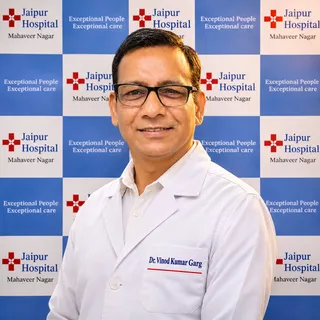
Your pulmonology doctors
Explore our pulmonology and chest care centre in Jaipur: every treatment, the doctors and what to expect at your visit.
Frequently asked questions
Questions patients ask about home oxygen therapy
What does long term oxygen therapy involve?
In short
Long-term oxygen therapy at Jaipur Hospital involves a structured OPD programme to assess your oxygen needs, select the right device, and set flow rates for rest and activity. It starts with arterial blood gas testing to confirm hypoxemia severity, followed by device selection between concentrator and cylinder based on your flow requirement, portability, and power backup. Ambulatory titration using a six-minute walk test sets exertional flow rates. The consultation and setup typically cost ₹2,000 to ₹5,000, with monthly rental extra.
In detail
The therapy is prescribed when arterial blood gas shows PaO2 ≤ 55 mmHg, indicating severe hypoxemia. Evidence shows long-term oxygen supplementation for at least 15 hours per day prolongs survival in severe hypoxemia.
The team evaluates whether a stationary concentrator or portable cylinder suits your lifestyle, power supply, and mobility. A six-minute walk test measures oxygen desaturation on exertion, guiding ambulatory flow settings. Telehealth monitoring of vital signs and spirometry can support adherence and early detection of exacerbations.
Lightweight ambulatory devices are provided to enhance compliance and activity, though studies note they may not automatically increase oxygen use or activity levels.
A common belief
Many people think oxygen is just a cylinder at home.
What actually happens
In reality, the device must match your lifestyle, and the flow rate must be titrated for rest, sleep, and exertion separately. Without proper titration, you may not get the survival benefit shown in studies.
Your next step at Jaipur Hospital
You will attend an OPD session of 30 to 60 minutes for assessment and setup. No hospital stay is needed.
The specialist will review your arterial blood gas report, perform a six-minute walk test, and recommend a device with flow settings for rest, sleep, and exertion. Monthly rental and refill logistics are explained. Follow-up visits are scheduled to recheck blood gases and adjust flow rates. To begin, book a consultation at Jaipur Hospital.
What happens during the first session?
In short
During the first session at Jaipur Hospital, the pulmonology specialist reviews your history, performs an arterial blood gas test to measure PaO2, and conducts a six-minute walk test to assess oxygen desaturation on exertion. Based on results, the specialist selects a stationary concentrator and a portable cylinder, sets flow rates for rest and activity, and trains you and your attendant on safe use.
In detail
The session follows a structured protocol. Arterial blood gas confirms hypoxemia severity per guideline criteria of PaO2 ≤ 55 mmHg. The six-minute walk test sets exertional flow rates through ambulatory oxygen titration.
Device selection evaluates your flow requirement, portability needs, and home power backup (concentrator vs cylinder). You receive hands-on training for the concentrator, cylinder changeover, nasal cannula care, and safety precautions. The consultation and setup typically take 30 to 60 minutes in the OPD. No anaesthesia is needed and recovery is immediate.
A common belief
People often expect just a machine handover.
What actually happens
In reality, the first visit is a clinical assessment: blood gas confirms you meet the strict PaO2 ≤ 55 mmHg criterion, the walk test sets your walking flow, and training covers safety, power backup, and cylinder changes. Skipping any step risks wrong flow or unsafe use.
Your next step at Jaipur Hospital
Bring any previous lung function tests, imaging, and a list of current medicines. The first visit costs ₹2,000 to ₹5,000 for consultation and setup; monthly device rental is extra. If eligible, the prescription is written and device delivery is arranged within a few days. A follow-up visit is scheduled to review compliance and adjust flow if needed.
How soon should I notice an improvement after starting home oxygen therapy?
In short
Improvement varies. Some people feel less breathless during daily tasks within the first few days, while others notice a gradual change over several weeks. Survival benefit is seen with consistent use of at least 15 hours per day in severe hypoxemia. Jaipur Hospital sets realistic expectations at the first visit and reviews progress at one month.
In detail
Long-term oxygen therapy corrects chronic hypoxemia, which reduces strain on the heart and can improve exercise capacity and quality of life over time.
The LOTT trial found no survival or symptom benefit in moderate hypoxemia, so the therapy is prescribed only when arterial blood gas confirms PaO2 ≤ 55 mmHg.
Symptom relief depends on the underlying disease, adherence to prescribed hours, and whether the flow rate matches exertional needs measured by a 6-minute walk test. Nutritional status and comorbidities also influence how quickly you feel better.
A common belief
Oxygen is not a quick fix for breathlessness from all causes.
What actually happens
In moderate hypoxemia, studies show no symptom benefit, so the prescription is based on a confirmed blood gas result, not on how you feel day to day.
Your next step at Jaipur Hospital
Keep a simple diary of breathlessness, sleep quality, and activity level for the first four weeks. Bring it to the one-month review where the team will check saturation at rest and on exertion, adjust flow if needed, and discuss any equipment issues.
Which symptoms need urgent help rather than routine review during home oxygen therapy?
In short
Seek urgent help for sudden severe breathlessness that does not improve with rest, chest pain, coughing blood, confusion or drowsiness, blue lips or fingertips, a fall with injury, or a fever above 38°C with worsening cough. These suggest a life-threatening exacerbation, pulmonary embolism, heart attack, or severe infection. Jaipur Hospital operates a 24×7 emergency department for these situations.
In detail
Patients on long-term oxygen have advanced cardiopulmonary disease and are at high risk of acute decompensation. Evidence shows hospital admission rates of 0.38 per patient over four months in a monitored COPD cohort. Exacerbations detected by telehealth required specialist escalation.
Delaying care for the symptoms above increases the risk of respiratory failure, arrhythmia, or death. Routine review is for stable trends; the listed symptoms need immediate assessment, blood gas, ECG, and imaging.
A common belief
Waiting for the next OPD appointment can be dangerous.
What actually happens
These signs mean your heart or lungs are failing right now, and minutes matter.
Your next step at Jaipur Hospital
Keep the emergency number (0141-2551500) and your oxygen prescription card by the phone. Tell your attendant the red-flag symptoms. If you use a pulse oximeter, a saturation below 85% on your prescribed flow is also an emergency.
Which changes in breathing, chest symptoms, or oxygen levels need urgent help?
In short
Seek urgent care if you develop sudden worsening breathlessness, new chest pain, confusion, drowsiness, or if your pulse oximeter reads below 85 percent despite using your prescribed oxygen. Jaipur Hospital runs a 24×7 emergency department for these situations. Do not wait for the next OPD appointment.
In detail
A drop in saturation below 85 percent that does not improve with rest or increased flow suggests acute deterioration such as a chest infection, pulmonary embolism or heart failure.
New or worsening cough with coloured sputum, fever, or sharp chest pain on breathing may indicate pneumonia or pleurisy. Confusion, severe headache or morning drowsiness can signal rising carbon dioxide levels, especially in COPD.
Swelling of the legs with sudden breathlessness may point to right heart strain. The emergency team will repeat arterial blood gas, chest X-ray and ECG to identify the cause and start treatment immediately. Keep your oxygen prescription sheet and medication list handy for the attending doctor.
A common belief
Patients often wait hoping it will pass, or they increase flow without telling anyone.
What actually happens
Rising carbon dioxide can cause confusion quietly. A saturation below 85 percent that does not recover with rest is a red flag, not a fluctuation.
Your next step at Jaipur Hospital
Save the hospital emergency number and keep a spare cylinder or battery backup ready. If symptoms escalate, call an ambulance or come straight to the emergency department.
Who is likely to benefit from this therapy?
In short
Patients with severe resting hypoxemia, typically a PaO2 of 55 mmHg or less, are most likely to benefit from long-term oxygen therapy at Jaipur Hospital. This includes people with advanced COPD, interstitial lung disease, or pulmonary hypertension who meet the blood gas criteria. The therapy aims to improve survival and reduce complications of chronic low oxygen.
In detail
Guidelines recommend long-term oxygen for severe resting hypoxemia. The landmark evidence shows survival benefit when oxygen is used at least 15 hours daily in this group. In contrast, the LOTT trial found no benefit in patients with moderate hypoxemia.
Patients with pulmonary arterial hypertension or chronic thromboembolic pulmonary hypertension who desaturate on exertion may also benefit from ambulatory oxygen during activity. Those with exercise-induced desaturation alone, without severe resting hypoxemia, are assessed individually. The therapy also helps reduce erythropoietin-driven polycythaemia, a response to chronic low oxygen.
A common belief
A common belief is that anyone with breathlessness needs oxygen.
What actually happens
The LOTT trial proved no survival benefit in moderate hypoxemia. Also, lightweight portable oxygen alone did not increase activity or usage in severe COPD patients. Proper testing separates who benefits from who does not.
Your next step at Jaipur Hospital
Your specialist will order an arterial blood gas test and a six-minute walk test to confirm eligibility. If you meet the criteria, a prescription for a concentrator and portable cylinder is written.
The first OPD visit takes 30 to 60 minutes and costs ₹2,000 to ₹5,000 for consultation and setup. Monthly rental is additional.
How long does a session last?
In short
A long-term oxygen therapy session at Jaipur Hospital lasts 30 to 60 minutes. This covers the consultation, arterial blood gas test, six-minute walk test, device selection, and training. The actual daily therapy at home continues for at least 15 hours each day as prescribed.
In detail
The first OPD visit is the main session. It includes history review, arterial blood gas to confirm PaO2 ≤ 55 mmHg, six-minute walk test for ambulatory titration, and concentrator versus cylinder selection based on flow needs and power backup.
Training on device operation, safety, and maintenance is included. No anaesthesia is required and recovery is immediate. Follow-up visits are shorter, typically 15 to 30 minutes, to check compliance, review flow settings, and address any issues.
A common belief
Some think the session is just picking up a machine.
What actually happens
It is a clinical visit: blood gas confirms eligibility, walk test sets walking flow, and training ensures safe use. Follow-ups are shorter but essential to adjust flow and check compliance.
Your next step at Jaipur Hospital
Plan for about one hour for the first visit. The cost is ₹2,000 to ₹5,000 for consultation and setup; monthly rental is extra. Follow-ups are scheduled at one month, three months, and then as needed. Bring an attendant who can learn the device handling.
How will progress be measured during home oxygen therapy?
In short
Progress is measured by arterial blood gas at rest, pulse oximetry at rest and during a 6-minute walk test, symptom scores such as the COPD Assessment Test or dyspnoea scales, and review of daily usage hours from the concentrator meter. Jaipur Hospital schedules these checks at baseline, one month, and then every three to six months.
In detail
Guideline criteria require PaO2 ≤ 55 mmHg to start therapy. The 6-minute walk test sets the correct ambulatory flow rate. Studies use the St George's Respiratory Questionnaire, BODE index, and 6-minute walk distance to track change.
Continuous monitoring of stationary and ambulatory use shows adherence patterns. Telehealth programmes that transmit vital signs and spirometry can detect exacerbations early, though Jaipur Hospital uses scheduled OPD visits for review.
A common belief
Feeling better is only one part.
What actually happens
Some patients feel the same but their organs are protected. That is why we use objective numbers — blood gas, walk distance, machine hours — not just how you feel.
Your next step at Jaipur Hospital
At each visit bring your concentrator for a meter reading, your symptom diary, and any saturations you recorded at home. The doctor will repeat the walk test if your condition has changed. Blood tests for haemoglobin and renal function may be added.
Could the symptoms be caused by the heart, lungs, anaemia, or another condition during home oxygen therapy assessment?
In short
Yes. Breathlessness, fatigue, and low oxygen saturation can arise from heart failure, interstitial lung disease, pulmonary hypertension, severe anaemia, obesity hypoventilation, or neuromuscular weakness, not only COPD. Jaipur Hospital performs a full clinical evaluation, arterial blood gas, ECG, echocardiogram, and blood counts before confirming a long-term oxygen prescription.
In detail
Guidelines restrict long-term oxygen therapy to severe resting hypoxemia (PaO2 ≤ 55 mmHg) from chronic respiratory failure. However, the same hypoxemia can be driven by left ventricular failure, pulmonary vascular disease, or reduced oxygen-carrying capacity from anaemia.
The LOTT trial excluded non-COPD causes, so a clear diagnosis is essential before committing to lifelong oxygen. Echocardiography screens for pulmonary hypertension and cor pulmonale. Haemoglobin and iron studies exclude anaemia as the primary driver.
A common belief
Oxygen treats the low number, not the cause.
What actually happens
If the cause is treatable anaemia or heart failure, fixing that may reduce or remove the need for oxygen. That is why we do not prescribe on symptoms alone.
Your next step at Jaipur Hospital
At your first visit expect a detailed history, examination, blood tests, ECG, echocardiogram, and arterial blood gas. If the cause is unclear, a CT scan at an outside imaging centre or a sleep study may be advised. The oxygen prescription is made only after the underlying condition is identified and optimised.
Could smoking, pollution, workplace exposure, or another illness be contributing?
In short
Yes, smoking, air pollution, occupational dust or fumes, and other illnesses such as heart failure, obesity or neuromuscular disease can all worsen low oxygen levels. Jaipur Hospital evaluates each factor during the assessment. Identifying and modifying these contributors is part of the overall management plan.
In detail
Cigarette smoke damages airways and alveoli, accelerating COPD and reducing oxygen transfer. Long-term exposure to biomass fuel smoke, construction dust, chemical vapours or mining dust causes chronic lung inflammation. Outdoor air pollution with fine particles (PM2.5) worsens daily symptoms and increases exacerbation risk.
Co-existing conditions like left heart failure cause fluid in the lungs, lowering oxygen. Obesity hypoventilation syndrome reduces breathing depth during sleep. Thyroid disorders and anaemia lower oxygen carrying capacity.
The team takes a detailed occupational and environmental history, reviews smoking pack-years, and orders relevant blood tests and cardiac evaluation to separate the contributions.
A common belief
Many patients blame only their lungs.
What actually happens
In reality, a mix of factors often drives hypoxemia. Treating just one while ignoring the others limits improvement. A full review separates the contributors so each can be addressed.
Your next step at Jaipur Hospital
You will receive counselling on smoking cessation, mask use at work, indoor air purifiers and vaccinations. If another illness is found, the appropriate specialist is involved. Follow-up is scheduled to track the impact of changes.
FAQ library
Questions and answers about home oxygen therapy
When you contact us
Get your oxygen plan
Contact Jaipur Hospital for a pulmonologist assessment, device guidance and a cost estimate before you decide.
- A consultation with a pulmonologist (chest physician) in the OPD
- Your scans and reports reviewed, with tests done in-house if you need them (laboratory, X-ray and imaging)
- Your options explained in plain words, including whether you need surgery at all
- A cost estimate before you decide
- Help with cashless treatment under MAA Yojana and empanelled insurers and TPAs
- Follow-up visits after your treatment
Overview
Home Oxygen Therapy: what to know
What home oxygen therapy is and how it helps
- Extra oxygen at home
- Given through nasal cannula or face mask
- Two oxygen sources
- Concentrator filters room air; cylinder stores compressed oxygen
- Goal of therapy
- Raise blood oxygen when lungs cannot do it alone
Home oxygen therapy means breathing extra oxygen at home through a nasal cannula or a face mask. The oxygen comes from a concentrator that filters room air, or from a cylinder that stores compressed oxygen. The aim is to raise the oxygen level in your blood when your lungs cannot do this on their own.
Long-term oxygen supplementation for at least 15 hours per day prolongs survival among patients with severe hypoxemia. The therapy does not heal the lung disease, but it reduces the strain on your heart and can improve how far you can walk and how you feel day to day.
Your doctor prescribes a flow rate in litres per minute and the number of hours you should use it each day. Using it for the prescribed time is essential; using it for less time does not give the same benefit.
Symptoms of low blood oxygen and when to seek urgent care
- Sudden breathlessness Does not settle with usual inhalers
- New or worsening confusion A sign of low oxygen affecting the brain
- Blue lips or fingertips Shows severe low oxygen in the blood
- Cannot speak in short sentences Breathlessness too severe for normal speech
- Rapid heartbeat with chest discomfort Heart strain from low oxygen
Common symptoms of low blood oxygen include:
- Breathlessness on exertion
- A feeling of not getting enough air
- Tiredness that is out of proportion to activity
- Waking up breathless at night
Many COPD patients with moderate to severe disease experience moderate hypoxemia at rest or during special circumstances, such as while sleeping or exercising. Skeletal muscle dysfunction and poor functional capacity are important extra-pulmonary manifestations of chronic obstructive pulmonary disease.
Warning signs that need medical attention the same day are a sudden increase in breathlessness that does not settle with your usual inhalers, new or worsening confusion, blue lips or fingertips, inability to speak in short sentences, and a rapid heartbeat with chest discomfort. If you notice any of these, call the hospital or go to the emergency department at once.
Causes and who is at higher risk of needing home oxygen
- COPD
- Main cause of chronic respiratory failure
- Other lung conditions
- Interstitial lung disease, bronchiectasis, pulmonary hypertension, cystic fibrosis
- Severe hypoxemia
- PaO2 of 55 mmHg or less in arterial blood
Chronic respiratory failure due to chronic obstructive pulmonary disease (COPD) is an increasing problem worldwide.
Other conditions that can lead to long-term oxygen therapy include:
- Interstitial lung disease
- Severe bronchiectasis
- Pulmonary hypertension
- Cystic fibrosis
The degree of hypoxemia is severe when the partial pressure of oxygen in arterial blood (PaO2) is 55 mmHg or less. Endogenous erythropoietin (EPO) responds strongly to hypoxemia. People who smoke, have a history of heavy dust or fume exposure, or have repeated chest infections are at higher risk.
Age over 60, low body weight, and coexisting heart disease also increase the likelihood of developing severe hypoxemia that meets prescription criteria.
How the need for home oxygen is diagnosed
- History and examination Detailed review in the OPD
- Arterial blood gas test Taken on room air at rest to confirm hypoxemia
- Six-minute walk test Checks if oxygen drops on exertion
- Pulse oximetry Quick checks and home monitoring
- Blood tests and imaging Full blood count, chest X-ray, spirometry; CT or MRI at outside centre
The diagnosis starts with a detailed history and examination in the OPD. The key test is an arterial blood gas (ABG) taken while you are breathing room air at rest. This confirms the severity of hypoxemia per guideline criteria (PaO2 ≤ 55 mmHg).
If the resting value is borderline, a six-minute walk test is used to see whether your oxygen level drops on exertion; this is called ambulatory oxygen titration. Pulse oximetry is used for quick checks and for monitoring at home, but the prescription decision rests on the ABG result.
Blood tests such as a full blood count may show a raised red cell count or increased red cell distribution width, which can be a response to chronic low oxygen. A chest X-ray and spirometry help identify the underlying lung disease.
The hospital has an in-house diagnostic laboratory and X-ray; CT or MRI scans, if needed, are done at an imaging centre outside the hospital and the results are reviewed by your doctor here.
Treatment options without surgery and when surgery is advised
The main non-surgical treatment is long-term oxygen therapy delivered by a stationary concentrator for use at home and a portable cylinder or lightweight ambulatory device for going out. Lightweight ambulatory oxygen devices are provided on the assumptions that they enhance compliance and increase activity.
Device selection depends on your prescribed flow rate, how many hours you need oxygen, whether you have reliable electricity, and how much you move around the house or outside. Ambulatory oxygen titration with a six-minute walk test sets the correct flow rate for exertion.
In studies, long-term oxygen therapy has been shown to reduce mortality in COPD patients with severe hypoxemia. The Long-term Oxygen Treatment Trial (LOTT), a large randomised trial, found no benefit of oxygen therapy in COPD patients with moderate hypoxemia. Pulmonary rehabilitation, inhalers, vaccinations, and treatment of coexisting heart disease are used alongside oxygen.
Surgery such as lung volume reduction or transplantation is considered only in selected patients at specialised centres; it is not performed at Jaipur Hospital. Your surgeon will discuss whether a surgical referral is appropriate for you.
Your first visit and tests for home oxygen therapy
- Chest examination and finger probe check Oxygen level measured at rest
- Six-minute walk test Shows oxygen drop on exertion and sets ambulatory flow rate
When you come for your first visit, the doctor will ask about your breathing, daily activities, and any past hospital admissions for breathlessness. You should bring all recent prescriptions, discharge summaries, and any previous blood gas or sleep study reports. The doctor will examine your chest and check your oxygen level at rest with a finger probe.
If the reading is low, an arterial blood gas test is done to measure the exact oxygen and carbon dioxide levels in your blood. This test confirms whether you meet the guideline criteria for long-term oxygen therapy, which is a resting PaO2 of 55 mmHg or less.
The doctor may also ask you to walk for six minutes while your oxygen level is monitored. This walk test shows whether your oxygen drops on exertion and helps set the correct flow rate for ambulatory use. If you have sleep-related breathing problems, an overnight oximetry or sleep study may be advised. The consultation and initial setup usually take 30 to 60 minutes in the OPD.
How home oxygen therapy works
Long-term oxygen therapy is prescribed for at least 15 hours every day, and many patients use it for 24 hours a day. The main goal is to correct severe hypoxemia and reduce the strain on your heart and lungs.
Your doctor will choose between an oxygen concentrator and oxygen cylinders based on your flow requirement, need for portability, and the reliability of electricity supply at home. Concentrators are suitable for continuous stationary use, while cylinders provide backup during power cuts and allow movement outside the home.
Lightweight ambulatory devices are offered to help you stay active, although studies show that simply providing a lighter device does not always increase daily oxygen use or activity levels. The flow rate is set from your arterial blood gas result at rest and is then adjusted using the six-minute walk test to cover exertion.
You will be shown how to operate the equipment, clean the humidifier bottle, and check the flow meter. A follow-up visit is scheduled to review your usage hours, check the equipment, and repeat the walk test if your condition changes.
Risks and possible complications of home oxygen therapy
Do
- Use humidifier bottle and water-based lubricants Reduces dryness of nose and throat
- Attend regular follow-up visits Helps catch worsening early
Avoid
- Increasing flow above prescribed rate Can cause oxygen toxicity or blunt breathing drive
Oxygen therapy is generally safe when used at the prescribed flow rate. The most common problems are dryness of the nose and throat, skin irritation behind the ears from the tubing, and occasional nosebleeds. Using the humidifier bottle and water-based lubricants helps reduce dryness.
A more serious but rare risk is oxygen toxicity if the flow is set higher than prescribed for long periods.
In patients with severe chronic obstructive pulmonary disease, very high oxygen flows can sometimes blunt the drive to breathe and raise carbon dioxide levels; this is why the flow is set strictly from your arterial blood gas result and not increased without a repeat test.
Fire hazard is a real concern: oxygen supports combustion, so you must never smoke, use a gas stove, or have open flames near the equipment. In studies of telehealth monitoring for home oxygen patients, clinical exacerbations were detected and escalated for specialist review, showing that regular follow-up helps catch worsening early.
Palliative oxygen given without meeting the hypoxemia criteria does not reliably relieve breathlessness, except when delivered as high-flow humidified oxygen.
Recovery and aftercare for home oxygen therapy
- Same day Start using oxygen at home; learn equipment routine
- First few days Attendant learns cylinder changes, filter checks, humidifier refills
- Daily target At least 15 hours of use each day, including during sleep
- 12 months Median reported use in 24-hour group was 24 hours a day
- After few weeks or hospital admission Repeat arterial blood gas to check if flow rate needs adjustment
- Weekly Clean concentrator filter; service machine per supplier schedule
There is no recovery period because this is not a procedure; you start using oxygen at home the same day. The first few days are for getting used to the equipment and the routine of wearing the nasal cannula for the prescribed hours.
Your attendant should also learn how to change cylinders, check the concentrator filter, and refill the humidifier with distilled water. You will be given a target of at least 15 hours of use each day, including during sleep. In a large trial, the median reported use in the 24-hour group was 24 hours a day at 12 months.
Keep a simple log of the hours you use oxygen and any symptoms such as morning headache, increased breathlessness, or confusion. Call the hospital or visit the OPD if you develop a fever, cough with coloured sputum, sudden worsening of breathlessness, or if the equipment stops working.
The doctor may repeat the arterial blood gas test after a few weeks or after any hospital admission to check whether the flow rate needs adjustment. Regular cleaning of the nasal prongs and tubing prevents infection. The concentrator filter should be cleaned weekly, and the machine serviced as per the supplier's schedule.
Results of home oxygen therapy in studies
Long-term oxygen therapy has been shown to reduce mortality in patients with chronic obstructive pulmonary disease who have severe resting hypoxemia. In the landmark trials, survival benefit was clear when oxygen was used for at least 15 hours a day in this group.
However, a large randomised trial (LOTT) found no survival or hospitalisation benefit in patients with moderate hypoxemia who did not meet the severe criteria. Another trial comparing 24-hour use with 15-hour use found no difference in the risk of hospitalisation or death at one year.
The hazard ratio for the primary outcome of death or hospitalisation was 0.99 (95% confidence interval 0.72 to 1.36). For patients with pulmonary arterial hypertension or chronic thromboembolic pulmonary hypertension who desaturate on exercise, ambulatory oxygen improved six-minute walk distance by a mean of 19 metres (95% CI 6 to 32) and improved functional class.
In COPD patients undergoing exercise training, high-flow oxygen during training improved walking distance more than standard oxygen, though endurance time did not differ significantly. Telehealth monitoring of home oxygen patients showed high satisfaction among patients and professionals, but did not significantly reduce emergency visits or admissions in the overall group.
Cost-effectiveness of telehealth was favourable only in patients without other comorbidities. Research continues on whether long-term oxygen helps with breathlessness, exacerbation frequency, exercise capacity, and quality of life in patients who do not meet the current severe hypoxemia criteria.
Cost and insurance for home oxygen therapy in Jaipur
The typical range in India for the initial consultation, arterial blood gas test, and equipment setup is ₹2,000 to ₹5,000. This is not a package price from Jaipur Hospital; the final amount depends on the tests needed, the type of device chosen (concentrator or cylinders), and whether you need a portable unit for ambulatory use.
Monthly rental for the concentrator or cylinder refills is extra and varies by supplier. Jaipur Hospital is empanelled under MAA Yojana and works with a panel of private insurers and TPAs for cashless claims where the policy covers home oxygen therapy. You should check with your insurer whether the rental and consumables are covered and whether a pre-authorisation is needed.
The hospital's OPD can provide the prescription and test reports required for the claim. For any estimate, please contact the hospital on 0141-2551500, 0141-2554139, or 7414 001 001.
