

Pulmonology · Jaipur Hospital
Pulmonary Hypertension Treatment in Jaipur
Breathless on small effort? We clarify the cause and give you a clear plan.
- Serving Jaipur since 1991 (35 years)
- NABH accredited
- 24×7 emergency & ICU
- Cashless: MAA Yojana + 32 insurers
- Session length
- Consultation 30 to 45 minutesRHC 1 to 2 hours
- Anaesthesia
- Local anaesthesia for right heart catheterisation
- Recovery
- Lifelong disease-specific medication
- Price
- ₹15,000 to ₹50,000 (workup)drugs ₹10,000 to ₹2,00,000/monthtypical range in India; ask us for an estimate
Breathless on small effort
You get breathless doing things that used to be easy
Walking up stairs or a short distance leaves you gasping. You may feel tired, dizzy or notice swelling in your legs. The cause is often missed because routine tests look normal.
-
Unexplained breathlessness
Ordinary activity makes you short of breath, but basic tests show nothing.
-
Fatigue and dizzy spells
You tire quickly and sometimes feel faint on exertion.
-
Leg swelling appears
Ankles or feet swell by evening, a sign the right heart is under strain.
-
Diagnosis delayed
Pulmonary hypertension is often found late because symptoms mimic asthma or heart failure.
Right heart catheterisation confirms the diagnosis and helps establish which WHO group applies before a treatment plan is finalised.
Why Jaipur Hospital
You worry that breathlessness will keep you from work and family life, and that the tests and medicines will cost more than you can afford.
Your care plan
Your first steps with us
- 1 Call or visit for an OPD consultation
- 2 Complete the workup including right heart catheterisation
- 3 Start disease-specific medication and lifestyle plan
- 4 Attend regular follow-up for dose adjustment
Insurance and schemes
How cashless works
Cashless treatment under MAA Yojana and with 32 insurers.
-
Tell us when you book
Say you are insured or have a scheme card, and send a photo of the card on WhatsApp so our insurance desk can check it in advance.
-
We get the approval
Once your doctor advises admission, the insurance desk sends the pre-authorisation request to your insurer or TPA; for planned surgery, approval can come before you are admitted.
-
Settled at discharge
The approved amount is settled between the insurer and the hospital; you pay only what the policy does not cover.
How the assessment and treatment are done
We confirm the diagnosis with right heart catheterisation, identify the WHO group, and start targeted medical therapy. Surgery or catheter procedures are considered for CTEPH when appropriate.
-
Right heart catheterisation
Measures pressures in the heart and lungs; includes vasoreactivity testing to guide therapy.
-
Oral targeted therapy
Endothelin receptor antagonists, PDE5 inhibitors, soluble guanylate cyclase stimulators, or prostacyclin pathway agents, often combined.
-
Parenteral prostanoids
Continuous infusion of epoprostenol or treprostinil for advanced disease when oral drugs are not enough.
Why patients trust us
- 1991 Serving Jaipur for 35 years
- NABH Accredited hospital
- 1 Pulmonology consultants
- 24×7 Emergency, ICU and ambulance
- 32 Cashless insurers, plus MAA Yojana
What research shows about this treatment
-
39 m mean increase in 6-minute walk distance at week 16
In a randomised trial, patients on riociguat walked 39 metres farther on average than at baseline.
-
47% improved or stabilised functional class at 1 year
In long-term follow-up, 47% of patients improved or kept their functional class at one year, while 3% worsened.
-
In-hospital mortality <5% in experienced centres for PEA
Large series report operative mortality below five percent for pulmonary endarterectomy at high-volume centres.
If it is left untreated
Without treatment, pulmonary arterial hypertension and CTEPH are progressive and may lead to right heart failure and death.
Life after treatment
Most people feel less breathless on daily activity, can walk farther, and manage their condition with regular medication and follow-up.
-
Less breathless on effort
Daily tasks such as walking or climbing stairs become easier for most people.
-
Better exercise capacity
Six-minute walk distance usually improves with targeted therapy.
-
Ongoing medication routine
Lifelong disease-specific drugs and regular check-ups keep the condition controlled.
Meet the team
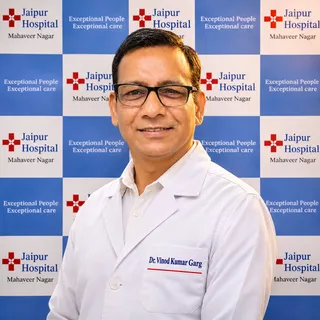
Your pulmonology doctors
Explore our pulmonology and chest care centre in Jaipur: every treatment, the doctors and what to expect at your visit.
Frequently asked questions
Questions patients ask about pulmonary hypertension treatment
What concerns can I discuss during an appointment for pulmonary hypertension?
In short
You can discuss your breathing troubles, daily stamina, current medicines, and test findings during your appointment at Jaipur Hospital. Your doctor listens to how fatigue or breathlessness affects your routine work. You can also ask about right heart catheterisation, oxygen requirements, long-term care plans, and estimated costs for specialised investigations.
In detail
Pulmonary hypertension involves raised blood pressure inside your lungs and heart chambers, requiring careful classification across five distinct medical groups before selecting treatment.
During your visit, our team evaluates whether pulmonary arterial hypertension, left heart problems, chronic lung conditions, or chronic thromboembolic disease explains your symptoms.
In studies, treatments differ sharply by cause, ranging from targeted oral vasodilators like endothelin receptor antagonists and PDE5 inhibitors to surgical evaluation for chronic blood clots.
You can discuss how right heart catheterisation measures right heart pressures and cardiac output, whether vasoreactivity testing is needed, and how medical therapies help relax constricted vessel walls to ease strain on your heart over time.
Your next step at Jaipur Hospital
Initial outpatient consultations typically take 30 to 45 minutes, allowing ample time to address your daily concerns and review your medical background. If catheter testing is recommended, the procedure usually takes 1 to 2 hours in a specialised lab. Our team helps you plan each step clearly.
Which medical records, previous reports, and medicine details should I bring for a pulmonary hypertension consultation?
In short
You should bring all past chest reports, heart tracings, echocardiograms, and current prescriptions to Jaipur Hospital. Having your previous discharge summaries and blood test sheets helps our doctors understand your clinical history. An organised folder allows our specialist team to review your case without repeating unnecessary diagnostic investigations.
In detail
Diagnostic decision-making in pulmonary hypertension relies on tracking changes in your heart chambers, lung fields, and pulmonary pressures over time.
Transthoracic echocardiography reports provide baseline measurements of right ventricular size and function, while previous CT scans or ventilation-perfusion scans help assess whether pulmonary clots or lung tissue diseases exist.
Furthermore, bringing all current medicine strips or chemist receipts enables your doctor to evaluate drug interactions, especially since treatments like endothelin receptor antagonists or PDE5 inhibitors require careful coordination.
Showing previous oxygen assessment reports also clarifies whether supplemental home oxygen therapy has been previously advised or adjusted during testing.
Your next step at Jaipur Hospital
Gather your diagnostic reports, ECG strips, discharge summaries, and medicine packages in a single file before visiting our OPD. Your appointment typically takes 30 to 45 minutes, and having your records ready saves valuable time. Our team reviews everything carefully.
How will the team explain my pulmonary hypertension diagnosis and treatment choices?
In short
Our specialist team explains your pulmonary hypertension diagnosis and treatment choices using detailed diagnostic findings at Jaipur Hospital. Your specialist reviews your pulmonary artery pressure measurements and explains which clinical group applies to your condition. The team outlines appropriate medical therapies or surgical pathways clearly so you understand every available option.
In detail
Treatment plans are chosen based on which of five World Health Organization groups most suitable explains your elevated pulmonary artery pressure.
Group 1 pulmonary arterial hypertension is treated with specific vasodilator medications such as endothelin receptor antagonists, PDE5 inhibitors, soluble guanylate cyclase stimulators, or prostacyclin pathway agents.
For Group 4 chronic thromboembolic disease, pulmonary endarterectomy is the established potentially curative surgical treatment of choice for surgically accessible disease, whereas balloon pulmonary angioplasty addresses distal inoperable lesions. Groups 2 and 3 focus on managing underlying heart or lung conditions.
The team explains expected benefits and potential adverse effects using published study results and clinical diagrams rather than outcome photographs.
A common belief
Pulmonary hypertension care is never one-size-fits-all.
What actually happens
The same elevated reading calls for entirely different treatments depending on the underlying cause. While Group 1 relies on targeted vasodilators, Group 4 may involve surgery or angioplasty, and Groups 2 and 3 focus on underlying heart or lung disease.
Your next step at Jaipur Hospital
Your initial consultation typically lasts 30 to 45 minutes, providing ample time to discuss reports with your family. If catheterisation is required, it is scheduled as a daycare procedure. Please feel welcome to prepare questions beforehand.
How does the term "high blood pressure" relate to pulmonary hypertension?
In short
At Jaipur Hospital, our doctors explain that regular high blood pressure and pulmonary hypertension involve two completely separate circulatory systems. Common high blood pressure affects systemic body arteries. Pulmonary hypertension specifically means high blood pressure inside the arteries carrying blood from the heart to the lungs.
In detail
Ordinary high blood pressure is measured on your arm with an ordinary cuff and reflects the pressure your left ventricle generates to pump blood throughout the body. In contrast, pulmonary hypertension involves elevated pressure in the pulmonary arteries connecting the right ventricle to your lungs.
This diagnosis cannot be made with an arm cuff; it requires specialised tests like echocardiography and right heart catheterisation. Elevated pulmonary pressure can arise from vascular narrowing, chronic thromboembolic disease, or left heart dysfunction.
Treating pulmonary hypertension requires specific therapies, such as targeted pulmonary vasodilators or surgical endarterectomy, rather than routine arm blood pressure tablets.
A common belief
Regular high blood pressure is measured on your arm and affects blood vessels throughout your body.
What actually happens
Pulmonary hypertension affects the pulmonary arteries connecting the heart and lungs, and it cannot be checked with an arm cuff. It requires specialised hospital tests and dedicated targeted therapies.
Your next step at Jaipur Hospital
If an echocardiogram suggests elevated pulmonary pressure, our team will guide you through definitive diagnostic testing. Workup costs typically range from ₹15,000 to ₹50,000 across India. Testing helps determine the exact cause so that proper treatment can begin. To evaluate your pulmonary pressures accurately, you are invited to book a consultation at Jaipur Hospital.
How should I measure blood pressure correctly at home for pulmonary hypertension?
In short
Our specialist team evaluates your blood pressure readings directly during clinical assessments at Jaipur Hospital. Standard arm cuffs measure systemic arterial pressure rather than the pressures inside your pulmonary arteries. A right heart catheterisation remains the medical method needed to measure pressures inside your heart and pulmonary vessels accurately.
In detail
In pulmonary hypertension workups, routine home cuffs track general circulation but cannot record internal pulmonary artery dynamics. Measuring pressures inside the right atrium and right ventricle requires a catheter guided to the right side of the heart.
During this procedure in a cardiac cath lab, a small hollow tube measures cardiac output and indirect pressures on the left side of the heart. The team may administer intravenous heart medicine during testing to track your response over about thirty minutes.
Because treatment depends strictly on your World Health Organization classification group, resting pressures obtained through formal diagnostic catheterisation guide medical therapy rather than self-monitored home numbers.
A common belief
Many people assume an arm cuff shows pulmonary pressure, but right heart catheterisation is the required method to record pressures inside your pulmonary vessels.
What actually happens
This test also measures cardiac output and response to medicines.
Your next step at Jaipur Hospital
A specialist consultation takes thirty to forty-five minutes to review your overall cardiac health and history. If catheterisation is advised, the hospital stay is typically daycare, or one night when vasoreactivity testing is included. Local anaesthesia numbs the insertion site. You may schedule a comprehensive evaluation by booking an assessment with our specialist team at Jaipur Hospital.
Which changes in breathing, chest symptoms, or oxygen levels need urgent help in pulmonary hypertension?
In short
New shortness of breath, severe breathing difficulty, and low oxygen levels require prompt medical attention at Jaipur Hospital. Our specialist team provides emergency services and intensive care for sudden respiratory deterioration. Any acute breathing change or chills following a catheter procedure should be evaluated without delay.
In detail
Significant drops in blood oxygen require supplemental oxygen therapy, which is added whenever testing confirms sustained hypoxia. In pulmonary hypertension, progressive obstruction or microvasculopathy can reduce cardiac output and lead to right heart failure if unmanaged.
Characteristic complications of advanced vascular disease include severe hypoxia, pulmonary oedema, and haemoptysis. Following right heart catheterisation, reporting chills, shortness of breath, or bleeding at the puncture site is essential. Invasive testing allows clinicians to track pressure changes and cardiac output continuously. Hospital care ensures supportive respiratory therapy, artificial ventilation when necessary, and immediate medical intervention to prevent severe circulatory compromise.
Your next step at Jaipur Hospital
Seek urgent care immediately if your breathing worsens or oxygen levels drop significantly on home testing. After a catheter test, keeping the insertion site clean and dry is important. Bruising is common, but swelling or fever needs review. You can visit our emergency department or book a consultation at Jaipur Hospital.
When should I book a consultation for pulmonary hypertension?
In short
You should book a consultation at Jaipur Hospital whenever you notice unexplained breathlessness, persistent fatigue, or an abnormal heart report. Getting evaluated early helps establish whether high pressure in your pulmonary arteries causes your symptoms. Our specialist clinic reviews your findings and plans the necessary diagnostic assessments without unnecessary delay.
In detail
Pulmonary hypertension often progresses quietly, meaning symptoms like reduced exercise tolerance or shortness of breath during routine walks warrant timely clinical attention. In studies, untreated chronic thromboembolic pulmonary hypertension can worsen over time and culminate in right heart failure.
Furthermore, approximately 1 to 3.8% of patients develop chronic thromboembolic disease within two years following an acute pulmonary embolism. Because treatment is not one-size-fits-all and depends entirely on the underlying cause, early clinical assessment is essential.
A specialist evaluation determines whether your symptoms stem from small-vessel arterial remodelling, left-sided heart disease, lung conditions, or organised blood clots that require surgical or catheter assessment.
Your next step at Jaipur Hospital
A standard outpatient consultation typically takes 30 to 45 minutes to complete your history and examination. If specialised investigations such as right heart catheterisation are indicated, they are scheduled conveniently as daycare procedures. Timely review ensures an accurate diagnosis and treatment strategy.
Should I keep a symptom diary before my pulmonary hypertension appointment?
In short
Yes, keeping a symptom diary before your appointment at Jaipur Hospital is very helpful for your doctor. Recording daily breathlessness, ankle swelling, and fatigue shows how your condition behaves during real-life activities. This practical information allows our specialist medical team to tailor your diagnostic assessment and treatment plan accurately.
In detail
Pulmonary hypertension symptoms often fluctuate based on physical exertion, weather, and fluid balance, making day-to-day records valuable for clinical evaluation.
In studies, functional capacity and exercise tolerance, such as distance walked without resting, are primary markers used to assess disease severity and response to targeted therapies.
Writing down when you feel breathless on stairs, whether your footwear feels tighter due to oedema, or if you feel dizzy gives your doctor an objective picture beyond a single clinic visit. This helps determine whether your functional status corresponds to mild limitation or more advanced stages needing prompt therapeutic adjustment.
Your next step at Jaipur Hospital
Note your symptoms, walking tolerance, and medicine timings for one to two weeks in a simple notebook before your visit. Bring this diary along with your medical records to your 30 to 45 minute consultation. It provides clear insights for your care plan.
What happens if the cause of my pulmonary hypertension symptoms is still unclear?
In short
If the cause of your symptoms remains unclear, our specialist team performs further structured investigations at Jaipur Hospital. Your doctor arranges a right heart catheterisation to measure exact pressures inside your heart and lungs directly. This precise diagnostic step confirms whether pulmonary arterial hypertension or another specific category is present.
In detail
Non-invasive tests such as transthoracic echocardiography provide initial screening, but right heart catheterisation remains the definitive diagnostic test to establish the diagnosis and clarify the clinical group before finalising therapy.
During this procedure, a small hollow tube is guided to the right side of the heart to record right atrial, ventricular, and pulmonary artery pressures, alongside cardiac output. Doctors may also give intravenous medicines during the assessment to check your heart's immediate response.
External imaging centres perform ventilation-perfusion scintigraphy or computed tomographic pulmonary angiography to rule out chronic blood clots. These systematic investigations prevent misdiagnosis and guide proper medication selection.
A common belief
Ultrasound scans of the heart can suggest high pressure, but they cannot provide the complete picture alone.
What actually happens
Catheterisation directly measures chambers and pulmonary arteries, helping doctors identify whether the issue stems from small vessel disease, blood clots, or left heart conditions before starting lifelong medications.
Your next step at Jaipur Hospital
Right heart catheterisation usually takes 1 to 2 hours in the cardiac cath lab, typically managed as a daycare stay. Our team reviews all external scans and laboratory findings with you once completed. You can contact our reception to arrange a diagnostic assessment for pulmonary hypertension at Jaipur Hospital.
How does the term "high BP" relate to pulmonary hypertension?
In short
The common term high BP refers to general arterial hypertension, whereas pulmonary hypertension evaluated at Jaipur Hospital involves high pressure solely in the lung circulation. Regular high BP is checked using an arm cuff, but pulmonary hypertension requires specialised cardiac testing to identify and measure accurately.
In detail
When someone mentions high BP, they usually mean systemic arterial pressure driven by the left ventricle pumping to the brain, kidneys, and limbs.
Pulmonary hypertension is an entirely separate disease process where the blood vessels inside the lungs become narrowed, stiff, or blocked by chronic clots. This resistance strains the right ventricle of the heart. The two conditions require completely different treatments.
Standard high BP medicines do not correct pulmonary arterial remodelling, which instead requires dedicated targeted vasodilator medications, lifelong monitoring, or interventions such as balloon pulmonary angioplasty or pulmonary endarterectomy in eligible chronic thromboembolic disease.
A common belief
People often assume that taking regular high BP tablets will manage high lung pressures, but that is incorrect.
What actually happens
Arm-cuff blood pressure does not reflect lung artery resistance. Pulmonary hypertension strains the right heart and demands targeted therapies designed specifically for pulmonary blood vessels.
Your next step at Jaipur Hospital
Our specialists assess your breathing symptoms and heart function during an unhurried 30 to 45 minute outpatient consultation. Please bring any past blood pressure logs, ECGs, and echo reports with you. Cashless options include MAA Yojana and approved private insurers.
FAQ library
Questions and answers about pulmonary hypertension treatment
When you contact us
A clear diagnosis and plan
Contact Jaipur Hospital for a pulmonologist consultation, review of your reports, a plain explanation of options, a cost estimate, and help with cashless treatment.
- A consultation with a pulmonologist (chest physician) in the OPD
- Your scans and reports reviewed, with tests done in-house if you need them (laboratory, X-ray and imaging)
- Your options explained in plain words, including whether you need surgery at all
- A cost estimate before you decide
- Help with cashless treatment under MAA Yojana and empanelled insurers and TPAs
- Follow-up visits after your treatment
Overview
Pulmonary Hypertension Treatment: what to know
What pulmonary hypertension is and how it develops
- Definition
- High pressure in lung arteries
- Effect on heart
- Right ventricle thickens and weakens
- Group 1 (PAH)
- Small lung arteries narrow and stiffen
- Group 4 (CTEPH)
- Follows clots that do not dissolve
Pulmonary hypertension means the pressure in the arteries that carry blood from the right side of the heart to the lungs is higher than normal. The right ventricle has to pump against this raised pressure, and over time the chamber can thicken and weaken. The condition is grouped by cause.
Group 1 is pulmonary arterial hypertension (PAH), where the small pulmonary arteries themselves become narrowed, thickened or stiff. Group 4 is chronic thromboembolic pulmonary hypertension (CTEPH), which follows blood clots that do not fully dissolve and leave organised fibrous material stuck to the artery walls.
In both groups the pressure rise is real even when a person feels well at rest; a lump that causes no pain is still a lump, and a pressure rise without symptoms is still pulmonary hypertension.
Symptoms of pulmonary hypertension and warning signs that need urgent care
- Sudden severe breathlessness Cannot catch your breath
- Fainting or near-fainting Feeling you may pass out
- Chest pain that does not settle Pain that stays
- Coughing up blood Blood in sputum
- Rapid increase in swelling Legs or abdomen swell fast
The most common symptom is breathlessness on exertion, such as walking up stairs or a gentle incline.
Fatigue, chest discomfort, a feeling of a racing heart, swelling of the ankles and abdomen, and episodes of dizziness or fainting can also occur.:
- Fatigue
- Chest discomfort
- A feeling of a racing heart
- Swelling of the ankles and abdomen
- Episodes of dizziness or fainting
In CTEPH, these symptoms may appear months or years after an acute pulmonary embolism, and they often progress slowly. Warning signs that need medical attention the same day include sudden severe shortness of breath, fainting or near-fainting, chest pain that does not settle, coughing up blood, and a rapid increase in leg or abdominal swelling.
These can signal a sudden rise in pulmonary pressure, a new clot, or right heart strain that needs immediate assessment.
Causes of pulmonary hypertension and who is at higher risk
- PAH causes
- Idiopathic, heritable, or linked to other conditions
- CTEPH cause
- Follows pulmonary emboli that leave clot material
- CTEPH risk factors
- Unprovoked or recurrent PE, clotting disorders, splenectomy
- PAH risk factors
- Family history, connective tissue disease, appetite suppressants
PAH can be idiopathic, heritable, or associated with:
- Connective tissue disease
- Congenital heart disease
- Portal hypertension
- HIV infection
- Certain drugs and toxins
CTEPH develops after one or more pulmonary emboli; the organised clot material narrows the arteries and triggers remodelling of the smaller vessels that are not directly blocked. Even after the large obstruction is cleared, distal small-vessel remodelling and microvasculopathy may persist.
Risk factors for CTEPH include a history of unprovoked or recurrent pulmonary embolism, certain blood clotting disorders, chronic inflammatory conditions, and splenectomy.:
- Unprovoked or recurrent pulmonary embolism
- Certain blood clotting disorders
- Chronic inflammatory conditions
- Splenectomy
For PAH, a family history, connective tissue disease, and past use of appetite suppressants raise the likelihood. In both groups, the underlying cause decides the treatment path, because the same pressure reading can call for very different therapy depending on the WHO group.
How pulmonary hypertension is diagnosed: examination and tests
- Clinical assessment Heart sounds, neck veins, leg swelling
- Echocardiography First-line imaging to estimate pressure
- V/Q scintigraphy Screening test for CTEPH
- CT pulmonary angiography Shows chronic clot and lung changes
- Cardiac MRI Reference standard for right ventricle
- Right heart catheterisation Confirms diagnosis and WHO group
The first step is a clinical assessment: listening to the heart for a loud pulmonary component of the second heart sound, checking for raised jugular venous pressure, leg oedema, and signs of right heart strain.:
- Listening to the heart for a loud pulmonary component of the second heart sound
- Checking for raised jugular venous pressure
- Leg oedema
- Signs of right heart strain
Transthoracic echocardiography is the first-line imaging tool; it estimates pulmonary artery pressure, measures right ventricular size and function, and helps decide whether further testing is needed. Ventilation–perfusion (V/Q) scintigraphy is the recommended screening test for CTEPH; a normal scan essentially rules it out.
Computed tomographic pulmonary angiography (CTPA) shows the location and appearance of chronic clot material, bronchial collateral arteries, and lung parenchymal changes. Cardiac magnetic resonance gives a reference-standard measurement of right ventricular volumes, mass and ejection fraction and is used for prognostication and follow-up.
Right heart catheterisation (RHC) confirms the diagnosis, measures pressures directly, determines cardiac output, and establishes the WHO group before a treatment plan is finalised.
During RHC a mild sedative may be given, the skin at the insertion site is numbed with local anaesthetic, and pressures are measured in the right atrium and right ventricle; intravenous medicine can be given to test the pulmonary arteries' response (vasoreactivity testing).
The procedure is done in the cardiac catheterisation laboratory and typically takes 30 to 60 minutes for the haemodynamic assessment; if vasoreactivity testing is performed, the stay may be longer.
Treatment options without surgery, and when surgery is advised
Medical therapy is the mainstay for PAH (Group 1) and for inoperable or residual CTEPH (Group 4).
PAH-specific drugs fall into several classes:
- Endothelin receptor antagonists block endothelin, a substance that promotes constriction and thickening of vessel walls
- PDE5 inhibitors prolong a natural vasodilating signal in the pulmonary artery
- Soluble guanylate cyclase stimulators such as riociguat act on a related but distinct pathway
- Prostacyclin pathway agents mimic or extend the effect of prostacyclin, a natural substance that relaxes pulmonary vessels
These medicines are used alone or in combination, and can be oral, inhaled, or continuously infused. Riociguat is approved for inoperable or persistent and recurrent CTEPH and carries a Class I, Level B recommendation in the 2022 ESC/ERS guidelines.
For CTEPH, pulmonary endarterectomy (PEA) is the treatment of choice and a potentially curative option when the disease is surgically accessible — that is, when obstructive lesions are in the main, lobar or proximal segmental arteries. Operability is a multidimensional assessment that integrates anatomical accessibility, the match between measured pulmonary vascular resistance and visible obstruction, comorbidities, and overall surgical risk.
A high resistance out of proportion to the visible obstruction suggests a large small-vessel component and predicts a higher risk of persistent pulmonary hypertension after surgery. Balloon pulmonary angioplasty (BPA) is an option for distal inoperable lesions or residual disease after PEA.
Medical therapy is used for inoperable disease, residual or recurrent pulmonary hypertension after PEA, and for preoperative optimisation before PEA or BPA. Supplemental oxygen is added whenever testing confirms a significant, sustained drop in blood oxygen, regardless of the WHO group.
Treatment plans are reassessed periodically rather than set permanently at diagnosis, and two patients in the same WHO group can reasonably end up on different plans. Referral to an experienced CTEPH centre for careful evaluation of suitability for surgery is essential, and a second opinion at a high-volume centre should be sought in difficult cases.
Your first visit and tests for pulmonary hypertension
- Doctor asks about symptoms Breathlessness, tiredness, chest discomfort, fainting, swelling
- Review of past reports Echo, X-ray, blood tests, CT angiogram, V/Q scan
- Bring all records Reports, medicine list, insurance or MAA Yojana card
- Physical examination Heart, lungs, oxygen level, right heart strain signs
- Right heart catheterisation if needed Definitive test to confirm diagnosis and WHO group
Your first visit takes 30 to 45 minutes.
The doctor asks about:
- Breathlessness
- Tiredness
- Chest discomfort
- Fainting episodes
- Any swelling in your legs
They review:
- Past echocardiograms
- Chest X-rays
- Blood tests
- Any CT pulmonary angiogram or V/Q scan you have already done
Bring all previous reports, a list of current medicines and your insurance or MAA Yojana card. The doctor examines your heart and lungs, checks your oxygen level and looks for signs of right heart strain. If the non-invasive tests suggest pulmonary hypertension, the next step is right heart catheterisation.
This is the definitive test to confirm the diagnosis, measure pressures directly and decide which WHO group applies before a treatment plan is finalised. The catheterisation is done under local anaesthesia in the cardiac catheterisation laboratory and takes 1 to 2 hours. A mild sedative helps you relax but you stay awake.
The skin at the insertion site is cleaned and numbed. Pressures are measured inside the right atrium and right ventricle during catheter advancement. Cardiac output is determined. Indirect measurements of pressures on the left side of the heart can be obtained. Intravenous heart medicine may be given during the procedure to assess the heart's response.
If heart output is low or pressures are too high, the catheter may be left in place for monitoring. You may need to stay in hospital for the day; an overnight stay is typical if vasoreactivity testing is done.
How pulmonary hypertension treatment works
Treatment depends on the WHO group identified during the workup. Group 1 pulmonary arterial hypertension is treated with dedicated vasodilator medication classes.
These include:
- Endothelin receptor antagonists that block the action of endothelin, a substance that promotes constriction and thickening of blood vessel walls
- PDE5 inhibitors that prolong the effect of a natural vasodilating signal in the pulmonary artery walls
- Soluble guanylate cyclase stimulators that act on a related pathway through a distinct mechanism
- Prostacyclin pathway agents that mimic or extend the effect of prostacyclin, a naturally occurring substance that relaxes pulmonary blood vessels
Medications are available in oral, inhaled and continuously infused forms and are often used in combination. For Group 4 chronic thromboembolic pulmonary hypertension, surgical and interventional options exist. Pulmonary endarterectomy is the treatment of choice and a potentially curative option when the disease is surgically accessible. Balloon pulmonary angioplasty is a staged procedure for distal inoperable lesions or residual disease.
PH-targeted medical therapy addresses the accompanying microvasculopathy and is used in inoperable disease, residual or recurrent PH after surgery, and for preoperative optimisation. Riociguat is a soluble guanylate cyclase stimulator approved for inoperable or persistent and recurrent CTEPH and carries a Class I, Level B recommendation in the 2022 ESC/ERS guidelines.
Parenteral prostanoids such as epoprostenol or treprostinil infusion are options for advanced disease. Supplemental oxygen is added whenever testing confirms a significant, sustained drop in blood oxygen. Your doctor will advise which combination suits you. Treatment plans are typically reassessed periodically rather than set permanently at diagnosis.
Two patients within the same WHO group can reasonably end up on different treatment plans. If an operation such as pulmonary endarterectomy or balloon pulmonary angioplasty is appropriate, your doctor will refer you to a centre that performs those procedures.
Risks and possible complications of pulmonary hypertension treatment
- Right heart catheterisation
- Rare acute complications; bruise is normal
- Pulmonary endarterectomy
- Reperfusion lung injury, residual PH, neurological events
- Balloon pulmonary angioplasty
- Vascular injury and haemoptysis are characteristic
- Riociguat
- Infusion site pain and reactions common
Right heart catheterisation is generally safe.
Acute complications are rare but include:
- Filter misplacement
- Pneumothorax
- Haematoma
- Air embolism
- Carotid artery puncture
- Arteriovenous fistula
Potential later complications include recurrent deep vein thrombosis, inferior vena cava thrombosis or penetration, post-thrombotic syndrome and migration of the filter. After the procedure, pressure is applied to the insertion site for 5 to 10 minutes. If a groin vein was used, you must lie flat for a few hours. A small bruise at the insertion site is normal.
Shortness of breath, trouble breathing or chills after the procedure should be reported to a healthcare provider. For pulmonary endarterectomy, the most common immediate post-operative complication specific to the surgery is reperfusion lung injury. It typically occurs within 48 hours and is characterised by high permeability oedema causing hypoxia and new radiological opacity in reperfused lung areas.
Reperfusion pulmonary oedema and residual pulmonary hypertension are unique post-operative complications associated with increased mortality. Principal early complications are reperfusion lung injury, residual pulmonary hypertension and, less commonly, neurological events. Refractory right ventricular failure or severe reperfusion injury may require venoarterial or venovenous extracorporeal membrane oxygenation (ECMO) as a bridge to recovery.
With ECMO, one-third to one-half of patients can be salvaged and leave hospital alive. There is potential for neurological injury from brain ischaemia during deep hypothermic circulatory arrest. Most large contemporary series report very few clinical neurological events and the risk of stroke is low. In the PEACOG trial there was no evidence of cognitive impairment after PEA.
For balloon pulmonary angioplasty, characteristic complications are vascular injury and haemoptysis. Their management includes prolonged low-pressure balloon inflation to seal a leak, reversal of heparin with protamine, selective coil or particle embolisation of a bleeding vessel, and, for frank perforation, deployment of a covered stent, with temporary ECMO support reserved for rare catastrophic events.
In studies of riociguat, the most common treatment-related adverse events were infusion site pain and other infusion site reactions. Serious adverse events were reported in 19% of patients in the low-dose group and 17% in the high-dose group.
Methylprednisolone had no significant impact on clinical outcomes and the incidence of lung injury was 41% in the corticosteroid-treated group versus 45% in the placebo group.
Recovery and aftercare for pulmonary hypertension
- After right heart catheterisation Light activity next day; keep site clean and dry
- After vasoreactivity testing or overnight stay Doctor reviews data before discharge
- Ongoing medication Lifelong disease-specific medication is typical
- Regular follow-up Symptoms, walk distance, NT-proBNP, echo
- After PEA or BPA ICU monitoring, gradual mobilisation, rehab programme
- Watch for warning signs Sudden breathlessness, chest pain, fainting, rapid weight gain, infection signs
After right heart catheterisation, the insertion site should be kept clean and dry. You can usually resume light activity the next day. If you had vasoreactivity testing or an overnight stay, your doctor will review the haemodynamic data before you go home. For pulmonary hypertension medication, lifelong disease-specific medication is typical.
You will have regular follow-up visits to assess:
- Symptoms
- Functional class
- 6-minute walk distance
- NT-proBNP levels
- Echocardiographic parameters
Dose adjustments are common in the first months. If you start parenteral prostanoid therapy, you will receive training on pump care, line hygiene and emergency procedures. After pulmonary endarterectomy or balloon pulmonary angioplasty, recovery involves intensive care monitoring, gradual mobilisation and a structured rehabilitation programme. Oxygen therapy continues if testing confirms ongoing low blood oxygen.
Watch for:
- Sudden worsening of breathlessness
- New chest pain
- Fainting
- Rapid weight gain from fluid retention
- Signs of infection at any catheter or surgical site
Call the hospital or attend the emergency department if any of these occur. Treatment plans are reassessed periodically.
Results of pulmonary hypertension treatment in studies
In the CHEST-1 trial, patients with inoperable or persistent and recurrent CTEPH who received riociguat had a mean increase of 39 metres in 6-minute walk distance at week 16, compared with a mean decrease of 6 metres in the placebo group. The least-squares mean difference between groups was 46 metres with a 95% confidence interval of 25 to 67 metres.
Secondary endpoints included improvements in pulmonary vascular resistance, NT-proBNP, WHO functional class, time to clinical worsening, Borg dyspnoea score and quality of life. In the CHEST-2 long-term extension, improvements in 6-minute walk distance and functional class persisted for up to 1 year. Long-term riociguat had a favourable benefit-risk profile with sustained benefits in exercise and functional capacity.
In the Japanese MR-BPA trial, the 12-month reduction in mean pulmonary artery pressure was -16.3 mmHg with balloon pulmonary angioplasty compared with -7.0 mmHg with riociguat. In the French RACE trial, the percentage reduction in pulmonary vascular resistance at 26 weeks favoured balloon pulmonary angioplasty over riociguat, although both treatments improved haemodynamics.
Pre-treatment with riociguat reduced balloon pulmonary angioplasty-related serious adverse events from 42% to 14%. For pulmonary endarterectomy, in-hospital mortality is now below 5% in experienced centres. Left untreated, CTEPH is progressive and may culminate in right heart failure and death. Even after mechanical obstruction is relieved surgically or percutaneously, distal small-vessel remodelling and microvasculopathy may persist.
In the observed population at 1 year, mean 6-minute walk distance changed by +51 metres and WHO functional class improved, stabilised or worsened in 47%, 50% and 3% of patients respectively.
Cost and insurance for pulmonary hypertension treatment in Jaipur
The typical workup for pulmonary hypertension in India costs ₹15,000 to ₹50,000. This includes consultations, echocardiography, right heart catheterisation, blood tests and imaging such as V/Q scan or CT pulmonary angiogram done at an external imaging centre. Targeted medication costs range from ₹10,000 to ₹2,00,000 per month depending on the drug class, dose and whether combination therapy is used.
These are typical ranges in India; ask us for an estimate based on your specific regimen. Right heart catheterisation is done as daycare; an overnight stay may be needed if vasoreactivity testing is performed. Jaipur Hospital is empanelled under MAA Yojana and works with a panel of private insurers and TPAs for cashless admission.
The hospital has an in-house pharmacy and 24-hour laboratory, X-ray and ECG services. CT and MRI scans are performed at external imaging centres; the doctor advises and reviews the scans. For admission, bring your insurance or scheme card and a valid photo ID. The hospital does not have our team that provides written estimates or packages; costs are discussed during the consultation.
