

Pulmonology · Jaipur Hospital
Tuberculosis Treatment in Jaipur
Persistent cough and weight loss? We confirm the diagnosis and guide you through a complete DOTS treatment plan.
- Serving Jaipur since 1991 (35 years)
- NABH accredited
- 24×7 emergency & ICU
- Cashless: RGHS, MAA Yojana, CGHS + 22 insurers
- Treatment length
- 6 to 9 months (standard regimen)
- Anaesthesia
- Not needed
- Recovery
- Clinical improvement in 2 to 4 weeksfull cure after completion
- Price
- ₹1,000 to ₹3,000 per consultation₹5,000 to ₹15,000 for workup (CBNAAT, culture) · Drugs often free via NTEPtypical range in India; ask us for an estimate
TB symptoms disrupt daily life
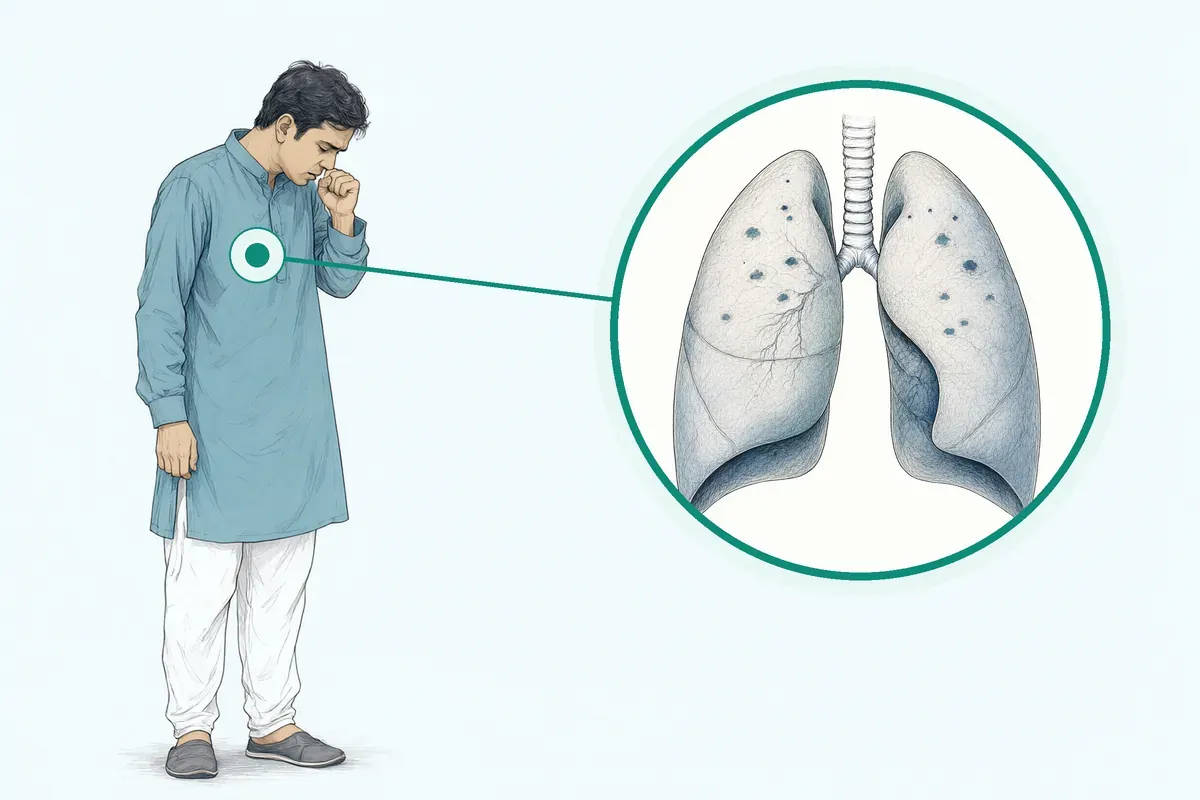
A cough that will not go away, fever at night, and weight you cannot explain
Active TB spreads through the air when you cough. Without the right medicines taken for the full course, the germs stay alive, you remain infectious, and the disease can become resistant and harder to treat.
-
Long infectious period
You can spread germs to family and coworkers every day until treatment starts working.
-
Risk of drug resistance
Stopping medicines early or missing doses lets surviving germs become resistant.
-
Treatment takes months
Standard regimens last six to nine months; missing doses restarts the clock.
-
Side effects worry you
Nausea, rash, joint pain, or orange urine can make you want to stop.
-
Cost and logistics
Repeated tests, daily visits, and medicine costs add up over many months.
Only active pulmonary TB is contagious; latent infection cannot spread to others.
Why Jaipur Hospital
You worry about infecting your children or parents, losing weeks of wages, and managing daily pills that upset your stomach.
Your care plan
Your first steps with us
- 1 Book an OPD consultation with a pulmonologist
- 2 Complete rapid molecular test and culture in-house
- 3 Start DOTS regimen with daily observation and monitoring
- 4 Finish the full course and get a completion record
How TB treatment works at Jaipur Hospital
We confirm the diagnosis with rapid molecular testing and culture, then start a standard DOTS regimen under direct observation. Your surgeon will discuss the right drug combination and duration for your type of TB.
-
CBNAAT (GeneXpert MTB/RIF)
Rapid molecular test that detects TB bacteria and rifampicin resistance within hours.
-
Liquid Culture (MGIT) & DST
Gold-standard culture that grows bacteria and tests sensitivity to all anti-TB drugs.
-
Standard HRZE Regimen (DOTS)
Four-drug intensive phase for two months, then two drugs for four months under direct observation per NTEP guidelines.
-
MDR-TB Regimen (Bedaquiline-based)
All-oral longer regimen for rifampicin-resistant TB, given under strict supervision.
Why patients trust us
- 1991 Serving Jaipur for 35 years
- NABH Accredited hospital
- 1 Pulmonology consultants
- 24×7 Emergency, ICU and ambulance
- 25 Cashless schemes and insurers
What studies show about TB treatment outcomes
-
Treatment takes four, six, or nine months
Duration depends on the regimen chosen and patient response; most plans last six to nine months.
-
Most people start feeling well after a few weeks
Symptoms like fever and cough often improve within the first month, but the full course must be finished.
-
Early antiretroviral therapy with TB treatment cuts mortality by 56 percent
In HIV co-infected patients, starting ART within four weeks of TB treatment reduced deaths from 12.1 to 5.4 per 100 person-years.
If it is left untreated
Without treatment, active TB can be fatal. You remain infectious to family and close contacts. Stopping medicines early lets surviving germs become drug-resistant, making the disease harder and longer to treat.
Life after completing TB treatment
Most people finish treatment, stop being infectious, and return to normal work and family life with regular follow-up.
-
No longer infectious
After the intensive phase, most patients cannot spread TB to others.
-
Return to daily routine
Strength and appetite usually come back within weeks; you can resume work and household duties.
-
Regular check-ups stay simple
Follow-up visits and occasional sputum tests confirm the heal stays solid.
-
Protect your household
Family members can be screened and offered preventive therapy if needed.
Frequently asked questions
Questions patients ask about tuberculosis treatment
Which problems are assessed under tuberculosis care?
In short
Jaipur Hospital assesses both pulmonary and extrapulmonary tuberculosis. Our team evaluates active TB disease, drug-sensitive and drug-resistant forms, and latent TB infection. We also review patients with TB-HIV co-infection, TB in pregnancy, and TB in children. Complications such as pleural effusion, TB meningitis, and bone or joint TB are included in the assessment.
In detail
Tuberculosis can affect almost any part of the body. Active pulmonary TB is contagious, while extrapulmonary TB involves organs like the brain, spine, or kidneys. Drug-resistant TB, including MDR-TB and XDR-TB, requires specific regimens. Latent TB infection means the bacteria are contained but may reactivate.
Our assessment follows NTEP guidelines and uses molecular tests like CBNAAT and culture to confirm the type and drug sensitivity.
A common belief
Many people think TB is only a lung disease, but it can affect the brain, spine, kidneys, and more.
What actually happens
Drug-resistant forms need different drugs and longer treatment.
Your next step at Jaipur Hospital
You will need a clinical review, sputum or tissue samples, and imaging as advised. The workup typically takes a few days. Bring any previous X-rays, test reports, and a list of current medicines.
How will the doctor decide which tests I need?
In short
The doctor at Jaipur Hospital selects tests based on the site of suspected disease, symptom profile, prior treatment history and risk factors for drug resistance. For pulmonary TB, sputum CBNAAT is the first test because it detects Mycobacterium tuberculosis and rifampicin resistance within hours. If CBNAAT is negative but clinical suspicion remains high, liquid culture (MGIT) is sent. For extrapulmonary TB, the relevant specimen — lymph node aspirate, cerebrospinal fluid, pleural fluid, synovial fluid, or tissue biopsy — is sent for CBNAAT and culture.
In detail
The evidence notes that several new TB diagnostics have been developed, including rapid molecular tests, and that drug susceptibility testing is essential for all drugs.
The doctor also orders baseline liver function tests, renal function, complete blood count, HIV test, and serum uric acid before starting treatment. If you have diabetes, HbA1c is checked. For patients on second-line drugs or with renal impairment, electrolyte monitoring is added.
Visual acuity and colour vision testing are done before and during ethambutol therapy. The test panel is individualised to balance diagnostic yield, speed, and safety monitoring.
A common belief
Some patients think a chest X-ray alone is enough.
What actually happens
X-ray shows shadows but cannot confirm TB or detect drug resistance. Molecular and culture tests are needed for a definitive diagnosis and correct regimen.
Your next step at Jaipur Hospital
You will give sputum or other specimens at the in-house laboratory. CBNAAT results are typically available within 24 hours. Culture and full drug susceptibility results take two to six weeks. Blood tests are done fasting in the morning. The doctor reviews all results and finalises the regimen within a few days.
How soon should I expect improvement after starting tuberculosis treatment?
In short
Most people start feeling better within 2 to 4 weeks of beginning standard TB treatment. At Jaipur Hospital, fever, cough, and weight loss usually improve during this period, but the bacteria remain alive for months. You must continue every dose of the 6 to 9 month regimen even after symptoms disappear to achieve full heal and prevent resistance.
In detail
Clinical improvement in the first few weeks is typical because the intensive phase drugs rapidly reduce the bacterial load. However, evidence shows that TB germs are strong and take a long time to die completely.
Stopping medicines too soon lets surviving bacteria multiply and develop resistance, making the disease harder to treat. Regular sputum tests and clinical reviews during the intensive and continuation phases confirm that the treatment is working. Liver function and vision are also monitored because side effects can appear early.
A common belief
Feeling better does not mean the infection is gone.
What actually happens
Stopping early is the main cause of drug-resistant TB, which is much harder to treat.
Your next step at Jaipur Hospital
Attend all follow-up visits and DOTS appointments so your doctor can track progress and manage any side effects. Do not stop medication on your own even if you feel well.
How does the term TB relate to tuberculosis care?
In short
TB is the common abbreviation for tuberculosis, an airborne infectious disease caused by Mycobacterium tuberculosis. At Jaipur Hospital, we use the term TB in all patient communication, records, and the DOTS programme. It refers to the same condition whether it affects the lungs (pulmonary TB) or other organs (extrapulmonary TB).
In detail
Evidence from global guidelines confirms that TB diagnosis requires demonstrating the organism through sputum microscopy, rapid molecular tests like CBNAAT, or culture. The term TB covers both drug-susceptible and drug-resistant forms.
Treatment follows the National TB Elimination Programme protocols with a standard six to nine month regimen for drug-susceptible disease and longer all-oral regimens for MDR-TB. The abbreviation does not change the clinical approach.
A common belief
Some people think TB is a milder form or only lung disease.
What actually happens
In fact, TB can affect any organ and needs the same rigorous treatment regardless of the name used.
Your next step at Jaipur Hospital
When you hear TB, think of a curable infection that needs a full course of multiple antibiotics under direct observation. Ask your doctor whether your TB is pulmonary or extrapulmonary and whether drug susceptibility results are available.
Which tests distinguish active tuberculosis from latent infection?
In short
Active TB is confirmed by finding Mycobacterium tuberculosis in sputum or tissue using CBNAAT, smear microscopy, or liquid culture. Latent TB infection shows a positive tuberculin skin test or interferon-gamma release assay but no bacteria on sputum tests and no symptoms. At Jaipur Hospital, our laboratory runs all these tests to make the distinction clear.
In detail
Evidence shows that CBNAAT detects TB DNA and rifampicin resistance within two hours. Liquid culture (MGIT) is the reference method for growing the organism and testing sensitivity to all drugs. A chest X-ray helps identify active pulmonary disease.
Latent infection tests only reveal immune sensitisation; they cannot diagnose active disease. Both conditions need different management: active TB requires a full multi-drug regimen, while latent infection may need preventive therapy.
A common belief
A positive skin test alone does not mean you have active TB.
What actually happens
Many people treat latent infection as disease and take unnecessary medicines. Correct testing avoids that mistake.
Your next step at Jaipur Hospital
If you have a cough for more than two weeks, weight loss, or fever, give sputum samples for CBNAAT and culture. If you are a close contact of a TB patient but feel well, ask about a skin test or blood test for latent infection.
How can I decide whether to seek advice about sputum and CBNAAT diagnosis?
In short
You should seek advice about sputum and CBNAAT diagnosis at Jaipur Hospital if you have a cough lasting more than two weeks, fever, night sweats, or unexplained weight loss. These symptoms suggest active pulmonary tuberculosis and need prompt testing. The hospital's pulmonology department arranges sputum examination and rapid molecular testing on an outpatient basis.
In detail
CBNAAT (GeneXpert MTB/RIF) is a rapid molecular test that detects Mycobacterium tuberculosis DNA and rifampicin resistance within a few hours. Evidence shows that rapid molecular tests improve early diagnosis and help start the correct regimen sooner.
Sputum smear microscopy and culture are also available; culture remains the reference for full drug susceptibility testing. The intensive phase of treatment usually begins after bacteriological confirmation, and early detection reduces transmission to close contacts.
A common belief
Many people wait for symptoms to worsen or rely only on a chest X-ray.
What actually happens
CBNAAT gives a faster, more specific result and checks for rifampicin resistance at the same time, so the right treatment can start without delay.
Your next step at Jaipur Hospital
Visit the pulmonary medicine OPD with an attendant if possible. Bring any previous chest X-rays, old treatment records, and a list of current medicines. The doctor will order sputum CBNAAT and may request a chest X-ray or blood tests. Results are typically available within a day.
Which changes in breathing, chest symptoms, or oxygen levels need urgent help?
In short
You need urgent help at Jaipur Hospital if you develop sudden breathlessness at rest, chest pain that worsens with breathing, coughing up more than a teaspoon of blood, bluish lips or fingertips, inability to speak in full sentences, or a drop in oxygen saturation below 94% on a home pulse oximeter. These suggest serious complications like massive haemorrhage, pneumothorax, or acute respiratory failure.
In detail
Haemoptysis occurs in some TB patients; massive haemoptysis (more than 200 to 600 mL in 24 hours) is life-threatening. Pneumothorax can develop from cavitary rupture and presents with sudden sharp chest pain and breathlessness.
Airway obstruction from endobronchial TB or lymph node compression can cause stridor. Evidence notes respiratory adverse drug reactions including chest pain, cough, and pneumothorax appearing after six months to one year. HIV co-infection increases the risk of rapid deterioration. The 24×7 emergency department at Jaipur Hospital has ICU, imaging, and bronchoscopy backup for immediate intervention.
A common belief
Some patients think worsening breathlessness is just TB getting worse or a side effect.
What actually happens
It can be a pneumothorax, massive bleed, or drug reaction needing instant care. Waiting at home can be fatal. The emergency team can drain air, stop bleeding, or adjust drugs within minutes.
Your next step at Jaipur Hospital
If any of these signs appear, call the ambulance (+91-7414-001-001) or go straight to the 24×7 emergency department. Do not wait for an OPD appointment.
Keep the patient sitting up, avoid eating or drinking if haemoptysis is heavy, and bring the treatment card and current medicine strip.
Which symptoms should prompt me to see a specialist?
In short
You should see a specialist at Jaipur Hospital if you have a cough lasting more than two weeks, fever especially in the evenings, night sweats, unexplained weight loss, loss of appetite, chest pain, or coughing up blood. For extrapulmonary TB, watch for persistent swelling of lymph nodes, back pain with stiffness, abdominal distension, headache with confusion, or joint swelling that does not improve.
In detail
Active TB disease typically presents with respiratory symptoms when the lungs are involved. The evidence states that people with active TB disease feel sick, and the germs multiply in the body.
Extrapulmonary symptoms depend on the organ affected: spinal TB causes back pain and deformity; TB meningitis causes headache, vomiting and altered sensorium; abdominal TB causes pain, distension and altered bowel habits.
Constitutional symptoms such as prolonged fever, night sweats and weight loss are common across all forms. Early specialist review allows timely CBNAAT or culture confirmation and prevents transmission.
A common belief
People often dismiss a long cough as a smoker's cough or allergy.
What actually happens
Delaying evaluation lets the disease advance and increases the risk of spreading infection to family members.
Your next step at Jaipur Hospital
If any of these symptoms persist beyond two weeks, do not wait. Bring any previous X-rays, sputum reports or medicine records to the OPD. The doctor will order CBNAAT, culture and baseline blood tests. Results are usually available within 24 to 48 hours for CBNAAT.
How will the results change my care plan?
In short
Test results directly determine the drug regimen, duration and monitoring plan at Jaipur Hospital. A CBNAAT positive with rifampicin sensitivity leads to the standard six-month HRZE regimen under DOTS. If rifampicin resistance is detected, the doctor switches to a bedaquiline-based all-oral MDR-TB regimen lasting 15 to 24 months after culture conversion. Full drug susceptibility testing from culture further refines the regimen by showing sensitivity to fluoroquinolones, injectable agents and newer drugs.
In detail
The evidence states that treatment plans use different combinations of medicines and that the regimen depends on drug susceptibility. If isoniazid resistance alone is found, isoniazid is dropped and the remaining three drugs are continued for six months.
If the patient has HIV, antiretroviral therapy timing is coordinated — usually within two to four weeks of starting TB treatment. Liver function abnormalities may require dose adjustment or temporary substitution of hepatotoxic drugs. Renal impairment alters dosing of ethambutol and certain second-line agents.
Positive culture at two months extends the intensive phase. The care plan is dynamic and updated at each follow-up visit.
A common belief
A common belief is that all TB takes the same medicines.
What actually happens
In fact, drug resistance patterns, HIV status, and organ function each change the drugs, doses and duration significantly.
Your next step at Jaipur Hospital
You will be called to discuss the CBNAAT result as soon as it is available. Culture results are reviewed at two weeks and then monthly. Bring your treatment card to every visit. The DOTS provider will observe your doses and record side effects.
What should I do if my tuberculosis symptoms persist or worsen during treatment?
In short
Contact your treating doctor at Jaipur Hospital immediately if fever, cough, breathlessness, or weight loss continue after four weeks of treatment or if new symptoms appear. Do not stop or change your medicines on your own. The team will arrange urgent sputum testing, blood work, and a clinical review to check for drug resistance, side effects, or another illness.
In detail
Evidence shows that persistent symptoms can mean the bacteria are resistant to one or more drugs, that you are not absorbing the medicines properly, or that an adverse drug reaction such as hepatotoxicity is developing.
Guidelines recommend early molecular testing (CBNAAT) and culture with drug susceptibility testing to identify resistance patterns. Prompt regimen adjustment prevents further lung damage and spread to contacts.
A common belief
Patients often wait weeks hoping things will improve.
What actually happens
Delaying a review lets resistant bacteria multiply and makes treatment harder.
Your next step at Jaipur Hospital
Keep a daily symptom diary and bring it to every visit. If you miss doses, tell the DOTS provider honestly so the plan can be adjusted. Hospital admission for five to ten days may be needed for severe side effects or complications.
FAQ library
Questions and answers about tuberculosis treatment
When you contact us
Get your TB assessment and plan
Contact Jaipur Hospital for a pulmonologist consultation, in-house tests, a clear explanation of your options, a cost estimate, cashless scheme help, and follow-up care.
- A consultation with a pulmonologist (chest physician) in the OPD
- Your scans and reports reviewed, with tests done in-house if you need them (laboratory, X-ray and imaging)
- Your options explained in plain words, including whether you need surgery at all
- A cost estimate before you decide
- Help with cashless treatment under RGHS, MAA Yojana, CGHS and empanelled insurers and TPAs
- Follow-up visits after your treatment
Overview
Tuberculosis Treatment: what to know
What Tuberculosis is and how it happens
- Germs enter lungs Airborne spread when active TB patient coughs or sneezes
- Latent infection Body walls off bacteria; not contagious
- Active disease Immune system fails to control germs; becomes contagious
Tuberculosis (TB) is an airborne infectious disease caused by bacteria called Mycobacterium tuberculosis. The germs spread through the air when a person with active TB in the lungs coughs, sneezes, or speaks. You breathe in the germs, and they can settle in your lungs and start to grow.
Not everyone who breathes in the germs becomes sick. In many people, the body's defence system walls off the bacteria. The germs stay alive but inactive. This is called latent TB infection. You cannot spread the germs to others when the infection is latent.
If your immune system cannot stop the germs from multiplying, the infection becomes active TB disease. Only active pulmonary TB (TB in the lungs) is contagious.
The germs can also travel through the blood to other parts of the body, such as:
- Lymph nodes
- Bones
- Brain
- Kidneys
This is called extrapulmonary TB.
TB germs are strong and take a long time to die. That is why treatment lasts for several months. If you stop the medicines too soon, you can become sick again. If you do not take the medicines correctly, the germs that are still alive may become resistant to those medicines. TB that is resistant to medicines is harder to treat.
Symptoms of Tuberculosis and warning signs that need urgent care the same day
- Liver injury Abdominal pain, nausea, vomiting, yellow skin or eyes
- Nerve problems Tingling or numbness in hands or feet
- Flu-like symptoms With dizziness or loss of appetite
People with active TB disease feel sick.
Common symptoms of pulmonary TB include:
- Cough that lasts two weeks or more
- Sometimes with blood in the sputum
- Chest pain
- Fever (often low-grade and worse in the evening)
- Night sweats
- Loss of appetite
- Weight loss
Extrapulmonary TB symptoms depend on the organ affected. For example, TB of the lymph nodes may cause a swelling in the neck. TB of the spine can cause back pain and stiffness. TB of the brain (meningitis) can cause headache, confusion, and vomiting.
Some side effects of TB medicines need medical attention the same day. Serious side effects include liver injury, abdominal pain, nausea and vomiting, skin and eyes turning yellow (jaundice), dizziness or lightheadedness, loss of appetite, flu-like symptoms, and tingling or numbness in your hands or feet.
If you are taking isoniazid, you may have tingling or numbness in your hands and feet. The rifampicin or rifapentine medicines may cause body fluids such as urine, saliva, tears, sweat, and breast milk to turn an orange colour. This is normal and harmless.
If you have any serious side effect, contact your health care provider immediately. You may be told to stop taking your medicines or to return to the clinic for tests.
Causes of Tuberculosis and who is at higher risk
- HIV infection
- Weakens immune control of TB germs
- Diabetes
- Increases risk of active TB and nerve damage from medicines
TB is caused by Mycobacterium tuberculosis bacteria. The germs spread from person to person through the air. You usually need to spend a lot of time close to someone with active pulmonary TB to get infected.
Certain conditions make it more likely that latent infection will turn into active disease.
These include:
- HIV infection
- Diabetes
- Malnutrition
- Cancer treatment
- Medicines that weaken the immune system such as steroids
Older age and daily alcohol consumption increase the risk of liver injury from the medicines. A genetic trait called slow acetylator status can increase the risk of side effects from isoniazid.
Diabetes, HIV infection, kidney failure, malnutrition, and alcoholism raise the risk of nerve damage (peripheral neuropathy) from isoniazid. Age over 60 years and HIV infection are linked to higher rates of adverse drug reactions overall. Pre-existing liver or kidney disease can increase the risk of side effects from pyrazinamide.
High doses of ethambutol, long treatment duration, kidney problems, older age, and pre-existing eye disease increase the risk of optic nerve damage.
Drinking alcohol while taking TB medicines can be dangerous and may hurt your liver. Some medicines can interact with TB drugs and cause side effects.
Rifampicin strongly affects the way the liver processes many other drugs, including:
- Antiretrovirals
- Anticoagulants
- Anticonvulsants
- Some antifungals
- Immunosuppressants
- Digoxin
- Beta-blockers
- Calcium channel blockers
- Oral diabetes medicines
- Theophylline
- Methadone
Oral contraceptives may not work as well when taken with TB medicines.
How Tuberculosis is diagnosed: examination and tests
Rapid molecular test
- CBNAAT (GeneXpert MTB/RIF)
Reference standard
- Liquid culture (MGIT) with DST
Basic test
- Sputum smear microscopy
Imaging
- Chest X-ray
Your doctor will ask about your symptoms, medical history, and any contact with a person who has TB. A physical examination will be done. If TB is suspected, several tests are used to confirm the diagnosis and check for drug resistance.
A rapid molecular test called CBNAAT (GeneXpert MTB/RIF) can detect TB bacteria and check for resistance to rifampicin within a few hours. This test is often the first step. Liquid culture (MGIT) with drug susceptibility testing (DST) is the most sensitive method to grow the bacteria and test which drugs will work.
Sputum smear microscopy looks for the bacteria under a microscope but cannot detect drug resistance. A chest X-ray helps to see the extent of disease in the lungs.
For extrapulmonary TB, samples may be taken from the affected site, such as:
- Lymph node biopsy
- Spinal fluid (lumbar puncture)
- Urine
Blood tests including complete blood count, liver and kidney function, and HIV testing are done before starting treatment to check your baseline health and plan safe dosing. Your health care provider will make sure the medications can kill the TB germs in your body.
Tuberculosis treatment options without surgery and when surgery is advised
Active TB disease is treated with a combination of antibiotics taken for several months. The standard regimen for drug-susceptible TB follows the National TB Elimination Programme (NTEP) guidelines. It has two phases. The intensive phase lasts two months and usually includes four drugs: isoniazid, rifampicin, pyrazinamide, and ethambutol. The continuation phase lasts four months with two drugs: isoniazid and rifampicin.
The total treatment length is typically six months. In some situations, such as cavitary disease with positive cultures after two months, therapy is extended.
Treatment is given under Directly Observed Therapy (DOT). A health worker watches you take each dose to help you complete the course. This can be done in person or by video call. DOT is the most suitable way to remember to take your medicines.
If you take medicines on your own, tips include taking pills at the same time daily, setting an alarm, using a pill box, marking a calendar, or asking a family member to remind you.
Your doctor will monitor you with blood tests, sputum tests, and sometimes chest X-rays during treatment. Liver enzymes are checked every two to four weeks during the intensive phase if you have risk factors. Vitamin B6 (pyridoxine) is often given to prevent nerve damage.
If the TB is resistant to rifampicin (MDR-TB), a longer all-oral regimen including bedaquiline is used. This regimen lasts 15 to 24 months after culture conversion. Surgery to remove a part of the lung may be considered for MDR-TB when medical treatment alone has a poor prognosis.
Procedures include:
- Segmentectomy
- Lobectomy
- Pneumonectomy
Surgery is done with a low mortality rate and is followed by continued drug treatment for more than a year. Your surgeon will advise if surgery is suitable for you.
Preparing for tuberculosis treatment
Do
- Inform about pregnancy or breastfeeding Doctor will choose pregnancy-safe medicines
- Stop alcohol before treatment Alcohol harms the liver during TB treatment
- Bring records and insurance cards Previous TB records, RGHS, MAA Yojana, CGHS, private insurer
Before you start tuberculosis treatment at Jaipur Hospital, your doctor will review your medical history and any medicines you take now. Tell your doctor about all prescription drugs, over-the-counter medicines, and supplements. Some medicines can interact with TB drugs and change how they work or increase side effects.
If you take birth control pills, discuss this with your doctor because rifampicin can make them less effective. Tell your doctor if you are pregnant, think you may be pregnant, or are breastfeeding. Your doctor will choose medicines that are recommended for use during pregnancy.
If you drink alcohol, your doctor will advise you to stop because alcohol can hurt your liver while you are on TB medicines.
You will have baseline blood tests to check your liver and kidney function before treatment starts. Your doctor may also check your vision and colour perception if ethambutol is part of your regimen. If you have HIV or diabetes, additional blood, sputum, or urine tests may be done before and during treatment.
Bring a list of your current medicines, any previous TB treatment records, and your insurance or scheme cards (RGHS, MAA Yojana, CGHS, or private insurer) to your first visit. No fasting is needed for the consultation or the tests. Wear comfortable clothes and bring an attendant if you wish.
How tuberculosis treatment is given
Tuberculosis treatment at Jaipur Hospital follows the National TB Elimination Programme (NTEP) guidelines. The standard regimen for drug-susceptible TB is a six-to-nine-month course given under Directly Observed Treatment, Short-course (DOTS). It has two phases. The intensive phase lasts two months and usually includes four drugs: isoniazid, rifampicin, pyrazinamide, and ethambutol.
The continuation phase lasts four months and usually includes two drugs: isoniazid and rifampicin. Your surgeon will advise which combination suits you based on your test results.
If the TB is resistant to rifampicin (MDR-TB), a longer all-oral regimen that includes bedaquiline is used. For extensively drug-resistant TB (XDR-TB), pretomanid may be added. Diagnosis uses rapid molecular tests such as CBNAAT (GeneXpert MTB/RIF) to detect TB and rifampicin resistance within hours. Liquid culture (MGIT) with drug susceptibility testing (DST) is the reference standard for checking sensitivity to all drugs.
Treatment is outpatient. You will visit the hospital or a DOT centre daily or several times a week. A health worker will watch you swallow the tablets and check how you are tolerating them.
If you take medicines on your own, your doctor will give you tips to remember doses, such as setting an alarm, using a pill box, or marking a calendar. Vitamin B6 (pyridoxine) is usually added to prevent nerve problems from isoniazid. Liver enzymes are monitored every two to four weeks during the intensive phase, especially if you have risk factors.
Uric acid levels are checked periodically if you take pyrazinamide. Vision is checked at baseline and during treatment if you take ethambutol. Admission for five to ten days is needed only if complications arise.
Risks and possible complications of tuberculosis treatment
- Orange body fluids
- Normal harmless effect of rifampicin
- Liver injury
- Uncommon but serious, mostly in first two to nine weeks
- Vision changes
- Rare optic nerve damage from ethambutol
TB medicines can cause side effects. People react differently. Most side effects are minor. Common ones include skin rash, upset stomach or nausea, and orange discoloration of urine, saliva, tears, sweat, or breast milk from rifampicin or rifapentine. This colour change is normal and harmless. Soft contact lenses may get permanently stained.
Serious side effects need immediate medical attention. These include:
- Liver injury
- Abdominal pain
- Nausea and vomiting
- Yellow skin or eyes (jaundice)
- Dizziness
- Loss of appetite
- Flu-like symptoms
- Tingling or numbness in hands or feet
Isoniazid can cause tingling or numbness in hands and feet. Liver injury from isoniazid or rifampicin is uncommon but can happen. Hepatotoxicity is most common in the first two to nine weeks. In studies, adverse drug reactions led to stopping medicines in about 24% of events.
Mild to moderate reactions were seen in about 77% of cases, while severe reactions were seen in about 23%. Nausea and liver enzyme elevation were the most common, each around 14%. Rash, itching, and vomiting were also reported. Peripheral neuropathy from isoniazid develops gradually after weeks or months.
Optic neuropathy from ethambutol is rare but can occur; the drug is stopped immediately if vision changes appear. Pyrazinamide can raise uric acid levels, causing joint pain or gout. Hyperuricemia was seen in up to 87% of patients taking pyrazinamide in one study. Psychiatric symptoms such as depression, anxiety, or hallucinations have been reported with some second-line drugs.
If you notice any serious side effect, call your health care provider immediately. Your doctor may adjust the dose, stop a drug, or give supportive treatment.
Recovery and aftercare during tuberculosis treatment
Do
- Take every dose until course ends
- Keep all clinic appointments for tests
You will probably start feeling better after a few weeks of treatment. Clinical improvement is typical in two to four weeks. Even if you feel well, you must continue taking every dose until the full course is finished. Stopping early can make you sick again and can cause the bacteria to become resistant to the medicines. Resistant TB is harder to treat.
Keep all clinic appointments. Your doctor will ask about side effects and order blood, sputum, or urine tests to check how the medicines are working and how your body is handling them. You may also get chest X-rays. If you have HIV or diabetes, extra monitoring is done. Take your pills at the same time each day.
Taking them with food can help absorption. Use a pill box, set an alarm, or ask a family member to remind you. Keep medicines out of reach of children.
If you have trouble taking the medicines, tell your doctor. The hospital can help with food, clean water, or transport if needed. An attendant can give emotional support and help with daily needs. After you finish treatment, ask your doctor for a written record of completion.
This helps if you need a TB test in the future because the test may stay positive even after successful treatment.
Call the hospital if you develop:
- Fever
- Persistent nausea or vomiting
- Yellow eyes or skin
- Dark urine
- Unexplained tiredness
- Vision changes
- Numbness in hands or feet
- A new rash
Results of tuberculosis treatment in studies
In studies, the standard six-month regimen for drug-susceptible TB achieves high success rates when taken completely. A four-month regimen with isoniazid, rifapentine, moxifloxacin, and pyrazinamide was found non-inferior to the standard six-month regimen in a large trial. For MDR-TB, bedaquiline-based regimens showed faster sputum culture conversion: at week 24, about 78% of patients converted compared with about 58% on placebo.
In another study, adding bedaquiline increased culture conversion to 48% versus 9% with placebo. Treatment success for MDR-TB with newer regimens has been reported around 89% at six months after therapy ended. Outcomes are better when the infection is susceptible to more drugs, when there is less prior drug exposure, and when treatment starts early.
For patients with HIV and TB, starting antiretroviral therapy early (within four weeks of TB treatment) reduced death rates by 56% compared with starting later. In one trial, nine months of treatment lowered bacteriologic recurrence compared with six months in HIV-positive patients, though mortality was similar.
These results come from groups of patients in studies; your own outcome depends on your disease type, drug susceptibility, and how regularly you take the medicines.
Cost and insurance for tuberculosis treatment in Jaipur
At Jaipur Hospital, a consultation typically costs ₹1,000 to ₹3,000. The initial workup, including CBNAAT and culture, typically costs ₹5,000 to ₹15,000. Anti-TB drugs are often provided free of cost through the National TB Elimination Programme (NTEP).
The total expense varies depending on the type of TB (drug-susceptible or drug-resistant), the number of tests needed, whether admission is required for complications (five to ten days), and the length of treatment (six to nine months for standard regimens; longer for MDR-TB).
The hospital accepts:
- RGHS
- MAA Yojana
- CGHS
- A panel of private insurers and TPAs
Bring your scheme or insurance card to the billing counter. The hospital has an in-house pharmacy and diagnostic laboratory, so tests and medicines can be obtained on site. For a detailed estimate, ask our team during your visit.