

Sports Injury · Jaipur Hospital
Field Side and Emergency Sports Care in Jaipur
Sudden injury during play? We assess, stabilise and arrange hospital transfer fast.
- Serving Jaipur since 1991 (35 years)
- NABH accredited
- 24×7 emergency & ICU
- Cashless: RGHS, MAA Yojana, CGHS + 22 insurers
- Treatment length
- 15 to 60 minutes per injury
- Anaesthesia
- Not needed or local anaesthesia for wound care
- Recovery
- Varies by injuryimmediate return or hospital transfer
- Price
- ₹2,000 to ₹10,000 per event coverageacute treatment billed separatelytypical range in India; ask us for an estimate
Injury stops the game
A player goes down and there is no doctor on the sideline
A twisted knee, a hard hit to the head or a suspected fracture needs a trained eye right away. Without it, the injury can worsen during the wait for an ambulance.
-
No qualified help nearby
Most local matches have no medical cover; the first aid kit is not enough.
-
Concussion missed on field
Head impacts look mild at first but can turn serious without a structured check.
-
Delay in hospital transfer
Time lost deciding where to go or waiting for transport adds risk.
-
Improvised splinting risks
Wrong immobilisation can increase pain and damage nerves or vessels.
Exertional heat stroke is the third leading cause of mortality in athletes during physical activity.
Why Jaipur Hospital
You worry the player's season or career could end in the minutes before proper care arrives.
Your care plan
Your first steps with us
- 1 Call us to book event medical cover
- 2 Our team sets up sideline station
- 3 Assess and stabilise any injury immediately
- 4 Arrange ambulance transfer to hospital if needed
How on-field care is delivered
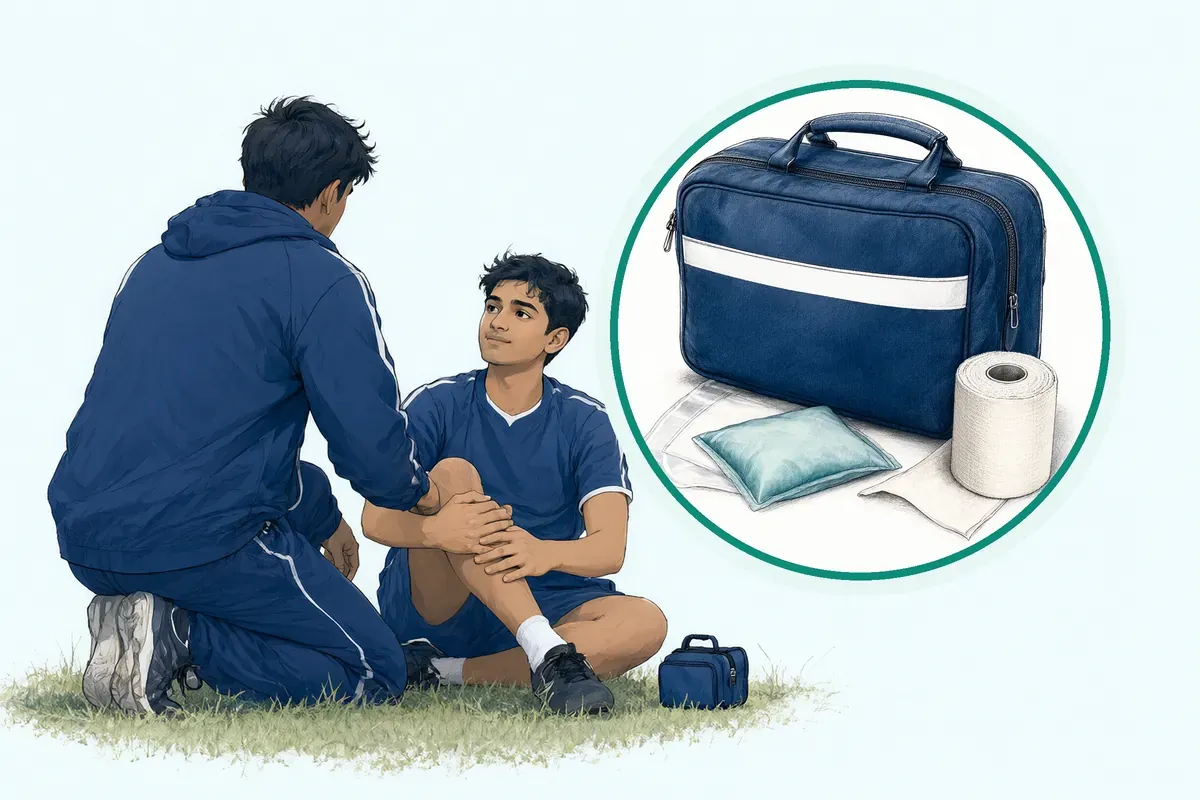
Our medical team reaches the venue before play starts, carries emergency kit and follows standard protocols for each injury type.
-
RICE / POLICE Protocol
Protection, optimal loading, ice, compression and elevation for acute soft tissue injuries like sprains and strains.
-
On-field Concussion Assessment (SCAT6)
Standardised tool to evaluate memory, balance and symptoms for immediate return-to-play or removal decisions.
-
Joint Reduction and Splinting
Closed reduction of dislocations and rigid immobilisation for suspected fractures before transport.
-
Emergency Airway and Spinal Precautions
Cervical collar application, log-roll technique and advanced life support for head or spine trauma.
Why patients trust us
- 1991 Serving Jaipur for 35 years
- NABH Accredited hospital
- 1 Sports Injury consultants
- 24×7 Emergency, ICU and ambulance
- 25 Cashless schemes and insurers
What research shows about sideline care
-
About 27% mortality
Mortality rates for exertional heat stroke are about 27 percent without rapid cooling.
-
Sensitivity 0.90 to 1.00
The Canadian C-spine rule shows high sensitivity for detecting cervical spine injury after blunt trauma.
-
Third leading cause
Exertional heat stroke ranks as the third leading cause of death in athletes during activity.
If it is left untreated
Without immediate assessment, a concussion can progress to brain swelling, a dislocation can cut off blood supply, and heat stroke can cause multi-organ failure. Delayed splinting may convert a closed fracture to an open one.
Back to training with a clear plan
Most players leave the field with a diagnosis, initial treatment done and a referral note for follow-up.
-
Injury identified fast
You know what structure is hurt before you reach the hospital OPD.
-
Pain controlled early
Ice, splinting or medication started on the field reduces swelling and discomfort.
-
Safe transfer arranged
Ambulance with paramedic backup takes the player to the right department without delay.
-
Clear next steps
A written handover tells the receiving doctor exactly what was found and done.
Frequently asked questions
Questions patients ask about field side and emergency sports care
Which problems are assessed under field side and emergency sports care?
In short
Field side and emergency sports care at Jaipur Hospital covers acute injuries during sports events. Our medical team assesses sprains, strains, fractures, dislocations, concussions, heat illness, and cardiac events. We also manage wounds, spinal precautions, and airway emergencies. The goal is rapid on-field evaluation and safe transfer if hospital care is needed.
In detail
The service uses standardised protocols for immediate decision-making. For soft tissue injuries we apply the POLICE principle: protection, optimal loading, ice, compression, and elevation. Concussion is evaluated with the SCAT6 tool to guide return-to-play decisions. Joint reductions and splinting stabilise fractures and dislocations before transport.
For catastrophic injury we initiate cervical spine immobilisation and advanced life support.
Evidence shows exertional heat stroke is the third leading cause of mortality in athletes and carries a mortality rate around 27 percent, so rapid cooling and recognition of central nervous system dysfunction are critical. Dehydration and high body fat impair thermoregulation and increase heat stroke risk.
- Evidence shows exertional heat stroke is the third leading cause of mortality in athletes and carries a mortality rate around 27 percent, so rapid cooling and recognition of central nervous system dysfunction are critical.
A common belief
Many people think a first-aid kit is enough.
What actually happens
But evidence shows exertional heat stroke kills about 27 percent of affected athletes, and concussion needs a structured tool like SCAT6, not just a quick chat.
Your next step at Jaipur Hospital
If you are organising a sports event, contact Jaipur Hospital at least two weeks ahead to arrange medical coverage. Event coverage typically costs ₹2,000 to ₹10,000; acute treatment is billed separately.
On the day, our team sets up a sideline station and stays for the event duration. After any injury, the athlete may be observed for one to four hours or admitted.
How will the doctor decide which tests I need?
In short
The sports medicine doctor at Jaipur Hospital selects tests based on your history, mechanism of injury, clinical examination findings and the suspected structures involved. Not every injury needs imaging. The decision follows established clinical guidelines to avoid unnecessary radiation or cost while ensuring serious pathology is not missed.
In detail
For example, the Ottawa ankle and knee rules help decide when an X-ray is needed for fracture exclusion. Ultrasound is useful for dynamic tendon assessment. MRI is reserved for suspected ligament tears, meniscal injuries, cartilage defects or stress fractures not visible on X-ray.
Evidence shows that targeted imaging guided by clinical probability improves diagnostic yield and reduces false positives. The in-house radiology department provides X-ray, ultrasound and MRI, often on the same day, so the doctor can review images promptly and adjust the plan.
A common belief
Patients often expect a scan straight away.
What actually happens
Evidence shows that using decision rules like the Ottawa criteria and reserving MRI for specific clinical questions avoids unnecessary cost and false positives while catching the injuries that matter.
Your next step at Jaipur Hospital
During the consultation the doctor will explain why a test is or is not recommended. If imaging is ordered you can usually have it done before leaving the hospital.
Results are typically available within a few hours for X-ray and ultrasound, and within 24 hours for MRI. The doctor will then discuss the findings and next steps. Ask your specialist at the appointment which tests are appropriate for your injury.
How soon should I expect improvement after the chosen treatment for a sports injury?
In short
Improvement after sports injury treatment varies by injury type and the treatment given. At Jaipur Hospital, acute on-field care takes 15 to 60 minutes per injury, while recovery after surgery or conservative management follows a structured timeline guided by the physiotherapy team.
In detail
For acute on-field injuries managed with RICE or POLICE protocols, symptom relief may begin within hours to days. After surgical procedures like ligament reconstruction, the initial healing phase takes several weeks, and a graded rehabilitation programme continues for months.
The centre uses advanced equipment such as underwater treadmills and isokinetic testing to monitor progress. Return to sport depends on meeting specific strength and functional milestones, not just time elapsed. Your surgeon and physiotherapist will outline the expected milestones for your specific condition.
A common belief
A common belief is that healing is just about time.
What actually happens
In reality, returning to sport too early based on a calendar date rather than functional testing increases re-injury risk. Our team uses objective measures like isokinetic testing to guide progression.
Your next step at Jaipur Hospital
You will receive a personalised rehabilitation plan with clear timelines. Regular follow-ups in the OPD allow the team to adjust the programme as you recover.
How can I decide whether to seek advice about on-field injury management?
In short
Seek advice about on-field injury management if you organise sports events, coach teams, or participate in sports where acute injuries like sprains, fractures, dislocations, or concussion can occur. Jaipur Hospital provides on-field assessment, acute injury management, and emergency referral for sports events.
In detail
On-field care covers immediate evaluation using standardised tools like SCAT6 for concussion, RICE or POLICE protocols for soft tissue injuries, joint reduction and splinting for dislocations or fractures, and spinal precautions for catastrophic injury. Treatment length is 15 to 60 minutes per injury.
The service includes observation for 1 to 4 hours or hospital transfer if required. Event coverage costs typically range from ₹2,000 to ₹10,000 per event, with acute treatment billed separately. Having trained medical cover ensures timely, appropriate decisions that reduce complications and improve outcomes.
A common belief
Organisers sometimes rely on a basic first-aid kit or untrained volunteers.
What actually happens
This can delay recognition of serious injuries like concussion or spinal trauma. Professional on-field teams use standardised protocols and can arrange rapid hospital transfer when needed.
Your next step at Jaipur Hospital
If you are planning a tournament, league, or school sports day, contact Jaipur Hospital to discuss medical cover requirements. The team will advise on the level of staffing and equipment needed for your event.
When should a sports injury be treated as an emergency?
In short
Treat a sports injury as an emergency when there is loss of consciousness, seizure, confusion, suspected spinal injury, obvious deformity, uncontrolled bleeding, or signs of heat stroke such as hot dry skin and collapse. Jaipur Hospital provides 24×7 emergency care with cervical spine immobilisation and advanced life support.
In detail
Evidence shows exertional heat stroke carries a mortality rate of about 27 percent and is the third leading cause of death in athletes. Central nervous system dysfunction, not a fixed temperature, defines heat stroke.
The Canadian C-spine rule and NEXUS criteria guide our decision on cervical imaging. For catastrophic injury, we initiate emergency airway management and spinal precautions immediately.
Rapid cooling is the most effective treatment for heat stroke, and closed reduction with splinting stabilises fractures or dislocations before transfer.
- Evidence shows exertional heat stroke carries a mortality rate of about 27 percent and is the third leading cause of death in athletes.
A common belief
People often wait for a specific temperature to confirm heat stroke, but evidence shows athletes collapse at varying temperatures and CNS dysfunction is the key marker.
What actually happens
Delaying cooling or spinal protection increases organ damage and mortality risk.
Your next step at Jaipur Hospital
Call the ambulance on 0141-2551500 or bring the athlete directly to the emergency department. An attendant should accompany the patient. The team will stabilise, investigate, and decide on observation or admission within one to four hours.
Can I continue any training safely while I recover?
In short
Whether you can train during recovery depends on the injury type, severity, and healing stage. Jaipur Hospital assesses each athlete individually to prescribe safe modified activity. Complete rest is rarely needed; optimal loading often speeds healing.
In detail
The POLICE protocol replaces strict rest with protection and optimal loading for soft tissue injuries. Evidence shows controlled loading stimulates tissue repair. For bone stress injuries, non-weight bearing cardio such as swimming or cycling may maintain fitness.
After concussion, a graded return to activity follows symptom resolution. Heat tolerance testing guides return after exertional heat stroke. The sports injury centre offers water based exercises, an underwater treadmill, and isokinetic testing to monitor progress.
Cardiovascular fitness can be preserved with upper body ergometry during lower limb recovery. Your surgeon and physiotherapist will define load limits and prohibited movements at each phase.
A common belief
Many athletes either stop completely or push through pain.
What actually happens
Both approaches delay recovery. Structured modified training preserves conditioning and supports tissue healing.
Your next step at Jaipur Hospital
Attend a follow up consultation at Jaipur Hospital sports injury OPD. The team will review imaging, examine you, and issue a written rehabilitation plan with specific exercises, intensity limits, and progression criteria.
Which symptoms should prompt me to see a specialist?
In short
You should see a sports medicine specialist at Jaipur Hospital if you have persistent joint pain, swelling that does not settle with rest, recurrent giving way of a joint, locking or catching sensations, numbness or tingling in a limb, or a gradual drop in performance without a clear injury. These signs often point to an underlying structural problem that needs proper evaluation.
In detail
Chronic symptoms such as morning stiffness lasting more than 30 minutes, pain that worsens with activity and improves with rest, or a feeling of instability during sport suggest ligament, cartilage or tendon pathology.
Evidence from sports injury centres shows that early diagnosis of complete ligament tears, meniscal damage or tendon ruptures allows timely surgical or non-surgical management. Ignoring these symptoms can lead to compensatory movement patterns and secondary injuries. The specialist will take a detailed history, examine the joint and may order imaging to confirm the diagnosis.
A common belief
Athletes often wait until they cannot train at all.
What actually happens
Evidence shows that early assessment of ligament tears, meniscal damage or tendon ruptures leads to better outcomes and prevents secondary problems from altered movement patterns.
Your next step at Jaipur Hospital
Call the hospital to book an appointment in the Sports Injury OPD. Bring any previous imaging or reports. The consultation typically lasts 20 to 30 minutes. If imaging is needed it can often be done on the same day at the in-house radiology department.
After review the specialist will discuss a care plan that may include physiotherapy, bracing, medication or referral for surgery. Schedule your visit today to avoid a longer layoff later.
How will the results change my care plan?
In short
Test results at Jaipur Hospital directly shape your care plan by confirming or ruling out specific structural damage. A normal X-ray may shift focus to soft tissue rehabilitation. An MRI showing a complete ligament tear or displaced meniscal fragment may lead to a surgical referral. The specialist integrates imaging with your clinical picture to decide between continued conservative care, injection therapy or operation.
In detail
Evidence from sports injury centres demonstrates that management changes in a significant proportion of cases after advanced imaging. For instance, a partial tear on MRI may allow a trial of bracing and physiotherapy, while a full-thickness rotator cuff tear with retraction often warrants early repair.
Stress fracture grading on MRI determines whether you can continue modified training or need strict rest. The doctor will explain what the images show, how it alters the timeline and what options remain.
A common belief
Many assume a scan just confirms pain.
What actually happens
In reality the grade of a ligament tear, the displacement of a meniscus or the stage of a stress fracture directly decides whether you brace, rest or operate. Evidence shows management changes in a large share of cases after MRI.
Your next step at Jaipur Hospital
After imaging you will review the findings with the specialist, usually on the same day or at a follow-up within a week. The revised plan will include clear milestones for return to sport.
If surgery is advised the team will discuss the procedure, typical hospital stay and rehabilitation phases. Bring your reports to every physiotherapy session so the therapist can align exercises with the latest information. Book a follow-up to finalise your pathway.
What should I do if symptoms persist or worsen after a sports injury treatment?
In short
If your symptoms persist or worsen after treatment for a sports injury, contact the sports injury team at Jaipur Hospital promptly. Do not wait for the next scheduled appointment if you notice increasing pain, swelling, instability, fever, or any new neurological symptoms such as numbness or weakness.
In detail
Persistent or worsening symptoms may indicate complications such as infection, graft failure, re-injury, or inadequate rehabilitation progression. Early assessment allows the team to adjust your treatment plan, order imaging if needed, or intervene before a small problem becomes serious. The 24×7 emergency department is available for urgent concerns outside regular clinic hours.
A common belief
Some patients try to push through worsening symptoms, thinking it is part of recovery.
What actually happens
Increasing pain or new neurological signs are not normal and may signal infection, re-injury, or a complication that needs prompt attention.
Your next step at Jaipur Hospital
Keep a record of symptom changes, activity levels, and any medication effects to share with your surgeon. If you are unsure whether a change is significant, it is safer to call and ask. For any concerning symptom after your injury or procedure, contact Jaipur Hospital immediately or visit the emergency department.
How can I decide whether to seek advice about sideline medical cover for events?
In short
Consider sideline medical cover if your event has multiple matches, large participant numbers, or sports with high injury rates. Jaipur Hospital offers team care for national and international sporting events, encompassing sports injury management and education for injury prevention.
In detail
Sideline cover provides continuous medical presence throughout the event. The team handles acute injuries on the field, manages concussion assessments using SCAT6, performs joint reductions and splinting, and initiates spinal precautions when needed.
They coordinate with the hospital's 24×7 emergency department and ambulance service for rapid transfer if hospital admission is required. The service includes baseline examinations for athletes and injury prevention education. Event coverage typically ranges from ₹2,000 to ₹10,000 per event, with acute treatment billed separately. This level of cover is appropriate for tournaments, multi-sport meets, or events where immediate medical decisions affect athlete safety.
A common belief
Basic first aid is not enough for events with concurrent matches or high-risk sports.
What actually happens
A single first-aider cannot assess concussion with SCAT6, reduce a dislocation, or coordinate ambulance transfer while monitoring other athletes. Sideline cover ensures no gap in medical oversight.
Your next step at Jaipur Hospital
Reach out to Jaipur Hospital well before your event date to discuss the schedule, sport types, and expected attendance. The team will propose a medical plan with staffing and equipment details.
FAQ library
Questions and answers about field side and emergency sports care
When you contact us
Book medical cover for your event
Contact Jaipur Hospital to arrange a sports medicine team for your upcoming tournament or match.
- A consultation with a sports injury specialist in the OPD
- Your scans and reports reviewed, with tests done in-house if you need them (laboratory, X-ray and imaging)
- Your options explained in plain words, including whether you need surgery at all
- A cost estimate before you decide
- Help with cashless treatment under RGHS, MAA Yojana, CGHS and empanelled insurers and TPAs
- Follow-up visits after your treatment
Overview
Field Side and Emergency Sports Care: what to know
What field side and emergency sports care covers
- On-field evaluation
- First assessment at the venue
- Acute injury management
- Immediate treatment to stabilise
- Emergency referral
- Transfer to hospital if needed
- Observation period
- 1 to 4 hours after treatment
Field side and emergency sports care is the medical support provided at a sports venue when an athlete is injured or becomes unwell during play. It covers the first assessment on the field, immediate treatment to stabilise the injury, and a decision about whether the person can continue, needs observation, or must be transferred to a hospital. The goal is to protect the athlete from further harm in the first minutes after an incident.
At Jaipur Hospital our surgical team and emergency staff work with event organisers to provide this cover. The service includes on-field evaluation, acute injury management, and emergency referral when hospital care is needed. Typical time spent per injury is 15 to 60 minutes. Anaesthesia is usually not required, though local anaesthesia may be used for wound care.
After on-field treatment the athlete may return to play, stay for observation for 1 to 4 hours, or be admitted if the injury is serious.
Common injuries and conditions seen on the field
- third leading cause Cause of death rank
- about 27% Mortality rate
The most frequent problems managed on the field are:
- Sprains
- Strains
- Bruises
- Cuts
- Suspected fractures or dislocations
Concussion is a particular concern because it affects brain function and can worsen if the athlete keeps playing. Heat illness, including exertional heat stroke, is another serious condition that can appear during intense activity in hot or humid weather.
Exertional heat stroke is characterised by central nervous system dysfunction such as confusion, convulsions, or coma together with high body temperature during physical activity. It is the third leading cause of death in athletes during physical activity. Mortality rates for exertional heat stroke are about 27%.
Other emergencies include sudden cardiac arrest, severe asthma attacks, and spinal injuries. Each needs a rapid, structured response to reduce the risk of long-term harm.
Symptoms and warning signs that need urgent care the same day
- Head injury signs Loss of consciousness, confusion, seizures, unusual behaviour
- Limb injury signs Cannot move limb, obvious deformity, severe pain preventing weight-bearing
- Breathing or collapse signs Difficulty breathing, chest pain, sudden collapse without contact
- Heat stroke signs Hot dry skin or profuse sweating, high temperature, vomiting, dizziness, altered mental state
- Deep cuts Heavy bleeding or wounds that may need stitches
- Nerve signs Numbness, tingling, or weakness in arms or legs after fall or tackle
Any athlete who shows the following signs should be assessed by the medical team immediately and may need hospital transfer the same day:
- Loss of consciousness, confusion, seizures, or unusual behaviour after a blow to the head or during heavy exertion
- Inability to move a limb, obvious deformity, or severe pain that prevents weight-bearing
- Difficulty breathing, chest pain, or sudden collapse without contact
- Signs of heat stroke: hot dry skin or profuse sweating, high core temperature, vomiting, dizziness, or altered mental state
- Deep cuts with heavy bleeding, or wounds that may need stitches
- Numbness, tingling, or weakness in the arms or legs after a fall or tackle
If any of these appear, the on-field team will start emergency care and arrange ambulance transfer to Jaipur Hospital's 24×7 emergency department. The hospital has an intensive care unit, in-house imaging, and modular operation theatres ready for urgent surgery if required.
Causes and who is at higher risk
- Direct contact and sudden twisting
- Common injury mechanisms
- Dehydration and hypohydration
- Increase heat stroke risk
- Higher body fat
- Impairs sweating and heat tolerance
- Older athletes and males
- Higher healthcare costs from injuries
Sports injuries happen from direct contact, sudden twisting, overuse, or environmental stress. Heat illness develops when the body cannot lose heat fast enough during exercise. Dehydration increases plasma osmolality and blood viscosity, which are linked to higher oxidative stress. Exercising in the heat raises sweat rates to meet the combined heat load from metabolism and the environment. Starting exercise already hypohydrated makes these effects worse.
People with higher body fat have impaired sudomotor (sweat) responses and a lower ability to thermoregulate. Obesity is associated with decreased cardiovascular fitness and impaired skin microvascular function, which can blunt heat loss. Dehydration could enhance the risk of exertional heat stroke via hyperthermia. The incidence of exertional heat stroke has increased dramatically over recent decades.
Older athletes and males consistently have higher healthcare costs from sports injuries. Sports such as basketball, football, cycling, soccer, and skateboarding account for high emergency and inpatient costs. Non-contact sports can also produce fewer but costlier injuries per patient.
How on-field diagnosis works: examination and decision tools
- 0.90 to 1.00 Canadian C-spine rule sensitivity
- 0.01 to 0.77 Canadian C-spine rule specificity
- 0.83 to 1.00 NEXUS sensitivity
- 0.02 to 0.46 NEXUS specificity
On the field the medical team uses a rapid, structured approach. For head injuries the standard tool is the SCAT6 (Sport Concussion Assessment Tool 6), which checks symptoms, memory, balance, and coordination to decide if the athlete can return or needs removal and further assessment.
For suspected spinal injury the Canadian C-spine rule and NEXUS criteria help decide whether cervical spine imaging is needed. In studies the Canadian C-spine rule showed sensitivity of 0.90 to 1.00 and specificity of 0.01 to 0.77; NEXUS sensitivity ranged from 0.83 to 1.00 and specificity from 0.02 to 0.46. A negative test is more useful for ruling out a clinically important cervical spine injury.
For heat stroke, relying on a single core temperature threshold (>40°C) is considered inaccurate because athletes can collapse at a wide range of temperatures. Central nervous system dysfunction is a more sensitive and specific marker. Immediate cooling remains the most effective treatment strategy. Delaying cooling while waiting for a specific temperature can cause long-term organ damage.
If the on-field assessment suggests a fracture, dislocation, or unstable injury, the team will immobilise the area and arrange transfer. At Jaipur Hospital the emergency department has X-ray, CT, and MRI available 24 hours a day, and the orthopaedic and sports injury specialists can evaluate the injury without delay.
Non-surgical treatment on the field and when surgery is advised
- Protection Protect the injured area from further harm
- Optimal loading Encourage safe, early movement
- Ice Apply cold to reduce swelling
- Compression Use bandaging to limit swelling
- Elevation Raise the limb above heart level
Most acute field injuries are managed without surgery. The standard early care for soft tissue injuries follows the POLICE principle: protection, optimal loading, ice, compression, and elevation. This replaces the older RICE protocol and encourages safe, early movement. Dislocated joints may be reduced (put back in place) on the field if it is safe to do so, then splinted. Fractures are splinted for transport. Wounds are cleaned and dressed under local anaesthesia if needed.
Concussion management means immediate removal from play, observation, and a graded return-to-sport protocol once symptoms have fully settled. Heat stroke is treated with rapid whole-body cooling (ice water immersion or aggressive evaporative cooling) before transport. Cardiac emergencies receive basic and advanced life support on site.
Surgery is advised when the damage is too severe to heal with conservative care alone. Complete ligament tears such as ACL or PCL ruptures, deep meniscus damage, tendon ruptures, and unstable fractures or dislocations that cannot be held in position often need surgical repair to restore joint stability and function.
At Jaipur Hospital the sports injury department performs arthroscopic and open ligament reconstruction for knee, ankle, shoulder, and other joints, as well as cartilage repair, rotator cuff repair, and joint replacement when indicated. Your surgeon will discuss which technique suits your injury and your goals.
The typical price for event coverage is ₹2,000 to ₹10,000 per event; acute treatment is billed separately. The hospital accepts RGHS, MAA Yojana, CGHS, and a panel of private insurers and TPAs.
Your first visit and tests for field side and emergency sports care
- Team reaches you within minutes Designated treatment area near field
- SCAT6 used for suspected concussion Checks memory, balance, concentration, nerve function
- X-ray or transfer arranged if needed 24-hour radiology and ambulance available
When you arrive at a sports event covered by Jaipur Hospital, our medical team sets up a designated treatment area near the field. If you are injured during play, the team reaches you within minutes. The doctor asks how the injury happened, where it hurts, and whether you have any past injuries or medical conditions. You should bring any regular medicines you take and tell the doctor about allergies.
For a suspected concussion, the doctor uses the SCAT6 tool. This checks your memory, balance, concentration and nerve function. It helps decide if you can return to play or need hospital referral. For a joint injury, the doctor checks for swelling, deformity, stability and range of movement. For a possible fracture or dislocation, an X-ray may be needed.
Our in-house radiology and laboratory are available 24 hours a day. If the injury looks serious, the doctor arranges immediate transfer to the emergency department by our 24×7 ambulance service.
How field side and emergency sports care works
Treatment on the field follows recognised protocols. For acute soft tissue injuries such as sprains and strains, the team applies the POLICE principle: protection, optimal loading, ice, compression and elevation. This replaces the older RICE method and aims to control swelling while encouraging early, safe movement.
If you have a dislocation, your surgeon may perform a closed reduction on the field to put the joint back in place, then apply a splint or cast for immobilisation. This is done under local anaesthesia if needed.
For a suspected spinal injury, the team applies full cervical spine immobilisation with a rigid collar, blocks and a spine board before moving you. Advanced life support is started at once if there is any airway or breathing problem.
For exertional heat stroke, immediate whole-body cooling is the most effective treatment. The team uses ice-water immersion or aggressive cold-water dousing to lower core temperature as fast as possible. Studies show that delaying cooling increases the risk of long-term organ damage.
The doctor does not wait for a specific core temperature reading before starting cooling, because athletes can collapse at a wide range of temperatures and central nervous system dysfunction is the key sign.
Each on-field assessment and treatment takes 15 to 60 minutes. If you need further care, you are transferred to the emergency department or admitted under the orthopaedics or sports injury team. The hospital has modular operation theatres and an intensive care unit for severe injuries.
Risks and possible complications of field side and emergency sports care
On-field treatment is generally safe. The main risks come from the injury itself rather than the first aid. A reduction of a dislocation can rarely cause nerve or vessel injury, or the joint may re-dislocate. Splints that are too tight can cause pressure sores or compartment syndrome; the team checks circulation and sensation regularly.
For concussion, the risk is missing a more serious brain injury such as a bleed. The SCAT6 tool reduces this risk but does not remove it. If symptoms worsen — vomiting, increasing drowsiness, seizure, weakness or slurred speech — you must go to hospital immediately for a CT scan.
Exertional heat stroke carries a mortality rate of about 27 per cent in published series. Survivors can have long-term neurological, cardiovascular, kidney or liver dysfunction. Rapid cooling lowers this risk. Dehydration and starting exercise in a hypohydrated state increase the risk of heat stroke. Higher body fat is linked to impaired sweating and poorer heat tolerance.
If cervical spine precautions are needed, the Canadian C-spine rule has been shown to have better accuracy than the NEXUS criteria for deciding who needs imaging. Both rules have high sensitivity but variable specificity. A negative test is more useful for ruling out a clinically important injury.
Recovery and aftercare after field side and emergency sports care
After on-field treatment, you may be observed for one to four hours in the emergency department. If your condition is stable, you can go home with an attendant. The doctor gives you written instructions on rest, ice, compression, elevation, weight-bearing limits and when to start gentle movement. You are told which pain medicines are safe and which to avoid.
For a concussion, you follow a graded return-to-play protocol under medical supervision. You must be symptom-free at rest, then with light exercise, then sport-specific drills, then full contact training before returning to competition. Each stage takes at least 24 hours. If symptoms return, you drop back a stage.
For a reduced dislocation or splinted fracture, you attend the orthopaedics OPD for a follow-up X-ray and clinic review, usually within a week. The splint or cast is checked and adjusted. Physiotherapy starts early to prevent stiffness and muscle loss.
Our physiotherapy department has an isokinetic testing system to monitor your progress, a high-tech gym, and an underwater treadmill for low-impact strengthening. Water-based exercises can speed up recovery and help muscles relax.
Call the hospital or return to the emergency department if you develop:
- Increasing pain not relieved by prescribed medicine
- Numbness or tingling
- Colour change in the limb
- Fever
- Wound discharge
- Worsening headache
- Confusion
- Vomiting
- Any new symptom that worries you
Results of field side and emergency sports care in studies
Studies of on-field protocols show that early, correct management improves outcomes. For exertional heat stroke, immediate cooling is the single most important factor for survival and reducing organ damage. Delayed cooling is linked to higher complication rates.
For cervical spine clearance, the Canadian C-spine rule and NEXUS criteria both have high sensitivity (90 to 100 per cent and 83 to 100 per cent respectively), meaning they rarely miss an injury. The Canadian rule has better overall accuracy. A negative result on either rule makes a clinically important injury unlikely.
In a large cardiac imaging study, the highest tertile of sympathetic denervation had a sudden cardiac arrest rate of 6.7 per cent per year, compared with 1.2 and 2.2 per cent in the lower tertiles. After 4.1 years of follow-up, cause-specific sudden cardiac arrest occurred in 16.2 per cent of the cohort. Women had a slightly higher survival rate to hospital discharge after cardiac arrest (odds ratio 1.1).
Sports injury costs vary widely. In one analysis, non-contact sports had 57.9 per cent higher costs per patient than contact sports. Older athletes and males tend to have higher healthcare costs from sports injuries. Baseball, basketball, cycling, football, roller sports and soccer are associated with high costs for both emergency and inpatient care.
Cost and insurance for field side and emergency sports care in Jaipur
Event coverage by our sports medicine team typically costs ₹2,000 to ₹10,000 per event. This covers the medical team's presence, equipment and on-field assessments. Acute treatment for an injury is billed separately. The final cost depends on the type of injury, whether imaging or procedures are needed, and if hospital admission or surgery is required.
Jaipur Hospital is a NABH-accredited multispeciality hospital.
We accept:
- RGHS
- MAA Yojana
- CGHS
- A panel of private insurers and TPAs
If you are covered under Ayushman Bharat (PMJAY), inpatient treatment is provided free of cost as per government policy. Diagnostic and pathology tests performed in our labs are charged at CGHS rates. Implants and some disposable items used in surgery are purchased by the patient.
For an estimate tailored to your event or injury, please contact the hospital on 0141-2551500 or 0141-2554139, or email [email protected]. The sports injury department works alongside orthopaedics, physiotherapy, neurosurgery and critical care to provide comprehensive care under one roof.