

Sports Injury · Jaipur Hospital
Stress Fracture and Shin Splints Treatment in Jaipur
Shin pain stops your runs and training. Jaipur Hospital offers clinical assessment, scan reviews, and structured non-surgical recovery plans.
- Serving Jaipur since 1991 (35 years)
- NABH accredited
- 24×7 emergency & ICU
- Cashless: MAA Yojana + 32 insurers
- Treatment length
- 6 to 12 weeks conservative care
- Anaesthesia
- Not needed
- Recovery
- Gradual return to sport in 8 to 16 weeks
- Price
- ₹15,000 to ₹60,000typical range in India; ask us for an estimate
Persistent shin pain during activity
Shin pain that limits your training
Exercise-induced lower leg pain often begins as an ache along your shinbone during workouts. Without proper load management, everyday walking can become uncomfortable.
-
Ache along the shin
Diffuse pain develops along the lower inner border of your shinbone during running or weight-bearing exercise.
-
Tenderness when touched
The inner edge of the lower leg bone feels tender or sore to direct pressure after physical training.
-
Discomfort returning with workouts
Pain settles during rest periods but returns once running, training sessions, or intense activities resume.
Medial tibial stress syndrome is a common lower leg running injury caused by overuse.
Why Jaipur Hospital
You may worry that persistent shin pain will keep you away from sports or disrupt your daily routine.
Your care plan
Your first steps with us
- 1 Visit our sports injury specialist in the OPD for assessment.
- 2 Review your history, clinical tests, and outside diagnostic scans.
- 3 Follow a tailored conservative care plan for 6 to 12 weeks.
- 4 Begin a gradual return to sport over 8 to 16 weeks.
Non-surgical management of bone stress
Care focuses on non-surgical options to manage bone stress. Your specialist reviews your symptoms and advises conservative measures suited to your training load.
-
Activity Modification & Protected Weight Bearing
Your specialist will discuss using crutches, a walking boot, or a brace to offload the affected bone during recovery.
-
Biomechanical Correction
Your specialist will discuss gait analysis, orthotics, and footwear advice to address overload and abnormal pressure patterns.
-
Shockwave Therapy (ESWT)
Your specialist will discuss extracorporeal shockwave therapy options for chronic tibial stress syndrome to help manage symptoms.
-
Calcium/Vitamin D Optimisation
Your specialist will discuss supplementation and advise outside DEXA screening to evaluate underlying bone health parameters.
Why patients trust us
- 1991 Serving Jaipur for 35 years
- NABH Accredited hospital
- 1 Sports Injury consultants
- 24×7 Emergency, ICU and ambulance
- 33 Cashless schemes and insurers
Clinical findings on bone stress care
-
5% to 35%
Medial tibial stress syndrome affects 5% to 35% of runners in published observational cohorts.
-
16 to 18 weeks
Approximate recovery times of 16 to 18 weeks have been observed in clinical studies of these injuries.
-
50% pain reduction
A three-week orthotic and calf-stretching protocol observed a 50% reduction in pain levels among participants.
If it is left untreated
Untreated shin stress can lead to repeated injury. A previous history of medial tibial stress syndrome is associated with repeat occurrences, prolonging recovery and keeping you away from regular physical activity.
Working toward your return to sport
With structured load management, most people gradually rebuild lower leg tolerance and resume regular physical routines.
-
Gradual activity progression
Most individuals usually resume structured running and training under planned load modification over several weeks.
-
Better movement habits
Gait adjustments and suitable footwear advice typically help runners manage midfoot pressure during daily runs.
-
Clear recovery guidance
Regular outpatient reviews usually give athletes a clear timeline for returning to sport without sudden strain.
Meet the team
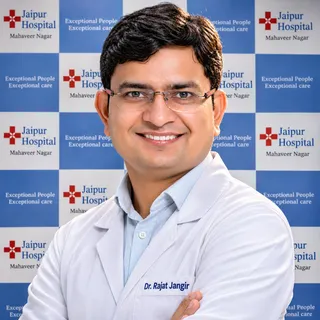
Your sports injury doctors
Explore our sports injury treatment centre in Jaipur: every treatment, the doctors and what to expect at your visit.
Frequently asked questions
Questions patients ask about stress fracture and shin splints treatment
What is stress fracture management?
In short
Stress fracture management at Jaipur Hospital means diagnosing bone stress injuries and guiding you through a non-surgical recovery plan. The goal is to let the bone heal while you keep as much fitness as possible. Most people improve with activity modification, protected weight bearing, and a gradual return to sport over several weeks.
In detail
Management starts with confirming the diagnosis and ruling out other causes of leg pain such as medial tibial stress syndrome. Evidence shows that conservative treatment is almost always successful and that no single option has proven superior to load reduction.
At Jaipur Hospital the orthopaedic and sports injury team uses activity modification with crutches, a walking boot or brace to offload the bone, biomechanical correction including gait analysis and orthotics, shockwave therapy for chronic tibial stress syndrome, and calcium and vitamin D optimisation with DEXA screening arranged at an outside imaging centre. Shock-absorbing insoles have reduced injury rates in military personnel and extracorporeal shockwave therapy has shortened symptom duration in studies.
A common belief
Many people think complete rest is the only answer, but evidence shows that protected loading and biomechanical correction give better long-term results than rest alone.
What actually happens
Shockwave therapy can help chronic cases that have not improved with basic offloading.
Your next step at Jaipur Hospital
Treatment typically lasts six to twelve weeks as an outpatient. You will follow a step-wise loading programme guided by the physiotherapy team, with regular reviews to track bone healing. Gradual return to sport usually takes eight to sixteen weeks. The typical cost range in India is ₹15,000 to ₹60,000; ask us for an estimate.
Which specialist should I see for this problem?
In short
You should see a sports injury specialist or an orthopaedic surgeon with an interest in bone stress injuries. At Jaipur Hospital the Sports Injury department works closely with the Orthopaedics team to diagnose and manage stress fractures and medial tibial stress syndrome without surgery. The same clinicians also coordinate physiotherapy, gait analysis and bone health optimisation under one roof.
In detail
A sports medicine doctor or orthopaedic surgeon will take a detailed training history, examine the tibia for focal versus diffuse tenderness, assess gait, foot posture, hip rotation and muscle strength, and order the appropriate imaging.
Because the Kaeding-Miller classification includes both clinical and radiographic parameters, the specialist needs access to X-ray and the ability to refer for MRI or CT at an outside imaging centre.
The team also arranges DEXA scanning for bone density at an external centre and reviews the result. Physiotherapists then deliver the graded loading programme and biomechanical retraining. This multidisciplinary pathway ensures that load management, orthotics, shockwave therapy if indicated, and nutritional optimisation are all aligned.
A common belief
Seeing a general physician may delay imaging and biomechanical assessment.
What actually happens
A specialist grades the injury using the Kaeding-Miller system, which guides whether you need a boot, crutches, or just load modification. Early specialist input shortens return to sport.
Your next step at Jaipur Hospital
Start with an appointment in the Sports Injury or Orthopaedics OPD at Jaipur Hospital. Bring your training log and current footwear. The doctor will decide on imaging and the offloading plan at the first visit.
What treatment options are available for my situation?
In short
Treatment at Jaipur Hospital is non-surgical and tailored to the injury grade. Options include activity modification with protected weight bearing using crutches, a walking boot or a brace; biomechanical correction with gait analysis, custom orthotics and footwear advice; extracorporeal shockwave therapy (ESWT) for chronic tibial stress syndrome; and calcium and vitamin D optimisation with DEXA screening for bone health. Surgery is rarely needed and only considered if all conservative measures fail.
In detail
Evidence shows conservative treatment is almost always successful. The foundation is load management: reducing impact until the bone heals, then a graded return. Biomechanical correction addresses the overload drivers — navicular drop, hip rotation, ankle stiffness — with orthotics and retraining.
Shock-absorbing insoles have reduced MTSS rates in military personnel. ESWT has shortened symptom duration in chronic cases; one trial found focused shockwave at a standard dose did not differ from sham, but broader evidence supports its use in resistant MTSS.
A three-week programme combining off-the-shelf orthotics and twice-daily calf stretching cut pain by fifty percent and symptom duration in sixty-five percent of participants. Calcium and vitamin D supplementation supports bone remodelling. No single conservative option has proven superior to rest and load management.
A common belief
Some clinics offer only rest or only orthotics.
What actually happens
Evidence shows no single modality beats load management alone. Combining offloading, biomechanics, shockwave for chronic cases, and bone health gives the most reliable return to sport.
Your next step at Jaipur Hospital
The programme runs six to twelve weeks with outpatient reviews every two to three weeks. Gradual return to sport typically takes eight to sixteen weeks. The typical cost range in India is ₹15,000 to ₹60,000; ask us for an estimate.
What can I safely do at home to manage symptoms of a stress fracture or shin splints?
In short
At home, you can manage symptoms by reducing or stopping the activity that causes pain, applying ice to the shin for 10 to 15 minutes a few times a day, and using crutches or a walking boot if advised by the team at Jaipur Hospital. Elevating the leg and wearing supportive shoes indoors also helps offload the tibia.
In detail
The core principle from evidence is prolonged reduction and management of load. No conservative option has proven more superior to rest. Shock-absorbing insoles have reduced medial tibial stress syndrome rates in military personnel.
A three-week protocol using an off-the-shelf basic foot orthotic during walking hours with a standard gastrocnemius and soleus stretching programme twice daily observed reductions in pain levels by 50 percent and symptom duration in 65 percent of participants.
Ice massage and stretching are commonly used, though studies show stretching and strengthening alone have not been proven effective as a standalone treatment. The team will guide you on safe home exercises that maintain fitness without loading the injured bone.
Your next step at Jaipur Hospital
Follow the specific home plan given at your OPD visit. Typical conservative care lasts 6 to 12 weeks with a gradual return to sport in 8 to 16 weeks. Do not resume running until the surgeon clears you. The typical cost range in India is ₹15,000 to ₹60,000.
How will the injury be assessed for displacement, instability, or damage to nerves and blood vessels?
In short
At Jaipur Hospital, the orthopaedic surgeon examines the leg for tenderness, swelling, and neurovascular status. X-ray is done in-house to check for a fracture line or displacement. If the X-ray is unclear or a stress fracture is suspected, the surgeon advises a CT or MRI at an outside imaging centre. The Kaeding-Miller classification uses clinical and radiographic parameters to grade the injury.
In detail
The clinical assessment includes checking pulses, sensation, and muscle power to rule out nerve or vessel injury. Computed tomography (CT) and pressure algometry are described in studies as valid instruments to corroborate the presence of the injury and confirm the diagnosis.
The Kaeding-Miller system was validated for intra- and interobserver reliability among sports medicine practitioners and allows any imaging modality. It was first described in 2012 and includes both clinical and radiographic parameters.
If there is any concern for compartment syndrome or vascular compromise, urgent referral is made. The surgeon correlates imaging findings with your symptoms to decide if the injury is stable or needs surgical opinion.
A common belief
A normal X-ray does not rule out a stress fracture.
What actually happens
Many patients assume no X-ray finding means no injury, but CT or MRI often shows the bone stress that X-ray misses.
Your next step at Jaipur Hospital
You will have a thorough clinical exam and in-house X-ray at your OPD visit. If advanced imaging is needed, the surgeon will advise a CT or MRI at an outside centre and review the images with you.
Conservative care typically runs 6 to 12 weeks with a gradual return to sport in 8 to 16 weeks. The typical cost range in India is ₹15,000 to ₹60,000.
Can I continue any training safely while I recover from a stress fracture or shin splints?
In short
Yes, you can maintain fitness with non-impact activities at Jaipur Hospital. Swimming, deep-water running, cycling on a stationary bike and upper-body strength work are usually allowed from week one. Impact loading — running, jumping, plyometrics — stays off-limits until the surgeon clears each stage.
In detail
Evidence shows neuromuscular training reduces injury incidence rate from seventeen point eight nine to six point five eight per thousand athlete-exposure hours. Cross-training preserves cardiovascular capacity while the tibia offloads.
The physiotherapy team designs a programme that loads the hip, core and upper body without tibial strain. Pain during or after any session means the load is too high. You progress only when symptom-free at the current level for one week.
A common belief
Many athletes either stop everything or keep running through pain.
What actually happens
Both delay healing. Structured cross-training keeps fitness high while the bone repairs.
Your next step at Jaipur Hospital
Your physiotherapist will give a weekly cross-training schedule. Expect three to four pool or bike sessions plus upper-body circuits. Running drills start only after clinical and imaging clearance, typically at eight to twelve weeks.
Which symptoms or changes should prompt me to seek medical advice?
In short
You should seek medical advice if you have exercise-induced pain along the inner border of the shin that worsens with activity and eases with rest. Pain that becomes constant, occurs at night, or stops you from training is a clear signal. Swelling, tenderness over a specific spot on the bone, or a limp that does not settle after a few days of reduced load also need assessment at Jaipur Hospital.
In detail
Medial tibial stress syndrome (MTSS) typically presents as diffuse pain along the posteromedial border of the distal two-thirds of the tibia. A stress fracture often shows more localised, sharp tenderness at a single point.
Risk factors that make early review important include a previous history of the same injury, a sudden increase in running volume of more than thirty percent, higher body mass index, excessive foot pronation (navicular drop greater than ten millimetres), and female gender.
Studies show these factors significantly raise the chance of a bone stress injury. Ignoring the symptoms can turn a stress reaction into a complete fracture, which lengthens recovery.
A common belief
Runners often push through 'shin splints' hoping they will disappear.
What actually happens
Evidence shows that diffuse MTSS pain and focal stress fracture pain need different management. Delaying assessment raises the risk of a complete fracture and can double your time off sport.
Your next step at Jaipur Hospital
If pain persists beyond two weeks of relative rest, or if you notice night pain or focal tenderness, book an appointment. The doctor will examine your leg, assess gait and foot mechanics, and decide on imaging. Early diagnosis means a shorter time off sport. Consultation at Jaipur Hospital is the next step.
What will the doctor ask and check at the first visit?
In short
At the first visit to Jaipur Hospital the doctor will ask about your training schedule, recent changes in volume or intensity, footwear history, previous injuries, menstrual history if relevant, and dietary intake of calcium and vitamin D. The examination includes palpation of the tibia to distinguish diffuse from focal tenderness, gait analysis, foot posture assessment, navicular drop measurement, hip rotation range, and ankle mobility.
In detail
The clinical assessment follows the Kaeding-Miller classification which combines clinical and radiographic parameters. The doctor checks for pain along the posteromedial border of the distal tibia (typical of MTSS) versus sharp focal tenderness (suggestive of stress fracture).
Hip external rotation, navicular drop, ankle plantarflexion and BMI are recorded as they are proven risk factors. You may be asked to bring your running shoes for wear pattern analysis.
Based on findings, the doctor decides whether X-ray is sufficient or if MRI or CT at an outside imaging centre is needed to confirm the grade. Blood tests for vitamin D, calcium and bone markers may be ordered. A DEXA scan for bone density may be advised; it is performed at an external centre.
A common belief
A quick five-minute check often misses the biomechanical drivers.
What actually happens
Evidence shows navicular drop, hip rotation and BMI are independent risk factors. Without measuring them, the offloading plan is guesswork and recurrence is common.
Your next step at Jaipur Hospital
The first visit takes about thirty minutes. You will leave with a provisional diagnosis, an offloading plan (boot, crutches or activity modification), and a list of any scans or blood tests needed. Follow-up is scheduled to review imaging and start the graded return-to-run programme.
Can this problem improve without a procedure or operation?
In short
Yes. The great majority of stress fractures and medial tibial stress syndrome heal with non-surgical care alone. At Jaipur Hospital the standard pathway is conservative: protected weight bearing, biomechanical correction, shockwave therapy if indicated, and bone health optimisation. Surgery is rarely indicated and only considered after all conservative options have been exhausted without success.
In detail
Studies show conservative treatment is almost always successful. The primary goal is to relieve pain and allow return to sport without discomfort. Load management — reducing impact until the bone adapts — is the cornerstone.
No conservative option has proven superior to prolonged reduction and management of load. Biomechanical correction with orthotics and gait retraining addresses the root cause. ESWT can accelerate symptom resolution in chronic tibial stress syndrome. Calcium and vitamin D optimisation supports bone remodelling.
Recovery times in studies range from seventy to three hundred days depending on severity and compliance; a structured programme aims for the shorter end. The Kaeding-Miller classification guides the offloading intensity. Surgery has shown some promising results in the small group that fails conservative care, but this is uncommon.
A common belief
Patients often fear they need an operation.
What actually happens
Evidence shows conservative care succeeds in the vast majority. The key is not just rest, but correcting the overload pattern so the injury does not return when you resume training.
Your next step at Jaipur Hospital
Expect a conservative programme of six to twelve weeks with gradual return to sport over eight to sixteen weeks. Regular outpatient reviews track healing and adjust loading. The typical cost range in India is ₹15,000 to ₹60,000; ask us for an estimate.
Are there foods, activities, or habits I should change for a stress fracture or shin splints?
In short
Yes. At Jaipur Hospital, the team advises increasing calcium and vitamin D intake through diet or supplements, stopping the running or jumping that loads the tibia, and correcting footwear and gait habits. A DEXA scan at an outside imaging centre may be advised to check bone density. Smoking and low body weight can impair bone healing, so these are addressed as well.
In detail
Evidence identifies higher BMI, navicular drop greater than 10 mm, increased hip external rotation, female sex, previous MTSS history, and running distance increases over 30 percent as risk factors. Calcium and vitamin D optimisation is part of the protocol to support bone health.
Shock-absorbing insoles have reduced MTSS rates in military personnel. Arch-support orthoses can normalise foot pressure distribution and reduce pain. Gait analysis identifies overpronation, early heel lift, and abductory twist that overload the medial tibia. The team provides footwear advice and orthotics to correct these patterns.
Reducing training load by more than 30 percent expansion is a key habit change. The surgeon will review your diet, training log, and shoes to build a practical modification plan.
A common belief
Runners often just buy new shoes, but evidence shows navicular drop, hip rotation, and sudden mileage spikes are stronger drivers.
What actually happens
Fixing only one factor usually is not enough.
Your next step at Jaipur Hospital
You will receive specific dietary, footwear, and training-load guidance at your consultation. Conservative care typically runs 6 to 12 weeks with a gradual return to sport in 8 to 16 weeks. The typical cost range in India is ₹15,000 to ₹60,000.
FAQ library
Questions and answers about stress fracture and shin splints treatment
When you contact us
Consult our sports injury team in Jaipur
Contact Jaipur Hospital to schedule an OPD assessment and have your lower leg symptoms and scans evaluated.
- A consultation with a sports injury specialist in the OPD
- Your scans and reports reviewed, with tests done in-house if you need them (laboratory, X-ray and imaging)
- Your options explained in plain words, including whether you need surgery at all
- A cost estimate before you decide
- Help with cashless treatment under MAA Yojana, various government health care schemes and empanelled insurers and TPAs
- Follow-up visits after your treatment
Overview
Stress Fracture and Shin Splints Treatment: what to know
What are shin splints and bone stress injuries
- 5% to 35% Runners affected
- 13.2% to 17.3% Main injury in runners
Medial tibial stress syndrome, commonly known as shin splints, is an exercise-induced leg injury caused by overuse. It is a very frequent condition among runners and military personnel. In published studies, medial tibial stress syndrome affects between 5% and 35% of runners. Other research reports that it is the main injury occurring in runners, with rates between 13.2% and 17.3%.
When you run or march, repetitive mechanical force passes through your lower leg bones. If the bone and surrounding tissues do not get enough time to recover between training sessions, micro-damage begins to accumulate along the bone surface. Medial tibial stress syndrome involves pain along the inner border of your shin bone, known as the posteromedial border of the tibia.
Without appropriate changes to training load, this bone stress can progress along a continuous spectrum toward a true tibial stress fracture.
Symptoms of shin splints and warning signs that need urgent review
- Sharp pinpoint bone pain Cannot put weight on leg
- Pain at rest or night Persists when resting or wakes you
- Sudden swelling or heat Redness or heat over shin
- Numbness or weakness In foot or toes
The primary symptom of medial tibial stress syndrome is diffuse pain along the posteromedial border of the tibia, particularly along the lower two-thirds of the shin bone. This discomfort is directly related to physical activity: it comes on with running or marching and eases when you rest. The tenderness is typically spread out across several centimetres rather than confined to a single sharp point.
Certain warning signs mean you should seek prompt medical attention rather than continuing self-care:
- Sharp, severe, or pinpoint bone pain that makes it impossible to put weight on your leg
- Pain that persists even when resting or wakes you from sleep at night
- Sudden swelling, redness, or heat over your shin
- Numbness, tingling, or weakness in your foot or toes
If you develop sudden limb swelling or severe constant pain after an injury, visit our 24×7 emergency department at Jaipur Hospital immediately to rule out an acute fracture or neurovascular injury.
Causes of medial tibial stress syndrome and who is at risk
- Training errors
- Increasing distance over 30%
- Previous history
- Relative risk 3.74 for repeat
- Female sex
- Relative risk 1.71
Medial tibial stress syndrome develops when physical load exceeds your leg bone's capacity to adapt. Increasing your training too quickly is a common trigger; studies show that runners expanding their running distance by more than 30% have a higher rate of this injury. Decreased running experience is also significantly associated with developing the condition.
Having a previous history of medial tibial stress syndrome increases your risk of repeat occurrence with a relative risk of 3.74, and a history of previous running injury is an established risk factor.
Research has identified several anatomical and biomechanical risk factors:
- Female sex, which studies show is significantly associated with medial tibial stress syndrome, with a relative risk of 1.71
- Higher body mass index and increased body weight
- Greater navicular drop, which indicates foot pronation, especially when greater than 10 mm
- Foot overpronation, baseline foot balance issues, and previous orthotic use
- Greater hip external rotation range of motion and peak internal rotation of the hip during running
- Greater ankle plantarflexion range of motion
- Biomechanical patterns during the stance phase of running, such as higher pelvic drop, early heel lift, and abductory twist
How our surgical team diagnoses shin splints and bone stress
- History and exam
- Training, footwear, tenderness, foot posture
- Classification
- Kaeding-Miller system used
- In-house X-ray
- Digital X-ray available at hospital
- Advanced scans outside
- CT or MRI at outside centre
At Jaipur Hospital, an orthopaedic doctor begins by taking a careful history of your athletic training, running surfaces, footwear, and symptom pattern. The doctor physically examines your lower leg, checking for tenderness along the inner edge of the tibia, assessing your foot posture, and measuring your joint movement.
To assess bone stress, classification systems may be used. For instance, the Kaeding-Miller classification system, first described in 2012, includes both clinical and radiographic parameters and allows for the use of any imaging modality.
Our hospital has an in-house imaging department with digital X-ray facilities. Plain radiographs help check for underlying bone changes or visible fracture lines. However, early bone stress injuries and shin splints often do not appear on standard X-rays.
While Jaipur Hospital has no CT or MRI scanner, your doctor may advise an advanced cross-sectional scan, such as a CT scan or MRI, to corroborate the injury and confirm the diagnosis. This scan is performed at an accredited imaging centre outside the hospital, and our team reviews the films with you in the OPD.
Non-surgical treatment options and when surgery is considered
Conservative treatment for medial tibial stress syndrome is almost always successful. The main goal of treatment is to relieve pain and allow you to return to sports without discomfort. At Jaipur Hospital, non-surgical conservative care typically lasts 6 to 12 weeks. Anaesthesia is not needed.
Most patients are managed entirely in the outpatient department (OPD), with day care admission used only if an injection is required.
Clinical trials have evaluated many conservative options, but none has proven superior to prolonged reduction and management of load. Your treatment plan may include:
- Activity modification and protected weight bearing: Rest and offloading the affected bone using crutches, a walking boot, or a brace to allow healing. Lower leg braces have been evaluated in trials and showed no significant difference compared to no brace.
- Biomechanical correction and orthoses: Studies show that arch-support foot orthoses can normalise foot pressure distribution, increase contact time, and reduce midfoot force over time. A three-week protocol combining off-the-shelf basic foot orthotics with calf stretching observed a 50% reduction in pain levels and shortened symptom duration in 65% of participants. However, other studies note that normalised pressure patterns do not consistently reduce pain in every individual.
- Extracorporeal shockwave therapy (ESWT): ESWT appears to have promise for chronic symptoms. In some studies, patients with medial tibial stress syndrome experienced faster recovery and decreased pain following shockwave therapy compared to exercise protocols. However, trials comparing a standard dose of focused shockwave therapy against a sham dose found no significant differences.
- Bone health optimisation: Evaluation of calcium and vitamin D levels. If bone density screening is advised, your doctor will recommend a DEXA scan at an outside imaging facility, as Jaipur Hospital does not have a DEXA machine.
Recovery in medial tibial stress syndrome often takes considerable time. In published studies, approximate recovery times range from 16 to 18 weeks, with average reported recovery times of 70 to 72 days in recreational runners.
In one randomised trial, recreational runners took an average of six months to recover sufficiently to complete an 18-minute run, with 250 to 300 days needed for 90% of participants to reach that mark. At Jaipur Hospital, a gradual return to sport typically takes 8 to 16 weeks under guided rehabilitation.
Surgery is rarely indicated for medial tibial stress syndrome. It is considered only for patients with persistent, severe pain who have not responded to comprehensive non-surgical options. The typical price for conservative management ranges from ₹15,000 to ₹60,000 in India, depending on required orthotics, physiotherapy sessions, and shockwave therapy. You can ask our team for a specific estimate during your OPD consultation.
Your first visit and tests for stress fractures and shin splints
Do
- Previous scans and X-ray films
- Prescriptions and medical reports
- Running or training shoes
- An attendant may accompany you
When you visit Jaipur Hospital for leg pain, our doctors begin by asking about your physical routine. You will discuss how often you run, walk, or train, any sudden increase in distance, your footwear, and your past injuries. The doctor examines your lower leg to check for tenderness along the inner border of your shin bone.
They also check your walking pattern, foot balance, and foot arch motion, including how much your foot rolls inward. Range of motion in your hip and ankle will also be assessed.
Your doctor will review your clinical signs and may classify the injury using clinical and imaging findings, such as the Kaeding-Miller system first described in 2012. Jaipur Hospital provides in-house digital X-ray services.
If advanced bone imaging such as a computed tomography (CT) scan is advised to confirm the diagnosis, our doctors will refer you to an outside imaging centre because Jaipur Hospital has no CT or MRI scanner.
Similarly, if your bone mineral density needs evaluation, your doctor will advise a DEXA bone density scan at an outside centre, as Jaipur Hospital has no DEXA machine. Our doctors will review the report with you upon your return.
For your first consultation at our OPD, bring any previous scans, X-ray films, prescriptions, and medical reports. It is also helpful to bring the running or training shoes you wear most often so your doctor can evaluate wear patterns. An attendant may accompany you to the hospital.
How treatment works for bone stress injuries and shin splints
- Activity modification
- Reduce or stop high-impact loading
- Offloading devices
- Walking boots, crutches or brace
- Biomechanical correction
- Orthotics and footwear guidance
- Shockwave therapy
- Acoustic pulses in OPD, no anaesthetic
- Bone health
- Calcium and vitamin D if needed
At Jaipur Hospital, care for medial tibial stress syndrome and bone stress injuries is non-surgical. Anaesthesia is not needed. Care is delivered on an outpatient basis, or as day care if an injection is ever required. Your doctor will advise which options suit your specific condition.
Activity modification and protected weight bearing form a central part of care. This involves reducing running distance or stopping high-impact loading to give the bone time to settle. In some cases, your doctor may recommend walking boots, crutches, or a brace to offload stress from the affected bone.
Biomechanical correction addresses forces that overload the tibia. Your doctor may evaluate your foot mechanics, including navicular drop and inward rolling of the foot. Arch-support foot orthotics and footwear guidance can help distribute midfoot pressure and increase contact time during movement.
Extracorporeal shockwave therapy (ESWT) uses acoustic pulses applied over the painful area of the shin. In studies, this non-invasive therapy has shown promise for chronic tibial stress syndrome. Sessions are conducted during OPD visits without any anaesthetic.
Optimising bone health through calcium and vitamin D supplementation may be advised based on laboratory findings and outside bone density evaluations. In rare cases where conservative care does not provide relief, surgery may be considered as a referral option.
Risks and possible complications of treatment
- Few direct complications
- No invasive procedures or anaesthesia
- Braces not superior
- No significant difference vs no brace
- Other passive options unproven
- Stretching, stockings, laser, electromagnetic fields
- Shockwave side effects
- Temporary soreness, redness, bruising
- Trial bias
- High risk of methodological bias
Non-surgical treatment for bone stress injuries carries very few direct physical complications because invasive procedures and anaesthesia are not involved. However, symptoms can persist if mechanical loading is not adequately modified. In studies, conservative options have not shown clear superiority over prolonged reduction and management of load.
Certain passive interventions have limited or unproven effectiveness. In a systematic review, lower leg braces showed no significant difference compared to no brace (standardised mean difference -0.06; 95% CI -0.44 to 0.32, p = 0.76).
The same review noted that stretching and strengthening exercises, sports compression stockings, low-energy laser treatment, and pulsed electromagnetic fields were not proven effective when tested in clinical trials.
Shockwave therapy can cause temporary local soreness, redness, or bruising at the site of treatment. In one study comparing standard-dose focused shockwave therapy (1450 millijoules per square millimetre) with a sham dose (70 millijoules per square millimetre), no significant differences were detected between the groups.
Additionally, many published clinical trials on medial tibial stress syndrome carry a high risk of methodological bias, meaning clinical results can vary across individuals.
Recovery and aftercare for shin splints and bone stress injuries
Conservative treatment typically takes 6 to 12 weeks of structured care. In the first few days and weeks, the main goal is relieving pain and controlling mechanical stress on your leg. You will be advised to rest from painful running or jumping drills. If a walking boot, crutches, or insoles are advised, you should use them as directed by your doctor.
Recovery in medial tibial stress syndrome tends to be gradual. In clinical literature, approximate recovery times are reported between 16 and 18 weeks. In one trial involving recreational runners, participants took an average of 6 months to recover sufficiently to complete an 18-minute run. In another cohort, 90% of participants took between 250 and 300 days to reach that milestone. Other studies observed average recovery times of 70 days in novice runners and 72 days in recreational runners.
Returning to sport typically occurs in 8 to 16 weeks under medical supervision. Your doctor will advise a gradual progression of activity rather than an immediate return to full training volume. If your leg pain worsens during normal walking, if you notice localised swelling, or if you develop unexpected calf pain, you should contact Jaipur Hospital for a review.
Results and recurrence rates in clinical studies
The primary aim of treatment is to relieve leg pain and help individuals return to activity without discomfort. In clinical trials, shockwave therapy has been associated with faster recovery and lower pain levels when compared to exercise protocols.
A three-week protocol combining basic foot orthotics during walking hours with calf muscle stretching twice daily showed a 50% reduction in pain levels and shortened symptom duration in 65% of participants.
Studies show that neuromuscular training can significantly lower the risk of sports injuries. In an athletic trial, neuromuscular training reduced the medial tibial stress syndrome incidence rate from 5.96 injuries per 1000 hours of exposure in conventional training down to 0.82 injuries per 1000 hours (relative risk 0.17; 95% CI 0.02 to 1.12; p = 0.012).
The overall injury incidence was 6.58 injuries per 1000 hours with neuromuscular training compared to 17.89 with conventional training (relative risk 0.38; 95% CI 0.18 to 0.82; p = 0.044). Sprint performance at 30 metres and countermovement jump height also improved. In a military trial, shock-absorbing insoles reduced medial tibial stress syndrome rates, with an adjusted hazard ratio of 0.25.
Recurrence is a known risk. Having a previous history of medial tibial stress syndrome significantly increases the likelihood of repeat occurrence, with a relative risk of 3.74 (95% CI 1.17 to 11.91; p = 0.03). Female sex is also an identified risk factor (relative risk 1.71; 95% CI 1.15 to 2.54; p = 0.008).
Other factors linked to injury risk include:
- Increased body mass index
- Greater navicular drop
- Greater hip external rotation range of motion
Cost of stress fracture and shin splints treatment in Jaipur and insurance coverage
The cost of non-surgical treatment for bone stress injuries and shin splints typically ranges from ₹15,000 to ₹60,000 in India. This is a typical price range, and you can ask us for an estimate based on your specific requirements.
The total expense depends on the number of OPD visits, whether specialised shockwave therapy sessions are prescribed, the type of supportive orthotics or braces recommended, and any laboratory tests required.
Prescription medicines, calcium supplements, and vitamin formulations can be purchased directly from the in-house chemist at Jaipur Hospital. Outside imaging tests, such as CT scans or DEXA bone density scans, are billed separately by the independent diagnostic facilities that perform them.
Jaipur Hospital is a NABH-accredited multispeciality hospital and works with several government schemes and health insurance plans.
Coverage is available under:
- Various government health care schemes
- MAA Yojana
-
We also work with a panel of private insurance companies and third-party administrators (TPAs). OPD consultations, orthotic devices, and therapy sessions may be subject to specific policy terms, co-payments, or cashless pre-authorisation guidelines set by your insurer. You can visit our hospital helpdesk to verify your scheme or insurance benefits.
