

Urology · Jaipur Hospital
Reconstructive Urology in Jaipur
When passing urine becomes difficult or painful, our surgical team evaluates your condition and explains your surgical options clearly.
- Serving Jaipur since 1991 (35 years)
- NABH accredited
- 24×7 emergency & ICU
- Cashless: RGHS, MAA Yojana, CGHS + 22 insurers
- Operation time
- 2 to 4 hours
- Anaesthesia
- Spinal or General anaesthesia
- Recovery
- Catheter for 2 to 3 weeks, full healing in 3 months
- Price
- ₹80,000 to ₹2,50,000typical range in India; ask us for an estimate
Straining to pass urine
Slow urinary flow and repeated blockages
You may notice a weak urinary stream, pain, or frequent urinary tract problems. Scarring inside the urinary passage narrows the channel, making normal urination difficult.
-
Weak urinary stream
Narrowing inside your urinary tube reduces flow and causes straining when you urinate.
-
Discomfort and burning
Passing urine may cause irritation, repeated infections, or discomfort in your pelvis.
-
Need for repeated procedures
Temporary stretch procedures may not hold, causing your symptoms to return over time.
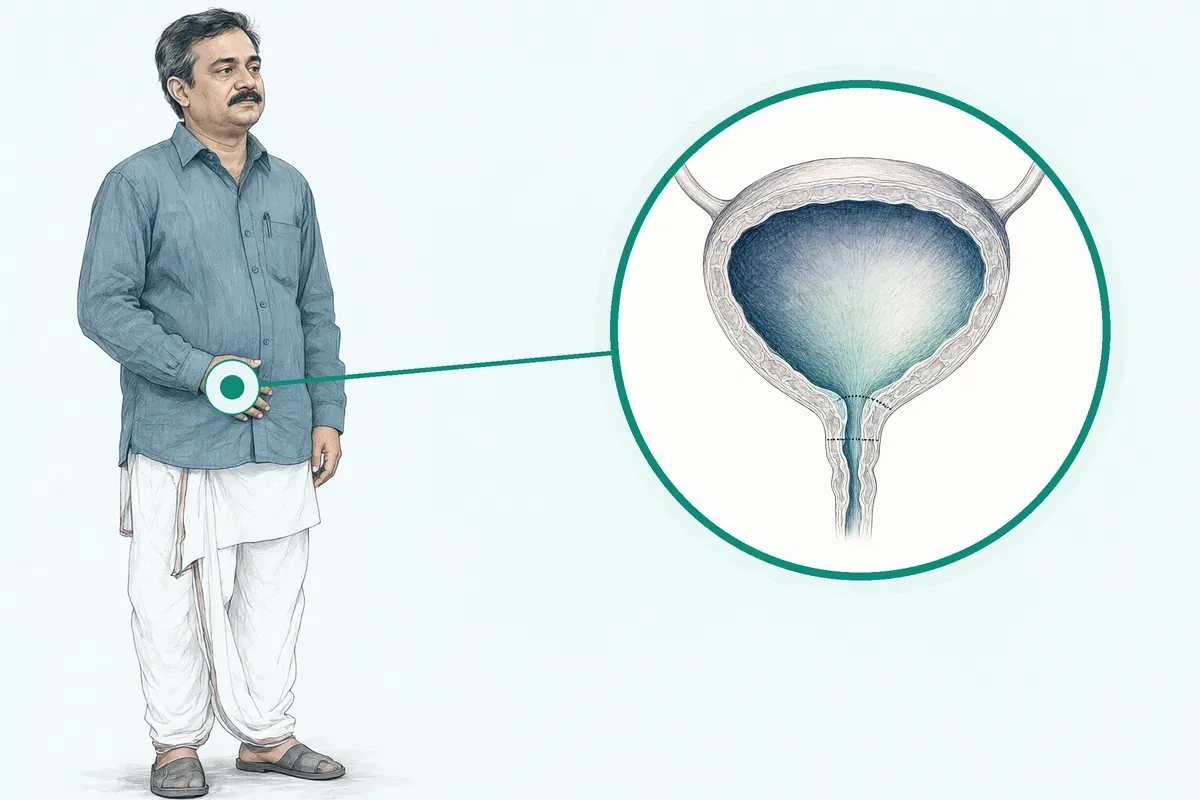
Urethral stricture is a narrowing of the urethra due to scar tissue.
Why Jaipur Hospital
You may worry about surgical pain, staying away from your work, or how your family will manage hospital expenses.
Your care plan
Your first steps with us
- 1 Visit our urology OPD for clinical evaluation
- 2 Undergo imaging tests to map the narrowing
- 3 Review your surgical plan and cost estimate
- 4 Recover with planned follow-up checks
How reconstructive surgery is planned
Our surgical team assesses the location and length of the tissue defect. Your surgeon will discuss the appropriate technique with you.
-
Urethroplasty
Your surgeon will discuss excision and primary anastomosis or buccal mucosa graft repair.
-
Optical Internal Urethrotomy (OIU)
Your surgeon will discuss endoscopic incision for short strictures using a small scope.
-
Hypospadias Repair
Your surgeon will discuss surgical correction of a congenital urethral opening defect.
-
Vesicovaginal Fistula Repair
Your surgeon will discuss closure of an abnormal connection between bladder and vagina.
Why patients trust us
- 1991 Serving Jaipur for 35 years
- NABH Accredited hospital
- 24×7 Emergency, ICU and ambulance
- 25 Cashless schemes and insurers
Clinical evidence on reconstructive outcomes
-
85% and 90%
The success rate for simple repairs is between 85% and 90% in reported clinical studies.
-
around 80%
The success rate for complex reconstructive repairs is around 80% in clinical literature.
-
within 18 months or fewer
Erectile dysfunction after surgery is usually temporary, often resolving within 18 months or fewer.
If it is left untreated
Leaving a tight stricture untreated can cause obstruction to urine flow. If narrowing recurs after surgery, it can block flow again, and repeated internal stretch procedures do not eliminate the scar.
Life after reconstructive treatment
Careful reconstruction aims to restore an open passage so urine can drain without ongoing strain.
-
Easier urination
Most people notice urine flows more freely once the urinary catheter is removed.
-
Return to routine
Patients typically resume non-physical work within 10 to 14 days following surgery.
-
Planned healing
Full tissue healing usually occurs within 3 months with structured OPD follow-up visits.
Meet the team
Our Urology specialists
Care led by Jaipur Hospital's urology consultants, backed by round-the-clock surgical, diagnostic and critical care support.
Frequently asked questions
Questions patients ask about reconstructive urology
Which problems are assessed under reconstructive urology?
In short
Reconstructive urology at Jaipur Hospital assesses urethral strictures, fistulas, and complex urinary tract reconstruction needs. This includes narrowing of the urethra from scar tissue, abnormal connections such as vesicovaginal fistula, and congenital defects like hypospadias. The surgical team evaluates each condition to plan the right repair.
In detail
Evidence defines urethral stricture as a narrowing of the urethra due to scar tissue and notes that female urethral stricture is a rare and challenging entity. Vesicovaginal fistula is an abnormal bladder-vagina connection. Hypospadias is a congenital urethral opening defect.
Iatrogenic injury from medical interventions is a common cause of strictures in well-resourced settings. The guidelines stress that selection of the appropriate technique is crucial and depends on anatomic location, stricture length, and prior interventions.
Urethroplasty encompasses a multitude of techniques, and adaptation to local stricture conditions is crucial for durable patency. The urology department manages these complex reconstructions using established surgical principles.
A common belief
Many people think only of strictures, but reconstructive urology also deals with abnormal connections between organs and birth defects that affect urine flow.
What actually happens
Each problem needs a different surgical plan based on location, length, and past treatments.
Your next step at Jaipur Hospital
You can book a consultation at Jaipur Hospital for a detailed evaluation. The surgical team will review your history, perform a physical examination, and may order imaging or cystoscopy to define the stricture length and location. This assessment usually takes one visit. After that, your surgeon will discuss the recommended approach and expected timeline.
How will the doctor decide which tests I need?
In short
The doctor at Jaipur Hospital decides tests based on your symptoms, examination findings, and any previous treatments. Standard first tests are a urinary flow rate measurement and office cystoscopy to see the stricture directly. Further imaging like a retrograde urethrogram may be ordered to define stricture length and location precisely.
In detail
Evidence states that clinicians should determine the length and location of the stricture in order to inform treatment. Routine use of imaging to assess stricture characteristics will be required to apply evidence-based recommendations.
The initial office cystoscopy examines the urethra for strictures and measures flow rate and residual urine. If the stricture is complex, long, or involves the posterior urethra, additional imaging such as retrograde urethrogram or voiding cystourethrogram helps map the anatomy.
Prior interventions, stricture location (bulbar, penile, or posterior), and whether the stricture is obliterative guide the choice of further tests. This stepwise approach avoids unnecessary investigations while ensuring the surgical plan is accurate.
A common belief
Some patients think they need every scan upfront.
What actually happens
In practice, the scope look and flow rate tell the surgeon most of what they need. Extra imaging is only ordered when the stricture is long, recurrent, or in a difficult location, so you avoid unnecessary tests and radiation.
Your next step at Jaipur Hospital
At Jaipur Hospital, the flow test and cystoscopy are typically done during your first OPD visit. If the urologist needs more detail, they will schedule a retrograde urethrogram or other imaging before any surgery. The in-house radiology department handles these tests. You will be told exactly which tests are needed and why.
How soon should I expect improvement after reconstructive urology surgery?
In short
After reconstructive urology surgery at Jaipur Hospital, urine flow usually improves once the catheter is removed, typically two to three weeks after the operation. Full healing of the reconstructed urethra takes about three months. Most people notice a clear difference in stream strength and emptying within the first few weeks after catheter removal.
In detail
The catheter remains in place for two to three weeks to allow the anastomosis or graft to heal without tension. At the follow-up visit, a voiding cystourethrogram may be done to confirm the repair is watertight before the catheter is taken out.
Evidence indicates that most strictures that recur do so within the first one to two years, so scheduled check-ups at three to six month intervals are important.
Pain and discomfort are usually mild to moderate for the first week and can be managed with prescribed medication. If buccal mucosa was used, the cheek heals in about three weeks.
A common belief
Some people expect instant results, but the urethra needs time to heal around the catheter.
What actually happens
Recurrences, if they happen, usually appear in the first year or two, which is why regular follow-up matters more than how you feel in week one.
Your next step at Jaipur Hospital
Plan for two to three weeks off work for simpler repairs and three or more weeks for complex cases. Avoid heavy lifting, strenuous exercise, and long periods of sitting while the catheter is in. Sexual activity should wait at least six weeks after catheter removal. Attend all follow-up appointments so your surgeon can monitor healing.
How will the site and length of the narrowing or abnormal connection be assessed before reconstructive urology surgery?
In short
Before reconstructive urology surgery at Jaipur Hospital, your urologist will determine the exact site and length of the urethral narrowing or fistula using a combination of tests. These typically include uroflowmetry to measure flow rate, retrograde urethrogram to outline the stricture on X-ray, and flexible cystoscopy to directly visualise the urethra from within.
In detail
Evidence emphasises that routine imaging and endoscopy are required to apply evidence-based recommendations. The retrograde urethrogram shows the length, location, and calibre of the stricture, while cystoscopy confirms the mucosal appearance and rules out other pathology.
For fistulas, a contrast study or cystogram defines the tract between the bladder and vagina. These tests are usually done in the OPD and take only a few minutes each.
Accurate mapping guides the choice between endoscopic incision, excision with primary anastomosis, or graft urethroplasty, and whether a one-stage or two-stage approach is needed.
A common belief
A single test is rarely enough.
What actually happens
The X-ray shows length and position, the scope shows tissue quality, and the flow test shows how much the narrowing actually blocks urine. Skipping any of them can lead to choosing the wrong operation.
Your next step at Jaipur Hospital
You will attend the urology OPD for these assessments before any operation is scheduled. Bring any previous imaging or operative notes. The surgeon will explain the findings and the recommended technique.
How can I decide whether to seek advice about urethroplasty for stricture?
In short
You should consider seeking advice about urethroplasty at Jaipur Hospital if you have a diagnosed urethral stricture that causes bothersome symptoms such as weak stream, straining, frequent infections, or inability to empty your bladder. Healthcare providers usually recommend urethroplasty when scar tissue narrows the urethra and simpler measures like dilation or endoscopic incision have failed or are unlikely to give a lasting result.
In detail
Guidelines suggest that the choice of treatment depends on stricture length, location, and previous interventions. Endoscopic incision is typically tried first for short, non-obliterative strictures.
Urethroplasty, which removes the scarred segment or rebuilds it with a tissue graft, has higher long-term success rates than repeated dilation or incision. In studies, urethroplasty success ranges from 80 to 94 percent depending on technique, while dilation success is below 50 percent. Your urologist will assess your anatomy and history to advise whether urethroplasty is appropriate.
A common belief
Patients often try multiple dilations or scope cuts hoping for a long-term fix, but evidence shows those methods fail in more than half of cases.
What actually happens
Urethroplasty offers a more durable repair for the right anatomy.
Your next step at Jaipur Hospital
If you have had repeated catheter changes, failed endoscopic procedures, or a long or complex stricture, ask for a reconstructive urology opinion. Bring any previous imaging or operative notes to the appointment.
The surgeon will explain the options, likely hospital stay of three to five nights, and catheter duration of two to three weeks.
Which urinary symptoms need urgent assessment?
In short
Certain urinary symptoms need urgent assessment at Jaipur Hospital. These include complete inability to pass urine, severe flank or abdominal pain with fever, visible blood in urine with clots, sudden worsening of urinary retention, or signs of sepsis such as high fever and confusion. An attendant should bring you to the emergency department without delay.
In detail
Acute urinary retention is a medical emergency requiring immediate catheterisation to protect the bladder and kidneys. Obstructing stones with infection can cause life-threatening sepsis. Gross haematuria with clots may indicate a tumour or severe trauma needing urgent cystoscopy.
Fournier's gangrene, though rare, presents with perineal pain, swelling, and fever and needs emergency surgery. Any new neurological symptoms like saddle anaesthesia or leg weakness with urinary changes suggest cauda equina syndrome and need immediate imaging.
Your next step at Jaipur Hospital
If you experience any of these symptoms, do not wait for a routine appointment. Call the emergency number or come directly to the 24-hour emergency department. Bring a list of current medicines and any previous urology reports.
Which symptoms should prompt me to see a specialist?
In short
You should see a specialist at Jaipur Hospital if you notice a weak urine stream, straining to pass urine, frequent urge with little output, burning during urination, blood in urine, or recurrent urinary infections. These symptoms suggest a possible urethral stricture or other reconstructive urology condition needing evaluation.
In detail
Evidence indicates that urethral stricture causes narrowing of the urethra from scar tissue, leading to obstructive voiding symptoms. Asymptomatic strictures do not always need active treatment, but symptomatic ones warrant assessment.
The first appointment typically includes cystoscopy of the urethra in the office and measurement of urinary flow rate and residual urine.
A cystoscopy is a scope exam where a small scope is placed into the urethra, very similar to catheterisation, to examine the area for strictures.
These tests help the urologist determine the length and location of the blockage, which is essential for selecting the appropriate treatment technique.
A common belief
Some people ignore a slow stream for years, thinking it is just ageing.
What actually happens
But these symptoms often mean scar tissue is narrowing the urethra. Asymptomatic strictures may not need treatment, but once symptoms appear, the stricture usually worsens without proper repair.
Your next step at Jaipur Hospital
If you have any of these symptoms, contact Jaipur Hospital to book an OPD consultation. The urologist will perform a clinical examination and may do a flow rate test and cystoscopy during the same visit.
Based on findings, further imaging or a suprapubic catheter may be advised before surgery. Early assessment helps plan the right treatment.
How will the results change my care plan?
In short
Test results at Jaipur Hospital directly shape your care plan by showing the stricture length, location, and whether it is obliterative. Short, non-obliterative strictures in the bulbar or posterior urethra may be offered endoscopic incision first. Longer or complex strictures usually need open urethroplasty with graft or excision. The surgeon selects the technique that matches your anatomy.
In detail
Evidence indicates that endoluminal treatments can be used for short, non-obliterative strictures at the bulbar and posterior urethra as first-line treatment.
Urethroplasty encompasses a multitude of techniques, and adaptation of the technique to the local conditions of the stricture is crucial to obtain durable patency rates.
Successful treatment requires selection of the appropriate endoscopic or surgical procedure based on anatomic location, length of stricture, and prior interventions. If imaging shows a short stricture, optical internal urethrotomy may be tried.
If the stricture is long, recurrent, or involves the penile urethra, excision and primary anastomosis or buccal mucosa graft urethroplasty is typically planned. The guidelines note that whenever possible, a one-stage approach is preferable, but a two-stage procedure might be appropriate for complex penile strictures. Perineal urethrostomy is an option for extensive anterior strictures or when complex surgery is not desired.
A common belief
A common belief is that all strictures get the same surgery.
What actually happens
In reality, a 1 cm bulbar stricture may only need an endoscopic cut, while a 5 cm penile stricture usually requires a buccal mucosa graft. The length, location, and past treatments decide the operation — not a one-size-fits-all approach.
Your next step at Jaipur Hospital
After your tests at Jaipur Hospital, the urologist will explain which category your stricture falls into and the recommended procedure. You will discuss the operation time, hospital stay, catheter duration, and recovery expectations. The team will also review any health factors that affect anaesthesia choice.
What should I do if symptoms persist or worsen after reconstructive urology surgery?
In short
If symptoms such as poor stream, straining, pain, fever, or bleeding persist or worsen after reconstructive urology surgery at Jaipur Hospital, contact your urologist promptly. Early evaluation helps identify whether a stricture is recurring, an infection is present, or the repair needs attention. Do not wait for the next scheduled visit if you are concerned.
In detail
Evidence shows that most recurrent strictures appear within the first one to two years and are often thin and web-like. These can frequently be managed with a repeat endoscopic incision rather than major surgery.
However, new onset fever, inability to pass urine, heavy bleeding, or worsening perineal pain may indicate infection, haematoma, or breakdown of the repair and require urgent assessment. The catheter site should be kept clean; any discharge or blockage should be reported. Your surgeon will advise whether an earlier cystoscopy or imaging is needed.
A common belief
Patients often hope symptoms will settle on their own.
What actually happens
But recurrent strictures are easiest to treat when caught early, usually with a simple scope procedure. Ignoring them can lead to complete blockage and more complex surgery later.
Your next step at Jaipur Hospital
Keep the emergency numbers of Jaipur Hospital handy. If you cannot pass urine at all, go to the 24×7 emergency department immediately. For less urgent concerns, call the urology OPD to bring forward your follow-up. Attend all planned cystoscopy or flow-rate checks even if you feel well, as asymptomatic recurrence can occur.
Could endoscopic treatment be suitable, or is reconstruction more appropriate for my urethral stricture?
In short
Endoscopic treatment such as optical internal urethrotomy may be suitable for short, non-obliterative strictures in the bulbar or posterior urethra, especially as a first-line option. Reconstruction with urethroplasty is generally more appropriate for longer strictures, recurrent strictures after endoscopic failure, complex strictures, or when the stricture is in the penile urethra. Your surgeon at Jaipur Hospital will decide based on the stricture length, location, and your treatment history.
In detail
Evidence shows that endoscopic incision has a mean success rate below 50 percent and recurrence is common. Urethroplasty techniques, including excision with primary anastomosis and buccal mucosa graft, achieve success rates of 80 to 94 percent in studies.
Guidelines recommend endoluminal treatments for short, non-obliterative strictures as first-line, but note that repetitive endoscopic procedures are not curative. For strictures longer than one to two centimetres, or those that have failed prior endoscopic treatment, reconstruction offers more durable patency. The choice also depends on whether a one-stage or two-stage approach is needed for complex penile strictures.
A common belief
Many patients prefer the smaller scope procedure hoping it will fix the problem permanently.
What actually happens
Evidence shows it rarely does for anything beyond a short, first-time stricture. Choosing the scope repeatedly just delays the definitive repair and adds scar tissue.
Your next step at Jaipur Hospital
Your urologist will review your imaging, cystoscopy findings, and any previous procedures before recommending the next step. If endoscopic treatment is offered, you will be counselled about the likelihood of recurrence and the need for surveillance.
FAQ library
Questions and answers about reconstructive urology
When you contact us
Consult our urology team in Jaipur
Book an OPD consultation at Jaipur Hospital to discuss your condition and review your options.
- A consultation with a urologist in the OPD
- Your scans and reports reviewed, with tests done in-house if you need them (laboratory, X-ray and imaging)
- Your options explained in plain words, including whether you need surgery at all
- A cost estimate before you decide
- Help with cashless treatment under RGHS, MAA Yojana, CGHS and empanelled insurers and TPAs
- Follow-up visits after your treatment
Overview
Reconstructive Urology: what to know
What is reconstructive urology and urethral stricture
- Urethral stricture
- Scar tissue narrows the urine passage
- Reconstructive urology
- Surgery that repairs or rebuilds the urinary tract
- Urethroplasty
- Removes scarred segment or rebuilds with healthy tissue
Your urethra is the tube that carries urine from your bladder to the outside of your body. If you have a male reproductive system, it also carries semen out of your body. Sometimes scar tissue builds up inside this passage. This scar tissue narrows the passage and makes it hard for urine to pass freely. This condition is known as a urethral stricture. In rare instances, strictures can also happen in women.
Reconstructive urology is the branch of surgery that repairs, rebuilds, or replaces parts of the urinary tract. When scar tissue narrows your passage, surgeons perform reconstructive operations like urethroplasty. In a urethroplasty, your surgeon can take out the scarred segment and join the healthy ends together. They can also rebuild the narrowed channel using healthy tissue borrowed from another part of your body.
At Jaipur Hospital, our surgical team evaluates each person carefully. Urologists play a central role in checking your urinary tract and managing stricture disease. Your care is planned to help urine flow freely again.
Symptoms of urethral stricture and when to seek urgent care
- Cannot pass any urine Complete blockage needs immediate drainage
- High fever May signal infection
- Severe lower belly pain Could mean bladder or kidney stress
- Heavy bleeding Needs urgent review
A narrowed urethra can cause noticeable trouble with urination. In a normally working bladder, urine flow does not slow down until the width of the urethra drops below 10F. As the channel becomes narrower, urine flow slows down significantly and your bladder cannot empty easily.
Common signs of a stricture include:
- A weak stream
- Straining while passing urine
- Feeling that your bladder is never completely empty
Strictures that do not cause any symptoms do not always require active treatment. However, when a stricture returns or tightens, it can cause marked urinary blockage.
If you experience a total blockage where you cannot pass any urine at all, you must seek urgent medical help immediately. You can reach the 24×7 emergency department at Jaipur Hospital without delay. Complete urine retention requires immediate drainage to protect your bladder and kidneys. Tell your doctor right away if you develop high fever, severe pain in your lower belly, or heavy bleeding.
Causes of urethral strictures and risk factors
- Medical procedures
- Catheters, scopes, or surgery can injure the urethra
- Ischaemic spongiofibrosis
- Reduced blood supply leads to fibrous scar tissue
- Physical trauma
- Injury to the pelvic area or perineum
- Blood-thinning medicines or supplements
- Increase bleeding risk during treatment
Scar tissue inside the urethra can develop for several reasons. In well-resourced countries, medical procedures that injure the urethra are among the most common causes of male urethral strictures. Where a specific cause is identified, the two most common reasons are medical interventions and unknown factors where no clear trigger is found.
Most strictures that form in the front part of the male urethra occur because of ischaemic spongiofibrosis, where blood supply is reduced and fibrous scar tissue forms.
Physical trauma, past catheter use, or prior endoscopic procedures can also trigger scarring in the urinary passage.:
- Physical trauma
- Past catheter use
- Prior endoscopic procedures
Certain factors can also increase your risks during treatment and surgery. Taking aspirin, blood-thinning medicines, or certain herbal supplements can increase your risk of bleeding. You should always inform our team about every medicine you take so your care can be planned safely.
How reconstructive urology problems are diagnosed
- History and checkup Surgeon reviews health and examines you
- Flow and residual check Measures urine speed and leftover urine
- Cystoscopy Scope exam to see inside the urethra
- Imaging (urethrography) X-ray pictures of the stricture
Diagnosing a urethral stricture involves clinical evaluation and targeted tests. At your first appointment in our OPD, your surgeon reviews your health history and carries out a physical checkup. To check how your bladder functions, your urinary flow rate and the urine left behind in your bladder are measured right in the clinic.
Your surgeon will also perform a cystoscopy. A cystoscopy is a scope exam where a small, thin scope is placed into the urethra from the penis, very similar to inserting a catheter. This allows your surgeon to inspect the inside of the passage directly and check for any narrowed areas. You may feel a slight burning sensation in your urethra for a short time after these tests.
Your surgeon must find the exact length and position of the blockage to choose the most suitable treatment. Along with endoscopy, imaging tests such as urethrography provide pictures of the stricture. Both of these checks are quick and are usually done during your visit.
Treatment options without major surgery and when surgery is advised
Not every stricture requires major open surgery right away. For short strictures, less invasive internal procedures are often considered. Urethral dilation can be used to stretch and expand the narrowed urethra temporarily for mild cases. However, urethral dilation is generally not a long-term solution.
In one group of 107 patients, urethral dilation had an average success rate of 47% at an average follow-up of 43 months. Doing endoluminal stretching or cutting procedures repeatedly does not eliminate the problem.
Another minor procedure is direct vision internal urethrotomy, where a small cut is made through a scope to open up short strictures. In some patients, a suprapubic catheter may be placed through a small opening in the lower belly before surgery.
This tube drains your bladder and gives your urethra time to rest, which helps scar tissue show up clearly before an operation.
Reconstructive surgery is advised when scar tissue causes a significant narrowing or when previous endoscopic cuts and dilations have failed. Reconstructive methods have shown higher average success rates than dilation in medical studies. In research on women who had failed dilation, flap repairs achieved a 91% success rate and oral mucosal repairs achieved 94%.
For men, research also shows that urethroplasty allows urine to flow freely and offers a lasting answer for strictures. Your surgeon at Jaipur Hospital will explain your options and advise which method fits your condition.
Preparing for reconstructive urology surgery
Before your reconstructive urology surgery at Jaipur Hospital, you meet with our surgical team. The doctor reviews your complete medical history and conducts a physical examination to ensure you are fit for the operation. Your surgeon typically determines the exact length and site of the urethral stricture or defect with imaging or endoscopy in the OPD clinic. These assessments help your team decide the most suitable surgical approach for your condition.
You must tell your doctor about all prescription drugs, over-the-counter tablets, and supplements you use. Certain medicines like aspirin, blood thinners, and some herbal supplements increase your bleeding risk during surgery. Please check with your doctor before you stop any of your regular medicines.
In some situations, a doctor may advise a suprapubic catheter before the procedure to drain urine through a small lower abdomen incision. This rests the urethra and allows diseased scar tissue to become clearly defined before surgical repair.
Our surgical team will provide clear, written directions on when you must stop eating and drinking before surgery. You should plan to bring an attendant with you to Jaipur Hospital to stay by your side and help you handle discharge formalities. You will also need someone to drive you home safely after discharge.
How reconstructive urology surgery is performed
- Urethroplasty
- Removes scar and joins healthy ends or rebuilds with a tissue graft
- Buccal mucosa graft
- Tissue taken from the inside of the cheek
- Optical Internal Urethrotomy (OIU)
- Endoscopic cut for short strictures
- Hypospadias Repair
- Corrects congenital defect of the urethral opening
- Vesicovaginal Fistula Repair
- Closes abnormal channel between bladder and vagina
On the day of your surgery at Jaipur Hospital, your surgical team includes a urologist, an anaesthesiologist, and trained operation theatre nurses. The anaesthesiologist typically administers spinal or general anaesthesia so you are asleep and feel no pain while the operation is underway. A reconstructive urology operation usually lasts between 2 to 4 hours in our modular operation theatres.
Several surgical techniques are available depending on your exact anatomy, and your surgeon will advise which option suits you:
- Urethroplasty: The surgeon cuts into tissue over the stricture through the penis, scrotum, or perineum. The narrowed scar is either removed and the healthy ends joined together, or the blocked passage is rebuilt using a tissue graft. When extra tissue is needed, surgeons frequently take a buccal mucosa graft from the lining inside your cheek, or use a penile skin graft.
- Optical Internal Urethrotomy (OIU): This is an endoscopic approach used for short strictures, where an instrument cuts open the narrowed scar tissue from within the passage.
- Hypospadias Repair: This reconstructive procedure corrects a congenital defect where the urethral opening is not at the tip of the penis.
- Vesicovaginal Fistula Repair: This surgery closes an abnormal, leaking channel between the urinary bladder and the vagina.
Once the surgical repair is completed, your surgeon closes the wound with dissolvable stitches. The team places a urinary catheter into the bladder so urine can drain freely while the tissues heal. A surgical wound drain may also be placed if needed.
Risks and possible complications of reconstructive urology
- 15 to 25 percent Stricture recurrence after urethroplasty
- about half Recurrences that cause symptoms
- often resolves within 18 months Temporary erectile dysfunction
- not reported in comparative study New stress urinary incontinence
Every surgical procedure carries potential risks, and feeling anxious before your operation is completely normal. Most patients experience mild to moderate discomfort or pain around the surgical site for up to a week following reconstructive surgery. You can ease this soreness with ice, prescribed painkillers, or anti-inflammatory drugs. Because anti-inflammatory medicines are not suitable for every person, always check with your doctor before taking them.
The primary long-term risk after urethroplasty is that the reconstructed passage narrows again over time. In studies evaluating patients after urethroplasty, strictures recur in about 15 to 25 percent of cases. When strictures recur, they are frequently thin, web-like bands, and only about half of these recurrences cause symptoms.
If a recurring stricture does cause a blockage, it can often be managed internally through a simple endoscopic cut, while major repeat reconstructive surgery remains rare. In research on urethral reconstruction, repetitive internal cutting alone without open reconstruction was not curative.
Other documented risks include temporary erectile dysfunction, which in studies often resolves within 18 months or fewer. Nerve injury can also occur, though nerve damage often improves gradually over time. In a comparative study of graft techniques, no instances of new-onset stress urinary incontinence were reported.
Keeping every scheduled follow-up visit at Jaipur Hospital allows our surgical team to detect and manage any possible issues early.
Recovery and aftercare following reconstructive urology
- Hospital stay
- Catheter in place
- Mouth graft heals
- Return to desk work
- Full tissue healing
- No sexual activity after catheter removal
Immediately after your operation, you are moved to the recovery area while your anaesthesia wears off. Patients typically stay in the hospital for 3 to 5 nights, where our nursing staff monitors your vitals, manages wound care, and assists with walking. You are allowed to return home once you can eat comfortably, walk safely, and care for your urinary catheter.
You will have a urinary catheter in place for 2 to 3 weeks to keep urine away from the healing wound. The catheter can be attached to a small leg bag strapped neatly beneath your trousers, making it easy and manageable to carry outdoors.
While your catheter is in place, you should avoid:
- Driving
- Prolonged sitting
- Squatting or spreading your legs wide
Gentle walking and climbing normal stairs are permitted. If your surgeon took a graft from the inside of your cheek, the mouth lining typically covers over in about three weeks, and a prescribed mouthwash helps keep the area clean.
Most patients can resume desk work or light, non-physical duties after 10 to 14 days, but you must avoid strenuous exercise and heavy lifting for at least two weeks. Full tissue healing typically takes 3 months. After your catheter is safely removed in the clinic, you must avoid sexual activity and masturbation for at least six weeks.
Contact Jaipur Hospital promptly if you develop severe pain, wound bleeding, fever, trouble passing urine, or a blocked or leaking catheter.
Results and long-term success rates from studies
Surgical success in published medical literature is defined as the lack of need for any further surgical intervention. Clinical studies demonstrate that open reconstructive urethroplasty provides higher long-term patency than simple temporary expansion procedures. In one group of 107 patients, temporary urethral dilatation had an average success rate of 47 percent at 43 months of follow-up. In comparison, studies report that urethroplasty techniques achieved mean success rates ranging between 80 and 94 percent.
Success rates in medical trials vary according to the specific technique and the nature of the repair. In published patient groups, simple reconstructive repairs had success rates between 85 and 90 percent, while complex surgical repairs showed success rates around 80 percent.
When strictures were repaired using tissue from the mouth, oral mucosal augmentation achieved a 94 percent success rate across 32 patients monitored for an average of 15 months. In research directly comparing tissue sources, urethral reconstruction with buccal mucosa grafts showed significantly higher success than repairs using penile skin grafts.
For female urethral reconstruction, vaginal or labial flap repairs demonstrated a 91 percent mean success rate in 58 patients at 32 months of follow-up.
Because most recurrent strictures appear within the first one to two years after surgery, scheduled follow-up is essential.
In studies, post-operative evaluation typically involves:
- Flow rate measurements
- Residual urine tests
- Direct visual checks with a cystoscope or X-ray urethrography
Regular visits ensure that your urinary tract stays open and drains properly over time.
Cost of reconstructive urology and insurance in Jaipur
The typical cost of reconstructive urology surgery in India ranges from ₹80,000 to ₹2,50,000. You can ask us for an estimate for your specific treatment at Jaipur Hospital. The overall cost depends on the specific surgical procedure you require and your individual health condition.
Minimally invasive endoscopic procedures cost less, whereas complex reconstructive operations that require extensive tissue grafts take more surgical time and involve higher expenses.
Other factors influencing your final bill include:
- The number of nights you stay in the ward
- Required anaesthesia
- Operating theatre time
- Any prescribed medications purchased from the in-house chemist
Jaipur Hospital is an established, NABH-accredited multispeciality hospital that supports cashless and reimbursement facilities under major government healthcare schemes.
Eligible patients can utilise benefits under:
- Rajasthan Government Health Scheme (RGHS)
- MAA Yojana
- Central Government Health Scheme (CGHS)
Our hospital is also empaneled with an extensive network of private health insurance companies and third-party administrators (TPAs). When you visit our hospital in Jaipur with your scheme documents or health insurance card, our staff will verify your coverage and explain your pre-authorisation steps.