

Anaesthesia and Critical Care · Jaipur Hospital
Ventilation and Airway Support in Jaipur
Breathing feels hard, and the choices are confusing. Jaipur Hospital offers a clear assessment, an explanation of your options, and a plan.
- Serving Jaipur since 1991 (35 years)
- NABH accredited
- 24×7 emergency & ICU
- Cashless: RGHS, MAA Yojana, CGHS + 22 insurers
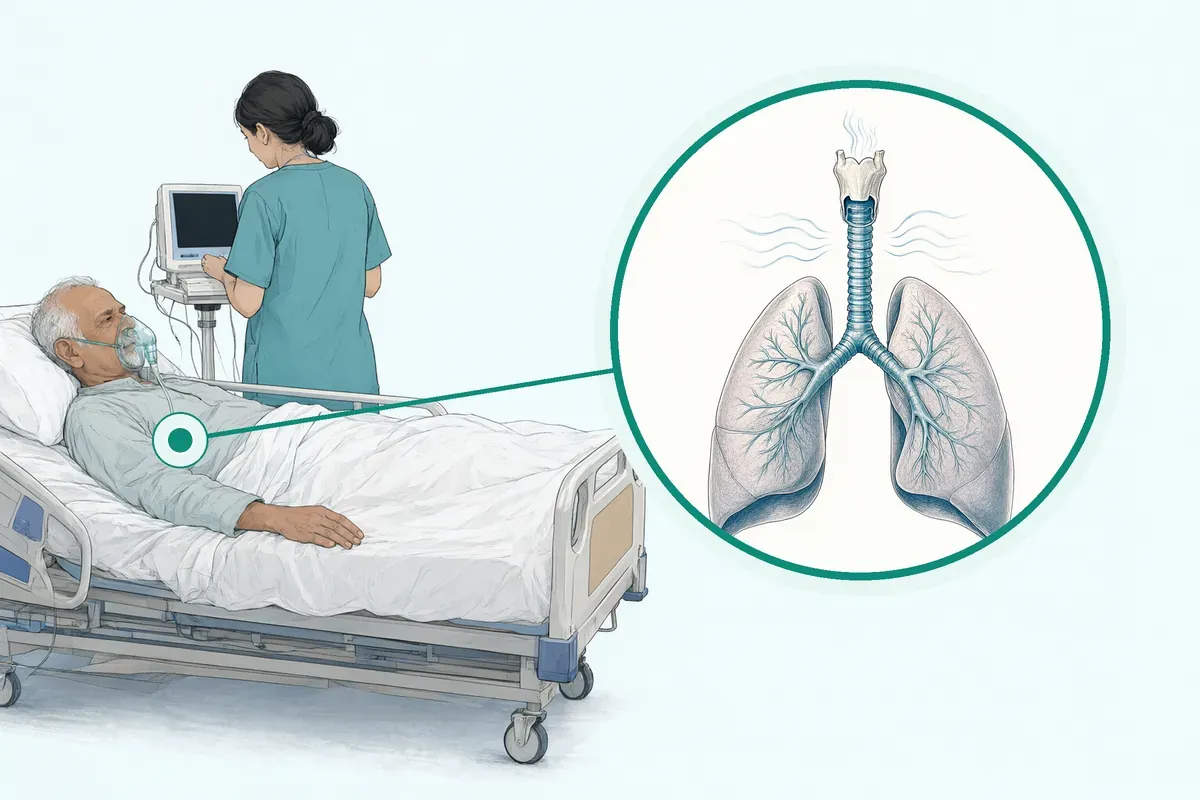
- Procedure time
- 30 to 60 minutes (intubation)
- Anaesthesia
- Rapid sequence induction
- Recovery
- Weaned as per clinical status
- Price
- ₹5,000 to ₹15,000 per day (ventilator charges)typical range in India; ask us for an estimate
Breathing takes over your day
When breathing becomes difficult
You may feel breathless, tired, or worried about a breathing tube. Your family may have questions about ICU care, costs, and time away from work. Jaipur Hospital checks what is happening and explains the next step.
-
Breathlessness that worsens
You may feel short of breath at rest or with small effort, and talking may feel difficult.
-
Worry about the tube
You may fear how a breathing tube feels, or that you will not be able to speak.
-
Cost and insurance questions
Ventilator charges and cashless cover can be hard to understand when you are under stress.
-
Confusing terms
NIV, BiPAP, intubation, and extubation may be new words for you and your family.
-
Family needs updates
Your attendant may want a clear answer about what is happening and what comes next.
Ventilator-associated pneumonia is defined as infection of the lung tissue in patients who have had invasive mechanical ventilation for at least 48 hours.
Why Jaipur Hospital
You may worry about the cost, the ICU stay, time off work, or how a breathing tube will feel.
Your care plan
Your first steps with us
- 1 Call or visit the OPD for an assessment.
- 2 Meet our anaesthesia and critical care team.
- 3 Get scans, reports and a cost estimate.
- 4 Start support and plan follow-up visits.
How the operation is done
Your surgeon reviews your breathing, reports, and airway. Your team then explains the support options, what each involves, and what to expect in the ICU. Your surgeon will discuss the choices with you and your family before you decide.
-
Invasive Mechanical Ventilation
A tube is placed in the windpipe and the ventilator supports each breath using set volume or pressure modes.
-
Non-Invasive Ventilation (NIV)
A tightly fitted mask supports breathing without a tube. BiPAP or CPAP may be used for COPD or pulmonary oedema.
-
High Flow Nasal Cannula
Heated, humidified oxygen is delivered through a nasal cannula at a higher flow than standard oxygen.
-
Difficult Airway Algorithm
If tube placement is difficult, video laryngoscopy or fiberoptic bronchoscopy may help your surgeon see the airway.
Why patients trust us
- 1991 Serving Jaipur for 35 years
- NABH Accredited hospital
- 1 Anaesthesia and Critical Care consultants
- 24×7 Emergency, ICU and ambulance
- 25 Cashless schemes and insurers
What research shows about ventilation care
-
4 to 8 ml/kg
Tidal volume range recommended for patients with acute respiratory distress syndrome in the guidance reviewed.
-
6.3%
Tracheostomy-related complications reported among patients in a study of early versus late tracheostomy.
-
5 to 40%
Share of patients ventilated for more than 2 days reported to develop ventilator-associated pneumonia, varying by setting.
If it is left untreated
When breathing worsens, oxygen levels can fall. Ventilator-associated pneumonia is a risk during invasive ventilation and has been reported in 5 to 40% of patients ventilated for more than 2 days, with wide variation by setting.
Life after treatment
After extubation, your team checks your breathing and helps you plan the next step. Follow-up visits give you time to ask questions as you return to daily life.
-
Less support over time
As your clinical status allows, the team reduces support and checks how your breathing responds.
-
Clear family updates
Your attendant can ask the team what has changed and what is planned next.
-
Follow-up visits
These visits give you time to discuss breathing, daily activity, and any new concerns.
-
Planning daily activity
Your team can advise on rest and gradual activity as your strength returns.
Frequently asked questions
Questions patients ask about ventilation and airway support
Which problems are assessed under ventilation and airway support?
In short
Our medical team assesses acute respiratory failure and difficult airways under ventilation and airway support at Jaipur Hospital. These issues include exacerbation of chronic obstructive pulmonary disease, cardiogenic pulmonary oedema, de novo hypoxaemic respiratory failure, chest trauma, and post-operative breathing difficulties. We also evaluate patients who need palliation, weaning, or post-extubation care.
In detail
In clinical practice, our intensive care team evaluates patients who cannot maintain oxygen levels or clear carbon dioxide on their own. Studies show that non-invasive ventilation is widely used in acute care for acute respiratory failure across multiple aetiologies.
When patients experience persistent breathing failure, our team evaluates whether they need non-invasive ventilation or invasive mechanical ventilation via an endotracheal tube. Our specialists also assess candidates for tracheostomy or high-flow nasal cannula therapy.
In studies, underlying medical conditions and illness severity are critical factors when managing ventilation support. Every evaluation accounts for your specific clinical status, existing lung condition, and overall physical stability.
A common belief
Ventilation is not just a final measure for unconscious patients.
What actually happens
It includes non-invasive masks and oxygen therapies that actively support struggling lungs early.
Your next step at Jaipur Hospital
If you or your relative experiences severe respiratory distress, our team begins assessments immediately in the emergency department or intensive care unit. The attending doctor reviews prior medical history, arterial blood gases, and chest imaging.
Following this initial evaluation, your attendant receives clear details about the proposed support plan. Please contact our reception desk to book a consultation at Jaipur Hospital.
How will the doctor decide which tests I need for ventilation and airway support?
In short
The doctor decides which tests you need by evaluating your breathing effort, oxygen stability, and medical background at Jaipur Hospital. Diagnostic decisions depend on whether you have acute respiratory failure, chronic lung disease, or an anticipated difficult airway that requires targeted imaging and laboratory investigation.
In detail
Your physician selects tests based on validated clinical guidelines and your individual physical presentation. In clinical literature, clinical suspicion alone is not sufficient to confirm complex respiratory infections or failure; objective assessments are necessary.
Tests typically include arterial blood gas analysis to measure oxygen and carbon dioxide pressures, alongside chest X-rays or computed tomography scans to evaluate lung parenchyma.
If infection such as ventilator-associated pneumonia is suspected, evidence supports taking distal microbiological samples before starting antibiotics to avoid altered results. For airway planning, our specialists assess anatomical features using clinical algorithms to determine if video laryngoscopy or fiberoptic bronchoscopy tools are needed.
A common belief
Doctors do not order random tests.
What actually happens
Each test, from arterial blood gases to lung imaging, answers a specific question about your lung function.
Your next step at Jaipur Hospital
Once the initial clinical examination is complete, the doctor explains which diagnostic tests are essential for your safety. Most baseline investigations can be completed promptly within our hospital facility. Your attendant will receive guidance on scheduling each test without unnecessary delays. Please reach out to our team to book a consultation at Jaipur Hospital.
How soon should I expect improvement after starting ventilation and airway support?
In short
Improvement in oxygenation and breathing effort is usually observed within minutes to hours after starting ventilation and airway support. At Jaipur Hospital, our intensive care unit team closely tracks your blood oxygen levels, heart rate, and chest movement to ensure the ventilator settings match your clinical requirements.
In detail
Non-invasive ventilation methods like BiPAP or CPAP rapidly assist breathing in acute conditions such as chronic obstructive pulmonary disease exacerbations or cardiogenic pulmonary oedema. High flow nasal cannula provides heated, humidified oxygen to ease the work of breathing.
When invasive mechanical ventilation is required, lung-protective settings aim to stabilise gas exchange while preventing lung stress.
In studies of patients with persistent hypercapnia following respiratory acidemia, adding home non-invasive ventilation to oxygen extended the median time to readmission or death from 1.4 months to 4.3 months. Clinical trials show recovery varies widely depending on underlying organ function, initial illness severity, and lung injury.
A common belief
People often expect instant total recovery, but lungs heal in stages.
What actually happens
Ventilators simply rest overworked respiratory muscles while doctors treat the underlying cause.
Your next step at Jaipur Hospital
Patients are weaned from breathing machines gradually as their clinical status improves. While ventilator charges typically range between ₹5,000 and ₹15,000 per day, hospitalisation duration depends on response to therapy.
If you have questions about respiratory recovery timelines, please book an appointment for an initial consultation with our pulmonology team at Jaipur Hospital.
Why is ventilation and airway support needed?
In short
Breathing support is needed when your lungs cannot take in adequate oxygen or eliminate carbon dioxide due to illness or injury. At Jaipur Hospital, our intensive care unit provides both invasive and non-invasive ventilation to support failing lungs and protect the airway.
In detail
Ventilation support relieves exhaustion in respiratory muscles and maintains gas exchange across damaged pulmonary tissues. Conditions leading to acute respiratory failure include severe chronic obstructive pulmonary disease exacerbations, cardiogenic pulmonary oedema, chest trauma, and acute respiratory distress syndrome.
Evidence supports using non-invasive ventilation across various causes of respiratory failure to avert the need for emergency intubation. In acute respiratory distress syndrome, mechanical ventilation delivering low tidal volumes of 4 to 8 millilitres per kilogram helps avoid excessive inspiratory pressures and protects lung tissue. Ventilatory support bridges the critical period, allowing antibiotics and other medical treatments time to heal underlying lung pathology.
A common belief
People sometimes fear that breathing machines damage the lungs.
What actually happens
In truth, properly adjusted ventilators protect failing respiratory muscles and supply oxygen while medications treat the underlying illness.
Your next step at Jaipur Hospital
The intubation process typically requires 30 to 60 minutes under rapid sequence induction anaesthesia. Ventilator charges typically range from ₹5,000 to ₹15,000 per day in India.
If you or a family member wish to understand the indications for respiratory support, book a consultation with our critical care team at Jaipur Hospital.
How can I decide whether to seek advice about invasive mechanical ventilation?
In short
You should seek advice about invasive mechanical ventilation if a patient experiences severe respiratory failure, extreme breathlessness, or reduced consciousness. At Jaipur Hospital, our critical care doctors evaluate whether machine breathing support through an endotracheal tube is necessary. Immediate medical assessment determines the most suitable airway support plan.
In detail
Invasive mechanical ventilation provides life-sustaining oxygen delivery when natural breathing falters. Our team utilises volume and pressure modes through an endotracheal tube placed during rapid sequence induction, a procedure that typically takes 30 to 60 minutes.
Invasive ventilation is indicated for acute respiratory distress syndrome, severe trauma, or major surgical recovery. In studies, protective ventilation using low tidal volumes of 4 to 8 ml per kg improves outcomes.
Studies also show that prone positioning for more than 12 hours per day helps severe ARDS cases. Because invasive support carries risks like ventilator-associated pneumonia, timely clinical evaluation is essential.
A common belief
Families often hesitate, hoping severe breathing struggles will resolve at home.
What actually happens
Waiting too long can dangerously strain the heart and other vital organs.
Your next step at Jaipur Hospital
If your loved one shows signs of exhausting respiratory effort, visiting our emergency department immediately is vital. An attendant can discuss treatment choices directly with our on-duty critical care specialists. Timely intervention prevents sudden complications from low oxygen or carbon dioxide buildup. Please book a consultation at Jaipur Hospital to discuss whether invasive airway management is required.
How will my medical history and current medicines affect the ventilation and airway support care plan?
In short
Your medical history and current medicines shape every stage of the ventilation and airway support plan. Jaipur Hospital reviews your past illnesses and prescriptions upon admission. Underlying heart disease, lung conditions, kidney health, and previous drug resistance directly influence ventilator settings, sedation choices, and infection prevention strategies.
In detail
Medical evidence indicates that underlying health conditions and overall illness severity are the most important risk factors for complications during mechanical ventilation. For instance, acute respiratory distress syndrome requires protective ventilation with lower tidal volumes of four to eight millilitres per kilogram.
Sedation choices also depend on your physiology. In clinical trials like MIDEX and PRODEX, dexmedetomidine was compared with midazolam and propofol; it reduced mechanical ventilation time compared with midazolam and preserved pain communication, though it carried more adverse effects.
Furthermore, prior antibiotic exposure alters bacterial risks, increasing likelihood of multidrug-resistant pathogens. Your doctor tailors airway pressures, fluids, and medications according to your individual clinical profile.
A common belief
Some think intensive care ventilators use one standard setting for everyone.
What actually happens
In truth, doctors adjust machine pressures, oxygen ratios, and sedatives around your kidney function, previous lung disease, and prescription medications.
Your next step at Jaipur Hospital
Bring all current medicine strips, prescriptions from your local chemist, and prior discharge summaries to the hospital. Your attendant can share these details with the intensive care team during morning updates.
To discuss how your medical history influences respiratory support, please book a consultation with our medical specialists at Jaipur Hospital.
Which symptoms should prompt me to see a specialist for ventilation and airway support?
In short
Persistent shortness of breath, severe fatigue from breathing effort, and chronic carbon dioxide retention should prompt you to consult a specialist at Jaipur Hospital. You should also seek specialist care if you develop morning headaches, frequent chest infections, worsening daytime drowsiness, or difficulty weaning off temporary hospital breathing assistance.
In detail
A specialist evaluation is necessary when breathing muscles become exhausted or standard medical treatments fail to clear respiratory distress. In medical studies, patients with persistent hypercapnia weeks after an acute flare-up of respiratory acidosis showed benefit from structured respiratory assessments.
When your lungs cannot eliminate carbon dioxide efficiently, you may experience profound lethargy, morning confusion, and poor sleep quality. Specialists check for chronic obstructive pulmonary disease progression, neuromuscular weakness, or upper airway obstruction.
Identifying these clinical signs early allows our clinical team to assess whether home non-invasive ventilation or specialised breathing therapies are appropriate before your lungs reach acute, sudden failure.
Your next step at Jaipur Hospital
Do not delay seeking guidance if your chronic respiratory symptoms begin to worsen steadily over several days. An attendant should accompany you to the hospital to assist with registration and documentation. Our outpatient department provides complete clinical reviews, including lung function and gas exchanges.
How will the test results change my ventilation and airway support care plan?
In short
Your test results determine whether you need non-invasive ventilation, oxygen therapy, or invasive mechanical ventilation at Jaipur Hospital. Objective findings from blood gases and imaging show our clinical team how well your lungs exchange gases and guide precise adjustments to your ventilator pressures and overall medical treatment plan.
In detail
Test results directly guide life-supporting interventions in our intensive care unit. For example, arterial blood gas tests showing severe respiratory acidosis or high carbon dioxide may indicate the immediate need for non-invasive positive airway pressure or invasive ventilation.
In clinical trials, specific ventilator settings such as low tidal volumes and controlled driving pressures help protect delicate lung tissue and reduce postoperative pulmonary complications.
Furthermore, if microbiological cultures identify bacterial pathogens like Pseudomonas aeruginosa or Klebsiella pneumoniae, our team selects targeted antibiotics rather than broad therapies. Distal quantitative cultures help our doctors avoid unnecessary antibiotic consumption. Every test result allows our medical team to modify pressures, adjust oxygen, or plan safe weaning.
A common belief
Ventilator support is never set once and forgotten.
What actually happens
Doctors use ongoing blood gas and imaging results to adjust pressures continuously as lungs heal.
Your next step at Jaipur Hospital
Your doctor reviews all incoming laboratory and radiology reports daily with your family attendant. As your blood gases and lung clarity improve, the team initiates gradual ventilator weaning as per clinical status.
If your condition requires ongoing care, our specialists will guide you through each recovery stage. You can book a consultation at Jaipur Hospital to discuss your care plan.
What should I do if breathing symptoms persist or worsen on ventilation support?
In short
If breathing symptoms persist or worsen while on ventilation support, our clinical staff must be alerted immediately for an urgent bedside evaluation. At Jaipur Hospital, the medical team continually monitors vital signs to identify respiratory deterioration, air hunger, or developing pulmonary infections without delay.
In detail
Sudden clinical worsening during ventilation may signal complications such as ventilator-associated pneumonia, barotrauma, or tube displacement. Ventilator-associated pneumonia occurs when lung tissue becomes infected after at least 48 hours of invasive ventilation, affecting 5 to 40 percent of mechanically ventilated patients in studies.
Common bacterial causes include Pseudomonas aeruginosa, Klebsiella pneumoniae, and Acinetobacter species. Guidelines recommend suspecting infection if new fever, purulent endotracheal secretions, leukocytosis, or worsening oxygenation appear. The medical team performs distal quantitative microbiological sampling before altering antibiotic therapy to target pathogens accurately. Adjustments to driving pressures, positive end-expiratory pressure, or sedation may also be required.
A common belief
Some believe ventilator settings are fixed once started.
What actually happens
In truth, lung condition changes continuously, and settings must be adjusted promptly to prevent further complications.
Your next step at Jaipur Hospital
Any change in breathing comfort or secretion colour requires immediate medical attention from the bedside nurses and doctors. Ventilator support costs typically range from ₹5,000 to ₹15,000 per day.
For personalised medical guidance or second opinions regarding persistent respiratory failure, you may book an OPD consultation at Jaipur Hospital.
How is the choice made between a mask and a breathing tube for ventilation and airway support?
In short
The choice between a mask and a breathing tube depends on your consciousness, oxygen levels, and how severely your lungs are struggling. Jaipur Hospital evaluates your medical stability in the emergency or Intensive Care Unit to select the most appropriate airway support option.
In detail
Non-invasive ventilation uses a tight-fitting mask for conditions like chronic obstructive pulmonary disease or cardiogenic pulmonary oedema, delivering positive pressure without an internal tube. However, if you have severe respiratory failure, cannot protect your airway, or need deep sedation, invasive mechanical ventilation is chosen.
This involves placing an endotracheal tube using rapid sequence induction anaesthesia, typically taking 30 to 60 minutes. When airway anatomy presents challenges, our surgical team follows a difficult airway algorithm using video laryngoscopy or fibreoptic bronchoscopy to ensure safety.
Your next step at Jaipur Hospital
Patients on invasive support stay in the ICU until extubation and are weaned as per clinical status. Daily ventilator charges in India typically range from ₹5,000 to ₹15,000; ask us for an estimate. Your surgeon will advise at the consultation. Please book an OPD consultation at Jaipur Hospital.
FAQ library
Questions and answers about ventilation and airway support
When you contact us
Get a clear plan for breathing support
Talk to Jaipur Hospital about an OPD assessment and a plan for your breathing support.
- A consultation with an anaesthesia and critical care specialist in the OPD
- Your scans and reports reviewed, with tests done in-house if you need them (laboratory, X-ray and imaging)
- Your options explained in plain words, including whether you need surgery at all
- A cost estimate before you decide
- Help with cashless treatment under RGHS, MAA Yojana, CGHS and empanelled insurers and TPAs
- Follow-up visits after your treatment
Overview
Ventilation and Airway Support: what to know
What ventilation and airway support means
Ventilation and airway support is care that helps you breathe when your own breathing is weak, blocked or not enough. It can support you for a short time after an operation, during a severe chest infection, or when another illness makes breathing hard. Non-invasive ventilation is widely used in acute care for acute respiratory failure from many causes.
Non-invasive ventilation supports breathing through a tight-fitting mask or nose piece. It does not need a tube in the windpipe. Invasive ventilation uses a tube placed in the windpipe, and a machine helps move air in and out. Putting the tube in usually takes 30 to 60 minutes.
Our team uses rapid sequence induction, a planned way to make you sleep and relax your muscles before the tube is placed. You then stay in the ICU until your team can remove the tube.
Common options include:
- Invasive mechanical ventilation with an endotracheal tube and volume or pressure modes
- Non-invasive ventilation with BiPAP or CPAP for COPD and pulmonary oedema
- Heated humidified oxygen through a high-flow nasal cannula
- A difficult airway plan using video laryngoscopy or fiberoptic bronchoscopy
Your surgeon will advise which option suits you. Jaipur Hospital is a NABH-accredited multispeciality hospital with a 24×7 emergency department, an Intensive Care Unit, and in-house diagnostic laboratory and imaging.
Symptoms and warning signs that need urgent care the same day
- New fever
- Thick or pus-like secretions
- More effort to breathe
- Oxygen need going up
Ventilator-associated pneumonia is an infection of the lung that can appear after at least 48 hours of invasive ventilation.
It may be suspected when you have at least two of these signs:
- A new fever
- Pus-like secretions from the breathing tube
- A high or low white blood cell count
- Breathing faster or needing more air movement
- A fall in oxygen levels
- Low blood pressure that needs medicine to support it
New or worsening breathing problems can also include unexplained low blood pressure or a rising need for oxygen. These signs need same-day review. If you or your attendant notices a new fever, thick or pus-like secretions, more effort to breathe, or the oxygen need going up, tell the nurse or doctor straight away.
VAP is reported to affect 5 to 40 out of 100 people who receive invasive ventilation for more than 2 days. The rate varies by country, ICU type and the criteria used. The daily risk is highest between days 5 and 9 of ventilation, and the total chance rises with longer ventilation.
For a person with ARDS, one report found a death rate of up to 41.8% in those who developed VAP, compared with 30.7% in those who did not. These are group results from studies and not a prediction for you.
Causes of ventilator-associated pneumonia and who is at higher risk
- Main risk factor
- Underlying medical condition and illness severity
- Early VAP
- Within 4 days, usually normal mouth and throat germs
- Late VAP
- After 5 days, often resistant bacteria
- Candida yeast
- Found in up to 27% on ventilation, not a direct VAP cause
The most important risk factor for VAP is likely the person's underlying medical condition, including other illnesses and how severe the current illness is. Invasive ventilation for more than 2 days raises the chance, and reported rates vary widely between countries and ICUs. Some groups have higher reported rates, including people with cancer and trauma patients.
Early VAP, within the first 4 days of hospital stay, in previously healthy patients not on antibiotics, usually involves normal mouth and throat germs. Late VAP, after at least 5 days, and VAP in people with risk factors for multidrug-resistant germs, is more often caused by resistant bacteria. Some reports have found similar rates of resistant germs in early and late VAP.
Common bacteria include:
- Pseudomonas aeruginosa
- Escherichia coli
- Klebsiella pneumoniae
- Acinetobacter species
Staphylococcus aureus is the main Gram-positive bacterium. Resistance to cephalosporins in Enterobacteriaceae is a major concern, and carbapenemase-producing strains are spreading. VAP may be caused by more than one germ at the same time, which can make treatment harder.
Candida is the most common yeast found in respiratory samples. It can be present in the lower breathing passages of up to 27% of people on mechanical ventilation. However, the evidence does not support Candida as a direct cause of VAP.
In one study of 213 patients with multiple organ failure, 146 (68.5%) had Candida in the trachea, but there was no link with bacterial VAP.
Herpes simplex virus and cytomegalovirus can reactivate and cause pneumonia in people on ventilators, including some who are not immunocompromised. Aspergillus may be involved in some late-onset VAP, especially after recent influenza. Fungi rarely cause VAP.
How ventilator-associated pneumonia is diagnosed
- Chest X-ray Often used but neither sensitive nor specific for VAP
- CT scan More sensitive but needs transport and monitoring, not routine
- Lower respiratory sample Distal quantitative cultures before antibiotics recommended
When you are on invasive ventilation, the team watches for ventilator-associated pneumonia. The first step in diagnosis is clinical suspicion. There is no single sign, blood test or score that can confirm VAP.
VAP should be considered when there are new signs of respiratory deterioration, such as fever, pus-like sputum, a high white cell count, worsening oxygen levels, unexplained low blood pressure, or a rising need for blood pressure support, with or without new chest X-ray changes.
Chest X-rays are often used but are neither sensitive nor specific for VAP. A CT scan is more sensitive, but it needs transport and careful monitoring, so it is not used routinely for every patient. Lung ultrasound has been suggested as an aid, but data on its accuracy are lacking. The CPIS score is not recommended by recent guidelines to diagnose VAP.
Once VAP is suspected, the next step is to take a sample from the lower respiratory tract for culture. Guidelines suggest taking distal quantitative samples before antibiotics, because samples taken after antibiotics can be altered or negative. Distal quantitative cultures may be more specific than blind sampling and can help reduce unnecessary antibiotics.
Treatment without surgery, and when a tracheostomy is advised
- 30.8% early vs 31.5% late 30-day death rate
- 51.0% early vs 53.7% late 2-year death rate
- About 13 days both groups Median ICU stay in survivors
- 6.3% of patients Tracheostomy complications
Treatment without surgery starts with oxygen and support for the cause of the breathing problem. Non-invasive ventilation is widely used for acute respiratory failure. High-flow nasal cannula gives heated, humidified oxygen and is an option when you need more oxygen but not a breathing tube.
If you need invasive ventilation, the team uses a tube in the windpipe and a machine. In ARDS, guidelines recommend lower tidal volumes of 4 to 8 ml/kg predicted body weight and lower inspiratory pressures. For severe ARDS, lying face down for more than 12 hours a day is recommended.
Higher pressure at the end of each breath and recruitment manoeuvres are conditionally recommended for moderate or severe ARDS. Routine high-frequency oscillatory ventilation is not recommended for moderate or severe ARDS.
Sedation is kept as light as possible. In trials, dexmedetomidine kept people at the planned level of light sedation about as well as midazolam or propofol. It shortened the time on ventilation compared with midazolam but not compared with propofol. More side effects were reported with dexmedetomidine in one analysis. The team usually checks whether you can breathe on your own and removes the tube when your condition allows.
A tracheostomy is a small surgical opening in the neck for a breathing tube. It may be advised when the team expects you to need breathing support for a longer time. In a trial, patients were enrolled if they were likely to need at least 7 more days of ventilation.
Early tracheostomy within 4 days was compared with late tracheostomy after 10 days. Death at 30 days was 30.8% with early and 31.5% with late. At 2 years, death was 51.0% with early and 53.7% with late. The median ICU stay in survivors was about 13 days in both groups. In a trial, tracheostomy-related complications were reported in 6.3% of patients.
The ventilator charge is usually ₹5,000 to ₹15,000 per day. This is a typical range in India. Your total cost depends on how long you need ICU care, the type of breathing support, medicines and tests. Ask us for an estimate.
Preparing for ventilation and airway support
Do
- Tell surgeon all medicines Include blood thinners, diabetes medicines, steroids, inhalers, chemist items
- Follow fasting plan Rules differ by health and anaesthesia type
Avoid
- Do not stop or change medicines Surgeon will advise if changes needed
Your surgeon will decide which tests you need before ventilation or airway support. Guidelines cannot cover every patient, so the plan is based on your health, your lungs and the reason you need support. The team may use the hospital's laboratory, X-ray and ECG services as part of this check.
Jaipur Hospital has an in-house diagnostic laboratory and imaging/radiology service, and 24-hour laboratory, X-ray and ECG. The hospital also has an in-house pharmacy.
Tell your surgeon about every medicine you take. This includes blood thinners, diabetes medicines, steroids, inhalers and anything bought from the chemist. Do not stop or change any medicine on your own. Your surgeon will say if something needs to change before the procedure.
Ask your surgeon what fasting plan to follow. Fasting rules can differ with your health and the type of anaesthesia. Follow the instructions you are given.
Bring your ID, insurance or scheme card, earlier reports, a list of your medicines and any inhalers or strips you use. Wear loose, easy clothes. Your attendant should keep the papers together and stay reachable.
Tell your surgeon if you have had a difficult airway or a difficult intubation before. This helps the team plan the right approach for you.
How ventilation and airway support is done
- ICU monitoring Breathing, oxygen, blood pressure, heart rhythm watched throughout
- Invasive ventilation Tube in windpipe connected to ventilator with volume or pressure modes
- Non-invasive ventilation Tight-fitting mask with BiPAP or CPAP for respiratory failure
- High-flow nasal cannula Heated humidified oxygen through nose prongs
- Difficult airway plan Video laryngoscopy or fiberoptic bronchoscopy if needed
- Intubation with rapid sequence induction Tube placement usually takes 30 to 60 minutes
Ventilation and airway support is given in the ICU or a critical care area. The team watches your breathing, oxygen level, blood pressure and heart rhythm throughout. Your team will explain the plan before the procedure. Ask questions if anything is unclear.
There are several common ways to support breathing. Invasive mechanical ventilation uses a tube placed in your windpipe. The tube is connected to a ventilator, which helps your lungs take in oxygen and remove carbon dioxide. The ventilator can use volume or pressure modes. Your surgeon will advise which option suits you.
Non-invasive ventilation, or NIV, uses a tight-fitting mask instead of a tube. BiPAP and CPAP are common forms of NIV. NIV is widely used in acute care for respiratory failure. Guidelines discuss NIV for COPD flare-ups, fluid in the lungs from heart failure, and support after extubation.
High flow nasal cannula gives heated, humidified oxygen through small prongs in your nose. It can support breathing when you need more oxygen than a standard mask can give.
If the team expects a difficult airway, they may follow a difficult airway plan. This can include video laryngoscopy, where a camera helps guide the tube, or fiberoptic bronchoscopy, where a thin flexible scope is used. Your surgeon will advise which option suits you.
For intubation, the procedure to place the tube, the team usually uses rapid sequence induction. Intubation usually takes 30 to 60 minutes. After the tube is in place, you stay in the ICU. Your stay is usually in the ICU until extubation, when the tube is removed. For ARDS, guidelines recommend lower tidal volumes and lower inspiratory pressures.
Risks and complications of ventilation and airway support
- 18.3 episodes per 1,000 ventilator-days European study rate
- 18.5 per 1,000 ventilator-days Lower- and middle-income countries rate
- Up to 41.8% ARDS death rate with VAP
- 30.7% ARDS death rate without VAP
- About 1% at day 30, 1.5% at day 60 French ICU study VAP mortality
- 6.3% of patients Tracheostomy complications
Ventilator-associated pneumonia, or VAP, is a lung infection that can occur in people who have been on invasive ventilation for at least 48 hours. In studies, VAP has been reported in 5% to 40% of patients who receive invasive ventilation for more than 2 days. The range is wide because countries, ICU types and diagnostic criteria differ.
One European study reported 18.3 episodes per 1,000 ventilator-days. In another report, rates in lower- and middle-income countries were higher than in US hospitals, at 18.5 versus 9.0 per 1,000 ventilator-days.
The daily risk of VAP is highest between days 5 and 9 of ventilation. The total risk rises with the length of time you need the ventilator. The most important risk factor is likely the patient's underlying medical condition and severity of illness.
VAP can be caused by many types of bacteria. Some are resistant to common antibiotics. When more than one germ is involved, treatment can be more complex. Fungi rarely cause VAP. Candida is the most common yeast found in respiratory samples, but current data do not support it as a direct cause of VAP.
In studies of patients with acute respiratory distress syndrome (ARDS), death rates were up to 41.8% in those who developed VAP and 30.7% in those who did not. A review of 58 prevention trials estimated the mortality linked to VAP at 9%.
Another analysis using individual patient data from 24 trials estimated 13%, with higher rates in surgical ICU patients and those with mid-range severity scores. A French ICU study found the mortality linked to VAP was very low, about 1% at day 30 and 1.5% at day 60. These are results from groups of patients. They do not predict what will happen to you.
If a tube is placed in your neck to help you breathe for longer (tracheostomy), complications were reported in 6.3% of patients in a review of trials. Sedation medicines can also have adverse effects. Guidelines are guidance only and cannot replace your doctor's judgment for your situation.
Recovery after ventilation and airway support
After the tube is placed, you stay in the ICU. The team checks your breathing, oxygen levels, blood pressure and sedation. You are weaned, or slowly taken off the ventilator, as your clinical status allows. Your stay is usually in the ICU until extubation.
Tell your nurse if you feel thirsty or have a sore throat. Your team will help you sit up, take deep breaths and cough. Jaipur Hospital has a physiotherapy department. Your team may involve a physiotherapist in your recovery.
Some patients need NIV after the tube is removed. Guidelines discuss NIV for post-extubation support and weaning. Your team will decide if this is right for you.
Before you leave, make sure you know your medicine times, follow-up OPD date and what to do if breathing gets worse. Ask your attendant to write these down.
In the first weeks, build up activity slowly. Keep taking your medicines as told. Keep your follow-up appointment. Your surgeon will tell you when you can return to work.
Call the hospital if you have new or worsening breathlessness, fever, or a change in sputum colour or amount. Also call if you have chest pain or confusion. These can be signs of infection or breathing trouble. Do not wait for your next appointment if they are severe. Jaipur Hospital has a 24×7 emergency department and ambulance service. Jaipur Hospital has a canteen with dietary meals for your attendant.
Results of ventilation and airway support
In studies, NIV is used for several causes of acute respiratory failure, including COPD flare-ups and fluid in the lungs from heart failure.
One trial looked at home NIV plus home oxygen in patients who still had high carbon dioxide in the blood two to four weeks after a flare-up. The typical time to readmission or death was 4.3 months with home NIV plus oxygen and 1.4 months with oxygen alone.
At 12 months, the risk of readmission or death was 63.4% with home NIV plus oxygen and 80.4% with oxygen alone. The absolute drop in risk was 17.0%. These results are from one group of patients. They do not promise the same result for you.
For patients with ARDS, guidelines recommend lower tidal volumes and lower inspiratory pressures. Prone positioning for more than 12 hours a day is recommended for severe ARDS. Protective ventilation during surgery improves outcomes in studies.
Cost of ventilation and insurance in Jaipur
Ventilator charges are usually ₹5,000 to ₹15,000 per day. This is a typical range in India, not a fixed price. Ask us for an estimate.
The final bill depends on how many days you need the ventilator, the level of ICU care, medicines, tests, and any other treatment you need. A longer ICU stay or a complication can raise the cost. The cost can also change if you need non-invasive ventilation, high flow oxygen, or a procedure such as a tracheostomy.
Jaipur Hospital works with RGHS, MAA Yojana, CGHS, and a panel of private insurers and TPAs. Cover depends on your scheme or policy and on approval. Ask us before your procedure so you know what papers to bring. Keep your scheme card and policy details with you.