

ENT (Ear, Nose and Throat) · Jaipur Hospital
Head and Neck Tumours in Jaipur
You found a lump or swelling; we give you a clear assessment and a simple plan.
- Serving Jaipur since 1991 (35 years)
- NABH accredited
- 24×7 emergency & ICU
- Cashless: RGHS, MAA Yojana, CGHS + 22 insurers
- Consultation length
- 30 to 45 minutes
- Anaesthesia
- Local for biopsy if needed
- Recovery
- Same day for clinic1 week post-biopsy
- Price
- ₹2,000 to ₹15,000typical range in India; ask us for an estimate
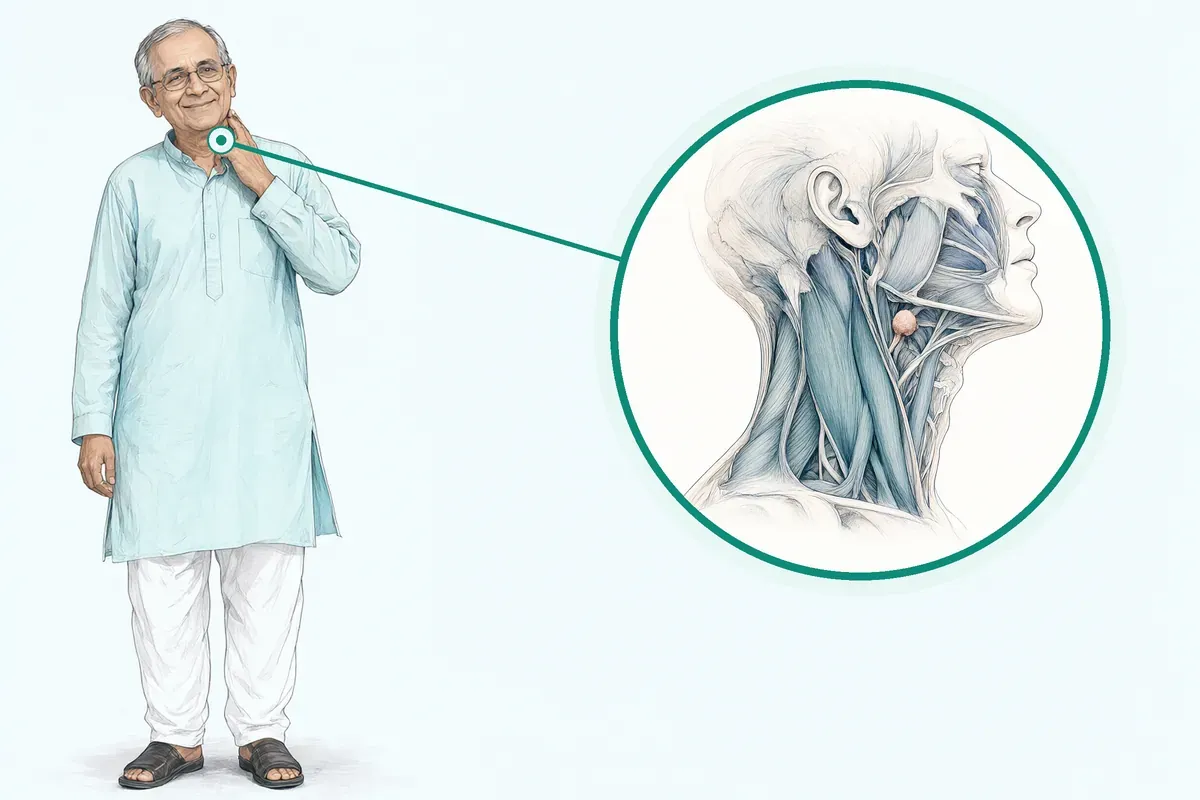
A lump you cannot ignore
You feel a lump in your neck and do not know what it means
A swelling in the neck, thyroid, or salivary gland can be harmless or serious. Waiting and wondering adds stress and delays treatment if it is needed.
-
Neck lump appears
You notice a swelling that does not go away after a few weeks.
-
Thyroid nodule found
A routine check or scan shows a nodule in your thyroid gland.
-
Salivary gland swelling
Pain or fullness near your jaw or under your tongue when you eat.
-
Voice or swallowing change
Hoarseness or difficulty swallowing that lasts more than two weeks.
-
Family history of cancer
Close relatives had head and neck cancer; you want screening.
Most head and neck cancers arise from the mucosal epithelium in the oral cavity, pharynx, and larynx.
Why Jaipur Hospital
You worry the lump could be cancer, what the treatment will cost, and how it will affect your work and family.
Your care plan
Your first steps with us
- 1 Call or visit OPD for an appointment
- 2 Consultation, examination, and needed scans in one visit
- 3 Multidisciplinary tumour board reviews your case
- 4 Receive a clear plan and cost estimate before you decide
How the evaluation is done
Your surgeon examines you, orders imaging or a biopsy if needed, and the tumour board agrees on a plan.
-
Ultrasound-Guided FNAC
A fine needle takes cells from a thyroid or neck node under ultrasound guidance for lab analysis.
-
Flexible Nasopharyngolaryngoscopy
A thin flexible scope examines the nose, throat, and voice box to see hidden areas.
-
Contrast-Enhanced CT/MRI Neck
Detailed cross-sectional scans show the size and spread of deep lesions for accurate staging.
-
Multidisciplinary Tumour Board
Surgical, radiation, and medical oncologists meet jointly to create a unified treatment plan.
Why patients trust us
- 1991 Serving Jaipur for 35 years
- NABH Accredited hospital
- 2 ENT (Ear, Nose and Throat) consultants
- 24×7 Emergency, ICU and ambulance
- 25 Cashless schemes and insurers
What research shows about evaluation and treatment
-
60% to 70% of thyroid biopsies are benign
In a large series, most thyroid nodules turned out not to be cancer after biopsy.
-
5% of thyroid biopsies are cancerous
A small minority of biopsied thyroid nodules are confirmed as cancer.
-
25% to 35% of thyroid biopsies are indeterminate
About one in four biopsies cannot give a clear answer and may need molecular testing or monitoring.
If it is left untreated
Without evaluation, a treatable cancer can grow and spread, making treatment more complex and reducing options. Early assessment gives you more choices and better outcomes.
Life after evaluation
Most people get a clear answer and a plan they understand, so they can move forward with confidence.
-
Know what you have
You receive a diagnosis or a clear reason why no treatment is needed right now.
-
Understand your options
Surgery, radiation, medicine, or watchful waiting are explained in plain words.
-
Plan your time and cost
You get a cost estimate and schedule before you commit to any treatment.
-
Return to daily routine
After a biopsy, most people resume normal activities the same day.
Frequently asked questions
Questions patients ask about head and neck tumours
Which problems are assessed under head and neck tumours?
In short
At Jaipur Hospital, the head and neck tumour service evaluates neck lumps, thyroid nodules, salivary gland masses, and performs cancer screening. The team also assesses lesions of the oral cavity, pharynx, larynx, nasal cavity, and paranasal sinuses. A multidisciplinary tumour board reviews complex cases to plan further care.
In detail
The evaluation covers a wide range of conditions because head and neck cancers arise from the mucosal epithelium of the upper aerodigestive tract, including the oral cavity, pharynx, and larynx. Thyroid nodules are common and most are benign, but a biopsy helps rule out cancer.
Salivary gland masses may be inflammatory or neoplastic. Risk factors such as tobacco, alcohol, and human papillomavirus (HPV) infection guide the clinical suspicion.
The service uses ultrasound-guided fine needle aspiration cytology (FNAC) for thyroid and neck nodes, flexible nasopharyngolaryngoscopy for direct visualisation, and contrast-enhanced CT or MRI for deep space staging.
A common belief
Many people think only visible neck swellings need checking.
What actually happens
However, early tumours in the throat or voice box may not cause a lump you can feel. They often present as voice change, swallowing difficulty, or ear pain. A flexible scope exam can find these hidden lesions.
Your next step at Jaipur Hospital
Your first step is a 30 to 45 minute outpatient consultation. The surgeon will examine you and may order imaging or a biopsy on the same day. Recovery from a biopsy is usually one week. The typical price range for evaluation is ₹2,000 to ₹15,000.
How will the doctor decide which tests I need?
In short
The doctor at Jaipur Hospital selects tests based on your symptoms, examination findings, and the suspected location of the problem. A neck lump or thyroid nodule usually leads to an ultrasound and ultrasound-guided FNAC. Throat or voice changes prompt a flexible nasopharyngolaryngoscopy. Deep or fixed masses need contrast-enhanced CT or MRI for staging.
In detail
Test choice follows clinical reasoning. Ultrasound-guided FNAC is the first-line test for thyroid nodules and accessible neck nodes because it is minimally invasive and gives a cytology diagnosis. Flexible nasopharyngolaryngoscopy provides direct visualisation of the upper aerodigestive tract mucosa where most cancers arise.
If the examination suggests a deep space lesion, submucosal extension, or nodal involvement beyond what the scope shows, cross-sectional imaging with contrast-enhanced CT or MRI is ordered.
The 2017 AJCC/UICC staging system incorporates HPV status for oropharyngeal cancers, so biopsy tissue may be tested for HPV. Molecular testing on indeterminate thyroid biopsies can reduce unnecessary surgery. The multidisciplinary tumour board reviews all results to recommend the next step.
A common belief
Patients often ask for a full-body scan first.
What actually happens
That is not needed and adds cost and radiation. A targeted approach — scope for the throat, ultrasound for the thyroid, CT or MRI only for deep extent — gives the right information faster and cheaper. The tumour board then uses all results to stage the disease accurately.
Your next step at Jaipur Hospital
Most tests are outpatient or daycare procedures. FNAC uses local anaesthesia and takes minutes; you go home the same day. CT or MRI may need a separate appointment. The typical evaluation cost range is ₹2,000 to ₹15,000. Your surgeon will explain which tests you need and why.
How soon should I expect improvement after the chosen treatment for head and neck tumours?
In short
Improvement after treatment for head and neck tumours depends on the type of treatment you receive. Jaipur Hospital provides outpatient biopsy with same-day recovery, while major surgery or chemoradiotherapy involves a longer healing period. Your surgeon will give a realistic timeline based on the specific plan agreed by the tumour board.
In detail
For a fine needle aspiration biopsy under local anaesthesia, you can resume normal activities the same day. The bandage stays on for about four hours and you should keep the area dry for 24 hours.
After major tumour resection, neck dissection, or reconstructive surgery, hospital stay is longer and recovery takes weeks. Swallowing, speech, and breathing may need rehabilitation. Chemoradiotherapy side effects such as fatigue, mucositis, and skin reaction peak during treatment and improve over several weeks after completion.
HPV-positive oropharyngeal cancers treated with radiotherapy plus cisplatin show high survival in studies, but functional recovery varies. The multidisciplinary team at Jaipur Hospital coordinates supportive care including nutrition, physiotherapy, and speech therapy to help you regain function.
A common belief
A common belief is that you bounce back immediately after any procedure.
What actually happens
In reality, major head and neck treatment affects vital functions like eating and talking, so recovery is gradual and supported by a team of therapists.
Your next step at Jaipur Hospital
Follow-up appointments are scheduled to monitor healing and manage side effects. You will receive guidance on wound care, diet modifications, and activity restrictions. Most patients return to light activity within days of biopsy and within weeks after major treatment. To understand the expected timeline for your case, book a consultation at Jaipur Hospital.
How does the term "head and neck tumours" relate to head and neck tumours?
In short
The terms "head and neck tumours" and "head and neck tumours" refer to the same group of conditions. The spelling difference is simply American English versus British or Indian English. Jaipur Hospital uses the Indian English spelling "tumours" in all communication and medical records.
In detail
Both spellings describe abnormal growths arising in the oral cavity, pharynx, larynx, thyroid, salivary glands, and other structures of the head and neck region. Most head and neck cancers are derived from the mucosal epithelium lining these areas.
The medical evaluation, staging, and treatment options are identical regardless of spelling. The American Thyroid Association guidelines and the AJCC/UICC staging system apply equally.
At Jaipur Hospital, the multidisciplinary tumour board evaluates neck lumps, thyroid nodules, salivary masses, and cancer screening using the same protocols whether the referral letter uses "tumour" or "tumour".
The techniques offered include ultrasound-guided FNAC, flexible nasopharyngolaryngoscopy, contrast-enhanced CT or MRI neck, and joint surgical, radiation, and medical oncology planning.
A common belief
Patients sometimes worry that the spelling indicates a different disease or severity.
What actually happens
It does not. Whether you read "tumour" or "tumour", the medical approach at Jaipur Hospital follows the same guidelines and tumour board process.
Your next step at Jaipur Hospital
You will see both spellings in online searches and international literature. Your reports and correspondence from Jaipur Hospital will use "tumour". This does not change the diagnosis, treatment, or follow-up. To have any neck lump or swelling evaluated, book a consultation at Jaipur Hospital.
What do the type, grade, and stage mean for head and neck tumours?
In short
Type, grade, and stage describe the cancer in different ways to guide treatment. Jaipur Hospital uses the 2017 AJCC/UICC staging system which includes HPV status for oropharyngeal cancers. The tumour board explains what each factor means for your care plan.
In detail
Type refers to the cell of origin, such as squamous cell carcinoma, adenocarcinoma, or thyroid cancer subtypes. Grade describes how abnormal the cells look under the microscope and how quickly they may grow.
Stage combines tumour size (T), lymph node involvement (N), and distant spread (M) into an overall category from I to IV. The 2017 AJCC/UICC system incorporates additional information relevant to HPV-positive disease, which has a better prognosis.
Early-stage cancers (Stage I or II) are often more amenable to surgical removal. Treatment is generally multimodal: surgery followed by chemoradiotherapy for oral cavity cancers, and primary chemoradiotherapy for pharynx and larynx cancers.
HPV-positive oropharyngeal carcinoma treated with radiotherapy plus cisplatin shows high survival in studies. The multidisciplinary tumour board at Jaipur Hospital integrates type, grade, stage, and HPV status to recommend the most appropriate sequence of surgery, radiation, and systemic therapy.
A common belief
Patients often confuse grade with stage.
What actually happens
Grade is a microscopic feature; stage is the whole-body extent. Both matter, but stage usually drives the main treatment decision. HPV-positive tumours have a different staging system and better outcomes.
Your next step at Jaipur Hospital
Your pathology report and imaging will be reviewed at the tumour board meeting. You will receive a clear explanation of your cancer type, grade, stage, and HPV status if relevant. This determines whether surgery, radiation, chemotherapy, or a combination is advised first. To understand what your specific type, grade, and stage mean for treatment, book a consultation at Jaipur Hospital.
How can I decide whether to seek advice about neck lump evaluation and FNAC?
In short
You should seek advice if you feel a lump in the neck that persists for more than two weeks, grows, is or that causes no pain is associated with voice change, difficulty swallowing or weight loss. At Jaipur Hospital, the ENT and head and neck surgery team evaluates neck lumps with clinical examination, ultrasound and ultrasound-guided fine needle aspiration cytology (FNAC) when indicated.
In detail
A neck lump in an adult is considered suspicious until proven otherwise. Common causes include reactive lymph nodes, thyroid nodules, salivary gland tumours and metastatic deposits from mucosal cancers. Ultrasound helps characterise the lump as solid, cystic or vascular.
FNAC provides a cytological diagnosis with minimal discomfort under local anaesthesia. Evidence shows most thyroid nodules are benign, but 5 percent of biopsies return malignant and 25 to 35 percent are indeterminate, sometimes requiring molecular testing or repeat biopsy.
Early evaluation allows timely staging and treatment planning if cancer is found. Delaying assessment can lead to upstaging and more extensive treatment.
A common belief
People often wait hoping a lump will disappear.
What actually happens
In adults, a persistent neck lump is taken seriously because it can be the first sign of a metastatic node or a primary tumour. Early FNAC gives a diagnosis without major surgery and guides the next steps.
Your next step at Jaipur Hospital
If you notice a persistent neck lump, book an OPD consultation at Jaipur Hospital. The doctor will examine you, order an ultrasound if needed and perform FNAC during the same visit if indicated. Results are usually available within a few days.
Could the problem affect hearing, balance, breathing, speech, or swallowing?
In short
Yes, head and neck tumours can affect hearing, balance, breathing, speech and swallowing depending on their location and size. At Jaipur Hospital, the evaluation includes assessing cranial nerve function, airway patency and swallowing safety before any treatment is planned.
In detail
Tumours in the nasopharynx can block the Eustachian tube causing hearing loss or middle ear effusion. Skull base involvement may affect cranial nerves controlling balance, facial movement, swallowing or tongue function.
Oropharyngeal and laryngeal tumours can narrow the airway, impair vocal cord mobility and cause aspiration. Oral cavity tumours may restrict tongue movement affecting speech articulation and swallowing. Large neck masses can compress the trachea or oesophagus.
Treatment itself such as surgery, radiotherapy or chemoradiotherapy can cause temporary or long-term changes in these functions. The multidisciplinary team aims to select approaches that preserve function while achieving disease control. Baseline assessment by speech-language pathologists and audiologists is often part of the workup.
A common belief
Patients often focus only on the tumour itself.
What actually happens
However, the location determines which functions are at risk. A nasopharyngeal mass may cause hearing loss before any throat symptom. A laryngeal tumour may threaten the airway. Understanding these risks early helps the team plan rehabilitation alongside cancer treatment.
Your next step at Jaipur Hospital
During your consultation at Jaipur Hospital, the surgeon will examine cranial nerves, perform flexible laryngoscopy and may refer you for swallowing assessment or audiometry. Any functional deficits are documented and factored into the treatment plan.
Which symptoms should prompt me to see a specialist?
In short
You should see a specialist at Jaipur Hospital if you notice a persistent neck lump, a swelling in the thyroid or salivary gland area, hoarseness lasting more than three weeks, difficulty swallowing, a sore throat that does not heal, unexplained ear pain, or a white or red patch in the mouth. These symptoms need proper evaluation even if they are not painful.
In detail
Most head and neck cancers start in the mucosal lining of the oral cavity, pharynx, and larynx. Tobacco and alcohol use are major risk factors for these cancers. HPV infection, especially HPV-16, is increasingly linked to oropharyngeal cancers.
Thyroid nodules are very common; studies show 60 to 70 percent of biopsies are benign and only about 5 percent are cancerous, but a specialist must confirm this. Salivary gland masses can be tumours or infections. Early assessment allows timely biopsy or imaging, which improves treatment options.
A common belief
People often ignore a lump that causes no pain or mild hoarseness, thinking it will go away.
What actually happens
Pain is not a reliable sign; many early cancers are comfortable. Waiting lets a treatable lesion advance. A quick clinic scope or ultrasound can clarify the cause within one visit.
Your next step at Jaipur Hospital
Do not wait for symptoms to become severe. Book a 30 to 45 minute consultation. The surgeon will take a history, examine your neck and throat, and may perform a flexible scope exam or order an ultrasound-guided FNAC. The typical cost range is ₹2,000 to ₹15,000.
How will the results change my care plan?
In short
Test results at Jaipur Hospital determine whether a lesion is benign, indeterminate, or malignant, and they define the stage if cancer is found. Benign thyroid nodules may only need monitoring. Indeterminate biopsies may lead to molecular testing or repeat biopsy. Cancer results trigger the multidisciplinary tumour board to create a joint surgical, radiation, and medical oncology plan.
In detail
The care pathway branches at each result. For thyroid nodules, about 60 to 70 percent of biopsies are benign, 5 percent malignant, and 25 to 35 percent indeterminate. Benign nodules are usually watched with serial ultrasounds.
Indeterminate cases may get molecular testing for gene mutations to guide surgery decisions. Malignant cytology leads to staging with CT or MRI and tumour board discussion.
For head and neck squamous cell cancer, HPV status from the biopsy changes prognosis and treatment; HPV-positive oropharyngeal cancers have better survival with radiotherapy plus cisplatin.
The tumour board considers tumour size, location, stage, HPV status, and your fitness to recommend surgery, radiotherapy, chemoradiotherapy, or a combination. Palliative surgery may be advised for symptom relief in advanced disease.
A common belief
A common worry is that any abnormal result means major surgery immediately.
What actually happens
In reality, most thyroid biopsies are benign and need only monitoring. Even indeterminate results do not equal cancer; molecular tests can avoid unnecessary operations. For cancer, the tumour board ensures you get the right combination of treatments, not just surgery alone.
Your next step at Jaipur Hospital
After results are ready, usually within a few days, you will meet the surgeon to discuss the plan. If surgery is needed, pre-operative assessment and consent follow. The typical evaluation cost range is ₹2,000 to ₹15,000; treatment costs are separate and will be estimated.
What should I do if symptoms persist or worsen after treatment for head and neck tumours?
In short
If symptoms persist or worsen after treatment for head and neck tumours, contact your care team at Jaipur Hospital without delay. New or increasing swelling, difficulty breathing or swallowing, bleeding, fever, or uncontrolled pain need prompt assessment. The hospital provides 24×7 emergency services for urgent concerns.
In detail
After biopsy, mild discomfort or bruising is common and usually settles with paracetamol and ice packs. However, signs of infection such as increasing redness, warmth, or pus at the site need medical review.
After major surgery or chemoradiotherapy, late effects can include fibrosis, hypothyroidism, or recurrence. Studies show that treatment-related adverse events vary by therapy; for example, hypothyroidism is common with pembrolizumab while fatigue is frequent with standard chemoradiation.
Regular surveillance with imaging and clinical examination is part of the follow-up protocol. The tumour board at Jaipur Hospital reviews any new findings and adjusts the management plan. Do not wait for the next scheduled visit if something feels wrong.
A common belief
Some patients wait for their next follow-up appointment hoping symptoms will settle.
What actually happens
Delaying can allow complications like infection or recurrence to progress. Early reporting leads to quicker intervention and better outcomes.
Your next step at Jaipur Hospital
Keep the emergency numbers handy: 0141-2551500, 0141-2554139, +91-7414-001-001. For non-urgent concerns, call during OPD hours or email [email protected]. Your attendant should also know these contacts. To arrange a review or discuss any worrying symptom, book a consultation at Jaipur Hospital.
FAQ library
Questions and answers about head and neck tumours
When you contact us
Get your assessment and plan
Contact Jaipur Hospital for an OPD consultation with an ENT surgeon, in-house tests, a multidisciplinary review, and a cost estimate before you decide.
- A consultation with an ENT surgeon in the OPD
- Your scans and reports reviewed, with tests done in-house if you need them (laboratory, X-ray and imaging)
- Your options explained in plain words, including whether you need surgery at all
- A cost estimate before you decide
- Help with cashless treatment under RGHS, MAA Yojana, CGHS and empanelled insurers and TPAs
- Follow-up visits after your treatment
Overview
Head and Neck Tumours: what to know
What head and neck tumours are and how they develop
- 60 to 70 percent Benign
- about 5 percent Cancerous
- 25 to 35 percent Indeterminate
Head and neck tumours are abnormal growths that can appear in:
- The thyroid gland
- Salivary glands
- Lymph nodes of the neck
- The lining of the mouth, throat and voice box
Most of these cancers start in the thin layer of cells that line the inside of the mouth, pharynx and larynx. A thyroid nodule is a lump that grows within the thyroid gland at the front of the neck. Many thyroid nodules are found by chance during a routine check or an imaging test for another reason.
In studies, most thyroid nodules turn out not to be cancer. At one large centre, 60 to 70 percent of thyroid biopsies came back benign, about 5 percent were cancerous, and the remaining 25 to 35 percent were indeterminate, meaning the result was not clearly benign or malignant.
Some head and neck squamous cell cancers are linked to human papillomavirus (HPV), especially HPV type 16. HPV-positive tumours behave differently from HPV-negative ones and are staged using a separate system that takes this biology into account.
The stage of a tumour describes how large it is and whether it has spread to nearby lymph nodes or distant parts of the body. Early-stage cancers (Stage I or II) are often smaller and have not spread far.
Symptoms and warning signs that need urgent care the same day
- Sudden difficulty breathing
- Noisy breathing (stridor)
- Feeling airway is narrowing
- Heavy bleeding from mouth or throat
- Cannot swallow saliva
A lump in the neck that does not go away after two to three weeks is the most common reason people seek evaluation. Other symptoms depend on the site of the growth.
You may notice:
- A swelling or pain in the throat
- Difficulty swallowing
- A change in your voice that lasts more than two weeks
- A sore in the mouth that does not heal
- Persistent ear pain on one side
A lump in the front of the neck that moves when you swallow may be a thyroid nodule.
Some symptoms suggest a more urgent problem. Sudden difficulty breathing, noisy breathing (stridor), or a feeling that the airway is narrowing need immediate attention at the emergency department. Heavy bleeding from the mouth or throat, or an inability to swallow your own saliva, also require same-day care.
If you have any of these, go to the nearest emergency department or call for an ambulance without waiting for an outpatient appointment.
Causes and who is at higher risk
- Tobacco and alcohol
- Main causes of oral cavity and larynx cancers; risk higher when both are used
- HPV infection
- Principal cause of rising oropharyngeal cancers, including in younger people
- Other factors
- Sharp teeth, poor oral hygiene, occupational dusts, childhood radiation, iodine deficiency
Tobacco use in any form — smoking cigarettes, bidis, or chewing tobacco — and heavy alcohol consumption are the main causes of cancers of the oral cavity and larynx. The risk is higher when both habits are present together.
Infection with human papillomavirus, mainly HPV-16, is now the principal cause of a rising subset of oropharyngeal (throat) cancers in many parts of the world, including India. HPV-related throat cancers are increasing in younger people who may not have a history of heavy tobacco or alcohol use.
Other factors that can raise risk include:
- Long-standing irritation from sharp teeth or ill-fitting dentures
- Poor oral hygiene
- Occupational exposure to certain dusts or chemicals
For thyroid nodules, the exact cause is not always known, but radiation exposure to the head, neck or chest in childhood and iodine deficiency in the diet can contribute. Age is a factor: most head and neck cancers are diagnosed after age 50, though HPV-related throat cancers can appear earlier.
Men are affected more often than women, but the gap is narrowing. A family history of thyroid disease or certain genetic syndromes may also increase risk for thyroid nodules.
How head and neck tumours are diagnosed: examination and tests
- History and examination Feel neck, examine mouth and throat, flexible scope through nose
- Ultrasound and FNAC Real-time imaging, local anaesthetic, rapid on-site evaluation
- Molecular testing if indeterminate Gene mutations or fusions guide surgery decision
- CT or MRI for staging Cross-sectional imaging for deeper lesions or known cancer
- Multidisciplinary tumour board Surgical, radiation and medical oncologists agree on joint plan
The first step is a detailed history and a physical examination. Your doctor will feel the neck for lumps, examine the mouth and throat, and may pass a thin flexible tube with a light and camera through the nose to see the back of the nose, throat and voice box. This is called flexible nasopharyngolaryngoscopy and gives a complete view of the upper aerodigestive tract.
If a thyroid nodule or a neck node is felt, an ultrasound scan is usually done next. Ultrasound-guided fine needle aspiration cytology (FNAC) uses a thin needle to take a small sample of cells from the nodule or node under real-time imaging. Local anaesthetic is given to numb the skin before the needle is inserted.
Most people do not feel pain during the procedure. The sample is sent to the laboratory for examination. Rapid on-site evaluation (ROSE) may be used to check that enough cells have been collected before you leave. If the sample is inadequate, the doctor may take another pass.
If the biopsy result is indeterminate, molecular testing for gene mutations or fusions can help decide whether surgery is needed or the nodule can be watched. If the biopsy is unlikely to be cancer, your doctor will continue to monitor the nodule with repeat ultrasounds.
For deeper lesions or to assess the extent of a known cancer, contrast-enhanced CT or MRI of the neck is used for cross-sectional staging. All confirmed cancers are discussed at a multidisciplinary tumour board where surgical, radiation and medical oncologists agree on a joint plan.
Non-surgical treatment options and when surgery is advised
Treatment depends on the type, site, stage and your overall health. For many early-stage cancers of the oral cavity, surgery to remove the tumour with a margin of healthy tissue is the primary approach, often followed by radiation or chemoradiation.
For cancers of the pharynx and larynx, the standard primary treatment is radiation combined with chemotherapy (chemoradiation) to preserve the organ and its function. In HPV-positive oropharyngeal cancer, radiotherapy plus cisplatin is the standard of care for eligible patients and is associated with high survival rates.
When chemotherapy cannot be given due to other health problems, the EGFR antibody cetuximab may be used with radiation in HPV-negative disease. For recurrent or metastatic disease that has progressed after platinum-based chemotherapy, immune checkpoint inhibitors such as pembrolizumab are approved options.
Surgery is advised when a confirmed diagnosis has been made through imaging and biopsy, and the tumour size, location and stage make it removable. Early-stage cancers (Stage I or II) are often more amenable to surgical removal.
Surgery may also be recommended to relieve symptoms such as difficulty swallowing, breathing problems or severe pain, even if the cancer cannot be completely removed. If previous treatment with chemotherapy or radiation has not controlled the tumour, surgery may be considered to remove remaining disease. Your surgeon will assess whether you are fit enough to tolerate the operation. The specific type of cancer — for example squamous cell carcinoma or adenocarcinoma — also influences the decision.
Surgical procedures can include:
- Tumour resection
- Neck dissection to remove affected lymph nodes
- Laryngectomy
- Mandibulectomy
- Maxillectomy
- Reconstructive surgery to restore appearance and function
Endoscopic approaches through the mouth or nose may be used for selected throat or nasal cavity tumours and can lead to quicker recovery and less postoperative pain. Your surgeon will explain which approach suits your situation.
Preparing for head and neck tumour surgery
Do
- Sign consent form
- Blood tests, ECG, chest X-ray
- Tell doctor about blood thinners
- Bring medicines, reports, insurance card, questions
Your surgeon will explain the operation and ask you to sign a consent form. Before surgery you will have blood tests, an electrocardiogram and a chest X-ray to check that you are fit for anaesthesia.
If you take blood thinners, tell your doctor; they may want you to stop them a few days before the biopsy or operation to lower the chance of bleeding. You will usually be asked not to eat or drink for six to eight hours before the procedure.
Bring your regular medicines, any imaging films or reports, your insurance card and a list of questions. An attendant should plan to stay with you on the day of surgery and for the first night if you are admitted.
How head and neck tumour surgery is done
The exact operation depends on the site and stage of the tumour. Your surgeon will advise which approach suits you. Common options include tumour resection, where the growth is removed with a margin of healthy tissue, and neck dissection to remove lymph nodes that may contain cancer.
For cancers of the larynx, a partial or total laryngectomy may be needed; this can affect speech and breathing. When the jaw bones are involved, a mandibulectomy or maxillectomy may be performed. Reconstructive surgery is often done at the same time to restore appearance and function.
Endoscopic techniques through the nose or mouth can be used for some throat or nasal tumours and may allow quicker recovery. On the day of surgery you will change into a gown, an intravenous line will be placed, and you will be taken to the modular operation theatre.
General anaesthesia is used for major resections; local anaesthesia may be used for a biopsy. The operation time varies with the extent of surgery. After the procedure you will be moved to the recovery area and then to a ward or the intensive care unit for monitoring.
Risks and possible complications of head and neck tumour surgery
All operations carry risks. Bleeding and infection can occur at the wound site. Nerve injury may lead to weakness of the face, shoulder or tongue, depending on the area operated. Swallowing difficulty, voice change or breathing problems can happen, especially after laryngectomy or extensive resection. A fistula (leak of saliva) may form in the neck and usually heals with dressings.
Flap failure is a risk when reconstructive tissue is transferred. In studies of systemic therapy for advanced disease, common side effects included fatigue, hypothyroidism and skin reactions; severe (grade 3 or worse) treatment-related adverse events occurred in fewer patients receiving pembrolizumab than with standard chemotherapy. Treatment-related deaths have been reported in clinical trials of immunotherapy and targeted therapy.
In a trial comparing cetuximab with cisplatin given with radiotherapy, acute moderate to severe toxicity was seen in about 77% of patients in each arm, and late moderate to severe toxicity in about 16% to 20%. Your surgical team will discuss the risks that apply to your operation and the steps taken to reduce them.
Recovery and aftercare after head and neck tumour surgery
- After biopsy Resume normal activities same day; keep dressing on for four hours
- After major surgery Hospital stay of several days; drains, feeding tube or tracheostomy may be in place
- Diet progression Start with sips of water, then soft diet as swallowing returns
- Full recovery Several weeks; surgeon guides return to work and normal activity
After a biopsy you can usually resume normal activities the same day. Keep the dressing on for four hours and do not let the area get wet for 24 hours. If you have pain once the anaesthesia wears off, paracetamol or an ice pack for 20 minutes at a time can help.
After major surgery you will stay in hospital for several days. Drains, a feeding tube or a tracheostomy tube may be in place; nurses will teach you and your attendant how to care for them. You will start with sips of water and progress to a soft diet as swallowing returns.
Physiotherapy and speech therapy begin early to help with shoulder movement, swallowing and voice. Before discharge you will receive written instructions on wound care, medicines and follow-up dates. Call the hospital if you develop fever, increasing neck swelling, redness or discharge from the wound, difficulty breathing, or if the feeding tube or tracheostomy tube becomes blocked or falls out.
Full recovery can take several weeks; your surgeon will guide you on when to return to work and normal activity.
Results of head and neck tumour surgery
- Median overall survival 8.4 months with pembrolizumab Recurrent or metastatic disease
- Median progression-free survival 18.3 months with lenvatinib Radioactive iodine-refractory thyroid cancer
Surgery aims to remove the cancer completely. In early-stage oral cavity cancers (Stage I or II), surgery alone often achieves good control. For locally advanced disease, treatment is usually multimodal: surgery followed by chemoradiotherapy for oral cavity cancers, and primary chemoradiotherapy for pharynx and larynx cancers.
In studies of HPV-positive oropharyngeal carcinoma treated with radiotherapy plus cisplatin, five-year overall survival was about 85% and five-year progression-free survival about 78%. Radiotherapy plus cetuximab showed inferior overall survival and progression-free survival compared with cisplatin in the same setting.
For recurrent or metastatic head and neck squamous cell carcinoma, pembrolizumab improved median overall survival to 8.4 months versus 6.9 months with standard chemotherapy in one large trial. In radioactive iodine-refractory thyroid cancer, lenvatinib prolonged median progression-free survival to 18.3 months compared with 3.6 months with placebo.
These figures come from groups of patients in clinical trials; your own outcome depends on the tumour type, stage, HPV status and your general health. Your multidisciplinary tumour board will discuss the expected results for your specific case.
Cost and insurance for head and neck tumour care in Jaipur
The typical price range for evaluation and biopsy at Jaipur Hospital is ₹2,000 to ₹15,000. The final cost depends on the type of investigation, whether imaging or endoscopy is needed, and if a biopsy is performed. Major surgery for head and neck cancer in India typically costs between ₹1,50,000 and ₹5,00,000.
Studies show that out-of-pocket expenditure for head and neck cancer patients averages around ₹37,845, with radiotherapy alone costing ₹31,000 to ₹42,000 depending on the technique, and additional indirect costs such as travel and lodging averaging ₹18,000 to ₹22,000. Surgery followed by adjuvant therapy incurs higher drug and consumable expenses.
Jaipur Hospital accepts:
- RGHS
- MAA Yojana
- CGHS
- A panel of private insurers and TPAs
The hospital has a 24-hour in-house pharmacy and diagnostic laboratory. Please ask the admissions team for an estimate based on your planned treatment.