

General & Laparoscopic Surgery · Jaipur Hospital
Colorectal Cancer Surgery in Jaipur
Blood in your stool or a lump that causes no pain can frighten you. Jaipur Hospital offers a clear assessment and a plan.
- Serving Jaipur since 1991 (35 years)
- NABH accredited
- 24×7 emergency & ICU
- Cashless: MAA Yojana + 32 insurers
- Operation time
- 3 to 5 hours
- Anaesthesia
- General anaesthesia
- Recovery
- Return to light activity in 4 to 6 weeks
- Price
- ₹2,50,000 to ₹5,50,000typical range in India; ask us for an estimate
A diagnosis you did not expect
A cancer diagnosis, and no clear plan yet
You may feel shock, fear, or anger. Work, family duties, and money all press on you at once. Many people are unsure which treatment comes first. Surgery may be only one part of your care, alongside other treatment.
-
The wait for answers
Reports, scans and second opinions can take time, and the delay adds to your worry.
-
Fear of the operation
You may worry about anaesthesia, pain after surgery, and how long you will be away from work.
-
Cost and family duties
You may ask who will care for the home, and how the hospital bill will be paid.
-
Changes to your body
Having a colectomy may change the way stool leaves your body, and that takes getting used to.
Bowel cancer means cancer that starts in the colon or the back passage, and it is also called colorectal cancer.
Why Jaipur Hospital
You are worried that the operation will be painful, that you will be away from work, and that the cost will fall on your family.
Your care plan
Your first steps with us
- 1 Call or email to book an OPD appointment.
- 2 Meet a general and laparoscopic surgeon with your reports.
- 3 Review your options, cost estimate and insurance cover.
- 4 Plan surgery, recovery and follow-up visits.
Insurance and schemes
How cashless works
Cashless treatment under MAA Yojana and with 32 insurers.
-
Tell us when you book
Say you are insured or have a scheme card, and send a photo of the card on WhatsApp so our insurance desk can check it in advance.
-
We get the approval
Once your doctor advises admission, the insurance desk sends the pre-authorisation request to your insurer or TPA; for planned surgery, approval can come before you are admitted.
-
Settled at discharge
The approved amount is settled between the insurer and the hospital; you pay only what the policy does not cover.
How the operation is done
Surgery removes the part of the bowel with cancer and the nearby lymph nodes. Your surgeon may join the healthy ends, or may need to make an ostomy. The type of operation depends on where the cancer sits.
-
Open Colectomy
A larger cut in the abdomen, often chosen for bulky or advanced tumours, so the surgeon can see and reach the area.
-
Laparoscopic Colectomy
Keyhole surgery through a few small cuts, using a camera, for some early stage cancers.
-
Transanal TME (TaTME)
A bottom-up approach through the back passage, for low rectal tumours close to the anal canal.
Why patients trust us
- 1991 Serving Jaipur for 35 years
- NABH Accredited hospital
- 3 General & Laparoscopic Surgery consultants
- 24×7 Emergency, ICU and ambulance
- 32 Cashless insurers, plus MAA Yojana
What research shows about this treatment
-
11.3 percent
Conversion from keyhole to open surgery happened in 11.3 percent of patients in one trial.
-
5 percent
At three years, the cancer came back in the same area in 5 percent of patients in both groups.
-
87 to 92 percent
Complete removal of the tissue around the rectum was achieved in 87 to 92 percent of patients across the two groups.
If it is left untreated
If cancer in the bowel is left untreated, it can spread to other organs and treatment becomes more complex. A colectomy is major surgery, and there is a risk of problems after any operation, such as infection, bleeding, or a leak where the bowel is joined.
Life after treatment
Most people go home about a week after surgery and return to light activity in 4 to 6 weeks. You will have follow-up visits to check how you are recovering.
-
Eating again
You usually eat and drink soon after surgery, with low-fibre food for the first month.
-
Moving each day
Most people sit up within a day and walk a little more each day.
-
Help at home
You will need help at home at first, and a dietitian can advise you and your family.
-
Follow-up visits
Regular appointments check your recovery and give you time to raise any concerns.
Meet the team
Your general & laparoscopic surgery doctors
Explore our general and laparoscopic surgery department in Jaipur: every treatment, the doctors and what to expect at your visit.
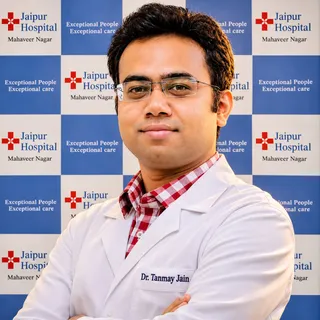
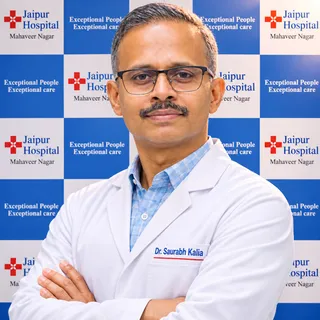

Frequently asked questions
Questions patients ask about colorectal cancer surgery
What does colorectal cancer surgery involve?
In short
Colorectal cancer surgery at Jaipur Hospital removes the part of the colon or rectum that contains cancer along with nearby lymph nodes. The operation takes three to five hours under general anaesthesia. You usually stay in hospital for five to eight nights.
In detail
The surgeon may use an open colectomy with a larger incision for advanced or bulky tumours, or a laparoscopic colectomy with several small cuts for early-stage disease. For low rectal tumours, a transanal total mesorectal excision (TaTME) may be chosen.
In studies, laparoscopic surgery resulted in similar safety and resection margins to open surgery, though operative time was longer. The surgeon rejoins the healthy ends of the bowel when possible; if not, a stoma is created. The typical cost range in India is ₹2,50,000 to ₹5,50,000.
A common belief
Many people think keyhole surgery is always used, but open surgery is still needed for bulky or advanced tumours.
What actually happens
In studies, laparoscopic and open approaches gave similar safety and margins, though keyhole took longer.
Your next step at Jaipur Hospital
Your surgical team will explain which technique suits your tumour location and stage. You will have pre-operative tests and a fitness review before a date is set. After discharge, light activity returns in four to six weeks.
Which tests and scans do I need before colorectal cancer surgery?
In short
Before colorectal cancer surgery at Jaipur Hospital you need a colonoscopy with biopsy to confirm the diagnosis, a CT scan of the chest, abdomen and pelvis to check for spread, and for rectal cancer an MRI of the pelvis to assess the tumour depth and mesorectal fascia. Blood tests include full blood count, kidney and liver function, clotting screen and carcinoembryonic antigen. The CT and MRI are done at an imaging centre outside the hospital; our team reviews the reports.
In detail
The colonoscopy shows the exact location and allows biopsy. The CT scan looks for metastases in the liver, lungs and lymph nodes.
For rectal cancer, MRI is the standard for local staging because it shows the relationship of the tumour to the circumferential resection margin and helps decide if pre-operative radiotherapy is needed.
In studies, patients with rectal cancer within fifteen centimetres of the anal verge had MRI staging. Blood tests assess your fitness for general anaesthesia and major surgery. A multidisciplinary meeting reviews all imaging and pathology before the surgical plan is finalised.
A common belief
The CT and MRI are not done at Jaipur Hospital because we do not have a CT or MRI scanner.
What actually happens
You have them at an outside imaging centre and bring the reports to us. We review the images and plan the surgery based on those results.
Your next step at Jaipur Hospital
Your surgeon will give you a list of required tests. You can have the CT and MRI at any recognised imaging centre and bring the reports and films to your appointment.
How painful is colorectal cancer surgery and the early recovery?
In short
Colorectal cancer surgery at Jaipur Hospital is a major operation and you will have pain afterwards, especially in the first week. Pain is managed with patient-controlled analgesia through a drip or an epidural pump for the first one to two days. After that you switch to regular oral painkillers. The nurses adjust the doses so you can move, breathe deeply and cough comfortably.
In detail
Immediately after surgery you may have a PCA drip that you control or an epidural catheter giving continuous pain relief. Fine tubes may also be placed near the wound to deliver local anaesthetic. Pain scores are checked regularly.
In studies, pain is expected for the first week or so and painkillers works well when taken regularly. You will have painkillers to take home with clear instructions on timing and dose. You should contact the doctor if pain persists or worsens.
The type of surgery, open or laparoscopic, influences the wound size and pain level; laparoscopic wounds are smaller but internal pain from the bowel handling is similar.
A common belief
Some people expect no pain after keyhole surgery.
What actually happens
The cuts are smaller but the bowel is still handled inside, so you still need strong pain relief for a few days. Taking painkillers regularly works better than waiting until it hurts badly.
Your next step at Jaipur Hospital
Before discharge the nurse gives you a painkiller schedule and wound care advice. You continue regular pain relief at home for the first week or two, then reduce as you feel able.
How long does recovery usually take after colorectal cancer surgery?
In short
Recovery after colorectal cancer surgery usually takes 4 to 6 weeks to return to light activity. You stay in hospital for 5 to 8 nights. Full recovery of energy and bowel function can take several weeks to a few months. Jaipur Hospital supports you through each stage.
In detail
Evidence shows that after a big operation you might wake up in the ICU or high dependency unit. Most people go home about a week after surgery. In studies, recovery was improved after laparoscopic surgery compared with open surgery.
You will be on a liquid or soft diet for a few days. Nurses and physiotherapists help you move around as soon as possible. You may be sitting in a chair within 12 hours and walking along the corridor within a few days. It is normal to feel very tired for several weeks and sometimes months.
A common belief
Many expect to bounce back in two weeks.
What actually happens
Studies show fatigue often lasts months, and bowel habits can take time to settle, especially after low rectal surgery.
Your next step at Jaipur Hospital
At home, build up activity gradually: walk around the house a bit more each day, then progress to walking outside. Avoid heavy lifting for 6 weeks. Follow the low-fibre diet advice for the first month. Take painkillers regularly as instructed. Contact your doctor if pain worsens or you develop fever, wound redness, or vomiting. Follow-up appointments check your recovery.
Could I need part of my bowel removed during colorectal cancer surgery?
In short
Yes. Colorectal cancer surgery at Jaipur Hospital involves removing the segment of colon or rectum that contains the cancer along with nearby lymph nodes. The amount removed depends on tumour location and spread. The surgeon then rejoins the healthy ends (anastomosis) whenever possible.
In detail
A partial colectomy removes the affected section; a total colectomy removes the entire colon. For rectal cancer, low anterior resection or abdominoperineal resection may be needed.
In studies, low anterior resection was done in about 77 percent of rectal cases and abdominoperineal resection in 23 percent. If the join is unsafe due to inflammation, poor blood supply or infection risk, a temporary or long-term stoma (ileostomy or colostomy) is created. The stoma nurse provides training and support.
A common belief
Some patients expect the whole colon to be removed.
What actually happens
Evidence shows most operations are partial colectomies or low anterior resections. Stoma rates depend on tumour height and intraoperative findings, not on patient preference alone.
Your next step at Jaipur Hospital
The surgeon explains the planned resection and stoma possibility at the pre-operative visit. You sign consent for the specific procedure and for stoma formation if required. After surgery the team monitors bowel function and stoma output. Follow-up includes dietitian and stoma nurse review. To discuss the likely extent of resection for your case, book a consultation at Jaipur Hospital.
How will the surgeon decide whether an operation is necessary for colorectal cancer?
In short
The surgeon at Jaipur Hospital decides on surgery based on the biopsy result, the cancer stage from scans, your fitness for anaesthesia, and whether the tumour can be removed with clear margins. Most colon cancers that have not spread are treated with surgery first.
In detail
A multidisciplinary team reviews the case. They check the biopsy confirms cancer, staging scans (CT, MRI for rectal cancer) show no distant spread, and the tumour is resectable.
Your heart, lung, and general health are assessed to see if you can tolerate major surgery and general anaesthesia. For rectal cancer, radiotherapy or chemoradiotherapy may be given before surgery to shrink the tumour.
If the cancer is stage IV with uncontrolled spread, surgery may not be offered unless it relieves a blockage. The team discusses the plan with you and your family.
A common belief
Some patients think every tumour must be operated on immediately.
What actually happens
In rectal cancer, pre-operative radiotherapy often comes first.
Your next step at Jaipur Hospital
You will have a pre-operative assessment with blood tests, ECG, and anaesthesia review. The surgeon explains the operation, risks, and likely need for a stoma.
Why might my doctor recommend colorectal cancer surgery?
In short
Your doctor may recommend colorectal cancer surgery at Jaipur Hospital to remove a tumour in the colon or rectum that has not spread to distant organs. Surgery is the main treatment for localised disease and aims to take out the cancer with a margin of healthy tissue and the related lymph nodes. It may be the only treatment needed for early stage cancer.
In detail
Surgery is advised when the cancer is confined to the bowel wall or nearby lymph nodes and can be removed completely. For colon cancer that has not spread, most people have surgery first.
For rectal cancer, radiotherapy or chemotherapy may be given before surgery to shrink the tumour. The decision depends on whether the cancer is in the colon or rectum, its stage, and your overall fitness for anaesthesia.
In studies, perioperative chemotherapy combined with surgery improved five-year overall survival compared with surgery alone for some stages. Your surgeon will explain how the stage and position of your tumour guide the recommendation.
A common belief
Some people think chemotherapy or radiotherapy can replace surgery.
What actually happens
For localised colon cancer, surgery is usually the first and most important treatment. For rectal cancer, you may have radiotherapy or chemotherapy first, but surgery is still needed to remove the tumour.
Your next step at Jaipur Hospital
You will have tests to confirm the stage and check your fitness for surgery. The surgical team discusses the findings with you and outlines the plan, including whether you need treatment before the operation.
How should I prepare in the days before colorectal cancer surgery?
In short
In the days before colorectal cancer surgery at Jaipur Hospital you follow a clear liquid diet the day before the operation and take the prescribed bowel preparation to clean the colon. You stop vitamin E, multivitamins, herbal remedies and other dietary supplements seven days before. You stop NSAIDs such as ibuprofen and naproxen two days before. You do not shave or wax the abdominal area from two days before. You tell the team about all medicines you take, including aspirin, and follow their specific instructions.
In detail
Bowel preparation reduces the bacterial load in the colon and lowers the risk of infection if the bowel is opened. The clear liquid diet and the laxative mixture empty the bowel. Stopping supplements and NSAIDs reduces bleeding risk.
Avoiding shaving prevents skin micro-cuts that can become infected. You shower with four percent chlorhexidine gluconate skin cleanser the night before and the morning of surgery. On the day of surgery you wear loose-fitting trousers and lace-up shoes. You remove all jewellery and metal objects.
If you are menstruating you use a sanitary pad instead of a tampon. You take only the medicines the care team has approved.
A common belief
Many people think they can eat normally until midnight.
What actually happens
For bowel surgery you need a clear liquid diet the whole day before and a full bowel preparation. Also, do not shave the abdomen yourself; it increases infection risk. The hospital team will give you the exact schedule.
Your next step at Jaipur Hospital
Your surgeon and anaesthetist will give you a written instruction sheet with the exact timing for stopping food, drink and each medicine. Follow it closely.
What are the common side effects and the less common serious complications of colorectal cancer surgery?
In short
Common side effects after colorectal cancer surgery include pain at the wound site, tiredness, and changes in bowel habit such as loose motions or constipation. You may also have a temporary catheter or wound drain. Jaipur Hospital monitors these closely during your stay.
In detail
Evidence shows that after any bowel cancer operation there is a risk of problems or complications. Possible problems include a leak where the surgeon has joined the ends of the colon together, or the bowel not working properly.
Other possible problems include infection, blood clots and bleeding. In studies, laparoscopic surgery resulted in less blood loss than open surgery. Conversion from laparoscopic to open surgery occurred in about 9 to 11 percent of patients in studies. The surgical team discusses these risks with you before the operation.
A common belief
Many people think keyhole surgery removes all risk.
What actually happens
Studies show conversion to open surgery happens in about one in ten cases, and leak rates are similar between open and laparoscopic approaches.
Your next step at Jaipur Hospital
You will stay in hospital for 5 to 8 nights. Before discharge, nurses explain wound care and give painkillers to take home. Contact your surgeon if you develop fever, increasing pain, wound redness, or if you cannot pass flatus or stool. Follow-up appointments are arranged to check recovery.
Which symptoms are expected after colorectal cancer surgery, and which need urgent medical attention?
In short
After colorectal cancer surgery at Jaipur Hospital, expected symptoms include wound discomfort, tiredness, irregular bowel movements, bloating and occasional nausea. These usually improve over weeks. Urgent signs are fever above 38 degrees Celsius, severe abdominal pain, wound redness or pus, heavy rectal bleeding, vomiting, inability to pass flatus or stool, leg swelling or sudden breathlessness.
In detail
The bowel join (anastomosis) can leak in a small number of cases, causing severe pain, fever and sepsis; this needs immediate review.
Blood clots in the leg (deep vein thrombosis) may show as calf swelling and pain; a clot travelling to the lung causes sudden breathlessness. Infection at the wound or inside the abdomen needs antibiotics or drainage.
The team gives written guidance on when to call the hospital or attend the emergency department. Early reporting prevents serious deterioration.
A common belief
Patients often dismiss fever or worsening pain as part of healing.
What actually happens
Evidence shows anastomotic leak and blood clots are time-critical; delay increases mortality. The hospital gives a clear red-flag list at discharge.
Your next step at Jaipur Hospital
Before discharge you receive a contact number for the surgical team and the 24-hour emergency department at Jaipur Hospital. Keep the discharge summary and medicine list handy. If any urgent symptom appears, do not wait for the next clinic visit. To learn the full symptom checklist, book a consultation at Jaipur Hospital.
FAQ library
Questions and answers about colorectal cancer surgery
When you contact us
What you get when you contact us
Call or email Jaipur Hospital to meet a specialist team and decide your next step with a clear plan.
- A consultation with a general and laparoscopic surgeon in the OPD
- Your scans and reports reviewed, with tests done in-house if you need them (laboratory, X-ray and imaging)
- Your options explained in plain words, including whether you need surgery at all
- A cost estimate before you decide
- Help with cashless treatment under MAA Yojana and empanelled insurers and TPAs
- Follow-up visits after your treatment
Overview
Colorectal Cancer Surgery: what to know
What colorectal cancer is and what surgery removes
Colorectal cancer starts in the colon or rectum. Surgery removes the cancerous part and joins the healthy ends, taking 3 to 5 hours under general anaesthesia. You usually stay in hospital for 5 to 8 nights.
- Colectomy
- Removes part or all of the colon
- Total colectomy
- Removes the entire colon
- Partial colectomy
- Removes only the affected sections
- Total mesorectal excision
- Removes rectum with surrounding tissue and lymph nodes as one block
Your colon is the main part of your large intestine. Bowel cancer is cancer that starts in the colon or the back passage, which is also called the rectum. Another name for it is colorectal cancer.
A colectomy is an operation to remove part or all of your colon.
It may remove:
- A few sections
- The whole colon
- The colon and the rectum
A total colectomy removes the entire colon. A partial colectomy removes only the affected sections. There are different types of partial colectomy, and your surgeon will explain which one fits your cancer.
In colorectal cancer surgery, the surgeon removes the part of the colon that holds the cancer and then joins the healthy ends back together. When the cancer is in the rectum, the surgeon also removes the tissue and lymph nodes around it as one block. This is called total mesorectal excision, and the team checks that the block is complete.
A colectomy is major surgery, and it is done under general anaesthesia. At Jaipur Hospital, the operation usually takes 3 to 5 hours. You will usually stay in hospital for 5 to 8 nights.
Symptoms of colorectal cancer and warning signs that need same-day care
After surgery, warning signs needing same-day care include a leak at the join, bowel blockage, infection, bleeding or blood clots. Pain in the first week is normal and managed with regular painkillers. Contact your surgeon or nurse about any symptom you are unsure about.
- Leak at the join Where bowel ends were joined
- Bowel not working Stops working properly
- Infection Any sign of infection
- Bleeding Unexpected bleeding
- Blood clots Signs of clots in legs or lungs
Some conditions of the colon, such as colon cancer, can affect how long you live. Others, such as diverticulitis, cause pain but are not life-threatening.
If part or all of your colon is removed, the way waste leaves your body can change. Your surgical team will explain what to expect and what is normal for you.
Some warning signs need care the same day.
After bowel cancer surgery, these include:
- A leak where the bowel ends were joined
- A bowel that stops working properly
- Infection
- Bleeding
- Blood clots
There is a risk of problems after any operation for bowel cancer.
Pain in the first week or so is normal after a big operation. Your doctor and nurses will give you painkillers. Tell them as soon as you feel pain. Painkillers work better when you take them regularly.
Call your surgeon or nurse about any symptom you are unsure about. You will also have follow-up appointments to check your recovery and to raise anything that worries you.
Causes of colorectal cancer and who is at higher risk
Surgery treats colon cancer, severe inflammatory bowel disease and inherited conditions like Lynch syndrome. A preventive colectomy may lower risk if you have Lynch syndrome or familial adenomatous polyposis. Severe bowel inflammation can damage the colon over time.
- Inherited conditions
- Lynch syndrome and familial adenomatous polyposis raise risk
- Severe inflammatory bowel disease
- Long-term inflammation can damage the colon
- Earliest stage cancer
- Limited to the lining of the colon
At the earliest stage, the cancer is limited to the lining of the colon.
Doctors do colectomies to treat:
- Colon cancer
- Severe inflammatory bowel disease
- Inherited conditions such as Lynch syndrome
Inherited conditions raise the chance of colon cancer. If you have Lynch syndrome or familial adenomatous polyposis, a preventive colectomy may reduce your risk. Severe inflammation of the bowel can damage the colon over time, and some people with it need a colectomy.
How colorectal cancer is diagnosed before surgery
A colonoscopy finds early cancer limited to the colon lining. Cancer stage and location guide the treatment offered. CT or MRI scans are done at an outside imaging centre; your surgeon advises and reviews them.
Your team will do tests to confirm that you are able to have surgery. A colonoscopy can find cancer at an early stage, when it is limited to the lining of the colon. The stage of the cancer, and whether it is in the colon or the rectum, guides the treatment you are offered.
Your surgeon will discuss the specific type of colectomy and the method. Before surgery, tell your care team about all the medicines and supplements you take. You will also get special instructions about which medicines to stop and when to stop eating and drinking.
If you need a CT or MRI scan, it is done at an imaging centre outside Jaipur Hospital. Your surgeon advises the scan and reviews the report with you.
Treatment without surgery and when colorectal cancer surgery is advised
Treatment may include surgery, radiotherapy, chemotherapy or a combination. Most people with colon cancer that has not spread have surgery. The operation depends on the cancer site, type and stage.
Open colectomy
- One long cut in the abdomen Used for large or bulky tumours
Laparoscopic colectomy
- A few small cuts (keyhole) Less harm to the body, faster recovery
Transanal total mesorectal excision (TaTME)
- Bottom-up approach through the back passage For low rectal tumours
Treatment for colorectal cancer may be:
- Surgery
- Radiotherapy
- Chemotherapy
- A combination of these
Most people have surgery for colon cancer that has not spread. The operation you have depends on where the cancer sits in the bowel, and the plan depends on whether it is colon or rectal cancer and on the stage. A colectomy may be just one part of your treatment.
Some people have chemotherapy before and after surgery, and some have surgery alone. In one large trial, patients were put into these two groups and followed for many years. Radiotherapy may be part of treatment for some people.
Your surgeon will advise which operation suits you. The main options are:
- Open colectomy. The surgeon works through one long cut in the abdomen. This is used for large or bulky tumours.
- Laparoscopic colectomy. The surgeon works through a few small cuts. This does less harm to the body, and recovery is faster. In studies, people having keyhole surgery lost less blood than those having open surgery. In one large trial, safety, resection margins and completeness of resection were similar to open surgery.
- Transanal total mesorectal excision (TaTME). The surgeon works from below, through the back passage, for low rectal tumours.
One large trial in rectal cancer found that keyhole surgery did not meet the agreed standard for the pathology specimen when compared with open surgery. Your surgeon will explain what this means for your case.
Some centres use a robotic device to assist keyhole surgery. Jaipur Hospital does not use a surgical robot. Our surgical team uses standard laparoscopic instruments.
Return to light activity usually takes 4 to 6 weeks. In India, the typical cost of this surgery is ₹2,50,000 to ₹5,50,000. The stage of the cancer and the type of operation change the cost. Ask us for an estimate.
Preparing for colorectal cancer surgery
Before surgery you will have tests and receive instructions on medicines, diet and bowel preparation. Stop supplements seven days before and NSAIDs two days before. Follow the clear liquid diet and cleansing routine the day before.
- Take antibiotics as instructed The day before surgery
- Stop drinking eight hours before arrival On the day of surgery
Before your operation, your surgical team will do tests to confirm that you are able to have surgery. Tell your doctor about every medicine and supplement you take, including anything you buy without a prescription.
Your team will give you special instructions about medicines and about when to stop eating and drinking. You will usually be asked to stop vitamin E, multivitamins, herbal remedies and other dietary supplements seven days before surgery. You will usually be asked to stop NSAIDs such as ibuprofen and naproxen two days before.
Do not shave or wax the abdominal area starting two days before surgery. If you take aspirin, follow your doctor's instructions about it in the seven days before.
Bowel preparation is part of the routine. You will usually be asked to take a clear liquid diet the day before, finish a bowel cleansing mixture, and then drink four to six cups of clear liquids. You will usually be given antibiotics to take as instructed the day before. You must stop drinking eight hours before your arrival time.
On the day, take only the medicines your care team has approved. Shower with a 4% chlorhexidine gluconate skin cleanser the night before and again on the morning of surgery, and once more before you leave for the hospital. Do not wear metal objects, including jewellery. Wear loose-fitting pants and lace-up sneakers. If you are menstruating, use a sanitary pad rather than a tampon.
How colorectal cancer surgery is done
A colectomy removes the cancerous part of the colon and nearby lymph nodes. The surgeon joins the healthy ends when possible, otherwise an ostomy is made. The operation takes three to five hours under general anaesthesia.
- Anastomosis
- Joining two healthy ends of the bowel together
- Ostomy
- Made when joining the ends is not possible
- Open surgery
- One long cut in the abdomen
- Keyhole (laparoscopic) surgery
- A few small cuts, less harm to the body
- Transanal total mesorectal excision (TaTME)
- Bottom-up approach for low rectal tumours
A colectomy is surgery to remove part or all of your colon, which is part of your large intestine. It may remove certain sections, all of the colon, or the colon and the rectum. The operation removes the part of the bowel that holds the cancer, along with nearby lymph nodes.
Where possible, your surgeon joins the two healthy ends back together; this is called an anastomosis. Sometimes this is not possible, and your surgeon will make an ostomy as part of the operation.
Your surgeon will advise which method suits you. Open surgery uses one long cut. Keyhole (laparoscopic) surgery uses a few small cuts and does less harm to the body. Transanal total mesorectal excision, or TaTME, is a bottom-up approach used for low rectal tumours. Jaipur Hospital does not use a surgical robot for this operation.
The operation is done under general anaesthesia and usually takes three to five hours. After a big operation you may wake up in the intensive care unit or a high dependency unit, where you have close nursing care. You are likely to have a drip in your arm for fluids until you are eating and drinking again.
You may also have:
- A catheter to drain urine
- A wound drain near the cut
- A nasogastric tube for about 24 hours
- An oxygen mask
Electronic pumps may control medicines given through your drip.
Risks and possible complications
- 10.1% overall Keyhole to open conversion
- About 9% and 11.3% Other reported conversion rates
- 8.1% vs 12.2% Robotic-assisted vs conventional keyhole conversion
- 5.7% overall Circumferential resection margin not clear
There is a risk of problems after any operation, including surgery for bowel cancer. Possible problems include a leak where the surgeon has joined the ends of your colon together, or your bowel not working properly. Other possible problems include infection, blood clots and bleeding.
Sometimes keyhole surgery has to be changed to open surgery during the operation. In one large trial, this conversion happened in 10.1% of patients overall. Other studies have reported conversion rates of about 9% and 11.3%.
In a trial that compared robotic-assisted and conventional keyhole surgery for rectal cancer, conversion happened in 8.1% of the robotic-assisted group and 12.2% of the conventional group.
The edge of the removed tissue is checked under a microscope. A clear margin means no cancer cells are seen at that edge. In the same trial, the circumferential resection margin was not clear in 5.7% of patients overall. In one large trial, a small number of patients died from complications of the operation.
Your surgeon will explain the risks that apply to you before you consent. Contact your surgeon if you have symptoms that concern you.
Recovery and aftercare after colorectal cancer surgery
You usually stay five to eight nights at Jaipur Hospital. You can sit up within 12 hours and walk the next day. A liquid diet starts first, then low-fibre foods for a month.
Most people stay in hospital for a few days up to a week. At Jaipur Hospital, the stay is usually five to eight nights.
You may be:
- Sitting in a chair within 12 hours of the operation
- Walking around your bed the next day
- Along the corridor within a few days
Nurses and physiotherapists will help you move and will check your breathing and leg exercises.
Your intestines cannot process food right after surgery, so you will usually have a liquid or soft diet for a few days. You can usually eat and drink again soon after. A dietitian will advise you and your family. For the first month, you should usually stick to low-fibre foods and build up slowly.
It is normal to have pain for the first week or so. Your doctor and nurses will give you painkillers. Tell them as soon as you feel pain, and take the painkillers regularly, because they work better that way. You will go home with painkillers and clear instructions.
Immediately after surgery, pain relief may be through a drip that you control, or through a thin tube in your back connected to a pump. Fine tubes into the muscles either side of the wound can also deliver a continuous painkiller.
You may have one wound after open surgery, or three to five smaller wounds after keyhole surgery, plus a five to six centimetre wound where part of the bowel was removed. Your nurse will change the dressings and clean the wounds. Most stitches dissolve and do not need removing; otherwise they stay in for at least 10 days.
You are likely to feel very tired for several weeks and sometimes months. Do a little more each day, sit for less time, and build up to walking outside. You can usually return to light activity in four to six weeks. Recovery at home may take up to six weeks.
Many people get back to most of their usual routines within two weeks. Ask your surgical team when you can drive again; you must be able to do an emergency stop without pain first. You will have follow-up appointments to check your recovery.
Call your doctor if your pain gets worse, or if you have any problem you are unsure about. If you have a stoma, your nurse will show you how to care for it.
Results: how well colorectal cancer surgery works
Keyhole and open surgery show similar recurrence and survival rates in large trials. One trial found keyhole resection less successful in stage II or III rectal cancer. Your surgeon will explain what this means for you.
Most people have surgery for colon cancer that has not spread. The operation you have depends on where the cancer sits in the bowel. Treatment depends on whether it is colon or rectal cancer and on the stage. Surgery may be one part of your treatment, and you may also have radiotherapy, chemotherapy, or both.
Results are reported from studies of groups of patients, not predictions for one person. In one large trial of rectal cancer, keyhole and open surgery had the same locoregional recurrence rate at three years, at 5.0% in both groups. Disease-free survival was 74.8% with keyhole surgery and 70.8% with open surgery, and overall survival was 86.7% and 83.6%.
Another large trial found that keyhole surgery had safety, resection margins and completeness of resection similar to open surgery, with similar recurrence and survival.
Not every study points the same way. In a trial of stage II or III rectal cancer, keyhole resection did not meet the test for being as good as open surgery on pathological outcomes, and the authors did not support keyhole resection in those patients. In that trial, a successful resection was achieved in 81.7% of keyhole cases and 86.9% of open cases.
Your surgeon will discuss what the studies mean for your stage and the position of your cancer.
Cost and insurance for colorectal cancer surgery in Jaipur
Surgery in India typically costs ₹2,50,000 to ₹5,50,000. The final bill depends on cancer stage, operation type, and hospital stay. Jaipur Hospital is empanelled with MAA Yojana and private insurers.
In India, colorectal cancer surgery usually costs between ₹2,50,000 and ₹5,50,000 as a typical range. Ask us for an estimate for your case. The final bill depends on the stage of the cancer, the type of operation, the hospital, and the surgeon's fees.
Cost rises with stage. At stage 0, when the cancer is limited to the lining of the colon, treatment costs less. At stage 4, when the cancer has spread to the lungs, liver or brain through lymph nodes, treatment becomes complex and surgery costs more.
Tests and treatment at later stages, such as chemotherapy, targeted therapy and immunotherapy, add to the cost. One Indian estimate for complete colon cancer treatment ranges from ₹1,50,000 to ₹6,00,000. A hospital in Hyderabad reports surgery costs from ₹2,00,000 to ₹8,00,000 or more, which shows how much the city and the hospital can change the figure.
A longer hospital stay adds to the bill; at Jaipur Hospital the stay is usually five to eight nights. Jaipur Hospital is empanelled with MAA Yojana and a panel of private insurers and TPAs.
