

General & Laparoscopic Surgery · Jaipur Hospital
Gastrointestinal Surgery in Jaipur
Digestive pain or blockage disrupting life? Jaipur Hospital offers clear assessment and a surgical plan.
- Serving Jaipur since 1991 (35 years)
- NABH accredited
- 24×7 emergency & ICU
- Cashless: RGHS, MAA Yojana, CGHS + 22 insurers
- Operation time
- 1 to 5 hours, depending on the operation
- Anaesthesia
- General anaesthesia
- Recovery
- 2 to 8 weeks, depending on the operation
- Price
- ₹80,000 to ₹4,00,000typical range in India; ask us for an estimate
Digestive problems stop normal life
Food pipe, stomach or intestine problems make eating, working and sleeping hard
Pain, bleeding, blockage or growths in the digestive tract can turn every meal into worry. You may lose weight, feel weak or fear a serious diagnosis. The uncertainty about what comes next adds to the stress.
-
Eating becomes painful
Swallowing hurts or food gets stuck, so you avoid meals and lose strength.
-
Bleeding or blockage
Blood in stool or vomiting, or a feeling of fullness that will not go away.
-
Fear of cancer
A growth or polyp found on tests raises worry about what it means for the future.
-
Daily routine disrupted
Frequent toilet visits, pain or weakness make it hard to work or care for family.
-
Unclear next steps
You have reports but no simple explanation of whether surgery is needed or what it involves.
Postoperative ileus, a temporary gut slowdown, occurs in about 10% to 35% of abdominal surgeries and can lengthen hospital stay.
Why Jaipur Hospital
You worry that surgery will mean weeks off work, a big bill and not knowing if the problem will come back.
Your care plan
Your first steps with us
- 1 Call or visit OPD for a surgical consultation
- 2 Get scans and reports reviewed with in-house tests if needed
- 3 Agree on a plan and receive a cost estimate
- 4 Have surgery and recover with follow-up visits
How the operation is done
Surgery on the food pipe, stomach or intestine is done under general anaesthesia. The approach depends on the condition, its location and whether it is an emergency or planned procedure. Operation time is usually 1 to 5 hours and hospital stay 2 to 10 days.
-
Laparoscopic surgery
Keyhole operations on the stomach and intestine where suitable, using small cuts and a camera.
-
Open surgery
A larger cut for emergencies, cancers or complex cases where keyhole surgery is not safe.
-
Endoscopic treatment
Some bleeding, narrowing and polyps are treated with a camera through the mouth or anus, without a cut.
Why patients trust us
- 1991 Serving Jaipur for 35 years
- NABH Accredited hospital
- 3 General & Laparoscopic Surgery consultants
- 24×7 Emergency, ICU and ambulance
- 25 Cashless schemes and insurers
What research shows about gastrointestinal surgery
-
10% to 35% of patients
Studies report postoperative ileus (temporary gut slowdown) in about 10% to 35% of abdominal surgeries, which can prolong hospital stay.
-
Up to 98% of patients
Most patients with postoperative ileus recover with supportive care such as fluids, nutrition and time, without needing another operation.
-
Lower with laparoscopy
Meta-analyses find laparoscopic colorectal surgery has a significantly lower rate of postoperative ileus compared with open surgery.
If it is left untreated
Untreated blockage, bleeding or growths in the digestive tract can lead to malnutrition, severe infection, bowel perforation or cancer spread. Early assessment reduces the risk of emergency surgery and longer recovery.
Life after treatment
Most people return to their usual routines within a few weeks. Diet adjusts gradually and follow-up checks monitor healing.
-
Eat without fear
Most people gradually return to a normal diet after the initial recovery period.
-
Back to work
Many resume light activity within two weeks and full routines by six to eight weeks, depending on the operation.
-
Regular check-ups
Follow-up visits and scans help catch any new issues early and give peace of mind.
-
Manage an ostomy if needed
If a stoma is created, our team teaches you care so you can manage it confidently at home.
Frequently asked questions
Questions patients ask about gastrointestinal surgery
Which problems are assessed under gastrointestinal surgery?
In short
Jaipur Hospital assesses a wide range of problems under gastrointestinal surgery. These include diseases of the food pipe, stomach, small intestine, large intestine, rectum and anus. Common conditions are hernias, gallstones, appendicitis, piles, fissures, fistulas, and tumours of the digestive tract. Obesity surgery and surgery for severe acid reflux are also evaluated.
In detail
The General and Laparoscopic Surgery department handles both benign and malignant conditions. Evidence shows that colectomy is treatment for several conditions including cancer, diverticulitis and inflammatory bowel disease.
Gastric bypass is considered for people with a body mass index over 35, especially with comorbidities like diabetes or high blood pressure. The surgical team decides between laparoscopic (keyhole) and open approaches based on the disease, urgency and complexity. Endoscopic treatment without a cut is used for some bleeding, narrowing and polyps.
A common belief
Many people think gastrointestinal surgery is only for cancer.
What actually happens
In fact, most operations are for common benign problems like gallstones, hernias and piles. The technique used — keyhole, open or endoscopic — depends on the specific condition and how complex it is.
Your next step at Jaipur Hospital
You can visit the OPD for a detailed evaluation. Bring any previous reports, scans and medicine lists. The surgeon will examine you, explain the likely diagnosis and discuss whether surgery is needed.
If an operation is advised, you will receive information about the technique, hospital stay of 2 to 10 days, recovery of 2 to 8 weeks and the typical cost range of ₹80,000 to ₹4,00,000.
How will the doctor decide which tests I need for gastrointestinal surgery?
In short
The doctor at Jaipur Hospital decides tests based on your symptoms, examination findings and the suspected diagnosis. Common tests include blood work for haemoglobin, liver and kidney function, infection markers and clotting profile. Imaging may be ultrasound, CT scan or MRI. Endoscopy or colonoscopy is needed for food pipe, stomach or large bowel problems.
In detail
The choice follows clinical guidelines. For upper abdominal symptoms, endoscopy visualises the food pipe and stomach directly. For lower symptoms like bleeding or change in habit, colonoscopy examines the large bowel.
CT scan of the abdomen and pelvis gives a full picture of organs, lymph nodes and spread if cancer is suspected. MRI is used for rectal cancer staging or complex pelvic problems.
Blood tests check fitness for anaesthesia — anaemia, kidney function and diabetes control are known risk factors for complications. If a hernia is suspected clinically, ultrasound may confirm it. The surgeon avoids unnecessary tests but ensures enough information to plan safe surgery. The hospital has in-house lab and imaging for quick turnaround.
A common belief
Patients sometimes ask for every scan available.
What actually happens
The surgeon orders only what is needed to confirm the diagnosis and plan the operation safely. Unnecessary tests add cost and delay without helping the decision.
Your next step at Jaipur Hospital
You will be told which tests to do and whether they need fasting. Blood tests usually need 8 to 10 hours fasting. Endoscopy and colonoscopy need bowel preparation the day before. CT or MRI may need contrast injection after a kidney function check. Reports are typically ready in 24 to 48 hours. The surgeon reviews them and finalises the plan.
How soon should I expect improvement after gastrointestinal surgery?
In short
Improvement after gastrointestinal surgery depends on the operation performed. Jaipur Hospital typically sees patients stay in hospital for two to ten days, with full recovery at home taking two to eight weeks. Many people return to most usual routines within two weeks after surgery.
In detail
Evidence shows that after colectomy, intestines cannot process food immediately, so a liquid or soft diet is given for a few days. Low-fibre foods are advised for the first month.
Laparoscopic surgery is associated with earlier return of bowel function, first flatus, and shorter hospital stay compared to open surgery. Studies report that enhanced recovery pathways, including epidural analgesia, early feeding, and mobilisation, reduce complications and length of stay.
Postoperative ileus, which can cause nausea, vomiting, and distension, affects 10 to 30 percent of patients but resolves spontaneously in up to 98 percent with supportive care. Chewing gum, early enteral nutrition, and multimodal pain management help speed recovery. Your surgeon will give you a personalised timeline based on the exact procedure and your health.
A common belief
People expect to eat normally the next day, but bowels need time to wake up.
What actually happens
Studies show laparoscopic surgery brings back bowel function faster than open surgery. Chewing gum, early sips of water, and moving around all help. Up to 30 percent get temporary ileus — bloating and nausea — but almost all settle with simple care, not re-operation.
Your next step at Jaipur Hospital
After discharge, you will have a follow-up appointment usually within one to two weeks. You should gradually increase activity, follow the dietary advice, and watch for warning signs like persistent vomiting, fever, or wound redness. Most patients feel significantly better by six weeks. To get a recovery plan tailored to your operation, book a consultation at Jaipur Hospital.
How can I decide whether to seek advice about stomach cancer surgery?
In short
If you have persistent upper abdominal pain, unexplained weight loss, difficulty swallowing, vomiting blood or black stools, or a family history of stomach cancer, seek a surgical opinion promptly. Jaipur Hospital offers evaluation with endoscopy, imaging and multidisciplinary review.
In detail
Evidence shows that early gastric cancer detected by endoscopy can be treated with endoscopic resection or surgery with curative intent. Advanced cases may need neoadjuvant therapy before surgery. The decision depends on tumour stage, location, your fitness and preferences.
Your surgeon will explain the type of gastrectomy, possible lymph node dissection, the need for nutritional support and the typical hospital stay of two to ten days. Alternatives like endoscopic mucosal resection are discussed for very early lesions.
A common belief
People often treat these symptoms as acidity for months.
What actually happens
Early evaluation does not mean you have cancer, but it catches treatable disease sooner. Endoscopy is the key test. Surgery, if needed, is planned with a full team including nutrition and oncology.
Your next step at Jaipur Hospital
Do not ignore persistent symptoms. Ask your doctor for a referral or contact the hospital directly for an OPD appointment. Bring any previous reports.
How will the surgeon decide whether an operation is necessary?
In short
The surgeon decides on the basis of your symptoms, clinical examination, imaging, endoscopy, biopsy results, and response to non-surgical treatment. Jaipur Hospital follows a multidisciplinary approach where the surgical team reviews all investigations before recommending an operation.
In detail
Key factors include whether the condition is life-threatening such as perforation or obstruction, whether it is malignant or pre-malignant, whether medical or endoscopic therapy has failed, and whether the risks of surgery are outweighed by the expected benefit.
The team also assesses your fitness for general anaesthesia using scoring systems that consider age, heart and lung function, kidney function, and nutritional status. Evidence from enhanced recovery pathways shows that careful preoperative optimisation reduces complications.
The surgeon will discuss the likely technique, laparoscopic or open, and the expected hospital stay of two to ten days.
A common belief
Patients sometimes think a surgeon always wants to operate.
What actually happens
In reality, many conditions like early strictures or small polyps are managed without surgery first. The surgeon operates only when the disease threatens your life or quality of life and other treatments have failed.
Your next step at Jaipur Hospital
Bring all previous reports, a current medication list, and any allergy details to the OPD. The surgeon will explain the diagnosis, the natural history without surgery, the surgical options, and the recovery timeline. You can ask about non-surgical alternatives at the same visit.
Which symptoms should prompt me to see a gastrointestinal specialist?
In short
You should see a gastrointestinal specialist at Jaipur Hospital if you have persistent abdominal pain, bloating, change in bowel habits lasting more than a few weeks, blood in the stool, black tarry stools, difficulty swallowing, persistent heartburn not relieved by medicines, unexplained weight loss, or a lump in the abdomen. These symptoms may point to conditions that need surgical evaluation.
In detail
Symptoms like long-standing heartburn can indicate severe reflux that may need surgery if medicines fail. Difficulty swallowing can signal a narrowing or growth in the food pipe. Blood in stool or black stools suggest bleeding somewhere in the digestive tract.
Change in bowel habits with weight loss can be a sign of tumours. A lump in the abdomen may be a hernia or a mass. Evidence shows that colectomy treats several conditions including cancer and inflammatory disease.
Early assessment helps decide if the problem is medical or surgical. The surgeon will take a history, examine you and order tests such as blood work, endoscopy, colonoscopy or scans.
A common belief
People often wait too long, hoping symptoms will go away.
What actually happens
Some take antacids for years when the problem may need a surgical fix. Others dismiss blood in stool as piles. Early review by a surgeon can catch serious conditions when they are easier to treat.
Your next step at Jaipur Hospital
Do not ignore symptoms that last more than two weeks. Book an OPD appointment at Jaipur Hospital. Bring any previous prescriptions, endoscopy reports, scan images and a list of current medicines. The specialist will review them, examine you and advise the next steps.
If surgery is needed, you will learn about the approach, expected hospital stay of 2 to 10 days and recovery of 2 to 8 weeks.
How will the test results change my care plan for gastrointestinal surgery?
In short
Test results at Jaipur Hospital directly shape your care plan. They confirm the diagnosis, show the stage and spread of disease, and assess your fitness for anaesthesia. Benign results may mean medicines and watchful waiting. Cancer staging decides between surgery first or chemotherapy first. Poor heart, lung or kidney function may need optimisation before any operation.
In detail
Endoscopy or biopsy confirms cancer versus inflammation. CT staging shows if a tumour is localised or has spread to liver, lungs or lymph nodes. Localised tumours usually go straight to surgery. Spread disease may need chemotherapy first.
Blood results guide anaesthesia planning — anaemia may need correction, kidney function affects drug doses, uncontrolled diabetes increases infection risk. Evidence shows that preoperative risk factors like emergency surgery, intraperitoneal surgery and renal insufficiency predict acute kidney injury.
If results show high surgical risk, the team may suggest a less invasive approach, endoscopic treatment, or non-surgical management. The multidisciplinary team discusses complex cases together.
A common belief
Some patients think a scan alone decides everything.
What actually happens
In reality, the biopsy, blood work and your overall health together shape the plan. A tumour that looks removable on CT may be unsafe to operate if your heart or kidneys are not fit. The team balances all factors.
Your next step at Jaipur Hospital
After all reports are ready, the surgeon explains the findings in plain language.
You will know the exact diagnosis, the recommended treatment sequence, the type of surgery if needed (laparoscopic, open or endoscopic), expected hospital stay of 2 to 10 days, recovery of 2 to 8 weeks and the typical cost range of ₹80,000 to ₹4,00,000. Any questions about stoma, diet or follow-up are answered.
What should I do if symptoms persist or worsen after gastrointestinal surgery?
In short
If symptoms persist or worsen after gastrointestinal surgery, contact Jaipur Hospital immediately or visit the 24-hour emergency department. Warning signs include persistent vomiting, high fever, severe abdominal pain, wound redness or discharge, inability to pass flatus or stool for more than 24 hours, or chest pain and breathlessness.
In detail
Evidence shows that postoperative ileus can cause nausea, vomiting, distension, and food intolerance. While up to 98 percent resolve with supportive care — nasogastric decompression, fluid correction, and early mobilisation — persistent symptoms may indicate complications like anastomotic leak, obstruction, or infection.
Studies report that restrictive fluid regimens can increase acute kidney injury risk, and lung-protective ventilation reduces respiratory failure. The hospital's 24×7 emergency department, intensive care unit, and in-house laboratory and imaging allow rapid assessment. Do not wait at home if you notice danger signs. Your discharge summary will list specific symptoms to watch for and the emergency contact numbers.
A common belief
Many patients think bloating and nausea are normal and stay home too long.
What actually happens
While temporary ileus is common and usually settles, the same symptoms can mean a leak or blockage needing urgent care. The hospital has round-the-clock ICU, lab, and imaging to check quickly. Your discharge paper tells you exactly which signs need immediate action.
Your next step at Jaipur Hospital
Keep the discharge summary and emergency numbers handy. If you are unsure whether a symptom is serious, call the hospital for advice. An attendant should stay with you for the first few days at home. For any concerning symptom, come to the emergency department at Jaipur Hospital without delay.
How can I decide whether to seek advice about oesophageal surgery?
In short
You should seek advice about oesophageal surgery if you have ongoing difficulty swallowing, frequent regurgitation, chest pain after eating, or weight loss that you cannot explain. Jaipur Hospital offers a surgical opinion after a clinical review and appropriate imaging.
In detail
The decision rests on symptom pattern, endoscopy findings, and tests such as a barium swallow or CT scan. Conditions like achalasia, large hiatus hernias, strictures that do not respond to dilation, Barrett’s oesophagus with high-grade dysplasia, or early cancer may need an operation.
The surgical team reviews whether laparoscopic or open repair is suitable. Evidence shows that minimally invasive approaches often lead to shorter hospital stay and faster return to eating, but the choice depends on anatomy and disease stage.
A common belief
Many people wait years hoping medicines will fix a mechanical blockage.
What actually happens
Medicines help acid but cannot widen a tight valve or remove a growth. Delaying can turn a simpler keyhole procedure into a bigger open surgery.
Your next step at Jaipur Hospital
Book an OPD visit with a general and laparoscopic surgeon. Bring any endoscopy reports, imaging CDs, and a list of medicines.
The surgeon will examine you, explain the options, and outline the likely hospital stay of two to ten days and recovery of two to eight weeks.
Can I discuss a non-surgical option or a less invasive approach?
In short
Yes, you can and should discuss non-surgical or less invasive options at your consultation. Jaipur Hospital offers endoscopic treatments, medical management, interventional radiology, and laparoscopic surgery where appropriate, and the surgeon will explain each option for your condition.
In detail
Many gastrointestinal conditions have a stepwise treatment ladder. For example, oesophageal strictures may be dilated endoscopically, early gastric polyps removed by endoscopic mucosal resection, bleeding controlled by clips or embolisation, and inflammatory bowel disease managed with biologics before surgery is considered.
The surgical team works with gastroenterologists and radiologists to offer the least invasive effective treatment first. Evidence supports trying endoscopic or medical therapy for benign disease unless there is obstruction, perforation, or cancer.
Laparoscopic surgery itself is a less invasive approach compared to open surgery, with smaller cuts, less pain, and faster recovery. The surgeon will outline why a particular approach is recommended for you.
A common belief
Some patients assume surgery means a large incision and long recovery.
What actually happens
In fact, many conditions are treated through a scope or with keyhole cuts. Even when surgery is needed, laparoscopic techniques are standard for suitable cases, reducing pain and hospital stay.
Your next step at Jaipur Hospital
Prepare a list of questions about alternatives before your OPD visit. Ask about success rates of endoscopic therapy, the chance of recurrence, and what happens if the non-surgical option fails. The surgeon will give you a clear comparison.
FAQ library
Questions and answers about gastrointestinal surgery
When you contact us
Get a clear surgical plan
Contact Jaipur Hospital for a consultation with a general and laparoscopic surgeon who will review your reports, explain your options and give you a cost estimate before you decide.
- A consultation with a general and laparoscopic surgeon in the OPD
- Your scans and reports reviewed, with tests done in-house if you need them (laboratory, X-ray and imaging)
- Your options explained in plain words, including whether you need surgery at all
- A cost estimate before you decide
- Help with cashless treatment under RGHS, MAA Yojana, CGHS and empanelled insurers and TPAs
- Follow-up visits after your treatment
Overview
Gastrointestinal Surgery: what to know
What gastrointestinal surgery is and how it helps
- Removes diseased part
- Takes out the affected section of the gut
- Bypasses a blockage
- Creates a new path for food to flow
- Joins healthy ends
- Reconnects the bowel after removal
- Creates a stoma
- New opening when joining is not safe
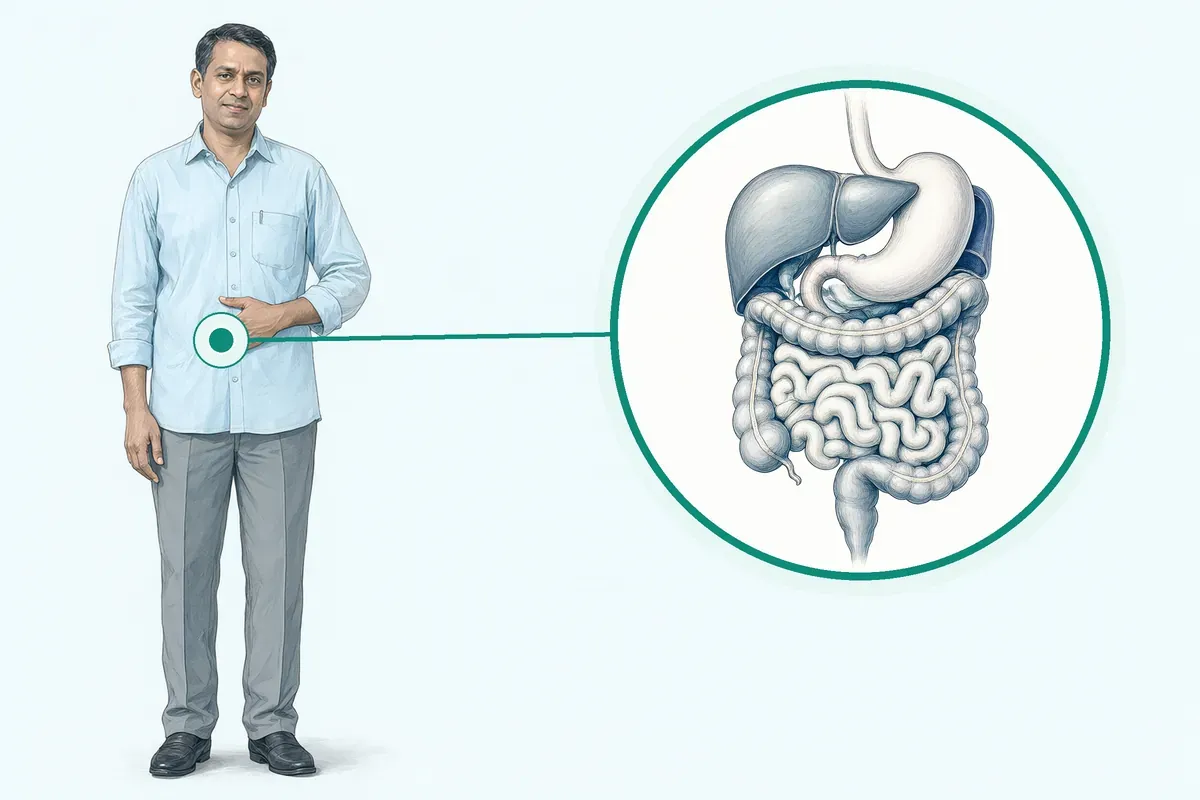
Gastrointestinal surgery is an operation on the food pipe, stomach, small intestine or large intestine. It is done to remove a diseased part, to bypass a blockage, to join two healthy ends after a section is removed, or to create a new opening (stoma) when the bowel cannot be joined safely.
A colectomy, for example, removes part or all of the colon and may also remove the rectum. In gastric bypass, a small stomach pouch is made and connected directly to the small intestine so food bypasses most of the stomach and the first part of the small intestine.
The operation may be done through small keyhole cuts (laparoscopic) or through a larger open cut, depending on the condition, whether it is an emergency, and how complex the case is. Operation time is usually one to five hours.
Symptoms of gut conditions and warning signs that need same‑day care
- Persistent vomiting
- High fever
- Signs of dehydration
Conditions that lead to gastrointestinal surgery often cause:
- Long‑standing belly pain
- A change in bowel habit (diarrhoea or constipation)
- Blood or mucus in the stool
- Unexplained weight loss
- Feeling full quickly
- A lump in the abdomen
After any abdominal operation, the bowel may temporarily stop moving — this is called postoperative ileus. It shows up as nausea, vomiting, a swollen belly, difficulty passing stool or gas, and not tolerating food.
If you have severe belly pain that does not settle, persistent vomiting, no passage of stool or gas for more than a day, high fever, or signs of dehydration (dry mouth, little urine, dizziness), go to the emergency department the same day. These can mean a blockage, a leak at the join, or an infection that needs urgent treatment.
What causes gut disease and who is at higher risk of complications
- Older age and male sex
- Linked to higher complication rates
- Smoking and heavy alcohol
- More than three standard drinks a day
- Diabetes needing insulin
- Raises chance of problems after surgery
- Poor exercise capacity
- Unable to climb a flight of stairs
Gut conditions that need surgery include:
- Cancers
- Inflammatory bowel disease (Crohn's disease, ulcerative colitis)
- Diverticular disease
- Severe obesity with related illnesses
- Emergencies such as a twisted bowel or a perforation
Several factors raise the chance of problems after surgery. Older age, male sex, smoking, heavy alcohol use (more than three standard drinks a day), diabetes needing insulin, kidney disease, heart failure, high blood pressure, low haemoglobin, and poor exercise capacity (unable to climb a flight of stairs) are all linked to higher complication rates.
For the bowel specifically, open surgery, operations longer than three hours, previous abdominal surgery, infection, blood transfusion, low albumin, obesity, and long‑term opioid use increase the risk of postoperative ileus. Protective factors include minimally invasive (laparoscopic) surgery, starting feeds early, and using several types of pain relief together so that strong opioids are needed less.
How gut conditions are diagnosed: examination and tests
Your surgeon will ask about your symptoms, past illnesses, medicines, and family history. A physical examination checks for tenderness, lumps, or a stoma if you have had surgery before.
Common tests include:
- Blood tests (haemoglobin, kidney and liver function, clotting, infection markers)
- Stool tests for blood or infection
- Imaging such as an ultrasound, CT scan or MRI of the abdomen
A camera test (colonoscopy or gastroscopy) lets the doctor see the inside of the food pipe, stomach or colon and take biopsies. For some conditions, a special X‑ray with contrast (barium study) or a CT colonography may be used. The results decide whether an operation is needed and which technique is safest.
Non‑surgical treatments and when surgery is advised for gastrointestinal conditions
Many gut problems are managed first without surgery.
This can include:
- Medicines to reduce acid, control inflammation, treat infection, or relieve constipation
- Dietary changes such as a low‑fibre or low‑residue diet
- Lifestyle steps like stopping smoking, cutting alcohol, and improving nutrition
For obesity with diabetes, high blood pressure or sleep apnoea, a trial of supervised diet, exercise and medical therapy is usually tried before surgery is considered.
Surgery is advised when the condition is cancer, when there is a blockage, perforation or severe bleeding that cannot be controlled endoscopically, when inflammatory bowel disease does not respond to medicines, or when obesity‑related illnesses remain uncontrolled after non‑surgical treatment. Some bleeding, narrowing or polyps can be treated with a camera (endoscopic treatment) without a cut on the abdomen. Your surgeon will explain the options and recommend the approach that fits your condition and overall health.
Preparing for gastrointestinal surgery
Do
- Bring all medicines in original packets
- Follow fasting rules
Your surgical team will arrange a set of tests before the operation. These usually include blood tests to check haemoglobin, kidney function and blood sugar, a chest X-ray and an ECG. If you have a heart or lung condition, the anaesthetist may ask for extra tests or a review by a cardiologist or pulmonologist.
Bring all your current medicines in their original packets so the team can see exactly what you take. Some medicines, especially blood thinners, diabetes tablets or insulin, and certain painkillers, may need to be stopped or changed a few days before surgery. Your surgeon and anaesthetist will tell you which ones to pause and when to restart them. Do not stop any medicine on your own.
If you smoke, stopping at least four weeks before the operation helps wound healing and lowers the chance of chest complications. Alcohol intake above three standard drinks a day raises the risk of bleeding and wound infection, and the risk grows with the amount consumed.
If you have diabetes treated with insulin or tablets, or if your kidney function is reduced, the anaesthetist will factor this into the plan. People who cannot walk up a flight of stairs without stopping have a higher chance of heart-related problems after surgery.
Fasting rules follow national guidelines: you may have clear fluids such as water or clear apple juice up to two hours before the anaesthetic, and solid food up to six hours before.
In some cases the team may give you a carbohydrate drink the evening before and again two hours before surgery; studies show this can reduce insulin resistance after the operation and may shorten the hospital stay. On the day of surgery, wear loose, comfortable clothes.
Bring your ID, any insurance or scheme cards (RGHS, MAA Yojana, CGHS or private TPA cards), a list of allergies, and a small bag with toiletries for the hospital stay. An attendant should plan to stay with you during the admission.
How gastrointestinal surgery is done
The operation is performed under general anaesthesia. The anaesthetist will meet you before surgery to explain the plan and discuss any specific risks. During the procedure the team maintains normal oxygen levels, body temperature and blood glucose.
Short-acting sedatives and pain relief may be used to help place lines or blocks, and long-acting opioids are avoided where possible to support early mobilisation. Careful titration of anaesthetic drugs and full recovery of muscle relaxation are standard practice.
Three broad techniques are available. Your surgeon will advise which one suits your condition.
- Laparoscopic surgery: The surgeon makes several small cuts (usually 5 to 10 mm) on the abdomen, inserts a camera and long instruments, and performs the operation while watching a screen. This approach is used for many stomach and intestinal procedures when the anatomy allows.
- Open surgery: A single larger cut is made on the abdomen. This is chosen for emergencies, for cancers that need a wider clearance, or when the operation is technically complex.
- Endoscopic treatment: For some problems such as bleeding, narrowing (stricture) or polyps, a flexible camera is passed through the mouth or anus and the treatment is done from inside the lumen, without any cut on the skin.
On the day of surgery you will be taken to the modular operation theatre. After the anaesthetic is given, the operation proceeds. The time varies from one to five hours depending on the specific procedure. For a colectomy, the surgeon removes the affected part of the colon and usually joins the two healthy ends together (anastomosis).
If joining them is not safe, an ostomy is created to bring the bowel out onto the abdominal wall. For gastric bypass, a small stomach pouch is made and connected directly to the small intestine, bypassing the rest of the stomach and the first part of the intestine. At the end of the operation the cuts are closed and you are moved to the recovery area.
Risks and possible complications of gastrointestinal surgery
- 17% to 35% Postoperative ileus after colectomy
- about 10% Postoperative ileus after abdominal tumour surgery
- up to 98% Recovery from ileus with supportive care
- from 17% to 5% Lung complications reduced by protective ventilation
All major abdominal operations carry risks. The most common early complications are related to the anaesthetic, the surgical wound, the lungs, the kidneys and the return of bowel function.
Postoperative ileus (temporary stopping of bowel movement) occurs in about 10% of abdominal tumour surgeries, and in 17% to 35% of patients after colectomy. It shows as nausea, vomiting, abdominal distension and inability to pass stool or gas.
Risk factors include:
- Older age
- Open surgery
- Operations longer than three hours
- Preoperative bowel preparation
- Infection
- Blood transfusion
- Smoking
- Male sex
- Previous abdominal surgery
- Long-term opioid use
- Low albumin
- Obesity
- Conversion from laparoscopic to open
- Intra-abdominal infection
- Peritonitis
- Electrolyte disturbance
- Excessive blood loss
Protective factors are minimally invasive surgery, early enteral feeding and multimodal pain control that limits opioids. Most patients (up to 98%) recover with supportive care such as nasogastric decompression, fluid and electrolyte correction, and early feeding.
Lung complications such as pneumonia or the need for non-invasive ventilation occur in a significant minority after major abdominal surgery. In one large trial, lung-protective ventilation reduced the need for non-invasive ventilation or intubation from 17% to 5% over seven days.
Another trial found postoperative pulmonary complications in about 40% of patients, with no major difference between higher and lower PEEP strategies.
Acute kidney injury develops in about 1% of non-cardiac surgeries and is more likely with restrictive fluid regimens in high-risk patients. Preoperative anaemia independently predicts higher mortality and complication rates. Cardiovascular serious adverse events within 24 hours have been reported in about 1.4% of patients in an intervention group compared with none in usual care. Higher PEEP ventilation can cause intraoperative hypotension needing more vasoactive drugs.
Wound infection, bleeding, anastomotic leak (a leak at the join in the bowel), and deep vein thrombosis are recognised surgical complications. The exact frequency depends on the operation, your health before surgery, and whether the procedure is laparoscopic or open. Your surgical team will discuss the risks that apply to your specific case.
Recovery and aftercare after gastrointestinal surgery
- Hospital stay Usually two to ten days
- First day Sitting out of bed and walking short distances
- First month Stick to low-fibre foods
- Six weeks Avoid heavy lifting over 3 to 4 kg
- Two to eight weeks Full recovery at home
After the operation you will spend time in the recovery room and then move to the ward or the intensive care unit if closer monitoring is needed. The hospital stay is usually two to ten days. Pain is managed with a combination of medicines that aim to limit strong opioids; epidural or regional blocks may be used for open procedures. Early mobilisation is encouraged — sitting out of bed and walking short distances from the first day.
Your intestines need time to start working again. You will begin with sips of water and progress to a liquid or soft diet over a few days. Chewing gum after surgery has been shown in studies to stimulate bowel activity and shorten the time to first flatus and stool.
Early enteral nutrition (feeding through a tube or by mouth) reduces the chance of ileus and shortens the stay without increasing the risk of anastomotic leak. In some studies laxatives, prucalopride, acupuncture or coffee also accelerated bowel recovery, but the team will choose what is appropriate for you.
Before discharge the team will ensure you are eating, passing stool, your pain is controlled on tablets, and you can move around safely. At home, recovery typically takes two to eight weeks depending on the operation. Many people return to most usual routines within two weeks. Stick to low-fibre foods for the first month.
Avoid heavy lifting (more than 3 to 4 kg) for six weeks. Keep the wound clean and dry; showers are usually allowed once the dressing is removed.
Call the hospital or visit the emergency department if you develop:
- Fever above 38°C
- Increasing abdominal pain
- Vomiting that does not stop
- No passage of stool or gas for more than 24 hours
- Redness or discharge from the wound
- Chest pain
- Sudden shortness of breath
- Calf swelling and pain
The 24×7 emergency department and ambulance service are available if you need urgent review.
Results of gastrointestinal surgery
- odds ratio 0.63 Prehabilitation lowers overall morbidity
- odds ratio 0.40 Prehabilitation lowers pulmonary morbidity
- from 27.5% to 10.5% Lung-protective ventilation reduced pulmonary complications
- 31.5% vs 41.6% Enhanced recovery pathways reduced complications
The outcome depends on the condition being treated. For colorectal cancer, surgery aims to remove the tumour completely and may be combined with chemotherapy or radiation. In studies, a colectomy can ease painful gut symptoms, may heal early-stage cancer, or help you live longer with advanced disease.
In some cases the surgery means living with an ostomy, which creates a new way for stool to leave the body. A colectomy may be just one part of your overall treatment.
For benign conditions such as severe diverticulitis, inflammatory bowel disease or obstruction, surgery removes the diseased segment and restores continuity where possible. Symptom relief is the main goal. In gastric bypass for obesity, the operation creates a small stomach pouch and bypasses part of the intestine.
Eligibility typically includes a body mass index above 35 with comorbidities such as diabetes, high blood pressure or sleep apnoea, or difficulty losing weight despite medical efforts.
Studies of enhanced recovery pathways (ERAS) show they reduce overall morbidity and shorten hospital stay. Prehabilitation (structured exercise and nutrition before surgery) lowers overall morbidity (odds ratio 0.63) and pulmonary morbidity (odds ratio 0.40) in major abdominal surgery. Lung-protective ventilation reduced the primary composite pulmonary complication rate from 27.5% to 10.5% in one trial.
A meta-analysis of 38 trials found the intervention group had fewer complications (31.5% vs 41.6%). Cardiac output-guided fluid therapy did not significantly change disability-free survival compared with usual care. Restrictive versus liberal fluid regimens showed no difference in disability-free survival.
Recurrence rates vary by disease. For cancer, the risk of recurrence depends on the stage at surgery and whether adjuvant treatment is given. For benign disease, recurrence of symptoms is less common but can happen if the underlying condition (such as Crohn's disease) affects other segments. Your surgeon will discuss the expected long-term results for your specific diagnosis.
Cost and insurance for gastrointestinal surgery in Jaipur
The typical price range for gastrointestinal surgery in India is ₹80,000 to ₹4,00,000. The final cost depends on the type of operation (for example, a colectomy versus a gastric bypass), whether it is done laparoscopically or open, the duration of surgery, the implants or staplers used, the length of hospital stay, and any intensive care or additional treatments needed.
The surgeon's experience and the hospital's facilities also affect the total. Preoperative consultations, investigations and medicines add to the bill. For gastric bypass specifically, published Indian estimates range from ₹2,50,000 to ₹6,00,000 across different cities.
Jaipur Hospital is a NABH-accredited multispeciality hospital established in February 1991. It is empaneled under RGHS, MAA Yojana and CGHS, and works with a panel of private insurers and TPAs.
If you are covered under one of these schemes, a part or all of the cost may be paid directly by the scheme or insurer, subject to their terms and pre-authorisation.
The hospital has an in-house pharmacy, diagnostic laboratory and radiology, modular operation theatres, a 24×7 emergency department and ICU, which means most services needed during your stay are available on site. Please ask the admissions team for a detailed estimate based on your planned procedure and your insurance or scheme coverage.