

General & Laparoscopic Surgery · Jaipur Hospital
Gastric Bypass Surgery in Jaipur
Struggling with weight and health issues? Get a clear assessment and a personalised surgical plan.
- Serving Jaipur since 1991 (35 years)
- NABH accredited
- 24×7 emergency & ICU
- Cashless: MAA Yojana + 32 insurers
- Operation time
- 2 to 3 hours
- Anaesthesia
- General anaesthesia
- Recovery
- Back to desk work in 2 to 4 weeks for most patients
- Price
- ₹3,00,000 to ₹5,50,000typical range in India; ask us for an estimate
Weight limits your life
Diet and exercise have not worked, and health problems are piling up
You have tried restricted diets and lifestyle changes. The weight stays, and conditions like diabetes, high blood pressure, or sleep apnoea worsen. Daily tasks become harder, and you worry about long-term health.
-
Diets fail repeatedly
Weight returns despite strict eating plans and effort.
-
Health conditions worsen
Diabetes, hypertension, or sleep apnoea need more medication.
-
Daily movement is hard
Joint pain and breathlessness limit work and family life.
-
Surgery feels overwhelming
Fear of complications, cost, and long recovery holds you back.
Bariatric surgery is currently the most effective procedure for the treatment of obesity.
Why Jaipur Hospital
You worry that surgery means weeks off work, high costs your family cannot afford, and complications no one explains clearly.
Your care plan
Your first steps with us
- 1 Call or visit OPD for a surgeon consultation
- 2 Complete in-house tests and get a cost estimate
- 3 Undergo laparoscopic surgery with a 2-4 night stay
- 4 Follow diet stages and attend scheduled follow-up visits
Insurance and schemes
How cashless works
Cashless treatment under MAA Yojana and with 32 insurers.
-
Tell us when you book
Say you are insured or have a scheme card, and send a photo of the card on WhatsApp so our insurance desk can check it in advance.
-
We get the approval
Once your doctor advises admission, the insurance desk sends the pre-authorisation request to your insurer or TPA; for planned surgery, approval can come before you are admitted.
-
Settled at discharge
The approved amount is settled between the insurer and the hospital; you pay only what the policy does not cover.
How the operation is done
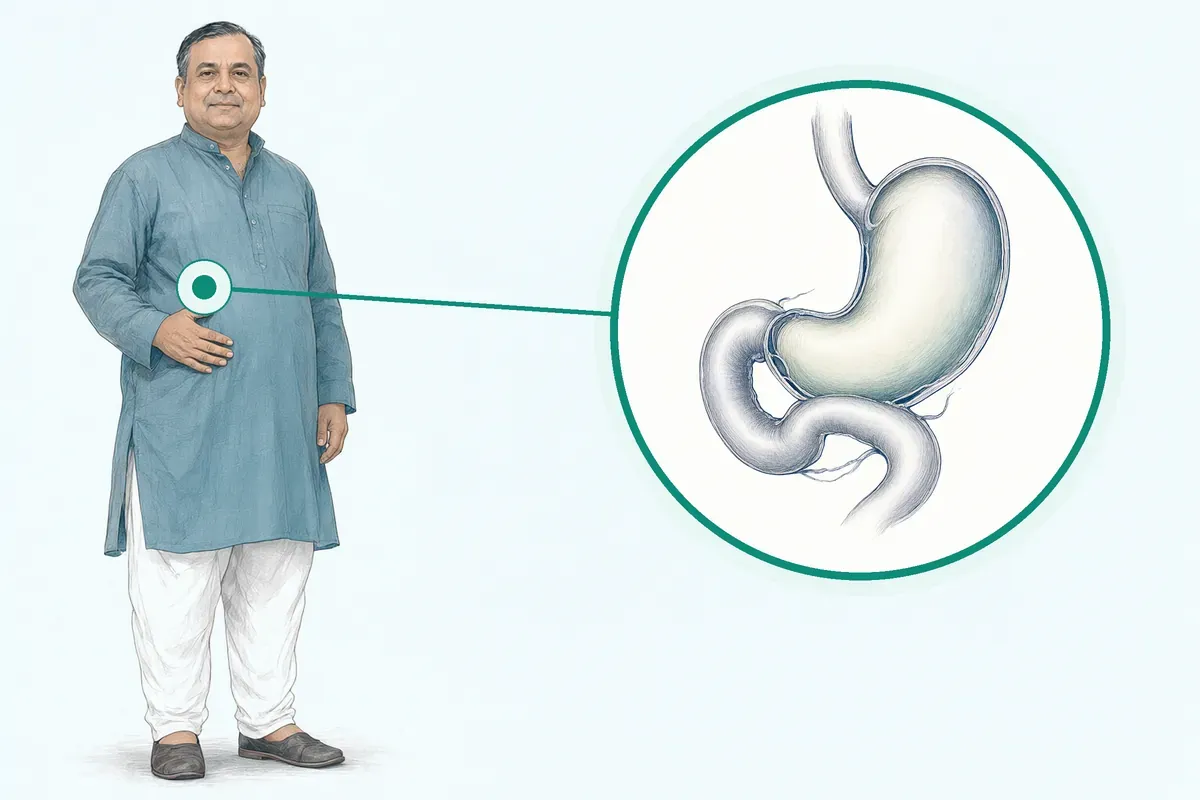
Under general anaesthesia, the surgeon creates a small stomach pouch and connects it to the small intestine, bypassing the rest of the stomach. The operation usually takes 2 to 3 hours.
-
Roux-en-Y gastric bypass
A small stomach pouch is joined to a loop of small intestine in a Y-shaped connection. Your surgeon will discuss if this suits you.
-
Mini (one-anastomosis) gastric bypass
A longer pouch is created with a single join to the intestine, often making it a shorter operation. Your surgeon will discuss if this suits you.
Why patients trust us
- 1991 Serving Jaipur for 35 years
- NABH Accredited hospital
- 3 General & Laparoscopic Surgery consultants
- 24×7 Emergency, ICU and ambulance
- 32 Cashless insurers, plus MAA Yojana
What research shows about this treatment
-
About 30% of baseline weight lost
Research shows people lose about 30% of their baseline weight after surgery.
-
45% diabetes remission at 5 years
Complete or partial remission of type 2 diabetes was seen in 45% of patients after gastric bypass at 5 years.
-
26% overall morbidity at 5 years
At 5 years the overall morbidity rate was 26% for gastric bypass, including nutritional deficiencies and reoperations.
If it is left untreated
Without treatment, obesity-related conditions like type 2 diabetes, hypertension, and sleep apnoea often progress, increasing the risk of heart disease, stroke, and kidney damage. Quality of life and mobility may continue to decline.
Life after treatment
Most people lose significant weight in the first year and see improvements in related health conditions. Lifelong vitamin supplements and dietary changes are needed.
-
Weight loss
Most people lose a large portion of excess weight within 12 to 18 months.
-
Better diabetes control
Many patients reduce or stop diabetes medications as blood sugar improves.
-
Fewer medications
Patients often need fewer pills for blood pressure and cholesterol.
-
Daily life improves
Movement becomes easier, and energy levels usually rise as weight drops.
Meet the team
Your general & laparoscopic surgery doctors
Explore our general and laparoscopic surgery department in Jaipur: every treatment, the doctors and what to expect at your visit.



Frequently asked questions
Questions patients ask about gastric bypass surgery
What does gastric bypass surgery involve?
In short
Gastric bypass surgery at Jaipur Hospital creates a small stomach pouch and connects it directly to the small intestine. This bypasses most of the stomach and the first part of the intestine, limiting how much you can eat and reducing calorie absorption. The operation usually takes two to three hours under general anaesthesia.
In detail
The surgeon divides the stomach into a small upper pouch and a larger lower section. The new pouch holds about one cup of food compared to four to six cups in a normal stomach.
The small intestine is cut and attached to the pouch so food skips the lower stomach and upper intestine. Digestive juices from the bypassed stomach rejoin the food stream further down.
This changes gut hormones such as GLP-1 and PYY, which help improve blood sugar control. Studies show the procedure leads to about 30 percent baseline weight loss at one year and remission of type 2 diabetes in roughly one third of patients at ten years.
- Studies show the procedure leads to about 30 percent baseline weight loss at one year and remission of type 2 diabetes in roughly one third of patients at ten years.
A common belief
Many people think the stomach is removed, but it stays in place and still makes digestive juices.
What actually happens
The change is in how food travels and how your hormones respond, which helps with weight and diabetes.
Your next step at Jaipur Hospital
You will stay in hospital for two to four nights and start a clear liquid diet. Most people return to desk work in two to four weeks. You will need lifelong vitamin supplements including iron, calcium and vitamin B12. Your surgeon will explain the exact steps at your consultation.
Which tests and scans do I need before gastric bypass surgery?
In short
Before gastric bypass surgery at Jaipur Hospital, you will need blood tests, heart and lung checks, and often an upper GI endoscopy. Common blood tests include complete blood count, liver and kidney function, blood sugar, HbA1c, lipid profile, thyroid levels, vitamin D, B12, iron and calcium. An ECG and chest X-ray are standard.
In detail
The anaesthesia team assesses fitness for general anaesthesia, so they may ask for a pulmonary function test, echocardiogram or cardiology opinion if you have heart or lung disease. Sleep apnoea screening with a sleep study is common because it affects airway management.
An abdominal ultrasound checks for gallstones or fatty liver. Upper GI endoscopy looks for hiatus hernia, ulcers or Barrett's oesophagus, which can change the surgical plan. Some centres also do a CT abdomen or MRCP if anatomy is unclear.
Women of childbearing age need a pregnancy test. All tests are usually done within two to four weeks before surgery so results are current. The exact list depends on your age, medical history and the surgeon's protocol.
A common belief
Some patients think only a blood sugar test is needed.
What actually happens
But the anaesthesia team must clear your heart and lungs for general anaesthesia, and the surgeon needs to see your stomach and oesophagus to avoid surprises during surgery.
Your next step at Jaipur Hospital
Collect your recent reports and bring them to the pre-anaesthesia clinic. The hospital will schedule any missing tests. You may need to stop certain medicines like blood thinners a few days before. Confirm the final checklist with your coordinator.
How painful is gastric bypass surgery and the early recovery?
In short
At Jaipur Hospital, gastric bypass surgery is done under general anaesthesia so you feel no pain during the operation. After surgery, most patients have moderate soreness at the small incision sites and some shoulder tip pain from the gas used during laparoscopy. The surgical team gives regular pain relief through a drip or tablets so you can move and breathe deeply.
In detail
The operation uses keyhole (laparoscopic) cuts, usually five or six small incisions. This causes less pain than a large open cut. Pain scores are typically highest on day one and drop quickly.
Shoulder tip pain comes from carbon dioxide gas irritating the diaphragm; it usually settles within 48 hours. Walking the morning after surgery helps clear the gas and reduces discomfort.
Evidence from recovery protocols shows early mobilisation and multimodal pain control keep most patients comfortable enough to start sips of water and move around the ward.
A common belief
People often fear severe pain from abdominal surgery.
What actually happens
In fact, keyhole surgery and modern pain protocols mean most patients are comfortable enough to walk the next morning. The shoulder pain surprises some, but it passes in a day or two.
Your next step at Jaipur Hospital
Expect to stay in hospital for two to four nights. You will receive pain medicine on a schedule, not only when you ask. By discharge, most people manage with oral tablets.
At home, take prescribed painkillers as directed, walk often, and avoid heavy lifting for two to four weeks. If pain suddenly worsens or you develop fever, call the hospital.
How long does recovery usually take after gastric bypass surgery?
In short
At Jaipur Hospital, most patients stay in hospital for two to four nights after gastric bypass. You can usually return to desk work in two to four weeks. Full recovery, including lifting and strenuous activity, takes about four to six weeks. The surgical team guides you through each stage at follow-up visits.
In detail
Recovery milestones: you start walking the morning after surgery. A clear liquid diet begins in hospital and continues for about two weeks at home, then progresses to pureed, soft, and finally solid foods over several weeks.
Evidence shows early mobilisation reduces clot risk and speeds bowel recovery. Pain is usually controlled with tablets by discharge. Driving is safe once you are off strong painkillers and can turn comfortably, typically after two weeks. Heavy lifting over five kilograms is avoided for four to six weeks to let the joins heal.
A common belief
Some patients expect to bounce back in a few days.
What actually happens
The stomach-intestine joins need weeks to heal strongly. Rushing solid food or heavy activity can cause leaks or hernias. The staged diet is not optional; it protects the new anatomy.
Your next step at Jaipur Hospital
Plan for two to four weeks off desk work, longer for physical jobs. Follow the diet stages exactly: liquids, pureed, soft, then solids. Take all prescribed supplements. Walk daily, increasing distance gradually. Attend all follow-up appointments for wound checks and blood tests. Report any fever, severe pain, vomiting, or wound problems promptly.
Am I eligible for gastric bypass surgery based on my BMI, medical history, and previous weight-loss attempts?
In short
Eligibility for gastric bypass at Jaipur Hospital is assessed by your surgeon during a consultation. Typical criteria include a BMI of 35 or more with at least two obesity-related conditions such as type 2 diabetes, hypertension, or sleep apnoea, or a BMI of 40 or more. You must also have tried and failed to lose weight through diet and exercise.
In detail
Studies enrolling patients for gastric bypass required a BMI between 30 and 39.9 with type 2 diabetes for at least six months, HbA1c of 8% or higher, and C-peptide above 1.0 ng/mL.
Other guidelines qualify patients with BMI 35 or above plus two comorbidities like diabetes, high blood pressure, or heart disease.
The surgical team reviews your full medical history, previous weight-loss attempts, and willingness to make lifelong lifestyle changes including portion control, regular exercise, and vitamin supplementation. You must be fit for general anaesthesia and understand the operation is usually irreversible. Psychological readiness and ability to attend long-term follow-up are also considered.
- Studies enrolling patients for gastric bypass required a BMI between 30 and 39.9 with type 2 diabetes for at least six months, HbA1c of 8% or higher, and C-peptide above 1.0 ng/mL.
A common belief
Some people assume a high BMI alone is enough.
What actually happens
The surgeon also checks your medical history, past weight-loss efforts, fitness for anaesthesia, and commitment to lifelong follow-up and supplements. Not everyone who wants the operation is a suitable candidate.
Your next step at Jaipur Hospital
Bring your medical records, a list of past diets or medicines tried, and recent blood reports to the OPD. The surgeon will calculate your BMI, assess comorbidities, and order any needed tests. If you meet criteria, you will receive a detailed estimate and pre-operative plan.
How will the surgeon decide whether gastric bypass surgery is necessary for me?
In short
The surgeon at Jaipur Hospital decides based on your BMI, obesity-related conditions, previous weight-loss attempts, and overall fitness for surgery. There is no single test; the decision comes from a full clinical assessment and discussion of risks and benefits.
In detail
Guidelines suggest surgery for patients with BMI 35 or above with at least two comorbidities such as type 2 diabetes, hypertension, or sleep apnoea, or BMI 40 or above.
The surgeon reviews your medical history, current medications, past diets or medicines tried, and willingness to commit to lifelong lifestyle changes including portion control, exercise, and vitamin supplements. You must be fit for general anaesthesia and understand the procedure is usually irreversible.
Psychological readiness and ability to attend long-term follow-up are also evaluated. The team may order blood tests, imaging, or a sleep study before confirming suitability.
The final plan is made jointly with you after explaining the typical weight loss, diabetes remission rates, and complication profile such as a 22% reoperation rate at five years and risk of nutritional deficiencies.
- The final plan is made jointly with you after explaining the typical weight loss, diabetes remission rates, and complication profile such as a 22% reoperation rate at five years and risk of nutritional deficiencies.
A common belief
Some patients expect a simple yes or no based on weight alone.
What actually happens
The decision is more nuanced. A high BMI with no other issues may not qualify, while a lower BMI with severe diabetes might. The surgeon also checks your understanding of the risks and commitment needed.
Your next step at Jaipur Hospital
Bring all medical records, a list of past weight-loss efforts, and recent investigations to the OPD. The surgeon calculates your BMI, screens for comorbidities, and checks anaesthesia fitness. If criteria are met, you receive a cost estimate of ₹3,00,000 to ₹5,50,000 and a pre-operative schedule.
Why might my doctor recommend gastric bypass surgery?
In short
A doctor may recommend gastric bypass surgery at Jaipur Hospital if you have a body mass index of 35 or more with obesity-related conditions such as type 2 diabetes, high blood pressure or sleep apnoea. It is also considered when diet, exercise and medicines have not led to lasting weight loss.
In detail
Evidence shows gastric bypass leads to greater weight loss than lifestyle management alone. In studies, patients lost about 26 percent of initial body weight at one year compared to 8 percent with medical therapy.
About 45 percent achieved remission of type 2 diabetes, and over half stopped medicines for high blood pressure or cholesterol. The surgery also improves reflux symptoms more often than sleeve gastrectomy.
Hormonal changes after the bypass improve insulin sensitivity within days, before major weight loss occurs. These metabolic benefits are why doctors suggest it for patients with severe obesity and related diseases.
- About 45 percent achieved remission of type 2 diabetes, and over half stopped medicines for high blood pressure or cholesterol.
A common belief
It is not just about losing weight.
What actually happens
The surgery changes gut hormones so blood sugar often improves within a week, long before you lose a lot of weight. That metabolic effect is a key reason doctors offer it.
Your next step at Jaipur Hospital
Your surgeon will review your weight history, medical reports and previous attempts at weight loss. Blood tests, heart and lung checks, and a nutrition assessment are usually done first. If you meet the criteria, the team will explain the risks and the lifelong follow-up needed.
How should I prepare in the days before gastric bypass surgery?
In short
In the days before gastric bypass surgery at Jaipur Hospital, you will follow a specific diet, stop certain medicines, and complete all pre-admission formalities. The surgeon usually prescribes a low-calorie, high-protein liquid diet for one to two weeks to shrink the liver and make the operation safer.
In detail
You must stop blood thinners, aspirin, and certain diabetes medicines as instructed by the anaesthesia team. Smoking should stop at least four weeks before to reduce wound and lung complications. Alcohol should be avoided.
You will need to arrange an attendant to stay with you in hospital and help at home afterwards. Pack loose clothing, your regular medicines in original packets, and any test reports.
The hospital will give you a chlorhexidine wash for the night before and morning of surgery. You will sign consent forms after the surgeon explains the procedure, risks like leak, bleed, stricture, dumping syndrome and nutritional deficiency, and the need for lifelong supplements. Keep your phone charged and emergency contacts ready.
A common belief
People often keep taking their usual diabetes tablets or forget to stop blood thinners.
What actually happens
Both can cause serious problems during surgery. The liquid diet is not optional; a large liver makes the operation harder and riskier.
Your next step at Jaipur Hospital
Confirm your admission time with the coordinator the day before. Do not eat or drink after the fasting deadline. Reach the hospital with your attendant and ID documents.
What are the common side effects and the less common serious complications of gastric bypass surgery?
In short
At Jaipur Hospital, common side effects after gastric bypass include nausea, vomiting, dumping syndrome (sweating, cramps, diarrhoea after sweet or fatty foods), temporary hair thinning, and changes in bowel habit. Less common but serious complications include a leak at the stomach-intestine join, bleeding, infection, blood clots, narrowing of the join (stricture), ulcers, and long-term vitamin or mineral deficiencies.
In detail
Dumping syndrome affects many patients when food moves too fast into the small intestine; avoiding sugar and fat helps. Nutritional deficiencies are well documented: iron, calcium, vitamin B12, vitamin B1, and others need lifelong supplements and blood checks.
Evidence shows reoperation rates around 15 to 22 percent at five years, often for strictures, ulcers, or hernias. Leaks occur in a small percentage but can cause peritonitis and need urgent surgery. Bleeding, clots, and wound infections are known surgical risks. The team monitors you closely in hospital and at follow-up to catch problems early.
A common belief
Many people focus only on weight loss and overlook the lifelong need for supplements and the risk of dumping syndrome.
What actually happens
A leak is rare but life-threatening; strictures and ulcers can need further procedures. These are not minor issues.
Your next step at Jaipur Hospital
Take all prescribed supplements daily and attend every follow-up for blood tests. Eat small, slow meals, chew well, and avoid high-sugar or high-fat foods to reduce dumping. Report persistent vomiting, severe abdominal pain, fever, redness at wounds, calf swelling, or black stools immediately. Lifelong monitoring is essential.
Which symptoms are expected after gastric bypass surgery, and which need urgent medical attention?
In short
At Jaipur Hospital, expected symptoms after gastric bypass include mild to moderate incision soreness, shoulder tip pain for a day or two, fatigue, nausea, and changes in bowel habit. Urgent symptoms needing immediate care are severe abdominal pain that worsens, fever above 38°C, persistent vomiting, inability to keep fluids down, redness or pus at wounds, calf swelling or pain, sudden shortness of breath, and black or bloody stools.
In detail
Shoulder tip pain comes from laparoscopic gas and resolves in 48 hours. Nausea is common in the first weeks as you adjust to the new stomach size and liquid diet.
Dumping syndrome (sweating, cramps, diarrhoea, palpitations) after sweet or fatty foods is a known side effect, not an emergency. However, worsening abdominal pain with fever can signal a leak or infection. Calf swelling may mean a blood clot.
Shortness of breath could be a clot in the lung. Black stools suggest bleeding. Evidence shows leaks and clots are rare but time-critical. The team gives you a 24-hour contact number at discharge.
A common belief
Patients often dismiss worsening pain as 'just gas' or wait too long with vomiting.
What actually happens
A leak or clot can become life-threatening in hours. The shoulder pain from gas is harmless and goes away; new severe pain is not.
Your next step at Jaipur Hospital
Keep the emergency number handy. For urgent symptoms, go to the nearest emergency department or call the hospital immediately. Do not wait to see if it passes. For expected symptoms like mild nausea or shoulder pain, use prescribed medicines and walk gently. Attend all scheduled follow-ups so the team can catch early signs of deficiency or stricture.
FAQ library
Questions and answers about gastric bypass surgery
When you contact us
Get your surgical assessment
Contact Jaipur Hospital to meet a general and laparoscopic surgeon, review your reports, understand your options, and receive a cost estimate.
- A consultation with a general and laparoscopic surgeon in the OPD
- Your scans and reports reviewed, with tests done in-house if you need them (laboratory, X-ray and imaging)
- Your options explained in plain words, including whether you need surgery at all
- A cost estimate before you decide
- Help with cashless treatment under MAA Yojana and empanelled insurers and TPAs
- Follow-up visits after your treatment
Overview
Gastric Bypass Surgery: what to know
What is severe obesity and how it affects your body
Severe obesity means a BMI of 35 or higher with weight-related health problems. Extra weight changes how your body handles sugar, fat and blood pressure. Surgery alters the stomach and intestine so you feel full sooner and absorb fewer calories.
Severe obesity is a condition where excess body weight begins to harm your health. Doctors measure it using body mass index (BMI), which compares your weight to your height. A BMI of 35 or higher, especially when you also have health problems linked to weight, is the usual threshold for considering weight-loss surgery.
When you carry this much extra weight, your body changes the way it handles sugar, fat and blood pressure. The stomach and intestine send signals that affect hunger, fullness and how your liver makes glucose. Over time these signals can keep blood sugar high, raise blood pressure and make breathing during sleep difficult.
Weight-loss surgery works by changing the anatomy of the stomach and small intestine so that you feel full sooner and your body absorbs fewer calories.
Symptoms of severe obesity and warning signs that need urgent care
Daily effects include breathlessness, joint pain, snoring with breathing pauses and tiredness. After surgery, fever, worsening abdominal pain, pelvic pressure, hiccups or restlessness may signal a leak. Vomiting after eating can mean a narrowing at the join.
- Fever May indicate a leak
- Increasing abdominal pain May indicate a leak
- Pelvic pressure May indicate a leak
- Hiccups May indicate a leak
- Restlessness May indicate a leak
- Vomiting after eating or drinking May indicate narrowing at the join
The day-to-day effects of severe obesity include:
- Breathlessness on mild effort
- Joint pain in the knees and hips
- Snoring with pauses in breathing at night
- Feeling tired even after a full night's sleep
You may also notice that your blood sugar, blood pressure or cholesterol stay high despite medicines.
After gastric bypass surgery, certain symptoms need medical attention the same day. A leak from the new join between the stomach pouch and the intestine can cause peritonitis, an inflammation of the lining of the abdomen. Warning signs include fever, increasing abdominal pain, pelvic pressure, hiccups and restlessness.
A narrowing (stenosis) at the join may cause vomiting after eating or drinking. Dumping syndrome happens when food moves too quickly into the small intestine; early dumping occurs 15 to 20 minutes after a meal with bloating, cramps, nausea, rapid heartbeat and sweating, while late dumping occurs one to three hours later with hunger, fatigue, weakness and dizziness.
Causes and who is at higher risk for severe obesity
Weight gain results from long-term energy intake exceeding energy used. Genetics, hormones, medicines, poor sleep, stress and easy access to high-calorie food all contribute. Higher risk comes with BMI 35 or more plus at least two weight-related conditions.
- Energy imbalance
- Weight gain when food energy exceeds body energy use over time
- Contributing factors
- Genetics, hormones, medicines, poor sleep, stress, and easy access to high-calorie food
- Higher health risk
- BMI 35 or more with at least two weight-related conditions
Weight gain happens when the energy you take in from food is more than the energy your body uses over a long period.
Genetics, hormonal conditions, certain medicines, poor sleep, stress and an environment that makes high-calorie food easy to get all play a part.:
- Genetics
- Hormonal conditions
- Certain medicines
- Poor sleep
- Stress
- An environment that makes high-calorie food easy to get
Some people find it very hard to lose weight even with a restricted diet because of metabolic factors.
You are at higher risk of the health problems linked to severe obesity if you have a BMI of 35 or more with at least two weight-related conditions such as type 2 diabetes, high blood pressure, heart disease or sleep apnoea.
A study that compared surgery with intensive medical treatment enrolled people with a BMI between 30 and 39.9, type 2 diabetes for at least six months, HbA1c of 8% or higher and a C-peptide level above 1.0 ng/mL.
How severe obesity is diagnosed: examination and tests
Your doctor calculates BMI from height and weight. Blood tests check diabetes, cholesterol, liver, thyroid and vitamin levels. A sleep study may be done for snoring, and an upper GI endoscopy can check the stomach lining before surgery.
Your doctor will calculate your BMI from your height and weight. Baseline weight is your weight before any treatment.
Blood tests check for:
- Type 2 diabetes (fasting glucose, HbA1c)
- Cholesterol and triglyceride levels
- Liver function
- Thyroid function
- Vitamin levels such as B12, iron and calcium
Blood pressure is measured on more than one visit. If you snore or feel unrefreshed after sleep, a sleep study may be done to look for obstructive sleep apnoea. An upper GI endoscopy is sometimes performed before surgery to check the stomach lining for ulcers or inflammation.
Treatment options without surgery and when gastric bypass surgery is advised
Surgery is advised when your BMI is 35 with two obesity-related conditions or BMI 40 without them. An intensive medical programme lost about 7.9% weight at 12 months versus 26.1% with gastric bypass. Surgery gave 4.8 times higher odds of reaching combined blood sugar, cholesterol and blood pressure targets.
- 7.9% Medical management weight loss
- 26.1% Gastric bypass weight loss
- 19% Medical management reached targets
- 49% Surgery group reached targets
The first step is always a structured programme of diet, physical activity and behaviour change, often with medicines to help control appetite or blood sugar. In a randomised trial, people who followed an intensive lifestyle and medical management plan lost about 7.9% of their starting weight at 12 months, while those who had gastric bypass lost about 26.1%.
At 12 months, 19% of the medical-management group reached combined targets for blood sugar, cholesterol and blood pressure, compared with 49% in the surgery group. The odds of reaching those targets were about 4.8 times higher with surgery.
Surgery is usually advised when BMI is 35 or more with two or more obesity-related conditions, or when BMI is 40 or more even without other conditions. You must be willing to make lifelong changes in portion size, food choices, regular exercise and vitamin supplementation.
Your surgical team will discuss whether Roux-en-Y gastric bypass or mini (one-anastomosis) gastric bypass suits you better. Both are done laparoscopically through small cuts; open surgery with a larger cut is used only when laparoscopic surgery is not safe.
Preparing for gastric bypass surgery
You attend a pre-anaesthesia clinic for blood tests, ECG and chest X-ray before surgery. Stop diabetes, blood pressure or blood-thinning medicines only when your surgeon and anaesthetist tell you. Fast overnight for at least ten hours and bring an attendant to stay with you.
Do
- Bring regular medicines in original packets
- Bring list of allergies
- Bring insurance or scheme cards
- Bring comfortable clothes for discharge
Before your operation you will attend the pre-anaesthesia clinic where the team checks your fitness for general anaesthesia. Blood tests, an ECG and a chest X-ray are usually done. If you take medicines for diabetes, blood pressure or blood thinning, your surgeon and anaesthetist will tell you which ones to stop and when to restart them.
You must fast overnight for at least ten hours before surgery. Bring your regular medicines in their original packets, a list of allergies, your insurance or scheme cards, and comfortable clothes for discharge. An attendant should plan to stay with you during the hospital stay.
How gastric bypass surgery is done
The operation takes two to three hours under general anaesthesia through five or six small cuts. A small stomach pouch holding about one cup is joined to the intestine, bypassing most of the stomach. The procedure is considered irreversible in most cases.
The operation is performed under general anaesthesia and usually takes two to three hours. Jaipur Hospital uses modular operation theatres and the procedure is done laparoscopically through five or six small incisions. Your surgeon will discuss which technique suits you.
In a Roux-en-Y gastric bypass a small stomach pouch is created and joined to a loop of small intestine in a Y-shaped connection. In a mini (one-anastomosis) gastric bypass a longer pouch is made with a single join to the intestine; this version is often a shorter operation.
Both methods bypass most of the stomach and the first part of the small intestine so that food goes straight from the new pouch into the middle section of the small intestine. The small pouch holds about one cup of food compared with four to six cups in a normal stomach. The operation is considered irreversible in most cases.
On the day of surgery you will be taken to the operating theatre, given anaesthesia, and the procedure will be carried out. After the operation the incisions are closed with staples or stitches.
Risks and possible complications of gastric bypass surgery
The most serious early risk is a leak at the stomach-intestine join causing peritonitis with fever, pain and hiccups. Late risks include narrowing of the join, dumping syndrome after sweet or fatty foods, and lifelong vitamin deficiencies. About 22% of Roux-en-Y patients needed reoperation at five years.
- 26% Overall morbidity at five years
- 22 Serious adverse events in bypass group
- Six Late postoperative complications in bypass group
All surgery carries risks. The most serious early complication is a leak at the join between the stomach pouch and the intestine, which can cause peritonitis — inflammation of the abdominal lining.
Signs of a leak include:
- Fever
- Increasing abdominal pain
- Pelvic pressure
- Hiccups
- Restlessness
Other early risks are bleeding, perforation of the stomach or intestines, and blockage at the new join or further down the bowel. In one trial four perioperative complications occurred in the gastric bypass group.
Late complications can include narrowing of the join (stomal stenosis) which may cause vomiting after eating or drinking, and dumping syndrome where food moves too quickly into the small intestine.
Early dumping happens 15 to 20 minutes after a meal with:
- Bloating
- Cramps
- Nausea
- Palpitations
- Sweating
Late dumping occurs one to three hours later with hunger, fatigue, sweating and dizziness. Dumping is often triggered by sweet or high-fat foods. Nutritional deficiencies are more common after gastric bypass than after medical management alone. You will need lifelong vitamin and mineral supplements including iron, calcium and vitamin B1.
At five years the overall morbidity rate in one study was 26%. Reoperation or further intervention was needed in about 22% of Roux-en-Y patients at five years. Serious adverse events included 22 in the gastric bypass group and 15 in the lifestyle-medical management group in the same trial.
One cardiovascular event was reported as a serious adverse event in the bypass group. Six late postoperative complications were recorded in the bypass group. Gastric reflux symptoms worsened less often after Roux-en-Y (6.3%) than after sleeve gastrectomy (31.8%). At ten years oesophagitis was seen in 31% of sleeve patients and was less prevalent after Roux-en-Y.
Recovery and aftercare after gastric bypass surgery
You stay in hospital for two to four nights after gastric bypass surgery. You begin with a clear liquid diet for at least two weeks and start walking the morning after surgery. Most people return to desk work in two to four weeks.
- Hospital stay Two to four nights after surgery
- Diet start Clear liquids for at least two weeks
- Desk work return Two to four weeks for most people
- Heavy lifting Avoid for at least four weeks
- First follow-up Outpatient visit at one to two weeks
After the operation you will stay in hospital for two to four nights. You will start on a clear liquid diet for at least two weeks. Nurses will encourage you to sit up and walk short distances from the morning after surgery.
Before discharge the team will give you instructions on wound care, pain control, and the vitamin supplements you must take at home. You will not be able to eat solid foods for several weeks; the diet advances from liquids to pureed food and then to soft solids under the guidance of the nutrition team.
Most people return to desk work in two to four weeks. Avoid heavy lifting and strenuous activity for at least four weeks. Your surgeon will see you in the outpatient department at one to two weeks, then at regular intervals to check weight, blood tests and nutritional status.
Call the hospital or attend the emergency department if you develop:
- Fever
- Severe abdominal pain
- Persistent vomiting
- Signs of wound infection
- Symptoms of a leak such as sudden pain with fever and restlessness
Long-term follow-up is essential to monitor for deficiencies and to adjust supplements.
Results of gastric bypass surgery in studies
Studies show gastric bypass patients lose about 26% of body weight at one year and 57% excess weight at five years. Diabetes remission occurs in 45% at five years and 33% at ten years. Some weight regain can happen over time.
In studies gastric bypass leads to substantial weight loss and improvement in obesity-related conditions. At one year patients in a randomised trial lost an average of 26% of their initial body weight after gastric bypass compared with 8% with lifestyle and medical management alone. Excess weight loss at five years averaged 57% in one series.
At ten years median excess weight loss was about 51% after Roux-en-Y. The difference in excess weight loss between Roux-en-Y and sleeve gastrectomy was about 8 percentage points at five and ten years. Complete or partial remission of type 2 diabetes occurred in 45% of bypass patients at five years.
At ten years diabetes remission was seen in 33% after Roux-en-Y and 26% after sleeve gastrectomy. Hypertension remission at ten years was 24% after Roux-en-Y and 8% after sleeve. Dyslipidaemia remission at ten years was 35% after Roux-en-Y. Obstructive sleep apnoea remission at ten years was 31% after Roux-en-Y and 16% after sleeve.
Medication for dyslipidaemia was stopped in 60% and for hypertension in 51% of bypass patients at five years. In one trial 49% of the gastric bypass group achieved a composite target of HbA1c below 7%, LDL below 100 mg/dL and systolic blood pressure below 130 mmHg at twelve months, compared with 19% in the medical management group.
The odds of reaching that target were 4.8 times higher with surgery. Weight loss was the main driver of these improvements. Hormonal changes such as increased GLP-1 and PYY after surgery contribute to better glucose control. Some weight regain can occur over the long term and a minority of patients need further procedures. No treatment-related deaths were reported in the gastric bypass group in the cited trial.
Cost and insurance for gastric bypass surgery in Jaipur
The typical price range for gastric bypass surgery in India is ₹3,00,000 to ₹5,50,000. Jaipur Hospital is empaneled under MAA Yojana and private insurers for cashless or reimbursement claims. Bring your scheme or insurance card at admission.
The typical price range for gastric bypass surgery in India is ₹3,00,000 to ₹5,50,000. The final cost depends on the technique chosen (Roux-en-Y or mini bypass), the length of hospital stay, any additional investigations, and whether you need intensive care after the operation.
Jaipur Hospital is a NABH-accredited multispeciality hospital with modular operation theatres, an in-house pharmacy, diagnostic laboratory and imaging, and a canteen that provides dietary meals. We are empaneled under MAA Yojana and a panel of private insurers and TPAs.
Please bring your scheme or insurance card at admission so the billing team can verify coverage and process cashless or reimbursement claims as per your policy terms.
