

Obstetrics and Gynaecology · Jaipur Hospital
Gynaecologic Endoscopy in Jaipur
Pelvic pain or infertility? Get clear assessment and a simple plan.
- Serving Jaipur since 1991 (35 years)
- NABH accredited
- 24×7 emergency & ICU
- Cashless: RGHS, MAA Yojana, CGHS + 22 insurers
- Operation time
- 45 minutes to 2 hours
- Anaesthesia
- General anaesthesia
- Recovery
- 1 to 2 weeks for laparoscopic, 2 to 3 days for hysteroscopic
- Price
- ₹40,000 to ₹1,50,000typical range in India; ask us for an estimate
Pain, uncertainty, delayed life
You live with pelvic pain, heavy bleeding, or infertility without a clear answer
Symptoms affect work, family, and peace of mind. Scans may not show the cause. You need to see inside the uterus and pelvis to know what is wrong.
-
Chronic pelvic pain
Daily discomfort that limits work and home life, often without a clear scan finding.
-
Heavy or irregular periods
Bleeding that causes anaemia and fatigue, possibly from fibroids or polyps.
-
Ovarian cysts
Cysts found on ultrasound that may need removal or monitoring.
-
Endometriosis suspicion
Painful periods and intercourse; diagnosis needs direct vision of the pelvis.
-
Unexplained infertility
Trying to conceive with normal basic tests; the uterus or tubes may need checking.
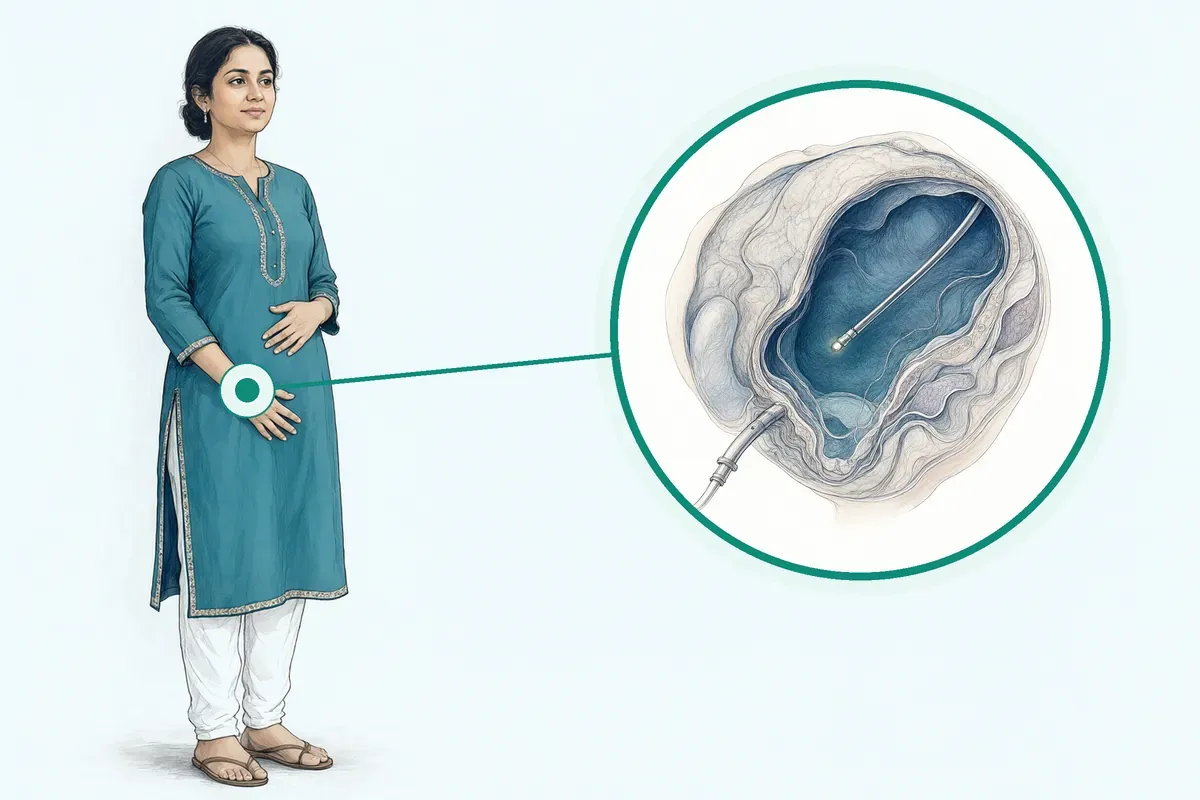
Laparoscopy allows the surgeon to see inside the abdomen and pelvis through small cuts using a camera.
Why Jaipur Hospital
You worry that surgery means a long recovery, time off work, and costs you cannot predict.
Your care plan
Your first steps with us
- 1 Call or visit OPD for gynaecology consultation
- 2 Complete scans and blood tests in-house
- 3 Review options and receive a cost estimate
- 4 Schedule surgery and plan your recovery at home
How the operation is done
Under general anaesthesia, the surgeon makes small cuts, inserts a camera and instruments, and treats the condition. Operation time is usually 45 minutes to 2 hours.
-
Diagnostic Hysteroscopy
A thin scope checks the uterine cavity for polyps, fibroids, septum, or adhesions.
-
Operative Hysteroscopy
Instruments through the hysteroscope remove polyps, fibroids, septum, or divide adhesions.
-
Diagnostic Laparoscopy
A camera through the belly button evaluates infertility, chronic pelvic pain, or endometriosis.
-
Operative Laparoscopy
Keyhole surgery for ovarian cystectomy, myomectomy, endometriosis excision, or tubal surgery.
Why patients trust us
- 1991 Serving Jaipur for 35 years
- NABH Accredited hospital
- 3 Obstetrics and Gynaecology consultants
- 24×7 Emergency, ICU and ambulance
- 25 Cashless schemes and insurers
What research shows about this treatment
-
1 to 2 weeks recovery for laparoscopic, 2 to 3 days for hysteroscopic
Typical recovery times after minimally invasive gynaecologic surgery are shorter than open surgery.
-
Major complications in 3 to 6 per 1,000 cases
Serious adverse events like bowel or vessel injury are uncommon in gynaecological laparoscopy.
-
Conversion to open surgery sometimes needed
If the surgeon cannot safely finish keyhole, they may switch to a larger incision.
If it is left untreated
Untreated fibroids or endometriosis can worsen pain, increase bleeding, and reduce fertility. Large cysts may twist or rupture, needing emergency surgery. Delaying diagnosis can limit future options.
Life after treatment
Most people return to normal activity within a few weeks with less pain and clearer answers about fertility.
-
Less pelvic pain
Most women report reduced period pain and chronic discomfort after excision or resection.
-
Regular periods
Heavy bleeding often improves after polyp or fibroid removal from the cavity.
-
Fertility clarity
You will know if tubes are open and the uterus is normal, helping plan next steps.
-
Faster return to work
Keyhole surgery usually means days off, not weeks, compared to open procedures.
Frequently asked questions
Questions patients ask about gynaecologic endoscopy
Which problems are assessed under gynaecologic endoscopy?
In short
Gynaecologic endoscopy at Jaipur Hospital assesses problems inside the uterus and the pelvic cavity. Diagnostic hysteroscopy evaluates the uterine cavity for polyps, fibroids, septum or adhesions. Diagnostic laparoscopy evaluates infertility, chronic pelvic pain and endometriosis. Operative procedures treat ovarian cysts, fibroids, endometriosis and tubal disease.
In detail
The techniques used include diagnostic hysteroscopy for office or operating theatre evaluation of the uterine cavity and operative hysteroscopy for polyp, fibroid, septum resection and adhesiolysis. Diagnostic laparoscopy allows visualisation of the pelvic organs to diagnose infertility, chronic pelvic pain and endometriosis.
Operative laparoscopy enables ovarian cystectomy, myomectomy, endometriosis excision and tubal surgery. Evidence shows minimally invasive surgery is now the standard of care for many gynaecological conditions, offering decreased blood loss, less postoperative pain, shorter hospitalisation and faster recovery compared with open surgery. The surgeon selects the approach based on the specific condition found during evaluation.
A common belief
Many people think keyhole surgery is only for diagnosis.
What actually happens
In fact, operative hysteroscopy and laparoscopy can treat the problem at the same sitting, avoiding a second surgery. The evidence shows this minimally invasive approach is now standard for many conditions because it reduces pain, blood loss and hospital stay compared with open surgery.
Your next step at Jaipur Hospital
You will need a referral or can book an appointment directly with the gynaecology department. Bring any previous ultrasound, MRI or blood reports. The surgeon will review your history, examine you and advise whether diagnostic hysteroscopy, diagnostic laparoscopy or both are needed. Most procedures are done as day care or with a one to two night stay.
How will the doctor decide which tests I need for gynaecologic endoscopy?
In short
The doctor at Jaipur Hospital decides tests based on your symptoms, examination findings and previous reports. Common tests include transvaginal ultrasound to assess uterine and ovarian anatomy, MRI pelvis for complex fibroids or deep endometriosis, blood tests for haemoglobin, thyroid, prolactin and CA-125, and sometimes hysterosalpingography for tubal patency. The choice is tailored to the suspected condition.
In detail
The decision follows a clinical pathway. If abnormal uterine bleeding is the main symptom, transvaginal ultrasound is first line to detect polyps, submucosal fibroids or endometrial thickness.
If the ultrasound is inconclusive or shows a complex lesion, MRI gives better soft tissue definition for surgical planning. For chronic pelvic pain or infertility, ultrasound assesses ovarian reserve, cysts and adenomyosis; MRI is added if deep infiltrating endometriosis is suspected.
Blood tests check for anaemia before surgery, thyroid and prolactin for hormonal causes of infertility, and CA-125 if an ovarian cyst has suspicious features. HSG is ordered when tubal factor infertility is likely.
Evidence shows hysterolaparoscopy serves as an alternative diagnostic method when imaging like 3D-SIS ultrasound, MRI or HyCoSy are not accessible. The surgeon selects the minimum tests needed to confirm the diagnosis and plan the operative approach, avoiding unnecessary investigations.
A common belief
Patients sometimes ask for every possible scan.
What actually happens
The surgeon orders only what changes the surgical plan. For example, MRI is not routine for simple cysts but is valuable for deep endometriosis to map bowel involvement. Unnecessary tests add cost and delay without improving outcomes. The goal is a focused workup.
Your next step at Jaipur Hospital
The surgeon will explain which tests are needed and why. Most blood tests and ultrasound can be done at the hospital's in house laboratory and radiology on the same day. MRI and HSG may need a separate appointment. Once results are available, the surgeon finalises the surgical plan and schedules the procedure.
How soon should I expect improvement after gynaecologic endoscopy treatment?
In short
Improvement after gynaecologic endoscopy depends on the procedure type and the condition treated. At Jaipur Hospital, most women feel significantly better within two to three days after hysteroscopic surgery and within one to two weeks after laparoscopic surgery, though full healing takes longer.
In detail
Diagnostic hysteroscopy or laparoscopy mainly provides a diagnosis; symptom relief comes from the subsequent treatment. After operative hysteroscopy for polyps or fibroids, bleeding often improves within days. After laparoscopic cystectomy, myomectomy, or endometriosis excision, pain decreases over one to two weeks.
Shoulder tip pain from residual gas is common for two to three days. Fatigue may last one to two weeks. Your surgeon gives a personalised timeline based on the extent of surgery.
A common belief
A common mistake is returning to heavy activity too soon because the small wounds look healed.
What actually happens
Internal healing takes longer, and early strain can cause hernia or bleeding.
Your next step at Jaipur Hospital
You will have a follow-up visit usually within one to two weeks to check wound healing and symptom progress. Return to desk work is often possible within a week for hysteroscopy and two weeks for laparoscopy. Strenuous exercise and heavy lifting are avoided for four to six weeks.
How does the term "gynaecologic endoscopy" relate to gynaecologic endoscopy?
In short
The terms "gynaecologic endoscopy" and "gynaecologic endoscopy" refer to the same medical specialty. The difference is only in spelling: the former uses American English and the latter uses British English, which is standard in India. At Jaipur Hospital, we use the British spelling across our records and communication.
In detail
Both terms describe the use of thin, lighted instruments to look inside the female pelvis and uterus. This includes hysteroscopy, where a scope passes through the cervix into the uterine cavity, and laparoscopy, where a scope enters through small cuts in the abdomen.
Evidence shows minimally invasive surgery is now the standard of care for many gynaecological conditions because it typically reduces blood loss, pain, and hospital stay compared with open surgery.
The techniques offered include diagnostic and operative hysteroscopy for polyps, fibroids, or adhesions, and diagnostic and operative laparoscopy for cysts, fibroids, and endometriosis.
A common belief
Some patients think the terms mean different procedures or levels of care.
What actually happens
They do not. Both cover hysteroscopy and laparoscopy for diagnosis and treatment.
Your next step at Jaipur Hospital
If you have been advised to have a hysteroscopy or laparoscopy, you can book a consultation at Jaipur Hospital to discuss the specific procedure you need. Your surgeon will explain the steps, the type of anaesthesia, and the expected recovery time. Bring any previous imaging or test reports to the appointment.
How can I decide whether to seek advice about operative hysteroscopy?
In short
You may consider seeking advice about operative hysteroscopy if you have been diagnosed with a polyp, a submucosal fibroid, a uterine septum or intrauterine adhesions that cause abnormal bleeding, infertility or recurrent miscarriage. At Jaipur Hospital, our surgical team evaluates each case to confirm whether a hysteroscopic procedure is appropriate.
In detail
Operative hysteroscopy treats lesions inside the uterine cavity using instruments passed through the hysteroscope. No abdominal incisions are needed. The evidence shows it is effective for removing polyps, fibroids and adhesions and for dividing a septum.
It is usually done as a day-care procedure under general anaesthesia. Recovery is typically two to three days. Your surgeon will review your imaging, symptoms and fertility plans before recommending this approach. If the lesion is large or deeply embedded, an alternative such as laparoscopic myomectomy may be discussed.
A common belief
Some women assume any uterine problem needs open surgery.
What actually happens
In fact, many cavity lesions can be removed through the cervix with no cuts on the abdomen, giving faster recovery and less pain.
Your next step at Jaipur Hospital
Bring your ultrasound or MRI reports and a list of symptoms to your OPD visit. The surgeon will explain the procedure, the expected hospital stay and the typical cost range of ₹40,000 to ₹1,50,000. You can then decide on a date for surgery.
How could gynaecologic endoscopy or its treatment affect future pregnancy?
In short
Gynaecologic endoscopy is often performed to improve fertility by treating conditions such as fibroids, endometriosis, adhesions or tubal disease. At Jaipur Hospital, your surgeon will discuss how the specific procedure may affect future pregnancy based on the findings and the technique used.
In detail
Hysteroscopic removal of polyps, submucosal fibroids or a septum can restore a normal uterine cavity and improve implantation rates. Laparoscopic excision of endometriosis, ovarian cystectomy or tubal surgery may enhance natural conception or IVF outcomes.
The evidence shows pregnancy outcomes after laparoscopic myomectomy with barbed sutures are comparable to those with conventional sutures. However, any uterine incision carries a small risk of uterine rupture in later pregnancy, so your surgeon may advise a planned caesarean section. Adhesion formation after surgery can also affect fertility. Your surgeon will tailor the approach to protect reproductive potential.
A common belief
Some women fear surgery will damage their uterus.
What actually happens
In fact, removing fibroids or endometriosis often helps conception. The key is proper repair of the uterine wall and prevention of adhesions, which your surgeon will plan for.
Your next step at Jaipur Hospital
Discuss your fertility plans openly during the consultation. The surgeon will explain the expected waiting period before trying to conceive, usually a few months after laparoscopic myomectomy. Bring any previous fertility test results.
Which symptoms should prompt me to see a specialist for gynaecologic endoscopy?
In short
Symptoms that should prompt a specialist visit include heavy or irregular menstrual bleeding, bleeding between periods, severe period pain, chronic pelvic pain, pain during intercourse, difficulty getting pregnant, and a known ovarian cyst or fibroid causing pressure symptoms. These may indicate conditions assessed by hysteroscopy or laparoscopy at Jaipur Hospital.
In detail
Heavy or irregular bleeding and intermenstrual bleeding often suggest uterine cavity pathology such as polyps, submucosal fibroids or adhesions, which diagnostic hysteroscopy evaluates. Chronic pelvic pain, dysmenorrhoea and dyspareunia are common presentations of endometriosis or pelvic adhesions, assessed by diagnostic laparoscopy.
Infertility evaluation frequently includes hysterolaparoscopy to check tubal patency, uterine cavity and pelvic anatomy. Evidence shows about two thirds of adolescents with chronic pelvic pain or dysmenorrhoea have laparoscopic evidence of endometriosis, and one third of those have moderate to severe disease.
A known ovarian cyst or fibroid causing pressure or growing in size may need operative laparoscopy for cystectomy or myomectomy. The surgeon correlates symptoms with imaging to decide if endoscopic evaluation is warranted.
A common belief
Some women wait years with chronic pelvic pain or heavy bleeding, thinking it is normal.
What actually happens
Evidence shows many of these women have treatable conditions like endometriosis or fibroids. Early endoscopic evaluation can confirm the diagnosis and allow treatment in the same procedure, reducing the need for multiple surgeries and long recovery.
Your next step at Jaipur Hospital
If you have any of these symptoms, schedule a gynaecology consultation. Bring previous scan reports and a list of medicines. The surgeon will take a detailed history, perform an examination and may order an ultrasound or MRI before advising hysteroscopy, laparoscopy or both. Most endoscopic procedures are day care or need one to two nights in hospital.
How will the results change my care plan for gynaecologic endoscopy?
In short
Test results at Jaipur Hospital directly shape whether you need diagnostic hysteroscopy, operative hysteroscopy, diagnostic laparoscopy, operative laparoscopy or a combined hysterolaparoscopy. Normal results may avoid surgery altogether. Findings like a polyp, submucosal fibroid or adhesions lead to operative hysteroscopy. Ovarian cysts, fibroids, endometriosis or tubal disease lead to operative laparoscopy.
In detail
The care plan is built on the specific pathology identified. Ultrasound or MRI showing a small asymptomatic cyst may only need follow up scans. A large or symptomatic cyst, solid ovarian mass or endometrioma typically needs operative laparoscopy for cystectomy.
Submucosal fibroids distorting the cavity are resected by operative hysteroscopy. Intramural or subserosal fibroids causing pressure or infertility are removed by laparoscopic myomectomy. Endometriosis seen on MRI or diagnosed at diagnostic laparoscopy is excised operatively in the same sitting.
Tubal blockage on HSG may lead to laparoscopic tubal surgery. Evidence shows minimally invasive surgery is standard for these conditions with benefits of less blood loss, less pain, shorter stay and faster recovery. If results show malignancy risk, the plan shifts to oncological staging.
The surgeon discusses each option, the typical operation time of 45 minutes to two hours, general anaesthesia, hospital stay of day care to two nights, and recovery of one to two weeks for laparoscopic and two to three days for hysteroscopic procedures.
A common belief
A common belief is that any abnormal finding needs surgery.
What actually happens
In reality, small asymptomatic cysts or tiny fibroids often just need monitoring. The surgeon uses results to match the least invasive effective treatment. Operative procedures are reserved for findings that cause symptoms or affect fertility, avoiding unnecessary surgery and its risks.
Your next step at Jaipur Hospital
After reviewing results, the surgeon explains the recommended procedure, risks, expected recovery and the typical price range of ₹40,000 to ₹1,50,000 in India. You will receive preoperative instructions including fasting, stopping certain medicines and bowel preparation if needed. A pre anaesthesia check is scheduled. The surgery date is fixed once you are medically fit.
What should I do if symptoms persist or worsen after gynaecologic endoscopy?
In short
If symptoms persist or worsen after gynaecologic endoscopy, contact your surgical team at Jaipur Hospital immediately. Warning signs include fever, severe abdominal pain, heavy vaginal bleeding, wound redness or discharge, chest pain, shortness of breath, or a rapid heartbeat. These may indicate infection, bleeding, or other complications needing prompt evaluation.
In detail
Mild pain, shoulder discomfort, and light spotting are normal for a few days. However, pain not controlled by prescribed medication, increasing abdominal distension, inability to pass urine or stool, or signs of wound infection require urgent review.
The NHS and Cleveland Clinic advise seeking immediate care for high temperature, severe difficulty breathing, or fainting. Your discharge summary lists specific symptoms to watch for and the hospital's emergency contact numbers.
A common belief
Some patients dismiss worsening pain as normal recovery.
What actually happens
Persistent or increasing pain after the first few days is not normal and may signal internal bleeding, infection, or organ injury that needs urgent treatment.
Your next step at Jaipur Hospital
Do not wait for your scheduled follow-up if you notice any red-flag symptoms. Visit the 24-hour emergency department at Jaipur Hospital or call the hospital directly. Early intervention prevents serious complications.
How can I decide whether to seek advice about laparoscopic gynaecological surgery?
In short
You may consider seeking advice about laparoscopic gynaecological surgery if you have ovarian cysts, fibroids, endometriosis, chronic pelvic pain or infertility that has not responded to medical treatment. At Jaipur Hospital, our surgical team assesses whether a keyhole approach is suitable for your condition.
In detail
Laparoscopic surgery uses small abdominal incisions to insert a camera and instruments. It allows the surgeon to diagnose and treat conditions such as ovarian cysts, fibroids, endometriosis and tubal disease.
The evidence shows laparoscopic surgery results in less blood loss, less postoperative pain, shorter hospital stay and faster recovery compared with open surgery. The procedure takes 45 minutes to two hours under general anaesthesia. Hospital stay ranges from day care to two nights.
Recovery is usually one to two weeks. Your surgeon will review your imaging, previous surgeries and overall health before confirming that laparoscopy is safe for you. In some complex cases, conversion to open surgery may be necessary.
A common belief
Many patients believe laparoscopy is only for diagnosis.
What actually happens
It is also a full surgical treatment. The same small cuts allow the surgeon to remove cysts, excise endometriosis or repair tubes, often avoiding a large abdominal incision.
Your next step at Jaipur Hospital
Bring your scan reports and a summary of previous treatments to the OPD. The surgeon will explain the steps, the typical cost range of ₹40,000 to ₹1,50,000 and the expected recovery timeline. You can then plan your surgery and leave arrangements.
FAQ library
Questions and answers about gynaecologic endoscopy
When you contact us
Get your assessment and plan
Contact Jaipur Hospital for a gynaecology OPD consultation, in-house tests, a clear explanation of options, a cost estimate, and help with cashless schemes.
- A consultation with a gynaecologist in the OPD
- Your scans and reports reviewed, with tests done in-house if you need them (laboratory, X-ray and imaging)
- Your options explained in plain words, including whether you need surgery at all
- A cost estimate before you decide
- Help with cashless treatment under RGHS, MAA Yojana, CGHS and empanelled insurers and TPAs
- Follow-up visits after your treatment
Overview
Gynaecologic Endoscopy: what to know
What gynaecologic endoscopy is
Gynaecologic endoscopy is a group of minimally invasive procedures that let a surgeon look inside the pelvis and uterus using a thin camera called a scope. The two main types are hysteroscopy, where the scope goes through the vagina and cervix into the uterus, and laparoscopy, where the scope goes through a small cut near the belly button.
Both can be diagnostic, meaning they are done to find the cause of a problem, or operative, meaning the surgeon treats the problem at the same time.
In a diagnostic hysteroscopy the surgeon checks the uterine cavity for:
- Polyps
- Fibroids
- A septum
- Scar tissue
In an operative hysteroscopy the same scope carries tiny instruments to:
- Remove a polyp
- Shave a fibroid
- Cut a septum
- Divide adhesions
Diagnostic laparoscopy is used to see the ovaries, fallopian tubes and the outside of the uterus, often for infertility, chronic pelvic pain or suspected endometriosis. Operative laparoscopy can remove an ovarian cyst, take out fibroids, excise endometriosis or repair a fallopian tube.
Minimally invasive surgery has become the standard of care for many gynaecological conditions because it uses small cuts instead of a large open incision. The camera gives a magnified view on a screen so the surgeon can work precisely.
Symptoms and when to seek urgent care
- High temperature or chills
- Wound problems
- Fast heartbeat
- Chest pain
- Severe breathing difficulty
Common reasons women are referred for gynaecologic endoscopy include:
- Heavy or irregular periods
- Bleeding between periods
- Pelvic pain that does not settle with simple pain relief
- Difficulty getting pregnant
- A known ovarian cyst or fibroid that needs checking
After a laparoscopy or hysteroscopy you should contact the hospital or go to the emergency department the same day if you develop any of the following: a high temperature or feel hot, cold or shivery; increasing pain, swelling, bleeding, pus or redness around the wounds; a very fast heartbeat; chest pain; or severe difficulty breathing such as gasping, choking or not being able to get words out. These can be signs of infection, internal bleeding or a blood clot and need immediate assessment.
Causes and who is at higher risk
- Fibroids
- Non-cancerous growths in uterine muscle, often run in families
- Endometriosis
- Uterine lining tissue grows outside uterus, causes pain and infertility
- Ovarian cysts
- Fluid-filled sacs from menstrual cycle, most harmless and resolve
- Higher risk factors
- Age 30s-40s, family history, previous pelvic surgery, obesity, never pregnant
The conditions diagnosed and treated with gynaecologic endoscopy have different causes. Fibroids are non-cancerous growths in the muscle of the uterus; they are very common and tend to run in families. Endometriosis happens when tissue similar to the lining of the uterus grows outside it, causing pain and sometimes infertility.
Ovarian cysts are fluid-filled sacs that can form during the menstrual cycle; most are harmless and go away on their own, but some persist or cause symptoms. Adenomyosis, polyps and scar tissue inside the uterus can also lead to bleeding or pain.
Women in their 30s and 40s are more likely to develop fibroids and endometriosis. A family history of these conditions increases the risk. Previous pelvic surgery or infection can cause adhesions that make organs stick together. Obesity and never having been pregnant are also linked to a higher chance of some of these problems.
How gynaecologic endoscopy is diagnosed: examination and tests
Before any scope procedure you will have a clinical examination and usually an ultrasound scan of the pelvis. A transvaginal ultrasound gives a clearer picture of the uterus and ovaries. In some cases an MRI or a specialised test such as HyCoSy (a dye test for the fallopian tubes) or 3D saline infusion sonography may be done first.
If these imaging tests do not give a clear answer, or if treatment is needed at the same time, your gynaecologist may recommend a diagnostic hysteroscopy or laparoscopy. During a diagnostic laparoscopy the surgeon can also take small tissue samples (biopsies) for laboratory testing.
The hospital will give you instructions on how to prepare, which usually include not eating or drinking for several hours before the procedure and sometimes stopping certain medicines such as blood thinners.
Non-surgical treatment options and when surgery is advised
Many gynaecological conditions can be managed without surgery at first.
Heavy periods may be treated with:
- Hormonal tablets
- A hormonal intrauterine system
- Tranexamic acid
Pain from endometriosis can be eased with anti-inflammatory painkillers or hormonal therapy such as:
- The combined pill
- Progestogens
- A GnRH analogue
Small, asymptomatic ovarian cysts are often watched with repeat ultrasounds because they frequently resolve on their own.
Surgery is usually advised when medical treatment has not controlled symptoms, when a fibroid or cyst is large or growing, when endometriosis is severe, when there is a septum or adhesions inside the uterus affecting fertility, or when a tissue diagnosis is needed. Diagnostic hysterolaparoscopy is also considered essential in the work-up of infertility, especially primary infertility.
Your surgeon will discuss whether a diagnostic procedure alone is enough or whether an operative procedure should be done at the same sitting.
Preparing for gynaecologic endoscopy surgery
Do
- Attend pre-anaesthesia check Blood tests, urine test, chest X-ray, ECG
- Tell anaesthetist about medicines Blood pressure, diabetes, thyroid, blood thinners
- Fast for six hours No food or drink before general anaesthesia
- Bring documents and loose clothes Medicine list, scan reports, insurance card
- Arrange an attendant Stay at hospital and drive you home
Your surgical team will ask you to come for a pre-anaesthesia check a few days before the operation. This usually includes blood tests, a urine test, a chest X-ray and an ECG. If you take medicines for blood pressure, diabetes, thyroid or blood thinners, tell the anaesthetist so they can advise which ones to continue or pause.
You will be asked not to eat or drink anything for at least six hours before the procedure because the operation is done under general anaesthesia. Bring a list of your current medicines, any recent scan reports, your insurance or scheme card and comfortable loose clothing to wear home.
An attendant should plan to stay with you at the hospital and drive you home afterwards, as you cannot drive for at least 48 hours after general anaesthesia.
How gynaecologic endoscopy is done
- General anaesthesia given You are asleep and feel no pain
- Laparoscopy: small cut near belly button Carbon dioxide gas creates space
- Camera and instruments inserted One to three more small cuts for tools
- Hysteroscopy: scope through vagina and cervix No abdominal cuts needed
- Gas released, cuts closed Stitches or clips and dressing applied
The operation is performed in a modular operation theatre under general anaesthesia so you are asleep and feel no pain. For laparoscopy, the surgeon makes a small cut near the belly button and pumps carbon dioxide gas into the abdomen to create space to see the organs clearly.
A thin telescope with a camera (laparoscope) is inserted through this cut and the picture is shown on a screen. One to three more small cuts may be made to pass surgical instruments. For hysteroscopy, a thin telescope is passed through the vagina and cervix into the uterus; no abdominal cuts are needed.
The surgeon may perform diagnostic hysteroscopy to view the uterine cavity, or operative hysteroscopy to remove polyps, fibroids, a septum or adhesions. Diagnostic laparoscopy is used to assess infertility, chronic pelvic pain or endometriosis.
Operative laparoscopy can:
- Remove ovarian cysts
- Fibroids (myomectomy)
- Excise endometriosis
- Perform tubal surgery
At the end, the gas is let out and the cuts are closed with stitches or clips and a dressing is applied. The operation usually takes 45 minutes to two hours depending on what is found and what needs to be done.
Risks and possible complications of gynaecologic endoscopy
- three to six per 1,000 cases Major complications
- one third to one half of major complications Access-related complications
- 0.4 of 1,000 procedures Life-threatening events
Laparoscopy is a common procedure and serious complications are rare. In studies, major complications from gynaecological laparoscopy occur in about three to six per 1,000 cases. These numbers have remained largely unchanged over the last two decades despite new entry devices and techniques. Complications related to laparoscopic access represent one third to one half of these adverse events.
In about 0.4 of 1,000 procedures, serious and potentially life-threatening events such as perforation of the bowel, major abdominal vessels or vessels of the abdominal wall have been reported. If the surgeon cannot safely complete the operation laparoscopically, they may need to switch to an open procedure with a larger incision. A hernia at the port site can occur.
Morcellation (cutting tissue into smaller pieces to remove it through the small cuts) carries a risk of spreading undetected sarcoma, parasitic myomas and potential damage to bowel or major blood vessels. Contained tissue extraction systems have been developed to reduce this risk and are becoming standard practice where morcellation is needed.
After surgery, pain from residual gas and shoulder tip pain are common. You will be given pain medication to keep you comfortable. Contact the hospital immediately if you develop a high temperature, feel hot, cold or shivery, have increasing pain, swelling, bleeding, pus or redness around the wounds, a very fast heartbeat, chest pain or severe difficulty breathing.
Recovery and aftercare after gynaecologic endoscopy
- Same day or next day Most leave hospital after laparoscopy
- Up to 10 days Normal activities after diagnostic laparoscopy
- 48 hours No driving after general anaesthesia
- 48 hours No flying after procedure
After the operation you will stay in the recovery room for about an hour while your vital signs are monitored until you wake up. Most people can leave hospital either on the same day or the day after laparoscopy. Hospital stay at Jaipur Hospital ranges from day care to two nights.
For diagnostic laparoscopy, recovery to normal activities usually takes up to 10 days; if surgery was performed, full recovery can take up to six to eight weeks. For hysteroscopic procedures, recovery is typically two to three days. Take paracetamol or ibuprofen for pain as advised. Drink plenty of fluids and eat a healthy diet.
Wear compression stockings if you have been given them. Move around as much as you can and do foot and leg exercises while resting. Keep the wound dry for the first 24 hours; you can shower after this but avoid very hot water. Do not have a bath for the first two weeks or until the wound has healed.
Do not drive for 48 hours or until you can do an emergency stop (check with your insurer first). Do not fly for 48 hours after the procedure. Avoid alcohol for 48 hours and do not smoke as it can slow healing. You can usually return to work after three days for minor procedures, but check with your surgeon.
Light exercise can often start after about a week, depending on the surgery. When you can resume sexual activity depends on the procedure; ask your surgeon. Schedule your follow-up appointment before leaving the hospital so your healing can be checked.
Results of gynaecologic endoscopy: how well it works and recurrence
- two-thirds Endometriosis found in adolescents
- one-third Moderate to severe endometriosis
Minimally invasive surgery is now the standard of care for many gynaecological conditions.
Proven benefits compared with open surgery include:
- Decreased blood loss
- Less postoperative pain
- Fewer perioperative complications
- Shorter hospitalisation
- Faster recovery
In a large trial for uterine cancer staging, laparoscopic surgery was superior for short-term safety and length of stay. The potential for increased risk of cancer recurrence with laparoscopy versus open surgery was found to be small.
For endometriosis, laparoscopic investigation finds visible disease in about two-thirds of adolescents with chronic pelvic pain or dysmenorrhea, and about one-third of those have moderate to severe disease. In studies of laparoscopic myomectomy, pregnancy outcomes after using barbed sutures for uterine closure are comparable to those with conventional sutures.
Barbed sutures have also been shown to reduce suturing time, operating time, blood loss, hospital stay and complication rates.
A Cochrane review comparing contained manual morcellation with uncontained power morcellation during laparoscopic myomectomy included two randomised trials with 176 women; neither study reported complications such as leiomyosarcoma during or after surgery in either group, but the quality of evidence was extremely low. The authors were uncertain whether in-bag morcellation reduces total operation time or improves ease of morcellation. Your surgeon will discuss the expected results for your specific condition and the chance of the problem returning.
Cost and insurance for gynaecologic endoscopy in Jaipur
The typical price range for gynaecologic endoscopy in India is ₹40,000 to ₹1,50,000. The final cost depends on the type of procedure (diagnostic or operative), the complexity of the case, the length of hospital stay and any additional services needed.
Jaipur Hospital is a NABH-accredited multispeciality hospital established in February 1991 with modular operation theatres, a 24×7 emergency department, in-house pharmacy, diagnostic laboratory and imaging. The hospital accepts RGHS, MAA Yojana, CGHS and a panel of private insurers and TPAs. Ask the hospital for an estimate based on your planned procedure and your insurance or scheme coverage.