

General Medicine · Jaipur Hospital
Liver and Digestive Medicine in Jaipur
Unclear liver reports or constant fatigue worry you. Jaipur Hospital offers clear evaluation and a structured medical plan.
- Serving Jaipur since 1991 (35 years)
- NABH accredited
- 24×7 emergency & ICU
- Cashless: RGHS, MAA Yojana, CGHS + 22 insurers
- Consultation length
- 20 to 30 minutes
- Anaesthesia
- Not needed
- Recovery
- Chronic disease monitoringacute hepatitis resolves in weeks
- Price
- ₹800 to ₹2,500 consultation₹3,000 to ₹10,000 for liver panel · ₹50,000 to ₹2,00,000 for admissiontypical range in India; ask us for an estimate
Living with uncertain liver symptoms
You feel tired and reports show liver changes
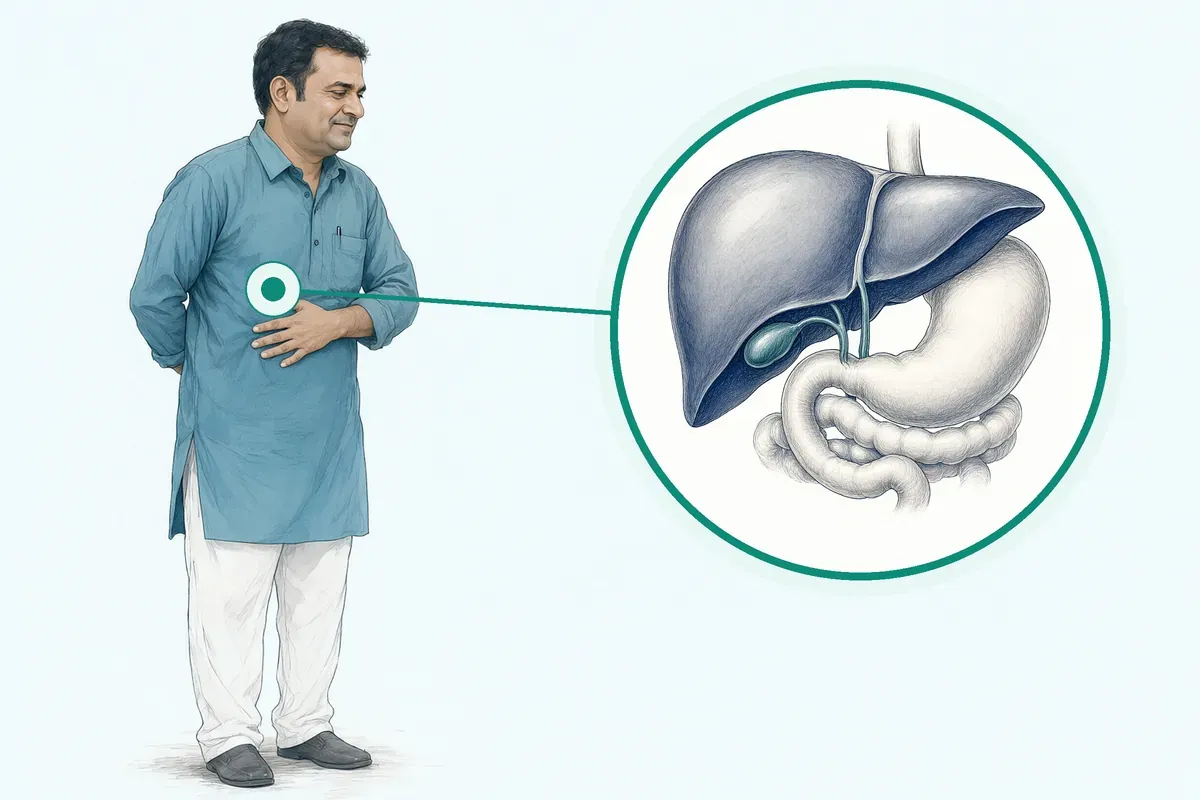
Liver conditions often develop quietly. You may notice tiredness, belly discomfort, or changes in routine blood tests without understanding what to do next.
-
Constant fatigue and weakness
You may feel tired or generally unwell for weeks without an obvious reason.
-
Fluid swelling and discomfort
Fluid buildup in the abdomen or swollen legs can make daily tasks difficult.
-
Worry over abnormal tests
Elevated liver enzymes or ultrasound findings often cause confusion and anxiety about future health.
Steatosis is often reversible, especially in the early stages and before cirrhosis develops.
Why Jaipur Hospital
You may worry about unexpected hospital costs, taking time off work, or coping with long-term illness.
Your care plan
Your first steps with us
- 1 Book an OPD consultation with our medical team.
- 2 Review your blood reports and diagnostic scans thoroughly.
- 3 Discuss a personalised medical and dietary management plan.
- 4 Attend regular follow-up visits to monitor your progress.
Medical assessment and treatment options
Our team evaluates your condition using structured tests and discusses evidence-based medical management tailored to your stage of liver illness.
-
Liver Function & Etiology Workup
Your doctor will discuss tests such as LFT, viral serology, autoimmune markers, and elastography to assess liver health.
-
NAFLD/NASH & Metabolic Liver Care
Your doctor will discuss structured weight management, cardiovascular risk reduction, and medical therapy for select cases.
-
Viral Hepatitis Antiviral Therapy
Your doctor will discuss antiviral medicines for hepatitis B and direct-acting antiviral regimens for hepatitis C.
-
Cirrhosis Complication Management
Your doctor will discuss diuretics for fluid retention, beta-blockers for varices, and medicines for encephalopathy.
Why patients trust us
- 1991 Serving Jaipur for 35 years
- NABH Accredited hospital
- 1 General Medicine consultants
- 24×7 Emergency, ICU and ambulance
- 25 Cashless schemes and insurers
Clinical findings in liver disease studies
-
3 to 5%
Weight loss of 3 to 5% is recommended in studies for people with simple steatosis.
-
8 to 12 weeks
In studies of chronic hepatitis C, direct-acting antiviral medicines cleared the virus in 8 to 12 weeks in over 95% of patients.
-
every 6 months
Doctors in clinical studies recommend regular screening for liver complications every 6 months for patients with cirrhosis.
If it is left untreated
Without medical care, long-term inflammation can cause progressive scarring in the liver and lead to severe complications.
Life after medical management
With timely diagnosis and medical guidance, most people can manage symptoms and protect liver function over time.
-
Steady routine monitoring
Most people feel reassured by regular OPD checkups that track liver enzyme trends clearly.
-
Manageable everyday symptoms
Medical management usually helps reduce swelling and fatigue, allowing a return to daily routines.
-
Structured lifestyle habits
Guidance on diet, activity, and medicines helps protect metabolic and digestive wellness over time.
Frequently asked questions
Questions patients ask about liver and digestive medicine
Which problems are assessed under liver and digestive medicine?
In short
Jaipur Hospital evaluates hepatitis, fatty liver, cirrhosis and functional GI disorders in the Liver and Digestive Medicine service. The team manages viral hepatitis B and C, alcoholic and non-alcoholic fatty liver disease, autoimmune liver conditions, cirrhosis complications and metabolic liver disease. Chronic disease monitoring and acute hepatitis care are provided.
In detail
The service covers a wide range of liver conditions. Viral hepatitis B and C are treated with antiviral therapy such as tenofovir or entecavir for HBV and sofosbuvir-based regimens for HCV.
NAFLD and NASH care focuses on weight loss, metabolic risk reduction and selected use of pioglitazone or vitamin E. Cirrhosis complications including ascites, variceal bleeding and hepatic encephalopathy are managed with diuretics, beta-blockers, lactulose and rifaximin.
Autoimmune hepatitis, biliary diseases and genetic conditions such as Wilson's disease and haemochromatosis are also evaluated. Diagnosis relies on liver function tests, viral serology, autoimmune markers and non-invasive elastography such as FibroScan.
A common belief
Many people think only alcohol causes liver disease.
What actually happens
In fact, fatty liver from obesity and diabetes is now very common, and viral hepatitis remains a major cause. Early evaluation catches these before they progress.
Your next step at Jaipur Hospital
A first consultation lasts 20 to 30 minutes and costs ₹800 to ₹2,500. Bring any previous blood reports, imaging or medication lists. The doctor will review your history, examine you and order a liver panel (₹3,000 to ₹10,000) or FibroScan if needed.
How will the doctor decide which tests I need?
In short
The doctor at Jaipur Hospital selects tests based on your history, examination findings and the suspected cause of liver disease. Standard first-line workup includes liver function tests, viral hepatitis serology, autoimmune markers, coagulation profile, ultrasound abdomen and FibroScan. Further tests such as CT, MRI, genetic studies or liver biopsy are ordered only if the diagnosis remains unclear or staging is needed.
In detail
Clinical reasoning guides test choice. Alcohol history and metabolic profile point to fatty liver or alcoholic hepatitis, prompting LFT, lipid profile, glucose, HbA1c and FibroScan. Risk factors for viral hepatitis trigger hepatitis B surface antigen, anti-HCV and HCV RNA.
Autoimmune features prompt ANA, ASMA, IgG levels. Cholestatic patterns lead to MRCP or ERCP. FibroScan estimates fibrosis non-invasively; biopsy is reserved for indeterminate cases or when histology changes management.
The Child-Pugh score and MELD score use bilirubin, albumin, INR, ascites and encephalopathy to grade cirrhosis severity and prioritise transplant referral.
A common belief
A standard panel for everyone wastes money and misses nuances.
What actually happens
Targeted testing based on clinical suspicion finds the cause faster and guides the right treatment from the start.
Your next step at Jaipur Hospital
Expect a tailored panel rather than a fixed battery. The team will explain why each test is chosen and the typical cost range: liver panel ₹3,000 to ₹10,000, FibroScan additional.
How soon should I expect improvement after the chosen treatment for liver disease?
In short
Improvement timelines depend on the specific liver condition and treatment started. At Jaipur Hospital, our medical team monitors response closely. Acute hepatitis often resolves within weeks. Fatty liver improvement may be seen in months with sustained lifestyle change. Cirrhosis management focuses on stabilising complications rather than reversing scarring.
In detail
Evidence indicates early-stage steatotic liver disease can sometimes improve within months when weight loss of 7 to 10 percent is achieved for NASH. Viral hepatitis antiviral therapy with direct-acting antivirals achieves high sustained virological response rates in 8 to 12 weeks.
For cirrhosis, diuretics control ascites over days to weeks, beta-blockers reduce variceal pressure, and lactulose or rifaximin improve encephalopathy symptoms. Liver transplantation offers survival benefit but requires lifelong follow-up.
A common belief
A common belief is that the liver heals fast once you start tablets.
What actually happens
In reality, scarring from cirrhosis is long-term, and fatty liver reversal needs sustained 7 to 10 percent weight loss. Viral hepatitis drugs work quickly but must be completed.
Your next step at Jaipur Hospital
Your doctor will set review intervals based on your diagnosis: typically 4 to 12 weeks for medication adjustment, 3 to 6 months for lifestyle interventions, and 6-monthly surveillance imaging for cirrhosis. Blood tests and FibroScan track progress. Report new symptoms promptly.
What do abnormal liver blood tests mean?
In short
Abnormal liver blood tests at Jaipur Hospital indicate that the liver is under stress, injured, or not performing its synthetic functions normally. Common patterns include raised alanine aminotransferase (ALT) and aspartate aminotransferase (AST) suggesting hepatocellular injury; raised alkaline phosphatase (ALP) and gamma-glutamyl transferase (GGT) pointing to cholestasis or biliary obstruction; low albumin and prolonged prothrombin time (INR) reflecting reduced synthetic capacity; and raised bilirubin indicating impaired excretion. The pattern guides the next investigations.
In detail
Evidence shows that isolated mild ALT elevation is frequently due to non-alcoholic fatty liver disease, especially with metabolic risk factors. Marked ALT and AST elevation (over ten times the upper limit) suggests acute viral hepatitis, drug-induced liver injury, or ischaemic hepatitis.
A cholestatic pattern (high ALP/GGT) prompts imaging for bile duct stones, strictures, or primary biliary cholangitis. Synthetic dysfunction (low albumin, high INR) correlates with cirrhosis severity and is part of the Child-Pugh score.
Viral serology, autoimmune markers, iron studies, copper studies, and FibroScan are selected based on the pattern. No single test diagnoses a specific disease; clinical correlation is essential.
A common belief
People often think one abnormal number equals a specific disease.
What actually happens
In reality, the same pattern can have several causes, and mild elevations are common in fatty liver without serious damage. Context — your weight, alcohol, medicines, and other blood results — matters more than any single value.
Your next step at Jaipur Hospital
Your doctor will repeat the tests to confirm persistence, review your alcohol intake, medications, and metabolic profile, and order targeted serology or imaging. Do not stop any prescribed medicine without advice. Fast before the repeat blood draw if requested.
How can I decide whether to seek advice about fatty liver disease?
In short
Consider seeking advice if you have risk factors for fatty liver disease even without symptoms. At Jaipur Hospital, evaluation is recommended for overweight or obesity, type 2 diabetes, high cholesterol, hypertension, or metabolic syndrome. A family history of liver disease or abnormal routine blood tests also warrant review.
In detail
Evidence shows global NAFLD prevalence is 25 percent with obesity in 51 percent, type 2 diabetes in 22 percent, hyperlipidaemia in 69 percent, and hypertension in 39 percent of affected individuals. Fibrosis progression in NASH occurs in about 40 percent.
Weight loss of 3 to 5 percent benefits simple steatosis; 7 to 10 percent is needed for NASH. Early intervention reduces cardiovascular risk and liver-related mortality.
- Fibrosis progression in NASH occurs in about 40 percent.
A common belief
A common view is that fatty liver is harmless because it is so common.
What actually happens
Data shows 40 percent of NASH cases progress to fibrosis, and liver-related mortality nearly doubles. Early weight loss and metabolic control can reverse or halt this.
Your next step at Jaipur Hospital
Start with a liver panel and abdominal ultrasound. If fatty liver is confirmed, FibroScan stages fibrosis. Lifestyle counselling, glycaemic control, and lipid management follow. Do not wait for symptoms.
Could several medical conditions or medicines be contributing to my symptoms?
In short
Yes, multiple medical conditions and medicines can contribute to liver and digestive symptoms. At Jaipur Hospital, the clinical review systematically checks for co-existing diseases such as diabetes, hypertension, thyroid disorders, and autoimmune conditions, and reviews all prescription, over-the-counter, and herbal medications for potential liver injury or drug interactions.
In detail
Many chronic diseases affect the liver. Type 2 diabetes and obesity drive non-alcoholic fatty liver disease, which can progress to NASH and cirrhosis. Hypothyroidism is linked to abnormal liver enzymes. Autoimmune hepatitis, primary biliary cholangitis, and primary sclerosing cholangitis may co-exist with other autoimmune disorders.
Medications are a frequent cause of liver injury: anti-tuberculosis drugs (isoniazid, rifampicin), antibiotics (amoxicillin-clavulanate), antiepileptics (valproate, carbamazepine), NSAIDs, statins, methotrexate, and herbal or Ayurvedic preparations can all raise liver enzymes or cause acute hepatitis. Polypharmacy increases interaction risk.
At Jaipur Hospital, the workup includes a detailed medication reconciliation, liver function tests, viral serology, autoimmune markers, and metabolic panel. FibroScan assesses fibrosis. Stopping or adjusting the offending drug often reverses drug-induced liver injury. Managing underlying metabolic conditions slows fatty liver progression. Coordination with cardiology, endocrinology, or rheumatology ensures comprehensive care.
A common belief
Patients often assume only alcohol or viruses harm the liver.
What actually happens
In reality, metabolic syndrome and drug-induced liver injury are leading causes. Stopping a harmful supplement or switching a prescription can reverse the damage, but only if the link is recognised.
Your next step at Jaipur Hospital
If you take multiple medicines or have several health conditions and notice liver-related symptoms, book a consultation at Jaipur Hospital. The visit takes 20 to 30 minutes and costs ₹800 to ₹2,500. A liver panel and FibroScan typically cost ₹3,000 to ₹10,000.
Your surgeon will review all factors, adjust medications if needed, and coordinate with other specialists. Bring a complete list of every medicine and supplement you use.
Which symptoms should prompt me to see a specialist?
In short
Jaipur Hospital advises seeing a liver specialist if you notice jaundice, unexplained fatigue, abdominal swelling, easy bruising or bleeding, itching, nausea, loss of appetite, weight loss, swelling in the legs, or confusion and memory changes. Early cirrhosis often has no symptoms, so routine checks are important if you have risk factors.
In detail
Symptoms of liver disease can be subtle at first. Fatigue and vague abdominal discomfort may be the only early signs. As cirrhosis progresses, portal hypertension causes fluid buildup (ascites) and swollen legs. Jaundice appears when bilirubin rises.
Easy bruising and bleeding reflect reduced clotting factor production. Hepatic encephalopathy causes confusion, forgetfulness, personality changes and sleep disturbances. Men may develop enlarged breasts or shrunken testicles. Women may have absent periods.
Risk factors such as heavy alcohol use, obesity, diabetes, viral hepatitis exposure or family history of liver disease warrant screening even without symptoms.
A common belief
People often ignore tiredness or mild belly pain.
What actually happens
But cirrhosis can be silent for years. By the time symptoms appear, scarring may be advanced. Risk factors like diabetes, obesity or past hepatitis need screening even if you feel fine.
Your next step at Jaipur Hospital
If you have any of these symptoms or risk factors, schedule a 20 to 30 minute consultation (₹800 to ₹2,500). The doctor will order liver function tests and viral serology (₹3,000 to ₹10,000) and may recommend FibroScan.
How will the results change my care plan?
In short
At Jaipur Hospital, test results guide the diagnosis, severity grading and treatment choices. Viral hepatitis markers start antiviral therapy. FibroScan and Child-Pugh scores stage fibrosis and cirrhosis severity, determining monitoring frequency and complication screening. Metabolic markers drive lifestyle and medical therapy for fatty liver. Abnormal imaging may lead to biopsy or cancer surveillance.
In detail
Results directly shape management. Positive HBV DNA or HCV RNA triggers antiviral treatment with tenofovir, entecavir or sofosbuvir-based regimens. FibroScan values above certain cut-offs indicate significant fibrosis or cirrhosis, prompting surveillance ultrasound every six months for hepatocellular carcinoma.
Child-Pugh class A, B or C decides prognosis and transplant referral timing. Elevated liver enzymes with metabolic syndrome lead to weight loss targets (7 to 10% for NASH), pioglitazone or vitamin E in select cases, and cardiovascular risk control.
Autoimmune markers may start corticosteroids or immunosuppressants. Ascites or varices on imaging start diuretics and beta-blockers. Each result narrows the differential and sets the next step.
A common belief
A normal FibroScan may mean only lifestyle advice.
What actually happens
A high score means six-monthly cancer scans and variceal screening. Viral load results start specific antivirals. The plan is personalised, not one-size-fits-all.
Your next step at Jaipur Hospital
You will discuss results at a follow-up visit, usually within a week. The doctor adjusts medications, sets monitoring intervals and refers for endoscopy or transplant evaluation if needed. Bring an attendant to help understand the plan.
What should I do if symptoms persist or worsen during liver disease treatment?
In short
If your liver disease symptoms persist or worsen while on treatment at Jaipur Hospital, contact your treating team immediately. Warning signs include increasing abdominal swelling, new or worsening confusion or drowsiness, vomiting blood, passing black or bloody stools, fever with chills, or sudden weight gain. These may indicate complications such as tense ascites, hepatic encephalopathy, variceal bleeding, or spontaneous bacterial peritonitis that need urgent evaluation.
In detail
Evidence highlights that decompensated cirrhosis can deteriorate rapidly. Ascites that does not respond to diuretics may require therapeutic paracentesis. Persistent encephalopathy despite lactulose and rifaximin may need dose adjustment or investigation for precipitants like infection or electrolyte imbalance.
Variceal bleeding is a medical emergency; guidelines recommend urgent endoscopy within twelve hours. Fever in a cirrhotic patient warrants blood cultures and empirical antibiotics. Early intervention reduces mortality. Your doctor may adjust diuretics, add antibiotics, modify lactulose, or arrange endoscopic therapy based on the clinical picture.
A common belief
Patients sometimes wait days hoping symptoms will settle, but in cirrhosis, deterioration can be rapid.
What actually happens
Early paracentesis, endoscopy for bleeding, or antibiotics for infection change outcomes. Do not self-adjust diuretics or stop lactulose.
Your next step at Jaipur Hospital
Keep a written list of your medicines and doses, and bring recent blood reports when you visit. Do not stop prescribed medicines without advice. If you cannot reach your doctor, attend the 24×7 emergency department at Jaipur Hospital.
Could I have liver disease without pain or jaundice?
In short
Yes, you can have significant liver disease without pain or jaundice. At Jaipur Hospital, many patients with early cirrhosis, non-alcoholic fatty liver disease, or chronic viral hepatitis are asymptomatic and diagnosed incidentally during routine health checks or investigations for other conditions. The liver itself has no pain receptors; discomfort arises only when the capsule stretches. Jaundice appears late, usually when bilirubin exceeds two to three milligrams per decilitre, often indicating advanced dysfunction.
In detail
Evidence confirms that cirrhosis can develop over many years without symptoms. Studies report that a large proportion of non-alcoholic fatty liver disease cases are found on ultrasound done for unrelated reasons. Chronic hepatitis B and C are frequently silent for decades.
Symptoms such as fatigue, vague abdominal discomfort, or mild enzyme elevation may be the only clues. By the time jaundice, ascites, or encephalopathy appear, the disease is usually decompensated.
This silent progression is why guidelines recommend screening high-risk groups — those with obesity, diabetes, heavy alcohol use, or viral hepatitis risk factors — with liver function tests and imaging even when they feel well.
A common belief
Many people believe they would feel sick if their liver was damaged.
What actually happens
In reality, the liver compensates silently for years. Routine blood tests and ultrasound are the only way to catch it early, especially if you have risk factors like diabetes, obesity, or regular alcohol use.
Your next step at Jaipur Hospital
If you have risk factors like overweight, diabetes, regular alcohol use, or a family history of liver disease, ask your doctor for a liver panel and abdominal ultrasound. Do not wait for symptoms. Early detection allows intervention that can slow or reverse damage.
FAQ library
Questions and answers about liver and digestive medicine
When you contact us
Consult our medical team in Jaipur
Reach out to Jaipur Hospital to review your reports and discuss a clear care plan.
- A consultation with a physician (internal medicine) in the OPD
- Your scans and reports reviewed, with tests done in-house if you need them (laboratory, X-ray and imaging)
- Your options explained in plain words, including whether you need surgery at all
- A cost estimate before you decide
- Help with cashless treatment under RGHS, MAA Yojana, CGHS and empanelled insurers and TPAs
- Follow-up visits after your treatment
Overview
Liver and Digestive Medicine: what to know
What liver and digestive conditions are and how they develop
- Fat buildup
- Too much fat in liver cells
- Reversible early stage
- Fat buildup often reversible before scarring
- Scarring replaces tissue
- Healthy tissue becomes scar tissue
- No reversal of cirrhosis
- Existing scar tissue cannot be reversed
Liver and digestive conditions include problems like fatty liver, hepatitis, and cirrhosis. Steatotic liver disease, formerly called fatty liver disease, happens when too much fat builds up in your liver cells. In its early stages, fat buildup in the liver is often reversible before severe scarring appears. Without medical attention, ongoing irritation and injury can build up in the tissue over time.
When long-term injury continues, it can lead to cirrhosis. Cirrhosis is a condition where healthy liver tissue is replaced by scar tissue, also called fibrosis, which stops the organ from working as it should. This damage develops slowly and can take many years to become life-threatening. Doctors do not have treatments that reverse existing scar tissue or reverse cirrhosis.
However, if you catch the damage early enough, you can manage the condition and slow down further harm by addressing its underlying cause.
Symptoms of liver disease and warning signs that need urgent care
- Vomiting blood
- Black or bloody stools
- Severe confusion or memory loss
- Extreme personality changes
- Sleep problems
Early liver conditions often develop without any warning signals. Many people with cirrhosis do not notice symptoms in the early stages, though some may feel tired or unwell all the time or have tummy pain. It is usually only after significant scarring happens that clearer signs begin to show.
As liver damage advances, you may experience:
- Fatigue
- Poor appetite
- Nausea
- Vomiting
- Weight loss
- Itchy skin
- Swollen legs
Other noticeable changes include:
- Fluid building up in the abdomen
- Yellowing of your skin and eyes
- Forgetfulness
- Trembling hands
- Slurred speech
- Bleeding or bruising easily
In men, hormonal changes may cause enlarged breasts or smaller testicles, while women may notice absent menstrual periods.
Certain warning signs require urgent medical care the same day. People who vomit blood or pass black or bloody stools should go to a hospital right away. Severe confusion, memory loss, extreme personality changes, or sleep problems happen when waste products build up in the brain, a complication known as hepatic encephalopathy. If you or your attendant notice these sudden changes, you need prompt medical evaluation in an emergency setting.
Causes of liver conditions and who is at higher risk
- 51.34% Obesity
- 69.16% Hyperlipidaemia
- 42.54% Metabolic syndrome
- 39.34% High blood pressure
- 22.51% Type 2 diabetes
Liver conditions develop from multiple medical causes and lifestyle factors.
Common causes include:
- Chronic alcohol use
- Viral hepatitis infections
- Fatty liver disease
- Genetic or metabolic disorders
Fatty liver disease is frequently linked to obesity. In worldwide research, the global prevalence of non-alcoholic fatty liver disease was 25.24%. In studies of patients with this condition, common metabolic comorbidities included obesity in 51.34%, hyperlipidaemia in 69.16%, metabolic syndrome in 42.54%, high blood pressure in 39.34%, and type 2 diabetes in 22.51%.
Long-term viral infections, such as hepatitis B, C, or D lasting over several decades, can damage liver cells. Long-term heavy alcohol use also places you at risk, defined in medical criteria as five or more drinks a day for at least five days in a month.
In health guidelines, drinking over 50 units of alcohol a week for men or over 35 units a week for women increases the likelihood of cirrhosis. Other causes include autoimmune hepatitis, where the immune system attacks liver tissue, and diseases that block or destroy bile ducts, such as primary biliary cholangitis and primary sclerosing cholangitis. Genetic conditions like Wilson's disease, hemochromatosis, alpha-1 antitrypsin deficiency, and cystic fibrosis can also lead to liver scarring.
How liver disease is diagnosed through examination and tests
- Physical examination Check for enlarged liver or abdominal swelling
- Blood tests Liver panel, viral serology, autoimmune markers
- Liver biopsy if needed Tissue sample checked under microscope
Because early liver disease often shows no outward signs, doctors frequently detect it during routine health checkups for other conditions or through blood tests. Your doctor will conduct a physical examination to look for signs such as an enlarged liver or abdominal swelling. An initial evaluation typically includes blood work, an abdominal ultrasound, and a consultation.
A complete liver panel checks several key markers in your blood:
- Bilirubin levels, which measure waste processing by the liver
- Liver enzymes like alkaline phosphatase, which can indicate active liver cell damage
- Serum proteins such as albumin and globulin, which reflect liver synthesis
- Prothrombin time (INR), which assesses blood clotting factor production
- Viral serology tests to check for hepatitis A, B, C, or E viruses
- Specific autoimmune markers to identify conditions like autoimmune hepatitis
Imaging tests help doctors view structural changes in the liver. These typically include:
- An ultrasound
- A CT scan
- Magnetic resonance imaging (MRI)
Non-invasive transient elastography, such as a FibroScan, evaluates liver stiffness and fat accumulation. In select cases where non-invasive tests do not provide enough information, a liver biopsy may be advised, where a small tissue sample is removed and checked under a microscope.
Doctors also use scoring systems like the Child-Pugh classification to assess severity across five measures, including albumin, ascites, bilirubin, brain function, and clotting time. For people with cirrhosis, doctors may advise regular ultrasound scans every 6 months to monitor for liver cancer.
Medical management and when surgery is advised
- 3% to 5% Simple steatosis
- 7% to 10% Advanced conditions (NASH)
Medical treatment focuses on stopping the root cause of liver injury and managing complications. In early-stage fatty liver disease, liver health can improve within months. For simple steatosis, a weight loss of 3% to 5% is recommended, while a weight loss of 7% to 10% is recommended for advanced conditions like non-alcoholic steatohepatitis.
Regular physical exercise, cholesterol control, and blood sugar management help halt progression. If alcohol is a factor, stopping alcohol intake completely is necessary. For viral hepatitis, antiviral medicines are prescribed; in studies, direct-acting antiviral medicines cleared chronic hepatitis C in more than 95% of people in 8 to 12 weeks. Autoimmune conditions may be treated with steroids and immunosuppressive agents.
When cirrhosis causes secondary complications, specific medicines are prescribed:
- Diuretic medicines to help remove excess fluid buildup in the abdomen and legs
- Beta-blocker medicines to lower blood pressure in portal veins and reduce bleeding risks
- Lactulose or rifaximin to help reduce toxin buildup in the brain
- Low-sodium diets and fluid drainage procedures if abdominal swelling is severe
- Antibiotics and vaccinations to prevent infections
Surgical interventions are considered when medical treatments alone cannot control complications. In cases of severe internal bleeding or uncontrolled portal hypertension, a shunt procedure or surgical shunt implant may be advised. For liver tumours, liver resection to remove the affected portion may be considered.
When cirrhosis progresses to end-stage liver failure and all other treatments have been exhausted, a liver transplant may be advised, which involves replacing the diseased liver with a healthy donor organ. Your surgeon will advise which medical or surgical option suits your clinical condition.
Preparing for liver and digestive medical procedures
Before any planned evaluation or intervention for liver and digestive conditions, our team runs specific tests to assess your liver function.
Blood tests check:
- Liver enzymes like alkaline phosphatase
- Bilirubin levels
- Proteins including albumin and globulin
Doctors may also order viral serology tests for hepatitis or antibody markers for autoimmune conditions. An abdominal ultrasound, CT scan, or MRI may be arranged by our team to view the liver tissue. If a liver biopsy is scheduled to examine tissue under a microscope, your surgeon will discuss the steps with you in detail.
Preparation involves discussing all your current medicines with your doctor. Talk with your doctor before taking prescription medicines, and also talk with your doctor before taking over-the-counter medicines. This includes pain relievers such as nonsteroidal anti-inflammatory drugs (NSAIDs) or acetaminophen, as well as sleep aids.
If your doctor advises you to stop medicines or activities that could worsen liver injury, follow that guidance closely. Do not drink alcohol or use illegal drugs.
For outpatient blood draws and imaging, fasting for several hours may be advised. If an endoscopic procedure or biopsy is planned, you will receive clear instructions on when to stop eating and drinking. When you come to Jaipur Hospital, bring your previous medical files, test reports, and government identification.
You should also bring all your current medicines in their original packaging from your chemist. It is helpful to have an adult family attendant accompany you to your OPD appointment.
Treatment methods for liver and digestive medicine
Liver and digestive care covers several clinical approaches. Your surgeon or physician will advise which option suits your condition. We do not use any single approach as standard.
- Liver Function and Etiology Workup: This option includes blood tests such as liver function panels, viral serology for Hepatitis A, B, C, and E, autoimmune markers, and non-invasive liver stiffness checks like FibroScan elastography.
- NAFLD/NASH and Metabolic Liver Care: For steatotic liver disease, treatment focuses on metabolic health. Recommended weight loss of 3 to 5% helps simple steatosis, while weight loss of 7% to 10% is recommended for advanced liver disease such as NASH. Managing high cholesterol, hypertension, and blood sugar control is part of this care, alongside regular exercise. In select cases, medications such as pioglitazone or vitamin E may be considered to reduce cardiovascular risk and liver injury.
- Viral Hepatitis Antiviral Therapy: Antiviral drugs help treat viral hepatitis. For chronic hepatitis B, medicines like tenofovir or entecavir may be used. For chronic hepatitis C, direct-acting antiviral regimens based on medicines like sofosbuvir are given to clear the infection.
- Cirrhosis Complication Management: When scarring leads to complications, medical therapies help control symptoms. Diuretics may be used to remove excess abdominal fluid. Beta-blockers may be used to reduce high pressure in the veins and lower bleeding risk. Medicines like lactulose and rifaximin are used for hepatic encephalopathy to control toxin buildup.
On the day of your OPD appointment at Jaipur Hospital, a consultation typically takes 20 to 30 minutes. General anaesthesia is usually not needed for outpatient medical evaluations. If an admission is required for decompensated liver disease, our medical team and nursing staff supervise your treatment plan.
Risks and complications of liver conditions in studies
- 40.76% Fibrosis progression in NASH
- 0.09 Mean annual progression rate in NASH
- 0.44 per 1,000 person-years Liver cancer incidence in NAFLD
- 42% Hypertension with lenvatinib
- 52% Palmar-plantar erythrodysaesthesia with sorafenib
Chronic liver disease can lead to progressive scarring and internal complications if left unchecked. In steatotic liver disease, fat builds up in liver cells, which can progress to NASH, advanced fibrosis, and cirrhosis. In published medical research, the fibrosis progression proportion in patients with NASH was 40.76% (95% CI: 34.69-47.13). In that same systematic review, the mean annual rate of progression in NASH was 0.09 (95% CI: 0.06-0.12).
Advanced cirrhosis carries risks such as fluid collection in the abdomen, known as ascites, and enlarged veins that can burst and bleed. Another serious complication is hepatic encephalopathy, where toxins build up in the brain and cause confusion, memory loss, personality changes, or sleep problems.
In studies, patients with cirrhosis are also at risk of developing hepatocellular carcinoma, the most common form of liver cancer. Research shows the incidence of liver cancer among patients with NAFLD was 0.44 per 1,000 person-years.
Targeted drug treatments used in advanced liver cancer trials also show documented side effects in medical studies. In a large trial comparing lenvatinib and sorafenib, the most common adverse event of any grade for lenvatinib was hypertension, occurring in 42% of patients. Decreased weight was the fourth most common adverse event for lenvatinib, seen in 31%. For sorafenib, the most common adverse event of any grade was palmar-plantar erythrodysaesthesia, which occurred in 52% of patients.
Recovery, aftercare, and when to seek urgent help
- Acute hepatitis Typically resolves in weeks
- Hospital stay for decompensated cirrhosis Typically 3 to 7 days
- Ongoing outpatient care Chronic conditions need regular monitoring
Recovery and aftercare depend on whether your condition is acute or chronic. Acute hepatitis typically resolves in weeks. Chronic conditions, such as fatty liver disease or cirrhosis, require ongoing chronic disease monitoring. Most patients manage their care as an outpatient without staying in the hospital.
If an admission is needed for decompensated cirrhosis, the hospital stay is typically 3 to 7 days, during which our team assists you and your attendant.
In the first days and weeks of home care, take all your prescribed medicines exactly as your doctor instructs. Avoid self-medicating or buying unapproved pills from a chemist.
You should consume healthy foods and drinks, and avoid:
- Raw or undercooked shellfish
- Fish
- Meat
Regular physical exercise helps prevent fat accumulation in liver tissue. If you have been advised to lose weight, aim to reach and stay at a healthy weight.
Certain symptoms require immediate medical attention. If you vomit blood, or notice very dark or black stools, you should go to an emergency hospital right away. You must also contact the hospital if you experience sudden confusion, trembling hands, severe abdominal swelling, yellowing of your eyes, or difficulty staying awake.
Results and long-term outlook from clinical studies
In clinical studies, treating the underlying causes of liver damage can help manage symptoms and prevent complications. For early-stage steatotic liver disease, steatosis is often reversible before cirrhosis develops, and the condition can sometimes improve within months. In chronic viral hepatitis, modern medications achieve high response rates.
In clinical studies, direct-acting antiviral medicines cleared chronic hepatitis C infection in more than 95% of people within 8 to 12 weeks.
When severe scarring has already developed into cirrhosis, doctors do not have specific medical treatments that reverse the scar tissue, but stopping underlying causes helps keep cirrhosis from getting worse. In clinical research evaluating cirrhosis severity, doctors use the Child-Pugh score to assess survival outlook.
In published data, one-year survival rates by Child-Pugh class were 100 percent for Class A, 80 percent for Class B, and 45 percent for Class C. Regular surveillance by ultrasound every six months helps detect suspicious liver nodules early, when effective medical or surgical therapies are feasible.
In clinical trials for advanced hepatocellular carcinoma, systemic drug therapies have demonstrated extended survival in study groups. In a large randomised trial of 954 patients, lenvatinib showed a median survival time of 13.6 months (95% CI 12.1-14.9), compared to 12.3 months (95% CI 10.4-13.9) for sorafenib.
In another clinical trial, the combination of atezolizumab and bevacizumab demonstrated a hazard ratio for death of 0.58 compared with sorafenib (95% CI 0.42 to 0.79; P < 0.001).
Cost of liver and digestive care and insurance schemes in Jaipur
At Jaipur Hospital, an OPD consultation typically costs ₹800 to ₹2,500. A diagnostic liver panel typically costs ₹3,000 to ₹10,000. If inpatient hospitalisation is required for decompensated liver conditions, admission typically ranges from ₹50,000 to ₹2,00,000. These figures represent a typical range in India.
Total costs depend on the specific blood tests required, the need for specialised imaging or endoscopy, the length of your hospital stay, and any complications being treated. You can ask us for an estimate for your planned care.
Jaipur Hospital is an NABH-accredited private hospital in Jaipur.
We accept government schemes including:
- Rajasthan Government Health Scheme (RGHS)
- MAA Yojana
- Central Government Health Scheme (CGHS)
We also work with a panel of private insurance companies and third-party administrators (TPAs). If you have health insurance coverage, your family attendant can share your policy details during your visit to verify available coverage.