
Understanding & candidacy · Knee Replacement
When is knee replacement advised after non-surgical care
Doctors usually suggest knee replacement when pain and stiffness stop you from doing everyday tasks and other treatments no longer help. The decision depends on how much your knee affects your daily life, not on X-rays alone. You and your doctor decide the right time together.
- ₹1,80,000 to ₹3,50,000 Typical cost range in India
- 3 to 5 nights Hospital stay
- 1.5 to 2.5 hours Operation time
- 1 to 2 days Walk with aid after surgery
How doctors decide you are ready for surgery
Do
- Severe pain limits daily tasks
- Non-surgical care tried first
- Decision based on life impact
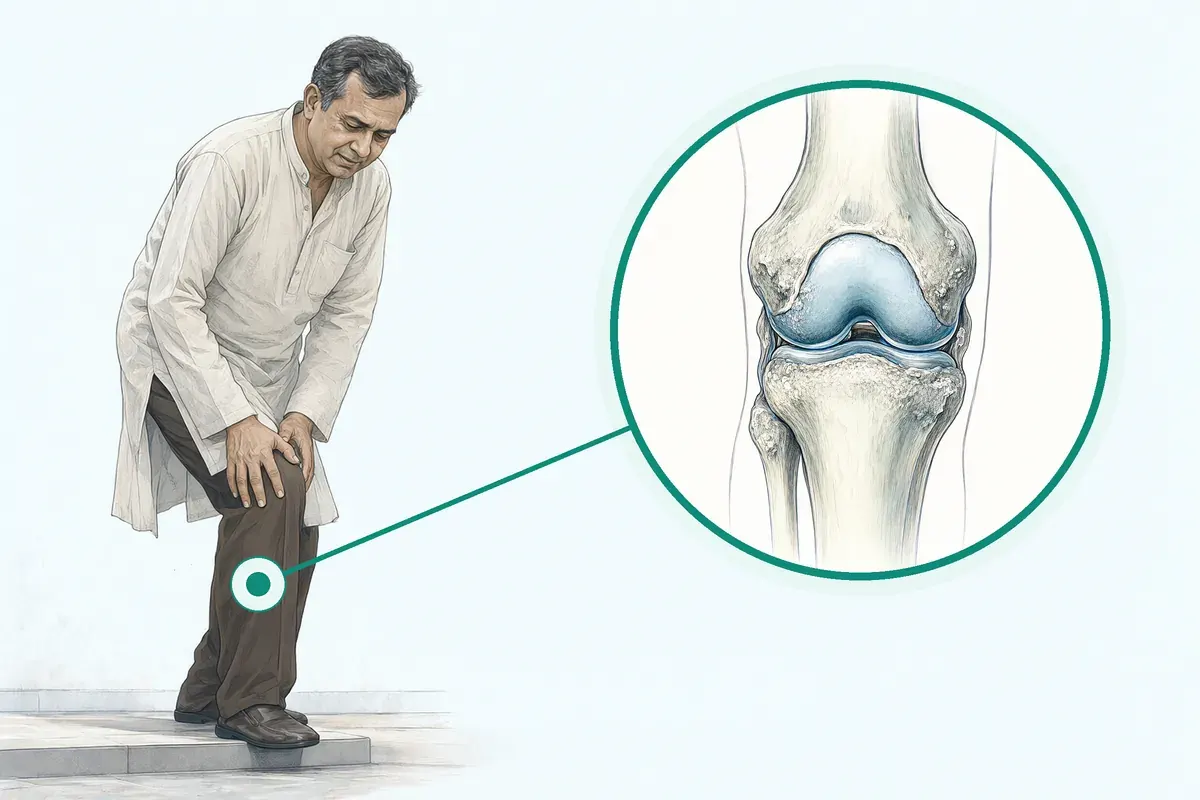
Doctors advise knee replacement when pain and stiffness make everyday life difficult and other treatments have not helped. The main reason is severe pain that limits daily activities such as walking, climbing stairs, or even getting out of bed. Non-surgical options like medicines, injections, physiotherapy and lifestyle changes are tried first.
If these do not give enough relief, surgery becomes an option. The decision is based on how much the knee affects your life, not on a scan alone. Your surgeon will recommend either a total or partial knee replacement.
Loss of independence and daily activities
Without replacement surgery, a severely osteoarthritic knee joint may continue to deteriorate until it is impossible to go about normal daily activities such as standing up, walking or getting up from a seated position. In studies, a severely osteoarthritic knee may continue to deteriorate until normal daily activities become impossible.
What X-rays and scans show before surgery
They also help the surgeon plan whether a total or partial replacement is suitable. However, the decision to operate rests on your symptoms and how they affect your life, not on the scan findings alone. Some people have severe changes on X-ray but manage well with non-surgical care. Your doctor will explain what the images show and how they fit with your symptoms.
What happens if you wait after being told you are ready
- Pain at rest and night pain
- Often increase as the joint wears down
- Walking and getting up become harder
- Daily movements get more difficult
- Bone may weaken or deformity increase
- Can make the operation more complex later
Knee arthritis usually gets worse with time if the operation is not performed. As the joint wears down further, pain at rest and night pain often increase, and walking or getting out of bed can become more difficult. In some people, the bone becomes weaker or the deformity increases, which can make the operation more complex later. Your surgeon can explain how waiting might affect your own situation.
Your right to choose not to operate
Knee replacement is an elective procedure, which means the final decision is yours. Even if your surgeon recommends it, you can decline or delay surgery.
Some people manage for longer with:
- Walking aids
- Activity changes
- Steroid injections
- Pain medicines
If you choose not to operate, your doctor will continue to help you manage symptoms and monitor your knee. You can always reconsider surgery later if your daily life becomes harder.
Questions to ask your doctor at the next visit
Write down your questions before the appointment so nothing is missed. You might ask: How much pain or loss of function means tablets and physio are no longer enough? Do my X-rays show changes that make surgery the better option now? What are the specific risks for me with my diabetes, heart condition or other health problems?
If I wait, what is likely to happen to my knee and my mobility? Are there any non-surgical options I have not tried yet, such as a different injection or a brace? What does recovery look like for someone my age and fitness level? Will I need help at home after discharge, and for how long?