

Neurosurgery and Neurology · Jaipur Hospital
Stroke Surgery in Jaipur
Sudden brain bleed needs fast surgery; we assess, explain options, and give a clear plan.
- Serving Jaipur since 1991 (35 years)
- NABH accredited
- 24×7 emergency & ICU
- Cashless: RGHS, MAA Yojana, CGHS + 22 insurers
- Operation time
- 2 to 5 hours
- Anaesthesia
- General anaesthesia
- Recovery
- ICU stay 3 to 7 days, rehabilitation over 3 to 12 months
- Price
- ₹3,00,000 to ₹8,00,000typical range in India; ask us for an estimate
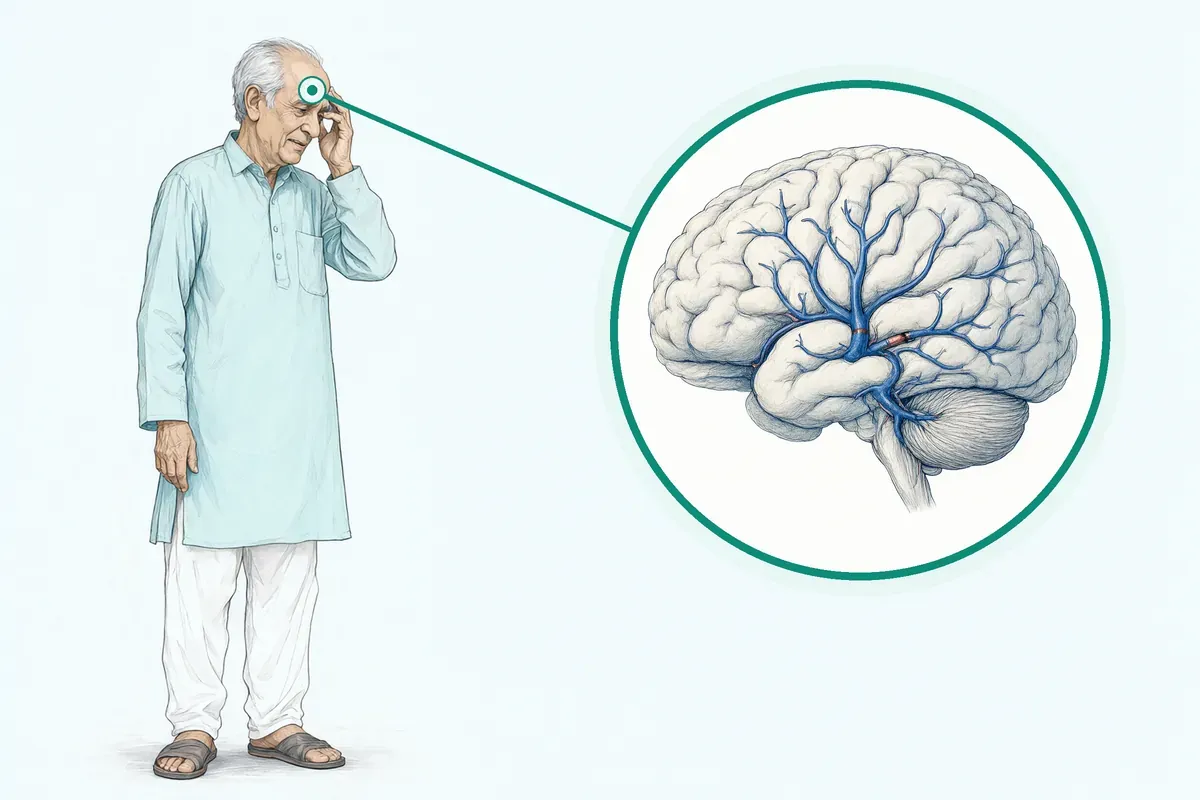
Brain bleed is an emergency
A sudden bleed in the brain threatens life and function
A ruptured vessel causes pressure that can damage the brain within hours. You may face sudden headache, weakness, or loss of consciousness. Fast decisions are needed, but the medical terms are confusing.
-
Sudden severe headache
Often described as the worst headache of your life, with nausea or vomiting.
-
Weakness or numbness
One-sided face, arm, or leg weakness; trouble speaking or understanding.
-
Confusion or drowsiness
Lethargy, memory problems, or difficulty waking up.
-
Seizure or stiff neck
New fits or neck stiffness after a sudden headache.
Haemorrhagic strokes account for 10 to 15 percent of all strokes and are a neurological emergency.
Why Jaipur Hospital
You are terrified for your loved one, overwhelmed by consent forms, and worried about the cost and long road ahead.
Your care plan
Your first steps with us
- 1 Call emergency or bring patient to 24x7 ER
- 2 Neurosurgeon reviews scans and explains options fast
- 3 Surgery done; ICU stay typically 3 to 7 days
- 4 Rehab starts in hospital and continues at home
How the operation is done
Surgery relieves pressure and stops bleeding. The method depends on the bleed type, size, and location. Your surgeon will discuss the appropriate option.
-
Decompressive craniectomy
Bone flap removed to give swollen brain space; flap stored for later replacement.
-
Haematoma evacuation
Microsurgical removal of blood clot from inside the brain or under the dura.
-
Aneurysm clipping
Open surgery places a tiny clip across the aneurysm neck to stop bleeding.
-
Endovascular coiling
Catheter threaded through groin artery fills aneurysm with coils; no skull opening.
Why patients trust us
- 1991 Serving Jaipur for 35 years
- NABH Accredited hospital
- 1 Neurosurgery and Neurology consultants
- 24×7 Emergency, ICU and ambulance
- 25 Cashless schemes and insurers
What research shows about this treatment
-
Functional independence at 3 months in about 6 in 10 patients
Mechanical thrombectomy studies showed 59 percent favourable outcome at 90 days.
-
Mortality at 90 days around 8 percent
Similar mortality in thrombectomy alone and combined therapy groups.
-
Symptomatic brain bleed after procedure in 2 percent
Symptomatic intracranial haemorrhage at 24 hours occurred in 2 percent of patients.
If it is left untreated
Without surgery, pressure builds and can cause long-term brain injury or death. Rebleeding risk is high in the first hours. Early decompression improves survival chance.
Life after treatment
Most people spend weeks to months regaining strength and speech with therapy. Recovery varies by bleed size and location.
-
ICU then ward stay
Usually 3 to 7 days in ICU, then 7 to 14 nights total in hospital.
-
Rehab at home
Physiotherapy, speech and occupational therapy often continue for 3 to 12 months.
-
Regular follow-up
Imaging and clinic visits scheduled to monitor healing and prevent complications.
-
Medication routine
Blood pressure control and sometimes anti-seizure drugs for months or longer.
Frequently asked questions
Questions patients ask about stroke surgery
Which problems are assessed under stroke and neurovascular surgery?
In short
At Jaipur Hospital our neurosurgery team assesses a range of acute and chronic neurovascular conditions. These include intracerebral haemorrhage, subarachnoid haemorrhage, ruptured aneurysms, arteriovenous malformations and large ischaemic strokes with malignant oedema. The service also evaluates patients with transient ischaemic attacks, carotid stenosis and vascular malformations that may need intervention.
In detail
The assessment follows established clinical pathways. According to our usual protocols, the team manages haemorrhagic stroke caused by hypertension, aneurysm rupture, arteriovenous malformation or amyloid angiopathy.
Evidence shows that large vessel occlusions are confirmed by CT or MR angiography and that eligibility for interventions such as thrombectomy depends on time from symptom onset and imaging findings.
The surgeon reviews the size, location and pressure effect of any bleed, the patient's conscious level and overall health to decide if surgery is indicated.
Your next step at Jaipur Hospital
If you or a family member has been diagnosed with a neurovascular condition, you can request an outpatient consultation. The surgeon will review prior imaging, order any additional scans and discuss whether observation, medical management or an operation is appropriate. To arrange a review, please book a consultation at Jaipur Hospital.
How will the doctor decide which tests I need?
In short
At Jaipur Hospital the neurosurgeon selects tests based on your symptoms, examination findings and the suspected diagnosis. A non-contrast CT head is usually the first scan for suspected haemorrhage or large stroke. If an aneurysm or arteriovenous malformation is suspected, CT angiography or MR angiography is added. Digital subtraction angiography may be used for detailed vascular mapping before aneurysm clipping or coiling.
In detail
Our usual protocols state that occlusions must be confirmed by CT or MR angiography before thrombectomy. Evidence shows that imaging creates detailed pictures of tissues, nerves and vessels, helping the surgeon locate the exact area needing treatment.
The surgeon also orders blood tests, coagulation profile, renal function and ECG to assess fitness for general anaesthesia. The choice of test balances diagnostic yield, radiation exposure and the urgency of the clinical situation.
Your next step at Jaipur Hospital
You will be guided through each required test by the nursing and radiology staff. Most emergency scans are done within the first hour of arrival. Elective vascular studies are scheduled within a few days of the outpatient visit. To have your case reviewed and the appropriate imaging arranged, please book a consultation at Jaipur Hospital.
How soon should I expect improvement after stroke surgery?
In short
Recovery after stroke surgery at Jaipur Hospital varies by person and procedure. Most patients spend three to seven days in the ICU and seven to fourteen nights in hospital. Rehabilitation continues for three to twelve months. Some functions improve within weeks, while others take longer. Your surgeon will give a clearer timeline after reviewing your case.
In detail
Improvement depends on the type of surgery performed. Decompressive craniectomy, haematoma evacuation, aneurysm clipping, or endovascular coiling each affect the brain differently. Evidence shows functional independence at three months occurs in about 59 percent of patients after mechanical thrombectomy.
Open craniotomy typically needs six weeks to several months for initial recovery. Less invasive procedures may allow faster early progress. Fatigue, headache, and temporary weakness are common in the first weeks. The healthcare team monitors neurological status closely during the ICU stay.
- Evidence shows functional independence at three months occurs in about 59 percent of patients after mechanical thrombectomy.
A common belief
Many expect a quick return to normal, but brain healing is gradual.
What actually happens
Open surgery needs longer recovery than endovascular coiling. Fatigue and headaches are common early on, not a sign of failure.
Your next step at Jaipur Hospital
You will have regular imaging and follow-up visits in the weeks and months after discharge. Rehabilitation with physiotherapists, speech therapists, and occupational therapists helps restore strength, mobility, and speech. Return to work and normal activities depends on your progress; discuss timing with your care team.
Which symptoms should prompt an immediate emergency call after stroke surgery?
In short
Call emergency services or go to the 24×7 emergency department at Jaipur Hospital if you experience sudden severe headache, difficulty waking, new confusion, weakness on one side, speech difficulty, seizure, vision loss, fever with neck stiffness, or wound swelling with discharge. These may indicate rebleeding, raised pressure, or infection.
In detail
After neurosurgery, the brain is vulnerable to complications. Rebleeding risk is small but real; studies show recurrent subarachnoid haemorrhage occurs at a rate of one in 641 patient-years after coiling and one in 2041 after clipping.
Raised intracranial pressure can develop from swelling or hydrocephalus, monitored in ICU with ICP devices. Infection signs include fever, wound redness, and discharge. Vasospasm after aneurysm treatment can cause delayed deficits. The team performs frequent neuro-observations early on.
A common belief
Mild headache and tiredness are common after surgery.
What actually happens
But sudden worsening or new neurological deficits are not normal. They can mean rebleeding, pressure build-up, or infection needing urgent treatment.
Your next step at Jaipur Hospital
Keep hospital emergency numbers accessible: 0141-2551500, 0141-2554139, +91-7414-001-001. Do not drive yourself if symptoms are acute. Attend all scheduled imaging and clinic reviews. Report any new neurological change promptly.
How can I decide whether to seek advice about brain aneurysm clipping?
In short
You should seek advice about brain aneurysm clipping if you have a diagnosed aneurysm or symptoms such as a sudden severe headache. Jaipur Hospital offers neurosurgical assessment for aneurysm treatment. Your surgeon will review imaging and clinical details to discuss whether open clipping is appropriate for your case.
In detail
Aneurysm clipping is an open surgical technique where a metal clip is placed across the aneurysm neck to stop blood flow into the sac.
Evidence shows clipping provides durable occlusion with a lower long-term rebleeding rate compared with endovascular coiling, though it involves a craniotomy and longer initial recovery. The decision depends on aneurysm size, location, shape, your age, and overall health.
Your surgical team will explain the risks, such as infection, neurological deficit, or vasospasm, and the expected ICU stay of three to seven days.
A common belief
Clipping is open surgery with a craniotomy, offering durable results but longer recovery than coiling.
What actually happens
Many people assume all aneurysms are coiled, but location and shape often make clipping the better choice.
Your next step at Jaipur Hospital
If you have been told you have an aneurysm or experience warning symptoms, ask your doctor for a referral to our neurosurgery OPD. Bring any recent CT or MRI reports.
The team will outline the treatment options, typical hospital stay of seven to fourteen nights, and the cost range of ₹3,00,000 to ₹8,00,000.
What changes in strength, sensation, speech, vision, or bladder control need urgent assessment?
In short
Any sudden or worsening weakness in limbs, numbness, speech difficulty, vision loss, or loss of bladder or bowel control needs urgent assessment. Jaipur Hospital provides 24×7 emergency neurosurgery for stroke and haemorrhage. These changes may indicate new bleeding, swelling, or ischaemia. Do not wait for symptoms to improve on their own.
In detail
Neurological changes after stroke surgery or in known neurovascular conditions can signal complications such as rebleeding, hydrocephalus, infarct extension, or seizure activity. Evidence shows early re-imaging and intervention improve outcomes.
The emergency team performs rapid CT or MRI, checks intracranial pressure if a monitor is in place, and reviews medication. ICU monitoring allows detection of subtle changes. The neurosurgery team decides on urgent surgical or medical management.
A common belief
Families often hope symptoms will settle.
What actually happens
In neurovascular conditions, new deficits can mean rebleeding or swelling that needs surgery within hours. Delay reduces recovery potential.
Your next step at Jaipur Hospital
If you or your attendant notice any new or worsening neurological symptom, go to the 24×7 emergency department at Jaipur Hospital immediately. Bring your discharge summary and medication list. The team will assess, image, and act. Typical emergency evaluation costs are included in the overall stroke surgery range of ₹3,00,000 to ₹8,00,000.
Which symptoms should prompt me to see a specialist?
In short
You should see a specialist if you experience a sudden severe headache, new weakness or numbness on one side of the body, difficulty speaking or understanding speech, loss of vision, unsteady gait, persistent confusion or seizures. At Jaipur Hospital the neurosurgery outpatient clinic evaluates these symptoms to determine if a neurovascular cause needs urgent imaging or intervention.
In detail
Evidence lists sudden intense headache, confusion, lethargy, memory problems, nausea or vomiting, seizures and stiff neck as symptoms of haemorrhagic stroke. Transient ischaemic attacks may cause brief episodes of weakness, speech disturbance or visual loss that resolve within minutes to hours.
These warning signs often precede a major stroke. The protocol notes that hypertension, aneurysm, arteriovenous malformation and blood thinners are common underlying causes, so any new neurological deficit warrants specialist assessment even if it appears to improve.
Your next step at Jaipur Hospital
Do not wait for symptoms to worsen. Contact the hospital's emergency department or request an urgent outpatient appointment. The team will arrange brain imaging, typically CT or MRI, and a neurosurgical review within the same day when indicated. To schedule a specialist assessment, please book a consultation at Jaipur Hospital.
How will the results change my care plan?
In short
At Jaipur Hospital the imaging and laboratory results directly determine whether you need emergency surgery, urgent endovascular treatment, admission for medical management or outpatient follow-up. A large haematoma with mass effect usually leads to haematoma evacuation or decompressive craniectomy. An aneurysm shown on angiography is treated by clipping or coiling based on anatomy and clinical grade.
In detail
Evidence shows that confirmed large vessel occlusion on angiography makes a patient eligible for mechanical thrombectomy within a five-hour window. The protocol notes that size and location of haemorrhage, intracranial pressure and neurological grade guide the decision between open surgery and endovascular coiling.
If imaging shows no surgical target but significant risk factors such as uncontrolled hypertension, the plan shifts to intensive medical management, blood pressure control and rehabilitation planning. Follow-up scans are scheduled to monitor resolution or detect delayed complications.
Your next step at Jaipur Hospital
The surgeon will explain the findings and the recommended pathway on the same day for emergency cases or at your follow-up visit for elective work. You will receive a clear plan covering medication, monitoring, rehabilitation referrals and the timing of any procedure. To discuss how your specific results affect your treatment, please book a consultation at Jaipur Hospital.
What should I do if symptoms persist or worsen after stroke surgery?
In short
Contact your surgical team at Jaipur Hospital immediately if new or worsening symptoms appear after stroke surgery. Warning signs include severe headache, increased drowsiness, confusion, weakness, speech difficulty, seizures, fever, or wound infection. Do not wait for a scheduled appointment. The 24×7 emergency department is available for urgent assessment.
In detail
After brain surgery, some side effects like fatigue, headache, and nausea are expected and usually improve over days. However, certain changes signal complications such as raised intracranial pressure, rebleeding, infection, or hydrocephalus. The healthcare team monitors neurological observations frequently in the first hours and days.
An external ventricular drain or ICP monitor may be in place to detect pressure changes early. Steroids and anti-epileptic medication are often prescribed to manage swelling and seizure risk.
A common belief
Some tiredness and headache are normal in the first weeks.
What actually happens
But sudden changes like difficulty waking, new speech problems, or worsening weakness need immediate evaluation to rule out rebleeding or pressure build-up.
Your next step at Jaipur Hospital
Keep the emergency numbers handy: 0141-2551500, 0141-2554139, +91-7414-001-001. If the patient becomes difficult to wake, develops new weakness, has a seizure, or shows signs of wound infection, go to the emergency department without delay. Attend all follow-up appointments for imaging and clinical review.
How does the time symptoms started affect treatment choices for stroke?
In short
Time from symptom onset critically guides treatment at Jaipur Hospital. For ischaemic stroke, intravenous thrombolysis typically starts within four hours and mechanical thrombectomy within five hours of onset. For haemorrhagic stroke, surgery timing depends on bleed size, location, and pressure on the brain. Earlier intervention generally improves outcomes.
In detail
Clinical trials define strict time windows. Intravenous alteplase must begin within four hours. Thrombectomy is performed within five hours for confirmed large vessel occlusion. For haemorrhage, decompressive craniectomy or haematoma evacuation proceeds when imaging shows life-threatening pressure or deteriorating consciousness.
The 24×7 emergency department and imaging allow rapid CT or MRI angiography to confirm diagnosis and eligibility. Delayed presentation may limit options to supportive care and rehabilitation.
A common belief
Many people wait to see if symptoms improve.
What actually happens
This loses the treatment window. Arriving late may mean only supportive care is possible. The emergency team needs the exact onset time to activate the right pathway.
Your next step at Jaipur Hospital
If stroke symptoms appear, call the ambulance service immediately: +91-7414-001-001. Note the exact time symptoms started; this determines eligibility for clot-busting or clot-removal therapy. The emergency team coordinates imaging and neurosurgical review within minutes.
FAQ library
Questions and answers about stroke surgery
When you contact us
Get a neurosurgeon's assessment today
Contact Jaipur Hospital for an OPD consultation, scan review, clear options, a cost estimate, and help with cashless schemes.
- A consultation with a neurosurgeon in the OPD
- Your scans and reports reviewed, with tests done in-house if you need them (laboratory, X-ray and imaging)
- Your options explained in plain words, including whether you need surgery at all
- A cost estimate before you decide
- Help with cashless treatment under RGHS, MAA Yojana, CGHS and empanelled insurers and TPAs
- Follow-up visits after your treatment
Overview
Stroke Surgery: what to know
What stroke surgery treats and how it happens
Stroke surgery at Jaipur Hospital is emergency neurosurgery for brain haemorrhage and stroke complications. A haemorrhagic stroke occurs when a weakened blood vessel ruptures and bleeds either inside or on the surface of the brain. Intracerebral haemorrhage occurs within the brain tissue itself.
A subarachnoid haemorrhage occurs in the space between the inner and outer layers of tissue that envelop the brain. These are neurological emergencies that need immediate treatment. Haemorrhagic strokes account for 10 to 15 percent of all strokes. The bleeding puts pressure on the brain and can damage brain cells. Surgery aims to stop the bleeding, remove the blood clot, and relieve pressure on the brain.
Symptoms and warning signs that need urgent care the same day
- Sudden intense headache
- Confusion or lethargy
- Weakness or numbness
- Speech problems or poor balance
A sudden, intense headache is a common symptom of haemorrhagic stroke.
Other warning signs include:
- Confusion
- Lethargy
- Memory problems
- Nausea or vomiting
- Seizures
- A stiff neck
You may also experience:
- Weakness
- Numbness
- Speech problems
- Poor balance
- Personality changes
If you or someone with you notices any of these signs, call for an ambulance or go to the nearest emergency department immediately. Time is critical because early treatment can limit brain damage.
Causes and who is at higher risk
- High blood pressure
- Can rupture small brain arteries
- Cerebral aneurysm
- Weak spot on brain artery wall
- Arteriovenous malformation
- Abnormal artery and vein bundle
High blood pressure can cause small arteries deep in the brain to rupture. A cerebral aneurysm is a weak spot on the wall of an artery within the brain, often where the artery branches. An arteriovenous malformation (AVM) is an abnormal bundle of arteries and veins that creates a higher risk of haemorrhage.
Cerebral amyloid angiopathy can lead to microbleeds and a higher risk of a large haemorrhage. Head trauma and blood thinners are also possible causes.
Risk factors include:
- Being 65 or older
- Smoking
- Hypertension
Haemorrhagic strokes are more common among men than women. AVMs tend to develop sporadically.
How it is diagnosed: examination and tests
When you arrive at the emergency department, the team will perform a rapid physical examination and check your vital signs. Imaging tests are done immediately to confirm the diagnosis and locate the bleed. A CT scan or magnetic resonance angiography is used to confirm occlusions and see the size and location of the haemorrhage.
These imaging tests create highly detailed pictures of the tissues, nerves, and blood vessels in your brain. The pictures help your surgeon locate the exact areas that need treatment. Blood tests and other checks are done to see if you are healthy enough for anaesthesia and surgery.
Treatment options without surgery and when surgery is advised
Not every brain haemorrhage needs open surgery. The decision depends on the size and location of the haemorrhage, the pressure inside the skull, your symptoms, underlying conditions, and your age and overall health. Small bleeds with low pressure may be managed with close monitoring in the ICU, blood pressure control, and medication to reduce brain swelling.
If the haemorrhage is large, causing dangerous pressure, or if there is an aneurysm or AVM that could bleed again, surgery is usually advised. Your neurosurgeon will explain the risks and benefits before any procedure so you can make an informed decision. Advances in medical technology make brain surgery safer than ever before.
The success of brain surgery varies depending on the type of procedure and your general health at the time of surgery.
Preparing for stroke surgery at Jaipur Hospital
Do
- Bring list of all medicines
- Fast for several hours
- Pack comfortable clothes and regular medicines
- Plan for an attendant to stay
Before stroke surgery, your surgical team will review your medical history and do a physical examination to make sure you are fit for general anaesthesia. You will have blood tests and imaging such as CT or MRI angiography to locate the exact area that needs treatment.
Bring a list of all medicines you take, especially blood thinners, because they can affect bleeding risk. Your doctor will tell you which medicines to stop or continue before the operation. You will need to fast for several hours before surgery; the anaesthesia team will give you the exact timing.
Pack comfortable clothes, any regular medicines in their original packets, and personal items for a hospital stay of about 7 to 14 nights. An attendant should plan to stay with you during admission.
How stroke surgery is done at Jaipur Hospital
Stroke surgery is performed under general anaesthesia and usually takes 2 to 5 hours. The technique depends on the cause and location of the bleed. Your surgeon will advise which option suits you. Decompressive craniectomy removes a bone flap to relieve malignant cerebral oedema. Haematoma evacuation uses microsurgical tools to remove an intracerebral or subdural haematoma.
Aneurysm clipping is an open procedure to place a clip across a ruptured intracranial aneurysm. Endovascular coiling is a catheter-based treatment for aneurysms and arteriovenous malformations (AVMs) that reaches the brain through blood vessels in the groin, without opening the skull. On the day of surgery, you will have an IV line inserted and monitoring devices attached.
After anaesthesia, the team positions you, makes the necessary incision or vascular access, performs the procedure, and closes the wound.
Risks and possible complications of stroke surgery
- 2% Symptomatic intracranial haemorrhage at 24 hours
- 23% Vasospasm
- 6% Embolisation in new territory
- 50.5% Any intracerebral haemorrhage with combined treatment
All brain surgery carries serious risks.
The biggest risks include loss of function such as:
- Speech
- Walking
- Thinking ability
Removal of brain tissue can affect concentration, problem solving, communication and cause weakness or coordination difficulties. Common complications after surgery include infection, which the team monitors by checking the wound. In studies of mechanical thrombectomy for stroke, symptomatic intracranial haemorrhage at 24 hours occurred in 2% of patients.
Vasospasm was seen in 23% of patients and embolisation in a new territory in 6%. Any intracerebral haemorrhage was observed in 33.7% of patients having mechanical thrombectomy alone and 50.5% in those having combined treatment. After open surgery you may feel tired, sore or have a headache. It is normal to feel worse before you feel better.
Some problems are not normal: contact your surgeon or go to the emergency department if you develop new weakness, seizures, worsening headache, fever, wound leakage or sudden confusion.
Recovery and aftercare after stroke surgery
- ICU stay 3 to 7 days with neurological monitoring
- Total hospital stay Typically 7 to 14 nights
- Rehabilitation after discharge Continues for 3 to 12 months
- Fatigue duration Can last for months or over a year
After stroke surgery you will stay in the intensive care unit for 3 to 7 days.
Nurses will do frequent neurological observations: checking:
- Alertness
- Reflexes
- Pupil reaction
- Pulse
- Blood pressure
- Oxygen levels
- Breathing rate
You may be on a ventilator, have drips for fluids and medicines, an external ventricular drain to control brain pressure, wound drains, an intracranial pressure monitor, a urinary catheter and a nasogastric tube for nutrition.:
- Ventilator
- Drips for fluids and medicines
- External ventricular drain to control brain pressure
- Wound drains
- Intracranial pressure monitor
- Urinary catheter
- Nasogastric tube for nutrition
Controlling brain pressure is a top priority in the first few days. You will be encouraged to move your arms and legs to prevent blood clots and muscle stiffness. Steroids such as dexamethasone are often given to reduce brain swelling and are tapered off under guidance.
Anti-epileptic medication may be prescribed for seizures; some people take it for up to a year or longer. Physiotherapy and occupational therapy assessments start early to prepare for discharge. Total hospital stay is typically 7 to 14 nights. After discharge, rehabilitation continues for 3 to 12 months to restore strength, mobility and speech.
Fatigue can last for months or over a year. Attend all follow-up appointments and imaging tests to monitor healing. Call the hospital if you develop fever, wound redness or discharge, new or worsening weakness, seizures, severe headache, confusion or difficulty swallowing.
Results of stroke surgery: how well it works and recurrence
- about 59% Functional independence at 3 months
- around 8 to 9% Mortality at 90 days
- about 1 in 641 patient-years Recurrent subarachnoid haemorrhage after coiling
- about 1 in 2041 patient-years Recurrent subarachnoid haemorrhage after clipping
In studies of mechanical thrombectomy for acute ischaemic stroke, functional independence at 3 months (modified Rankin Scale 0 to 2) was achieved in about 59% of patients. Mortality at 90 days was around 8 to 9%.
For ruptured aneurysms, patients treated with endovascular coiling were more likely to be alive and independent at 10 years than those treated with neurosurgical clipping. The probability of death or dependency was significantly greater in the neurosurgical group. Rebleeding was more likely after endovascular coiling than after clipping, but the absolute risk was small.
In long-term follow-up, the incidence of recurrent subarachnoid haemorrhage was about 1 in 641 patient-years after coiling and 1 in 2041 patient-years after clipping. The risk of a poor outcome from rebleeding was about 1 in 1397 patient-years after coiling and 1 in 2041 patient-years after clipping.
Patients were 40 times more likely to die from other causes than from the treated aneurysm. Success varies with the type of procedure and your general health at the time of surgery. Your surgeon will explain the expected benefits and risks for your specific condition before you decide.
Cost and insurance for stroke surgery in Jaipur
The typical price range for stroke surgery in India is ₹3,00,000 to ₹8,00,000.
The final cost depends on:
- The technique used
- The complexity of the case
- Length of ICU and hospital stay
- Need for ventilation
- Implants such as clips or coils
- Any additional procedures
Jaipur Hospital is a NABH-accredited multispeciality hospital with modular operation theatres, a 24×7 emergency department, ICU, in-house pharmacy, laboratory and imaging. The hospital accepts RGHS, MAA Yojana, CGHS and a panel of private insurers and TPAs. Ask the admissions team for an estimate based on your planned procedure and coverage.