

Physiotherapy · Jaipur Hospital
Speech Swallowing and Voice Therapy in Jaipur
When speaking, eating, or using your voice feels difficult, Jaipur Hospital provides thorough assessment and a structured therapy plan.
- Serving Jaipur since 1991 (35 years)
- NABH accredited
- 24×7 emergency & ICU
- Cashless: RGHS, MAA Yojana, CGHS + 22 insurers
- Session length
- 30 to 45 minutes
- Anaesthesia
- Not needed
- Recovery
- Variable, weeks to months
- Price
- ₹800 to ₹1,500 per sessiontypical range in India; ask us for an estimate
Difficulty eating, speaking, or communicating
When everyday eating and talking feel like an uphill struggle
Trouble swallowing food, coughing during meals, or struggling to find words can feel unsettling and tiring. You may worry about your safety while eating or feel cut off from daily conversations.
-
Coughing while eating
Food or liquids feel stuck, causing throat clearing, coughing, or choking during daily meals.
-
Persistent hoarseness
Your voice sounds raspy or weak, making it tiring to speak through a normal conversation.
-
Finding words after illness
Expressing your thoughts, understanding others, or speaking clearly feels slow and frustrating.
This complex process involves many interacting sensory, motor, and psychological components, including >40 muscles.
Why Jaipur Hospital
You may feel embarrassed by changes in your voice or worried that choking during meals could lead to serious chest trouble.
Your care plan
Your first steps with us
- 1 Visit our OPD for a detailed initial assessment.
- 2 Review your medical history and daily communication needs.
- 3 Practice guided swallowing or vocal exercises during outpatient sessions.
- 4 Follow your home exercise schedule between clinic visits.
how therapy options are planned
Therapy is outpatient, usually lasting 30 to 45 minutes per session without anaesthesia. Your clinician will discuss suitable options based on your assessment.
-
Dysphagia Therapy
Options your surgeon will discuss include swallowing exercises, diet modification, and thermal stimulation.
-
Voice Therapy
Options your surgeon will discuss include vocal hygiene, resonance training, and LSVT LOUD.
-
Aphasia Rehabilitation
Options your surgeon will discuss include language drills, communication strategies, and AAC.
-
Articulation Therapy
Options your surgeon will discuss include phonological placement and motor speech drills.
Why patients trust us
- 1991 Serving Jaipur for 35 years
- NABH Accredited hospital
- 1 Physiotherapy consultants
- 24×7 Emergency, ICU and ambulance
- 25 Cashless schemes and insurers
clinical evidence on therapy and rehabilitation
-
21%
Studies show overall 30-day mortality from aspiration pneumonia was 21% in evaluated cohorts.
-
30% to 65%
Researchers reported dysphagia is highly prevalent following stroke, with estimates ranging from 30% to 65%.
-
about 1 in 3
Approximately one third of people who have a stroke experience aphasia in clinical studies.
If it is left untreated
Leaving swallowing problems unaddressed can cause repeated chest infections, dehydration, and unintended weight loss. Swallowing impairment reduces quality of life, complicates medication intake and leads to malnutrition and aspiration pneumonia, which is a major cause of death in PD.
what to expect as you progress
Recovery is variable, usually taking weeks to months with consistent practice and regular outpatient sessions.
-
Safer daily meals
Most people learn strategies and postures that usually help them swallow food more comfortably.
-
Easier voice projection
Patients typically learn techniques that help them speak with less vocal strain.
-
Clearer communication
Targeted drills usually help people express needs more clearly to attendants and family.
Frequently asked questions
Questions patients ask about speech swallowing and voice therapy
What does speech swallowing and voice therapy involve?
In short
Speech swallowing and voice therapy at Jaipur Hospital involves assessment and treatment for speech, language, swallowing and voice disorders. Our speech-language pathologists use exercises, diet modification and vocal hygiene training. Sessions last 30 to 45 minutes and are done as an outpatient. No anaesthesia is needed.
In detail
Therapy covers four main areas. Dysphagia therapy uses swallowing exercises, diet modification and thermal stimulation to improve safety and efficiency. Voice therapy includes vocal hygiene, resonance training and LSVT LOUD for conditions like hoarseness or vocal cord dysfunction.
Aphasia rehabilitation uses language drills, communication strategies and augmentative and alternative communication (AAC) for acquired language impairment after brain damage. Articulation therapy uses phonological placement and motor speech drills for unclear speech.
Evidence shows speech and language therapy results in clinically and statistically significant benefits to functional communication, reading, writing and expressive language. Intensive, high-dose therapy over a longer duration yields better functional communication outcomes than lower intensity approaches. A multidisciplinary approach with compensatory and rehabilitative strategies is recommended for dysphagia management.
A common belief
Many people think therapy is only for children or stroke survivors.
What actually happens
In fact, it helps adults with Parkinson's, dementia, voice strain from professional use, and swallowing difficulties from ageing or surgery. It is not just talking practice; it includes muscle training, breathing techniques and safe swallowing strategies.
Your next step at Jaipur Hospital
Your surgeon or referring doctor will advise if therapy is appropriate. An initial assessment by a speech-language pathologist determines your specific needs and goals. A typical programme involves weekly sessions over weeks to months, with home practice between visits. Recovery is variable.
The typical price range is ₹800 to ₹1,500 per session. Please contact Jaipur Hospital to book a consultation and discuss an estimate.
What happens during the first speech swallowing and voice therapy session?
In short
During the first session at Jaipur Hospital, the speech-language pathologist takes a detailed case history, reviews medical records, and performs baseline assessments. For swallowing, this may include a clinical swallow examination and screening tests. For voice, it includes vocal quality analysis and laryngeal examination if needed. For speech and language, standardised tests assess articulation, fluency and comprehension. The session lasts 30 to 45 minutes.
In detail
Evidence describes three levels of dysphagia assessment: screening, clinical and instrumental. Screening captures brief signs to identify risk. Clinical diagnostic tests confirm presence, location and severity of impairment. Instrumental tests like FEES and VFSS use objective technology to measure swallowing physiology.
For voice disorders, a laryngologist may first examine the vocal cords. The therapist evaluates oral preparatory phase, voluntary oral phase, involuntary pharyngeal phase and oesophageal phase. They check for aspiration, residue, coughing, throat clearing and voice quality.
Based on findings, they set goals and choose techniques: swallowing exercises, diet modification, thermal stimulation, vocal hygiene, resonance training, LSVT LOUD, language drills, AAC strategies, or articulation drills. An individually adjusted care plan is developed in interdisciplinary cooperation.
A common belief
People often expect therapy exercises to start immediately.
What actually happens
In reality, the first visit is mostly evaluation. The therapist must identify which phase of swallowing is impaired — oral, pharyngeal or oesophageal — and whether the problem is safety (aspiration) or efficacy (residue). For voice, they check vocal cord vibration and muscle tension. Without this baseline, exercises could be unsafe or ineffective.
Your next step at Jaipur Hospital
Bring any medical reports, imaging, or a list of medicines to the first session. Wear comfortable clothing. The therapist will explain findings and recommend a session frequency, usually weekly. Home practice is essential for progress. Recovery is variable, typically weeks to months. The typical price range is ₹800 to ₹1,500 per session.
How soon should I notice an improvement with speech swallowing and voice therapy?
In short
Improvement timelines vary widely because each person's condition and goals differ. At Jaipur Hospital, the speech-language pathologist sets realistic expectations after the first assessment. Some people notice small changes in voice quality or swallow safety within a few sessions, while others need weeks or months of consistent practice to see measurable progress.
In detail
Evidence shows that functional communication gains are linked to therapy intensity, dose and duration. Higher-intensity programmes produce better outcomes in aphasia and dysphagia rehabilitation, although dropout rates rise with very intensive schedules.
Recovery depends on the underlying cause — stroke, Parkinson's disease, dementia, vocal fold injury or age-related presbyphagia — and on how regularly you practise the exercises at home.
The therapist tracks specific targets such as vocal loudness, pitch control, swallow timing or word-finding accuracy, and adjusts the plan as you improve.
A common belief
A common belief is that therapy works like medication — one dose and you are better.
What actually happens
In reality, it is more like physiotherapy: the brain and muscles need repeated, deliberate practice to rewire or strengthen. Skipping home practice slows progress significantly.
Your next step at Jaipur Hospital
Most people attend sessions once or twice a week for several months. Your therapist will give you a home practice schedule and review progress at regular intervals. If you feel progress has stalled, discuss it at the next appointment so the plan can be modified.
What symptoms suggest an infection, voice strain, reflux, or another cause during speech swallowing and voice therapy?
In short
Infection may show as fever, increased cough with coloured sputum, chest pain or sudden confusion. Voice strain feels like throat ache, vocal fatigue, pitch breaks or loss of range after talking. Reflux often causes heartburn, throat clearing, a lump sensation, bitter taste or hoarseness worst in the morning. At Jaipur Hospital, the speech-language pathologist helps you distinguish these from therapy-related fatigue and alerts the medical team when needed.
In detail
Aspiration pneumonia — a key infection risk in dysphagia — can present with non-specific symptoms: low-grade fever, malaise, nausea, headache or only discomfort. Silent aspiration means no cough at all.
Voice strain from overuse or poor technique leads to muscle tension dysphonia: neck tightness, effortful phonation, reduced vocal stamina. Laryngopharyngeal reflux irritates the larynx without classic heartburn; signs include chronic throat clearing, globus sensation and morning voice roughness.
Medication side effects such as dry mouth from anticholinergics or sedation from opioids mimic or worsen these symptoms. The therapist tracks symptom patterns — timing, triggers, response to voice rest or diet changes — to guide differential diagnosis.
A common belief
Many people blame therapy for every new symptom.
What actually happens
But aspiration pneumonia can be silent, reflux often has no heartburn, and medication side effects are common. Tracking patterns — not just feelings — tells us the real cause.
Your next step at Jaipur Hospital
Keep a daily log of symptoms: when they occur, what makes them better or worse, and any medication changes. Share this at each therapy session. If infection is suspected, the therapist coordinates urgent medical review. For reflux, dietary and positional advice is given alongside therapy.
How can I decide whether to seek advice about aphasia and communication therapy?
In short
Consider seeking advice at Jaipur Hospital if you or a relative notice difficulty finding words, understanding conversation, reading or writing after a stroke, brain injury or neurological diagnosis. Early referral to a speech-language pathologist improves functional communication outcomes. The first consultation is an outpatient visit of 30 to 45 minutes.
In detail
Evidence shows aphasia affects about one third of stroke survivors and is linked to higher disability and mortality. Speech and language therapy yields clinically significant gains in expressive language, reading and writing, especially when started early and delivered at sufficient intensity.
The therapist uses language drills, communication strategies and augmentative tools matched to your subtype and goals. A clinical assessment confirms the type and severity before therapy begins.
A common belief
Waiting often leads to frustration and isolation.
What actually happens
Studies show early, intensive therapy gives better communication recovery than delayed or low-dose approaches.
Your next step at Jaipur Hospital
Therapy sessions typically cost ₹800 to ₹1,500 each and continue for weeks to months. The therapist sets measurable goals and reviews progress regularly.
How will the therapist adapt treatment to my home, work, and activity goals?
In short
At Jaipur Hospital, the speech-language pathologist tailors each therapy plan to your daily routines, job demands and leisure activities. Goals are set jointly during the first 30 to 45 minute assessment. Exercises, strategies and practice schedules are chosen to fit your environment and priorities.
In detail
Evidence supports functional, context-specific therapy. For voice, the therapist may simulate workplace speaking loads or teach microphone techniques. For swallowing, meal textures and timing are adjusted to your home kitchen and cultural diet.
For aphasia, communication scripts and augmentative tools target real conversations — phone calls, shopping, family gatherings. Home practice tasks are designed to be brief, relevant and measurable so progress transfers to everyday life.
A common belief
Generic worksheets often fail because they ignore real-life noise, time pressure and food preferences.
What actually happens
Personalised practice sticks better and shows faster functional gains.
Your next step at Jaipur Hospital
Therapy typically runs weekly or twice weekly for weeks to months at ₹800 to ₹1,500 per session. The therapist reviews goal attainment each visit and modifies the plan as you advance.
Who is likely to benefit from speech swallowing and voice therapy?
In short
Adults and children with speech, language, swallowing or voice disorders can benefit from therapy at Jaipur Hospital. This includes people after stroke, with Parkinson's disease, dementia, head and neck cancer, traumatic brain injury, or voice problems from professional voice use. Older adults with age-related swallowing changes also benefit.
In detail
Evidence shows dysphagia affects 29% to 64% of stroke patients and over 80% of those with advanced dementia. In Parkinson's disease, more than 80% develop dysphagia during the disease course. Voice disorders affect the larynx and can cause hoarseness, pitch problems or voice loss.
Professional voice users like singers or teachers may develop muscle tension dysphonia. Aphasia affects approximately one third of stroke survivors. Children with articulation delays or motor speech disorders benefit from articulation therapy.
Older adults with presbyphagia — age-related swallowing changes — face higher risks of aspiration pneumonia, malnutrition and dehydration. Therapy aims to improve swallow safety, communication function and quality of life. A multidisciplinary approach is recommended for complex cases.
A common belief
A common belief is that only stroke patients need this therapy.
What actually happens
Actually, over 80% of Parkinson's patients develop swallowing problems. Many older adults have silent aspiration without knowing it. Voice therapy is not just for singers; teachers, call-centre staff and anyone with chronic hoarseness can benefit. Early intervention reduces pneumonia and malnutrition risk.
Your next step at Jaipur Hospital
If you have difficulty swallowing, persistent hoarseness, unclear speech, or language problems after illness or injury, ask your doctor for a referral. Our speech-language pathologist will assess your condition and design a programme. Sessions are typically weekly. The typical price range is ₹800 to ₹1,500 per session.
How long does a speech swallowing and voice therapy session last?
In short
Each speech swallowing and voice therapy session at Jaipur Hospital lasts 30 to 45 minutes. Sessions are outpatient and do not require anaesthesia or hospital stay.
In detail
Session length allows time for targeted exercises, feedback and home practice review. Evidence shows therapy intensity and duration affect outcomes. For aphasia, higher intensity and longer duration lead to better functional communication. For dysphagia, exercises strengthen over 40 muscles involved in swallowing. Voice therapy includes breathing, relaxation and vocal drills. The therapist adjusts the pace to your tolerance and goals.
A common belief
Some think longer sessions give faster results.
What actually happens
Evidence shows consistent, paced practice over weeks works better than long, infrequent sessions. Overdoing exercises can cause vocal fatigue or muscle strain. The therapist sets a safe pace for your condition.
Your next step at Jaipur Hospital
Most people attend weekly or twice weekly. Total sessions vary from weeks to months. Cost is typically ₹800 to ₹1,500 per session. Regular attendance and home practice improve results.
How will progress be measured in speech swallowing and voice therapy?
In short
Progress is measured with objective tools and functional goals tailored to your condition. At Jaipur Hospital, the speech-language pathologist uses standardised scales, instrumental assessments and real-life communication tasks to track change. You will see clear markers such as improved swallow safety scores, increased vocal loudness, better word-finding accuracy or reduced aspiration signs.
In detail
For dysphagia, clinicians may repeat a fibreoptic endoscopic evaluation of swallowing or a videofluoroscopic swallowing study to visualise airway protection and bolus transit. Voice therapy uses acoustic measures like maximum phonation time, pitch range and sound pressure level, alongside perceptual rating scales.
Aphasia rehabilitation tracks gains on language batteries covering naming, comprehension, reading and writing. Functional outcomes — such as eating a meal without coughing, being understood on the phone or returning to work — are documented at each review. Research confirms that high-intensity, high-dose therapy yields significantly better functional communication results than lower-dose approaches.
A common belief
Many people assume progress is just a feeling of 'getting better'.
What actually happens
Without objective data, small but important gains can be missed, or plateaus mistaken for failure. Measurement keeps therapy focused and lets us change the plan early if needed.
Your next step at Jaipur Hospital
Your therapist will explain the specific measures chosen for you and share results at scheduled reviews, usually every four to six weeks. Home practice logs and caregiver feedback also inform adjustments. If goals are not being met, the plan is modified promptly.
When does persistent hoarseness or swallowing difficulty need further investigation?
In short
Persistent hoarseness lasting more than two weeks or swallowing difficulty that does not improve with simple measures should be investigated. At Jaipur Hospital, the ENT specialist and speech-language pathologist recommend early evaluation, especially if you use your voice professionally, have a history of smoking, or notice weight loss, coughing during meals or a lump sensation in the throat.
In detail
Evidence shows that voice disorders affect the larynx and can lead to hoarseness, pitch problems or complete voice loss. Swallowing difficulty may signal oropharyngeal dysphagia, which is highly prevalent after stroke, in Parkinson's disease and in dementia.
Instrumental evaluation such as fiberoptic endoscopic evaluation of swallowing and videofluoroscopic swallowing study detects aspiration and identifies the phase of impairment. Early detection reduces the risk of aspiration pneumonia, malnutrition and dehydration. A laryngologist examines the vocal folds directly to rule out structural lesions, inflammation or neurological weakness.
A common belief
People often hope it will go away.
What actually happens
But silent aspiration and early vocal fold lesions are treatable only if caught early. Waiting increases pneumonia risk and makes therapy harder.
Your next step at Jaipur Hospital
Do not wait beyond two weeks for hoarseness or any swallowing problem that affects eating, drinking or weight. Bring a list of medications and any previous reports. The doctor may schedule a flexible laryngoscopy or a swallow study within days.
FAQ library
Questions and answers about speech swallowing and voice therapy
When you contact us
Arrange your assessment at Jaipur Hospital
Reach out to our team to plan your consultation and discuss your assessment options.
- A consultation with a physiotherapist in the OPD
- Your scans and reports reviewed, with tests done in-house if you need them (laboratory, X-ray and imaging)
- Your options explained in plain words, including whether you need surgery at all
- A cost estimate before you decide
- Help with cashless treatment under RGHS, MAA Yojana, CGHS and empanelled insurers and TPAs
- Follow-up visits after your treatment
Overview
Speech Swallowing and Voice Therapy: what to know
What speech, swallowing, and voice disorders are
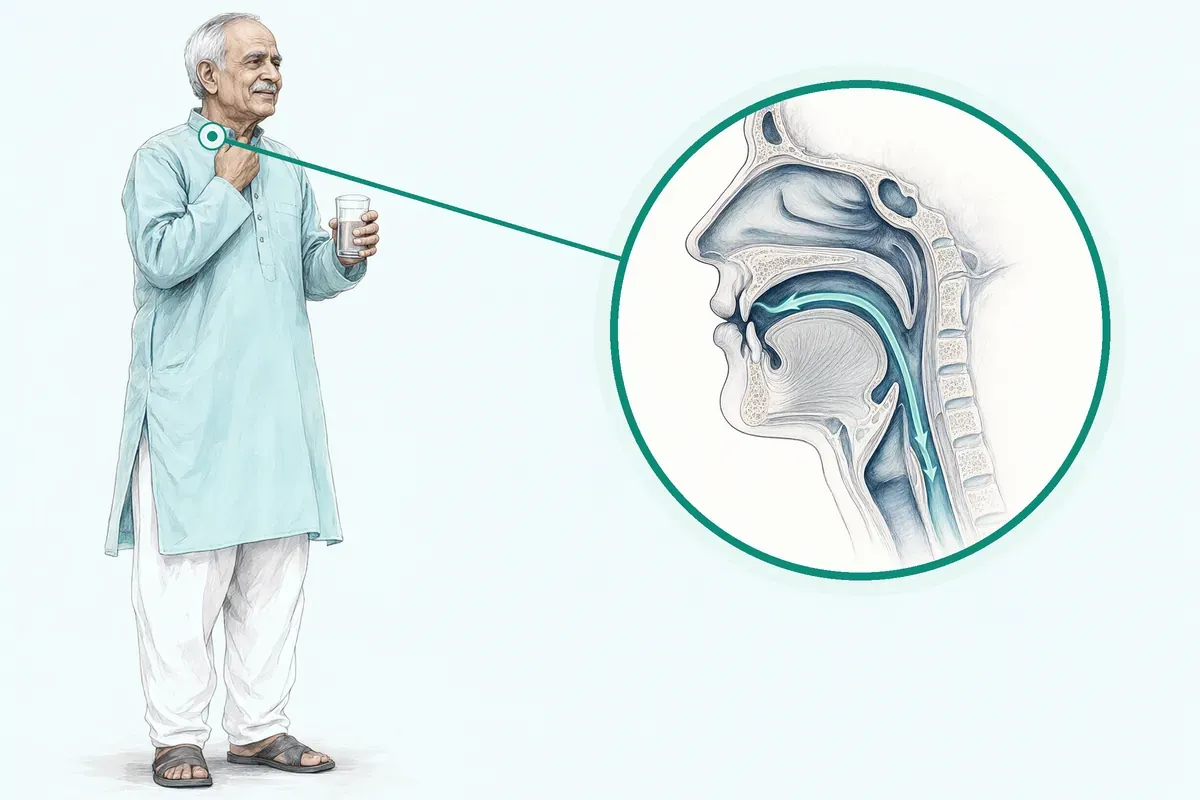
Swallowing disorders, known as oropharyngeal dysphagia, happen when food, liquid, or saliva cannot move easily or safely from your mouth down to your stomach. The upper throat serves two roles through one path: breathing and swallowing.
During a swallow, your body must shift this shared space from an airway into a digestive passage, move the food bolus into the food pipe, and switch back to breathing. This rapid action requires more than 40 muscles working together with your brain and nerves. In healthy adults, a normal swallow takes only 600 to 1,000 milliseconds.
When this process fails, food or drink can slip into your airway. When material stays above your vocal cords, it is called penetration; when it drops below the vocal cords, it is called aspiration.
Voice disorders affect your larynx, commonly called the voice box. Your voice box houses the muscles and vocal cords you use to breathe, talk, and swallow. When you speak, air travels from your lungs and causes your vocal cords to vibrate together.
If you have a voice disorder, these vocal cords vibrate out of rhythm or fail to close and open completely. This makes speaking tiring, causes roughness, or alters your pitch.
Speech and language disorders involve difficulties producing sounds or processing words. A condition called aphasia is an acquired language impairment caused by damage to the brain. It can affect how you understand spoken speech, how you talk, and how you read or write. Jaipur Hospital provides speech, swallowing, and voice therapy in our outpatient department to assess and retrain these functions.
Sessions usually run for 30 to 45 minutes without any need for anaesthesia. Speech therapy covers a wide range of communication and swallowing challenges, and voice therapy is a specific part of speech therapy designed to rebuild your vocal cords and speaking stamina.
Symptoms of speech, swallowing, and voice disorders
- Fever, chills, confusion, severe tiredness
- Cannot swallow fluids or medicines
Swallowing problems create distinct physical symptoms while eating or drinking.
You may experience:
- Food sticking in your throat
- Repetitive swallowing to clear a single bite
- Food lingering in your mouth
Many people cough, clear their throat frequently, or notice a wet, hoarse sound in their voice during or after meals. In people with dementia, swallowing often slows down noticeably, and handling utensils or feeding oneself becomes difficult.
Voice disorders usually change the sound and feel of your voice.
You may notice:
- Ongoing hoarseness
- Strained speech
- Sudden shifts where your pitch turns unexpectedly high or low
You may find that talking takes extra physical effort, or you may lose your speaking voice entirely. Voice problems can also appear alongside difficulties with speech sounds and clarity.
Certain warning signs require urgent medical care at our emergency department on the same day. Swallowing difficulties can cause food, liquid, or oral secretions to enter the lungs, leading to a serious lung infection called aspiration pneumonia. In studies, acute complications of aspiration include severe lung infections and sepsis. You should seek emergency care immediately if you or your family member notice:
- Sudden fever, chills, confusion, or severe tiredness after choking during meals
- Shortness of breath, rapid breathing, or noisy breathing
- Sharp chest pain that worsens when breathing in
- Persistent coughing spasms or sudden inability to clear food from your throat
- Inability to swallow fluids or medicines, which can lead to rapid dehydration and physical weakness
Jaipur Hospital operates a 24x7 emergency department and intensive care unit, where an attendant can accompany you if urgent care is required.
Causes and who is at higher risk
- 30% to 65% After stroke
- More than 80% Parkinson's disease
- Up to 93% Advanced dementia
- 27% to 33.7% Older adults over 65
- Over 40% to 68% Nursing care residents
Swallowing and speech disorders can arise from nerve damage, head and neck conditions, or age-related muscle loss. A stroke or neurodegenerative illness often disrupts nerve pathways in the brainstem and cerebral cortex that control swallowing reflexes and speech. In people younger than 60 years, swallowing problems are mostly associated with neurologic conditions or cancers.
Swallowing problems can also happen after medical procedures like:
- Breathing tubes
- Neck surgeries
- Radiation therapy for head and neck cancers
Voice disorders frequently develop when muscle tension around your neck and jaw forces your vocal cords to work under strain. Singers, teachers, and people who use their voice heavily for work face higher risks of voice strain and vocal cord changes.
Swallowing issues can also stem from structural blockages such as:
- Throat pouches
- Bone growths along the neck spine
- Narrowing of the food pipe
Age is an important risk factor. Ageing naturally slows swallowing responses, delays throat reflexes, and reduces the muscle mass and force of the tongue, a condition known as sarcopenia. Studies show that swallowing disorders affect:
- 30% to 65% of people following a stroke
- More than 80% of patients with Parkinson's disease during their illness
- Up to 93% of patients with dementia in advanced stages
- 27% to 33.7% of independently living older adults over 65 years
- Over 40% to 68% of elderly residents in nursing care settings
Taking multiple medicines also raises your risk. Certain sedative tablets reduce alertness, opioids can suppress your protective cough reflex, and drugs that dry your mouth make chewing and moving food harder.
How speech, swallowing, and voice disorders are diagnosed
- OPD assessment History, speech, breathing, muscle strength
- Bedside screening Modified water test for swallow weakness
- Instrumental tests FEES or VFSS for deeper evaluation
Diagnosing these conditions begins in the outpatient department (OPD) with a detailed assessment of your medical history and symptoms. Your specialist evaluates your speech clarity, breathing patterns, posture, and the strength of your face, tongue, and neck muscles.
If you have voice concerns, your specialist checks how your vocal cords move and how your voice sounds across different pitches and volumes.
For swallowing concerns, clinical tests help identify the location and severity of the trouble. A bedside screening test or a modified water test, which checks your ability to drink measured amounts of water, helps detect signs of swallowing weakness.
For older patients with complex health needs, a comprehensive geriatric assessment looks at medical, functional, and mental factors together to shape a therapy plan.
When deeper evaluation is needed, objective instrumental tools examine throat function during actual swallows. Fiberoptic endoscopic evaluation of swallowing (FEES) uses a thin, flexible camera passed gently through your nose to observe your throat and vocal cords while you swallow food and liquids.
Another standard test is a videofluoroscopic swallowing study (VFSS), a moving X-ray taken while you swallow small bites coated with contrast material. These tests show whether food enters your airway and whether you experience silent aspiration, where liquid enters the lungs without triggering a cough.
Diagnostic tests are conducted as outpatient evaluations. Your specialist will advise which assessment is appropriate for your symptoms.
Treatment options and when surgery is advised
Most speech, swallowing, and voice disorders are treated without surgery through structured rehabilitation and compensatory exercises. Therapy is delivered in our outpatient department, with sessions typically lasting 30 to 45 minutes without anaesthesia. Progress is variable and generally takes weeks to months of guided practice.
The typical cost across India ranges from ₹800 to ₹1,500 per session; ask our team for a specific estimate based on the number of sessions planned.
Non-surgical techniques are selected according to your specific condition, and your clinician will advise which option suits your needs:
- Dysphagia Therapy: Involves exercises to strengthen your tongue and throat muscles, thermal stimulation to trigger faster swallow reflexes, and changes to food texture or fluid thickness so meals move safely without entering your airway.
- Voice Therapy: Focuses on vocal hygiene, diaphragmatic breathing, posture relaxation, resonance training, and programmes like LSVT LOUD to build vocal strength without straining your vocal cords.
- Aphasia Rehabilitation: Uses structured language drills, reading and writing exercises, and augmentative and alternative communication (AAC) tools or apps to rebuild communication after brain injury.
- Articulation Therapy: Employs phonological placement and motor speech drills to help your tongue and lips produce clear speech sounds.
In studies, people with aphasia showed improvements in functional communication, reading, and expressive speech following structured therapy. In some cases, tech devices or mobile apps can be used at home to monitor your voice pitch or track your exercise progress.
When swallowing is too weak to safely meet daily nutritional needs, temporary tube feeding or oral nutritional supplements are used to prevent severe weight loss and dehydration.
Surgery is not a standard part of speech and swallowing therapy itself, but surgical treatment may be recommended by your surgeon for physical blockages or structural problems. These include removing throat or food pipe tumours, repairing a Zenker's diverticulum, or widening a severe narrowing in the food pipe.
Surgery may also be considered on your vocal cords, with voice therapy typically provided afterward as part of your rehabilitation to help your vocal folds heal correctly. Your clinician will guide you on the safest course of care for your condition.
Preparing for speech, swallowing, and voice therapy
Do
- Bring medical records and discharge summaries
- Have an attendant accompany you
Before you begin your therapy sessions, your care team reviews your medical background and evaluates your symptoms. Assessment tools can include screening tests, clinical diagnostic evaluations, or objective instrumental assessments.
For swallowing difficulties, tests such as a modified water test assessing maximum swallowing volume or instrumental evaluations like videofluoroscopic swallowing studies and fiberoptic endoscopic evaluation of swallowing help map your swallow pattern. If you have voice concerns, your provider or laryngologist examines your voice box and vocal folds.
For older adults with complex health needs, an interdisciplinary comprehensive geriatric assessment may be used to coordinate your overall care plan.
Anaesthesia is typically not needed for these outpatient therapy sessions. Because anaesthesia is not used, overnight fasting is usually not required unless a specific instrumental diagnostic test calls for it. You should bring your existing medical records, previous hospital discharge summaries, and a complete list of your current medicines to the OPD.
It is helpful to have an attendant accompany you to your appointments so they can understand your care plan and assist with home activities.
Talk with your doctor about all medicines you take, including those from a chemist. Many older adults take more than 4 medicines. Certain medicines can affect swallowing or alertness. For instance, sedatives reduce alertness and increase aspiration risk. Opioids can suppress your protective cough reflex. Neuroleptics may cause movement changes and impair swallowing.
Drugs with anticholinergic actions can cause dry mouth, which is linked to residuals in the throat and reduced cognitive function. Never stop taking any medicine on your own; your doctor will review your medicines and tell you how to take them safely.
How speech, swallowing, and voice therapy is done
Speech, swallowing, and voice therapy is usually conducted as an outpatient service. A single therapy session typically lasts 30 to 45 minutes. When you arrive at the OPD, you will work directly with a speech-language pathologist. The techniques used are selected according to your individual needs and patterns of difficulty. Your specialist will advise which techniques suit your condition.
- Dysphagia Therapy: This option focuses on swallowing safety and efficiency. It includes swallowing exercises to strengthen muscles such as the tongue and submental muscles. Your specialist may recommend diet modification, which involves adjusting the texture and consistency of foods and liquids to ensure safe oral intake. It may also involve thermal stimulation and compensatory swallowing strategies to support protective reflexes like laryngeal vestibule closure.
- Voice Therapy: This option uses education and vocal exercises to treat voice problems and reduce vocal strain. It includes vocal hygiene education, which covers daily practices to keep your vocal folds healthy. You may learn diaphragmatic breathing, posture adjustments, and gentle neck massage to release muscle tension. It also includes resonance training, where you practice directing vocal energy forward toward your lips to produce clear sound without straining your vocal cords. Specific programmes such as LSVT LOUD focus on voice strengthening and coordination.
- Aphasia Rehabilitation: This option addresses acquired language difficulties affecting speaking, understanding, reading, or writing after brain damage. It uses structured language drills, personalised communication strategies, and augmentative and alternative communication (AAC) tools such as writing boards or text-to-speech apps to support functional communication.
- Articulation Therapy: This option addresses speech clarity. It uses phonological placement techniques to guide correct tongue and lip positions, along with motor speech drills that help coordinate the muscles needed for speech.
Risks and complications of swallowing and voice disorders
- Up to one-third of acute stroke patients Post-stroke pneumonia
- Nearly 35% Pneumonia share of post-stroke deaths
- 21% overall, 30% healthcare-associated Aspiration pneumonia 30-day mortality
- 22% to 26% Malnutrition at discharge in stroke
Swallowing and voice therapies are non-invasive and do not involve surgical incisions. The primary risks arise from the underlying disorders themselves when swallowing safety or nutrition is impaired.
When swallowing is impaired, food, liquids, or saliva can enter the airway above the vocal folds (penetration) or pass below them into the lungs (aspiration). Swallowing difficulties can lead to malnutrition, dehydration, chest infections, and aspiration pneumonia. In studies, post-stroke pneumonia affects up to one-third of acute stroke patients, and pneumonia accounts for nearly 35% of post-stroke deaths.
In a systematic review, stroke patients with dysphagia had a 3-fold increase in pneumonia risk, and patients with confirmed aspiration had an 11-fold increase in risk. In hospital cohorts, 40% of lower respiratory tract infections and community-acquired pneumonia cases presented with dysphagia compared to 21.8% of patients without dysphagia.
Among elderly patients admitted to a hospital with pneumonia, 55% presented with clinical signs of oropharyngeal dysphagia. In studies of aspiration pneumonia, the 30-day mortality rate was 21% overall and 30% in healthcare-associated cases.
Nutritional deficits are another significant concern. In studies of stroke patients, 16% presented with nutritional deficits at admission, rising to 22% to 26% at discharge from acute care, and reaching up to 45% during post-acute rehabilitation. In a study of older persons, malnutrition or risk of malnutrition was found in 18.6% of those with dysphagia compared to 12.3% without dysphagia.
Dehydration can also cause dry mouth, physical weakness, and confusion. For voice disorders, straining the voice or training incorrectly can cause vocal strain or overuse injury. In speech therapy studies, high-intensity schedules have also shown higher participant dropout rates.
Recovery and aftercare: the first days and weeks
- First days to weeks Daily home exercises, steady pace, avoid overuse
- Ongoing weeks to months Attend sessions a few times per month, monitor nutrition
- After discharge Continuous monitoring of swallowing and nutrition
Recovery timelines for speech, language, swallowing, and voice therapy are variable, typically ranging from weeks to months. Because care is provided in an outpatient setting, you return home after each 30 to 45 minute session. Most people attend voice therapy sessions a few times per month for several months.
During the first days and weeks, following your home exercise schedule is essential for progress. Your speech-language pathologist will teach you daily routines and exercises to practice at home. You should practice at a steady pace without overdoing it, which helps you avoid overuse injury or vocal strain.
In some cases, your clinician may recommend tech devices or smartphone apps to monitor your voice pitch, steadiness, or home exercise performance. Another promising method noted in studies is intensive training of expiratory muscle strength.
If you have a swallowing impairment, your attendant and family should ensure that all meals follow the specific food and liquid consistencies recommended by your swallowing specialist. To avoid weight loss, meals may be enriched or supplemented with oral nutritional supplements. If oral intake becomes unsafe or insufficient, enteral feeding may be indicated. Because swallowing and nutritional needs can persist, continuous monitoring after hospital discharge is necessary.
Contact the hospital or seek medical attention promptly if you notice warning signs of chest infection or aspiration.
Symptoms of aspiration pneumonia can include:
- Fever
- Cough
- Noisy breathing
- Choking
- Shortness of breath
- Chest discomfort
You should also contact your care team if you experience marked weight loss, dehydration, difficulty swallowing prescribed medicines, or sudden loss of voice.
Results and therapy outcomes in clinical studies
- Aphasia therapy
- Improves functional communication, reading, writing, expressive language
- High-intensity therapy
- Better outcomes than lower intensity or shorter duration
- Voice therapy
- Strengthens voice box muscles, coordinates vocal cord vibration
- Swallowing therapy
- Reduces aspiration, ensures adequate energy intake
Clinical trials and reviews demonstrate measurable benefits from structured speech, language, and voice interventions, though outcomes vary across patient groups.
In studies of speech and language therapy for aphasia, therapy resulted in clinically and statistically significant benefits to patients' functional communication, reading, writing, and expressive language. Functional communication was significantly better in people with aphasia who received therapy at a high intensity, high dose, or over a long duration compared to those receiving therapy at lower intensity or shorter duration.
However, in some trials, these specific benefits were not evident at later follow-up assessments. In research tracking aphasia over 1 year, monitored frequencies of aphasia were 2% to 12% lower than baseline.
Other studies show that aphasia can carry ongoing challenges: patients with aphasia showed greater disability from 28 days to 2 years after stroke and utilised more rehabilitation services by 2 years.
For voice therapy, clinical evidence shows that vocal exercises and resonant voice therapy help strengthen voice box muscles, coordinate vocal cord vibration, and allow airflow to be used more efficiently. These techniques reduce stress on the vocal folds, improve vocal power and clarity without straining, and help reduce the risk of vocal injury.
In swallowing therapy, individualised nutritional and behavioural care plans aim to reduce aspiration and ensure adequate energy intake. Long-term studies note that oropharyngeal dysphagia remains closely linked to age and underlying neurological conditions, requiring ongoing multidisciplinary support.
Cost of speech and swallowing therapy and insurance in Jaipur
At Jaipur Hospital, speech, swallowing, and voice therapy is provided on an outpatient basis. The price typically ranges from ₹800 to ₹1,500 per session in India. You can ask our team at the hospital for an estimate based on your recommended treatment plan.
The overall cost of therapy depends on several factors: the total number of sessions prescribed by your specialist, the specific techniques required, and whether you need diagnostic evaluations such as swallowing assessments or vocal examinations. It also depends on whether specialised devices, nutritional supplements, or multi-week rehabilitation programmes are recommended for your care.
Jaipur Hospital is a NABH-accredited multispeciality hospital established in February 1991.
We accept government healthcare schemes including:
- Rajasthan Government Health Scheme (RGHS)
- MAA Yojana
- Central Government Health Scheme (CGHS)
We also work with a panel of private insurance companies and Third Party Administrators (TPAs). If you plan to use insurance or a government scheme, bring your scheme card, policy papers, and doctor's referral to our hospital counter so our staff can check your benefits and guide you through the approval process.