
Plastic Surgery · Jaipur Hospital
Chin Augmentation in Jaipur
You feel your chin is too small; we assess your face and give you a clear surgical plan.
- Serving Jaipur since 1991 (35 years)
- NABH accredited
- 24×7 emergency & ICU
- Cashless: MAA Yojana + 32 insurers
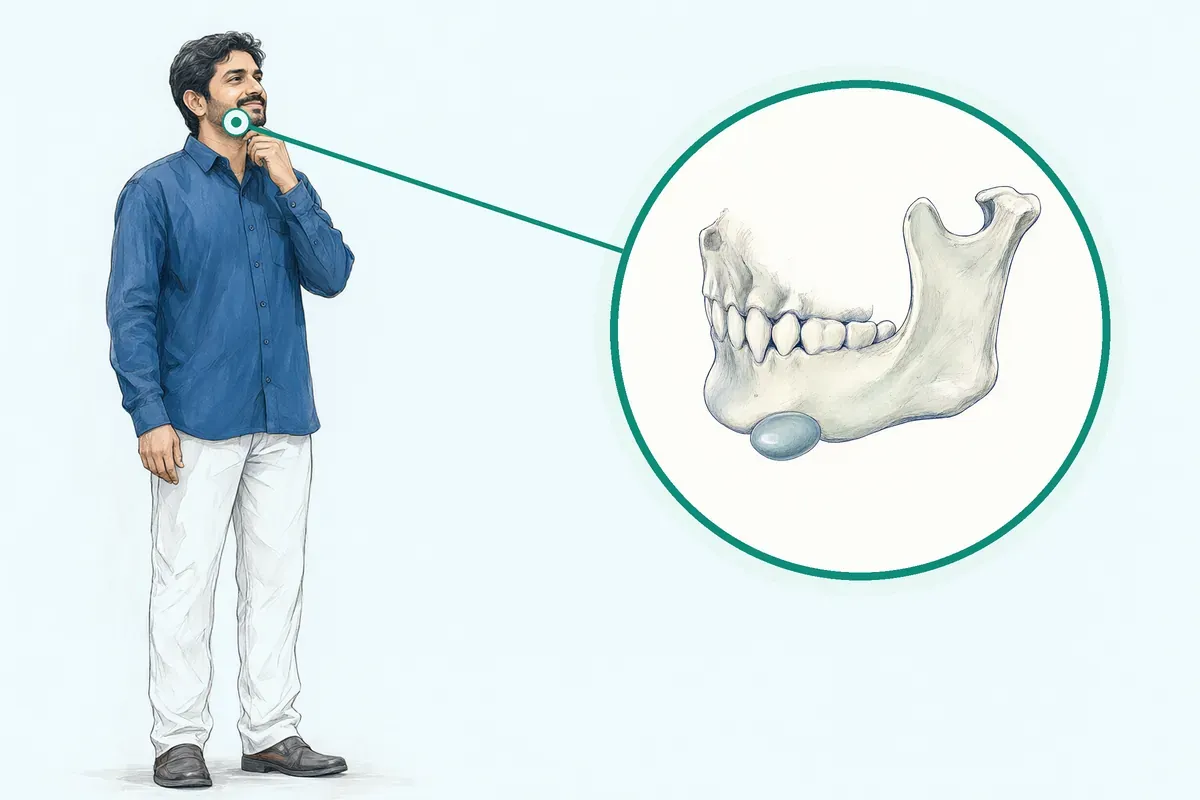
- Operation time
- 1 to 1.5 hours
- Anaesthesia
- Local with sedation or General
- Recovery
- Swelling reduces in 1 to 2 weeks
- Price
- ₹60,000 to ₹1,80,000typical range in India; ask us for an estimate
Chin looks too small or weak
My chin makes my face look unbalanced
A small or retracted chin can make the nose appear larger or the neck less defined. You may avoid profile photos or feel your lower face lacks strength.
-
Profile looks uneven
A weak chin throws off the balance between your nose, lips and neck.
-
Jawline lacks definition
The transition from chin to neck looks soft or undefined.
-
Self-conscious in photos
You turn your head or avoid side angles because of your chin.
-
Normal bite, weak chin
Teeth meet correctly but the chin bone itself sits too far back.
The chin is a critical component in the perception of facial attractiveness and overall harmony.
Why Jaipur Hospital
You worry that surgery will mean a long recovery, visible scars, or a result that looks unnatural.
Your care plan
Your first steps with us
- 1 Call or visit OPD for a consultation with a plastic surgeon
- 2 Get scans and photos done in-house to plan your surgery
- 3 Have the operation under local sedation or general anaesthesia
- 4 Follow up at one week and as advised for full recovery
How the operation is done
Surgery takes one to one and a half hours. The surgeon places an implant through a cut inside the mouth or under the chin, or cuts and moves the chin bone forward. You go home the same day or stay one night.
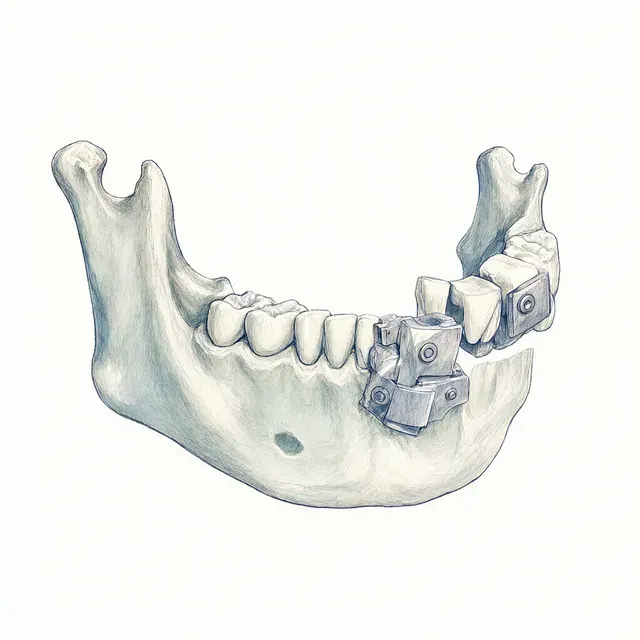 Bone cut and movedThe chin bone is cut and slid forward
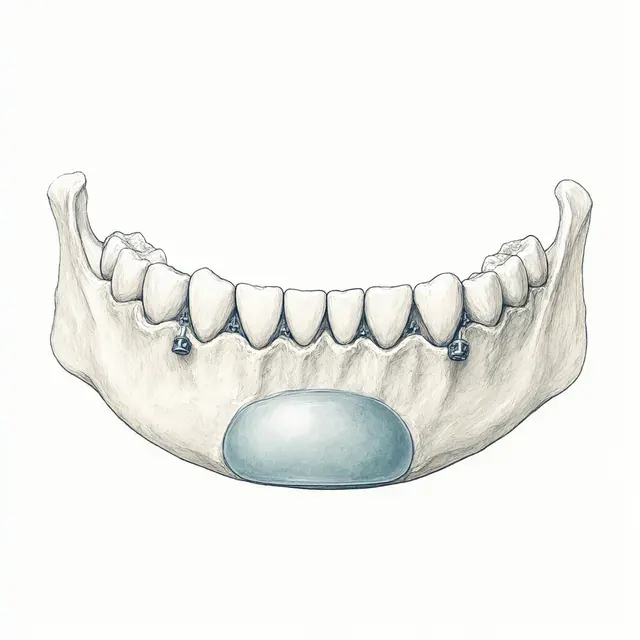 Implant placedA shaped silicone implant is fixed on the bone
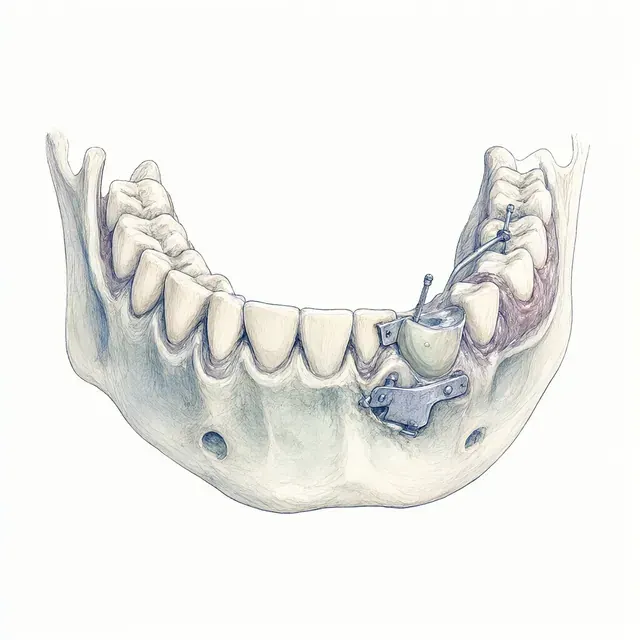 Result healedThe new chin position is stable and healed
-
Silicone implant
A shaped silicone block is placed over the chin bone through a cut inside the mouth or a small cut under the chin. The implant is fixed in position.
-
Sliding genioplasty
The surgeon cuts the chin bone, moves the front segment forward, and holds it with small plates and screws. No foreign material is used.
Why patients trust us
- 1991 Serving Jaipur for 35 years
- NABH Accredited hospital
- 1 Plastic Surgery consultants
- 24×7 Emergency, ICU and ambulance
- 33 Cashless schemes and insurers
What research shows about chin surgery
-
Overall complication rate 15.7% for implants, 19.7% for osteotomy
In a review of 4,897 patients, most complications were minor; transient nerve injury occurred in 2.4% of implant and 16.4% of osteotomy cases.
-
Bone resorption under implants is common but usually under 2 mm
Most studies with under five years follow-up report mean resorption below 2 mm; long-term rates vary widely.
-
Swelling reduces in one to two weeks
Typical recovery sees swelling and bruising settle within two weeks; most people return to desk work within a few days.
If it is left untreated
Without treatment the facial imbalance remains. A retruded chin does not cause medical harm but can affect self-image and profile aesthetics long term.
Life after treatment
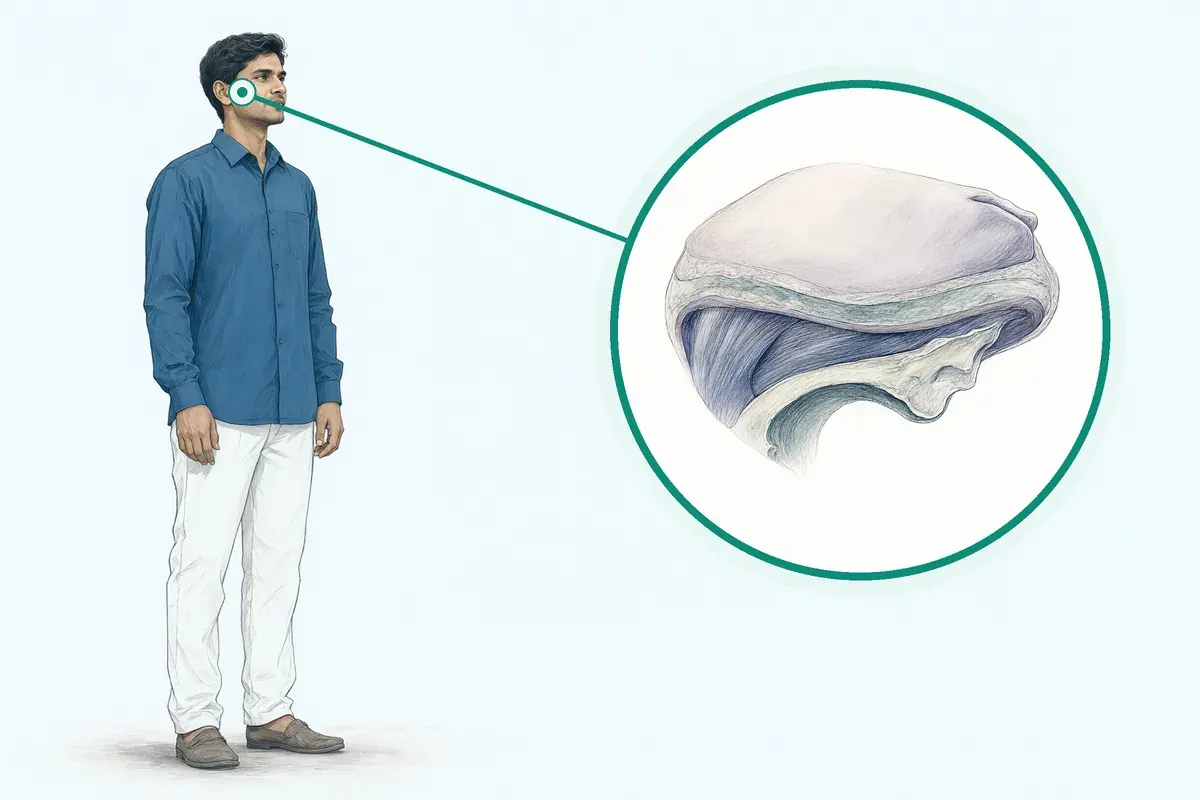
Most people see a stronger chin and better facial balance once swelling settles. You return to normal eating and work within one to two weeks.
-
Better profile balance
The chin projects further, bringing the nose, lips and neck into harmony.
-
Defined jawline
The angle under the chin looks sharper in photos and the mirror.
-
Comfortable eating returns
Soft diet for a few days, then normal meals as the mouth heals.
-
Scars hidden or faint
Inside the mouth leaves no visible scar; under the chin usually fades to a thin line.
Meet the team
Your plastic surgery doctors
Explore our plastic surgery hospital in Jaipur: every treatment, the doctors and what to expect at your visit.

Frequently asked questions
Questions patients ask about chin augmentation
What does chin augmentation genioplasty involve?
In short
Chin augmentation genioplasty at Jaipur Hospital involves surgery to improve chin projection and shape. The operation takes one to one and a half hours under local anaesthesia with sedation or general anaesthesia. You may go home the same day or stay one night. Swelling usually reduces in one to two weeks. The typical price range in India is ₹60,000 to ₹1,80,000.
In detail
Two main techniques are used. A silicone implant can be placed through an incision inside the mouth or under the chin. In sliding genioplasty, the surgeon cuts the chin bone, moves it forward or to the side, and fixes it with plates and screws.
Both methods aim to improve facial balance. Studies show all techniques provide satisfactory cosmetic outcomes with high patient satisfaction. The choice depends on your anatomy and the surgeon's assessment.
A common belief
Some people think fillers are the only option.
What actually happens
Fillers are temporary and need repeat treatments. Surgery gives a lasting structural change. Bone resorption can occur with implants over many years, but silicone shows low rates of nerve injury. The surgeon will explain which method suits your anatomy.
Your next step at Jaipur Hospital
You will attend an OPD consultation where the surgeon examines your chin and jaw, discusses your goals, and explains the options. Pre-operative tests such as blood work and X-rays are arranged.
After surgery you follow a soft diet, use prescribed mouth rinses, and avoid strenuous activity for at least a week.
Which tests and scans do I need before chin augmentation genioplasty?
In short
Before chin augmentation genioplasty at Jaipur Hospital, you usually need blood tests to check haemoglobin, clotting, and infection markers. The surgeon may order X-rays or a CT scan of the mandible to see the bone structure and nerve position. Photographs of your face and profile are taken for planning. Additional tests depend on your medical history.
In detail
Evidence shows imaging exams such as X-rays are used to examine the chin bone and plan the surgery. For sliding genioplasty, the surgeon must know the exact position of the mental nerve to avoid injury. Blood work ensures you are fit for anaesthesia.
If you have diabetes, high blood pressure, or take blood thinners, further checks like ECG or physician clearance may be needed. The hospital's in-house laboratory and radiology make these tests convenient.
A common belief
Some patients think only a blood test is enough.
What actually happens
Bone surgery needs precise imaging to protect the nerve. Implant surgery also needs bone assessment. Skipping scans raises the risk of nerve injury or poor implant fit. The hospital does all tests on site.
Your next step at Jaipur Hospital
All tests are done at Jaipur Hospital's diagnostic centre. Results are typically available within a day. The surgeon reviews them and confirms the surgery date. You receive instructions on stopping certain medicines before the operation.
How painful is chin augmentation and the early recovery?
In short
Chin augmentation at Jaipur Hospital is performed under local anaesthesia with sedation or general anaesthesia, so you do not feel pain during the operation. After surgery, discomfort is usually mild to moderate and is managed with prescribed pain relievers.
In detail
During the operation you receive anaesthesia chosen by your surgeon, either local with sedation or general, so the procedure itself is not felt. In studies of filler injection, patients reported a mean pain score of 2.3 out of 10 immediately after treatment.
For surgical augmentation, the incision is inside the mouth or under the chin; swelling and tenderness peak in the first few days and then subside.
Your care team monitors you for a few hours before discharge and gives you medication to keep you comfortable at home.
Your next step at Jaipur Hospital
Take the prescribed pain medicine on schedule for the first 48 hours. Use cold compresses and sleep with your head raised to reduce swelling. Most people return to light activity within a week. Contact the hospital if pain worsens or is not controlled by medication.
How long does recovery usually take after chin augmentation?
In short
Recovery after chin augmentation at Jaipur Hospital typically takes one to two weeks for swelling to reduce enough to return to normal activities. Most patients go home the same day or after one night. You will need a few days of soft diet and limited talking. Full bone healing after sliding genioplasty takes about six weeks, though daily routine resumes earlier.
In detail
Our usual protocols state swelling reduces in one to two weeks. Evidence shows most injection-site reactions from filler studies resolve within seven days, and surgical patients follow a similar timeline for visible swelling. Bruising may last ten to fourteen days.
Numbness or altered sensation can persist for weeks to months but usually improves gradually. You should avoid heavy lifting, bending, or strenuous activity for at least one week. Depending on your job, you may need a few days to two weeks off work. The dissolvable stitches inside the mouth fall out over two to three weeks.
A common belief
People often expect to be back to normal in two or three days.
What actually happens
The face swells more than other areas, and the intraoral incision means a soft diet for several days. Numbness can linger longer than the swelling.
Your next step at Jaipur Hospital
Plan for at least three to five quiet days at home. Keep your head elevated, use cold compresses for the first 48 hours, and follow the oral hygiene instructions. Attend your follow-up visit so the surgeon can check healing. Do not rush back to exercise; wait for your surgeon's clearance.
Are my expectations realistic for my anatomy and health for chin augmentation?
In short
Your surgeon at Jaipur Hospital will assess whether your expectations match what chin augmentation can achieve for your facial structure and general health. The consultation includes a physical examination, imaging, and a discussion of your goals to determine if the desired projection and shape are surgically feasible and safe for you.
In detail
Realistic expectations depend on your bone anatomy, soft tissue thickness, and the relationship between your chin and other facial features such as the nose and lips.
Evidence shows that surgical augmentation using implants or sliding genioplasty can improve facial balance and harmony when the procedure is matched to the individual's anatomy. Studies report high patient satisfaction when the surgical plan addresses measurable deficiency, such as horizontal microgenia with normal occlusion.
However, the amount of advancement is limited by the soft tissue envelope and the position of the mental nerves. Your surgeon will explain what degree of change is achievable without creating tension on the closure or risking nerve injury. Preoperative imaging and measurements help define a safe and aesthetic target.
A common belief
Many people assume any chin size is possible, but the safe amount of advancement is limited by your nerves and skin envelope.
What actually happens
Pushing beyond that can cause numbness or wound problems.
Your next step at Jaipur Hospital
At your consultation, the surgeon will review your medical history, perform a clinical assessment, and may order X-rays or 3D scans to plan the surgery. You will receive a clear explanation of the likely outcome, the limitations, and the recovery timeline. To begin this assessment, book a consultation at Jaipur Hospital.
How will appearance, function, and realistic expectations be discussed for chin augmentation?
In short
At Jaipur Hospital, the consultation for chin augmentation covers facial appearance, oral function, and realistic expectations in a structured discussion. The surgeon evaluates your profile, chin projection, bite relationship, and speech or lip competence, then explains what surgery can and cannot change.
In detail
The discussion begins with a clinical examination and often includes X-rays or 3D imaging to measure the chin position relative to the forehead, nose, and lips. Measurements such as the cervicomental angle, mentocervical angle, and lower face height ratios guide the surgical plan.
The surgeon explains the two main techniques — silicone implant and sliding genioplasty — and how each affects projection, vertical height, and width.
Functional aspects include the position of the mental nerves, which supply sensation to the lower lip and chin, and the stability of the bite. Evidence shows that both techniques achieve high patient satisfaction when the indication matches the anatomy.
The surgeon will describe the expected recovery, the timeline for swelling to settle, and the small risk of temporary numbness. You are encouraged to ask questions and state your priorities so the plan reflects your goals within safe limits.
A common belief
Some clinics focus only on the profile picture.
What actually happens
A proper consultation also checks your bite, lip movement, and nerve safety so the result works in real life, not just in photos.
Your next step at Jaipur Hospital
You will receive a summary of the proposed approach, the likely outcome, and the recovery steps. The surgeon will also explain the consent process and any preoperative tests required. To have this detailed discussion, book a consultation at Jaipur Hospital.
Why might my doctor recommend chin augmentation genioplasty?
In short
A doctor may recommend chin augmentation genioplasty at Jaipur Hospital to correct a retruded or underdeveloped chin that affects facial harmony. The procedure can also reconstruct the chin after injury or for congenital deformity. It aims to improve the balance between the chin, lips, and nose in profile. Most people seek it for cosmetic reasons, but some need it for reconstruction.
In detail
Evidence shows a small or retracted chin creates facial disharmony, especially in profile. Candidates often have horizontal microgenia with normal bite. Studies report that surgical augmentation using implants or osteotomy achieves good outcomes and high patient satisfaction.
Fillers offer a temporary, non-surgical alternative for mild to moderate retrusion, but surgery provides a structural correction. The surgeon evaluates your facial proportions using established measurements.
A common belief
Many people try fillers first.
What actually happens
Fillers work for mild cases but are temporary and need top-ups. Surgery changes the underlying structure. Bone resorption under implants can happen over years, but silicone implants have low nerve injury rates. The surgeon will weigh the pros and cons for your face.
Your next step at Jaipur Hospital
If you feel your chin is too small or far back, book a consultation at Jaipur Hospital. The surgeon will analyse your facial profile, discuss whether surgery or a non-surgical option fits your needs, and outline the expected timeline and costs. You will receive clear guidance on the next steps.
How should I prepare in the days before chin augmentation genioplasty?
In short
In the days before chin augmentation genioplasty at Jaipur Hospital, you should stop smoking several weeks ahead to improve healing. Arrange for an attendant to stay with you after surgery. Follow the surgeon's advice on stopping certain medicines. Keep the skin clean and avoid any cuts or infections near the chin. Plan for a soft diet and time off work.
In detail
Evidence shows smoking increases complication risk. The surgeon may ask you to stop aspirin, anti-inflammatory drugs, herbal supplements, and anticoagulants before surgery. You will receive instructions on fasting before anaesthesia. The hospital provides a pre-admission checklist.
You should buy prescribed mouth rinse and soft foods in advance. Most people need a few days to a few weeks off work depending on their job.
A common belief
People often forget to stop supplements like vitamin E or ginkgo, which can increase bleeding.
What actually happens
Some think they can drive themselves home. You cannot drive after sedation or general anaesthesia. The hospital gives a clear checklist so nothing is missed.
Your next step at Jaipur Hospital
You will get a written pre-operative instruction sheet at your pre-surgery visit. The nursing team calls you a day before to confirm fasting time and arrival. On the day, wear loose clothing and leave valuables at home.
What are the common side effects and the less common serious complications of chin augmentation?
In short
Common side effects after chin augmentation at Jaipur Hospital include swelling, bruising, tenderness and temporary numbness of the lower lip or chin. Less common serious complications can include infection, implant displacement, bone resorption, or nerve injury that may cause lasting altered sensation.
In detail
In studies of surgical augmentation, the overall complication rate was about 15.7 percent for implants and 19.7 percent for osteotomy. Transient mental nerve injury occurred in 2.4 percent of implant cases and 16.4 percent of osteotomy cases.
Swelling and bruising are expected and usually resolve in one to two weeks. Implant-site pain, bruising and swelling were reported in 2 to 5 percent of filler patients. Rare events include implant exposure, deep infection, or significant bone resorption over years. Your surgeon discusses the risks that apply to your chosen technique.
Your next step at Jaipur Hospital
Watch for increasing redness, warmth, pus, fever, or sudden severe pain, which may signal infection. Report any new or worsening numbness that does not improve. Keep follow-up appointments so the surgical team can check healing.
Which symptoms are expected after chin augmentation, and which need urgent medical attention?
In short
Expected symptoms after chin augmentation at Jaipur Hospital include swelling, bruising, mild to moderate discomfort, tightness, and temporary numbness or tingling of the lower lip and chin. These are normal and improve over days to weeks. Urgent signs are increasing pain not relieved by medication, spreading redness or heat, pus from the incision, fever above 38°C, sudden asymmetry or implant movement, difficulty breathing or swallowing, and heavy bleeding.
In detail
Evidence shows tenderness, swelling, and firmness are the most common early symptoms, affecting the majority of patients. Numbness from mental nerve stretching occurs in a minority and usually resolves. Serious complications such as infection, haematoma, or implant displacement are uncommon but require immediate evaluation.
If the incision inside the mouth opens or you notice a foreign body sensation, contact the hospital. Persistent numbness beyond three months should be reviewed but is not an emergency.
A common belief
Patients often mistake normal numbness for nerve damage, or think mild oozing is an emergency.
What actually happens
The key is change: if symptoms get worse instead of better, or new ones appear suddenly, seek help immediately.
Your next step at Jaipur Hospital
Keep the emergency numbers handy. If any urgent symptom appears, call the hospital or go to the 24×7 emergency department. Do not wait for the next scheduled visit. For expected symptoms, continue prescribed pain relief, cold compresses, soft diet, and oral rinses.
FAQ library
Questions and answers about chin augmentation
When you contact us
Get a clear surgical plan
Contact Jaipur Hospital for a consultation, in-house scans, a cost estimate and help with cashless insurance schemes.
- A consultation with a plastic surgeon in the OPD
- Your scans and reports reviewed, with tests done in-house if you need them (laboratory, X-ray and imaging)
- Your options explained in plain words, including whether you need surgery at all
- A cost estimate before you decide
- Help with cashless treatment under MAA Yojana and empanelled insurers and TPAs
- Follow-up visits after your treatment
Overview
Chin Augmentation: what to know
What chin augmentation is and how it works
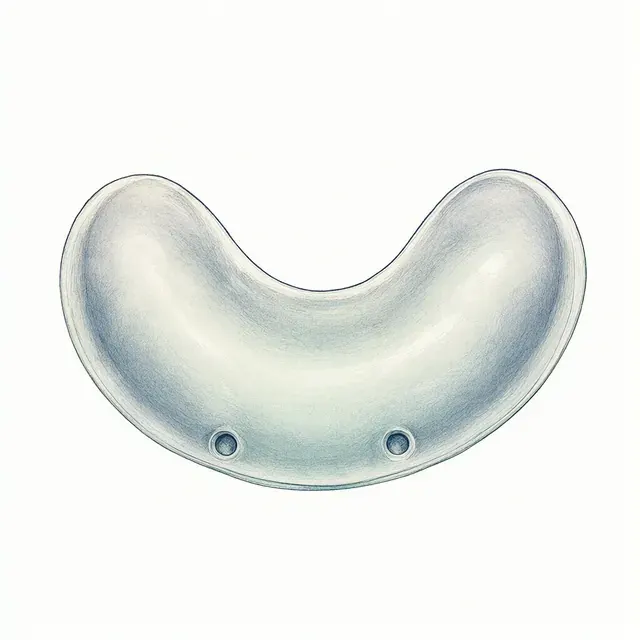 Silicone implantA shaped silicone block placed on the chin bone
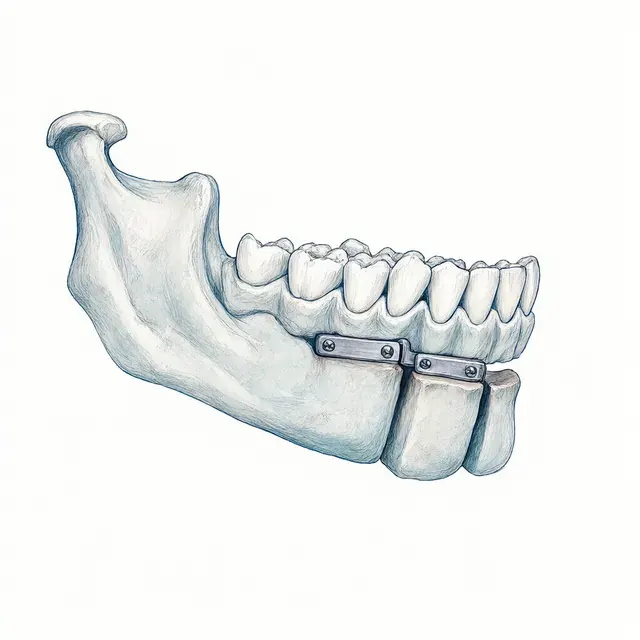 Sliding genioplastyThe chin bone is cut, moved forward and fixed
- Silicone implant
- Placed through mouth or under chin
- Sliding genioplasty
- Bone cut and moved forward
Chin augmentation is a surgical procedure that increases the projection of the chin to improve facial balance. It is performed when the chin appears small or set back compared with the rest of the face. Two main surgical techniques are used. A silicone implant can be placed through an incision inside the mouth or a small cut under the chin.
In a sliding genioplasty, the surgeon cuts the chin bone, moves it forward, and fixes it in the new position with plates and screws. Both methods aim to create a stronger chin profile and better harmony between the chin, lips and nose. The operation usually takes one to one and a half hours.
It is done under local anaesthesia with sedation or general anaesthesia, and most people go home the same day or stay one night in hospital.
Symptoms and when to seek urgent care
- Increasing pain Not relieved by prescribed medicine
- Infection signs Spreading redness, warmth or fever
- Breathing difficulty Sudden swelling makes breathing or swallowing hard
- Worsening numbness Lower lip or chin numbness getting worse
A small or retracted chin can make the lower face look weak or out of proportion, especially in profile. Some people have a normal bite but the chin bone itself is set back, a condition called horizontal microgenia. These are cosmetic concerns rather than medical symptoms.
After surgery, it is normal to have swelling, bruising and tenderness for a few weeks.
Contact your surgeon on the same day if you develop increasing pain that is not relieved by prescribed medicine, signs of infection such as spreading redness, warmth or fever, sudden swelling that makes breathing or swallowing difficult, or numbness of the lower lip or chin that is getting worse.
Causes and who is at higher risk
A retruded chin is usually a developmental feature: the lower jaw bone does not grow forward enough. It can run in families. Trauma or previous surgery to the jaw can also reduce chin projection. People who want a stronger chin profile and are in good general health are candidates for surgery.
Smoking impairs wound healing and increases the risk of complications, so you should stop smoking several weeks before the operation. Certain medications such as aspirin, anti-inflammatory drugs, herbal supplements or blood thinners can increase bleeding; your surgeon will tell you which ones to stop before surgery.
The procedure is generally not advised if you have an active infection in the mouth or on the skin of the chin, or if you have unrealistic expectations about the degree of change possible.
How a small chin is diagnosed
Diagnosis begins with a clinical examination. The surgeon looks at your face from the front and side, feels the chin bone and checks your bite. Standard facial measurements and angles are used to assess chin projection and vertical height. Photographs are taken for planning and for comparison after surgery.
Imaging such as X-rays or a CT scan helps the surgeon see the bone structure, the position of the mental nerve and the thickness of the soft tissue. These images are essential for choosing the right implant size or planning the bone cut in a sliding genioplasty. Blood tests may be done to confirm you are fit for anaesthesia.
Non-surgical options and when surgery is advised
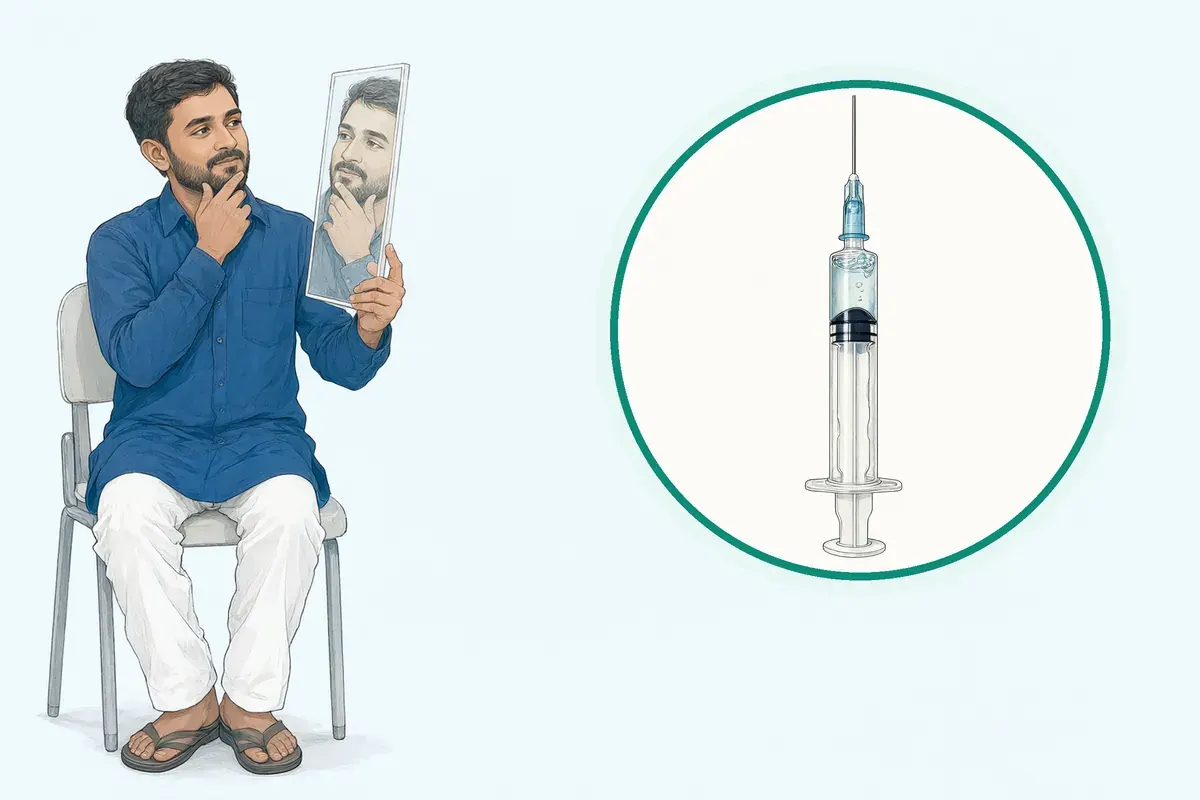
Dermal fillers, usually hyaluronic acid based, can add volume to the chin without surgery. The effect is temporary and lasts several months to over a year, after which repeat injections are needed to maintain the result. Fillers are suitable for mild to moderate retrusion and for people who want to try a change before committing to surgery.
Common side effects include tenderness, firmness and swelling at the injection site, which usually settle within a week. Surgery is advised when the chin deficiency is more marked, when a lasting structural change is wanted, or when the chin needs to be moved in a direction that fillers cannot achieve, such as vertical lengthening or correction of asymmetry. Your surgeon will discuss both approaches and recommend the one that fits your anatomy and goals.
Preparing for chin augmentation surgery
Do
- Tell doctor about medicines
- Stop certain medicines
- Fast before anaesthesia
- Bring an attendant
- Wear front-opening clothes
Before chin augmentation surgery, your doctor will ask about your medical history and any medicines you take. Tell your doctor if you take aspirin, anti-inflammatory drugs, herbal supplements or anticoagulants (blood thinners). You may need to stop certain medicines before the operation. Your doctor may order blood tests or other checks to be sure the surgery is safe for you.
Imaging such as X-rays is often used to examine the chin bone and plan the procedure. Photographs of your chin and jawline may be taken for the medical record.
You will receive instructions about fasting before anaesthesia. The operation uses local anaesthesia with sedation or general anaesthesia. Most people have the procedure as a day case or stay one night in hospital. Bring an attendant to take you home and stay with you for the first 24 hours.
Wear loose, comfortable clothing that opens at the front so you do not have to pull anything over your head.
How chin augmentation surgery is done
- Incision made Inside mouth or under chin
- Incision closed Dissolvable stitches used
- Bandage applied Supports chin and reduces swelling
Chin augmentation can be performed with a silicone implant or by moving your own chin bone (sliding genioplasty). Your surgeon will discuss which option suits your facial structure and goals.
With a silicone implant, the surgeon makes an incision inside your mouth or a small cut under the chin. The implant is placed on the bone and centred carefully. The incision is closed with dissolvable stitches.
With a sliding genioplasty, the incision is made inside the mouth. The surgeon cuts the chin bone, moves it forward, backward or sideways to the planned position, and fixes it with small plates and screws. The incision is then closed with dissolvable stitches.
The operation usually takes 1 to 1.5 hours. You may receive intravenous antibiotics during surgery to reduce the risk of infection. After the procedure, a bandage or wrap may be placed on your face to support the chin and reduce swelling. You will be monitored for a few hours before going home or to your room.
Risks and possible complications of chin augmentation
- 15.7% Overall implant complications
- 19.7% Overall osteotomy complications
- 2.4% Transient nerve injury implants
- 16.4% Transient nerve injury osteotomy
All surgery carries some risk. In studies of chin augmentation, the overall complication rate was about 15.7% for implants and 19.7% for osteotomy (bone surgery).
Temporary numbness or altered sensation in the lower lip and chin can occur if the mental nerve is stretched or bruised. Studies report transient mental nerve injury in about 2.4% of implant cases and 16.4% of osteotomy cases.
In two patients treated with autologous bone from the chin area, temporary numbness of the front of the mandible was noted and resolved with medication.
Infection is possible but uncommon. One study reported a case of facial cellulitis and injection site inflammation after filler treatment that resolved without lasting effects. Serious infection after surgical chin augmentation is rare.
Implant-related problems can include shifting, malposition, or a visible or palpable edge. Bone resorption under an implant is a known long-term change; studies report a mean of less than 2 mm in most series with under 5 years of follow-up. Silicone implants have shown the lowest rates of nerve-related complications (0.4%) compared with some other materials.
With sliding genioplasty, the bone is fixed with plates and screws. In one patient treated with a bone block allograft, a titanium plate became exposed two months after surgery. Poor bone healing (non-union) or relapse of the bone position is uncommon.
General surgical risks include bleeding, haematoma, wound healing problems, and reactions to anaesthesia. Scarring inside the mouth is usually not visible; a submental incision under the chin typically heals as a fine line.
If you smoke, you should stop several weeks before surgery because smoking impairs healing. Your surgeon will explain the risks that apply to your case.
Recovery and aftercare after chin augmentation
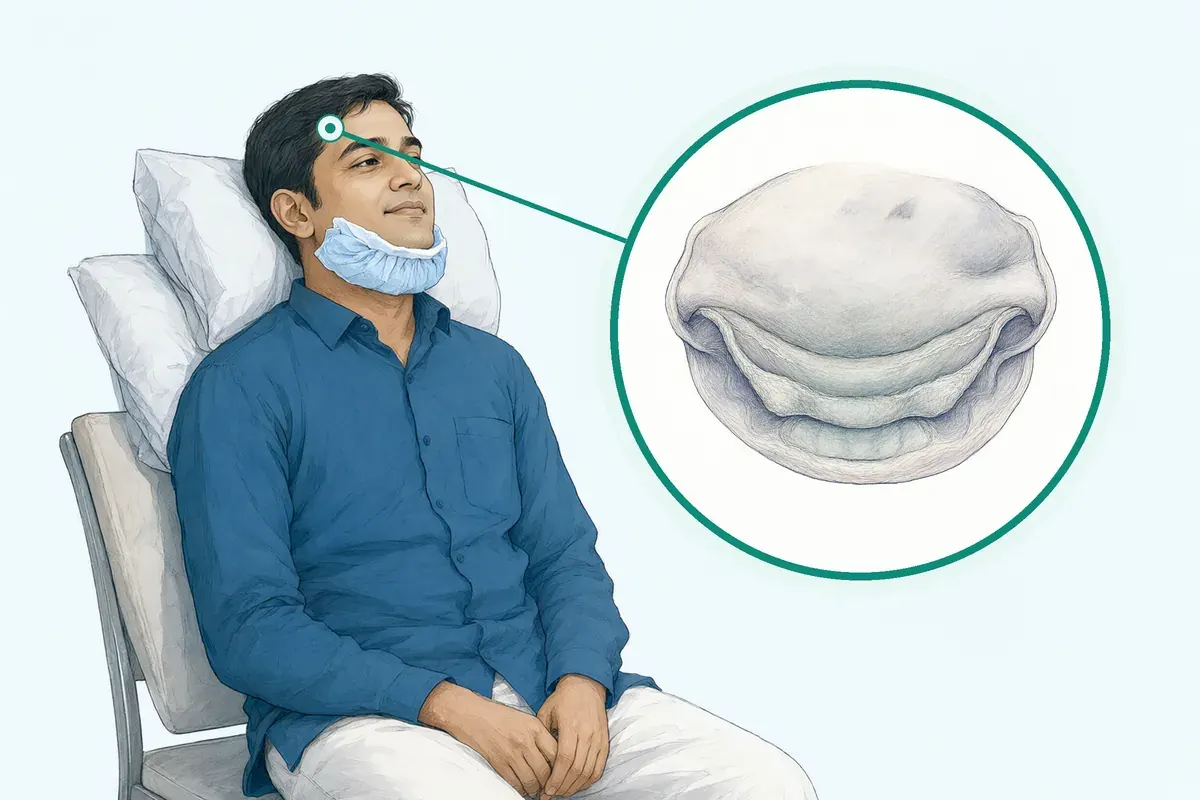
- First few days Liquids or very soft foods only
- 1 to 2 weeks Swelling reduces significantly
After surgery, you will have some swelling and bruising. This is normal and usually improves over a few weeks. Cold compresses can help relieve discomfort and swelling. Sleep with your head raised on two or three pillows to reduce facial swelling.
A bandage or wrap may stay in place for the first day or two. Try not to touch or irritate the incision or stitches. If the incision is inside your mouth, rinse your mouth regularly with water or a prescribed oral rinse to keep it clean.
Eat liquids or very soft foods for the first few days. You can return to a normal diet once your doctor says it is safe. Take any prescribed pain relief as directed. If your chin hurts, your provider may recommend pain relievers.
Avoid heavy lifting, bending or strenuous activity for at least a week. Depending on your work, you may need a few days to a couple of weeks off. Swelling reduces significantly in 1 to 2 weeks, though subtle swelling may last longer.
Contact your healthcare provider if you develop increasing pain, spreading redness, fever, pus from the wound, sudden swelling, or any new numbness that does not improve. Attend your follow-up appointments so your surgeon can check healing and remove any non-dissolvable sutures if used.
Results of chin augmentation surgery
- 37 Satisfaction before surgery
- 79 Satisfaction at 12 weeks
- less than 2 mm Bone resorption average
Chin augmentation aims to improve the projection and shape of the chin, bringing better balance to the face. In a large review of 54 studies covering 4,897 patients, all described techniques provided consistently satisfactory cosmetic outcomes and high patient satisfaction.
With a silicone implant, the change in chin projection is immediate and stable. Long-term studies note that some bone resorption under the implant can occur over years; the average is usually less than 2 mm in series with shorter follow-up. The rate and depth of resorption vary between patients.
With sliding genioplasty, the bone heals in its new position. The result is generally stable once the bone has united. Nerve sensation usually returns to normal; in studies, lower lip function, sensation and movement were normal at all follow-up visits after treatment.
Patient-reported satisfaction with chin appearance improves significantly after augmentation. In one trial using a validated scale, mean satisfaction scores rose from about 37 to 79 at 12 weeks, and the majority of patients remained satisfied at one year.
The procedure can be combined with other surgery such as rhinoplasty or submental liposuction if that fits your overall plan. Your surgeon will discuss what degree of change is realistic for your anatomy.
Cost and insurance for chin augmentation in Jaipur
The typical price range for chin augmentation in India is ₹60,000 to ₹1,80,000. The final cost depends on the technique (implant or sliding genioplasty), the type of anaesthesia, whether you stay as a day case or overnight, the implant used, and any additional procedures performed at the same time.
Jaipur Hospital is a NABH-accredited multispeciality hospital. It is empaneled under MAA Yojana and a panel of private insurers and TPAs. Chin augmentation is usually considered a cosmetic procedure, so most insurance plans do not cover it.
If the surgery is done for reconstructive reasons — for example after trauma or to correct a congenital deformity — coverage may be possible under your policy; check with your insurer and the hospital's insurance desk.
The hospital has in-house diagnostic imaging, laboratory, pharmacy, modular operation theatres and a 24-hour emergency department. For an estimate, contact the hospital on 0141-2551500, 0141-2554139 or 7414 001 001, or email [email protected].