

Plastic Surgery · Jaipur Hospital
Facelift and Neck Lift in Jaipur
Loose facial skin and neck bands alter your profile; Jaipur Hospital offers surgical assessment, clear options, and a structured care plan.
- Serving Jaipur since 1991 (35 years)
- NABH accredited
- 24×7 emergency & ICU
- Cashless: RGHS, MAA Yojana, CGHS + 32 insurers
- Operation time
- 3 to 5 hours
- Anaesthesia
- General anaesthesia
- Recovery
- Socially presentable in 2 to 3 weeks, full recovery in 3 months
- Price
- ₹2,00,000 to ₹4,50,000typical range in India; ask us for an estimate
Changes in facial and neck tissues
Loose skin and neck bands altering your profile
With ageing, facial skin loses elasticity and neck muscle bands loosen, leading to jowling, excess folds, and a less defined jawline.
-
Loose neck muscle bands
The platysma muscle band stands out when flexed and can loosen over time.
-
Jowls and tissue laxity
Skin and underlying facial tissues lose support, leading to sagging along the lower jaw.
-
Submental fullness
Fat deposits and loose skin gather under the chin, reducing jawline definition.
The platysma is the muscle band that stands out when you flex your neck, and it can loosen over time.
Why Jaipur Hospital
You may worry about the surgical downtime, noticeable swelling, or being away from your routine work.
Your care plan
Your first steps with us
- 1 Book an OPD consultation with our surgical team.
- 2 Complete in-house preoperative blood investigations and anaesthesia evaluation.
- 3 Undergo surgery in our modular operation theatre.
- 4 Attend planned follow-up visits for dressing checks.
How the operation is done
Surgery takes 3 to 5 hours under general anaesthesia, typically requiring a hospital stay of 1 to 2 nights.
-
SMAS Facelift
Your surgeon will discuss lifting the deep superficial musculoaponeurotic system layer.
-
Mini Facelift
Your surgeon will discuss using shorter incisions for early jowling and mild laxity.
-
Deep Plane Facelift
Your surgeon will discuss releasing retaining ligaments for natural repositioning.
-
Neck Lift (Platysmaplasty)
Your surgeon will discuss corset platysma sutures combined with submental liposuction.
Why patients trust us
- 1991 Serving Jaipur for 35 years
- NABH Accredited hospital
- 1 Plastic Surgery consultants
- 24×7 Emergency, ICU and ambulance
- 35 Cashless schemes and insurers
Findings from surgical studies
-
2 to 3 weeks
Most patients in studies feel comfortable returning to light daily activities within this period.
-
8.8%
Postoperative seroma was observed in seven patients per group in a comparative study.
-
2% to 3%
Haematoma rates were 3% for deep technique facelifts and 2% for SMAS facelifts.
If it is left untreated
Untreated skin laxity and muscle loosening do not reverse on their own, and no cosmetic procedure stops the natural ageing process entirely.
Life after treatment
Patients typically plan for phased recovery with support from their attendant and surgical team.
-
Initial two to three weeks
Patients typically become socially presentable as early swelling and bruising subside.
-
Two to three months
Most normal activities and exercise can usually be resumed with your surgeon's approval.
-
Three months onward
Full recovery is typically reached as deeper tissues settle into a refined contour.
Meet the team
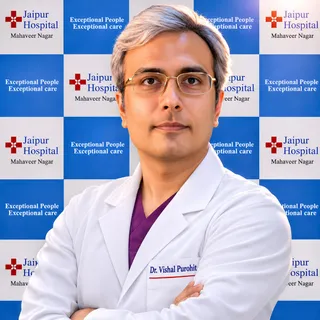
Your plastic surgery doctors
Explore our plastic surgery hospital in Jaipur: every treatment, the doctors and what to expect at your visit.
Frequently asked questions
Questions patients ask about facelift and neck lift
What is a facelift and neck lift?
In short
A facelift and neck lift at Jaipur Hospital is a surgical procedure that tightens facial and neck tissues and removes excess skin to restore a youthful contour. The operation usually takes three to five hours under general anaesthesia. Patients typically stay in hospital for one to two nights and become socially presentable in two to three weeks.
In detail
The surgery addresses sagging skin, jowls, and loose neck muscles. Techniques include SMAS facelift, mini facelift, deep plane facelift, and neck lift with platysmaplasty and submental liposuction.
In studies, both SMAS and deep plane methods showed significant aesthetic improvement, with deep plane offering superior midface rejuvenation. Neck lift incisions are placed around the ears and sometimes under the chin to blend with natural creases.
The surgeon reshapes several layers at once, tightening muscles, redistributing fat, and removing excess skin. General anaesthesia is standard, with induction using propofol, fentanyl, atracurium, and midazolam, maintained with isoflurane, propofol, and dexmedetomidine.
A common belief
Many people think a facelift only pulls skin tight.
What actually happens
In reality, the surgeon works on deeper layers — the SMAS and platysma muscles — to create a natural, lasting result. Incisions are hidden along natural creases around the ears and under the chin.
Your next step at Jaipur Hospital
Recovery involves head elevation, cool compresses, and prescribed medication for comfort. Most patients rest for the first few days, take short walks, and focus on hydration. Swelling and bruising peak in the first week, then improve over weeks two to three.
Final results appear around three months, with full maturation at one year. Sun protection, avoiding smoking, and following scar care instructions support better outcomes.
Which specialist should I see for facelift and neck lift?
In short
You should see a plastic surgeon for a facelift and neck lift at Jaipur Hospital. Our Plastic Surgery department performs these procedures under general anaesthesia with a 1 to 2 night hospital stay. The surgical team has training in SMAS facelift, mini facelift, deep plane facelift, and neck lift with platysmaplasty and submental liposuction.
In detail
Plastic surgeons are trained in the anatomy of the facial nerve, SMAS layer, retaining ligaments, and platysma muscle. They perform the deep plane release, corset platysma sutures, and skin redraping required for a natural contour.
In studies, both SMAS and deep plane techniques showed significant aesthetic improvement when performed by surgeons experienced in facial dissection. The surgeon also manages combined procedures such as blepharoplasty if needed.
A consultation includes assessment of your health, skin quality, and facial structure to determine the safest and most effective approach.
A common belief
Dermatologists and non-surgical clinics cannot lift the SMAS layer or tighten the platysma muscle.
What actually happens
They offer devices or injectables that do not reposition deep tissues. Only a plastic surgeon trained in facial nerve anatomy and deep plane dissection can release retaining ligaments, anchor the composite flap, and redrape skin for a lasting, natural result.
Your next step at Jaipur Hospital
Ask for a plastic surgeon who regularly performs facelift and neck lift surgery. At Jaipur Hospital, the Plastic Surgery department operates in modular theatres with 24×7 critical care support.
You will receive a preoperative fitness review, a detailed explanation of the technique options, and a cost estimate in the typical range of ₹2,00,000 to ₹4,50,000.
What treatment options are available for a facelift and neck lift?
In short
At Jaipur Hospital, treatment options for facial and neck rejuvenation include SMAS facelift, mini facelift, deep plane facelift, and neck lift with platysmaplasty and submental liposuction. These can be performed alone or combined, such as a facelift with neck lift or blepharoplasty, for more comprehensive rejuvenation.
In detail
The SMAS facelift lifts the superficial musculoaponeurotic system. The mini facelift uses shorter incisions for early jowling and mild laxity. The deep plane facelift releases the masseteric, zygomatic, and cervical retaining ligaments for a natural, long-lasting result.
The neck lift tightens the platysma with corset sutures and may include submental liposuction. Incisions are placed around the ears and sometimes under the chin. In studies, both SMAS and deep plane techniques showed significant aesthetic improvement, with deep plane offering superior midface rejuvenation.
Haematoma rates were 3% for deep plane and 2% for SMAS. Seroma occurred in 8.8% of patients, mostly in the submental region. Most patients had mild oedema. General anaesthesia is used for all techniques.
- Seroma occurred in 8.8% of patients, mostly in the submental region.
A common belief
Each technique targets different layers and degrees of ageing.
What actually happens
Mini facelift suits early changes. Deep plane releases retaining ligaments for longer-lasting midface lift. Neck lift addresses platysma bands and fat under the chin. The surgeon chooses based on your anatomy, not a one-size-fits-all approach.
Your next step at Jaipur Hospital
Your surgeon will recommend the technique that matches your anatomy and goals after examination. The typical cost range in India is two lakh to four and a half lakh rupees. Hospital stay is one to two nights. Recovery to socially presentable takes two to three weeks, with full recovery in three months.
What can I safely do at home to manage symptoms after facelift and neck lift surgery?
In short
After a facelift and neck lift at Jaipur Hospital, you can manage discomfort at home with prescribed pain medication, cool compresses on the cheeks (not directly on incisions), and sleeping with your head elevated on two to three pillows. Short, gentle walks around the house promote circulation. Keep the incisions dry and follow the dressing instructions given at discharge. Avoid bending, twisting the neck, or lifting anything heavy for at least two weeks.
In detail
Evidence shows most patients describe the sensation as tightness and fullness rather than sharp pain. Swelling and bruising peak in the first seven days, then gradually subside. Cool compresses and head elevation reduce oedema by improving venous and lymphatic drainage.
Tumescent infiltration with tranexamic acid and epinephrine is used during surgery to minimise bleeding, which also lessens postoperative bruising. Drains or a haemostatic net may be placed for 48 hours to prevent fluid collection.
Patients are advised to avoid sleeping on the operated side for two weeks. Strenuous activity raises blood pressure and can provoke haematoma, which occurred in 2 to 3 percent of cases in studies. Light walking is encouraged from day one to lower the risk of deep venous thrombosis.
A common belief
Some patients try to resume normal chores too soon.
What actually happens
Raising your blood pressure with straining can cause bleeding under the flaps, which may need a return to theatre.
Your next step at Jaipur Hospital
Your discharge summary from Jaipur Hospital will list medication timings, wound care steps, and the date for your first follow-up, usually within the first week. Most people feel socially presentable by two to three weeks. Call 7414 001 001 if you notice sudden one-sided swelling, increasing pain, or drainage from the incisions.
How does the term "interferential therapy" relate to facelift and neck lift?
In short
Interferential therapy is a physiotherapy modality that uses medium-frequency electrical currents to reduce pain and swelling. It is not a standard part of facelift and neck lift recovery at Jaipur Hospital. Our protocol relies on head elevation, cool compresses, prescribed medication, gentle walking, and time. The hospital has a physiotherapy department, but interferential therapy is not routinely prescribed for these procedures.
In detail
The evidence provided for facelift and neck lift recovery describes swelling peaking in the first week, then improving over two to three months. Management includes elevation, compression dressings for the first 24 hours, avoidance of strenuous activity, and sun protection.
No study in the supplied evidence mentions interferential therapy, electrical stimulation, or any energy-based device for postoperative care. The hospital does not offer laser, radiofrequency, HIFU, or other energy devices for skin or scar treatment.
Physiotherapy may be advised for neck stiffness if it persists beyond the usual recovery window, but the modality would be chosen by the therapist based on assessment, not by a fixed protocol.
A common belief
Some clinics advertise machines to speed healing.
What actually happens
The evidence shows swelling resolves on its own timeline; no device has been proven to shorten it.
Your next step at Jaipur Hospital
If you experience unusual neck tightness or pain after the initial healing period, mention it at your follow-up at Jaipur Hospital. The surgeon may refer you to the in-house physiotherapy team for assessment.
Are my expectations realistic for my anatomy and health?
In short
Realistic expectations for a facelift and neck lift at Jaipur Hospital depend on your skin elasticity, bone structure, degree of laxity, and overall health. Surgery can reposition sagging tissues, sharpen the jawline, and smooth neck bands, but it cannot change your fundamental bone structure or stop ageing. Studies show both SMAS and deep-plane techniques improve appearance, with deep-plane giving superior midface rejuvenation, yet no procedure restores the face of a different person. Good candidates are non-smokers in generally good health who understand the limits.
In detail
Evidence indicates that final results become visible around three months, with full maturity at six to twelve months. Scars are hidden along natural contours behind the ears and under the chin and fade over months with proper care.
Long-term studies show improved contour and cervicomental angle maintain for many years in most patients, though some recurrence of laxity occurs with ageing. Revision surgery carries a higher complication rate of 20 percent versus 7 percent for primary cases.
Your surgeon will assess whether your skin quality and ligament laxity match the result you want. If the gap is large, the surgeon will explain what is achievable and what is not.
A common belief
Patients sometimes bring filtered photos as a target.
What actually happens
The surgeon works with your anatomy, not an image. Honest discussion prevents disappointment.
Your next step at Jaipur Hospital
Book a consultation at Jaipur Hospital. The surgeon will examine you, discuss your goals, and give an honest opinion on what your anatomy can deliver. You will also receive a cost estimate within the typical range of ₹2,00,000 to ₹4,50,000. Call 7414 001 001 to schedule your visit.
How will appearance, function, and realistic expectations be discussed for facelift and neck lift?
In short
At Jaipur Hospital, the consultation covers your aesthetic goals, facial and neck anatomy, skin quality and medical history. The surgeon explains what facelift and neck lift surgery can achieve such as improved jawline definition, smoother neck contour and reduced jowling, and what it cannot do such as change your essential facial structure or stop ageing. Functional aspects like neck movement and sensation are also reviewed.
In detail
Evidence shows that good candidates are nonsmokers in generally good health with realistic expectations of what a neck lift can and cannot do. The surgeon assesses fat deposits under the chin or jawline, platysma muscle laxity and skin redundancy.
The discussion includes the choice of technique such as SMAS, mini, deep plane facelift or platysmaplasty with corset sutures and submental liposuction. Risks such as haematoma, seroma, temporary nerve injury, infection and unfavourable scarring are explained.
The recovery timeline is outlined: swelling and bruising peak in the first week, socially presentable in two to three weeks, full recovery in three months. Genetics, skin elasticity and healing response affect individual outcomes.
A common belief
Patients sometimes expect perfection or symmetry that surgery cannot deliver.
What actually happens
The discussion includes risks, recovery time and how genetics and lifestyle affect the final result so you can decide with clear information.
Your next step at Jaipur Hospital
You will receive preoperative instructions including stopping smoking and certain medications. The typical hospital stay is one to two nights under general anaesthesia. The cost range in India is typically ₹2,00,000 to ₹4,50,000.
Which symptoms or changes should prompt me to seek medical advice for a facelift and neck lift?
In short
You may consider a facelift and neck lift at Jaipur Hospital if you have sagging skin in the midface or jawline, deep folds around the mouth, jowls, loose neck skin, fat deposits under the chin, or visible platysma bands that stand out when you flex your neck. These changes often develop with age and genetics.
In detail
Common signs include skin laxity that creates a tired or aged appearance, loss of jawline definition, and a cervicomental angle that has become less distinct. The platysma muscle can loosen over time, causing vertical bands in the neck.
Fat may accumulate under the chin or along the jawline. Good candidates are non-smokers in generally good health with realistic expectations. Surgery does not change your essential facial structure or stop the ageing process entirely.
In studies, most patients were middle-aged, with a mean age of 45.5 years, and sought improvement in these visible signs of ageing.
A common belief
These changes are not medical emergencies.
What actually happens
They are age-related and influenced by genetics, skin elasticity, and collagen loss. Surgery is a choice, not a necessity. Non-surgical options exist but cannot replicate the effect of tightening deep tissues and removing excess skin.
Your next step at Jaipur Hospital
If these changes bother you and affect your confidence, a consultation can clarify whether surgery is appropriate. The surgeon will assess your skin elasticity, bone structure, and overall health. You will discuss your goals, medical history, and any medications.
What will the doctor ask and check at the first visit for a facelift and neck lift?
In short
At the first visit for a facelift and neck lift at Jaipur Hospital, your surgeon will ask about your medical history, current medications, allergies, smoking and alcohol use, and any previous surgeries. The surgeon will examine your face and neck, assess skin elasticity, bone structure, fat distribution, muscle tone, and the degree of skin laxity and platysma banding.
In detail
The surgeon will discuss your goals and expectations, explaining what a facelift and neck lift can and cannot achieve. You will be asked about specific concerns such as jowls, neck bands, fat under the chin, or deep folds.
The surgeon will evaluate whether you are a non-smoker in generally good health with realistic expectations. Photographs may be taken for your medical record.
The surgeon will explain the techniques available — SMAS facelift, mini facelift, deep plane facelift, and neck lift with platysmaplasty — and which may suit your anatomy. Risks such as haematoma, seroma, infection, nerve injury, scarring, and asymmetry will be discussed. Anaesthesia options will be reviewed, with general anaesthesia being standard. Preoperative tests may be advised based on your health.
A common belief
The consultation is not just a quick look.
What actually happens
The surgeon assesses deep anatomy — retaining ligaments, platysma bands, facial nerve landmarks — to choose the right technique. You will discuss realistic outcomes, risks like haematoma or nerve injury, and the recovery timeline. Photographs are taken for planning.
Your next step at Jaipur Hospital
You will receive an estimate of the typical cost range, which in India is usually between two lakh and four and a half lakh rupees, depending on the technique, combined procedures, and hospital stay.
The surgeon will outline the recovery timeline: one to two nights in hospital, socially presentable in two to three weeks, full recovery in three months. You will be advised to stop smoking and avoid blood thinners before surgery.
Can this problem improve without a procedure or operation for facelift and neck lift?
In short
The structural changes that lead to a facelift and neck lift — descent of the SMAS layer, platysma muscle separation, fat redistribution, and skin laxity — do not reverse without surgery. Non-surgical treatments may improve skin texture or add volume but cannot reposition the deep tissues or recreate a defined jawline and neck contour at Jaipur Hospital.
In detail
Ageing stretches the retaining ligaments and allows the midface and jowls to drop. The platysma edges separate, forming visible bands. Fat accumulates under the chin. Creams, energy devices, and injectables work on the skin surface or superficial volume.
They cannot release the masseteric, zygomatic, and cervical ligaments, lift the SMAS-platysmal flap, or place corset sutures in the platysma. In studies, surgical techniques showed significant aesthetic improvement that non-surgical methods cannot replicate.
Good candidates for surgery are nonsmokers in good health with realistic expectations about what a facelift or neck lift can and cannot do.
A common belief
Marketing often suggests non-surgical alternatives give similar results.
What actually happens
They do not. A mini facelift uses shorter incisions but still lifts the SMAS. A deep plane facelift releases retaining ligaments for a natural, long-lasting result. A neck lift adds corset sutures and often liposuction. These manoeuvres require direct surgical access and cannot be replicated by surface treatments.
Your next step at Jaipur Hospital
If you want a lasting correction of the deep layer, surgery is the only option.
The surgeon will explain the expected improvement, the recovery of 2 to 3 weeks for social activities and 3 months for full healing, and the typical cost range of ₹2,00,000 to ₹4,50,000. You can also discuss combined procedures such as blepharoplasty.
FAQ library
Questions and answers about facelift and neck lift
When you contact us
Consult our surgical team in Jaipur
Contact Jaipur Hospital to arrange an OPD assessment and discuss your options with our plastic surgery team.
- A consultation with a plastic surgeon in the OPD
- Your scans and reports reviewed, with tests done in-house if you need them (laboratory, X-ray and imaging)
- Your options explained in plain words, including whether you need surgery at all
- A cost estimate before you decide
- Help with cashless treatment under RGHS, MAA Yojana, CGHS and empanelled insurers and TPAs
- Follow-up visits after your treatment
Overview
Facelift and Neck Lift: what to know
What is facial and neck tissue laxity and how does it happen
- Platysma muscle
- Muscle band in neck that can loosen over time.
- Tissue sag
- Weakening muscle and firm tissue loss cause sagging.
- Rhytidectomy
- Medical term for surgery lifting facial tissues.
- Platysmaplasty
- Medical term for surgery focused on neck.
As time passes, changes occur naturally in the deeper structures and skin of your face and neck. The platysma is the muscle band that stands out when you flex your neck, and it can loosen over time.
When this muscle weakens and tissues lose their firmness, fat deposits can settle under the chin or along the jawline, and the overlying skin begins to sag.
In medical terms, surgery to lift and tighten facial tissues is known as a rhytidectomy, while surgery focused on the neck is called a platysmaplasty. These changes in the face and neck are a normal part of ageing, where structural support diminishes and soft tissues shift downward.
Symptoms of facial and neck sagging and warning signs
- Increasing pain Requires immediate medical attention after surgery.
- Sudden one-sided swelling Rapid unilateral swelling needs same day evaluation.
- Incision drainage Drainage requires prompt contact with surgical team.
- Active bleeding Needs prompt evaluation on the same day.
Facial and neck tissue laxity commonly shows as:
- Loose skin
- Visible muscle cords or bands running down the throat
- Jowls along the lower jaw
- Fullness under the chin
These changes typically cause no physical pain, but they alter the contours of your jawline and lower face.
After any corrective surgical procedure, certain symptoms require immediate medical attention. If you experience increasing pain, sudden swelling on one side of your face or neck, or drainage from your incisions, you should contact our surgical team promptly to rule out complications such as a collection of blood called a haematoma, or an infection. In studies, significant complications are infrequent, but rapid unilateral swelling or active bleeding needs evaluation on the same day.
Causes of facial and neck ageing and who is at higher risk
The loss of tissue firmness happens due to several internal and external factors. Genetics can influence skin elasticity, natural collagen production, and how your body responds to tissue strain. Over time, the gradual weakening of the platysma muscle and retaining ligaments allows deeper facial fat and skin to shift downwards.
Certain personal factors can increase risks or affect tissue health. Habits such as smoking or consuming alcohol can slow blood circulation and interfere with normal tissue nutrition and healing. In clinical assessments, health conditions like hypertension and the use of blood thinners are also evaluated as factors that may influence complications such as bleeding or fluid collection.
How facial and neck laxity is diagnosed and assessed
Assessment begins with an in-person clinical evaluation in our outpatient department (OPD). Your surgeon examines the skin elasticity of your face and neck, checks the degree of fat accumulation under the chin and around the jawline, and inspects the separation or laxity of the underlying platysma muscle bands.
Your surgeon will also review your complete medical history, including any history of high blood pressure, previous operations, or medications such as blood thinners. Routine pre-operative health assessments and tests are organised to confirm that you are in good general health prior to considering any surgical intervention. Before any procedure is scheduled, informed consent is thoroughly discussed and obtained.
Treatment options and when facelift and neck lift surgery is advised
For mild concerns, supportive lifestyle habits, proper skincare, and sun protection play an important role in caring for your skin health. In dermatology and surgical studies, treatments with specific wavelengths of light have been shown to help modulate inflammation, improve microcirculation, and support tissue healing in selected settings. However, non-surgical approaches cannot reposition separated muscle bands or remove large amounts of loose skin.
Surgery is typically considered when there are pronounced loose neck muscles, significant jowling, or stubborn fat deposits under the chin and jawline that do not respond to non-surgical measures. Good candidates are non-smokers in generally good health who understand that while surgery restores contour, no procedure stops the ageing process entirely.
Your surgeon will examine your anatomy and advise whether a facelift, a neck lift, or a combined procedure is appropriate for your specific needs.
Preparing for your facelift and neck lift surgery
- Health evaluation Doctor reviews medical history and checks facial anatomy.
- Preoperative tests Surgical team guides routine pre-surgery testing.
- Stop smoking Stopping smoking before surgery supports wound recovery.
- Fasting before anaesthesia Surgeon advises fasting time before general anaesthesia.
- Hospital admission Bring records and medicines with a family attendant.
Preparing for surgery begins with an evaluation of your general health and medical history. Your surgeon will discuss your goals, check your facial anatomy, and explain whether a facelift, a neck lift, or both procedures suit your needs.
You will be asked about existing health conditions such as high blood pressure, as well as tobacco habits and any blood-thinning medicines you take.
Before your operation, your surgical team will guide you through routine preoperative tests. Smoking slows blood circulation and can delay wound healing, so stopping smoking before and after surgery supports your recovery. Your surgeon will advise you when to start fasting before surgery, as the operation requires general anaesthesia.
On the day of admission, bring your:
- Identification documents
- Previous medical records
- Test reports
- Any daily medicines in their original packaging
You should plan for a family attendant to stay with you during your hospitalisation. At Jaipur Hospital, patients typically stay in the hospital for 1 to 2 nights following the operation.
How facelift and neck lift surgery is performed
SMAS Facelift
- SMAS Facelift Lifts deeper layer to reposition sagging facial tissues.
Mini Facelift
- Mini Facelift Uses shorter incisions for mild laxity and early jowls.
Deep Plane Facelift
- Deep Plane Facelift Releases ligaments to reposition deeper muscle and fat.
Neck Lift
- Neck Lift Tightens neck muscle bands using sutures.
Facelift and neck lift surgery is performed in an operation theatre under general anaesthesia. The operation typically takes 3 to 5 hours, depending on the extent of tissue tightening required. Your surgeon will discuss the surgical options with you beforehand to determine which approach fits your anatomy.
There are several common surgical techniques:
- SMAS Facelift: This involves lifting the deeper layer beneath the skin, known as the superficial musculoaponeurotic system, to reposition sagging facial tissues.
- Mini Facelift: This technique uses shorter incisions around the ears to address mild tissue laxity and early jowling.
- Deep Plane Facelift: This technique releases facial retaining ligaments to reposition deeper muscle and fat structures beneath the SMAS layer for natural contouring.
- Neck Lift (Platysmaplasty): This procedure tightens the platysma muscle bands in the neck using sutures and may include submental liposuction to address fullness under the chin.
During the procedure, your surgeon makes incisions placed in natural folds around the ears or under the chin. The underlying tissues and muscles are tightened, excess skin is removed, and incisions are closed with sutures or skin glue.
Surgical drains or supporting sutures may be placed to reduce internal fluid collection, and a supportive dressing is applied around the face and neck.
Risks and possible complications of facelift and neck lift surgery
- 8.8% Postoperative seroma rate
- 2% to 3% Postoperative haematoma rate
- 58.1% to 70.9% Mild postoperative oedema rate
- 6.9% Severe swelling rate
Significant complications after facelift and neck lift surgery are infrequent, but every surgical procedure involves potential risks that your surgeon will review with you during your consultation. Possible complications include adverse reactions to anaesthesia, bleeding, infection, deep venous thrombosis, persistent pain, prolonged swelling, and unfavourable scarring.
Fluid collection under the skin can occur after surgery. In a clinical study of 160 facelift patients, postoperative seroma developed in 8.8% of patients, and haematoma occurred in 2% to 3% of cases. Most patients in clinical studies experience mild postoperative oedema, reported in 58.1% to 70.9% of standard surgery cases, while severe swelling was noted in 6.9%. In revision surgery, higher rates of moderate to marked swelling were observed.
Infection rates remain low for both facelift and neck lift procedures in clinical trials. Nerve injuries after surgery are usually temporary and resolve over time, while long-standing nerve injury is rare. Temporary hair thinning near incision lines can also occur. Any sudden swelling on one side, increasing pain, or fluid discharge requires prompt medical assessment.
Recovery and aftercare following surgery
Do
- Take short walks Rest at home and take short walks for circulation.
- Use cool compresses Apply cool compresses on cheeks to manage swelling.
Avoid
- Avoid sleeping on side Do not sleep on side of face for 2 weeks.
- Avoid strenuous activities Heavy lifting and strenuous exertion must be avoided.
- Avoid neck twisting Avoid movements that twist or strain your neck.
After surgery, you will be monitored in the hospital ward. Patients are typically hospitalised for 1 to 2 nights. During the first 24 hours, you may wear a supportive neck dressing, and swelling, bruising, and a feeling of tightness or mild fullness are normal.
You should sleep with your head elevated above your heart and avoid sleeping on the side of your face for 2 weeks.
Cool compresses on the cheeks and prescribed medicines from the hospital chemist help manage swelling and keep you comfortable. Most patients spend the first few days resting at home and taking short walks to support circulation. Swelling and bruising generally peak during the first 7 days before starting to settle.
Strenuous activities, heavy lifting, and movements that twist or strain the neck must be avoided during the early healing period.
Patients are usually socially presentable in 2 to 3 weeks and comfortable returning to light daily activities. Most normal activities and exercise can be resumed by 2 to 3 months with your surgeon's approval. Full recovery typically takes about 3 months, during which scars gradually fade along natural contours behind the ears and under the chin.
You should contact Jaipur Hospital promptly if you notice sudden swelling on one side of your face or neck, bleeding, fever, or increasing pain.
Results: what to expect from facelift and neck lift surgery
- First 2 to 3 weeks Early bruising and swelling settle down.
- Weeks 4 to 6 Contours appear smoother and more defined.
- Around 3 months Soft tissues settle into their full contour.
- Several months to year Deeper facial tissues continue maturing over time.
Facelift and neck lift surgery is designed to tighten loose facial and neck tissues, improve jawline definition, and reduce sagging under the chin. In clinical studies, both standard SMAS and deep plane surgical techniques demonstrate significant aesthetic improvements in facial and neck contour.
Initial changes become noticeable as early bruising and swelling settle over the first 2 to 3 weeks. By weeks 4 to 6, tissues enter a refinement stage where contours appear smoother and more defined. Full soft tissue settling typically takes around 3 months, with deeper tissues continuing to mature over several months to a year.
Long-term clinical studies show that properly performed neck lift procedures maintain improved neck contour and cervicomental angles for many years, with low rates of recurring muscle banding. However, no surgical procedure stops the natural ageing process or alters your underlying facial bone structure. Protecting your skin from direct sun exposure and maintaining healthy lifestyle habits help preserve your surgical results over time.
Cost of facelift and neck lift surgery in Jaipur and insurance coverage
The cost of facelift and neck lift surgery typically ranges from ₹2,00,000 to ₹4,50,000 in India. The total expense depends on several factors, including the specific surgical technique chosen, whether a facelift and neck lift are combined, operating theatre time, anaesthetist fees, surgeon fees, and the duration of your hospital stay. You can consult our surgical team for a personalised estimate based on your planned procedure.
Cosmetic procedures such as facelifts and neck lifts are generally elective and not considered medically necessary, meaning they are usually not covered by standard health insurance policies. However, Jaipur Hospital is empanelled with government schemes including RGHS, MAA Yojana, and CGHS, as well as a panel of private insurers and Third Party Administrators (TPAs) for medically eligible inpatient treatments.
Our administrative team can help clarify documentation and billing details during your OPD consultation at our hospital facility in Mahaveer Nagar, Tonk Road, Jaipur.
