

Pulmonology · Jaipur Hospital
Paediatric Respiratory Care in Jaipur
When your child struggles with persistent coughing and wheezing, Jaipur Hospital offers clinical assessment, in-house testing, and a clear management plan.
- Serving Jaipur since 1991 (35 years)
- NABH accredited
- 24×7 emergency & ICU
- Cashless: RGHS, MAA Yojana, CGHS + 22 insurers
- Session length
- 30 to 60 minutes (consultation)tests add 1 hour
- Anaesthesia
- Not needed (sedation for bronchoscopy if required)
- Recovery
- Immediate for clinic4 to 6 hours post-bronchoscopy
- Price
- ₹1,500 to ₹4,000 (consultation)₹10,000 to ₹30,000 (bronchoscopy package)typical range in India; ask us for an estimate
Persistent cough and restless nights
My child cannot stop coughing and struggles to breathe
Watching your child wheeze or wake up breathless at night causes severe worry. You want to know the exact cause and how to help them breathe easily.
-
Nighttime coughing fits
Coughing often turns worse at night or after running, disturbing your child's sleep and leaving them tired.
-
Noisy chest and wheezing
A whistling sound when breathing out can make daily activities and feeding difficult for young children.
-
Recurrent chest infections
Frequent colds that settle in the chest cause repeat fevers, fast breathing, and missed school days.
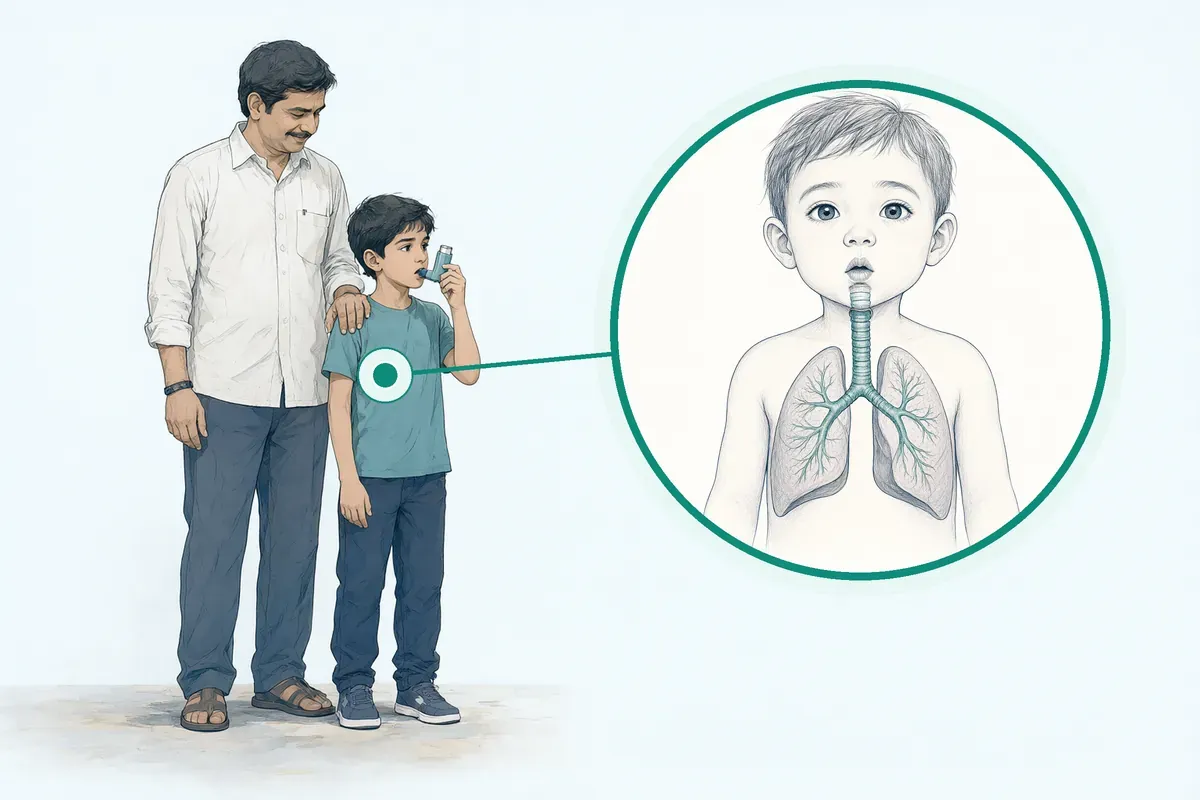
Airway hyperresponsiveness to stimuli causes constriction of bronchial smooth muscle and is the major cause of wheezing during an asthma attack.
Why Jaipur Hospital
You worry about sleepless nights, unexpected attacks, and whether every chest cold means long-term asthma.
Your care plan
Your first steps with us
- 1 Book an OPD consultation with our pulmonology team
- 2 Undergo clinical evaluation and in-house diagnostic tests
- 3 Receive a personalised daily management and action plan
- 4 Attend regular follow-up visits to monitor breathing progress
How paediatric respiratory conditions are evaluated
Your doctor will discuss suitable evaluation and testing options based on your child's age, symptoms, and medical history.
-
Impulse Oscillometry (IOS)
Your doctor will discuss this lung function test for young children who cannot perform regular spirometry.
-
Flexible Bronchoscopy
Your doctor will discuss this airway inspection and lavage option if your child has recurrent infections or stridor.
-
Paediatric Sleep Study
Your doctor will discuss overnight polysomnography to evaluate symptoms of suspected obstructive sleep apnoea.
-
Allergy Skin Prick Testing
Your doctor will discuss skin testing to identify aeroallergen triggers for allergic asthma and rhinitis.
Why patients trust us
- 1991 Serving Jaipur for 35 years
- NABH Accredited hospital
- 1 Pulmonology consultants
- 24×7 Emergency, ICU and ambulance
- 25 Cashless schemes and insurers
What clinical research shows
-
about 2 weeks
In studies of viral bronchiolitis, the median duration of symptoms was about 2 weeks.
-
10–20%
Research shows that 10 to 20 percent of infants still had respiratory symptoms at 3 weeks after onset.
-
80%
Clinical studies observe that up to 80 percent of children with certain chronic ciliary disorders develop lower respiratory infections by preschool age.
If it is left untreated
Untreated airway narrowing and severe respiratory distress can escalate rapidly in young children. Without structured clinical guidance, severe attacks can lead to respiratory failure or cause a child to stop breathing during an acute episode.
Daily life with a clear management plan
With proper medical management, most children can participate in daily childhood activities.
-
Calmer nights
Most children sleep more comfortably when nighttime triggers and airway inflammation are properly managed.
-
Active play
Children usually return to outdoor games and school activities once symptom triggers are identified.
-
Clear action steps
Parents usually feel more prepared by knowing which inhaler or medicine to use during a cold.

Frequently asked questions
Questions patients ask about paediatric respiratory care
Which problems are assessed under paediatric respiratory care?
In short
Paediatric respiratory care at Jaipur Hospital covers asthma, recurrent wheezing, pneumonia, and sleep apnoea in children. The service also evaluates chronic cough, bronchiolitis, and suspected airway abnormalities. Our paediatric pulmonology team sees children from infancy through adolescence for both acute and long-term breathing concerns.
In detail
Asthma is a chronic inflammatory condition of the airways leading to episodic wheezing, coughing, chest tightness, and shortness of breath. Recurrent wheezing in young children often follows viral infections and may not mean asthma; most early wheezers do not develop asthma later.
Pneumonia presents with sudden cough, high fever, and fast breathing. Sleep apnoea involves repeated breathing pauses during sleep. The team also assesses primary ciliary dyskinesia, a rare genetic disorder causing chronic oto-sino-pulmonary disease, and structural problems such as vascular rings or foreign body aspiration.
A common belief
Many parents think any wheeze means asthma, but evidence shows most early wheezers do not develop asthma.
What actually happens
Also, cough and wheeze with colds are common and often settle without specialist care.
Your next step at Jaipur Hospital
If your child has persistent cough, wheeze, or breathing difficulty, book a consultation at Jaipur Hospital. The first visit takes 30 to 60 minutes; tests such as impulse oscillometry or allergy skin prick testing may add about one hour.
Bring any previous prescriptions, chest X-rays, or lab reports. Our team will review the history, examine your child, and suggest a plan.
How will the doctor decide which tests my child needs?
In short
The doctor at Jaipur Hospital chooses tests based on your child's age, symptom pattern, physical examination, and response to previous treatment. Impulse oscillometry is used for young children who cannot do spirometry. Flexible bronchoscopy is considered for recurrent infections or stridor. A sleep study is ordered for suspected obstructive sleep apnoea. Allergy skin prick testing identifies aeroallergen triggers.
In detail
Clinical guidelines recommend against routine imaging or blood tests for typical bronchiolitis. Chest X-rays are only considered when the presentation is not classic. Virological testing does not generally assist management.
For asthma, the diagnosis is clinical; lung function testing supports it but is not mandatory in young children. The doctor uses assessment tools like the Paediatric Respiratory Assessment Measure to gauge severity and decide on oxygen, blood gas, or continuous monitoring. Each test is ordered only when it will change management.
A common belief
Routine blood tests, chest X-rays, or viral panels are not recommended for typical bronchiolitis or asthma.
What actually happens
Tests are ordered only when the result will change the plan, not as a standard checklist.
Your next step at Jaipur Hospital
After the consultation, the doctor will explain which tests are recommended and why. Most tests are done as outpatient or daycare procedures. Bronchoscopy needs sedation and 4 to 6 hours recovery. A sleep study is overnight.
The typical price range for consultation is ₹1,500 to ₹4,000; bronchoscopy package is ₹10,000 to ₹30,000. Ask for an estimate at Jaipur Hospital.
How soon should my child expect improvement after the chosen treatment for paediatric respiratory care?
In short
Improvement timelines depend on the condition and treatment at Jaipur Hospital. For an acute asthma exacerbation, reliever inhalers often ease symptoms within minutes. Controller inhalers for persistent asthma typically show benefit over 2 to 4 weeks. Viral bronchiolitis cough may last 2 to 3 weeks regardless of treatment. Bronchoscopy recovery is 4 to 6 hours.
In detail
In acute asthma, short-acting beta-agonists (SABA) relieve bronchospasm rapidly, and reassessment after each treatment round guides further steps. For maintenance therapy, inhaled corticosteroids reduce airway inflammation gradually; peak effect may take several weeks.
In bronchiolitis, supportive care is mainstay; bronchodilators and steroids do not consistently shorten illness. Median symptom duration is about 2 weeks, with 10 to 20 percent of infants still coughing at 3 weeks.
For allergic asthma, avoiding identified triggers after skin prick testing can reduce exacerbations within weeks. Sleep apnoea symptoms may improve within days of starting CPAP or after adenotonsillectomy recovery. The team will set realistic expectations at each visit and adjust the plan if response is inadequate.
A common belief
Parents often expect antibiotics or a single treatment to stop a cough immediately.
What actually happens
Evidence shows most childhood coughs are viral and self-limiting. Bronchodilators do not shorten bronchiolitis. Controller inhalers need daily use for weeks before you see the full benefit.
Your next step at Jaipur Hospital
You will receive a written action plan with clear criteria for when to seek review. Follow-up is usually scheduled at 2 to 4 weeks for new controller therapy, or sooner if symptoms persist. If your child is not improving as expected, contact the hospital or attend the 24×7 emergency department.
How does the term "paediatric respiratory care" relate to paediatric respiratory care?
In short
The terms "paediatric respiratory care" and "paediatric respiratory care" mean the same specialty at Jaipur Hospital. "Paediatric" is the American English spelling; "paediatric" is the British and Indian English spelling used in India. Both refer to the diagnosis and management of breathing disorders in children including asthma, recurrent wheezing, pneumonia, and sleep apnoea.
In detail
Jaipur Hospital follows Indian medical conventions and uses the spelling "paediatric" in all communication, records, and signage. The service covers the same conditions regardless of spelling: asthma, recurrent wheezing, pneumonia, and sleep apnoea management in children.
Diagnostic tools include Impulse Oscillometry for young children, flexible bronchoscopy for airway evaluation, paediatric sleep studies for apnoea, and allergy skin prick testing. Consultation lasts 30 to 60 minutes; procedures are daycare.
You may see both spellings on international websites or research papers, but the clinical care, team, and facilities are identical. The department is part of the Pulmonology department at Jaipur Hospital.
A common belief
You may see both spellings online and wonder if they are different services.
What actually happens
They are not. The team, tests, and treatments are exactly the same. Jaipur Hospital uses the Indian English spelling paediatric in all its communication.
Your next step at Jaipur Hospital
When searching for information or booking an appointment, use either spelling; the hospital recognises both. For care in Jaipur, the service is listed under Paediatric Respiratory Care.
How can my child decide whether to seek advice about bronchiolitis management?
In short
You should seek advice for bronchiolitis management when your baby shows difficulty breathing, poor feeding, or unusual drowsiness. Jaipur Hospital offers paediatric respiratory consultations where a doctor will assess breathing rate, oxygen level, and hydration. Most infants recover at home, but certain signs mean a clinic visit is needed promptly.
In detail
Bronchiolitis is a viral lower respiratory infection common in infants under 12 months. Evidence shows routine tests are not recommended for typical cases; diagnosis is clinical. You should watch for fast breathing, chest retractions, grunting, nasal flaring, or a fever above 39°C.
If your baby cannot feed well, has fewer wet nappies, or seems very sleepy or irritable, these suggest the illness is more than a mild cold. Smoking at home worsens symptoms.
The doctor will check oxygen saturation and decide if supportive care such as oxygen or fluids is needed. Antibiotics do not help viral bronchiolitis, and bronchodilators are not routinely recommended.
A common belief
Many parents think antibiotics or cough syrups will help, but bronchiolitis is viral.
What actually happens
Medicines do not shorten it, and over-the-counter cough syrups can be unsafe for babies. The key is watching for breathing effort and hydration.
Your next step at Jaipur Hospital
If any warning signs appear, bring your child to the OPD for a 30 to 60 minute consultation. The doctor will examine your baby, measure oxygen levels, and give a clear plan for home care or admission if required. Recovery at home usually takes one to two weeks.
Which is the most common respiratory disease in kids?
In short
Viral upper respiratory infections like the common cold are the most frequent respiratory illnesses in children. Among chronic conditions, asthma is the most common, affecting millions of children worldwide. Jaipur Hospital manages the full spectrum of paediatric respiratory diseases from acute infections to chronic asthma.
In detail
Evidence shows cough and wheezing are very common when young children have colds and chest infections, and usually do not mean asthma. However, asthma is the most activity-limiting chronic condition in children, accounting for millions of lost school days.
In the United States, over 7 million children had asthma in 2008, leading to 1.7 million emergency visits. Bronchiolitis is the most common lower respiratory tract infection in infants, with peak incidence between 3 and 6 months.
Recurrent wheezing affects many toddlers, but most do not develop persistent asthma. Accurate diagnosis ensures the right treatment for each condition.
A common belief
Many parents think any wheeze means asthma.
What actually happens
Evidence shows most wheezing in toddlers is triggered by viruses and resolves with age. True asthma has specific patterns: frequent episodes, night symptoms, allergy links, and response to inhalers. Testing helps confirm it.
Your next step at Jaipur Hospital
If your child has frequent cough, wheeze, or breathlessness, book a paediatric respiratory consultation at Jaipur Hospital. The doctor will take a detailed history, examine your child, and use tests like IOS or allergy testing if needed. An accurate diagnosis leads to a clear management plan. Early review prevents unnecessary medication and missed school days.
Which changes in breathing, chest symptoms, or oxygen levels need urgent help?
In short
Seek urgent help if your child has fast or laboured breathing, chest retractions, grunting, nasal flaring, inability to speak or feed, blue lips or tongue, or unusual drowsiness. Jaipur Hospital runs a 24×7 emergency department with paediatric support. These signs suggest respiratory failure and need immediate assessment and oxygen therapy.
In detail
Evidence shows children develop hypoxaemia faster than adults. Warning signs include a respiratory rate above 60 breaths per minute in infants, use of accessory muscles (neck, abdominal), intercostal or subcostal retractions, grunting on expiration, and oxygen saturation below 92% on pulse oximetry.
A child who cannot finish a sentence or feed, who is agitated or excessively sleepy, or who has a silent chest (no air entry) is in severe distress. Cyanosis is a late sign.
In asthma exacerbations, a peak expiratory flow below 60% predicted or failure to respond to initial bronchodilator doses also warrants emergency care. The emergency team will give oxygen to keep saturation above 92-94%, repeated bronchodilators, and systemic corticosteroids. Continuous monitoring is used for severe cases.
A common belief
Some parents wait to see if a nebuliser at home helps.
What actually happens
In a severe attack, delay can be dangerous. Oxygen levels drop quickly in children. The emergency department has oxygen, continuous monitoring, and IV medicines that home treatment cannot provide.
Your next step at Jaipur Hospital
If any of these signs appear, go straight to the emergency department or call the 24×7 ambulance service. Do not wait for an OPD appointment. The emergency team will stabilise your child and admit to the ICU or ward if needed.
After the acute episode, a follow-up with the paediatric respiratory team is arranged. Jaipur Hospital is ready to care for your child at any hour.
Which symptoms should prompt my child to see a specialist?
In short
Take your child to a paediatric respiratory specialist at Jaipur Hospital if they have a cough lasting more than three weeks, wheezing that occurs more than once a month, night-time cough or wheeze, breathing difficulty during exercise, or repeated chest infections. A family history of asthma or allergy also raises the likelihood.
In detail
Clues that increase the likelihood of asthma include frequent episodes (more than once a month), triggers such as exercise, allergens, or tobacco smoke, prolonged respiratory symptoms with a viral illness lasting more than 10 days, personal or family history of atopy or asthma, and a good rapid response to bronchodilator therapy.
Persistent daily wet cough from early infancy, year-round nasal congestion, recurrent otitis media, or neonatal respiratory distress may suggest primary ciliary dyskinesia. Chronic middle ear disease alone is common and does not by itself warrant specialist referral.
A common belief
Occasional cough with a cold is normal and usually settles at home.
What actually happens
Not every wheeze is asthma; many young children wheeze with viruses but outgrow it. A specialist helps separate the two.
Your next step at Jaipur Hospital
Schedule a consultation if these patterns sound familiar. The visit lasts 30 to 60 minutes; impulse oscillometry can test lung function in young children who cannot do spirometry. Bring a symptom diary, previous prescriptions, and any allergy test results. The doctor will decide if further tests such as a sleep study or bronchoscopy are needed.
How will the results change my child's care plan?
In short
Test results at Jaipur Hospital directly shape your child's care plan. Impulse oscillometry showing airway obstruction may start or adjust inhaled controller therapy. A positive allergy skin prick test leads to allergen avoidance advice and possibly immunotherapy. Bronchoscopy findings of infection or structural issues guide antibiotics or surgery. A sleep study confirming apnoea may lead to CPAP or adenotonsillectomy referral.
In detail
Evidence shows that reassessment after each treatment round is the most important aspect of managing acute asthma exacerbations. For bronchiolitis, routine bronchodilators or epinephrine show no consistent benefit, so a normal impulse oscillometry or lack of response to bronchodilator helps avoid unnecessary medicines.
In primary ciliary dyskinesia, diagnosis changes management to regular airway clearance, surveillance spirometry, and targeted antibiotics. The asthma action plan is updated at each visit based on symptom control and lung function trends.
A common belief
A common mistake is treating every wheeze with bronchodilators.
What actually happens
Evidence shows they do not help typical bronchiolitis. Test results prevent over-treatment and ensure the right therapy for the right condition.
Your next step at Jaipur Hospital
After tests, the doctor will discuss results, adjust medicines, and give a written action plan. Follow-up visits are usually every 1 to 3 months for asthma, sooner after an exacerbation. Bring the updated plan to school, daycare, and caregivers.
What should my child do if symptoms persist or worsen after treatment for paediatric respiratory care?
In short
If your child's symptoms persist or worsen, follow the written asthma action plan or seek medical review promptly at Jaipur Hospital. The plan outlines when to increase reliever medication, start oral steroids if prescribed, and when to attend the emergency department. Do not wait if your child is struggling to breathe, unable to speak in sentences, or has blue lips.
In detail
Evidence emphasises rapid reassessment after each treatment round in acute exacerbations. Warning signs include increasing respiratory rate, use of accessory muscles, oxygen saturation below 92 percent, or altered consciousness. In bronchiolitis, worsening after initial improvement may suggest secondary bacterial infection.
For chronic asthma, persistent symptoms despite good inhaler technique and adherence suggest a need for step-up therapy or investigation for alternative diagnoses. The team at Jaipur Hospital provides a 24×7 emergency department and ambulance service for urgent needs.
If your child has had a procedure such as bronchoscopy, watch for fever, persistent cough, or bleeding and contact the hospital. Regular follow-up allows the team to adjust treatment before a severe flare develops.
A common belief
Some families wait too long, hoping the child will improve on their own.
What actually happens
In asthma, early action prevents severe attacks. In bronchiolitis, new fever or worsening work of breathing after a few days needs review. The action plan removes guesswork.
Your next step at Jaipur Hospital
Keep the action plan accessible at home, school, and with caregivers. If symptoms do not settle within the timeframe discussed (usually 2 to 4 weeks for new controller therapy), book a review. For sudden deterioration, go straight to the emergency department or call the ambulance service.
FAQ library
Questions and answers about paediatric respiratory care
When you contact us
Book a paediatric respiratory consultation
Contact Jaipur Hospital to schedule an OPD assessment with our pulmonology team and receive a clear care plan for your child.
- A consultation with a pulmonologist (chest physician) in the OPD
- Your scans and reports reviewed, with tests done in-house if you need them (laboratory, X-ray and imaging)
- Your options explained in plain words, including whether you need surgery at all
- A cost estimate before you decide
- Help with cashless treatment under RGHS, MAA Yojana, CGHS and empanelled insurers and TPAs
- Follow-up visits after your treatment
Overview
Paediatric Respiratory Care: what to know
What is paediatric respiratory care and how breathing problems happen in children
- Asthma
- Long-term airway swelling with flare-ups
- Viral bronchiolitis
- Common chest illness in infants
- Primary ciliary dyskinesia
- Rare inherited condition affecting cilia
- Airway obstruction
- Milk or small items entering airways
Paediatric respiratory care covers conditions of the airways and lungs in young children, including:
- Asthma
- Recurrent wheezing
- Pneumonia
- Sleep apnoea
Coughing is a normal, healthy, and important reflex that helps clear the airways in your child's throat and chest. Coughing and wheezing are common symptoms of childhood illness. Cough and wheezing are also common when young children have colds and chest infections, and having them usually does not mean your child has asthma.
Asthma is a long-term swelling and sensitivity of the lower breathing tubes that comes with sudden flare-ups. During an asthma attack, the muscles around your child's bronchial tubes react to ordinary things and tighten up, which is called bronchospasm. This narrowing makes the breathing tubes tight and causes wheezing sounds.
At the same time, swelling and fluid build-up further narrow the air passages and restrict ventilation. Cell signals in the body trigger swelling through different pathways, making the air passages sensitive and narrowed.
Other childhood lung illnesses also narrow your child's breathing passages. Viral bronchiolitis is a common chest illness affecting infants and young children. In this illness, airway swelling and mucus plugs narrow the tubes. Primary ciliary dyskinesia is a rare inherited condition where tiny hair-like structures called cilia do not move normally.
This leads to ongoing chest, ear, and sinus problems in children. In young babies, breathing problems can also happen if milk or small items enter the airways.
Symptoms of paediatric respiratory illness and signs that need urgent hospital care
- Difficulty breathing
- Sudden coughing without prior illness
- Breathing muscles sucking in deeply
- Child stops breathing during severe attack
Children with breathing illnesses show a range of symptoms. Coughing and wheezing in babies can be distressing for you and your baby, but in most cases, symptoms can be relieved at home. With a chest infection like bronchiolitis, your child may start with an ordinary runny nose and sneezing, which then moves into the chest after a few days.
Your child may then develop a persistent cough, fast breathing, and increased effort to pull air in. When listening to the chest, doctors hear crackles and wheezing. A notable sign of bronchiolitis is how quickly findings change from minute to minute as mucus clears with coughing or when your baby becomes unsettled.
In studies, fever is present in about a third of infants with bronchiolitis, usually early on with temperatures below 39°C.
In children with asthma, physical checks show wheezing, coughing, chest tightness, fast breathing, and sucking in of the chest walls. Coughing often becomes worse during the night or after running and playing. In primary ciliary dyskinesia, babies often develop breathing distress within 12 to 24 hours after birth. Children with this rare condition typically have a year-round, daily wet cough and a blocked nose from early infancy.
You must take your child to an emergency department or children's hospital straight away if you notice warning signs:
- Your child is having difficulty breathing
- Your child has sudden coughing without being unwell first, which could mean choking
- Breathing muscles suck in deeply between the ribs or at the base of the neck
- Your child becomes quiet, unusually tired, or distressed and symptoms do not settle
- A child can stop breathing during a severe respiratory attack, which is an immediate emergency
Causes of breathing problems in children and who faces higher risk
- Young age and prematurity
- Infants under 2 to 3 months and pre-term babies
- Chronic health conditions
- Lung problems, heart defects, weak muscles, low immunity
- Tobacco smoke exposure
- Smoking inside home or car
- Allergens and outdoor air
- Dust mites, pet hair, moulds, pollen, dirty air
There are different reasons why your child may cough or wheeze. Colds and other viruses are very common causes of coughing. Bronchiolitis is a viral chest infection that causes coughing and wheezing. Croup causes a hoarse, barking cough. Pneumonia brings a sudden cough, high fever, and fast breathing. Pertussis, also called whooping cough, causes severe coughing spells.
Sudden coughing in a child who was completely well just moments before can happen if a small object gets choked on or stuck in the nose. Nighttime asthma flares can also be triggered by stomach acid reflux, allergens, or natural body clock shifts.
Certain factors make some babies and children much more vulnerable to severe breathing trouble:
- Young age: Infants aged under 2 to 3 months and babies born premature, especially before 32 weeks, face high risk for severe bronchiolitis and can have pauses in breathing. Children and infants develop low blood oxygen much faster than adults and are particularly at risk for respiratory failure.
- Chronic lung problems of prematurity, heart defects, muscle weaknesses, or weakened body defences make chest infections more severe.
- Tobacco smoke: Smoking inside your home or car increases the risk of breathing problems in babies and children, and smoke exposure triggers coughs and asthma flares.
- Allergies and outdoor air: Dust mites, pet hair, moulds, pollen, and dirty air cause coughing, sneezing, and asthma attacks.
How paediatric respiratory conditions are diagnosed: clinic examination and tests
At Jaipur Hospital, your consultation usually takes 30 to 60 minutes. Diagnostic tests typically add another 1 hour. Your doctor will ask about your child's breathing history and check how your child breathes. Most doctors do not diagnose asthma in babies before 12 months of age, because the muscles around the airways are still maturing.
In studies, most young children who wheeze early in life do not go on to develop asthma as older children or adults.
Clues that point toward asthma include:
- Wheezing more than once a month
- Flares triggered by smoke or exercise
- Coughs lasting longer than 10 days after a cold
- A family history of allergies
- Quick relief after using an inhaler
Before your appointment, filling out an asthma score test at home can help you share clear symptom details with your doctor.
For typical viral bronchiolitis in babies, routine blood tests, viral swabs, and chest x-rays are not recommended by clinical guidelines because they add costs without changing care. Serious bacterial infections in the blood are extremely low in babies with bronchiolitis, seen in fewer than 0.1% in studies after standard vaccinations.
Urine tests are checked in babies under 60 days with fever because urinary infections occur in 1% to 7% of cases. For acute asthma, doctors use clinical scoring tools to check illness severity, looking closely at neck muscle use and ribs pulling inward. Pulse oximeter sensors check blood oxygen levels, and blood gas tests are reserved for severe attacks.
When specialised assessments are needed, your doctor will advise which option suits your child:
- Impulse Oscillometry (IOS): Measures lung function and airway resistance in young children who are unable to blow into standard lung testing devices.
- Flexible Bronchoscopy: Allows direct inspection of your child's breathing passages and fluid collection if there are recurrent chest infections or unusual breathing sounds.
- Paediatric Sleep Study: An overnight test to check breathing, oxygen, and sleep stages for obstructive sleep apnoea.
- Allergy Skin Prick Testing: Identifies specific allergic triggers such as dust mites or pollen in children with allergic asthma.
Treatment options without surgery, and when procedural care is advised
In most cases, you can relieve mild coughing and wheezing at home. Keeping your child calm helps, as crying and distress make breathing much harder. Offering frequent sips of water or fluids makes swallowing easier during a cold.
Over-the-counter cough syrups from the chemist are not suitable for infants and young children without a doctor's advice, because they can cause harm and hide serious illness. Antibiotics do not work against viral colds, flu, croup, or bronchiolitis. In studies of bronchiolitis, routine bronchodilator inhalers do not show consistent benefit in hospitals, and guidelines advise against them. However, doctors sometimes trial an asthma inhaler in babies under 12 months to see if the symptoms respond.
For children with asthma, doctors manage symptoms using a combination of:
- Quick-relief medicines
- Daily controller medicines
- Trigger avoidance
Asthma cannot be eliminated, but it can be managed so your child lives an active life without symptoms. Short-acting bronchodilator medicines relieve airway muscle tightening during an attack. For mild to moderate attacks, using a metered-dose inhaler with a spacer chamber works just as well as or better than a wet nebuliser.
In acute hospital care, oxygen is given when saturation levels drop below 92% to 94%. Your doctor will teach you how to use an inhaler and spacer correctly and prepare a written asthma action plan. Controller medicines taken every day help prevent swelling and stop asthma attacks before they start.
Share this plan with your child's school, daycare, and family attendants so everyone knows what to do. For rare ciliary disorders, daily chest physiotherapy to clear mucus and targeted antibiotics are used.
Care at our hospital is typically provided on an outpatient basis in the OPD. A standard consultation usually costs ₹1,500 to ₹4,000, which is the typical range in India; ask us for an estimate. Routine visits require no anaesthesia and recovery is immediate.
When an airway inspection like flexible bronchoscopy is required, it is done as a daycare procedure under sedation. Recovery from bronchoscopy typically takes 4 to 6 hours before your child goes home with an attendant. A bronchoscopy package typically ranges from ₹10,000 to ₹30,000 in India, depending on individual procedure needs and tests; ask us for an estimate.
Preparing for paediatric respiratory procedures at Jaipur Hospital
Do
- Previous test reports
- Chest X-rays
- Discharge summaries
- Current inhaler devices with spacers
When you bring your child to Jaipur Hospital for paediatric respiratory care, preparation starts during your initial OPD visit. A consultation session usually takes 30 to 60 minutes. Diagnostic investigations usually add 1 hour to your visit.
Your doctor will review your child's medical history and current prescriptions. In studies, parents are advised to discuss all ongoing treatments with their healthcare provider, including quick-relief inhalers and daily controller therapies. Your doctor will explain how your child's medicines work and clarify expected timelines for each treatment.
Over-the-counter cough syrups should not be given to babies or young children without direct advice from a doctor, as research shows they may cause harm or mask signs of a serious underlying chest illness.
For clinic assessments and non-invasive breathing checks, fasting is usually not needed. If your child requires an airway procedure such as flexible bronchoscopy, sedation is typically arranged, and our team will provide fasting instructions beforehand.
Please bring all previous test reports, chest X-rays, discharge summaries, and your child's current inhaler devices with spacers to the hospital.:
- Previous test reports
- Chest X-rays
- Discharge summaries
- Your child's current inhaler devices with spacers
Having an attendant stay with your child helps keep them calm during evaluation.
How paediatric respiratory procedures and tests are performed
Jaipur Hospital provides several diagnostic and therapeutic options for children experiencing breathing difficulties. Your doctor will advise which option suits your child's specific condition.
Impulse Oscillometry (IOS) is a lung function testing method designed for young children who are unable to perform traditional forced spirometry breathing manoeuvres. In studies, formal lung function tests like spirometry require active cooperation that young children typically cannot manage. Impulse oscillometry measures airway resistance during normal, quiet breathing.
Flexible Bronchoscopy provides direct airway inspection and fluid lavage for children suffering from persistent stridor, recurrent chest infections, or suspected structural issues. Sedation is typically administered so your child remains asleep and comfortable throughout the examination.
Paediatric Sleep Study involves overnight polysomnography to evaluate children who snore, experience nighttime pauses in breathing, or show signs of obstructive sleep apnoea.
Allergy Skin Prick Testing identifies specific aeroallergen triggers, such as house dust mites, animal dander, or moulds, which may worsen allergic asthma and allergic rhinitis.
Care is usually provided on an outpatient basis in our OPD, while procedural interventions are managed as daycare admissions. On the day of a procedure, your child is admitted to our daycare unit. Our team checks your child's baseline heart rate and oxygen saturation before starting. After the procedure is completed, your child rests under clinical observation until the sedative wears off.
Risks and complications in paediatric respiratory conditions
- Rapid respiratory fatigue
- Infants and young children are particularly vulnerable
- Bacterial infections after bronchiolitis
- Middle ear infections or pneumonia can develop later
Respiratory procedures and severe chest illnesses carry potential risks. In hospital studies, infants and young children are particularly vulnerable to rapid respiratory fatigue and hypoxemia. Continuous pulse oximetry is used to detect falling oxygen levels early. During a severe respiratory attack, a child can stop breathing.
Retaining high levels of carbon dioxide after standard bronchodilator treatment is a worrisome sign in acute airway narrowing. In studies of young infants with viral chest infections like bronchiolitis, associated bacterial infections such as middle ear infections or pneumonia can develop later in the illness.
In studies evaluating blood cultures in infants after the introduction of routine pneumococcal immunisation, bacteraemia was found to be rare, occurring in less than 0.1% of patients. Urinary tract infections were identified in 1% to 7% of febrile infants with bronchiolitis.
In genetic conditions affecting airway clearance, such as primary ciliary dyskinesia, recurrent otitis media can lead to complications.
In published trials, these complications include:
- Insertion of multiple sets of ear tubes
- Conductive hearing loss
- Speech and language delays
- The need for hearing aids
Your medical team continuously monitors your child to identify and treat any signs of airway narrowing or distress promptly.
Recovery and aftercare for children at home
- After OPD consultation Recovery is immediate
- After daycare procedure under sedation Recovery typically takes 4 to 6 hours before discharge
- First days at home Comfort child, keep calm, offer frequent fluids, keep home smoke-free
- Cough duration in acute chest infections Usually settles within a few days to a couple of weeks
- Infant bronchiolitis symptom duration Median about 2 weeks, 10% to 20% still have symptoms at 3 weeks
Recovery after a routine OPD consultation is immediate. Following a daycare procedure under sedation, such as flexible bronchoscopy, recovery typically takes 4 to 6 hours before your child can be discharged home.
During the first days at home, comfort your child and help them stay calm, because agitation makes breathing more difficult. Offer frequent fluids in small sips if your child has nasal congestion or a viral cough. Make sure your home and vehicle remain strictly smoke-free, as environmental tobacco smoke worsens airway inflammation and increases breathing problems in children.
If your child uses an inhaler, make sure to use a spacer as demonstrated by our team to deliver the medicine into the lower airways.
In studies of children with acute chest infections, coughing usually settles within a few days to a couple of weeks. In research tracking infant bronchiolitis, the median duration of symptoms was about 2 weeks, though 10% to 20% of infants still had lingering symptoms at 3 weeks.
Call Jaipur Hospital or visit our 24x7 emergency department immediately if your child has difficulty breathing, shows chest indrawing or stomach breathing, suddenly starts choking, develops a high fever with rapid breathing, or becomes unusually drowsy or distressed. If mild coughing persists beyond 3 weeks without improvement, schedule a review at our OPD.
Results and long-term management in clinical studies
Long-term respiratory management aims to control airway inflammation and prevent recurrent flare-ups. In clinical trials, asthma cannot be eliminated permanently, but structured management allows children to maintain active lives free from symptoms. Research indicates that the majority of infants who wheeze during early viral infections do not go on to develop chronic asthma in later childhood.
For acute asthma flare-ups, studies show that short-acting inhaled bronchodilators provide prompt relief of muscle spasm in the airways. Using a metered-dose inhaler with a holding chamber demonstrates equivalent or superior effectiveness compared to wet nebulisation in infants, children, and adults.
In contrast, large systematic reviews of clinical trials show that bronchodilators and antibiotics do not provide consistent clinical benefits for infants with viral bronchiolitis.
In rare genetic conditions like primary ciliary dyskinesia, regular airway clearance, routine surveillance of lung function, and targeted antibiotic therapy help manage chronic infections and protect the bronchial tubes. In research studies, approximately 50% of children with this condition show bronchiectasis on chest imaging by 8 years of age.
Consistently following a written action plan and avoiding known environmental triggers help keep your child's breathing stable over time. You can collect your child's prescribed inhalers and controller medicines directly from our in-house chemist before heading home.
Cost of paediatric respiratory care and insurance in Jaipur
- ₹1,500 to ₹4,000 OPD consultation
- ₹10,000 to ₹30,000 Bronchoscopy package
The cost of paediatric respiratory care depends on the type of evaluation your child requires. At Jaipur Hospital, an OPD consultation typically ranges from ₹1,500 to ₹4,000. For diagnostic airway procedures, a bronchoscopy package typically ranges between ₹10,000 and ₹30,000 in India.
Several factors change the final cost. These include whether your child requires special diagnostic evaluations such as impulse oscillometry, skin prick allergy tests, overnight sleep studies, or advanced imaging. Costs may also vary depending on the length of daycare observation, laboratory investigations, and specific medications dispensed by our in-house chemist. You can ask our billing staff for an estimate based on your child's recommended care plan.
Jaipur Hospital is a NABH-accredited multispeciality hospital. We accept major government schemes including the Rajasthan Government Health Scheme (RGHS), MAA Yojana, and Central Government Health Scheme (CGHS). We also work with a panel of private insurance companies and third-party administrators (TPAs) for cashless and reimbursement claims. Our staff will assist you with the required paperwork during admission and discharge.