

Pulmonology · Jaipur Hospital
Pulmonary Embolism Treatment in Jaipur
Sudden breathlessness or chest pain can cause great fear; our specialist team offers thorough assessment, clear explanations, and a planned path forward.
- Serving Jaipur since 1991 (35 years)
- NABH accredited
- 24×7 emergency & ICU
- Cashless: MAA Yojana + 32 insurers
- Treatment length
- Acute: hours to daysintervention 1 to 2 hours
- Anaesthesia
- General anaesthesia for intervention
- Recovery
- Anticoagulation 3 to 6 months minimum
- Price
- ₹60,000 to ₹3,00,000typical range in India; ask us for an estimate
Sudden shortness of breath and uncertainty
Unexplained breathlessness and worry about blood clots
A blood clot in your lungs brings sudden chest discomfort, breathlessness, and confusion about the right medical care. Finding clear answers quickly is essential.
-
Sudden breathlessness
Unexplained difficulty in breathing often appears rapidly, causing worry and physical distress.
-
Unexplained chest pain
Discomfort in the chest can be mistaken for other conditions, delaying proper medical attention.
-
Fear of recurrence
Living with the worry that a clot may form again creates ongoing anxiety.
Pulmonary embolism is the third most common cause of death from cardiovascular disease after heart attack and stroke.
Why Jaipur Hospital
You may be feeling frightened about your breathing and worried about the length of your hospitalisation or time off work.
Your care plan
Your first steps with us
- 1 Consult our specialist team in the OPD or emergency unit.
- 2 Review your diagnostic scans, laboratory blood tests, and medical history.
- 3 Begin your planned anticoagulation or intervention under continuous monitoring.
- 4 Follow your regular medication plan and attend scheduled recovery reviews.
Insurance and schemes
How cashless works
Cashless treatment under MAA Yojana and with 32 insurers.
-
Tell us when you book
Say you are insured or have a scheme card, and send a photo of the card on WhatsApp so our insurance desk can check it in advance.
-
We get the approval
Once your doctor advises admission, the insurance desk sends the pre-authorisation request to your insurer or TPA; for planned surgery, approval can come before you are admitted.
-
Settled at discharge
The approved amount is settled between the insurer and the hospital; you pay only what the policy does not cover.
How the condition is managed
Your specialist team will evaluate the clot and discuss appropriate medical options, balancing treatment effectiveness with safety.
-
Systemic thrombolysis
Medicine such as alteplase is given through an intravenous line to dissolve blood clots in patients with shock.
-
Catheter-directed thrombolysis
A lower dose of clot-dissolving medication is delivered directly into the lung artery through a thin catheter.
-
Mechanical thrombectomy
Specialised aspiration devices such as FlowTriever or Indigo are guided to the clot to remove it mechanically.
-
Surgical embolectomy
Open or minimally invasive surgery is used to physically remove the blood clot from the pulmonary vessels.
Why patients trust us
- 1991 Serving Jaipur for 35 years
- NABH Accredited hospital
- 1 Pulmonology consultants
- 24×7 Emergency, ICU and ambulance
- 32 Cashless insurers, plus MAA Yojana
What research shows about pulmonary embolism care
-
47%
In a meta-analysis, thrombolytic therapy reduced mortality by 47 percent in patients with pulmonary embolism.
-
1.1%
Major bleeding occurred in 1.1 percent of patients receiving rivaroxaban compared to 2.2 percent receiving standard therapy.
-
3.3%
Among patients with right ventricular dysfunction, the rate of recurrent clot was 3.3 percent with edoxaban.
If it is left untreated
Leaving a pulmonary embolism untreated can lead to severe complications. Untreated chronic thromboembolic pulmonary hypertension carries a poor prognosis, and blood clots may recur even during therapy.
Life after medical treatment
With timely medical care and regular monitoring, most patients steadily resume normal activities.
-
Gradual return to activity
For most people with stable oxygen levels, gentle walking typically begins early during hospitalisation or at home.
-
Clear medication routine
Patients usually follow a prescribed oral anticoagulation schedule for three to six months minimum.
-
Structured follow-up care
Regular outpatient reviews help track breathing recovery and ensure safe adjustment of medicines.
Meet the team
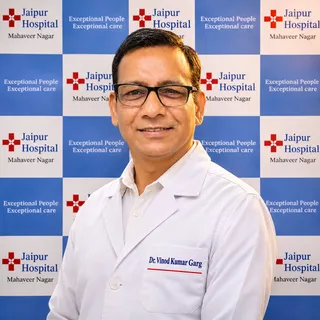
Your pulmonology doctors
Explore our pulmonology and chest care centre in Jaipur: every treatment, the doctors and what to expect at your visit.
Frequently asked questions
Questions patients ask about pulmonary embolism treatment
What is pulmonary embolism management?
In short
Pulmonary embolism management is the urgent treatment of a blood clot blocking an artery in the lung. At Jaipur Hospital, the team starts anticoagulation immediately to stop the clot growing and to prevent new clots. For massive embolism with shock, thrombolysis or embolectomy is used to restore blood flow. Hospital stay is usually three to seven nights, often in the intensive care unit for severe cases.
In detail
Anticoagulation is the foundation of therapy for acute pulmonary embolism. Low-molecular-weight heparin or a direct oral anticoagulant is started without waiting for every scan.
If the patient has low blood pressure or signs of right-heart strain, systemic thrombolysis with alteplase or catheter-directed thrombolysis with a lower dose can be given.
Mechanical thrombectomy devices such as FlowTriever or Indigo, or surgical embolectomy, are options when thrombolysis is contraindicated or has failed. In studies, thrombolysis reduced early hemodynamic collapse but increased major bleeding, especially after age sixty-five. Anticoagulation continues for at least three to six months.
A common belief
Many people think a scan is needed before any treatment.
What actually happens
Guidelines say anticoagulation should begin as soon as pulmonary embolism is suspected, not after every test result. Waiting can be dangerous.
Your next step at Jaipur Hospital
If you suspect a pulmonary embolism, call an ambulance or come to the 24×7 emergency department at Jaipur Hospital. The team will assess risk, start anticoagulation if appropriate, and arrange a CT pulmonary angiogram at an outside imaging centre. A typical stay is three to seven nights.
Which specialist should I see for this problem?
In short
You should see a pulmonologist or a physician trained in pulmonary vascular disease for pulmonary embolism management. At Jaipur Hospital, the Pulmonology department leads the initial assessment, risk stratification, and long-term anticoagulation plan. For massive embolism needing thrombolysis or embolectomy, the pulmonary team works with the anaesthesia and critical care specialists and the cardiothoracic surgery team.
In detail
Guidelines recommend that patients with suspected chronic thromboembolic pulmonary hypertension be referred to a pulmonary hypertension centre. The InShape algorithms use CT pulmonary angiogram signs, ECG, and NT-proBNP to decide who needs echocardiographic investigation for chronic thromboembolic disease.
Risk stratification at the time of acute embolism — using clinical scores, troponin, BNP, and echocardiography — determines whether advanced therapy such as thrombolysis or mechanical thrombectomy is needed. The hospital has a 24×7 emergency department, intensive care unit, and modular operation theatres for these interventions.
A common belief
Some people go only to a general physician or a cardiologist.
What actually happens
Pulmonary embolism needs a specialist who follows the lung artery pressure and the right heart over months, not just the acute phase.
Your next step at Jaipur Hospital
Start with the emergency department if symptoms are acute. For follow-up after an embolism, book a consultation with the Pulmonology team at Jaipur Hospital.
They will arrange a CT pulmonary angiogram at an outside imaging centre, an echocardiogram, and blood tests, then set the duration of anticoagulation and the surveillance schedule.
What treatment options are available for pulmonary embolism?
In short
Treatment options for pulmonary embolism include anticoagulation, systemic thrombolysis, catheter-directed thrombolysis, mechanical thrombectomy, and surgical embolectomy. At Jaipur Hospital, the team chooses the option based on the clot size, your blood pressure, heart strain, and bleeding risk. Anticoagulation is the foundation for almost every patient.
In detail
Anticoagulation with low-molecular-weight heparin or a direct oral anticoagulant such as rivaroxaban, apixaban, dabigatran, or edoxaban is started first. For massive PE with hypotension, systemic thrombolysis with alteplase is indicated. Catheter-directed thrombolysis delivers a lower dose of alteplase via a pulmonary artery catheter.
Mechanical thrombectomy uses aspiration devices such as FlowTriever or Indigo. Surgical embolectomy, open or minimally invasive, is used when thrombolysis is contraindicated or has failed. In intermediate-risk PE, thrombolysis prevents haemodynamic decompensation but increases major bleeding and stroke.
The 2026 AHA/ACC guidelines favour low-molecular-weight heparin over unfractionated heparin for initial parenteral therapy, or a direct oral anticoagulant if oral therapy is feasible.
A common belief
A common belief is that every pulmonary embolism needs a procedure to remove the clot.
What actually happens
In reality, blood thinners alone work for most people. Thrombolysis or embolectomy is only for the sickest patients where the heart is failing. The team weighs the bleeding risk carefully before using clot-busters.
Your next step at Jaipur Hospital
The emergency team starts anticoagulation immediately if there is no contraindication. If advanced therapy is needed, the procedure takes 1 to 2 hours under general anaesthesia. Hospital stay is typically 3 to 7 nights with ICU care for massive PE.
Anticoagulation continues for at least 3 to 6 months. The typical cost range in India is ₹60,000 to ₹3,00,000; ask the hospital for an estimate.
What can I safely do at home to manage symptoms of pulmonary embolism?
In short
At home, you can manage pulmonary embolism symptoms by taking your anticoagulant exactly as prescribed, walking gently as soon as you feel able, and wearing compression stockings if advised at Jaipur Hospital. Early mobilisation is encouraged because immobility itself raises the risk of another clot. Most people whose blood pressure and oxygen are stable begin walking in hospital or on the first day home.
In detail
Evidence shows that gentle walking starts within the first days for people with low or intermediate-low risk clots, stable heart function and steady oxygen levels on room air. You should avoid heavy lifting, intense exercise or long periods of sitting until your surgeon clears you.
Keep hydrated, eat a balanced diet and do not stop your anticoagulant without medical advice. Future surgery or dental work will need planning because anticoagulants often need to be paused briefly. Report any new or worsening breathlessness, chest pain, leg swelling or unusual bleeding at once.
A common belief
Bed rest was once advised, but evidence now shows early mobilisation is safe for stable patients and reduces clot recurrence.
What actually happens
Do not stop your anticoagulant on your own.
Your next step at Jaipur Hospital
Your surgical team will give you a written plan for activity, medication times and follow-up appointments. You will have blood tests to check kidney function and, if on warfarin, INR monitoring. The typical anticoagulation course is at least three to six months.
Which symptoms suggest a clot that needs emergency assessment?
In short
Sudden shortness of breath, sharp chest pain that worsens with breathing, a fast or irregular heartbeat, coughing up blood, feeling faint or collapsing, and cold sweats are warning signs that a pulmonary embolism may be present and need emergency care at Jaipur Hospital. These symptoms can appear without warning and worsen quickly.
In detail
Pulmonary embolism often presents with non-specific clinical features and requires specialised investigations for confirmation. Disregarding unexplained dyspnoea as anxiety or attributing chest pain to musculoskeletal causes are common pitfalls. Massive pulmonary embolism with shock is an indication for systemic thrombolysis with alteplase.
The 2019 ESC guidelines advise risk stratification to decide who benefits from advanced treatment such as thrombolysis or embolectomy. Early recognition and immediate hospital assessment reduce mortality.
A common belief
Many people dismiss breathlessness as anxiety or chest pain as muscle strain.
What actually happens
Those delays are a known reason why clots are missed and people die.
Your next step at Jaipur Hospital
If you or someone near you develops these symptoms, call 108 or Jaipur Hospital's 24×7 ambulance on 7414 001 001. Do not wait to see if they pass. The emergency team will start oxygen, monitoring and anticoagulation at once and arrange urgent imaging.
Which changes in breathing, chest symptoms, or oxygen levels need urgent help?
In short
New or worsening breathlessness at rest, inability to speak in full sentences, chest pain that does not settle, a respiratory rate above 24 breaths per minute, oxygen saturation below 94% on room air, or sudden confusion need an ambulance to Jaipur Hospital immediately. These suggest the heart or lungs are under strain.
In detail
Persistent dyspnoea at three to six months is a criterion for post-PE functional impairment. Echocardiographic probability of pulmonary hypertension defines post-PE cardiac impairment.
In acute pulmonary embolism, a systolic pulmonary artery pressure above 50 mm Hg on echocardiography is a risk factor for chronic thromboembolic pulmonary hypertension. The 2019 ESC guidelines recommend referring patients with persistent dyspnoea or CTEPH risk factors for echocardiogram. Early intervention for haemodynamic compromise reduces mortality.
A common belief
Some people think they can wait or take a taxi.
What actually happens
A drop in oxygen or new confusion means the clot may be growing or the heart is failing. Delay increases the risk of death.
Your next step at Jaipur Hospital
Keep a pulse oximeter at home if you have been advised. If saturation drops below 94% or you develop any of the symptoms above, call 108 or Jaipur Hospital's 24×7 ambulance on 7414 001 001. Do not drive yourself.
Which symptoms or changes should prompt me to seek medical advice?
In short
Sudden shortness of breath, sharp chest pain that worsens with a deep breath, a rapid or irregular heartbeat, coughing up blood, or feeling faint should prompt you to seek medical advice immediately. At Jaipur Hospital, the 24×7 emergency department evaluates these symptoms urgently because they can signal a pulmonary embolism. Early treatment reduces the risk of death and long-term complications.
In detail
Pulmonary embolism often presents with nonspecific features, making it easy to miss. Disregarding unexplained breathlessness as anxiety or attributing chest pain to musculoskeletal causes are common pitfalls.
A clot in the leg may cause swelling, warmth, or calf pain, but deep vein thrombosis can also be silent. Risk factors such as recent surgery, immobility, cancer, pregnancy, oral contraceptives, or a personal or family history of clots raise the probability. Clinical probability scores help decide who needs immediate imaging.
A common belief
People often wait, thinking it is anxiety, a muscle strain, or indigestion.
What actually happens
Guidelines list these as common reasons pulmonary embolism is missed. Do not self-diagnose; get checked.
Your next step at Jaipur Hospital
If you notice any of these symptoms, call an ambulance or go to the emergency department at Jaipur Hospital without delay.
The team will check your oxygen level, heart rate, and blood pressure, start anticoagulation if indicated, and arrange a CT pulmonary angiogram at an outside imaging centre.
What will the doctor ask and check at the first visit?
In short
At the first visit, the doctor will ask about the onset and nature of your breathlessness, chest pain, cough, or fainting. They will ask about recent surgery, immobility, long travel, cancer, hormonal medication, pregnancy, and any personal or family history of blood clots. At Jaipur Hospital, the examination includes heart rate, blood pressure, oxygen saturation, and a careful check of both legs for swelling, warmth, or tenderness.
In detail
Clinical probability assessment using a validated score is the first step. The doctor looks for signs of right-heart strain such as a raised jugular venous pressure, a loud pulmonary component of the second heart sound, or hypotension.
Risk factors for antiphospholipid syndrome — such as livedo reticularis, recurrent miscarriage, or arterial thrombosis — are specifically enquired about. Heparin resistance may prompt a check for antithrombin deficiency.
The 2019 ESC guidelines advise thrombophilia testing only in selected patients, such as those under fifty with no provoking factor and a strong family history.
A common belief
Patients often expect an immediate CT scan.
What actually happens
Guidelines say a clinical score and a D-dimer come first; a scan is only needed if the probability is not low. This avoids unnecessary radiation and contrast.
Your next step at Jaipur Hospital
Bring any previous scan reports, blood test results, and a list of current medicines. The doctor will order a D-dimer blood test and a CT pulmonary angiogram at an outside imaging centre if the probability is not low. An echocardiogram may be done the same day.
Can pulmonary embolism improve without a procedure or operation?
In short
Some pulmonary emboli can be managed without a procedure or operation at Jaipur Hospital. Anticoagulation alone is the foundation of treatment for most patients and many clots resolve over weeks to months with blood-thinning medicines. The need for thrombolysis or embolectomy depends on the clot size, your blood pressure, oxygen levels and whether the heart shows strain.
In detail
Evidence shows that most patients with venous thromboembolism respond to anticoagulation, which prevents new clots and allows the body to break down the existing one. Low-risk pulmonary embolism can reasonably be treated as an outpatient with anticoagulation alone.
Thrombolysis is reserved for massive pulmonary embolism with shock or hypotension, or for select intermediate-risk patients with right ventricular dysfunction and a low bleeding risk.
Mechanical thrombectomy or surgical embolectomy are options when thrombolysis is contraindicated or has failed, or in massive pulmonary embolism with cardiac arrest. The choice is guided by risk stratification using clinical scores, echocardiography, troponin and imaging.
A common belief
A procedure such as thrombolysis or embolectomy is only needed for massive clots causing low blood pressure or heart strain, or when anticoagulation cannot be used.
What actually happens
Most patients do not need it.
Your next step at Jaipur Hospital
Your surgeon will assess the clot burden, haemodynamic stability and bleeding risk to decide if a procedure is needed. If anticoagulation alone is chosen, you will start blood thinners in hospital and continue for at least three to six months. Regular follow-up with blood tests and clinical review is required.
Are there foods, activities, or habits I should change after pulmonary embolism treatment?
In short
After pulmonary embolism treatment at Jaipur Hospital, you may need to adjust certain foods, activities and habits. If you take warfarin, keep your vitamin K intake steady by eating similar amounts of green leafy vegetables each day. Avoid binge drinking and limit alcohol because it affects clotting and falls risk. Stop smoking, as it damages blood vessels and raises clot risk. Discuss any herbal supplements with your surgeon, as many interact with anticoagulants.
In detail
Evidence shows that failing to advise patients of risk factors such as smoking, pregnancy and oral contraceptives is a common pitfall. Combined hormonal contraceptives increase clotting risk; your surgeon may suggest an alternative.
Long-haul travel is usually deferred until you are stable, established on anticoagulation and past the first weeks. Driving can resume once breathlessness and lightheadedness have settled enough to react normally. Regular gentle walking is encouraged; intense sport should wait for medical clearance. Maintain a healthy weight and stay hydrated.
A common belief
Many people think they must rest completely, but gentle activity is protective.
What actually happens
Smoking and combined hormonal contraceptives are often overlooked risk factors that your surgeon will address.
Your next step at Jaipur Hospital
Your surgical team will review your medications, supplements and lifestyle at each follow-up. You will receive written guidance on diet, activity progression and when to restart or pause anticoagulation for procedures. The typical anticoagulation duration is at least three to six months.
FAQ library
Questions and answers about pulmonary embolism treatment
When you contact us
Consult our pulmonology team in Jaipur
Reach out to Jaipur Hospital to have your symptoms and test reports assessed by our medical specialists.
- A consultation with a pulmonologist (chest physician) in the OPD
- Your scans and reports reviewed, with tests done in-house if you need them (laboratory, X-ray and imaging)
- Your options explained in plain words, including whether you need surgery at all
- A cost estimate before you decide
- Help with cashless treatment under MAA Yojana and empanelled insurers and TPAs
- Follow-up visits after your treatment
Overview
Pulmonary Embolism Treatment: what to know
What is pulmonary embolism and how it happens
Pulmonary embolism happens when a blood clot blocks blood flow in the lungs. It is the third most common cause of death from cardiovascular disease after heart attack and stroke.
In most cases, the problem begins as a deep vein thrombosis, where a clot forms in the deep veins of the leg or pelvis and travels through the bloodstream into the pulmonary arteries.
When a blood clot lodges in the lungs, it strains the right side of the heart. Venous thromboembolism shares common pathophysiological characteristics of inflammation, hypercoagulability, and endothelial injury with atherothrombosis. Anticoagulation is the foundation of therapy for acute pulmonary embolism. In patients with acute pulmonary embolism, systemic thrombolysis improves right ventricular dilatation, though it is associated with major bleeding.
Some people develop long-term problems after a clot. Sequelae occurring after venous thromboembolism include chronic thromboembolic pulmonary hypertension and post-thrombotic syndrome. CTEPH is an uncommon, but serious, complication of PE. In fact, untreated CTEPH has a survival rate worse than many common cancers. Getting a timely assessment at Jaipur Hospital helps protect your heart and lung function.
Symptoms of pulmonary embolism and warning signs that need urgent care
- Sudden shortness of breath Sudden or worsening difficulty with breathing.
- Unexplained chest pain Chest discomfort without an obvious clear cause.
- Leg swelling or tenderness Swelling, pain or redness from deep vein thrombosis.
- Feeling faint Lightheadedness or a feeling of fainting.
- Low blood pressure Systolic blood pressure falling below 90 mm Hg.
Pulmonary embolism can develop quickly and requires prompt medical attention. Many patients die of PE that was not recognised because it presents with nonspecific clinical features and requires specialised investigations for confirmation of diagnosis. Disregarding patient's complaints of unexplained dyspnea as anxiety or hyperventilation is a common pitfall in management. In addition, attributing complaints of unexplained chest pain to musculoskeletal pain is a common pitfall in management.
Warning signs that need urgent care include:
- Sudden or worsening shortness of breath
- Unexplained chest pain
- Swelling, tenderness, or redness in one leg from deep vein thrombosis
- Lightheadedness or feeling faint
- Low blood pressure, where systolic blood pressure drops below 90 mm Hg
Breathlessness needs careful evaluation. The assessment of breathlessness should include an assessment of severity and recovery from the index PE. If you experience sudden chest discomfort or difficulty breathing, visit our 24×7 emergency department immediately.
Causes and who is at higher risk of pulmonary embolism
- Immobility or illness
- Staying still for long periods or having acute illness.
- Heart or lung conditions
- Cardiopulmonary conditions affecting clot tolerance.
- Cancer history
- Active cancer or a diagnosis within 5 years.
- Antiphospholipid syndrome
- The most common form of acquired clotting disorder.
A pulmonary clot forms when the natural balance of blood clotting changes. Venous thromboembolism and atherothrombosis share common risk factors. Failing to advise patients of risk factors such as smoking, pregnancy, and use of oral contraceptives is a common pitfall in management. Failing to diagnose predisposing or associated conditions is also a common pitfall in management.
Risk factors include:
- Prolonged immobility or acute medical illness
- Presence of an acute or chronic cardiopulmonary comorbidity that affects your ability to tolerate PE
- Cancer, as one in 20 patients who present with VTE is diagnosed with cancer within 12 months
- A history of cancer within 5 years
- Antiphospholipid syndrome, which is the most common form of acquired thrombophilia
- Inherited clotting conditions, such as Factor V Leiden, prothrombin gene mutations, antithrombin deficiency, or protein C and S deficiency
Patients with more severe acute PE are at greater risk of developing CTEPH. A meta-analysis demonstrated an odds ratio of 4.1 for the development of CTEPH in patients with no major transient risk factors compared with those with them.
In a study from the ASPIRE Registry, only 3 of 376 (0.8%) patients seen 3 to 6 months post PE with a major transient risk factor developed CTEPH, compared with 33 of 1139 patients (2.8%) with no major transient risk factors.
How pulmonary embolism is diagnosed: examination and tests
Diagnosing pulmonary embolism requires a systematic clinical assessment. Failing to initiate an appropriate diagnostic workup in patients with symptoms consistent with PE is a common pitfall in management. Clinical probability assessment helps to identify patients with low clinical probability for whom the diagnosis of venous thromboembolism can be excluded solely with a negative result from a plasma D-dimer test.
The diagnosis is usually confirmed with compression ultrasound showing deep vein thrombosis or with chest CT showing pulmonary embolism. At Jaipur Hospital, our doctors advise and review your chest CT scan, which is performed at an imaging centre outside the hospital.
Failing to initiate therapeutic anticoagulation in patients suspected of having PE, before imaging investigations, is a common pitfall in management.
Further tests help assess strain on the heart and check for complications:
- An echocardiogram to evaluate right heart strain, where a systolic pulmonary artery pressure of more than 50 mm Hg at the time of acute PE is a risk factor for CTEPH
- Blood tests for cardiac troponin I or troponin T to detect myocardial injury
- Electrocardiogram (ECG) and NT-proBNP measurement
Routine cancer screening with CT scans in patients with a first unprovoked clot is not recommended, as trials show it does not improve mortality compared with limited screening based on your history and physical examination.
Testing for inherited thrombophilia is also not recommended for most patients with a first clot, nor should it be routinely conducted to decide the duration of blood thinners.
Treatment options for pulmonary embolism without surgery, and when surgery is advised
Blood thinners
- Direct oral anticoagulants Modern tablets that do not need routine laboratory monitoring.
- Injectable blood thinners Injections such as low-molecular-weight heparin or fondaparinux.
Procedural interventions
- Systemic thrombolysis Clot-dissolving medicine given through an intravenous line.
- Catheter-directed thrombolysis Lower doses of medicine delivered directly into the lung artery.
- Mechanical thrombectomy Using catheter aspiration devices to physically remove clots.
- Surgical embolectomy Clot removal carried out under general anaesthesia.
Most patients with venous thromboembolism respond to anticoagulation, which is the foundation of treatment. If a patient with acute PE has no absolute contraindication, anticoagulant therapy should be initiated to reduce the risk of recurrent venous thromboembolism and death. Modern blood thinners include direct oral anticoagulants such as rivaroxaban, apixaban, edoxaban, and dabigatran, which do not require regular laboratory monitoring. Injectable options include low-molecular-weight heparin, unfractionated heparin, and fondaparinux.
Blood thinner medicines are typically taken for a minimum of 3 to 6 months. For low-risk patients who meet specific criteria, treatment can be managed safely at home. In hospital, an acute stay typically lasts 3 to 7 nights, with care in the Intensive Care Unit for massive clots.
A typical price range for pulmonary embolism treatment in India is ₹60,000 to ₹3,00,000, depending on the severity of the clot, whether ICU monitoring is needed, and the specific medicines used. You can ask us for an estimate.
When a clot causes dangerously low blood pressure or severe heart strain, procedural interventions may be advised. Your specialist will discuss the techniques that suit your condition:
- Systemic thrombolysis: Clot-dissolving medicine given through an intravenous line for massive clots with shock, which helps restore blood flow rapidly
- Catheter-directed thrombolysis: Lower doses of clot-dissolving medicine delivered directly into the pulmonary artery via a catheter to reduce bleeding risks
- Mechanical thrombectomy: Using catheter aspiration devices such as FlowTriever or Indigo to physically remove the clot
- Surgical embolectomy: Open or minimally invasive clot removal carried out under general anaesthesia when clot-dissolving medicines cannot be used or have not resolved the blockage
Interventions typically take 1 to 2 hours. Your surgeon will advise which approach is safest and most effective for you.
Preparing for pulmonary embolism treatment
Do
- Report all medicines Tell your doctor about prescriptions, over-the-counter tablets and supplements.
- Report bleeding history Mention any recent bleeding, stomach ulcers, past operations, or pregnancy.
- Fast before anaesthesia Fast from food and water for several hours beforehand if advised.
- Bring hospital papers Carry photo identification, insurance cards, files and test reports.
Pulmonary embolism treatment begins urgently when a blood clot blocks blood flow in the lungs. If you have symptoms, our doctors check your breathing, heart rate, blood pressure and oxygen levels right away. Anticoagulation is the foundation of therapy for acute pulmonary embolism.
If you have no absolute contraindication, anticoagulant medicine is started quickly to reduce the risk of another clot and death. In patients suspected of having a pulmonary embolism, failing to start therapeutic blood thinners before imaging tests are completed is a recognised pitfall.
Before an intervention or blood-thinning medicine begins, our doctors review your medical history and current prescriptions. Tell your doctor about every tablet you take, including over-the-counter medicines, herbal supplements and pain relievers. You should also tell your doctor if you have had recent bleeding, stomach ulcers, previous surgeries, or if you are pregnant.
Patients should be asked about risk factors like smoking, pregnancy and oral contraceptive pills. Resistance to heparin can happen in people who need large doses to reach target blood levels, often linked to higher levels of factor VIII and certain binding proteins.
Your doctor will organise blood tests before and during care. These checks assess kidney function, liver health, blood counts and how quickly your blood clots. If an intervention under general anaesthesia is needed, you will typically be asked to fast from food and water for several hours beforehand. For an emergency procedure, our team manages fasting protocols safely in the Intensive Care Unit.
Bring your government photo identification, insurance cards, previous medical files and any recent test reports with you. Having a family attendant stay nearby is helpful to support you, hear updates from the specialist team, and collect medicines from the chemist.
How pulmonary embolism treatment is done
- Administer general anaesthesia General anaesthesia is typically given before the procedure starts.
- Guide catheter through vessels A flexible tube is guided into the pulmonary artery clot.
- Deliver targeted treatment Medicine is released directly at the blockage site.
- Clear the blockage Devices vacuum or pull the clot out mechanically.
Pulmonary embolism treatment covers medicines that thin blood, drugs that dissolve clots, or procedures that physically remove clots. Acute treatment typically lasts from hours to days, while an intervention typically takes 1 to 2 hours. General anaesthesia is typically used if an intervention is carried out. Your doctor will advise which treatment suits you based on your blood pressure, heart strain and bleeding risk.
- Systemic thrombolysis: This option delivers clot-dissolving medication, such as alteplase, through an intravenous line into your bloodstream. It is used for massive pulmonary embolism when a patient has low blood pressure or shock. In patients with low blood pressure, dissolving the clot can quickly restore blood flow, though doctors reserve it for those without a high bleeding risk. Recombinant tissue plasminogen activator at a dose of 100 mg has been the most commonly used regimen.
- Catheter-directed thrombolysis: In this procedure, a specialist guides a thin, flexible tube through your blood vessels directly into the pulmonary artery clot. A lower dose of alteplase is released right at the blockage, sometimes aided by ultrasound waves to help the medicine penetrate the clot. Your doctor will advise if this targeted method is right for your clinical condition.
- Mechanical thrombectomy: This intervention uses specialised catheter devices, such as FlowTriever or Indigo aspiration systems, to vacuum or pull the clot out of the lung arteries. It aims to clear the blockage mechanically through blood vessels without needing full-dose clot-dissolving medicines. Your doctor will advise whether catheter aspiration is suitable for your clot location.
- Surgical embolectomy: If medicines are unsafe or catheter procedures cannot clear the blockage, surgical removal of the clot is an option. A surgeon removes the clot through open surgery or minimally invasive surgical techniques. Your surgeon will explain what is involved if an operation is required.
Most patients respond to medical anticoagulation alone. Initial blood thinners may be given by injection under the skin or through a vein, including low-molecular-weight heparin, unfractionated heparin or fondaparinux. Patients eligible for tablets are often started on direct oral anticoagulants, which include rivaroxaban, apixaban, dabigatran or edoxaban.
Warfarin is also an oral option; its effect is checked with a routine blood test called the international normalised ratio (INR), aiming for a target range of 2.0 to 3.0.
Risks and possible complications of pulmonary embolism treatment
- Minor bleeding
- Small bleeds such as nosebleeds or easy skin bruising.
- Major bleeding
- Serious bleeding occurring inside the digestive tract or brain.
- Clot recurrence
- Blood clots can sometimes reform even during ongoing medical care.
- CTEPH
- Scarred clots cause high blood pressure in the lung arteries.
Every medical treatment carries possible risks. Because pulmonary embolism treatments thin the blood or break down clots, bleeding is the primary safety concern. Bleeding can be minor, such as nosebleeds or easy bruising, or major, such as bleeding inside the digestive tract or brain.
In clinical trials, the frequency of bleeding varies with the chosen medicine. In a study comparing rivaroxaban with standard blood-thinning therapy, major bleeding was observed in 26 patients (1.1%) on rivaroxaban and 52 patients (2.2%) on standard therapy.
Across that trial, major or clinically relevant non-major bleeding occurred in 10.3% of patients taking rivaroxaban and 11.4% of those on standard treatment. In another study comparing apixaban with the injectable heparin dalteparin, recurrent venous clots occurred in 5.6% and 7.9% of patients, respectively.
Clot-dissolving therapies carry higher bleeding rates than blood thinners alone. In a trial of intermediate-risk patients receiving tenecteplase, major bleeding outside the brain occurred in 32 patients (6.3%), compared with 6 patients (1.2%) receiving placebo. A meta-analysis showed that while thrombolytic therapy reduced mortality by 47% in pulmonary embolism patients, it was associated with a 2.7-fold increase in major bleeding.
In that analysis, major bleeding did not increase significantly in patients younger than 65 years, but it more than tripled in patients older than 65 years. In an ultrasound-assisted catheter thrombolysis trial of 59 patients, reversing heart dilatation occurred without an increase in bleeding complications.
Blood clots can recur even during treatment. Other long-term complications after a clot include post-thrombotic syndrome in the legs and chronic thromboembolic pulmonary hypertension (CTEPH), where scar-like clots cause high blood pressure in the lung arteries. CTEPH is an uncommon but serious condition.
In one study, 0.8% of patients with a temporary risk factor and 2.8% of patients without temporary risk factors developed CTEPH.
Recovery and aftercare following a pulmonary embolism
- First weeks at home Gradually increase daily movement as stamina returns.
- Months 3 to 6 Complete the standard minimum course of blood thinner medicine.
Hospital stay typically lasts 3 to 7 nights, with admission to the Intensive Care Unit if you have a massive pulmonary embolism. Your oxygen levels, blood pressure and heart function are watched closely throughout your stay. For most people whose blood pressure and oxygen levels are stable, gentle walking begins in the hospital or on the first day home. Walking early is encouraged because staying still in bed can raise the risk of another blood clot forming.
During the first weeks at home, your body continues to heal. You will need to take anticoagulant medicine for a minimum of 3 to 6 months. For an uncomplicated clot caused by a temporary risk factor, 3 months of anticoagulation is standard.
If you have persistent risk factors or an unprovoked clot, your doctor may recommend extending blood thinners for longer. If you take warfarin, you will need blood tests every 1 to 2 weeks once stable to check your INR level. Direct oral anticoagulants do not require routine blood clotting tests.
Normal daily movement can be increased slowly as your stamina returns. Driving is usually resumed once breathlessness and lightheadedness have settled enough for you to react normally. Medical teams generally prefer that you are stable, settled on your blood thinners, and past the first few weeks before undertaking long-haul travel.
Any future dental work or planned operations will need coordination with your doctor, as blood thinners often need to be paused briefly. Some centres also offer structured rehabilitation programmes to help patients recover their physical fitness after a pulmonary embolism.
Call Jaipur Hospital or visit our 24×7 emergency department immediately if you experience sudden breathlessness, chest pain, coughing up blood, sudden leg swelling, dizziness, or black stools. Unusual bleeding that does not stop, such as heavy nosebleeds or severe bruising, also requires prompt medical review.
Results of pulmonary embolism treatment in clinical studies
Pulmonary embolism is the third most common cause of cardiovascular death after heart attack and stroke. Timely treatment with blood thinners and interventions helps lower the risk of death and prevents new clots from developing.
Large clinical trials show that modern oral blood thinners perform as well as older standard therapies. In the EINSTEIN-PE study, which included 4,832 patients, fixed-dose rivaroxaban alone was non-inferior to standard heparin and vitamin K antagonist therapy for preventing recurrent clots.
In the Hokusai-VTE study of 3,319 patients, edoxaban resulted in a 3.3% clot recurrence rate among patients with right heart strain, compared with 6.2% for warfarin. In trials evaluating dabigatran, the medicine was non-inferior to warfarin in reducing recurrent clots and caused less bleeding.
Apixaban also lowered the risk of recurrent clots or clot-related death by 16% compared with standard therapy in clinical trials.
For patients with unstable blood pressure, clot-dissolving medicines offer rapid relief of lung strain. In a trial of 1,006 patients with intermediate-risk clots, death or circulatory collapse within 7 days happened in 2.6% of patients given tenecteplase compared with 5.6% given placebo.
In that study, death within 7 days occurred in 1.2% of the tenecteplase group and 1.8% of the placebo group. Controlled trials show that the early advantage of clot-dissolving drugs in clearing blockages on scans is most marked in the first 24 hours.
Some patients experience lingering breathlessness or reduced exercise tolerance after a clot, known as post-PE functional impairment. Scans can show residual clot traces months later; a meta-analysis of 25 studies found 52% of patients had residual perfusion defects at 11 months, while a prospective study noted residual defects in 29% at 12 months. Your doctor will evaluate your breathing and heart recovery during regular OPD follow-up visits.
Cost of pulmonary embolism treatment and insurance in Jaipur
The cost of pulmonary embolism treatment in India typically ranges from ₹60,000 to ₹3,00,000. This is a typical range across hospitals in India. You can ask us for a specific cost estimate based on your clinical assessment.
Several medical factors affect the overall cost of care. Treatment with standard oral blood thinners costs less than advanced interventions. If your condition requires an ICU bed, mechanical clot removal, catheter-directed thrombolysis, or surgical embolectomy, total expenses will be higher. The number of nights spent in hospital, required oxygen support, laboratory investigations, and post-discharge medicines also change the final bill.
Jaipur Hospital is empanelled with MAA Yojana for eligible patients seeking cashless government healthcare benefits. Cashless hospitalisation and claim reimbursements are also available through our panel of private insurers and Third Party Administrators (TPAs). If you have a private health insurance policy, bring your card to our admission desk so our team can help process your pre-authorisation paperwork.
Jaipur Hospital is NABH-accredited and in service since 1991, offering 24-hour critical care and medical services. Our team provides an itemised breakdown of hospital charges during your stay. For queries regarding treatment estimates, room categories, or empanelled insurance providers, our desk staff can guide you directly.
