

Sports Injury · Jaipur Hospital
Ankle and Foot Sports Injuries in Jaipur
Ankle pain or giving way? We assess, explain options and give you a clear plan.
- Serving Jaipur since 1991 (35 years)
- NABH accredited
- 24×7 emergency & ICU
- Cashless: RGHS, MAA Yojana, CGHS + 22 insurers
- Treatment length
- Varies by condition
- Anaesthesia
- Local, regional or general as needed
- Recovery
- 2 weeks to 6 months depending on injury
- Price
- ₹5,000 to ₹2,50,000typical range in India; ask us for an estimate
Ankle pain and instability
Your ankle hurts, feels loose or gives way during activity
A sprain that never fully healed, repeated giving-way, morning stiffness in the Achilles or sharp heel pain can stop you from walking, running or playing. Without proper assessment the problem often returns.
-
Repeated sprains
Up to 40% of first-time sprains lead to chronic instability with recurrent giving-way.
-
Achilles or heel pain
Tendinopathy and plantar fasciitis cause morning stiffness and pain that limits walking and sport.
-
Stress fracture risk
Overuse can cause small bone cracks that worsen without proper off-loading and guided return.
-
Long-term joint changes
Untreated instability is linked to post-traumatic osteoarthritis over time.
-
Unclear next steps
You may not know whether you need rehab, an injection or surgery — and want honest advice.
Chronic ankle instability involves proprioception deficits in inversion and plantarflexion compared with the uninjured side.
Why Jaipur Hospital
You worry that ongoing ankle pain will keep you off the field, make daily walking difficult, and lead to time off work or study.
Your care plan
Your first steps with us
- 1 Call or visit OPD for specialist consultation
- 2 Get scans and tests done in-house if needed
- 3 Review options and receive a cost estimate
- 4 Start rehab or schedule surgery with follow-up plan
How treatment is planned and delivered
Your surgeon evaluates the injury, reviews imaging and discusses whether non-surgical rehab, arthroscopy, ligament repair or tendon procedures fit your goals. Anaesthesia is local, regional or general as needed. Stay ranges from daycare to two nights.
-
Functional Rehabilitation
Proprioception, eccentric loading and a graded return-to-sport protocol guided by physiotherapy.
-
Ankle Arthroscopy
Small incisions with a camera to debride, remove loose bodies or treat cartilage lesions.
-
Lateral Ligament Reconstruction (Broström)
Anatomic repair of stretched or torn lateral ligaments for chronic instability.
-
Achilles/Plantar Fascia Procedures
Debridement, gastrocnemius recession or PRP injection for persistent tendinopathy or fasciitis.
Why patients trust us
- 1991 Serving Jaipur for 35 years
- NABH Accredited hospital
- 1 Sports Injury consultants
- 24×7 Emergency, ICU and ambulance
- 25 Cashless schemes and insurers
What research shows about these treatments
-
Up to 40% develop chronic instability
Nearly four in ten people with a first lateral ankle sprain go on to develop chronic ankle instability.
-
Surgery reduces re-rupture risk
Pooled data show surgical repair of acute Achilles rupture lowers re-rupture rate to about 3.7% versus 9.8% without surgery.
-
15.8% higher complication risk with surgery
Surgery for Achilles rupture carries an absolute 15.8% increase in complications other than re-rupture compared with non-operative care.
If it is left untreated
Leaving an unstable or painful ankle untreated can lead to repeated sprains, progressive joint damage and a higher chance of post-traumatic osteoarthritis. Early assessment reduces the risk of long-term disability.
Life after treatment
Most people return to daily walking and sport with a structured rehab plan; recovery time varies by injury.
-
Steady ankle
Most people feel more stable on uneven ground and during quick direction changes.
-
Less morning stiffness
Achilles and heel pain usually improve with guided eccentric loading and activity modification.
-
Return to sport
A phased protocol helps most athletes resume training at their previous level.
-
Fewer recurrent injuries
Addressing proprioception and strength deficits lowers the chance of another sprain.
Frequently asked questions
Questions patients ask about ankle and foot sports injuries
Which problems are assessed under ankle and foot sports injuries?
In short
Jaipur Hospital assesses a range of ankle and foot sports injuries including ankle sprains, chronic instability, Achilles tendinopathy, plantar fasciitis, and stress fractures. The orthopaedic and sports injury team evaluates each condition through clinical examination and imaging to determine the exact structure involved and the severity of the injury.
In detail
Evidence shows lateral ankle sprains are among the most common sports injuries and up to 40 percent of first-time sprains may develop into chronic ankle instability, which is defined as recurrent giving way, pain, swelling and weakness persisting more than twelve months after the initial injury.
Achilles tendinopathy and plantar fasciitis are overuse conditions affecting the tendon and fascia respectively, while stress fractures result from repetitive loading on bone.
The team uses a structured assessment model that incorporates proprioception deficits, dynamic balance, peroneal reaction time and strength measurements to guide the care plan.
A common belief
Many people think a sprain is just a sprain, but research shows up to 40 percent of first-time sprains progress to chronic instability with ongoing giving way, pain and weakness.
What actually happens
Proper assessment catches these deficits early.
Your next step at Jaipur Hospital
You will attend an OPD consultation where the surgeon takes a detailed history, examines the ankle and foot, and orders weight-bearing X-rays or MRI as needed. The assessment usually takes one visit. After the results are reviewed, the surgeon discusses the treatment options with you and your attendant.
How will the doctor decide which tests I need?
In short
The surgeon at Jaipur Hospital selects tests based on your history, mechanism of injury, clinical examination findings and the suspected diagnosis. Weight-bearing X-rays are usually the first imaging step to assess bone alignment, joint space and fracture lines. MRI or ultrasound is added when soft tissue detail of ligaments, tendons or fascia is required.
In detail
Clinical assessment focuses on dynamic balance, peroneal reaction time, eversion strength and proprioception deficits, which evidence shows contribute to non-specific ankle instability. If chronic ankle instability is suspected, the surgeon may order stress X-rays or MRI to evaluate lateral ligament integrity and associated cartilage lesions.
For Achilles tendinopathy, ultrasound or MRI confirms tendon thickening, intratendinous vascularity and partial tears. Plantar fasciitis is often diagnosed clinically but ultrasound can show fascia thickening. Stress fractures may need MRI or bone scan if X-rays are normal initially. The choice of test is tailored to the specific clinical question.
A common belief
A common mistake is assuming everyone needs an MRI straight away.
What actually happens
Evidence shows clinical tests for proprioception, balance and strength guide whether imaging should target bone, ligament or tendon. The right test avoids unnecessary cost and delay.
Your next step at Jaipur Hospital
You will have the relevant imaging done at the in-house radiology department, often on the same day as your consultation. The surgeon reviews the images with you and explains how the findings change the treatment plan.
How soon should I expect improvement after the chosen treatment?
In short
Improvement timelines at Jaipur Hospital vary by condition and treatment type. Functional rehabilitation typically shows measurable gains in pain and function at six to twelve weeks. Surgical recovery ranges from two weeks for arthroscopic debridement to six months for ligament reconstruction or Achilles repair, with gradual return to sport guided by milestones.
In detail
Evidence from studies on Achilles tendinopathy shows VISA-A scores improve significantly by twelve weeks with both eccentric and heavy slow resistance training, though patient satisfaction may differ earlier. For acute Achilles rupture, surgical patients returned to work about nineteen days sooner than non-surgical patients.
Ankle arthroscopy is usually daycare with early weight-bearing as tolerated. Lateral ligament reconstruction requires protected weight-bearing for several weeks followed by progressive rehabilitation. Chronic ankle instability rehabilitation focuses on dynamic balance and peroneal reaction time, with studies measuring outcomes at six, twelve and twenty-four weeks. The surgeon sets specific milestones for range of motion, strength and sport-specific drills before clearing full return.
A common belief
Patients often expect instant relief after surgery, but tissue healing follows biological timelines.
What actually happens
Evidence shows even with successful surgery, full return to sport takes months of guided rehab to restore proprioception and strength.
Your next step at Jaipur Hospital
You will receive a written rehabilitation protocol with weekly goals. The physiotherapy team monitors progress and adjusts load. Follow-up visits are scheduled at two weeks, six weeks, three months and six months as needed.
Can my ankle or foot sports injury heal with rehabilitation, or is an operation worth considering?
In short
Many ankle and foot sports injuries heal with structured rehabilitation, but some need surgery. Jaipur Hospital assesses each case individually. Functional rehabilitation with early range of motion can give results equal to surgery for certain conditions, while chronic instability or large tendon tears may require an operation.
In detail
Evidence shows that when functional rehabilitation with early range of motion is used, re-rupture rates are similar for surgical and non-surgical treatment of Achilles rupture.
For chronic Achilles tendinopathy, both eccentric loading and heavy slow resistance produce lasting improvement, with heavy slow resistance linked to higher early satisfaction. However, if early motion protocols are not followed, surgical repair lowers re-rupture risk.
Up to 40 percent of first-time lateral ankle sprains develop into chronic instability, which is associated with proprioception and balance deficits.
Our surgical team offers ankle arthroscopy for loose bodies or impingement, Broström ligament reconstruction for chronic instability, and Achilles or plantar fascia procedures including debridement, gastrocnemius recession, or PRP injection. The choice depends on injury severity, chronicity, and your goals.
A common belief
People often think surgery is a quicker fix, but evidence shows rehab with early motion matches surgical outcomes for many conditions.
What actually happens
Surgery adds risks like wound complications, which occur more often with operative treatment.
Your next step at Jaipur Hospital
Your surgeon will examine you, review imaging, and explain whether a supervised rehabilitation programme is sufficient or if a procedure is advised. Most patients start with a trial of rehabilitation unless there is a clear structural indication for surgery.
How can I decide whether to seek advice about ankle ligament reconstruction?
In short
You should consider a surgical opinion if your ankle still gives way after at least three months of supervised functional rehabilitation, if you have had multiple sprains in the past year, or if imaging shows a torn lateral ligament with ongoing instability. Jaipur Hospital offers a structured assessment to guide that decision.
In detail
Chronic ankle instability is defined as recurrent giving way, pain, swelling and weakness more than twelve months after the first sprain. Evidence shows that dynamic balance deficits, delayed peroneal reaction time and eversion weakness drive the instability.
Functional rehabilitation — proprioception drills, eccentric loading and sport-specific progressions — is the first-line treatment. When a dedicated programme fails to restore stability, anatomic lateral ligament reconstruction (Broström) reliably restores mechanical restraint.
Studies comparing surgery with non-operative care find lower re-rupture rates after surgery when early motion protocols are not used, but surgery adds a 15.8 percent absolute risk of other complications. The choice hinges on how much instability limits your sport, work or daily life after genuine rehab effort.
- Studies comparing surgery with non-operative care find lower re-rupture rates after surgery when early motion protocols are not used, but surgery adds a 15.8 percent absolute risk of other complications.
A common belief
People often wait years, hoping it will tighten up.
What actually happens
But each giving-way episode stretches the ligament further and damages the joint surface. Surgery is not a first step; it is the step when structured rehab has genuinely failed to control the instability.
Your next step at Jaipur Hospital
At your consultation, the surgeon will test ligament laxity, proprioception and strength, review imaging, and discuss whether you have completed an adequate rehabilitation trial. If reconstruction is advised, it is usually daycare or one-night stay under regional or general anaesthesia. Recovery to sport typically takes three to six months.
Can I continue any training safely while I recover from an ankle or foot sports injury?
In short
Yes, modified training is usually encouraged to maintain cardiovascular fitness, proximal strength and neuromuscular control while the injured tissue heals. Jaipur Hospital designs a cross-training plan that respects the healing timeline of your specific injury — sprain, tendinopathy, stress fracture or post-surgical state.
In detail
Evidence supports early protected motion and progressive loading for most ankle and foot conditions. For lateral ankle sprains, functional rehabilitation starts with range of motion and weight-bearing as tolerated, advancing to proprioception and eccentric work.
Achilles tendinopathy protocols use heavy slow resistance or eccentric loading within pain-monitored limits. Stress fractures require offloading the bone — often a boot or non-weight-bearing — but upper-body ergometry, swimming with a pull buoy and hip-core circuits are typically safe.
After arthroscopy or ligament reconstruction, the surgeon defines weight-bearing status and range-of-motion limits; stationary bike, seated strength work and contralateral limb training begin early. The principle is load the healing tissue appropriately — not zero load, not full load.
A common belief
The old advice was total rest.
What actually happens
We now know complete unloading weakens bone, tendon and muscle, and delays return. The trick is dosing the load: enough to stimulate healing, not enough to disrupt it.
Your next step at Jaipur Hospital
Your physiotherapist will give you a weekly programme with clear load markers: pain during and after session, swelling response, range-of-motion checkpoints. Progression criteria are objective — hop tests, strength symmetry, sport-specific drills — not just time.
Which symptoms should prompt me to see a specialist?
In short
You should see a specialist at Jaipur Hospital if you have persistent ankle pain, swelling, recurrent giving way, stiffness, weakness or difficulty bearing weight after an injury. Symptoms lasting beyond a few weeks, or repeated episodes of the ankle turning over, suggest chronic instability or an overuse condition that needs formal assessment.
In detail
Chronic ankle instability is characterised by frequent episodes or perceptions of the ankle giving way, persistent pain, swelling, limited motion, weakness and diminished self-reported function more than twelve months after the initial sprain.
Evidence links prior ankle sprain to a high recurrence rate and long-term outcomes such as post-traumatic osteoarthritis. Achilles tendinopathy typically presents with activity-related tendon pain, morning stiffness and thickened tendon. Plantar fasciitis causes heel pain worst with the first steps in the morning.
Stress fractures produce localised bone pain that worsens with weight-bearing activity. These symptom patterns help the surgeon decide which imaging and tests are required.
Your next step at Jaipur Hospital
Make an OPD appointment if you recognise any of these symptom patterns. The surgeon will examine you, order appropriate imaging, and explain the findings. Early review can prevent progression to chronic instability.
How will the results change my care plan?
In short
Imaging and clinical test results at Jaipur Hospital directly shape whether your care plan follows a non-operative pathway or proceeds to surgery. Normal X-rays with ligament laxity on stress views may lead to functional rehabilitation. MRI showing a full-thickness ligament tear, cartilage lesion or Achilles rupture may shift the plan to surgical repair or reconstruction.
In detail
Evidence indicates that if functional rehabilitation with early range of motion is employed, re-rupture rates are equal for surgical and non-surgical management of acute Achilles rupture. Without early motion protocols, surgery reduces re-rupture risk.
For chronic ankle instability, MRI-confirmed ligament attenuation or associated osteochondral lesions often warrant anatomic lateral ligament reconstruction (Broström) or ankle arthroscopy for debridement and microfracture. Plantar fasciitis with fascia thickening on ultrasound may progress to gastrocnemius recession or PRP injection if rehabilitation fails.
Stress fracture grade on MRI determines whether protected weight-bearing or surgical fixation is needed. Each result narrows the options to those matched to the pathology.
A common belief
Patients sometimes expect surgery for every abnormal scan, but evidence shows early motion rehab gives equal re-rupture rates to surgery for Achilles tears.
What actually happens
The surgeon matches the intervention to the specific lesion, not just the image.
Your next step at Jaipur Hospital
After the tests, the surgeon discusses the findings, explains the recommended pathway and outlines the expected timeline. You and your attendant can ask questions before deciding.
What should I do if symptoms of my ankle or foot sports injury persist or worsen?
In short
If your symptoms persist or worsen, contact Jaipur Hospital for a review. Our orthopaedic team will reassess your ankle or foot injury and adjust the plan. You may need a repeat examination, updated imaging, or a change in rehabilitation intensity. Do not ignore increasing pain, swelling, or instability.
In detail
Persistent symptoms often mean the initial injury has not healed fully or a new problem has developed. Evidence shows chronic ankle instability is linked to proprioception deficits and recurrent giving way. Up to 40 percent of first-time lateral ankle sprains progress to chronic instability.
Worsening pain or swelling may indicate a stress fracture, tendon tear, or joint surface damage that was not visible earlier.
Our surgical team uses clinical tests and imaging to decide whether functional rehabilitation should continue, be modified, or whether a procedure such as ankle arthroscopy or ligament reconstruction is needed.
A common belief
Many people wait hoping it will settle, but evidence shows up to 40 percent of first sprains become chronic instability.
What actually happens
Ignoring worsening signs can lead to long-term joint damage.
Your next step at Jaipur Hospital
Book a follow-up in our Sports Injury OPD within one to two weeks if symptoms do not improve with rest and prescribed exercises. Bring any recent scans or reports. The surgeon will examine you, order new imaging if required, and discuss next steps.
Does the scan show a partial tear, complete tear, or wear-related change in my ankle or foot?
In short
Your scan report will describe the exact findings such as a partial tear, complete tear, or degenerative change. Jaipur Hospital reviews imaging with you and explains what it means for your treatment plan.
In detail
Imaging such as MRI or ultrasound identifies ligament tears, tendon pathology, cartilage lesions, and bone stress injuries. Evidence shows that scan findings must match clinical symptoms; asymptomatic tears are common.
A partial Achilles tear may be managed with loading programmes, while a complete rupture may need surgical discussion. Wear-related changes like tendinopathy or early osteoarthritis guide load management and injection choices. The surgeon correlates imaging with your examination to avoid over-treatment.
A common belief
Patients often fear any tear means surgery.
What actually happens
Evidence shows imaging alone does not dictate treatment; clinical correlation is key. A tear on MRI without instability may not need an operation.
Your next step at Jaipur Hospital
Bring your scans to the Sports Injury OPD. The surgeon will review them, compare with your clinical picture, and discuss whether the findings explain your symptoms. Further imaging may be arranged if needed.
FAQ library
Questions and answers about ankle and foot sports injuries
When you contact us
Get your ankle assessed and a clear plan
Contact Jaipur Hospital for an OPD consultation with a sports injury specialist, in-house scans if needed, honest options and a cost estimate before you decide.
- A consultation with a sports injury specialist in the OPD
- Your scans and reports reviewed, with tests done in-house if you need them (laboratory, X-ray and imaging)
- Your options explained in plain words, including whether you need surgery at all
- A cost estimate before you decide
- Help with cashless treatment under RGHS, MAA Yojana, CGHS and empanelled insurers and TPAs
- Follow-up visits after your treatment
Overview
Ankle and Foot Sports Injuries: what to know
What ankle and foot sports injuries are and how they happen
- Lateral ankle sprain
- Foot rolls inward, tears outer ligaments
- Chronic ankle instability
- Ankle keeps giving way over a year later
- Achilles tendinopathy
- Painful overuse of the heel tendon
- Plantar fasciitis
- Irritation of the tissue under the foot
- Stress fracture
- Tiny bone cracks from repeated loading
Ankle and foot sports injuries cover a group of conditions that affect the bones, ligaments, tendons and soft tissues around the ankle and heel.
The most common problems we see at Jaipur Hospital are:
- Lateral ankle sprains
- Chronic ankle instability
- Achilles tendinopathy
- Plantar fasciitis
- Stress fractures
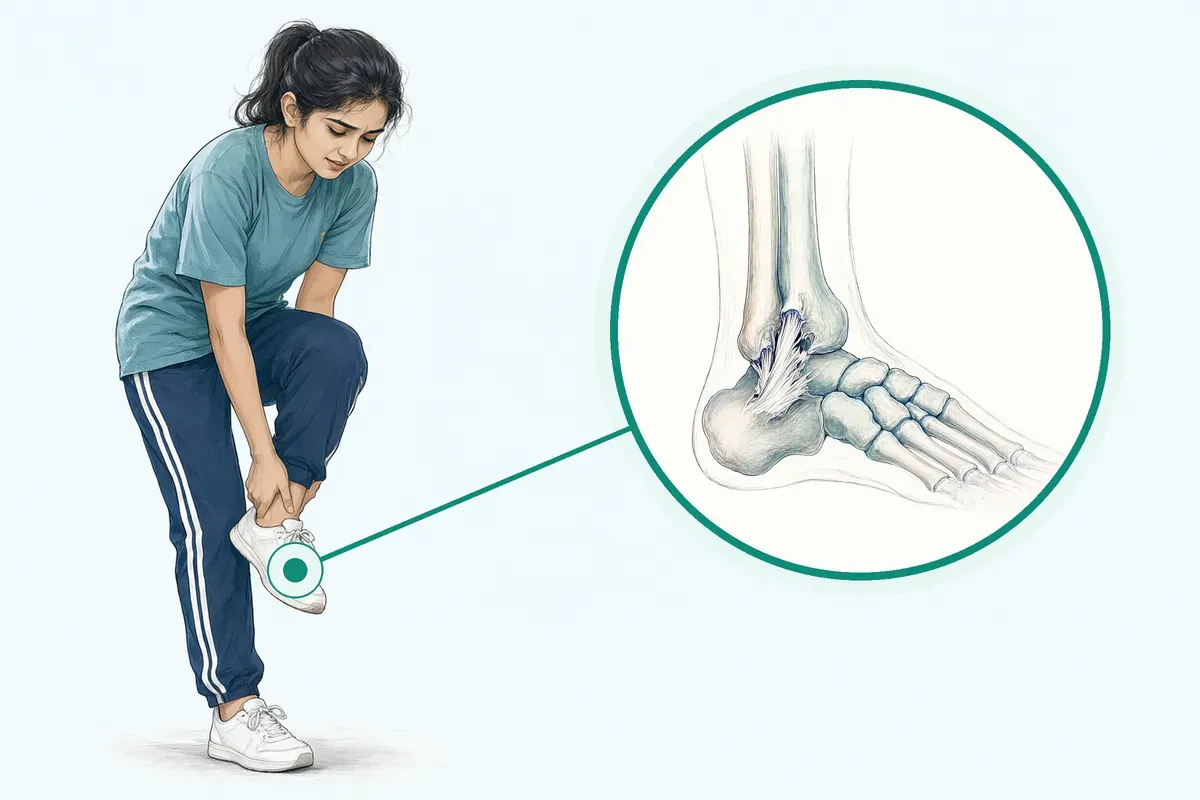
A lateral ankle sprain happens when the foot rolls inward and stretches or tears the ligaments on the outside of the ankle. If the ankle keeps giving way or feels unstable more than a year after the first sprain, it is called chronic ankle instability.
Achilles tendinopathy is a painful overuse condition of the large tendon at the back of the heel. Plantar fasciitis is irritation of the thick band of tissue that runs under the foot. Stress fractures are tiny cracks in the bone caused by repeated loading. These injuries can happen during sport, training or even a simple misstep on uneven ground.
Symptoms and warning signs that need urgent care the same day
- Intense pain that does not settle
- Bleeding
- Nausea and vomiting after injury
Typical symptoms include:
- Pain
- Swelling
- Stiffness
- A feeling that the ankle may give way
With Achilles tendinopathy you may feel pain and thickening in the tendon, especially in the morning or after activity. Plantar fasciitis usually causes sharp heel pain with the first steps after rest. A stress fracture gives deep, aching pain that worsens with weight‑bearing and eases with rest.
You should seek care the same day if you have intense pain that does not settle, bleeding, inability to put any weight on the foot, or if you develop nausea and vomiting after an injury. These can signal a fracture, a complete tendon rupture or another problem that needs immediate assessment in our 24×7 emergency department.
Causes and who is at higher risk
- Court sports
- Higher risk of twisting injuries
- Uneven surfaces
- Running on uneven ground increases risk
- Previous sprain
- Past injury raises chance of recurrence
- Early return to activity
- Before full rehabilitation is complete
The primary cause of lateral ankle sprain is a sudden twisting force that damages the lateral ligaments. That injury also damages the small nerve endings (mechanoreceptors) inside the joint, which leads to proprioception deficits — a reduced sense of joint position and movement.
Research shows that up to 40% of people who have a first‑time lateral ankle sprain go on to develop chronic ankle instability. Deficits in dynamic balance, peroneal reaction time and eversion strength are strongly linked to ongoing instability. Moderate evidence also points to proprioception and static balance deficits as contributors.
People who play court sports, run on uneven surfaces, have had a previous sprain, or return to activity before full rehabilitation are at higher risk.:
- Play court sports
- Run on uneven surfaces
- Have had a previous sprain
- Return to activity before full rehabilitation
Acute ankle sprains are very common in physically active populations.
How ankle and foot sports injuries are diagnosed: examination and tests
- History and examination Check swelling, tenderness, motion, laxity, strength
- Proprioception and balance tests Deficits are a hallmark of chronic instability
- Imaging X-ray, ultrasound or MRI as needed
- Diagnostic arthroscopy Tiny camera to see joint surfaces directly
Diagnosis starts with a detailed history and a physical examination in the OPD. Your surgeon checks for swelling, tenderness, range of motion, ligament laxity and strength. Proprioception and balance may be tested because these deficits are a hallmark of chronic instability. X‑rays are used to rule out fractures.
Ultrasound or MRI scans help visualise tendon tears, tendinopathy, plantar fascia thickening, ligament damage and stress fractures that are not seen on X‑ray. In some cases a diagnostic ankle arthroscopy is performed; this is a minimally invasive procedure where a tiny camera is inserted through small incisions to see the joint surfaces, cartilage and soft tissues directly.
The International Ankle Consortium has published selection criteria to standardise the diagnosis of chronic ankle instability for research and clinical use.
Treatment options without surgery and when surgery is advised for ankle and foot sports injuries
Most ankle and foot sports injuries are managed without surgery first. Functional rehabilitation is the cornerstone: it includes proprioception training, eccentric loading exercises and a graded return‑to‑sport protocol.
For Achilles tendinopathy, studies show that both traditional eccentric training and heavy slow resistance training give equally good, lasting results, with heavy slow resistance often linked to higher patient satisfaction at 12 weeks. Adding high‑volume injection or platelet‑rich plasma (PRP) to eccentric training can reduce pain, improve activity levels and reduce tendon thickness and vascularity more than eccentric training alone.
High‑volume injection may be more effective than PRP in the short term. For acute Achilles tendon rupture, if early range‑of‑motion rehabilitation is used, rerupture rates are similar for surgical and non‑surgical treatment. If early mobilisation is not used, surgery reduces the absolute rerupture risk by about 8.8%.
Surgery is usually considered when conservative measures fail after several months, for chronic instability with repeated giving way, for large tendon tears, or for displaced stress fractures.
Surgical options include:
- Ankle arthroscopy for debridement, loose body removal or microfracture
- Anatomic lateral ligament reconstruction (Broström) for chronic instability
- Achilles or plantar fascia procedures such as debridement, gastrocnemius recession or PRP injection
Your surgeon will advise which technique suits your specific injury and goals.
Preparing for Ankle and Foot Sports Injuries Surgery
Your surgeon will ask for a few routine tests before the operation. These usually include blood tests, an X-ray of the ankle or foot, and sometimes an MRI or CT scan to plan the procedure. If you take blood-thinning medicines, diabetes tablets, or any regular medication, tell your surgeon during the pre-operative visit.
The anaesthesia team will review your health and decide whether local, regional, or general anaesthesia is suitable. You will be asked to fast for at least six hours before surgery, which means no food or drink, including water, unless the anaesthetist tells you otherwise.
On the day of admission, bring your test reports, insurance or scheme cards, a list of your current medicines, comfortable loose clothing, and an attendant who can stay with you. The hospital provides a canteen with dietary meals and a 24-hour pharmacy for any medicines prescribed after discharge.
How Ankle and Foot Sports Injuries Surgery Is Done
- Small incisions around ankle Surgeon makes a few small cuts
- Insert tiny camera (arthroscope) Camera shows joint inside
- Use instruments to remove damaged tissue Treat cartilage injuries
The exact operation depends on your condition. Your surgeon will discuss which technique suits you after reviewing your scans and examination findings.
Common options include:
- Ankle arthroscopy
- Lateral ligament reconstruction (Broström procedure)
- Procedures for the Achilles tendon or plantar fascia such as debridement, gastrocnemius recession, or platelet-rich plasma injection
Ankle arthroscopy is a minimally invasive procedure where the surgeon makes a few small incisions around the ankle, inserts a tiny camera called an arthroscope, and uses specialised instruments to remove damaged tissue, loose bodies, or scar tissue and to treat cartilage injuries.
In a Broström reconstruction, the surgeon repairs the stretched or torn lateral ligaments through a small incision on the outside of the ankle to restore stability. For Achilles tendinopathy or plantar fasciitis that has not improved with rehabilitation, the surgeon may remove degenerative tissue, lengthen the calf muscle, or inject platelet-rich plasma to stimulate healing.
All procedures are performed in modular operation theatres under sterile conditions. The anaesthesia team will keep you comfortable with local, regional, or general anaesthesia as planned. Most arthroscopic cases are done as daycare, meaning you can go home the same day, while open reconstructions may need an overnight stay of one to two nights.
Risks and Possible Complications of Ankle and Foot Sports Injuries Surgery
- 15.8 percent Surgery complication increase (Achilles rupture)
- 3.7 percent Re-rupture after surgical repair
- 9.8 percent Re-rupture non-surgical
- up to 40 percent Chronic instability after first sprain
Every operation carries some risk.
Common early issues include:
- Swelling
- Bruising
- Stiffness
- Temporary numbness around the incisions
Infection occurs in a small number of cases and is usually managed with antibiotics. Nerve injury can cause a patch of numbness or tingling on the top of the foot, which often improves over months.
Deep vein thrombosis (blood clot in the leg) is uncommon after foot and ankle surgery; studies comparing surgical and non-surgical groups found no significant difference in the rate of deep vein thrombosis. In research on Achilles tendon rupture, surgery was associated with an absolute risk increase of about 15.8 percent for complications other than re-rupture compared with non-operative care.
Re-rupture of the Achilles tendon after surgical repair is reported at around 3.7 percent in pooled studies, while the non-surgical re-rupture rate is higher at about 9.8 percent. Chronic ankle instability develops in up to 40 percent of people after a first-time lateral ankle sprain, which is why thorough rehabilitation after surgery is essential.
Your surgical team will explain the specific risks that apply to your procedure and the steps taken to reduce them.
Recovery and Aftercare After Ankle and Foot Sports Injuries Surgery
In the first few days after surgery, your foot will be bandaged and may be placed in a splint, boot, or cast depending on the procedure. You will be given pain relief tablets and advised to keep the leg elevated above heart level as much as possible to reduce swelling.
Crutches or a walker are usually needed so you do not put weight on the operated leg until your surgeon allows it. The hospital provides a 24-hour emergency department and ambulance service if you have sudden severe pain, bleeding, or signs of infection such as increasing redness, warmth, or fever.
Stitches or skin clips are typically removed at the outpatient clinic after ten to fourteen days. Physiotherapy starts early with gentle range-of-motion exercises and progresses to proprioception training, eccentric loading, and a structured return-to-sport protocol. This functional rehabilitation is the mainstay of treatment and is recommended by consensus guidelines.
Recovery time varies widely: simple arthroscopic debridement may allow return to daily activities in two to six weeks, while ligament reconstruction or Achilles procedures can take three to six months before full sporting activity. Your surgeon and physiotherapist will guide you through each phase.
Contact the hospital if you notice worsening pain not relieved by prescribed medicines, calf swelling or tenderness, wound discharge, or fever above 38 degrees Celsius.
Results of Ankle and Foot Sports Injuries Surgery
- 3.7 percent Surgical re-rupture rate (no early motion)
- 9.8 percent Non-surgical re-rupture rate (no early motion)
Outcomes depend on the specific injury, the technique used, and how closely you follow the rehabilitation programme. In studies of chronic Achilles tendinopathy, both traditional eccentric loading and heavy slow resistance training produced significant and lasting improvements in pain, function, and tendon structure at twelve weeks and at one year, with no significant difference between the two approaches.
Patient satisfaction tended to be higher with heavy slow resistance training at twelve weeks but was similar at one year. Adding high-volume injection or platelet-rich plasma to eccentric training appeared more effective than eccentric training alone for reducing pain, improving activity levels, and decreasing tendon thickness and vascularity in the short term.
For acute Achilles tendon rupture, pooled data from eight randomised trials involving 762 patients showed a significantly lower re-rupture rate with surgical repair (3.7 percent) compared with non-surgical treatment (9.8 percent) when early range-of-motion protocols were not used. When functional rehabilitation with early motion was employed, re-rupture rates were similar between surgical and non-surgical groups.
In chronic ankle instability, surgery such as anatomic ligament reconstruction aims to restore mechanical stability, but studies emphasise that proprioception deficits in inversion, eversion, and plantarflexion persist and must be addressed through targeted balance and reaction-time training. No significant differences have been found between surgical and non-surgical groups in calf circumference, strength, or functional scores in some trials. Your surgeon will discuss the expected results for your condition based on the current evidence.
Cost and Insurance for Ankle and Foot Sports Injuries Treatment in Jaipur
The typical price range for ankle and foot sports injury treatment in India is ₹5,000 to ₹2,50,000. The final cost depends on the type of procedure, whether it is done as daycare or needs an overnight stay, the choice of implants or biologics such as platelet-rich plasma, and any additional imaging or follow-up care required.
Arthroscopic ankle surgery in other major Indian cities has been quoted at ₹75,000 to ₹2,50,000, with variation based on the hospital category and the complexity of the case. Jaipur Hospital is a NABH-accredited multispeciality hospital established in 1991 with modular operation theatres, in-house diagnostic laboratory and imaging, and a dedicated physiotherapy department.
The hospital accepts patients under RGHS, MAA Yojana, CGHS, and a panel of private insurers and TPAs. If you are covered under any of these schemes, bring your scheme card and photo identity at admission. The billing team can help you understand what is covered and what out-of-pocket expenses to expect.
For an estimate specific to your condition and planned procedure, you can contact the hospital on 0141-2551500, 0141-2554139, or +91-7414-001-001, or email [email protected].