

Sports Injury · Jaipur Hospital
Hip and Groin Sports Injuries in Jaipur
Groin pain stopping your sport? Get clear assessment and a step-by-step plan at Jaipur Hospital.
- Serving Jaipur since 1991 (35 years)
- NABH accredited
- 24×7 emergency & ICU
- Cashless: RGHS, MAA Yojana, CGHS + 22 insurers
- Treatment length
- Varies by condition
- Anaesthesia
- General or spinal for surgery
- Recovery
- 6 weeks to 6 months post-surgery
- Price
- ₹15,000 to ₹3,00,000typical range in India; ask us for an estimate
Pain that stops your sport
Deep groin or hip pain that returns every time you train
You feel a sharp catch or dull ache in the groin or front of the hip when you change direction, sprint or kick. Rest helps briefly, but the pain comes back as soon as you load the joint again.
-
Sharp catch on twisting
A sudden pinch in the hip or groin when you pivot or change direction at speed.
-
Ache after training
Deep soreness that settles overnight but returns within minutes of the next session.
-
Tenderness over the pubic bone
Pain you can point to at the lower abdomen or inner thigh attachment that hurts on a sit-up.
-
Stiffness in the morning
Hip feels tight for the first 30 minutes after waking, then eases with movement.
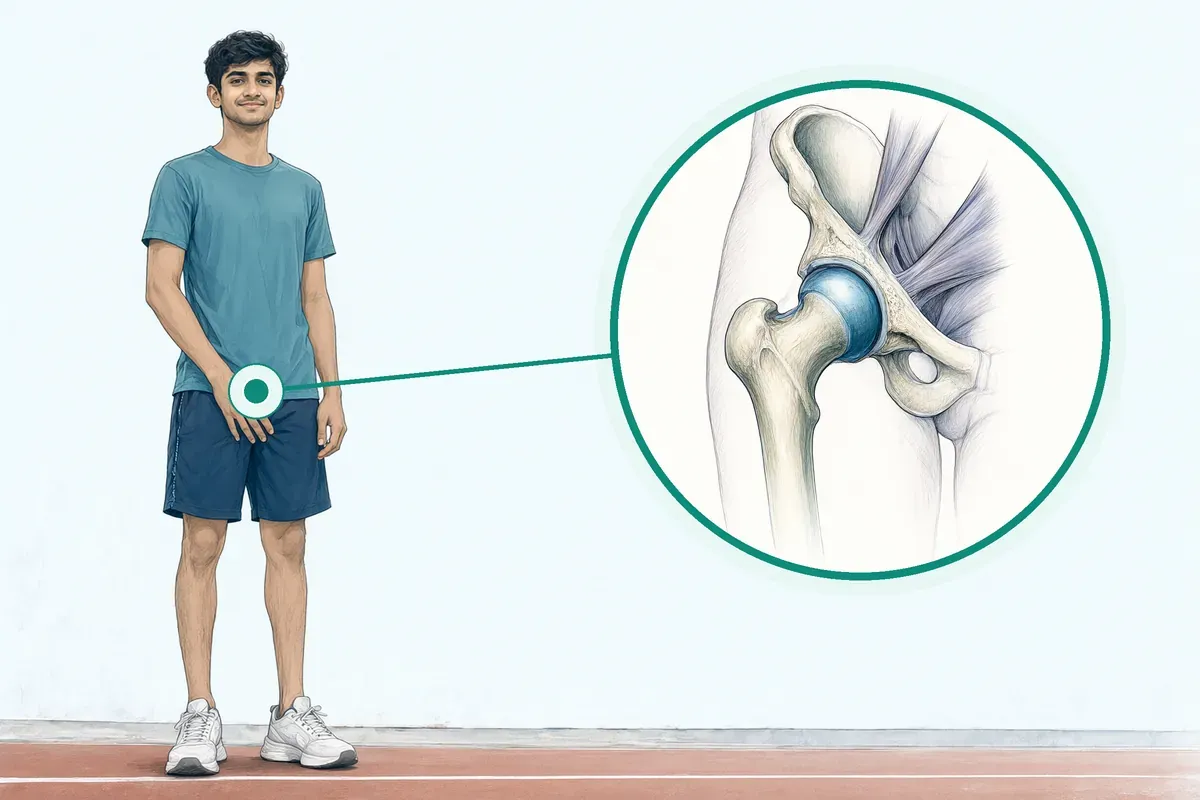
Femoroacetabular impingement syndrome is an important cause of hip pain in young adults and can lead to progressive labral and cartilage damage.
Why Jaipur Hospital
You worry that each training session is making the damage worse and that surgery might mean a long break from the sport you love.
Your care plan
Your first steps with us
- 1 Book an OPD consultation with a sports injury specialist
- 2 Complete imaging and tests in our in-house radiology and lab
- 3 Review options with your surgeon and agree a treatment plan
- 4 Start guided rehab or schedule surgery with post-op follow-up
How the operation is done
Surgery is usually arthroscopic (keyhole) under general or spinal anaesthesia. The surgeon reshapes bone, repairs the labrum or reinforces the abdominal wall, then you begin a phased rehab programme.
-
Targeted Physiotherapy
Core stability, gluteal strengthening and load management taught in clinic and continued at home.
-
Hip Arthroscopy (FAI/Labral Repair)
Cam or pincer bone resection with labral repair or reconstruction through small keyhole incisions.
-
Sports Hernia Repair
Open or laparoscopic mesh reinforcement of the inguinal disruption to restore abdominal wall strength.
-
Ultrasound-guided Injections
Corticosteroid or PRP injected precisely into the adductor or iliopsoas tendon under imaging guidance.
Why patients trust us
- 1991 Serving Jaipur for 35 years
- NABH Accredited hospital
- 1 Sports Injury consultants
- 24×7 Emergency, ICU and ambulance
- 25 Cashless schemes and insurers
What research shows about this treatment
-
About 9 in 10 surgeries successful
Approximately 90% of open and laparoscopic sports hernia repairs are considered successful in published series.
-
Return to sport in 6 to 12 weeks
With post-surgery rehab, people with a sports hernia usually fully return to sport between six and 12 weeks.
-
Reoperation risk about 5.5%
Pooled data show a 5.5% risk of reoperation after hip arthroscopy, including revision or conversion to hip replacement.
If it is left untreated
Untreated FAI can lead to progressive labral and cartilage damage, increasing the risk of early hip osteoarthritis. Sports hernias rarely heal on their own and may tear again with return to sport.
Life after treatment
Most people return to training and daily activity with a structured rehab plan and clear milestones.
-
Progressive loading
A phased programme moves you from protected weight-bearing to full sport-specific drills.
-
Return-to-sport criteria
Clear strength and movement tests guide the decision to resume competition safely.
-
Ongoing maintenance
A simple home exercise routine helps keep the hip and core strong through the season.
Frequently asked questions
Questions patients ask about hip and groin sports injuries
Which problems are assessed under hip and groin sports injuries?
In short
Our surgical team assesses femoroacetabular impingement, labral tears, sports hernias, and adductor tendinopathy at Jaipur Hospital. These sports injuries affect the deep muscles, tendons, cartilage, and bone around your pelvis. A thorough check at our OPD clarifies whether joint shapes or torn tissues cause your ongoing hip or groin ache.
In detail
Femoroacetabular impingement involves cam morphology, which is extra bone at the femoral head neck junction, or pincer morphology, which is acetabular over-coverage. In studies, cam morphology is proposed to overload extra-articular muscles, leading to athletic pubalgia.
Athletic pubalgia, commonly called a sports hernia, happens when deep abdominal wall layers or tendons attaching to your pelvis weaken or tear. It involves no true hernia sac. Soft tissues around your groin tear during forceful twisting or sudden turns.
Additionally, labral tears inside the joint socket and tendinopathy of the adductor or iliopsoas tendons are assessed together because these conditions frequently overlap in active individuals.
A common belief
Many people assume groin pain is just a simple muscle pull.
What actually happens
However, bone shapes like cam impingement often place extra stress on surrounding muscles, creating sports hernias and joint cartilage tears together.
Your next step at Jaipur Hospital
Treatment length varies by condition, and our team guides your full recovery plan. Most athletes undergo targeted clinical assessments followed by appropriate imaging within a few days. You can arrange support from an attendant if travel is uncomfortable during severe flare-ups.
How will the doctor decide which tests I need for a hip and groin sports injury?
In short
Your doctor decides which tests you need based on your physical examination and specific pain triggers at Jaipur Hospital. Our surgical team reviews whether your symptoms suggest joint impingement, soft tissue tears, or referred pain. Targeted imaging is then selected to confirm the diagnosis.
In detail
Groin injuries can be challenging to pinpoint because conditions like hip-joint osteoarthrosis, pelvic fractures, and core tendon tears share overlapping symptoms. During your clinical evaluation, your surgeon assesses pain during hip rotation and resisted abdominal flexion.
If joint impingement or labral injury is suspected, plain radiographs and MRI scans are typically ordered. In studies, MRI identified labral injury in sixty-eight point one percent of investigated hips.
For sports hernias, imaging helps confirm athletic pubalgia while ruling out traditional hernias or bony fractures. By matching physical findings with selective imaging, your healthcare team avoids unnecessary investigations while ensuring an accurate anatomical assessment.
Your next step at Jaipur Hospital
Diagnostic tests are arranged promptly through our in-house laboratory and imaging department. Once your X-rays or scans are ready, your surgeon will review the images with you. Treatment length varies by condition, and your surgeon will advise at the consultation. To begin your medical evaluation, book a consultation at Jaipur Hospital.
How soon should I expect improvement after treatment for hip and groin sports injuries?
In short
You can typically expect noticeable improvement within six to eight weeks of starting targeted physiotherapy for hip and groin injuries. At Jaipur Hospital, our surgical team monitors your progress through regular OPD visits, adjusting your rehabilitation programme to restore mobility and control discomfort safely as your tissues heal.
In detail
Recovery timelines vary depending on whether you undergo non-surgical rehabilitation or an operative procedure. In clinical studies, patients who complete structured physical therapy experience significant symptom improvement around six to eight weeks.
If you undergo sports hernia repair or arthroscopic hip surgery, full return to sports or strenuous activity usually takes between six and twelve weeks, with overall surgical recovery taking six weeks to six months.
In research, patients assigned to hip arthroscopy demonstrated superior functional activity scores at eight to twelve months compared with physiotherapy groups. However, muscle soreness remains a common temporary event in both surgical and exercise groups during rehabilitation.
A common belief
Expecting joint tissues to recover overnight often leads to frustration.
What actually happens
Gradual progression is essential, because pushing hard too early can strain repairing muscles or cause recurring tears.
Your next step at Jaipur Hospital
Your treatment length varies by condition. Following arthroscopic hip surgery, patients typically stay one to three nights in the hospital and begin walking with crutches within 24 hours. Overall care in India typically ranges from ₹15,000 to ₹3,00,000. To check your recovery milestones or plan appropriate therapy, schedule an appointment for an initial assessment at Jaipur Hospital.
Can this hip or groin injury heal with rehabilitation, or is an operation worth considering?
In short
Mild strains may heal with rehabilitation, but a true sports hernia or severe impingement rarely heals on its own. At Jaipur Hospital, our surgical team evaluates both conservative and operative paths. An operation is worth considering if pain continues after two to six months of rehabilitation.
In detail
A sports hernia involves tears in deep abdominal layers or pelvic tendons that usually require formal therapy. In studies, targeted physical therapy improves symptoms within six to eight weeks. However, if chronic pain persists, an operation is typically needed.
Surgical options include open or laparoscopic mesh reinforcement, or hip arthroscopy to repair torn labral tissue and reshape bone. In research, sports hernia surgeries show an approximate 90% success rate.
Furthermore, studies on femoroacetabular impingement demonstrate that patients receiving arthroscopic hip surgery achieved superior functional outcomes compared with those managed solely by physiotherapy and activity modification.
- In research, sports hernia surgeries show an approximate 90% success rate.
A common belief
Hoping that severe groin tears heal with simple rest often leads to chronic pain.
What actually happens
In clinical trials, surgical repair offered superior functional improvement over physical therapy alone when impingement symptoms persisted.
Your next step at Jaipur Hospital
Treatment length varies by condition, and surgical recovery generally ranges from 6 weeks to 6 months. Arthroscopy typically requires 1 to 3 nights of hospitalisation under general or spinal anaesthesia, with typical Indian costs between ₹15,000 and ₹3,00,000. To discuss whether surgery or therapy suits your injury, please book a consultation at Jaipur Hospital.
How can I decide whether to seek advice about hip arthroscopy for impingement?
In short
You should seek an evaluation if chronic hip pain restricts your movement or daily activities. At Jaipur Hospital, our surgical team evaluates femoroacetabular impingement using physical examinations and diagnostic imaging. We assess your joint symptoms thoroughly to help determine if surgical intervention or structured physiotherapy is the right path.
In detail
Femoroacetabular impingement syndrome is an important cause of hip pain and limited range of motion in young adults and athletes. The condition involves cam morphology, pincer morphology, or both, leading to progressive damage within the joint cartilage and labrum.
In studies, arthroscopic hip surgery demonstrated superior hip-related quality of life and functional scores compared with physiotherapy alone. Surgery aims to improve symptoms and potentially delay progression to end-stage osteoarthritis.
However, personalised hip therapy focusing on core stability, supervised exercises, and education is also an option. Your healthcare team reviews your imaging and activity goals to guide treatment.
Your next step at Jaipur Hospital
Treatment length varies by condition, and surgical recovery typically ranges from 6 weeks to 6 months. Diagnostic imaging, such as X-rays or MRI, helps clarify joint damage before making decisions. An attendant can accompany you to our orthopaedic OPD for evaluation. Your surgeon will advise at the consultation.
Can I continue any training safely while I recover from a hip or groin sports injury?
In short
You can usually perform modified, low-load exercises under professional guidance while recovering from a hip or groin sports injury. At Jaipur Hospital, our surgical team works closely with physiotherapists to guide your rehabilitation. Your surgeon will advise which specific exercises are safe at your consultation.
In detail
Recovering from hip and groin conditions requires careful load management to avoid worsening tissue damage. In clinical studies of personalised hip therapy and sports hernia rehabilitation, treatment includes an individualised exercise programme that progresses gradually.
Core stability training, gluteal strengthening, and movement control are emphasised without aggravating hip or lower abdominal tissues. High-impact sports, rapid direction changes, and forceful pelvic twisting must be paused while tissues heal.
If you undergo surgery, post-operative rehabilitation focuses first on maintaining range of movement before graduated loading begins. Resuming high-intensity training too early risks re-tearing the repaired soft tissue, which clinical evidence notes can occur.
A common belief
Many athletes either stop moving entirely or push through sharp pain.
What actually happens
In clinical protocols, a structured exercise programme focusing on core stability and progressive loading helps restore function without overloading the injured hip and abdominal muscles.
Your next step at Jaipur Hospital
Structured physical therapy sessions typically begin within a few weeks of treatment and progress across six to twelve weeks. Your physiotherapist will provide a clear schedule of safe movements to practice at home. If you notice increased pain, notify your healthcare team promptly. To establish a safe recovery exercise plan, you can book a consultation at Jaipur Hospital.
Which symptoms should prompt me to see a specialist for hip and groin sports injuries?
In short
You should see our surgical team if you experience chronic pain in your lower abdomen or groin. Jaipur Hospital provides specialised assessment when hip pain limits your range of motion during physical activity. Discomfort during sit-ups or pelvic twisting movements indicates that an underlying sports injury needs attention.
In detail
In studies, sports hernias cause chronic pain that worsens with sudden changes of direction, kicking, or forceful pelvic twisting. Femoroacetabular impingement syndrome typically causes limited hip range of motion and pain in young adults and athletes.
You may notice deep groin discomfort that flares up when flexing your abdomen against resistance or after sports sessions. When joint impingement damages the acetabular labrum and articular cartilage, hip stiffness often progresses.
Lingering tenderness over your pubic bone or adductor tendons that does not improve after brief rest suggests soft tissue tears rather than a simple, self-limiting muscle strain.
A common belief
Athletes often push through pelvic tenderness thinking it will heal on its own.
What actually happens
In reality, a sports hernia or labral tear rarely settles without structured medical intervention and targeted rehabilitation.
Your next step at Jaipur Hospital
Prompt specialist review prevents further cartilage wear and persistent tendon pain. Your initial evaluation usually takes place in our outpatient department with clear physical testing. Recovery takes six weeks to six months depending on whether care is non-surgical or operative.
How will the test results change my care plan for hip and groin sports injuries?
In short
Test results show whether your pain originates from bony impingement, cartilage tears, or soft tissue disruption at Jaipur Hospital. Clear imaging determines whether non-surgical rehabilitation or surgical intervention is appropriate. Your surgeon uses these findings to create a management plan matched to your joint anatomy.
In detail
In studies, treatment plans for sports hernias depend on factors like injury severity, age, overall health, and desired activity levels. If scans show isolated adductor or iliopsoas tendinopathy without significant joint disruption, targeted physiotherapy or ultrasound-guided corticosteroid or PRP injections may be recommended.
If an MRI reveals labral tears alongside cam or pincer impingement, hip arthroscopy to repair the labrum and resect bone may be considered.
In patients with combined femoroacetabular impingement and sports hernia, research indicates that addressing both pathologies surgically is more effective than managing either condition alone. Conversely, severe joint degeneration may require different orthopaedic strategies.
A common belief
A generic exercise plan does not work for every injury.
What actually happens
If scans show both a cam deformity and a sports hernia, treating only one issue often leaves athletes with persistent groin pain.
Your next step at Jaipur Hospital
Once scan reports arrive, your follow-up discussion takes place promptly in our OPD. Rehabilitation generally starts within two to three weeks of diagnosis, whereas surgical scheduling depends on clinical necessity. Typical treatment lengths vary by condition.
What should I do if symptoms persist or worsen during treatment for hip and groin sports injuries?
In short
If your hip and groin symptoms persist or worsen, you should immediately contact your healthcare team for a clinical reassessment. Jaipur Hospital provides access to our surgical team and diagnostic facilities to evaluate your condition and determine if your treatment plan requires modification or alternative therapy.
In detail
Persistent discomfort is not uncommon, but worsening symptoms require careful evaluation. If non-surgical care fails to relieve pain after two to six months, surgical repair may be considered. In clinical trials, 28 patients in a rehabilitation group eventually required surgery after conservative care proved insufficient.
Furthermore, in some cases, affected tissues can tear again after a return to active sports, which may necessitate repeat repair. If you experience unexpected joint swelling, severe pain, or fever, urgent evaluation is critical.
In clinical studies, adverse events like muscle soreness were frequent, while serious complications such as hip joint infection occurred in rare individual instances.
A common belief
Many athletes try to push through worsening groin pain, believing soreness is normal.
What actually happens
Ignoring persistent pain can cause further soft tissue tearing or progressive joint cartilage wear.
Your next step at Jaipur Hospital
Do not attempt to push through worsening groin pain or sudden instability. Visit our OPD so your surgeon can conduct a physical exam and arrange necessary imaging. In India, treatment costs typically range from ₹15,000 to ₹3,00,000. If your symptoms are not settling as expected, book a consultation at Jaipur Hospital for an updated treatment review.
Does my scan show a partial tear, complete tear, or wear-related change in the hip and groin?
In short
A radiological scan shows whether you have a soft tissue tear, bone impingement, or joint cartilage wear. At Jaipur Hospital, our surgical team reviews your X-rays or MRI scans in detail during your OPD visit to explain exactly what structural changes are present.
In detail
Accurate imaging is essential because groin pain can arise from multiple overlapping sources. Scans may reveal cam morphology, where bone flattening occurs at the femoral head-neck junction, or pincer morphology, involving acetabular over-coverage.
In research studies, labral tears were detected on MRI in 68.1% of evaluated hips. Imaging also identifies sports hernias, which involve tears or weakening in the lower abdominal wall muscles or tendons attaching to the pelvis.
Scans further help differentiate between acute tears and wear-related changes such as joint cartilage damage. Your surgeon correlates these visual findings with a physical exam, which may include resisted abdominal contractions to confirm symptoms.
- In research studies, labral tears were detected on MRI in 68.1% of evaluated hips.
A common belief
Imaging reports contain complex medical terms that can be alarming.
What actually happens
Scans must always be matched with a clinical physical examination, because structural changes do not always correlate directly with pain.
Your next step at Jaipur Hospital
Imaging tests are arranged as part of pre-surgical and diagnostic workups. Typical treatment costs across India range from ₹15,000 to ₹3,00,000 depending on whether injections, physical therapy, or surgery are chosen.
To have your scans carefully reviewed and receive an accurate explanation of your joint health, book a consultation at Jaipur Hospital.
FAQ library
Questions and answers about hip and groin sports injuries
When you contact us
Get your assessment and plan
Contact Jaipur Hospital to book an OPD consultation, review your scans and discuss options with a sports injury specialist.
- A consultation with a sports injury specialist in the OPD
- Your scans and reports reviewed, with tests done in-house if you need them (laboratory, X-ray and imaging)
- Your options explained in plain words, including whether you need surgery at all
- A cost estimate before you decide
- Help with cashless treatment under RGHS, MAA Yojana, CGHS and empanelled insurers and TPAs
- Follow-up visits after your treatment
Overview
Hip and Groin Sports Injuries: what to know
What hip and groin sports injuries are and how they happen
- FAI
- Extra bone on femoral head or socket
- Labral tear
- Tear of the cartilage ring lining the hip socket
- Sports hernia
- Tear in lower abdominal wall muscles or tendons
- Adductor tendinopathy
- Pain and degeneration in inner thigh tendons
Hip and groin sports injuries cover several conditions that cause ongoing pain in the hip joint, lower abdomen or groin. Femoroacetabular impingement syndrome (FAI) is an important cause of hip pain in young adults. It happens when extra bone grows on the femoral head (cam morphology) or the socket over-covers the femoral head (pincer morphology). This abnormal contact damages the labrum and articular cartilage over time.
A labral tear is a tear of the cartilage ring that lines the hip socket. It often occurs together with FAI.
A sports hernia, also called athletic pubalgia, is not a true hernia. It is an injury, usually a tear, in the muscles or tendons of the lower abdominal wall or where they attach to the pelvis.
Adductor tendinopathy is pain and degeneration in the tendons that attach the inner thigh muscles to the pubic bone. Cam-type impingement can increase motion at the pubic symphysis and overload these structures, linking FAI and sports hernia.
These conditions often exist together. FAI has been reported in 12% to 94% of patients with sports hernia, athletic pubalgia or adductor-related groin pain.
Symptoms of hip and groin sports injuries and when to seek urgent care
- Fever with hip or groin pain
- Swelling that appears rapidly
The main symptom of a sports hernia is ongoing (chronic) pain in the lower abdomen and/or groin.
FAI and labral tears typically cause deep hip or groin pain, stiffness and a catching or clicking sensation. Pain often worsens with activity, prolonged sitting or movements that flex and rotate the hip.
Adductor tendinopathy causes pain high on the inner thigh, made worse by sprinting, kicking or sudden changes of direction.
Referred pain can make the picture confusing. You can feel pain in your groin from injuries that originate in other parts of your body such as your leg.
Seek care the same day if you have:
- Sudden severe pain after a fall or twist, with inability to bear weight
- Visible deformity of the hip or thigh
- Numbness or weakness in the leg or foot
- Fever with hip or groin pain
- Swelling that appears rapidly
These features may indicate a fracture, infection or other urgent problem.
Causes and who is at higher risk for hip and groin sports injuries
- Approximately 5% Adult athletes with sports hernia yearly
- 26 to 28 years Most common age for sports hernia
- 54.8% Cam morphology in athletes
- 67% Asymptomatic pincer deformity
A sports hernia happens when the deep layers of the lower abdominal wall or the tendons that attach muscles to the pelvis weaken or tear.
Sports that involve repetitive, forceful motions, especially twisting the pelvis, can damage or cause a tear in the soft tissue of the lower abdomen or groin.
A sports hernia most often happens to people who play sports that require sudden changes of direction or severe twisting movements.
Approximately 5% of adult athletes experience sports hernias every year.
Males are much more likely to get a sports hernia than females.
Athletes between the ages of 26 and 28 most commonly develop a sports hernia. It is rare for older people and children.
You don't have to be an athlete to get a lower abdomen or groin injury, but it is more common in athletes.
Cam morphology is more prevalent in athletes (54.8%) than in the general population (23.1%).
Asymptomatic pincer deformity is common, with a prevalence of 67% in imaging studies.
Sports hernias can be difficult to prevent because of the stress and strain placed on the pelvis and hips in certain sports.
A multidisciplinary approach for diagnosis and treatment is recommended for optimal care.
How hip and groin sports injuries are diagnosed: examination and tests
- Physical exam
- Sit-up or resisted abdomen flexion tests for pain
- Imaging for FAI and labral tears
- X-rays, MRI or CT scans visualise the hip joint
- MRI detection of labral injury
- Found in 68.1% of hips without contrast
Sports hernias can be difficult to diagnose because many conditions cause groin pain, such as hip-joint osteoarthrosis, rectal or testicular pain, or a pelvic fracture.
To diagnose a sports hernia, your healthcare provider will do a thorough examination of your symptoms and history and perform a physical exam.
They will ask about your symptoms and history, then give you a physical exam to assess the injury and pain. They will probably ask you to do a sit-up and/or flex your abdomen against resistance. If you have a sports hernia, these exercises will be painful.
Because a sports hernia is a broad condition and you could have other conditions causing groin pain, your healthcare provider may have you undergo imaging tests.
For FAI and labral tears, diagnostic imaging such as X-rays, MRI, or CT scans is used to clearly visualise the condition of the hip joint.
MRI without intra-articular contrast found labral injury in 68.1% of hips in one series.
Imaging helps confirm athletic pubalgia or rule out other possible injuries.
Non-surgical treatment for hip and groin sports injuries and when surgery is advised
- Hospital stay for arthroscopy After surgery
- Full recovery after surgery Depending on procedure and goals
Personalised hip therapy has four core components:
- Assessment of pain, function and range of hip motion
- Patient education
- An exercise programme taught in the clinic and repeated at home with individualisation, progression and supervision
- Help with pain relief
For sports hernia, non-surgical treatment is usually tried first. This includes physical therapy, anti-inflammatory drugs and/or corticosteroids.
The overall goal of physical therapy is to improve strength and flexibility in your abdominal muscles and hips without making the injury and pain worse.
Common physical therapy methods include core stability and movement control exercises.
People who go through physical therapy for a sports hernia experience significant improvement in symptoms after six to eight weeks.
Ultrasound-guided injections (corticosteroid or PRP) are an option for adductor or iliopsoas tendinopathy.
If you are still experiencing pain two to six months after non-surgical treatment, surgical treatment is usually needed for a sports hernia.
For FAI, patients with symptomatic FAI referred to secondary or tertiary care achieve superior outcomes with arthroscopic hip surgery than with physiotherapy and activity modification.
In a randomised trial, the mean Hip Outcome Score for activities of daily living was 10 points higher in the arthroscopic surgery group compared with the physiotherapy group at eight months.
At two years, both groups showed statistically significant improvements, but the mean difference between groups was not significant.
For patients with both FAI and sports hernia, surgical management of both pathologies is more effective than treating one alone (89% vs 33% of cases).
Approximately 90% of surgeries, both open and laparoscopic, to fix sports hernias are considered successful.
Laparoscopic repair has a high success rate and earlier recovery of full sports activity compared to open surgery or conservative treatment.
Your surgeon will advise which technique suits you. Surgery is typically done under general or spinal anaesthesia with a hospital stay of 1 to 3 nights for arthroscopy. Recovery after surgery ranges from 6 weeks to 6 months.
Preparing for hip and groin sports injury surgery
Do
- Medical evaluation and imaging
- Routine blood tests, ECG, chest X-ray
- Discuss blood thinners and anti-inflammatory drugs
- Quit smoking, reduce alcohol, balanced diet
Before surgery, your surgical team will arrange a medical evaluation and imaging such as X-rays, MRI, or CT scans to clearly visualise the condition of the hip joint or groin area. Routine blood tests, an electrocardiogram (ECG), and possibly a chest X-ray are conducted to evaluate your general health.
You will discuss any medicines you take, especially blood thinners such as aspirin or warfarin, or anti-inflammatory drugs, because these can increase bleeding risk and may need to be stopped before the operation. The team will advise you on lifestyle modifications: quitting smoking, reducing alcohol, and keeping a balanced diet can help recovery.
Arrange for an attendant to drive you home and help with daily tasks for the first few days after discharge. You will usually be asked not to eat or drink for at least 6 to 8 hours before surgery. On the day of admission, bring your regular medicines, comfortable clothing, and any walking aids you use.
How hip and groin sports injury surgery is done
The operation depends on the specific injury. For femoroacetabular impingement (FAI) or a labral tear, hip arthroscopy is commonly used. The surgeon makes small incisions, inserts a camera and instruments, and removes the bone causing impingement during hip movements. Labral tears are repaired if possible, or debrided if repair is not suitable.
Articular cartilage lesions are debrided to a stable base, and microfracture may be performed in areas of full-thickness cartilage loss. For sports hernia (inguinal disruption), repair can be open or laparoscopic with mesh reinforcement. The laparoscopic approach, either transabdominal preperitoneal or extraperitoneal, is associated with earlier return to full sports activity.
For adductor or iliopsoas tendinopathy, ultrasound-guided injections of corticosteroid or platelet-rich plasma (PRP) may be offered as a non-surgical option. Your surgeon will advise which technique suits your injury and goals. On the day of surgery, you receive general or spinal anaesthesia. The procedure typically takes one to two hours. After surgery, you are monitored in the recovery area before moving to a ward.
Risks and complications of hip and groin sports injury surgery
- about 72% Patient-reported adverse events after hip arthroscopy
- rare Serious adverse events
- 1.7% (95% CI 0.9% to 2.5%) Risk of clinical complications
In studies of hip arthroscopy, patient-reported adverse events occurred in about 72% of surgical patients compared with 60% in those having physiotherapy. Muscle soreness was the most common event, reported by 42% in the surgery group and 47% in the physiotherapy group. Serious adverse events were rare: seven were reported across participating hospitals.
Five of six serious events in the surgery group were related to treatment, including one hip joint infection. No patients withdrew because of adverse events. The pooled risk of reoperation after hip arthroscopy, including revision or conversion to total hip replacement, was 5.5% (95% CI 3.6% to 7.5%). The risk of clinical complications was 1.7% (95% CI 0.9% to 2.5%).
For sports hernia repair, studies note that the affected tissue can tear again after return to sport, and if this happens, surgical repair may need to be repeated. In one trial, 28 patients initially assigned to rehabilitation later underwent surgery. Your surgical team will discuss the risks that apply to your procedure and health.
Recovery and aftercare after hip and groin sports injury surgery
After hip arthroscopy, patients are usually allowed home when they can walk safely with crutches, typically within 24 hours. Hospital stay is usually 1 to 3 nights. Postoperative physiotherapy begins soon after surgery, focusing on maintaining range of movement and a graduated return to activity.
For sports hernia repair, people who have surgery and post-operative physical therapy can usually return to their sport or activities between six and 12 weeks. Those who follow a physical therapy programme for sports hernia often experience significant improvement in symptoms after six to eight weeks. A sports hernia is unlikely to heal on its own without formal treatment.
Recovery after hip surgery for FAI or labral repair typically takes 6 weeks to 6 months, depending on the procedure and your goals. In the first weeks, you will use crutches and follow a guided exercise plan. Your physiotherapist will progress strengthening of the core, gluteal muscles, and hip control.
Contact the hospital if you develop increasing pain, swelling, redness, fever, wound discharge, or sudden inability to bear weight. It is important to follow your healthcare team's instructions and allow your body to heal before returning to sports.
Results of hip and groin sports injury surgery in studies
In a multicentre randomised trial, patients with symptomatic FAI referred to secondary or tertiary care achieved superior outcomes with arthroscopic hip surgery compared with physiotherapy and activity modification at 12 months.
The mean difference in the international Hip Outcome Tool (iHOT-33) was 6.8 points (95% CI 1.7 to 12.0) in favour of surgery, exceeding the minimum clinically important difference of 6.1 points. At eight months, the mean Hip Outcome Score activities of daily living (HOS ADL) was 10 points higher in the surgery group (95% CI 6.4 to 13.6).
In a study of female patients with pincer or combined FAI, labral repair led to superior functional outcomes and more patients rating their hip as normal or nearly normal compared with labral debridement. At two years, both surgery and physiotherapy groups showed statistically significant improvements, but the mean difference between groups was not significant.
Most patients perceived little to no change in status at two years. For sports hernia, approximately 90% of surgeries, both open and laparoscopic, are considered successful. When FAI and sports hernia occur together, surgical management of both pathologies was more effective than treating either alone (89% vs 33% of cases).
Return to sport after hip arthroscopy was reported in 87.7% of patients (95% CI 82.4% to 92.9%). Hip survival rates at medium-term follow-up were excellent and equivalent for arthroscopy and open surgical dislocation (90.5% vs 93%). Advanced age and pre-existing cartilage injury were risk factors for progression to total hip replacement after either treatment.
Cost and insurance for hip and groin sports injury treatment in Jaipur
The typical price range for hip and groin sports injury treatment in India is ₹15,000 to ₹3,00,000. The final cost depends on the specific procedure (arthroscopy, open or laparoscopic repair, or injection), the implants or mesh used, length of hospital stay, and any additional investigations or physiotherapy sessions. Hip arthroscopy in India typically ranges from ₹90,000 to ₹2,50,000.
Jaipur Hospital is a NABH-accredited multispeciality hospital with modular operation theatres, in-house diagnostic laboratory and imaging, and a 24-hour pharmacy. The hospital accepts patients under RGHS, MAA Yojana, CGHS, and a panel of private insurers and TPAs. Ask the admissions team for an estimate based on your planned procedure and insurance coverage.