

Urology · Jaipur Hospital
Uro Oncology in Jaipur
Cancer diagnosis feels overwhelming; we give you a clear assessment and a step-by-step plan.
- Serving Jaipur since 1991 (35 years)
- NABH accredited
- 24×7 emergency & ICU
- Cashless: RGHS, MAA Yojana, CGHS + 22 insurers
- Operation time
- 2 to 5 hours
- Anaesthesia
- General anaesthesia
- Recovery
- Full recovery in 4 to 8 weeks
- Price
- ₹1,50,000 to ₹5,00,000typical range in India; ask us for an estimate
Facing a cancer diagnosis
You have a lump or abnormal report and do not know how serious it is.
A suspected tumour in the kidney, bladder, prostate or testis brings fear about surgery, changes in body function, time away from work and the cost of treatment.
-
Uncertainty about the tumour
You need to know the exact type and stage before any decision.
-
Fear of surgery side effects
Worry about urine control, sexual function or needing a stoma bag.
-
Treatment cost and logistics
Concern about hospital bills, insurance approval and attendant arrangements.
-
Waiting for the next step
Long gaps between tests, reports and seeing a specialist add stress.
Renal cell carcinoma denotes cancer originated from the renal epithelium and accounts for more than 90 percent of kidney cancers.
Why Jaipur Hospital
You worry about how surgery will change your daily life, how long you will be off work and whether your family can manage the expense.
Your care plan
Your first steps with us
- 1 Call or visit OPD for a urology consultation.
- 2 Complete scans and biopsy in-house if needed.
- 3 Review options with your surgeon and get a cost estimate.
- 4 Admit for surgery and recover with follow-up visits.
How the operation is done
Surgery is performed under general anaesthesia and usually takes two to five hours. The approach depends on the organ and stage. Your surgeon will discuss the suitable technique.
-
Radical Nephrectomy
Complete kidney removal for renal cell carcinoma, sometimes with lymph node dissection.
-
Radical Cystectomy
Bladder removal with urinary diversion created for muscle-invasive cancer.
-
Radical Prostatectomy
Open or laparoscopic removal of the prostate and seminal vesicles for localised cancer.
-
Transurethral Resection (TURBT)
Endoscopic removal of bladder tumours through the urethra without external cuts.
Why patients trust us
- 1991 Serving Jaipur for 35 years
- NABH Accredited hospital
- 24×7 Emergency, ICU and ambulance
- 25 Cashless schemes and insurers
What research shows about these treatments
-
About 9 in 10 people regain urine control after prostate surgery
In a large surgical series, most patients recovered continence over time while a small minority had persistent mild stress incontinence.
-
Erectile recovery can take weeks to years
Studies note that full erections may return within weeks or months, but sometimes take up to three years after prostate removal.
-
MRI-targeted biopsy finds more significant cancer
In men with raised PSA, MRI with targeted biopsy detected clinically significant cancer in 38 percent versus 26 percent with standard biopsy.
If it is left untreated
Without treatment, kidney or bladder tumours can grow into nearby organs or spread to lungs, bones and lymph nodes. Prostate cancer may progress to block urine flow or cause bone pain. Testicular cancer can spread rapidly. Early assessment allows timely intervention.
Life after treatment
Most people return to usual activities within a few months. Regular follow-up checks continue for years.
-
Return to work
Usually within four to eight weeks depending on the surgery type and your job.
-
Manage urinary changes
Most people regain control; pelvic floor exercises and time help recovery.
-
Ongoing surveillance
Scheduled scans and blood tests to monitor for any recurrence.
-
Support for stoma care
If a urinary diversion is needed, stoma nurses teach you and your attendant daily care.
Meet the team
Our Urology specialists
Care led by Jaipur Hospital's urology consultants, backed by round-the-clock surgical, diagnostic and critical care support.
Frequently asked questions
Questions patients ask about uro oncology
Which problems are assessed under uro oncology?
In short
Uro oncology at Jaipur Hospital assesses cancers of the kidney, bladder, prostate, and testis. This includes renal cell carcinoma, urothelial carcinoma of the bladder, prostate adenocarcinoma, and testicular tumours. The service also evaluates masses found on imaging that may represent these cancers.
In detail
The team reviews each case to determine the organ of origin, the histological subtype, and the extent of spread. For kidney tumours, clear cell renal cell carcinoma is the most common subtype and accounts for most cancer-related deaths.
For prostate cancer, the grade and stage guide whether surgery, radiation, or systemic therapy is considered. Bladder tumours are classified as non-muscle-invasive or muscle-invasive, which decides between endoscopic resection or radical cystectomy. Testicular tumours are grouped into seminoma and non-seminoma types. Multidisciplinary discussion ensures that the treatment plan matches the specific biology and stage of the disease.
A common belief
Many people think uro oncology only means prostate cancer.
What actually happens
In fact, kidney and bladder cancers are also common and need different surgical approaches. Testicular cancer, though rarer, affects younger men and is highly curable with the right sequence of surgery and chemotherapy.
Your next step at Jaipur Hospital
You will first attend the urology OPD for a clinical examination and basic blood tests. Imaging such as CT or MRI is usually arranged within a few days. A biopsy may be needed before finalising the plan. Bring any prior reports to your appointment. To start the assessment, book a consultation at Jaipur Hospital.
How will the doctor decide which tests I need?
In short
The uro oncology surgeon at Jaipur Hospital chooses tests based on your symptoms, physical examination, and suspected cancer type. For prostate concerns, multiparametric MRI may come before biopsy. For kidney or bladder tumours, CT urogram and urine cytology are standard. Blood tests include PSA, renal function, and tumour markers.
In detail
Evidence shows multiparametric MRI with or without targeted biopsy is an alternative to standard transrectal ultrasound-guided biopsy for prostate cancer detection in biopsy-naive men with raised PSA.
MRI-targeted biopsy detected clinically significant cancer in 38 percent of men versus 26 percent with standard biopsy, while fewer men underwent unnecessary biopsy. For renal masses, CT characterises the tumour and checks for spread. For bladder symptoms, cystoscopy and CT urogram evaluate the urothelium. The surgeon selects the pathway that gives the most accurate staging with the least invasiveness.
A common belief
Some patients expect immediate biopsy.
What actually happens
But for prostate cancer, MRI first can avoid unnecessary biopsies — 28 percent of men with non-suspicious MRI avoided biopsy altogether. For kidney and bladder, imaging stages the disease before any tissue diagnosis.
Your next step at Jaipur Hospital
At your OPD visit, the surgeon will explain which scans and blood tests are needed and why. Most imaging is done in-house at the diagnostic laboratory and radiology unit. Results are typically available within a few days. The surgeon will then discuss the findings and next steps.
How soon should I expect improvement after uro-oncology treatment?
In short
At Jaipur Hospital, improvement after uro-oncology treatment depends on the type of surgery and your overall health. Most patients notice better wound comfort and catheter function within the first two weeks. Full recovery of strength and urinary control typically takes four to eight weeks. Your surgeon will give you a personalised timeline at each follow-up visit.
In detail
Recovery speed varies because radical nephrectomy, radical cystectomy, radical prostatectomy, and transurethral resection (TURBT) affect different organs and need different healing periods.
Evidence shows minimally invasive prostate surgery patients often go home the next day, while open procedures need longer hospital stays of four to seven nights.
Continence returns for about nine out of ten people over time, but erectile function may take months or up to three years. Kidney and bladder surgeries involve larger incisions or urinary diversion, so stamina returns more gradually. Your age, fitness, and any additional therapies such as chemotherapy also shape the pace.
Your next step at Jaipur Hospital
Plan for at least one month of reduced activity after discharge. Keep all follow-up appointments so your team can check wound healing, catheter removal, and blood results. Gradually increase walking distance each week. Avoid heavy lifting for six to eight weeks. If you travel, carry a medical summary and enough medicines.
What do the type, grade, and stage mean for uro-oncology cancer?
In short
At Jaipur Hospital, type tells you which cell the cancer started from, grade describes how abnormal the cells look under the microscope, and stage shows how far the cancer has spread. Together they guide the treatment plan. For example, renal cell carcinoma is the commonest kidney cancer type, and clear cell subtype carries the highest mortality. Prostate grade uses the Gleason score; higher scores mean faster growth.
In detail
Type, grade, and stage come from pathology after biopsy or surgery. Evidence notes renal cell carcinoma accounts for over 90 percent of kidney cancers and includes more than ten histological subtypes. Clear cell RCC causes most cancer-related deaths.
Bladder cancer stage ranges from non-muscle-invasive (Ta, T1) treated with TURBT to muscle-invasive (T2 or higher) needing radical cystectomy. Prostate stage ranges from localised (T1-T2) suitable for radical prostatectomy to locally advanced or metastatic disease where surgery may not be first choice. Higher grade and stage usually mean additional therapies such as chemotherapy, immunotherapy, or radiation are considered.
Your next step at Jaipur Hospital
Ask your surgeon to explain your specific type, grade, and stage in plain language. Request a copy of the pathology report. These details determine whether surgery alone is enough or if you need systemic therapy. Follow-up imaging schedules also depend on stage.
How can I decide whether to seek advice about TURBT for bladder tumour?
In short
You should seek advice about TURBT if you have blood in your urine, frequent urination, or pain while passing urine. Jaipur Hospital offers endoscopic removal of bladder tumours through TURBT. Your urologist will review cystoscopy findings and biopsy results to confirm whether the tumour is non-muscle invasive and suitable for this procedure.
In detail
TURBT stands for Transurethral Resection of Bladder Tumour. It is an endoscopic technique where a resectoscope is passed through the urethra to remove tumours from the bladder lining without any external incision. According to our usual protocols, this technique is used for bladder tumours.
The procedure allows the surgeon to remove visible growths and obtain tissue for pathological staging. The grade and stage from the biopsy determine if TURBT alone is sufficient or if additional treatment such as intravesical therapy or radical cystectomy is needed. Your surgeon will explain the findings and the next steps based on the pathology report.
A common belief
Many people wait hoping symptoms will settle.
What actually happens
Delaying allows a tumour to grow deeper into the bladder wall. Early TURBT can remove non-muscle invasive tumours completely and gives accurate staging for further treatment decisions.
Your next step at Jaipur Hospital
If you notice blood in your urine or have irritative urinary symptoms, book an OPD consultation at Jaipur Hospital. The urology team will arrange cystoscopy, urine cytology, and imaging as needed. After TURBT, a catheter usually stays for one to three days. Follow-up cystoscopies are scheduled at three months and then regularly to monitor for recurrence.
Which urinary symptoms need urgent assessment?
In short
Urgent assessment is needed for visible blood in urine, inability to pass urine, severe flank or abdominal pain with fever, or sudden worsening of urinary symptoms. Jaipur Hospital provides 24×7 emergency care for these conditions.
In detail
Visible blood in urine (haematuria) can indicate bladder or kidney tumours, stones, or infection and always requires investigation. Acute urinary retention (cannot pass urine) is a medical emergency needing catheterisation. Severe loin pain with fever suggests kidney infection (pyelonephritis) or obstructing stone with sepsis.
Sudden onset of incontinence or frequency with neurological signs may point to spinal cord compression. These symptoms should not wait for a routine OPD appointment.
The emergency department can perform immediate ultrasound, blood tests, and catheterisation, and call the urology team if admission or urgent surgery is required.
A common belief
People often wait to see if blood in urine clears on its own, but it can be the first sign of bladder or kidney cancer.
What actually happens
Urinary retention can damage the bladder and kidneys permanently if not relieved quickly. Fever with loin pain may mean sepsis. These are not symptoms to monitor at home.
Your next step at Jaipur Hospital
If you experience any of these symptoms, go to the emergency department or call the ambulance service. Do not delay. The urology team is available for urgent evaluation.
Which symptoms should prompt me to see a specialist?
In short
Blood in the urine, a lump in the testis, persistent flank pain, difficulty passing urine, or a rising PSA should prompt a visit to the urology OPD at Jaipur Hospital. These signs may indicate a urothelial or renal tumour, prostate cancer or a testicular mass. Early evaluation allows timely staging and treatment planning.
In detail
Visible or microscopic haematuria is the most common presentation of bladder and upper tract urothelial carcinoma. A testicular that causes no pain swelling raises concern for germ cell tumour. Flank discomfort or a palpable abdominal mass may signal renal cell carcinoma.
Urinary frequency, poor stream or nocturia can accompany locally advanced prostate cancer. Bone pain or weight loss suggests metastatic spread. The specialist correlates symptoms with examination, urine cytology, imaging and tumour markers to decide the next step.
A common belief
Many people ignore occasional blood in urine or attribute urinary changes to age.
What actually happens
A testicular lump is often dismissed as an infection. Delaying evaluation lets tumours grow and spread, which limits curative options. Early specialist review changes the outlook.
Your next step at Jaipur Hospital
Do not wait for symptoms to worsen. Schedule an OPD appointment for urine analysis, ultrasound or PSA testing as indicated. Results are typically available within 48 to 72 hours. If a tumour is suspected, the team arranges staging scans and biopsy promptly.
How will the results change my care plan?
In short
Test results at Jaipur Hospital determine the cancer type, grade, and stage, which directly shape your treatment options. Localised kidney tumours may go straight to surgery. Prostate cancer grade and stage decide between active surveillance, surgery, or radiation. Bladder tumour stage chooses between endoscopic resection or radical cystectomy.
In detail
Pathology confirms the diagnosis and grade. For renal cell carcinoma, clear cell subtype and stage guide whether partial or radical nephrectomy is appropriate. For prostate cancer, Gleason score and MRI stage separate low-risk disease suitable for surveillance from higher-risk disease needing radical prostatectomy or radiation.
Studies show that salvage radical prostatectomy after radiation can control cancer for ten years or more in selected patients. For bladder cancer, muscle invasion on biopsy shifts treatment from TURBT to radical cystectomy with urinary diversion.
Testicular cancer stage and marker levels dictate whether orchidectomy alone suffices or chemotherapy is needed. Molecular profiling may inform systemic therapy choices in advanced disease.
A common belief
A common belief is that all cancers need immediate surgery.
What actually happens
In fact, low-grade prostate cancer may be watched safely. Small kidney tumours may need only partial nephrectomy. Bladder cancer confined to the lining is treated endoscopically. The stage and grade, not just the diagnosis, drive the plan.
Your next step at Jaipur Hospital
After results are ready, the team will discuss the stage and options with you and your attendant. A treatment timeline is usually agreed within one week. Further staging scans may be arranged if needed. To review your results and plan next steps, book a consultation at Jaipur Hospital.
What should I do if symptoms persist or worsen after uro-oncology treatment?
In short
At Jaipur Hospital, contact your surgical team immediately if you develop fever, heavy bleeding, severe pain not relieved by prescribed medicines, inability to pass urine, or signs of wound infection such as spreading redness or pus. Our 24-hour emergency department and ambulance service are available for urgent assessment. Do not wait for the next scheduled visit if something feels seriously wrong.
In detail
Persistent or worsening symptoms can signal complications that need prompt treatment. After radical cystectomy, urine leaks or blockage at the diversion site may occur. After radical prostatectomy, catheter blockage or rectal injury is rare but possible.
Evidence notes that salvage prostatectomy carries higher risk of urinary blockage and rectal injury. Kidney surgery patients should watch for flank pain or reduced urine output. Early reporting lets the team intervene with antibiotics, drainage, or re-operation if required, reducing the chance of longer hospitalisation.
Your next step at Jaipur Hospital
Keep the emergency numbers 0141-2551500 and +91-7414-001-001 handy. If you are far from Jaipur, go to the nearest hospital and ask them to share reports with our team. Carry your discharge summary and medicine list. Attend all follow-ups even if you feel well.
Has the uro-oncology condition spread, and which tests can assess that?
In short
At Jaipur Hospital, whether the cancer has spread is determined by staging investigations. Common tests include contrast-enhanced CT of the chest, abdomen, and pelvis, whole-body bone scan, and sometimes PET-CT or MRI. For prostate cancer, multiparametric MRI of the pelvis and PSMA PET-CT are used. Your surgeon selects tests based on the primary tumour type and initial findings.
In detail
Evidence shows localised renal cell carcinoma can be managed with surgery alone, while metastatic disease needs systemic therapy. For prostate cancer, pelvic lymph node dissection during radical prostatectomy checks nodal spread.
Imaging studies in trials used CT, bone scan, and PSMA PET to define metastatic burden. Bladder cancer staging uses CT urography, chest CT, and bone scan to rule out distant spread before radical cystectomy.
Testicular cancer staging relies on CT and tumour markers (AFP, beta-hCG, LDH). Accurate staging avoids unnecessary surgery if disease is already widespread and ensures appropriate referral for chemotherapy or immunotherapy.
Your next step at Jaipur Hospital
Complete all recommended scans before the treatment planning meeting. Bring prior imaging CDs to avoid repeats. Results are usually available within a week. The multidisciplinary team will review them and assign a clinical stage.
FAQ library
Questions and answers about uro oncology
When you contact us
Get your assessment and plan
Contact Jaipur Hospital for a urology OPD consultation, in-house tests, a clear explanation of options, a cost estimate and help with cashless schemes.
- A consultation with a urologist in the OPD
- Your scans and reports reviewed, with tests done in-house if you need them (laboratory, X-ray and imaging)
- Your options explained in plain words, including whether you need surgery at all
- A cost estimate before you decide
- Help with cashless treatment under RGHS, MAA Yojana, CGHS and empanelled insurers and TPAs
- Follow-up visits after your treatment
Overview
Uro Oncology: what to know
What uro oncology conditions are and how they develop
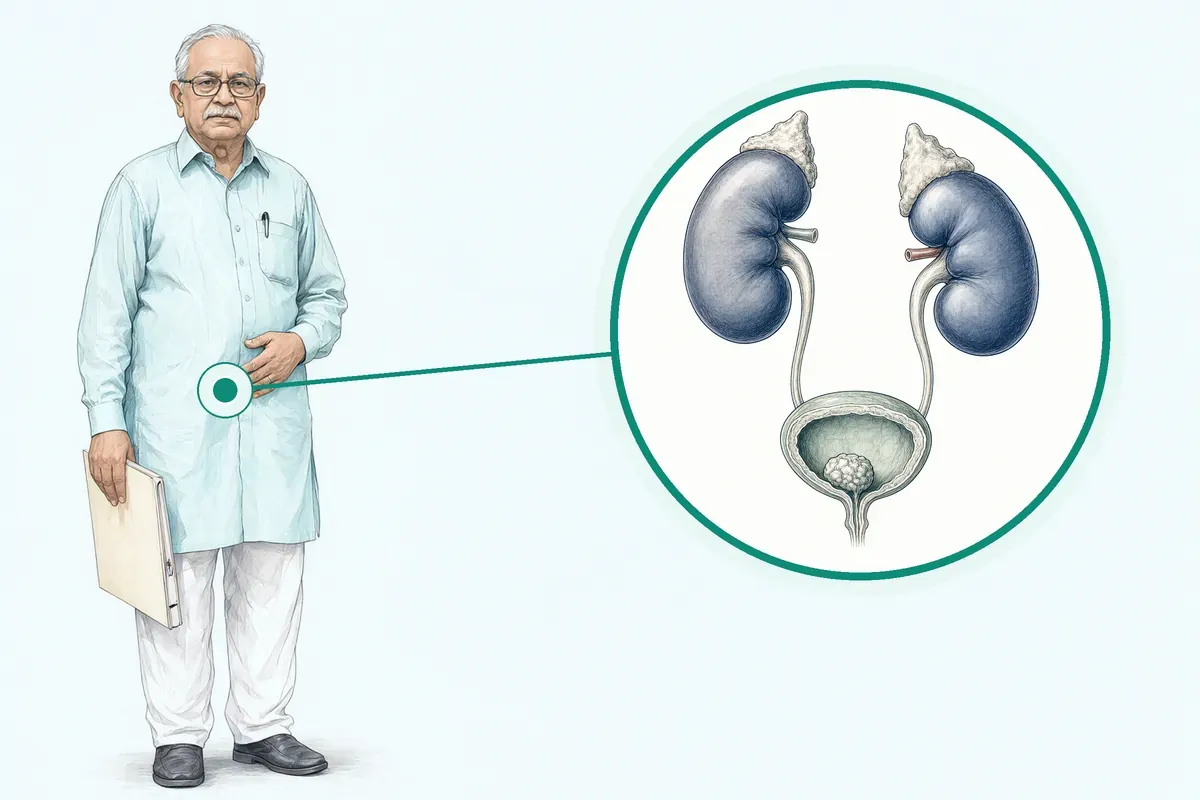
- Kidney cancer
- Renal cell carcinoma is most common
- Bladder cancer
- Tumours arise from inner lining
- Prostate cancer
- Starts in prostate gland below bladder
- Testicular cancer
- Starts in the testicles
Uro oncology covers cancers that start in the urinary system and the male reproductive organs.
The main types are:
- Kidney cancer
- Bladder cancer
- Prostate cancer
- Testicular cancer
In the kidney, the most common cancer is renal cell carcinoma, which begins in the lining of the tiny tubes that filter blood. This type accounts for more than 90 percent of kidney cancers and has several subtypes, with clear cell being the most frequent. In the bladder, tumours usually arise from the inner lining.
Prostate cancer begins in the prostate gland, which sits below the bladder and surrounds the urethra. A radical prostatectomy is surgery to remove the whole prostate gland and the seminal vesicles. Testicular cancer starts in the testicles. These cancers develop when cells acquire genetic changes that make them grow out of control.
In kidney cancer, mutations in the VHL gene and in genes that control how DNA is packaged have been described. Tumours can also show marked differences between one area and another, which can affect how they behave.
Symptoms and warning signs that need same-day care
- Cannot pass urine at all Possible blockage
- Heavy bleeding with clots Significant bleeding
- Severe flank pain with fever Severe infection
- Feel faint with rapid heartbeat Significant bleeding
Common symptoms depend on the organ involved. Blood in the urine, which may look pink, red or cola-coloured, is a frequent sign of kidney or bladder cancer. You may notice pain in the side or back that does not go away, a lump in the abdomen, or unexplained weight loss and tiredness with kidney tumours.
Bladder cancer can cause a need to pass urine more often, pain when passing urine, or difficulty starting the stream. Prostate cancer in its early stages often causes no symptoms. Later it may lead to weak flow, straining, getting up at night, or a feeling that the bladder has not emptied.
Testicular cancer usually appears as a lump that causes no pain or swelling in a testicle, sometimes with a dull ache in the lower abdomen or scrotum.
Seek care on the same day if you suddenly cannot pass urine at all, if you see heavy bleeding with clots, if you develop severe flank pain with fever, or if you feel faint and have a rapid heartbeat. These can mean a blockage, severe infection or significant bleeding that needs immediate attention.
Causes and factors that raise your risk
- Smoking
- Major risk for bladder and kidney cancer
- Obesity and high blood pressure
- Linked to kidney cancer
- Age over 50
- Strongest factor for prostate cancer
- Undescended testicle
- Increases testicular cancer risk
- Chemical exposure
- Dye, rubber, leather industries linked to bladder cancer
The exact cause is not always known, but several factors increase the chance of developing these cancers. Smoking is a major risk factor for bladder and kidney cancer. Obesity and high blood pressure are linked to kidney cancer. For prostate cancer, age is the strongest factor; most cases are diagnosed after 50.
A family history of prostate, breast or ovarian cancer can raise risk. Certain inherited gene changes also play a part. In testicular cancer, an undescended testicle at birth, a previous testicular cancer, or a family history increase risk. Occupational exposure to certain chemicals, such as those used in dye, rubber or leather industries, is linked to bladder cancer. Long-term dialysis and some inherited syndromes raise the risk of kidney cancer.
How uro oncology conditions are diagnosed
- History and examination Physical check and digital rectal exam
- Blood and urine tests Kidney function, liver function, PSA, urine for blood and cells
- Imaging scans Ultrasound, CT or MRI, multiparametric MRI for prostate
- Biopsy or cystoscopy Tissue sample confirms diagnosis and grade
Diagnosis starts with a detailed history and physical examination. Your doctor will feel the abdomen and, for men, may do a digital rectal examination to check the prostate. Blood tests include kidney function, liver function and, for prostate cancer, prostate-specific antigen (PSA). Urine tests look for blood, infection or abnormal cells. Imaging is essential. Ultrasound is often the first scan.
A CT scan or MRI of the abdomen and pelvis gives detailed pictures of the tumour and shows if it has spread. For prostate cancer, multiparametric MRI can help decide whether a biopsy is needed and where to take samples.
In studies, MRI with or without targeted biopsy was noninferior to standard transrectal ultrasound-guided biopsy and detected more clinically significant cancers while reducing the detection of clinically insignificant cancers. A biopsy, where a small piece of tissue is taken with a needle, confirms the diagnosis and tells the grade of the cancer.
For bladder tumours, a cystoscopy (a thin telescope passed through the urethra) allows the doctor to see inside the bladder and take biopsies or remove small tumours (TURBT). Bone scans or PET-CT may be used to check for spread to bones or other organs.
Non-surgical treatment options and when surgery is advised
Treatment depends on the type, stage and grade of cancer, your overall health and your preferences. For localised kidney cancer, surgery is the main treatment and can successfully manage the disease. Options include removing the whole kidney (radical nephrectomy) or, for smaller tumours, removing only the tumour (partial nephrectomy).
For muscle-invasive bladder cancer, removal of the bladder (radical cystectomy) with creation of a new way for urine to leave the body is standard. For localised prostate cancer, surgery (radical prostatectomy) is a common treatment. It may be used along with other therapies such as radiation. Surgery is generally advised for tumours that are likely to grow and spread fast.
Open surgery is often preferred when cancer has spread locally, is high risk, or is very hard to remove. Minimally invasive approaches, including laparoscopic and robotic-assisted surgery, use small incisions. In robotic-assisted surgery, the surgeon sits at a console and controls special instruments to remove the prostate and seminal vesicles. For bladder tumours that have not invaded the muscle, transurethral resection (TURBT) is done through the urethra.
Non-surgical options include:
- Active surveillance for very low-risk prostate cancer
- Radiation therapy
- Hormone therapy (androgen deprivation)
- Chemotherapy
- Targeted therapy
- Immunotherapy
For advanced kidney cancer, targeted agents such as sunitinib, pazopanib, axitinib and others, as well as immunotherapy with nivolumab, are used. For advanced prostate cancer, newer hormonal agents like enzalutamide and radium-223 for bone metastases can prolong survival. Your surgeon will discuss which approach suits your situation.
Preparing for Uro Oncology surgery
Do
- Complete pre-op tests Blood tests, chest X-ray, ECG, CT or MRI
- Review medicines with surgeon Blood thinners, aspirin, herbal supplements may need stopping
- Fast from midnight No food or drink before surgery
- Bring items on admission day Medicines in original packets, allergy list, insurance cards, comfortable clothing
- Arrange an attendant Family member to stay during hospital stay
Before your operation, the surgical team will arrange a set of tests to check your fitness for anaesthesia and surgery. These usually include blood tests, a chest X-ray, an ECG, and imaging such as a CT scan or MRI to confirm the stage of the tumour.
If you are having prostate surgery, a multiparametric MRI may be used to guide biopsy decisions and surgical planning. Your surgeon will also review any medicines you take. Blood thinners, aspirin, and certain herbal supplements may need to be stopped several days before the procedure; your doctor will give you a clear list.
You will be asked to fast from midnight on the night before surgery. On the day of admission, bring your regular medicines in their original packets, a list of allergies, your insurance or scheme cards, and comfortable clothing for discharge. An attendant should plan to stay with you during the hospital stay.
How Uro Oncology surgery is done
- Taken to modular operation theatre Given general anaesthesia
- Procedure lasts two to five hours Depends on organ and stage
- Surgeon may remove pelvic lymph nodes During prostate surgery to check spread
The operation you have depends on the organ involved and the stage of the cancer. For kidney cancer, a radical nephrectomy removes the whole kidney and surrounding tissue.
For bladder cancer that has grown into the muscle layer, a radical cystectomy removes the bladder and creates a new way for urine to leave the body, such as an ileal conduit or a neobladder.
For prostate cancer confined to the gland, a radical prostatectomy removes the prostate and seminal vesicles; this can be done through an open incision, laparoscopically, or with robotic assistance. For early bladder tumours, a transurethral resection of bladder tumour (TURBT) is performed through the urethra without any external cuts.
On the day of surgery, you will be taken to the modular operation theatre and given general anaesthesia. The procedure typically lasts two to five hours. During prostate surgery, the surgeon may also remove some pelvic lymph nodes to check for spread. Your surgeon will discuss which technique suits your case before the operation.
Risks and possible complications of Uro Oncology surgery
All major surgery carries risks. Bleeding, infection, and reactions to anaesthesia can occur with any procedure. After radical prostatectomy, injury to the rectum or a blocked urine flow are rare but possible. Prostate removal makes you infertile because the seminal vesicles are removed; sperm banking before surgery is an option to discuss with your doctor.
Erectile dysfunction and urinary incontinence are known side effects of prostate cancer surgery. In studies, about 9 out of 10 people regain urine control over time, while about 5 to 10 out of 100 have long-term mild stress incontinence. Recovery of erections can take weeks to months, and sometimes up to three years.
Nerve-sparing techniques aim to protect the nerves that control erections, but this is not always possible depending on the cancer. For kidney cancer, metastatic disease is often resistant to standard chemotherapy. Immunotherapy combinations such as nivolumab plus ipilimumab have shown fewer severe (grade 3 or 4) adverse events than everolimus in advanced renal cell carcinoma. Your surgical team will explain the specific risks for your operation and how they are monitored.
Recovery and aftercare after Uro Oncology surgery
After surgery, you will spend time in the recovery area before moving to a ward. A urinary catheter will be in place; for prostate surgery, the care team will teach you how to remove it at home, usually 7 to 14 days after the operation. Pain is managed with regular medication.
You will be encouraged to sit up and walk short distances from the first day to prevent blood clots and help bowel function return. The typical hospital stay is four to seven nights, though after minimally invasive prostate surgery some patients go home the next day. Full recovery at home takes four to eight weeks.
During this time, avoid heavy lifting, strenuous exercise, and driving until your surgeon clears you. The surgical incision usually heals in three to four weeks but can take up to six months to fully settle. Attend all follow-up appointments so the team can check wound healing, catheter function, and pathology results.
Call the hospital or visit the 24×7 emergency department if you develop:
- Fever above 38°C
- Heavy bleeding
- Severe pain not relieved by prescribed medicines
- Inability to pass urine
- Signs of wound infection such as spreading redness or pus
Results of Uro Oncology surgery
- Median overall survival not reached with nivolumab plus ipilimumab vs 26 months with sunitinib Advanced kidney cancer
- Radium-223 median overall survival 14.9 months vs 11.3 months placebo Metastatic prostate cancer (bone)
- MRI-targeted biopsy 38% vs standard biopsy 26% for clinically significant cancer Prostate biopsy detection
Surgery is a common treatment for localised prostate cancer and can be combined with other therapies. For localised kidney cancer, surgery alone can successfully manage the disease.
In studies of advanced renal cell carcinoma, immunotherapy combinations have improved survival compared to older targeted therapy; one large trial showed a median overall survival not reached with nivolumab plus ipilimumab versus 26 months with sunitinib in intermediate and poor risk patients. For metastatic prostate cancer that has progressed after chemotherapy, enzalutamide prolonged survival in a phase 3 trial.
Radium-223 improved median overall survival to 14.9 months versus 11.3 months for placebo in patients with bone metastases. In prostate cancer diagnosis, MRI-targeted biopsy detected clinically significant cancer in 38% of men compared to 26% with standard biopsy, while reducing detection of clinically insignificant cancer.
A salvage radical prostatectomy after radiation treatment can control cancer for ten years or more in some patients. These results come from groups of patients in clinical trials; your own outcome depends on the cancer type, stage, and your overall health. Your surgeon will discuss what the pathology report means for your follow-up plan.
Cost and insurance for Uro Oncology surgery in Jaipur
The typical price range for these operations in India is ₹1,50,000 to ₹5,00,000.
The final cost depends on:
- Type of surgery performed
- Choice of room
- Fee for the surgical team
- Standard tests and diagnostic procedures
- Need for radiation or chemotherapy
- Cost of post-procedure care
Jaipur Hospital is a NABH-accredited multispeciality hospital established in February 1991.
We accept patients under:
- RGHS
- MAA Yojana
- CGHS
- A panel of private insurers and TPAs
The in-house pharmacy, diagnostic laboratory, and imaging services are available on campus. For a personalised estimate, please contact the hospital billing office with your clinical details and insurance information.