

Anaesthesia and Critical Care · Jaipur Hospital
Anaesthesia Services in Jaipur
Surgery needs safe anaesthesia. We assess you, explain options, and give a clear plan.
- Serving Jaipur since 1991 (35 years)
- NABH accredited
- 24×7 emergency & ICU
- Cashless: RGHS, MAA Yojana, CGHS + 22 insurers
- Procedure time
- As per surgery duration
- Anaesthesia
- General / Spinal / Epidural / Block
- Recovery
- PACU monitoring 1 to 3 hours
- Price
- ₹5,000 to ₹30,000 (per case complexity)typical range in India; ask us for an estimate
Fear of anaesthesia risks
You worry about being unconscious, pain after surgery, or complications during the operation.
Surgery brings anxiety about awareness, breathing tubes, nausea, nerve injury, or not waking up. You want to know the risks are managed and your comfort is priority.
-
Fear of awareness
Worry about waking up or feeling pain during the operation.
-
Post-surgery nausea
Concern about vomiting and discomfort in the recovery room.
-
Breathing problems
Anxiety about airway management and lung complications after anaesthesia.
-
Nerve injury risk
Fear of lasting numbness or weakness from blocks or positioning.
-
Cost uncertainty
Not knowing the final bill for anaesthesia and recovery care.
Surgical injury releases inflammatory mediators that activate nociceptors and spread systemically if not controlled.
Why Jaipur Hospital
You want to know your anaesthetist has seen your reports, knows your allergies, and will stay with you every minute.
Your care plan
Your first steps with us
- 1 Book pre-anaesthesia check-up in OPD.
- 2 Get fitness clearance and cost estimate.
- 3 Receive chosen anaesthesia during surgery.
- 4 Recover in PACU with monitoring for 1 to 3 hours.
how the operation is done
Your anaesthetist reviews your health, chooses the technique with you, and monitors vital signs throughout surgery. Recovery includes PACU observation.
-
General Anaesthesia
Inhalational or IV agents with airway control keep you fully unconscious for major surgery.
-
Neuraxial Blockade
Spinal, epidural, or combined spinal-epidural numbs the lower body for abdominal or leg procedures.
-
Peripheral Nerve Blocks
Ultrasound-guided blocks target specific nerves for arm, leg, or shoulder surgery.
-
Monitored Anaesthesia Care
Sedation with local anaesthesia keeps you comfortable for minor or short procedures.
Why patients trust us
- 1991 Serving Jaipur for 35 years
- NABH Accredited hospital
- 1 Anaesthesia and Critical Care consultants
- 24×7 Emergency, ICU and ambulance
- 25 Cashless schemes and insurers
what research shows about this treatment
-
18.5% vs 18.0%
Death or inability to walk at 60 days was similar between spinal and general anaesthesia groups in hip fracture patients.
-
20.5% vs 19.7%
Postoperative delirium rates were comparable between spinal and general anaesthesia in older adults.
-
44.3% vs 33.3%
Nausea and vomiting occurred more often with regional than general anaesthesia in one trial.
If it is left untreated
Uncontrolled surgical nociception drives stress responses during surgery and can lead to chronic pain syndromes afterward.
life after treatment
Most people wake up comfortable, spend a short time in recovery, and go home or to the ward as planned.
-
Comfortable waking
Most people wake up with pain controlled and nausea managed.
-
Short PACU stay
Usually 1 to 3 hours of monitoring before moving to the ward or home.
-
Clear discharge plan
You receive written instructions for medicines and follow-up dates.
-
Return to routine
Most people resume light activity within days depending on the surgery.

Frequently asked questions
Questions patients ask about anaesthesia services
Which problems are assessed under anaesthesia services?
In short
Jaipur Hospital provides anaesthesia services for all surgical specialties. The anaesthesia team assesses your fitness for surgery and plans the type of anaesthesia. This includes general, spinal, epidural, nerve blocks, and monitored anaesthesia care. The assessment covers your medical history, current medicines, allergies, and airway examination.
In detail
The anaesthetist reviews your health to choose the safest technique. Evidence shows that protective ventilation strategies during general anaesthesia improve postoperative pulmonary function and reduce infection scores.
Regional techniques like spinal or epidural anaesthesia are compared with general anaesthesia for outcomes such as delirium and recovery; studies found similar rates of postoperative delirium and functional recovery at 60 days between spinal and general anaesthesia for hip fracture surgery.
Ultrasound-guided nerve blocks are used for targeted pain control with fewer intravascular injections. The team also plans multimodal pain management, which may include opioids, NSAIDs, ketamine, dexmedetomidine, magnesium, or lidocaine to target different pain pathways.
A common belief
Many people think anaesthesia is only about being asleep.
What actually happens
In fact, the assessment is a detailed safety check. Studies show that the choice of technique and ventilation strategy can affect lung function and recovery after surgery. The team also plans multimodal pain control to reduce reliance on opioids alone.
Your next step at Jaipur Hospital
Before surgery, you will attend a pre-anaesthesia check-up in the OPD. Bring your medicine list and past medical records. The anaesthetist will explain the planned technique, risks, and fasting instructions. You will sign a consent form.
On the day of surgery, the team will monitor you in the operating theatre and then in the PACU for one to three hours.
How will the doctor decide which tests I need before anaesthesia?
In short
The anaesthetist at Jaipur Hospital decides tests based on your age, medical history, type of surgery, and planned anaesthesia technique. Routine tests may include blood counts, kidney and liver function, blood sugar, ECG, and chest X-ray. Additional tests like echocardiography or lung function tests are ordered only if your history or examination suggests a need.
In detail
The goal is to identify conditions that affect anaesthetic safety. Evidence shows that protective ventilation strategies benefit patients undergoing prolonged abdominal surgery, so baseline lung function may be relevant. Patients with cardiac disease may need an ECG or echocardiogram to guide haemodynamic management.
The anaesthetist follows a targeted approach rather than ordering every test for every patient. This avoids unnecessary cost and delay. The pre-anaesthesia clinic evaluates your functional capacity, medication list, and airway anatomy to tailor the investigation plan.
A common belief
It is a common belief that everyone needs a full panel of tests.
What actually happens
Evidence supports a targeted approach: ordering tests only when they change the anaesthetic plan. This reduces unnecessary cost and waiting. For example, protective ventilation helps in long abdominal surgery, so lung tests may be needed there but not for a short limb procedure.
Your next step at Jaipur Hospital
Attend the pre-anaesthesia OPD at Jaipur Hospital a few days before surgery. Bring previous test reports and prescriptions. The anaesthetist will review them and order only the tests needed for your case. Most results are available within a day from our in-house laboratory. You will then receive final instructions for fasting and medicines.
How soon should I expect improvement after the chosen anaesthesia treatment?
In short
Recovery from anaesthesia at Jaipur Hospital is monitored in the PACU for one to three hours. Most patients wake up within minutes after general anaesthesia. Spinal or epidural numbness wears off in two to four hours. Nerve blocks can last six to 24 hours depending on the drug. Full recovery from anaesthetic effects is usually within 24 hours.
In detail
The type of anaesthesia influences early recovery. Evidence shows that median pain scores at rest were zero in both regional and general anaesthesia groups after hip fracture surgery. Hospital stay was similar at seven days median for both techniques.
Protective ventilation during general anaesthesia improves lung function up to day five. Postoperative nausea and hypotension are more common with regional techniques but are treatable. Monitored anaesthesia care allows faster discharge for minor procedures. The surgical procedure itself determines the overall recovery timeline more than the anaesthesia type.
A common belief
People often think anaesthesia dictates the whole recovery.
What actually happens
Studies show that the surgery itself drives the timeline. For hip fracture surgery, hospital stay was seven days regardless of spinal or general anaesthesia. Pain scores were similar. The anaesthesia team focuses on smooth emergence, nausea control, and multimodal pain relief so the surgical recovery can proceed.
Your next step at Jaipur Hospital
After surgery, you will stay in the PACU until your vital signs are stable, pain is controlled, and you can drink fluids. The anaesthetist will prescribe a multimodal pain plan. Your attendant can stay with you in the ward. Discharge depends on the surgery: daycare for minor procedures, longer for major operations. Follow-up is arranged before you leave.
How does the term "anaesthesia" relate to anaesthesia services?
In short
The word "anaesthesia" is the American English spelling of the British English term "anaesthesia" used at Jaipur Hospital. Both spellings refer to the same medical specialty that provides pain relief, unconsciousness, and physiological stability during surgical and diagnostic procedures. The hospital uses the British spelling in all its records and communication.
In detail
Anaesthesia services encompass general anaesthesia, neuraxial blockade such as spinal and epidural, peripheral nerve blocks, and monitored anaesthesia care. The specialty is defined by the controlled, reversible depression of neuronal function to prevent nociception, which is the neural process of encoding noxious stimuli.
Evidence describes balanced general anaesthesia as the administration of different drugs together to create the anaesthetic state, using less of each agent than if given alone.
Multimodal general anaesthesia adds agents such as dexmedetomidine, magnesium, ketamine, or lidocaine to target multiple nociceptive pathways, reducing opioid reliance.
The American Society of Regional Anaesthesia and Pain Medicine publishes practice advisories on local anaesthetic systemic toxicity, highlighting the role of ultrasound guidance in improving safety. Regardless of spelling, the clinical goals, techniques, and safety standards are identical.
A common belief
Patients sometimes think the spelling indicates a different technique or standard.
What actually happens
It does not. The drugs, monitoring, and safety protocols are identical whether you write it with an 'e' or without.
Your next step at Jaipur Hospital
When you search for information online, you will find both spellings used interchangeably in medical literature. At Jaipur Hospital, the department is named Anaesthesia and Critical Care. If you have any documents or insurance forms using the American spelling, they are accepted without issue. For detailed information about the specific anaesthesia plan for your surgery, book a consultation at Jaipur Hospital.
How do general, regional, and local anaesthesia differ?
In short
General anaesthesia produces a reversible state of unconsciousness with loss of protective reflexes, requiring airway control. Regional anaesthesia, such as spinal or epidural blockade, numbs a large body region by injecting local anaesthetic near the spinal cord or nerve roots. Local anaesthesia involves direct infiltration of a small area. At Jaipur Hospital, the anaesthesia team selects the technique based on your surgery and health.
In detail
General anaesthesia uses inhalational agents like sevoflurane or intravenous agents like propofol, often with muscle relaxants and opioids, to achieve unconsciousness, analgesia, and immobility. Evidence shows it targets GABAergic and other receptors in the brain and spinal cord.
Regional anaesthesia includes neuraxial blocks — spinal, epidural, or combined spinal-epidural — and peripheral nerve blocks guided by ultrasound. These block nociceptive transmission at the nerve root or peripheral nerve level.
Monitored anaesthesia care provides sedation and anxiolysis with local infiltration for minor procedures, preserving spontaneous ventilation. Studies comparing spinal and general anaesthesia for hip fracture surgery in older adults found similar survival, ambulation recovery, and delirium rates at 60 days.
Protective ventilation strategies during general anaesthesia for abdominal surgery improve postoperative pulmonary function. The choice balances surgical requirements, patient comorbidities, and anticipated postoperative pain management needs.
A common belief
Patients often think regional means you are awake and feel everything.
What actually happens
With regional anaesthesia you can be lightly sedated and comfortable, and studies show outcomes like survival and recovery are similar to general anaesthesia for many major surgeries.
Your next step at Jaipur Hospital
Your anaesthetist will explain the recommended technique and alternatives during the pre-operative visit. You will have the opportunity to ask questions and express preferences. The final plan is documented and signed. Recovery in the post-anaesthesia care unit lasts one to three hours regardless of technique. For a detailed discussion of which approach suits your procedure, book a consultation at Jaipur Hospital.
How can I decide whether to seek advice about pre anaesthetic checkup?
In short
You should seek a pre-anaesthetic check-up at Jaipur Hospital as soon as your surgery is planned. The check-up is needed for every patient having anaesthesia, whether general, spinal, epidural, or sedation. It allows the anaesthetist to assess your health, review medicines, order tests, and explain the anaesthesia plan. Early assessment gives time to optimise any medical problems before the operation date.
In detail
The pre-anaesthetic visit includes a detailed history of past illnesses, allergies, previous anaesthesia, and current medicines. The anaesthetist examines your airway, heart, and lungs. Blood tests, ECG, or chest X-ray may be ordered based on your age and medical conditions.
Evidence shows that pre-operative optimisation reduces complications and cancellations. For example, controlling blood pressure, anaemia, or blood sugar before surgery improves outcomes. The anaesthetist also discusses fasting rules, which regular medicines to continue, and the type of anaesthesia suitable for your procedure. You can ask questions about risks, recovery, and pain management.
A common belief
Some patients think the surgeon's fitness certificate is enough.
What actually happens
The anaesthetist looks at different things: airway, drug allergies, heart and lung reserve, and how your body handles anaesthesia drugs. Missing this visit can lead to last-minute cancellations or avoidable complications.
Your next step at Jaipur Hospital
Schedule the check-up at least a few days before surgery. Bring all medicine strips, recent test reports, and any specialist letters. The anaesthetist will give you a clear plan and written instructions. If new issues are found, there is time for further evaluation.
How will my medical history and current medicines affect the care plan?
In short
Your medical history and current medicines directly shape the anaesthesia plan at Jaipur Hospital. The anaesthetist reviews every condition and drug during the pre-anaesthetic check-up to choose the safest technique, adjust doses, and plan monitoring. Conditions such as heart disease, lung disease, diabetes, stroke, or bleeding disorders change the choice of anaesthesia and the drugs used.
In detail
For example, blood thinners may need to be stopped or bridged before a spinal or epidural block. Beta-blockers and ACE inhibitors are usually continued, but diuretics may be held on the morning of surgery. Diabetes medicines are adjusted for fasting.
Inhalers for asthma or COPD are continued. The anaesthetist also checks for drug interactions, such as MAO inhibitors with certain anaesthetic agents. Evidence shows that continuing most cardiac medicines reduces perioperative cardiac events.
The team may order extra tests like echocardiogram or lung function tests based on your history. Allergies and previous anaesthesia problems are documented to avoid triggering agents. The plan is discussed with your surgeon and physician if needed.
A common belief
Patients often stop all medicines on their own before surgery.
What actually happens
This can be dangerous. Stopping beta-blockers or antiplatelet drugs without advice increases the risk of heart attack or stroke. The anaesthetist gives a clear, written plan for each medicine.
Your next step at Jaipur Hospital
Bring a complete list of all medicines, including herbal supplements, to your pre-anaesthetic visit. The anaesthetist will give you written instructions on which medicines to take or stop on the day of surgery. Any new test results will be reviewed.
Which symptoms should prompt me to see a specialist?
In short
You should see an anaesthesia specialist at Jaipur Hospital before any planned surgery. Also consult if you have had previous reactions to anaesthesia, a family history of anaesthesia problems, severe heart or lung disease, sleep apnoea, or difficult airway issues. Unexplained muscle weakness or a history of malignant hyperthermia also need review.
In detail
The pre-anaesthesia assessment identifies risk factors that change the anaesthetic plan. Evidence highlights that small patient size and sarcopenia increase the risk of local anaesthetic systemic toxicity. Patients with obstructive sleep apnoea or severe cardiac or respiratory disease need tailored ventilation and monitoring strategies.
Protective ventilation with lower tidal volumes and positive end-expiratory pressure improves oxygenation and reduces pulmonary complications after abdominal surgery. A history of difficult intubation or previous awareness under anaesthesia requires specific airway planning. The anaesthetist also evaluates medications that may interact with anaesthetic agents, such as blood thinners or monoamine oxidase inhibitors.
A common belief
Patients often assume the surgeon handles everything.
What actually happens
The anaesthetist looks for specific risks that change how you are kept safe during surgery. For example, research shows that protective ventilation strategies improve lung function after surgery. Conditions like sleep apnoea or sarcopenia need special planning to avoid complications.
Your next step at Jaipur Hospital
Ask your surgeon for a referral to the anaesthesia OPD at Jaipur Hospital. Bring a list of all medicines, supplements, and allergy details. The anaesthetist will examine your airway, heart, and lungs. They may order blood tests, an ECG, or a chest X-ray. You will receive clear fasting instructions and advice on which medicines to take on the morning of surgery.
How will the results change my care plan?
In short
Test results at Jaipur Hospital help the anaesthetist adjust the anaesthetic technique, drug doses, monitoring level, and postoperative plan. Abnormal kidney or liver function may change drug choices. Heart or lung abnormalities may lead to invasive monitoring, ICU backup, or a change from general to regional anaesthesia. Uncontrolled blood sugar may delay elective surgery.
In detail
The anaesthetist uses results to minimise risk. Evidence indicates that protective ventilation improves outcomes in patients with lung vulnerability. If echocardiography shows poor heart function, the team may avoid certain anaesthetic agents that depress the heart and prepare vasopressors.
Abnormal coagulation tests may contraindicate neuraxial blocks like spinal or epidural anaesthesia. High blood sugar increases infection risk and may prompt optimisation before surgery. The plan is individualised: the same surgery can have different anaesthetic approaches based on your physiology.
A common belief
Patients often think tests are just a formality.
What actually happens
In reality, each result directly shapes your safety plan. Research shows that protective ventilation helps vulnerable lungs, and coagulation status decides if a spinal block is safe. The anaesthetist tailors every detail to your physiology, not just the surgery.
Your next step at Jaipur Hospital
After your tests, the anaesthetist will discuss the findings with you and your surgeon. You will receive a clear explanation of any changes to the anaesthetic plan, monitoring, or recovery expectations. If optimisation is needed, your surgery may be rescheduled. The team coordinates with other specialists if required.
What should I do if symptoms persist or worsen after anaesthesia?
In short
If you notice new or worsening symptoms after your anaesthesia at Jaipur Hospital, contact your surgical team or the anaesthesia department immediately. Common concerns include severe headache, persistent nausea, numbness that does not improve, difficulty breathing, or fever. Early reporting helps the team assess and manage any complication promptly.
In detail
Anaesthesia techniques such as general, spinal, epidural, or nerve blocks carry known side effect profiles. Evidence shows nausea and vomiting occur in around 33 to 44 percent of patients depending on the technique, while postoperative hypotension is reported in roughly 10 to 12 percent.
Nerve blocks may cause temporary numbness or weakness that usually resolves. Persistent or severe symptoms may indicate rare complications such as post-dural puncture headache, local anaesthetic systemic toxicity, or infection at the injection site.
The anaesthesia team monitors every patient in the post-anaesthesia care unit for one to three hours before discharge or ward transfer, but some effects appear later. Recognising warning signs and seeking timely review reduces the risk of prolonged morbidity.
A common belief
Many patients think mild discomfort is normal and wait too long.
What actually happens
While nausea and soreness are common, worsening symptoms can signal rare but serious issues like a spinal headache or nerve injury that need prompt treatment.
Your next step at Jaipur Hospital
Keep the discharge summary and any contact numbers provided by the hospital. If symptoms develop after you leave, call the anaesthesia department or visit the 24-hour emergency department at Jaipur Hospital. Do not wait for a scheduled follow-up if you feel unsafe. Your surgeon and anaesthetist will review your case at the next outpatient visit and adjust the plan if needed.
FAQ library
Questions and answers about anaesthesia services
When you contact us
Get your anaesthesia plan
Contact Jaipur Hospital for a pre-anaesthesia assessment, clear options, and a cost estimate before you decide.
- A consultation with an anaesthesia and critical care specialist in the OPD
- Your scans and reports reviewed, with tests done in-house if you need them (laboratory, X-ray and imaging)
- Your options explained in plain words, including whether you need surgery at all
- A cost estimate before you decide
- Help with cashless treatment under RGHS, MAA Yojana, CGHS and empanelled insurers and TPAs
- Follow-up visits after your treatment
Overview
Anaesthesia Services: what to know
What anaesthesia services are and how they work
Anaesthesia services at Jaipur Hospital provide general, regional, and monitored anaesthesia for all surgical specialties. The purpose is to keep you free from pain and unaware during an operation or procedure. General anaesthesia uses inhalational or intravenous agents with airway control so you are completely unconscious.
Regional anaesthesia includes spinal, epidural, or combined spinal-epidural blocks that numb a large part of the body while you remain awake or lightly sedated. Peripheral nerve blocks use ultrasound guidance to numb a specific limb or area. Monitored anaesthesia care gives sedation together with local anaesthesia for minor procedures. Your surgeon and anaesthesiologist will advise which technique suits your operation and your health.
How anaesthesia affects the body during surgery
- Pain signals
- Surgery releases substances that activate nerve endings
- Signal pathways
- Signals travel up spinal cord to brain
- Brain response
- Brain can increase or decrease pain transmission
- General anaesthesia action
- Enhances inhibitory GABAergic activity in brain
Surgery causes tissue injury that releases inflammatory mediators such as prostaglandins into the bloodstream. These substances activate nociceptors, the bare nerve endings that signal pain. The signals travel up the spinal cord to the brain through ascending pathways. At the same time, the brain activates descending pathways that can increase or decrease pain transmission.
General anaesthesia works mainly by enhancing inhibitory GABAergic activity in the cortex, thalamus, and brainstem, which produces unconsciousness. Balanced general anaesthesia combines several drugs so that less of each is needed.
Multimodal anaesthesia adds agents that target different parts of the nociceptive system, such as:
- NMDA receptors
- Alpha-2 receptors
- Sodium channels
Common side effects and warning signs after anaesthesia
- Difficulty breathing
- Severe drowsiness you cannot shake off
- Persistent vomiting
- Severe headache worse when sitting up
- New weakness or numbness
After anaesthesia, nausea and vomiting are common. In one large trial, about 44 percent of patients who had regional anaesthesia and 33 percent who had general anaesthesia reported nausea or vomiting. Postoperative hypotension (low blood pressure) occurred in about 12 percent with regional anaesthesia and 10 percent with general anaesthesia. Shivering or hypothermia can happen, especially after general anaesthesia.
Delirium (sudden confusion) was seen in roughly 20 percent of older adults after hip fracture surgery, with similar rates for spinal and general anaesthesia. Most side effects settle within hours to a day.
Contact your care team the same day if you have difficulty breathing, severe drowsiness you cannot shake off, persistent vomiting, severe headache that worsens when sitting up, or new weakness or numbness that was not there before surgery.
Who is at higher risk of complications from anaesthesia
- Older age and frailty
- Higher baseline risk of delirium and death
- Small body size and sarcopenia
- Increase risk of local anaesthetic systemic toxicity
- Long abdominal surgery
- May benefit from protective ventilation strategies
- Ultrasound guidance
- Associated with fewer intravascular injections
Risk varies with age, frailty, and existing illness. Older adults, especially those with hip fracture, have a higher baseline risk of delirium and death regardless of anaesthesia type. Small body size and sarcopenia (loss of muscle mass) increase the potential risk of local anaesthetic systemic toxicity.
Patients having long abdominal surgery may benefit from protective ventilation strategies that reduce pulmonary complications. Ultrasound guidance for nerve blocks is associated with fewer intravascular injections. Your anaesthesiologist reviews your medical history, current medicines, and allergies before every case to plan the safest approach.
How your anaesthesia plan is decided before surgery
Before surgery, you attend a pre-anaesthesia check-up where the anaesthesiologist examines you, reviews investigations, and discusses the options. The choice between general, regional, or monitored anaesthesia depends on the type of surgery, your health, and your preference.
For example, in a large trial of hip fracture surgery in older adults, spinal and general anaesthesia had similar outcomes for survival and walking ability at 60 days. In stroke thrombectomy, general anaesthesia and conscious sedation showed no significant difference in infarct growth.
Your anaesthesiologist will explain the plan, the monitoring that will be used, and what to expect in the recovery room. PACU monitoring typically lasts one to three hours after surgery.
Preparing for anaesthesia services at Jaipur Hospital
Do
- Bring all medical records Blood reports, ECG, chest X-ray, doctor letters
- Tell doctor about all medicines Include those bought from chemist without prescription
- Follow fasting rules No solid food for six hours, no clear fluids for two hours
- Bring CPAP machine if used For sleep apnoea
Avoid
- Leave jewellery and valuables at home Wear loose, comfortable clothing
Before your surgery, you will meet an anaesthesiologist in the OPD or on the ward. The doctor will ask about your past illnesses, previous operations, allergies, and every medicine you take, including those bought from a chemist without a prescription. Bring your recent blood reports, ECG, chest X-ray, and any letters from other doctors.
If you take blood thinners, diabetes tablets, or insulin, your surgeon and anaesthesiologist will tell you which doses to hold or change. Do not stop any medicine on your own.
You must fast before anaesthesia. Usually, no solid food for six hours and no clear fluids for two hours before the scheduled start time. Your anaesthesiologist will confirm the exact timing for you. Wear loose, comfortable clothing. Leave jewellery and valuables at home. An attendant should stay with you through admission and discharge. If you use a CPAP machine for sleep apnoea, bring it with you.
The anaesthesiologist will explain the type of anaesthesia planned for your operation: general, spinal, epidural, a nerve block, or monitored anaesthesia care with sedation. You can ask about the benefits and risks of each option. The final choice depends on the surgery, your health, and your preference. You will sign a consent form after your questions are answered.
How anaesthesia is given for your surgery
- Monitoring and IV cannula placed Chest leads, BP cuff, pulse oximeter, IV line
- Peripheral nerve block: ultrasound-guided injection Numbs only the surgical site
- Wake up and move to PACU Anaesthetic stopped, recovery monitoring
On the day of surgery, you are taken to the operating theatre complex. Monitoring leads are placed on your chest, a blood pressure cuff on your arm, and a pulse oximeter on your finger. An intravenous cannula is inserted for fluids and medicines.
If you receive general anaesthesia, anaesthetic drugs are given through the cannula or breathed through a mask. Once you are unconscious, your anaesthesiologist secures your airway with a tube or a supraglottic device and continues anaesthesia with inhalational agents, intravenous agents, or both.
This is called balanced general anaesthesia, where several drugs are used together at lower doses than if one drug were used alone. During the operation, the team watches your heart rate, blood pressure, oxygen level, and depth of anaesthesia continuously.
If you receive a spinal or epidural (neuraxial blockade), you sit or lie on your side while the anaesthesiologist cleans your back and injects local anaesthetic near the spinal nerves. The area below the waist becomes numb and heavy. You stay awake unless light sedation is given. A combined spinal-epidural may be used for longer operations.
For operations on an arm or leg, an ultrasound-guided peripheral nerve block may be offered. The anaesthesiologist uses an ultrasound probe to see the nerves and injects local anaesthetic around them. This numbs only the surgical site. It can be used alone or with general anaesthesia or sedation.
For minor procedures, monitored anaesthesia care (MAC) may be chosen. You receive sedation through the cannula while the surgeon injects local anaesthetic at the operation site. You stay comfortable and can respond to voice.
Your anaesthesiologist stays with you throughout the operation, adjusting drugs, fluids, and ventilation as needed. At the end, the anaesthetic is stopped, you wake up, and you are moved to the Post Anaesthesia Care Unit (PACU).
Risks and possible complications of anaesthesia
- about 44 percent Nausea or vomiting with regional anaesthesia
- about 33 percent Nausea or vomiting with general anaesthesia
- about 12 percent Postoperative hypotension with regional anaesthesia
- about 10 percent Postoperative hypotension with general anaesthesia
Modern anaesthesia is generally safe. Most side effects are minor and pass quickly. Common effects after general anaesthesia include nausea and vomiting, a sore throat from the airway tube, shivering, and drowsiness. In one large study, nausea and vomiting occurred in about 44 percent of patients who had regional anaesthesia and about 33 percent of those who had general anaesthesia.
Postoperative hypotension (low blood pressure) was reported in about 12 percent of the regional anaesthesia group and about 10 percent of the general anaesthesia group.
Serious complications are rare. They include:
- Allergic reactions
- Breathing difficulties
- Damage to teeth or lips during airway management
- Nerve injury from a needle or catheter
- Local anaesthetic systemic toxicity (LAST)
Small patient size and sarcopenia (low muscle mass) are factors that increase the potential risk for LAST. The use of ultrasound guidance for nerve blocks is associated with fewer intravascular injections.
Delirium (sudden confusion) can occur after surgery, especially in older patients. In a large trial of hip fracture patients aged 65 and older, delirium occurred in about 20 percent of both the spinal anaesthesia group and the general anaesthesia group. The difference between the two techniques was small and not statistically significant. Hypoactive delirium (quiet, withdrawn type) was seen more often with spinal anaesthesia in that study.
Protective ventilation strategies during general anaesthesia for long abdominal surgery have been shown to improve lung function and reduce early lung infection scores compared with standard ventilation. Your anaesthesiologist chooses the ventilation settings based on the operation and your lung health.
If you have any allergy, previous bad reaction to anaesthesia, or a family history of anaesthesia problems, tell your anaesthesiologist before surgery.
Recovery and aftercare after anaesthesia
- Numbness wears off (few hours) After spinal or epidural
- Pain relief continues on ward Paracetamol, NSAIDs, opioids, or nerve block infusion
- Discharge with written instructions Medicines, wound care, activity limits, follow-up
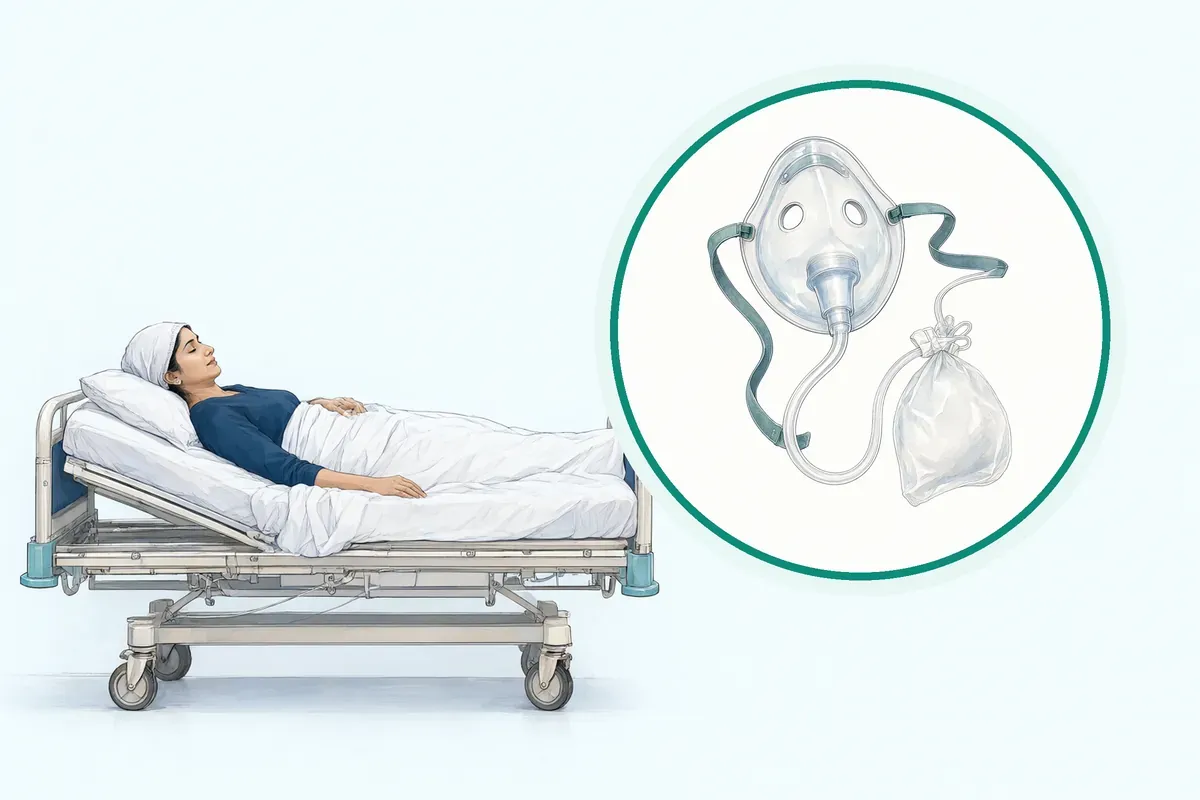
After the operation, you are taken to the PACU. Nurses monitor your breathing, heart rate, blood pressure, oxygen level, and pain score. You stay there for one to three hours until you are fully awake, comfortable, and stable. Oxygen may be given by mask or nasal prongs.
If you had a spinal or epidural, the numbness and weakness wear off over a few hours. You will be helped to move your legs and turn in bed.
Pain relief is started in the PACU and continued on the ward. It may include regular paracetamol, NSAIDs, opioids, or a continuation of a nerve block or epidural infusion. The goal is to keep you comfortable enough to breathe deeply, cough, and move. Tell the nurse if pain is not controlled.
Nausea is treated with anti-sickness medicines. If you had a sore throat from the airway tube, it usually settles in a day or two. Drink sips of water when you are fully awake and not nauseous. You can eat when the surgeon allows.
Before discharge, you will get written instructions about medicines, wound care, activity limits, and follow-up dates. An attendant must take you home if you go home the same day. Do not drive, operate machinery, sign legal documents, or drink alcohol for 24 hours after general anaesthesia or sedation.
Call the hospital or visit the emergency department if you develop:
- Difficulty breathing
- Severe pain not relieved by prescribed medicines
- High fever
- Persistent vomiting
- Inability to pass urine
- New numbness or weakness
- Any other worrying symptom
Results and outcomes of anaesthesia techniques in studies
Large studies have compared spinal anaesthesia with general anaesthesia for common operations such as hip fracture repair in older adults. In one trial with 1,600 patients, the combined outcome of death or inability to walk independently at 60 days was almost the same in both groups: about 18.5 percent with spinal anaesthesia and 18.0 percent with general anaesthesia.
Death within 60 days occurred in about 3.9 percent with spinal and 4.1 percent with general anaesthesia. The incidence of postoperative delirium was similar, around 20 percent in each group.
For open abdominal surgery lasting more than two hours, a protective ventilation strategy during general anaesthesia (lower tidal volume, positive end-expiratory pressure, and recruitment manoeuvres) improved lung function tests up to day five, reduced chest X-ray changes up to day three, and lowered a clinical pulmonary infection score at days one and three, without increasing hospital stay.
In stroke thrombectomy, general anaesthesia was associated with higher successful reperfusion rates than conscious sedation in one trial, but infarct growth did not differ significantly. Clinical outcomes at 90 days favoured general anaesthesia in that study.
Balanced general anaesthesia uses several drugs together to create the anaesthetic state, allowing lower doses of each drug. Multimodal general anaesthesia adds agents that target different parts of the nociceptive (pain) system, such as NMDA receptors, alpha-2 receptors, and sodium channels, to reduce opioid use and side effects. Opioids remain the most effective single antinociceptive agents.
Your anaesthesiologist will choose the technique and drugs based on the surgery, your health, and current evidence. No single technique is better for every patient or every operation.
Cost and insurance for anaesthesia services in Jaipur
The typical cost range for anaesthesia at Jaipur Hospital is ₹5,000 to ₹30,000 per case, depending on the complexity and duration of the surgery, the type of anaesthesia, the drugs and consumables used, and whether special monitoring or invasive lines are needed. This range reflects usual charges in India; ask the hospital for an estimate for your specific procedure.
Studies of anaesthesia drug costs show that the choice of technique affects drug expenditure. Low-flow inhalational anaesthesia with isoflurane tends to be more cost-effective than high-flow techniques or total intravenous anaesthesia (TIVA).
Drug wastage accounts for a portion of the cost; in one analysis, the mean wastage was about ₹132 per case, with muscle relaxants being the largest component of wastage. Consumables such as syringes, tubing, and cannulas make up a significant share of the total anaesthesia cost.
Jaipur Hospital is a NABH-accredited multispeciality hospital established in February 1991. It accepts patients under RGHS, MAA Yojana, CGHS, and a panel of private insurers and TPAs. If you are covered under any of these schemes, bring your card and any required pre-authorisation documents.
The hospital has a 24×7 emergency department, ICU, in-house pharmacy, diagnostic laboratory, imaging, and modular operation theatres. For billing queries, contact the hospital accounts office during working hours.