

ENT (Ear, Nose and Throat) · Jaipur Hospital
Paediatric ENT in Jaipur
When your child struggles with ear pain, blocked breathing, or hearing trouble, our surgical team provides a thorough assessment and a clear plan.
- Serving Jaipur since 1991 (35 years)
- NABH accredited
- 24×7 emergency & ICU
- Cashless: RGHS, MAA Yojana, CGHS + 22 insurers
- Consultation length
- 15 to 30 minutes
- Anaesthesia
- Not needed
- Recovery
- Same day
- Price
- ₹800 to ₹2,000typical range in India; ask us for an estimate
When your child is uncomfortable
My child cannot breathe easily and keeps getting ear pain
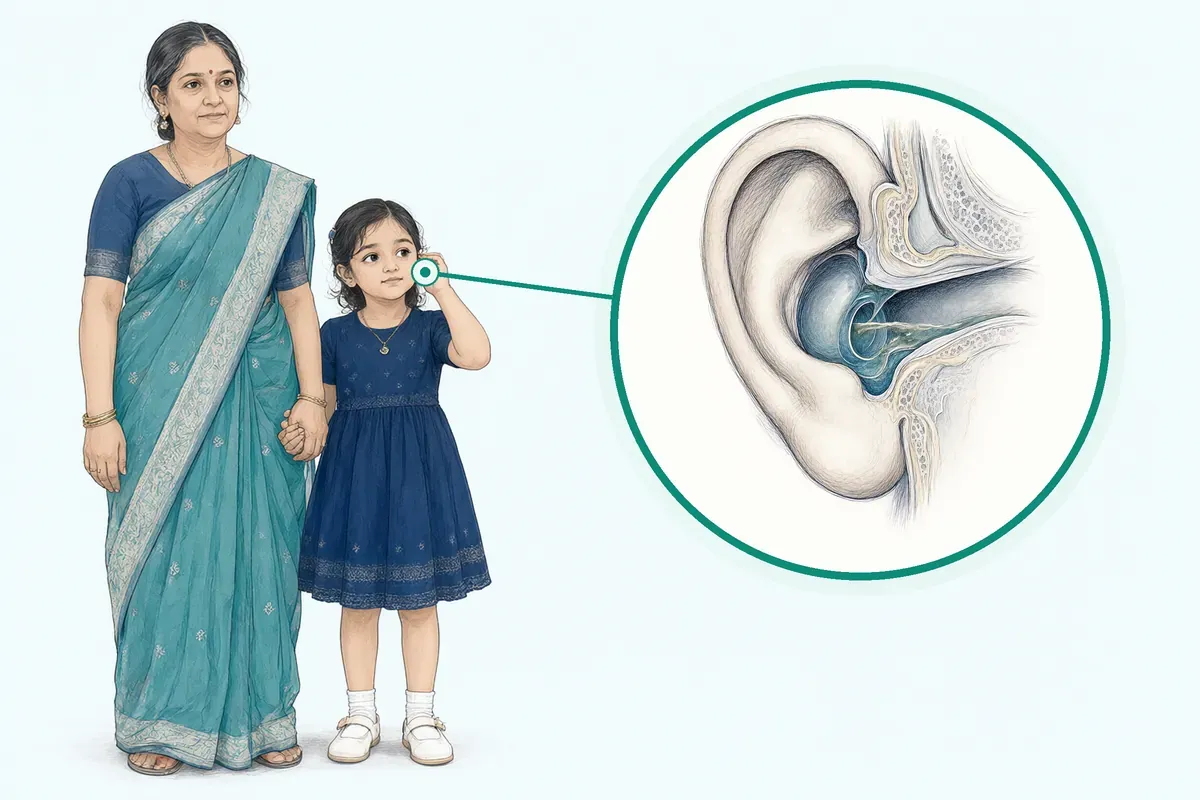
Repeated colds often lead to fluid buildup, earache, disturbed sleep, or mouth breathing. Parents worry about constant antibiotics and missed school days.
-
Recurring ear infections
Fluid in the middle ear causes repeated pain, fever, and irritability after common colds.
-
Enlarged adenoids and snoring
Swollen tissue behind the nose can block breathing passages and disrupt peaceful nighttime sleep.
-
Muffled hearing or delay
Persistent middle ear fluid may soften sounds and affect your child's attention in class.
Acute otitis media occurs as a complication of viral upper respiratory tract infection.
Why Jaipur Hospital
You worry about your child's discomfort, repeated medicines, disrupted nights, and the thought of surgery.
Your care plan
Your first steps with us
- 1 Book an OPD consultation with our ENT team
- 2 Review your child's ear, nose, and throat
- 3 Discuss treatment options with your surgeon
- 4 Follow your child's same-day recovery plan
How the evaluation and treatment are planned
Our team reviews your child's symptoms during an outpatient visit. Your surgeon will discuss appropriate diagnostic checks and treatment options tailored to your child's needs.
-
Microscopic ear examination
Your surgeon will discuss office otoscopy with suction clearance to examine the eardrum closely.
-
Flexible nasendoscopy
Your surgeon will discuss an awake airway and adenoid assessment using a gentle flexible scope.
-
Audiometry and tympanometry
Your surgeon will discuss hearing and middle ear pressure tests to evaluate fluid or hearing changes.
-
Sleep study referral
Your surgeon will discuss referral for an overnight study if obstructive sleep apnoea is suspected.
Why patients trust us
- 1991 Serving Jaipur for 35 years
- NABH Accredited hospital
- 2 ENT (Ear, Nose and Throat) consultants
- 24×7 Emergency, ICU and ambulance
- 25 Cashless schemes and insurers
Clinical research findings on paediatric ear and airway care
-
60%
In clinical trials, 60% of children recovered by 24 hours whether treated with antibiotics or placebo.
-
20 to 30 minutes
Adenoidectomy is completed on an outpatient basis and typically lasts 20 to 30 minutes.
-
1 in 14
For every 14 children treated with antibiotics, one experienced an adverse event such as vomiting, diarrhoea, or rash.
If it is left untreated
Untreated middle ear fluid or severe hearing issues may lead to speech and language development delays. Early intervention helps address these concerns.
What families typically experience after evaluation
With timely care and appropriate guidance, most children find steady relief and return to their regular childhood routines.
-
Quiet night sleep
Most children breathe more comfortably through the nose once airway obstruction or enlarged tissues are addressed.
-
Fewer missed school days
Families usually see fewer disruptions from recurrent ear pain after completing a tailored treatment plan.
-
Clearer sound awareness
Children typically respond better in classrooms and home settings once middle ear fluid issues resolve.

Frequently asked questions
Questions patients ask about paediatric ent
Which problems are assessed under paediatric ENT?
In short
Paediatric ENT at Jaipur Hospital assesses ear, nose, throat and airway conditions in children. Common problems include recurrent ear infections, glue ear, hearing loss, enlarged adenoids, tonsillitis, nasal obstruction, snoring, sleep apnoea, speech delay, and congenital anomalies of the ear or airway.
In detail
The service covers diagnosis and management of acute otitis media, chronic otitis media with effusion, sensorineural and conductive hearing loss, adenotonsillar hypertrophy, allergic rhinitis, sinusitis, foreign bodies, and airway obstruction.
Evidence shows that viral upper respiratory infections often trigger acute otitis media and that breastfeeding is protective in the first two years. Adenoidectomy is typically considered for children aged one to seven when medical treatment fails. Flexible nasendoscopy allows awake airway and adenoid assessment. Audiometry and tympanometry evaluate hearing and middle ear pressure. Sleep study referral is available for suspected obstructive sleep apnoea.
A common belief
Many parents think ENT only means ear infections or tonsils.
What actually happens
In reality, the clinic also evaluates hearing, breathing during sleep, and speech development, because these are often linked to the same underlying issues.
Your next step at Jaipur Hospital
If your child has any of these concerns, book a consultation at Jaipur Hospital. The visit lasts 15 to 30 minutes and is an outpatient appointment. Bring any previous hearing tests, imaging, or medication lists. Your surgeon will examine your child, discuss findings, and recommend next steps such as further tests or treatment planning.
How will the doctor decide which tests my child needs?
In short
The surgeon at Jaipur Hospital decides tests based on your child's symptoms, examination findings, and age. After history and clinical examination including microscopic ear examination and flexible nasendoscopy if needed, the surgeon may order audiometry, tympanometry, or refer for a sleep study. The choice follows clinical guidelines and the specific questions raised by the assessment.
In detail
The decision process is stepwise. For ear symptoms, otoscopy findings guide whether audiometry or tympanometry is needed to confirm middle ear effusion or hearing loss.
For snoring or apnoea, flexible nasendoscopy assesses adenoid size and airway; if obstruction is suspected, a sleep study referral is made. Evidence shows that drug-induced sleep endoscopy and cine MRI are used in selected cases to identify obstruction sites.
The guideline recommends a framework for clinical decision-making rather than a fixed protocol. Neonatal screening results and prior test reports also influence the plan.
A common belief
Some parents expect every test at the first visit.
What actually happens
The surgeon follows guidelines: tests are ordered only when the examination raises a specific question, avoiding unnecessary procedures for the child.
Your next step at Jaipur Hospital
No tests are done without explanation. The surgeon will discuss why each test is recommended, what it involves, and how the result will change management. Most tests are available in-house.
How soon should my child expect improvement after the chosen paediatric ENT treatment?
In short
The timeline for improvement depends on the specific paediatric ENT condition and the treatment chosen at Jaipur Hospital. For acute otitis media managed with observation, about 60 percent of children recover within 24 hours regardless of antibiotics. With antibiotics, pain reduction becomes modest after two to three days. For glue ear, observation for three months is standard before reassessment. Surgical recovery varies by procedure.
In detail
After adenoidectomy or adenotonsillectomy, most children resume normal activity within seven to ten days, though throat discomfort and earache may persist for up to two weeks. Nasal obstruction and snoring often improve within the first week.
For tympanostomy tube insertion, hearing improvement is usually immediate once middle ear fluid clears.
In obstructive sleep apnoea treated with rapid maxillary expansion, studies show apnoea-hypopnoea index reduction from a mean of 8.9 to 2.7 events per hour in short-term follow-up, with a healing rate of 70 percent based on AHI reduction.
For cochlear implantation in unilateral deafness, auditory rehabilitation progresses over months with regular mapping and therapy. The surgeon provides a procedure-specific recovery timeline during the consent discussion.
A common belief
Parents sometimes expect instant results from surgery or antibiotics.
What actually happens
Evidence shows antibiotics barely change the first 24 hours of an ear infection, and surgical healing takes days to weeks. The surgeon sets realistic expectations for each specific procedure.
Your next step at Jaipur Hospital
Follow-up appointments are scheduled to monitor progress, typically at one to two weeks after surgery and then as needed. Contact the hospital sooner if your child develops fever, significant bleeding, worsening pain, or any concerning symptom. Keep a symptom diary to share at review.
How does the term "paediatric ent" relate to paediatric ENT?
In short
The term "paediatric ent" is the American English spelling of "paediatric ENT". Both refer to the same medical specialty: ear, nose, and throat care for children. Jaipur Hospital uses the British English spelling "paediatric ENT" as standard in India, but the meaning and scope of the specialty are identical regardless of spelling.
In detail
Paediatric ENT covers conditions such as adenoid hypertrophy, tonsillitis, glue ear, hearing loss, obstructive sleep apnoea, and airway disorders in children. The American spelling "paediatric" drops the "ae" diphthong, while British and Indian English retain it as "paediatric".
This spelling difference applies across medical terminology — for example, "anaesthesia" versus "anaesthesia", "gynaecology" versus "gynaecology". The clinical guidelines, diagnostic approaches, and treatment protocols are the same internationally.
At Jaipur Hospital, the department is labelled Otolaryngology and provides paediatric ENT services including microscopic ear examination, flexible nasendoscopy, audiometry, tympanometry, and sleep study referral. The spelling variation does not indicate any difference in training, expertise, or services offered.
A common belief
People sometimes think the spelling signals a different qualification or standard.
What actually happens
It does not. The training, guidelines, and treatments are identical. Jaipur Hospital uses the Indian standard spelling "paediatric ENT" but recognises both terms.
Your next step at Jaipur Hospital
When searching for information or booking appointments, you may encounter both spellings. They refer to the same specialty. The consultation at Jaipur Hospital lasts 15 to 30 minutes and is an outpatient visit. The typical fee ranges from ₹800 to ₹2,000.
How can my child decide whether to seek advice about grommet insertion for glue ear?
In short
Your child should seek advice about grommet insertion for glue ear if hearing loss or fluid behind the eardrum lasts longer than three months. Jaipur Hospital offers outpatient assessment with microscopic ear examination and tympanometry to confirm the diagnosis. The consultation takes 15 to 30 minutes and costs between ₹800 and ₹2,000.
In detail
Glue ear is common in children and often clears on its own. Guidelines suggest a period of watchful waiting for up to three months because many cases resolve without surgery.
If fluid persists and causes hearing loss that affects speech, learning or behaviour, grommet insertion may be considered. At Jaipur Hospital, the surgeon uses otoscopy with suction clearance and tympanometry to measure middle ear pressure and confirm fluid. Audiometry checks the degree of hearing loss.
The evidence shows that early intervention prevents delays in speech and language development when hearing loss is persistent. The surgeon will explain the benefits and risks of grommets versus continued observation so you can decide together.
A common belief
Many parents think grommets are needed straight away.
What actually happens
Guidelines recommend waiting up to three months because most glue ear clears on its own. Surgery is considered only when hearing loss affects speech or learning.
Your next step at Jaipur Hospital
Book a paediatric ENT consultation at Jaipur Hospital if your child has had reduced hearing or ear infections for more than three months. Bring any previous hearing test reports.
The surgeon will examine the ears, perform tympanometry and audiometry if needed, and discuss whether grommet insertion is appropriate. Call 0141-2551500 or email [email protected] to schedule an appointment.
Could the problem affect hearing, balance, breathing, speech, or swallowing?
In short
Yes, paediatric ENT conditions can affect hearing, balance, breathing, speech and swallowing depending on the diagnosis. Jaipur Hospital evaluates all these functions during a paediatric ENT consultation. The 15 to 30 minute visit includes microscopic ear examination, flexible nasendoscopy, audiometry and tympanometry as needed.
In detail
Glue ear and recurrent infections mainly affect hearing and sometimes balance if the inner ear is involved. Enlarged adenoids or tonsils can block the airway, causing snoring, mouth breathing and sleep apnoea, which may affect growth and behaviour.
Hearing loss from any cause can delay speech and language development. Difficulty swallowing may point to throat infections, structural issues or neurological conditions.
At Jaipur Hospital, the surgeon checks each system: ear microscopy and tympanometry for hearing and middle ear pressure, nasendoscopy for adenoid size and airway patency, and clinical examination for swallowing.
The evidence shows that early identification of hearing loss prevents speech delays, and treating airway obstruction improves sleep and daytime function.
A common belief
Parents often treat each symptom separately.
What actually happens
A child who snores may also have hearing loss from glue ear. A child with unclear speech may have an airway issue. The ENT surgeon looks at the whole picture, not just one symptom.
Your next step at Jaipur Hospital
If your child has any of these symptoms, book a paediatric ENT consultation at Jaipur Hospital. The surgeon will assess hearing, breathing, speech and swallowing in one visit and explain which systems are involved. Call 0141-2551500 or email [email protected] to schedule an appointment.
Which symptoms should prompt my child to see a specialist?
In short
You should bring your child to a paediatric ENT specialist at Jaipur Hospital for persistent ear pain, repeated ear infections, hearing difficulty, speech delay, chronic nasal blockage, mouth breathing, loud snoring, pauses in breathing during sleep, frequent tonsillitis, or recurrent throat infections.
In detail
These symptoms often indicate conditions that benefit from early evaluation. Acute otitis media commonly follows viral upper respiratory infections. Persistent middle ear effusion can cause hearing loss that affects speech development. Enlarged adenoids and tonsils are a frequent cause of obstructive sleep apnoea in children.
Neonatal hearing screening enables early detection in many countries, but later onset hearing loss may present as speech delay or inattention. The guideline recommends assessment for children aged six months to twelve years with uncomplicated acute otitis media. Breastfeeding offers protection against ear infections in the first two years.
A common belief
Parents often wait for many infections before seeking help.
What actually happens
Evidence shows early intervention prevents speech and language delays, and that children under two with bilateral infection benefit most from timely assessment.
Your next step at Jaipur Hospital
If your child shows any of these signs, schedule a consultation at Jaipur Hospital. The appointment takes 15 to 30 minutes. Bring vaccination records, previous antibiotic prescriptions, and any hearing or sleep study reports. Your surgeon will decide if further tests such as audiometry, tympanometry, or flexible nasendoscopy are needed.
How will the results change my child's care plan?
In short
Test results at Jaipur Hospital directly shape your child's care plan. Audiometry and tympanometry confirm the type and degree of hearing loss, guiding decisions on medical treatment, ventilation tubes, or hearing devices. Sleep study results determine if adenotonsillectomy or other airway intervention is needed. Nasendoscopy findings show the level of obstruction.
In detail
Evidence supports test-guided management. Abnormal tympanometry at two to four weeks improves with antibiotics in some children, but not at three months. Hearing loss diagnosis triggers a search for aetiology and may lead to hearing devices or cochlear implants for profound unilateral loss.
For obstructive sleep apnoea, rapid maxillary expansion reduced apnoea-hypopnoea index from a mean of 8.9 to 2.7 per hour in short-term follow-up, with a 70% healing rate. Lingual tonsillectomy success ranges from 57% to 88%, supraglottoplasty from 58% to 72%. The guideline emphasises weighing benefits against harms. Your surgeon will explain what each result means for your child.
- For obstructive sleep apnoea, rapid maxillary expansion reduced apnoea-hypopnoea index from a mean of 8.9 to 2.7 per hour in short-term follow-up, with a 70% healing rate.
A common belief
Some families think tests are just for records.
What actually happens
In reality, each result changes the plan: a normal sleep study may avoid surgery; abnormal hearing tests may start early intervention to protect speech development.
Your next step at Jaipur Hospital
After tests are completed, a follow-up consultation will be scheduled to review results and finalise the plan. This may include medication changes, surgery scheduling, hearing aid fitting, or further referrals. The timeline depends on the condition.
What should my child do if symptoms persist or worsen after paediatric ENT treatment?
In short
If your child's symptoms persist or worsen after treatment, you should contact Jaipur Hospital promptly for reassessment. The surgeon will have given you specific guidance on expected recovery timelines and warning signs during the consultation. Do not wait if your child develops high fever, severe pain, difficulty breathing, bleeding, or any sudden change in condition.
In detail
For acute otitis media managed with observation, guidelines recommend re-evaluation if symptoms do not improve within 48 to 72 hours or if they worsen at any point. After antibiotic treatment, persistent pain or fever beyond two to three days warrants review.
Following grommet insertion, persistent ear discharge, hearing not improving, or grommet extrusion should be reported. After adenoidectomy or tonsillectomy, any fresh bleeding — especially more than spotting — difficulty swallowing fluids, or signs of dehydration need urgent attention.
For obstructive sleep apnoea, if snoring or apnoea episodes continue after the expected recovery period, a repeat sleep study or airway reassessment may be needed. For hearing rehabilitation, lack of progress in speech perception or device issues should be addressed early. The hospital's 24×7 emergency department is available for urgent concerns outside regular hours.
A common belief
Some families wait too long, hoping symptoms will settle.
What actually happens
Others rush to emergency for minor issues. The surgeon will give you a clear list of red flags versus normal recovery signs so you know exactly when to act and when to monitor at home.
Your next step at Jaipur Hospital
Keep the follow-up appointment schedule provided by your surgeon. If you are unsure whether a symptom is normal, call the hospital for advice. The consultation fee for a review visit typically ranges from ₹800 to ₹2,000.
How can my child decide whether to seek advice about airway foreign body removal?
In short
Your child needs immediate medical attention if they suddenly choke, cough, wheeze or have noisy breathing after putting something in their mouth or nose. Jaipur Hospital provides 24×7 emergency care for airway foreign body removal. Do not wait for a routine appointment; go straight to the emergency department.
In detail
Airway foreign bodies are a life-threatening emergency. Common objects include nuts, seeds, small toy parts or beads. Symptoms can start with sudden coughing or choking, then progress to wheezing, stridor or difficulty breathing.
Sometimes the object moves and symptoms seem to improve, but the risk remains. At Jaipur Hospital, the emergency team assesses the airway and may use flexible nasendoscopy or rigid bronchoscopy under anaesthesia to locate and remove the object.
The evidence shows that delayed removal can lead to pneumonia, airway damage or respiratory failure. Even if your child seems fine after a choking episode, a piece may remain. Prompt evaluation is essential.
A common belief
Some parents wait to see if the object comes out on its own.
What actually happens
That is dangerous. A foreign body can move deeper, cause infection or block the airway completely. Even if coughing stops, the object may still be there.
Your next step at Jaipur Hospital
If your child has inhaled or swallowed an object and has any breathing difficulty, cough or voice change, go to the Jaipur Hospital emergency department immediately. The hospital has 24×7 ambulance service, modular operation theatres and an intensive care unit. For non-emergency questions about airway safety, call 0141-2551500 to speak with the paediatric ENT team.
FAQ library
Questions and answers about paediatric ent
When you contact us
Consult an ENT surgeon in our OPD
Contact Jaipur Hospital to arrange an OPD assessment and discuss practical care options for your child.
- A consultation with an ENT surgeon in the OPD
- Your scans and reports reviewed, with tests done in-house if you need them (laboratory, X-ray and imaging)
- Your options explained in plain words, including whether you need surgery at all
- A cost estimate before you decide
- Help with cashless treatment under RGHS, MAA Yojana, CGHS and empanelled insurers and TPAs
- Follow-up visits after your treatment
Overview
Paediatric ENT: what to know
What paediatric ENT covers and how childhood conditions develop
- 1.86 per 1000 newborns Sensorineural hearing loss at birth
- 30% to 40% One-sided cases
Paediatric ENT addresses common medical problems that affect a child's ears, nose, throat, and airway.
These conditions include:
- Middle ear infections
- Enlarged adenoids or tonsils
- Glue ear
- Hearing difficulties
In growing children, these passages are closely connected. When an infection or swelling starts in one area, it easily spreads to another.
Acute otitis media is a sudden middle ear infection that occurs as a complication of a viral upper respiratory tract infection. During a common cold or respiratory illness, viruses and bacteria interact in the breathing passages. Respiratory syncytial virus is the most commonly detected virus linked with these ear infections.
Swelling in the back of the nose can block the passages that drain the middle ear, causing fluid and pressure to build up behind the eardrum.
Adenoids are small pads of immune tissue located high in the throat behind the nose. They play an active role in immunity during infancy, so surgery on them is rarely performed in children under one year of age. Adenoids naturally begin shrinking around age seven and usually disappear by the teenage years. However, when they become swollen or chronically infected, they can block nasal airflow and disturb sleep.
Hearing problems can also be present from birth. Congenital hearing loss is one of the most prevalent chronic conditions in children. In developed countries, the estimated incidence of sensorineural hearing impairment of more than 40 dB HL at birth is 1.86 per 1000 newborns. About 30% to 40% of these cases affect only one ear.
At Jaipur Hospital, our surgical team evaluates each child carefully to understand how their symptoms developed and to plan the right support.
Symptoms of paediatric ear, nose, and throat problems
- Ear pain with discharge (otorrhoea)
- High fever that does not settle
- Sudden worsening of hearing
Children with ear, nose, or throat problems show signs that vary with age.
An acute middle ear infection often brings:
- Sudden ear pain
- Irritability
- Fever
- Fluid draining from the ear canal
In research trials assessing ear infections, symptom scores were measured to track recovery, looking at pain, fussiness, and fever.
When a child suffers from enlarged adenoids or airway narrowing, you may notice persistent mouth breathing, loud snoring, and restless sleep. Research shows that children with narrow hard palates and obstructive sleep apnoea experience frequent pauses in breathing during sleep. These breathing interruptions disturb sleep patterns and daytime energy.
Hearing impairment can be harder to spot in its early stages. Very young children with single-sided deafness often do not exhibit obvious language and cognitive delays. Parents and teachers may only notice later that the child turns one ear toward sounds or struggles to follow conversations in noisy rooms.
Certain warning signs require urgent medical attention on the same day. If your child develops ear pain accompanied by ear discharge, known as otorrhoea, you should seek immediate evaluation. Swelling, redness, or tenderness directly behind the ear, high fever that does not settle, or sudden worsening of hearing should also be checked promptly at the hospital OPD or emergency department.
Causes and who is at higher risk of paediatric ENT disorders
- Viral and bacterial mix
- Respiratory viruses and bacteria act together to trigger ear infections.
- Daycare exposure
- Three or more children for 10+ hours a week raises infection risk.
- Congenital infections
- Cytomegalovirus is a common risk factor for hearing loss from birth.
Childhood ear infections and hearing disorders arise from a mix of environmental, viral, and genetic factors. Acute otitis media is triggered by common breathing infections. A symptomatic upper respiratory tract infection, rather than an infection without symptoms, is crucial in triggering acute middle ear inflammation. Both respiratory viruses and bacterial otopathogens play active roles together.
However, research shows it is still unclear whether viral load plays an important role in how acute otitis media develops.
Certain daily settings increase a child's risk of persistent or failing infections. In clinical studies, clinical-failure rates were greater among children who were exposed to three or more children for 10 or more hours per week, such as in nursery or daycare settings.
Children who have an active infection in both ears also face a higher risk of treatment failure compared to those with an infection in only one ear.
Hearing loss present from birth has distinct root causes depending on the setting. Congenital hearing loss might be attributed to environmental and prenatal factors, which prevail in low-income settings. Congenital infections, particularly cytomegalovirus infection, are a common risk factor for hearing loss. In contrast, genetic causes probably account for the majority of cases in developed countries.
Genetic mutations can affect any component of the hearing pathway, especially inner ear fluid balance and the conversion of sound vibrations into nerve signals.
Infant feeding habits also influence the risk of middle ear infections. Exclusive breastfeeding for the first 6 months of life is associated with the greatest protection against acute otitis media in the first 2 years. Any form of breastfeeding provides protection during these first 2 years. More breastfeeding compared to less breastfeeding is consistently linked with lower infection rates. After 2 years of age, there is no evidence that breastfeeding continues to protect against middle ear infections.
How paediatric ENT conditions are diagnosed: examination and tests
- Microscopic ear examination Magnified view of eardrum with suction clearance
- Flexible nasendoscopy Awake camera check of adenoids and nasal airway
- Audiometry and tympanometry Hearing and middle ear pressure tests
- Sleep study referral Overnight check for obstructive sleep apnoea
Diagnosing a child's ear, nose, or throat condition involves a step-by-step examination tailored to the child's comfort. Clinical practice guidelines stress that a specific, clear definition must be applied to identify conditions like acute otitis media accurately before deciding on treatment.
A diagnosis of hearing loss is usually followed by a search for an underlying cause to guide medical care and family counselling. In many countries, newborn hearing screening programmes enable early detection soon after birth.
Your surgeon will recommend specific diagnostic options based on your child's age and complaints:
- Microscopic ear examination: Office otoscopy with suction clearance allows direct, magnified viewing of the eardrum and removal of discharge or wax.
- Flexible nasendoscopy: An awake assessment of the adenoids and nasal airway using a thin, flexible camera passed gently through the nose.
- Audiometry and tympanometry: Hearing assessments and middle ear pressure tests that detect fluid collection behind the eardrum.
- Sleep study referral: An overnight evaluation for children who show signs of obstructive sleep apnoea.
In complex airway or sleep obstruction cases, specialised diagnostic techniques may be used to identify where the blockage occurs. In clinical research studies, drug-induced sleep endoscopy was used to identify airway obstruction sites in 11 of 24 articles. Cine magnetic resonance imaging was used in 3 of 24 articles, and alternative imaging methods were used in another 3 articles. Your surgeon will advise which test is appropriate for your child.
Non-surgical treatment options and when surgery is advised
- 60% with or without antibiotics Recovery at 24 hours
- 1 to 7 years Surgery age range
Most childhood ear infections can be managed without surgery. Clinical guidelines emphasise proper pain relief and note the limited role of routine antibiotics. In high-income countries, most cases of acute otitis media resolve on their own without complications. In combined trial data, 60% of children recovered within 24 hours whether they received an antibiotic or a dummy medicine.
Antibiotics did not reduce pain at 24 hours. At 2 to 3 days, almost a third fewer children had lingering pain with antibiotics, and at 4 to 7 days, a quarter fewer had pain. Two-thirds fewer had pain at 10 to 12 days compared with placebo.
The possible benefits of antibiotics must be weighed against their side effects. For every 14 children treated with antibiotics in trials, one child experienced an adverse event such as vomiting, diarrhoea, or a skin rash that would not have happened otherwise. Immediate antibiotic treatment showed a substantial increase in these side effects compared to watchful observation.
Severe complications were rare and did not differ between children taking antibiotics and those receiving placebo or observation. For most children with mild illness, waiting under observation is a recognised approach. Antibiotics are most beneficial in children under two years of age who have infections in both ears, or who have ear discharge.
When antibiotics are required, studies showed that a 5-day course had higher failure rates and less symptom reduction than a 10-day course.
Non-surgical prevention also includes standard childhood immunisations. Vaccines against influenza and pneumococcal bacteria led to a significant drop in ear-infection healthcare visits over a ten-year monitoring period. Other non-surgical treatments include specific antimicrobial therapies and non-implantable hearing aids.
Surgery is advised when medical management does not resolve the condition. Doctors typically recommend adenoidectomy surgery for children between 1 and 7 years of age when persistent challenges fail to respond to standard care. Surgery becomes necessary when a child experiences recurring ear infections that do not clear with antibiotics.
Adenoidectomy is completed on an outpatient basis through the open mouth with no visible external scars. The procedure is relatively quick, typically lasting 20 to 30 minutes. It is often combined with tonsil removal, known as an adenotonsillectomy. Surgeons use tools like a curette or methods such as electrocautery, radiofrequency energy, or laser ablation to remove tissue.
Other surgical options include rapid maxillary expansion for narrow palates, which reduced apnoea scores in studies, as well as lingual tonsillectomy and supraglottoplasty. For profound sensorineural hearing loss in one or both ears, cochlear implants are an established surgical option to support speech development. Your surgeon will advise which management path suits your child.
Your first visit and tests for paediatric ENT at Jaipur Hospital
- History and questions Doctor asks about symptoms, past illnesses, medicines, and allergies.
- Bring past records Medical reports, audiograms, and imaging films help the assessment.
- Examination and tests Ear, nose, throat check; microscopic exam, nasendoscopy, audiometry, or sleep study referral as needed.
Your first visit to the Otolaryngology department at Jaipur Hospital usually takes 15 to 30 minutes. The doctor will ask about your child's symptoms, such as ear pain, hearing difficulty, snoring, or frequent colds. They will also ask about past illnesses, medicines your child takes, and any allergies.
Bring any previous:
- Medical reports
- Audiograms
- Imaging films
The doctor will examine your child's ears, nose, and throat. A microscopic ear examination with suction clearance may be done to get a clear view of the eardrum and remove any wax or discharge. Flexible nasendoscopy can be performed while your child is awake to assess the adenoids and airway.
Audiometry and tympanometry are used to check hearing levels and middle ear pressure. If obstructive sleep apnoea is suspected, the doctor may refer your child for a sleep study. No anaesthesia is needed for these outpatient assessments.
How paediatric ENT treatment works at Jaipur Hospital
Treatment depends on the condition found during the assessment. For glue ear or recurrent ear infections, the doctor may suggest a period of watchful waiting, as many cases of acute otitis media resolve spontaneously without complications.
Antibiotics may be considered for children under two years with infection in both ears or with ear discharge, as they are most useful in these groups. For other children with mild disease, an expectant observational approach is often justified. Pain management is a priority, and the doctor will advise on suitable analgesia.
If fluid persists or infections recur despite medical management, a referral for grommet insertion may be discussed. For enlarged adenoids causing persistent nasal blockage, recurrent ear infections, or sleep-disordered breathing, adenoidectomy may be recommended. This operation is typically considered for children between one and seven years old, as adenoids naturally shrink after this age.
Adenoidectomy is often combined with tonsillectomy (adenotonsillectomy) if the tonsils are also enlarged. Surgical techniques include curette removal, electrocautery, radiofrequency energy, or laser ablation; your surgeon will advise which method suits your child. For hearing loss, options include hearing aids or implantable devices, and the doctor will guide you based on the type and severity of loss.
If a structural airway issue is identified, procedures such as supraglottoplasty or lingual tonsillectomy may be considered. All surgical procedures are performed in the modular operation theatres at Jaipur Hospital under general anaesthesia by the surgical team.
Risks and possible complications of paediatric ENT treatments
- Surgery general risks
- Bleeding, infection, and reactions to anaesthesia.
- Velopharyngeal insufficiency
- Air escaping through the nose during speech, usually temporary.
- Adenoid regrowth
- Tissue can grow back, especially in younger children.
- Bleeding after tonsillectomy
- Higher risk in the first two weeks when combined with adenoidectomy.
Medical management with antibiotics carries a risk of adverse events such as vomiting, diarrhoea, or rash. In studies, these occurred more often in children taking antibiotics compared with placebo, with one additional child affected for every 14 treated. Immediate antibiotics were associated with a substantially increased risk of these side effects compared with expectant observation.
Severe complications from acute otitis media itself are rare and did not differ between children treated with antibiotics and those given placebo. For surgical procedures like adenoidectomy, general risks include bleeding, infection, and reactions to anaesthesia. Specific risks include velopharyngeal insufficiency (air escaping through the nose during speech), which is usually temporary.
Adenoid tissue can occasionally regrow, especially in younger children. When adenoidectomy is combined with tonsillectomy, the risk of post-operative bleeding is higher, typically within the first two weeks. Your surgeon will discuss the risks specific to your child's procedure and health before you give consent.
Recovery and aftercare for paediatric ENT treatments
After an outpatient consultation or diagnostic tests, your child can go home straight away and resume normal activities. If your child has an operation such as adenoidectomy, it is usually done as a day-case procedure. The operation itself typically lasts 20 to 30 minutes. Your child will be monitored in the recovery area until fully awake.
Most children go home the same day once they are drinking and comfortable. You will be given advice on pain relief, usually paracetamol or ibuprofen, and sometimes a short course of antibiotics. Encourage your child to drink plenty of fluids. A soft diet is recommended for a few days.
Your child should rest at home for about a week and avoid crowds or people with infections to reduce the risk of catching a cold. Avoid forceful nose blowing. A follow-up appointment is usually arranged for two to three weeks after surgery.
Contact Jaipur Hospital on 0141-2551500 or 0141-2554139 if your child has bright red bleeding from the nose or mouth, a high fever, severe pain not relieved by medicines, or is not drinking enough fluids.
Results of paediatric ENT treatments in studies
In studies of acute otitis media, about 60% of children recovered within 24 hours whether they received antibiotics or placebo. Antibiotics provided a modest reduction in pain at two to three days (about one third fewer children with pain) and at four to seven days (about a quarter fewer).
By 10 to 12 days, two thirds fewer children had pain with antibiotics compared with placebo. Antibiotics reduced abnormal middle ear pressure findings at two to four weeks and halved the risk of infection in the opposite ear. However, they did not reduce abnormal findings at three months or late recurrences.
For adenoidectomy in obstructive sleep apnoea, studies using rapid maxillary expansion (a related airway treatment) showed the apnoea-hypopnoea index decreased from a mean of 8.9 to 2.7 events per hour in short-term follow-up, with a healing rate of 70% based on this index reduction. In longer follow-up over three years, the index reduced from 7.1 to 1.5.
Improvement in oxygen saturation is consistently seen in the short term. For unilateral hearing loss, early intervention prevents delays in speech and language development. Cochlear implants are an option for profound single-sided deafness. Breastfeeding for the first six months offers the greatest protection against acute otitis media in the first two years of life. Any breastfeeding is protective, but the effect is not seen after two years of age.
Cost and insurance for paediatric ENT at Jaipur Hospital
A paediatric ENT consultation at Jaipur Hospital typically costs between ₹800 and ₹2,000. The final amount depends on the tests needed, such as audiometry, tympanometry, or flexible nasendoscopy.
If surgery is required, the cost varies based on the type of procedure, the choice of hospital and location, the surgeon's expertise, the anaesthesia required, and whether additional procedures like tonsillectomy or FESS are done at the same time. Post-surgical medications and follow-up consultations also add to the total expense.
Jaipur Hospital is a NABH-accredited multispeciality hospital established in February 1991. It accepts patients under RGHS, MAA Yojana, CGHS, and a panel of private insurers and TPAs. The hospital has a 24×7 emergency department, in-house pharmacy, diagnostic laboratory, and modular operation theatres. For an estimate for a specific procedure, please ask at the OPD reception or call 0141-2551500.