
Understanding & candidacy · Fibroids and Uterine Conditions
Fibroids and pregnancy: fertility, risks and delivery planning
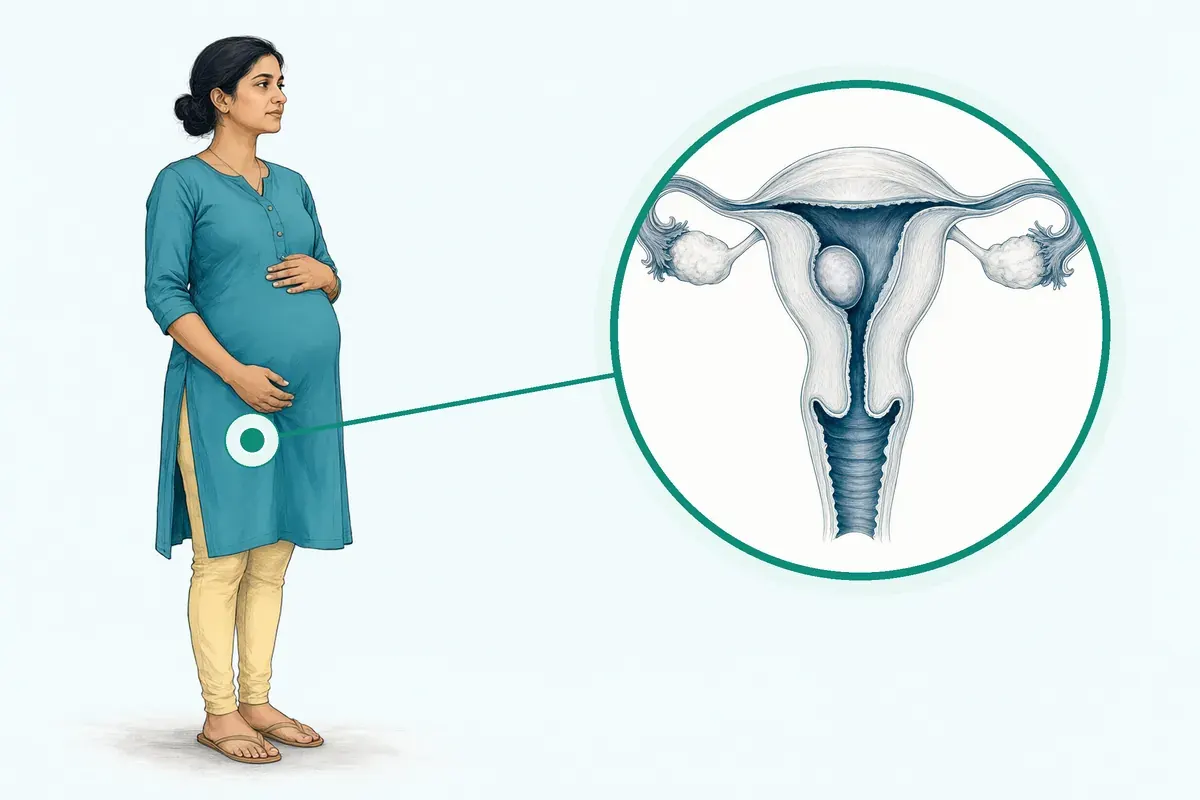
Many women with fibroids conceive and have healthy pregnancies. The size and place of the fibroid inside the womb matter most for fertility and birth risks. Your doctor will guide you on whether treatment before pregnancy is needed.
- Up to 70% Women under 50 with fibroids
- 20 to 30% Women who get symptoms
Can fibroids stop you getting pregnant?
- Submucosal fibroids
- Grow into the womb cavity and distort the space for embryo implantation
- Very large fibroids
- May block a fallopian tube or change the shape of the uterine cavity
- Fibroids acting like a contraceptive device
- If an embryo attaches over a fibroid, the placenta may not develop properly
Most women with fibroids get pregnant without difficulty. However, the size and location of the fibroid matter. Submucosal fibroids, which grow into the cavity of the womb, can distort the space where an embryo needs to implant.
Very large fibroids may block a fallopian tube or change the shape of the uterine cavity, making it harder for sperm to reach the egg or for an embryo to settle. Fibroids can also act like a contraceptive device; if an embryo tries to attach over a fibroid, the placenta may not develop properly.
This can lead to infertility or early pregnancy loss. They may suggest an ultrasound or hysteroscopy to check the inside of the womb.
Fibroids and miscarriage risk
- Submucosal fibroids
- Strongest link to miscarriage because they affect the womb lining
- Intramural fibroids
- Within the muscle wall, smaller effect on miscarriage risk unless very large
- Subserosal fibroids
- On the outer surface, smaller effect on miscarriage risk unless very large
Fibroids are linked to a higher chance of miscarriage, especially when they bulge into the uterine cavity. The presence of a fibroid can stop the placenta from forming correctly, which may result in pregnancy loss. Submucosal fibroids carry the strongest association with miscarriage because they directly affect the lining of the womb.
Intramural fibroids (within the muscle wall) and subserosal fibroids (on the outer surface) have a smaller effect on miscarriage risk unless they are very large. Not every woman with fibroids will miscarry; many go on to have a healthy baby. Your doctor will consider the number, size, and position of your fibroids when discussing your personal risk.
Do fibroids grow and cause pain during pregnancy?
Pregnancy hormones, especially oestrogen, can cause existing fibroids to enlarge, most often in the first trimester. This growth may lead to pelvic pain, pressure, or a feeling of heaviness. A specific complication called red degeneration can happen when a fibroid outgrows its blood supply; it causes sudden, severe abdominal pain, sometimes with nausea or fever.
Fibroids on a stalk (pedunculated) can twist, which also causes acute pain, nausea, or fever. Pain from fibroids during pregnancy is usually managed with rest and simple analgesics that are safe in pregnancy. If you experience sudden severe pain, fever, or bleeding, go to the nearest emergency department or call 108.
Risks to the baby and preterm labour
- Preterm labour
- Higher chance of early delivery
- Limited space for baby
- Large fibroids may restrict foetal growth
- Placental problems
- Placenta praevia or placental abruption
- Breech or transverse position
- Fibroid may block the head-down position
Fibroids are associated with a higher chance of preterm labour and early delivery. Large fibroids or those that distort the uterine cavity may limit the space for the baby to grow, which can affect foetal growth. They may also increase the risk of placental problems, such as the placenta lying low (placenta praevia) or separating early (placental abruption).
The baby may lie in a breech or transverse position if a fibroid blocks the head-down position. These risks depend on the fibroid's size, number, and exact location. Many women with fibroids still have a normal pregnancy and a healthy baby. Your care team will monitor the pregnancy closely with extra scans if needed.
Is a caesarean section automatic with fibroids?
- Fibroid blocks birth canal
- Low fibroid or near cervix prevents baby's head from engaging
- Previous myomectomy scar
- Uterine scar could weaken and rupture during contractions
Having fibroids does not mean you will automatically need a caesarean section. The decision depends on the size and position of the fibroids and whether they block the birth canal or make it unsafe for the baby to pass through.
A fibroid low in the uterus or near the cervix can prevent the baby's head from engaging or cause obstruction during labour. If you have had a myomectomy in the past, your doctor may advise a planned caesarean because the scar on the uterus could weaken and rupture during strong contractions. Many women with fibroids still have a vaginal birth. Your care team will assess the fibroids by scan in late pregnancy and discuss the safest route for you.
Should you remove fibroids before trying to conceive?
- Assess need for surgery Consider when fibroids distort the womb cavity, are large, or linked to repeated miscarriages
- Choose surgical approach Hysteroscopic for cavity fibroids, keyhole or open for wall or surface fibroids
- Weigh benefits and risks Small risk of internal scarring; caesarean may be recommended later
- Plan recovery time Typical recovery takes 2 to 6 weeks
Surgery to remove fibroids (myomectomy) is usually considered when fibroids distort the inside of the womb, are large, or have been linked to repeated miscarriages or failed fertility treatment. Submucosal fibroids that bulge into the cavity are the type most often removed before pregnancy because they can stop an embryo from implanting or growing.
The operation can be done through a telescope inserted via the cervix (hysteroscopic myomectomy) for fibroids inside the cavity, or through keyhole or open surgery for fibroids in the wall or on the surface. Myomectomy carries a small risk of internal scarring that could itself affect fertility, and if you do conceive afterwards, a caesarean birth may be recommended.
Your doctor will weigh the benefits against the risks and advise on the right timing. Recovery typically takes 2 to 6 weeks. The typical cost range in India is ₹50,000 to ₹2,00,000 depending on the approach and hospital stay.
When to see your doctor
Do
- Heavy vaginal bleeding
- Fever with abdominal tenderness
- Regular painful contractions before 37 weeks
Contact your doctor or go to the nearest emergency department straight away if you are pregnant and have severe abdominal pain that does not settle, heavy vaginal bleeding, fever with abdominal tenderness, or regular painful contractions before 37 weeks. These can be signs of fibroid complications such as twisting or red degeneration, or of preterm labour.
If you are planning a pregnancy and know you have fibroids, book a pre-conception check-up to discuss their size, location and whether any treatment is advised before you try to conceive.
Ask your doctor:
- Do my fibroids distort the womb cavity?
- Is myomectomy recommended in my case?
- What are the risks and benefits of surgery versus waiting?
- How will we monitor the fibroids during pregnancy?
If you have had a myomectomy, tell your maternity team early so they can plan the safest delivery. Call 108 for an ambulance if you need urgent help.
If you have had a myomectomy, tell your maternity team early so they can plan the safest delivery.