

General & Laparoscopic Surgery · Jaipur Hospital
Gallbladder Cancer Surgery in Jaipur
You have gallbladder cancer. We assess, plan and operate with a specialist team.
- Serving Jaipur since 1991 (35 years)
- NABH accredited
- 24×7 emergency & ICU
- Cashless: MAA Yojana + 32 insurers
- Operation time
- 3 to 5 hours
- Anaesthesia
- General anaesthesia
- Recovery
- Back to desk work in 4 to 6 weeks
- Price
- ₹1,50,000 to ₹3,50,000typical range in India; ask us for an estimate
Cancer found late, options unclear
You have gallbladder cancer and need a clear way forward
Gallbladder cancer is often found late, sometimes after surgery for stones. You may face jaundice, a lump, weight loss or pain. The next steps can feel overwhelming.
-
Found by chance
Many cancers are detected only after routine gallbladder removal for stones.
-
Silent spread
The disease often spreads before any symptoms appear, making early detection hard.
-
Jaundice or lump
Yellow skin or a mass under the right ribs can mean the tumour has grown into the bile duct or liver.
-
Advanced at diagnosis
Only about one in ten patients has resectable disease when first seen.
The gallbladder lacks a serosal layer next to the liver, so tumours invade the liver and spread early.
Why Jaipur Hospital
You worry about how long you have, whether surgery can help, and the cost and time away from work for your family.
Your care plan
Your first steps with us
- 1 Call or visit OPD for surgeon consultation
- 2 Review scans and reports, arrange any needed tests
- 3 Undergo radical cholecystectomy with lymph node dissection
- 4 Recover in hospital 5 to 8 nights, then follow-up at home
Insurance and schemes
How cashless works
Cashless treatment under MAA Yojana and with 32 insurers.
-
Tell us when you book
Say you are insured or have a scheme card, and send a photo of the card on WhatsApp so our insurance desk can check it in advance.
-
We get the approval
Once your doctor advises admission, the insurance desk sends the pre-authorisation request to your insurer or TPA; for planned surgery, approval can come before you are admitted.
-
Settled at discharge
The approved amount is settled between the insurer and the hospital; you pay only what the policy does not cover.
How the operation is done
Under general anaesthesia, the surgeon removes the gallbladder, a portion of the liver bed, and regional lymph nodes. The procedure takes 3 to 5 hours. Hospital stay is usually 5 to 8 nights.
-
Radical Cholecystectomy
Gallbladder removal with liver bed resection and lymphadenectomy for potentially curable disease.
-
Palliative Biliary Bypass
Bypass for unresectable disease causing obstruction to relieve jaundice and improve comfort.
Why patients trust us
- 1991 Serving Jaipur for 35 years
- NABH Accredited hospital
- 3 General & Laparoscopic Surgery consultants
- 24×7 Emergency, ICU and ambulance
- 32 Cashless insurers, plus MAA Yojana
What research shows about this treatment
-
5-year survival over 95%
For T1a tumours treated with simple cholecystectomy, five-year survival exceeds 95 percent.
-
5-year survival 70% to 0%
Survival falls from 70 percent with subserosal invasion to zero percent when adjacent organs are involved.
-
Median survival 2 to 4 months
In unresectable disease, median survival is two to four months and one-year survival is below five percent.
If it is left untreated
Without surgery, the cancer grows into the liver and bile ducts, causing worsening jaundice, pain and weight loss. Most unresectable patients survive only a few months.
Life after treatment
Most people return to desk work in four to six weeks. Long-term outlook depends on the stage found at surgery. Regular follow-up checks for recurrence.
-
Back to routine
Most people resume desk work within four to six weeks after discharge.
-
Digestion adjusts
The liver still makes bile; most people eat a normal diet after a short adjustment.
-
Ongoing checks
Regular scans and blood tests monitor for any recurrence, especially in the bile duct.
-
Adjuvant therapy
For advanced stages, chemotherapy or chemoradiation may be advised after surgery.
Meet the team
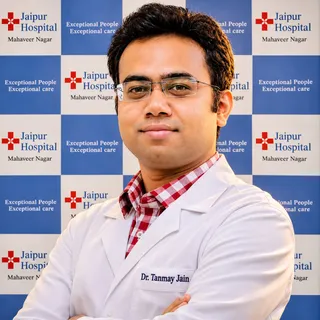
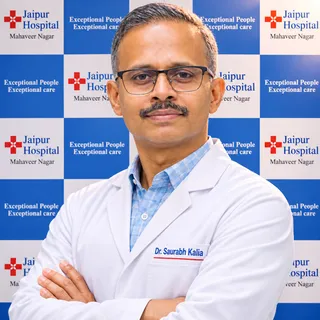
Your general & laparoscopic surgery doctors
Explore our general and laparoscopic surgery department in Jaipur: every treatment, the doctors and what to expect at your visit.

Frequently asked questions
Questions patients ask about gallbladder cancer surgery
What does gallbladder cancer surgery involve?
In short
Gallbladder cancer surgery at Jaipur Hospital is a radical cholecystectomy with lymph node dissection. The operation removes the gallbladder, a portion of the liver bed, and regional lymph nodes. It takes three to five hours under general anaesthesia. A typical hospital stay is five to eight nights. The goal is complete removal of the tumour with clear margins.
In detail
The procedure follows standard oncological principles. For tumours staged T1b or higher, an extended cholecystectomy is performed. This includes en bloc resection of the gallbladder bed with a two to three centimetre liver wedge or segment IVb and V resection.
A systematic lymphadenectomy clears nodes along the common hepatic artery, hepatoduodenal ligament, and retropancreatic area. At least six nodes are retrieved for accurate staging. If the cystic duct margin is positive, extrahepatic bile duct resection is added to achieve an R0 resection. For unresectable disease causing obstruction, a palliative biliary bypass may be done to relieve jaundice.
A common belief
A simple cholecystectomy only takes out the gallbladder.
What actually happens
That is enough for very early T1a tumours with clear margins. For anything deeper, cancer cells may remain in the liver bed or nodes, so the wider resection is standard.
Your next step at Jaipur Hospital
Your surgeon will review imaging and histopathology to plan the exact extent of surgery. Preoperative workup includes contrast-enhanced CT or MRI and often a staging laparoscopy. After discharge, you can expect to return to desk work in four to six weeks.
Which tests and scans do I need before gallbladder cancer surgery?
In short
Before gallbladder cancer surgery at Jaipur Hospital, you need contrast-enhanced CT or MRI of the abdomen and pelvis for staging. Blood tests include liver function, kidney function, complete blood count, coagulation profile, and tumour markers such as CA 19-9 and CEA. A staging laparoscopy is often performed to detect peritoneal or liver surface metastases that imaging misses.
In detail
High-resolution cross-sectional imaging is essential to define the primary tumour extent, vascular involvement, and nodal status. CECT and MRI are complementary; MRI with MRCP gives better bile duct detail.
PET-CT may detect occult distant metastases but has false positives from inflammation, so it is usually done four to six weeks after any prior surgery. Staging laparoscopy has high accuracy for peritoneal disease and avoids a non-therapeutic laparotomy in about twenty-three percent of patients.
Histopathological confirmation is mandatory before neoadjuvant therapy for unresectable disease. For resectable tumours, a biopsy is not routinely needed and carries a risk of tumour spillage. The surgeon reviews all reports in a multidisciplinary meeting before finalising the operative plan.
A common belief
An ultrasound alone is not enough for surgery planning.
What actually happens
It misses vascular invasion and small metastases. PET-CT is not routine; it is used selectively and only after a gap from any recent surgery to avoid false positives from inflammation.
Your next step at Jaipur Hospital
Arrange the scans and blood work as soon as surgery is discussed. The staging laparoscopy is scheduled as a short procedure under anaesthesia. Results are typically available within a few days.
How painful is gallbladder cancer surgery and the early recovery?
In short
Gallbladder cancer surgery is a major operation, so you will have pain at the incision site and in the abdomen for the first few days. At Jaipur Hospital, the anaesthesia and surgical team use a planned pain relief protocol including epidural or patient-controlled analgesia, followed by oral medicines. Most patients find the pain manageable and it decreases steadily over the first week.
In detail
The operation takes three to five hours and involves an upper abdominal incision, liver bed resection, and lymph node dissection. Pain scores are highest in the first forty-eight hours. Epidural analgesia or intravenous patient-controlled analgesia is standard for the first two to three days.
After that, oral opioids and paracetamol are used. You will be encouraged to sit up and walk from day one to aid lung expansion and bowel recovery. Shoulder tip pain from diaphragmatic irritation after liver resection is common and responds to simple analgesics.
The nursing team assesses pain regularly and adjusts medication. By discharge at five to eight days, most patients are on oral tablets only.
A common belief
Some patients expect no pain or think they should tough it out.
What actually happens
Good pain control lets you breathe deeply, cough, and walk early, which prevents pneumonia and clots. Ask for medicine on time rather than waiting for the pain to build up.
Your next step at Jaipur Hospital
Take pain medicines on schedule, not only when pain is severe. Use the spirometer as taught to prevent chest infection. Report any sudden increase in pain, fever, or wound leakage.
How long does recovery usually take after gallbladder cancer surgery?
In short
After radical cholecystectomy at Jaipur Hospital, most people stay in hospital for five to eight nights. You can usually return to desk work in four to six weeks. Full recovery, including energy levels and comfortable physical activity, may take eight to twelve weeks. The exact timeline depends on the extent of liver resection, whether the surgery was open or laparoscopic, and your overall health.
In detail
The operation lasts three to five hours under general anaesthesia. If a wedge resection or segmentectomy of the liver (segments IVb and V) is done, the liver needs time to regenerate. Laparoscopic surgery typically allows earlier mobilisation and less wound pain than an open incision.
Drains are removed once output falls below a set threshold, usually before discharge. Fatigue is common for several weeks because of the physiological stress of major abdominal surgery and possible adjuvant therapy.
Lymph node dissection around the portal structures can cause temporary swelling or discomfort in the right upper abdomen.
Patients who need adjuvant chemotherapy or chemoradiation after R0 resection for T2-4 N1 disease will have a longer overall recovery period as those treatments start once wounds have healed.
A common belief
Patients often expect to bounce back in two weeks like after a simple gallstone operation.
What actually happens
Radical cholecystectomy removes part of the liver and lymph nodes, so fatigue lasts longer. Adjuvant chemotherapy, if needed, adds further recovery time.
Your next step at Jaipur Hospital
Plan for one to two weeks of limited activity at home after discharge. Avoid heavy lifting (more than 5 kg) for six weeks. Walking is encouraged from day one. A follow-up visit is scheduled at two weeks.
If you develop fever, wound redness, increasing pain, jaundice or persistent vomiting, contact the hospital sooner. To book a consultation at Jaipur Hospital, call 0141-2551500 or 7414 001 001.
Do gallstones without symptoms need treatment?
In short
Gallstones without symptoms (silent gallstones) usually do not need treatment. The risk of developing gallbladder cancer from silent stones is low, and prophylactic cholecystectomy is not routinely recommended unless specific high-risk features are present. Jaipur Hospital follows guidelines that reserve surgery for symptomatic stones or incidental findings that warrant further evaluation.
In detail
Evidence from high-incidence regions shows that long-standing chronic inflammation from gallstones is a driver of gallbladder cancer, but the absolute risk for an individual with silent stones remains small.
Prophylactic cholecystectomy is considered only after correlating with the epidemiological profile of the area and identifying features such as a porcelain gallbladder, gallbladder wall thickening over 3 cm, a polyp larger than 1 cm, or anomalous pancreaticobiliary duct junction.
In the Indo-Gangetic belt where gallbladder cancer rates are higher, the threshold for investigation may be lower, but routine removal of asymptomatic stones is not supported by data. Most gallbladder cancers are discovered incidentally during cholecystectomy for symptomatic stones, not through screening of silent stones.
A common belief
Many people believe all stones should be removed to prevent cancer.
What actually happens
Studies show prophylactic cholecystectomy for silent stones does not improve survival in the general population. Even in high-incidence areas like the Indo-Gangetic belt, surgery is guided by gallbladder wall changes or polyps, not by stones alone.
Your next step at Jaipur Hospital
If you have silent gallstones found on an ultrasound done for another reason, your doctor will assess the gallbladder wall, stone size and any polyp. No treatment is needed if all features are benign. Annual ultrasound surveillance may be advised in selected high-risk cases. To book a consultation at Jaipur Hospital, call 0141-2551500 or 7414 001 001.
How will the surgeon decide whether an operation is necessary?
In short
The surgeon decides based on the tumour stage from imaging, the histopathology if the gallbladder has already been removed, and your fitness for general anaesthesia. Jaipur Hospital follows a structured workup before recommending radical cholecystectomy or palliative bypass.
In detail
Evidence shows that cross-sectional imaging (CECT or MRI) defines the T stage, nodal status and distant spread. If the tumour is resectable (T1b to T3, N0 or N1) and you are medically fit, radical cholecystectomy with liver bed resection and lymphadenectomy is offered.
For T1a with clear cystic duct margin, no further surgery is needed. If imaging shows N2 nodes, para-aortic nodes, peritoneal deposits or distant metastases, surgery is not curative and palliative biliary bypass or stenting is considered.
Staging laparoscopy may be used to detect occult peritoneal or liver surface disease. The decision also weighs the cystic duct margin status, the presence of acute cholecystitis, and your overall performance status.
Your next step at Jaipur Hospital
You will have a CECT or MRI, blood tests including liver function and tumour markers, and a preoperative anaesthesia review. The multidisciplinary team meets to confirm resectability.
Why might my doctor recommend gallbladder cancer surgery?
In short
Your doctor may recommend gallbladder cancer surgery at Jaipur Hospital because surgical resection is the only treatment with curative intent for this disease. It is advised when imaging and staging show the tumour can be completely removed with clear margins and there is no distant spread. Early-stage tumours confined to the gallbladder wall have the most suitable outcomes.
In detail
Evidence shows that for T1a tumours with negative cystic duct margins, simple cholecystectomy alone offers five-year survival over ninety-five percent.
For T1b and higher stages, the risk of lymph node involvement and residual disease rises significantly, making radical resection with liver bed excision and lymphadenectomy necessary.
Surgery is also considered for incidental cancers found after a cholecystectomy done for presumed benign disease; re-resection is recommended for T1b and above if margins are involved or staging was incomplete.
In locally advanced cases without metastasis, neoadjuvant chemotherapy followed by surgery may be an option. For unresectable disease causing biliary obstruction, a palliative bypass can relieve symptoms and improve quality of life. The decision always balances tumour stage, your fitness for major surgery, and the likelihood of achieving an R0 resection.
A common belief
Some patients hope chemotherapy or radiation alone can control the disease.
What actually happens
For gallbladder cancer, these treatments have low response rates and are not curative on their own. They are used after surgery or when surgery is not possible.
Your next step at Jaipur Hospital
Your surgeon will review your CT or MRI scans, blood tests including liver function and tumour markers, and any prior histopathology. If you had a previous cholecystectomy, the pathology slides and operative notes are needed. Staging laparoscopy may be used to rule out peritoneal spread. The typical cost range in India is ₹1,50,000 to ₹3,50,000.
How should I prepare in the days before gallbladder cancer surgery?
In short
In the days before gallbladder cancer surgery at Jaipur Hospital, you will complete pre-admission testing including blood work, ECG, and chest X-ray. Your surgeon and anaesthetist review your medicines; blood thinners may need to be stopped several days ahead. You should stop smoking and alcohol, as they impair healing. Arrange an attendant to stay with you during the five-to-eight-night hospital stay.
In detail
Preparation focuses on optimising your fitness for a three-to-five-hour operation under general anaesthesia. The anaesthesia team assesses cardiac and respiratory risk.
If you take antiplatelet or anticoagulant drugs, the team will give a specific stopping schedule, usually five to seven days for warfarin and shorter for newer agents. Diabetic medicines are adjusted for fasting.
Nutritional status is reviewed; protein supplements may be advised if you have weight loss. Bowel preparation is not routinely required for this surgery. You will sign the surgical consent after the procedure, risks, and alternatives are explained.
The night before, you shower with antiseptic soap if advised. Fasting instructions are given by the anaesthesia team. Bring all regular medicines, imaging CDs, and pathology reports to admission. The hospital provides a canteen with dietary meals for your attendant.
A common belief
Some patients think they need strong laxatives or a special diet.
What actually happens
Bowel preparation is not standard for this operation. The key is medicine adjustment and fitness optimisation, not bowel cleansing.
Your next step at Jaipur Hospital
Admission is usually on the morning of surgery or the evening before. Confirm your admission time with the OPD. The typical cost range in India is ₹1,50,000 to ₹3,50,000; ask for an estimate. MAA Yojana and empanelled private insurers and TPAs are accepted for cashless care.
What are the common side effects and the less common serious complications of radical cholecystectomy with lymph node dissection?
In short
Common side effects after radical cholecystectomy with lymph node dissection include pain at the incision site, tiredness, temporary changes in bowel habit and mild shoulder discomfort from the gas used during laparoscopy. Jaipur Hospital monitors these closely during the usual 5 to 8 night stay. Most patients return to desk work in 4 to 6 weeks.
In detail
The operation removes the gallbladder, a portion of the liver bed and the regional lymph nodes, so the body adjusts to bile flowing directly into the intestine. This can cause loose stools or bloating for a few weeks.
Serious but less common complications include bile leak from the liver bed or cystic duct stump, bleeding that may need re-operation, wound infection, injury to the common bile duct or nearby blood vessels, and port-site hernia.
Studies note that bile spillage during removal is linked to higher recurrence rates, so the surgical team uses retrieval bags and careful technique to minimise this risk.
Lymph node dissection adds a small risk of injury to the portal vein, hepatic artery or the right hepatic duct.
A common belief
People often think keyhole surgery means no major risks.
What actually happens
The evidence shows bile spillage during removal is linked to worse outcomes, so the team uses retrieval bags and meticulous dissection. Lymph node clearance also carries a small risk of vascular injury that open or laparoscopic approaches both share.
Your next step at Jaipur Hospital
Before discharge you will receive written instructions on wound care, signs of bile leak (persistent pain, fever, yellow drainage) and when to seek urgent review. A follow-up visit is usually scheduled within 7 to 10 days.
Blood tests and an ultrasound may be repeated to check liver function and rule out fluid collection. To book a consultation at Jaipur Hospital, call 0141-2551500 or 7414 001 001.
Which symptoms are expected after radical cholecystectomy with lymph node dissection, and which need urgent medical attention?
In short
Expected symptoms after radical cholecystectomy with lymph node dissection include incisional pain, shoulder tip discomfort from residual gas, fatigue, reduced appetite and loose or frequent stools for several weeks. Jaipur Hospital advises that fever above 38°C, worsening abdominal pain, yellow or green wound drainage, jaundice, persistent vomiting, inability to pass flatus or stool, and sudden shortness of breath need urgent medical review.
In detail
Pain at the port sites or laparotomy incision is managed with regular analgesics and usually improves significantly by two weeks. Shoulder tip pain from diaphragmatic irritation by carbon dioxide resolves in 48 to 72 hours.
Bile flowing directly into the duodenum causes loose stools in up to half of patients; this often settles over months. Warning signs of bile leak are persistent right upper quadrant pain, fever, bilious drain output or bilious wound discharge.
Bile duct injury may present with jaundice, pale stools and dark urine. A collection or abscess causes swinging fever and rising inflammatory markers. Port-site hernia appears as a bulge at the incision weeks later. Deep vein thrombosis risk is mitigated by early mobilisation and prophylaxis; sudden calf pain or breathlessness needs immediate evaluation.
A common belief
Patients often dismiss fever or bile-stained drainage as part of healing.
What actually happens
Evidence shows bile leak is a major complication that needs early re-intervention. Jaundice after surgery may signal a bile duct injury or stricture. Do not wait for the scheduled follow-up if these appear.
Your next step at Jaipur Hospital
You will receive a discharge summary with red-flag symptoms and a 24-hour contact number. The first follow-up is usually within 7 to 10 days for wound check and blood tests.
If any red-flag symptom appears before then, attend the emergency department or call the hospital directly. To book a consultation at Jaipur Hospital, call 0141-2551500 or 7414 001 001.
FAQ library
Questions and answers about gallbladder cancer surgery
When you contact us
Get a clear plan and cost estimate
Contact Jaipur Hospital for a surgeon consultation, scan review, plain-language options, a cost estimate and help with cashless treatment.
- A consultation with a general and laparoscopic surgeon in the OPD
- Your scans and reports reviewed, with tests done in-house if you need them (laboratory, X-ray and imaging)
- Your options explained in plain words, including whether you need surgery at all
- A cost estimate before you decide
- Help with cashless treatment under MAA Yojana and empanelled insurers and TPAs
- Follow-up visits after your treatment
Read more
Read more about gallbladder cancer surgery
- Gallstone Symptoms and When Surgery Is Needed
Understand gallstone symptoms, warning signs, and how doctors decide if you need gallbladder removal surgery. A patient guide from Jaipur Hospital, Jaipur.
- Why ERCP is done before gallbladder surgery
This page explains why ERCP before gallbladder surgery is done to clear bile duct stones first, making keyhole removal safer.
- Silent gallstones: do I need surgery if I have no pain?
Most silent gallstones need no surgery. Learn when doctors advise removal — porcelain gallbladder, certain blood disorders such as sickle cell disease or chronic...
- Eating after gallbladder removal: Indian meals that work
Most people can eat a normal, healthy diet after their gallbladder is removed. A plain-language guide from Jaipur Hospital, Jaipur.
- Gallstone blocking bile duct: emergency signs and what to do
Learn the warning signs of a gallstone stuck in the bile duct, including jaundice, dark urine, pale stools, severe pain with fever, and when to seek urgent care.
Overview
Gallbladder Cancer Surgery: what to know
What gallbladder cancer is and how it develops
Gallbladder cancer starts in the inner lining and spreads outward through the wall. Chronic inflammation from gallstones is a main driver over about 15 years. It is the most common biliary tract cancer and is frequent in north India.
- Starts in lining
- Adenocarcinoma from secretory cells
- Spreads outward
- Invades liver directly, no serosal layer
- Long inflammation
- Gallstones drive chronic inflammation
- Slow progression
- About 15 years from normal to invasive
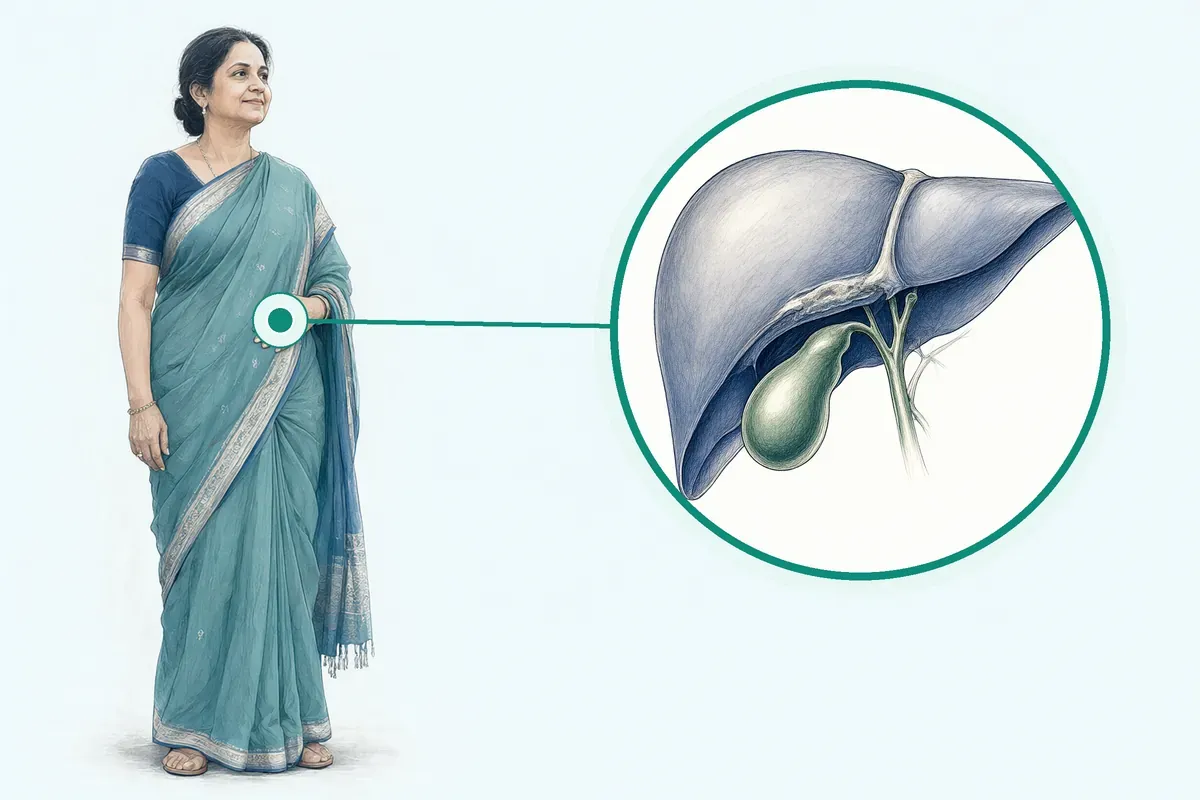
Gallbladder cancer is a malignancy that starts in the inner lining of the gallbladder, a small pear-shaped organ tucked under the liver on the right side of the upper abdomen. The gallbladder stores bile, a fluid made by the liver that helps digest fats. Nearly all gallbladder cancers are adenocarcinomas, which arise from the secretory cells of the gallbladder lining. A rare subtype is papillary adenocarcinoma, which grows from finger-like projections that help move bile.
The disease begins in the inner layer and spreads outward through the wall of the gallbladder. Because the gallbladder lacks a serosal layer next to the liver, cancer cells can invade the liver directly and spread to other organs early. Long-standing chronic inflammation, often due to gallstones, is an important driver of this cancer.
The progression from normal tissue to invasive cancer can take about 15 years, passing through stages of:
- Metaplasia
- Dysplasia
- Carcinoma in situ
Gallbladder cancer is the most common cancer of the biliary tract. It is infrequent in developed countries but common in specific regions of developing countries, including the Indo-Gangetic belt of northern India. In north India the incidence in females is among the highest reported worldwide. Most cases are found at an advanced stage because early cancer rarely causes symptoms.
Symptoms and warning signs that need urgent care the same day
Common symptoms are right upper abdominal pain, weight loss, a lump, and jaundice. Weight loss occurs in 99% and appetite loss in 97% of symptomatic patients. Sudden severe pain, high fever, or worsening jaundice need same-day emergency care.
- Sudden severe abdominal pain May mean perforation or blockage
- High fever with chills Suggests infection
- Vomiting that prevents keeping fluids down Risk of dehydration
Many people have no symptoms until the cancer is advanced. When symptoms appear, the most common are pain in the right upper abdomen and upper middle abdomen, with or without a change in the character of the pain.
Other frequent symptoms include:
- Weight loss
- Loss of appetite
- A lump in the right upper abdomen
- Jaundice (yellowing of the skin and eyes)
- Nausea and vomiting
Jaundice suggests the tumour has invaded the bile ducts and often means the disease has spread widely.
Some cancers are found by chance during surgery for gallstones or on imaging done for another reason. In a study of symptomatic patients, weight loss was reported in 99% and loss of appetite in 97%. Pain in the right upper abdomen occurred in 70%, a palpable mass in 53%, jaundice in 39%, and nausea or vomiting in 10%.
Warning signs that need medical attention the same day include sudden severe abdominal pain, high fever with chills, vomiting that prevents keeping fluids down, and new or worsening jaundice with dark urine and pale stools. These can indicate a blocked bile duct, infection or a perforated gallbladder, all of which need urgent assessment in the emergency department.
Causes and who is at higher risk
Gallstones are the strongest risk factor; women are affected two to three times more than men. The Indo-Gangetic belt including Rajasthan has very high incidence, especially in females over 65. Smoking, obesity, and family history also raise risk.
- Gallstones
- Strongest known risk factor
- Female gender
- Two to three times more often than men
- Indo-Gangetic belt
- Among highest incidence globally
- Lifestyle factors
- Smoking, obesity, fried foods, reused oil
The exact cause is not fully understood, but several factors increase risk. Gallstones are the strongest known risk factor; long-standing stones cause chronic inflammation that can lead to cancer. Other gallbladder conditions such as porcelain gallbladder (calcified wall), Mirizzi syndrome (stone impacted in the neck of the gallbladder pressing on the bile duct) and bile reflux also raise risk.
Women are affected two to three times more often than men worldwide. In India the disease is most common in females over 65. The Indo-Gangetic belt, including Rajasthan, has one of the highest incidence rates globally. Family history of gallstones or gallbladder cancer increases risk, and clustering of cases in families suggests a genetic component. Certain blood groups (A+ and AB+) have been linked to higher frequency in some studies.
Lifestyle factors include smoking, obesity, a diet high in fried foods and reused oil, and exposure to certain chemicals. Chronic typhoid carriage and anomalies of the pancreaticobiliary duct junction are also associated with higher risk. Having risk factors does not mean you will develop cancer; many people with these factors never do.
How gallbladder cancer is diagnosed: examination and tests
Diagnosis begins with an abdominal ultrasound; if a mass is seen, CECT or MRI stages the disease. Biopsy is avoided before surgery if the tumour looks resectable to prevent spillage. Staging laparoscopy checks for tiny deposits that scans may miss.
- Ultrasound first Most patients have only this before surgery
- CECT or MRI for staging Shows tumour extent and lymph nodes
- PET-CT if advised Done 4 to 6 weeks after operation to reduce false positives
- Staging laparoscopy Finds tiny deposits scans may miss
Diagnosis usually starts with an ultrasound of the abdomen. Most patients have only an ultrasound before surgery. If a mass or wall thickening is seen, contrast-enhanced CT (CECT) or MRI of the abdomen is needed for proper staging.
These scans show:
- The extent of the tumour
- Involvement of the liver or nearby organs
- Enlarged lymph nodes
A PET-CT scan may detect metastatic disease not seen on CT, but it can give false-positive results, especially soon after surgery. If a PET-CT is advised, it is usually done 4 to 6 weeks after the initial operation to reduce false positives from inflammation.
If the tumour appears resectable on imaging, a tissue biopsy is not routinely done before surgery because removing the gallbladder for diagnosis alone risks tumour spillage. In unresectable cases where chemotherapy is planned, a percutaneous biopsy is reliable with about 88% sensitivity. Fine-needle aspiration cytology (FNAC) guided by ultrasound has a reported diagnostic accuracy of 95%.
Staging laparoscopy is used to look for tiny deposits on the liver surface or peritoneum that scans may miss. It is recommended for patients who appear non-metastatic on imaging.
For incidental cancers found after a cholecystectomy for presumed benign disease, further work-up includes cross-sectional imaging and sometimes staging laparoscopy, especially if the tumour is T1b or higher, margins are positive or the grade is high. Pathology of the removed gallbladder confirms the diagnosis and determines the T stage, margin status and grade.
Treatment options without surgery and when surgery is advised for gallbladder cancer
Surgical resection is the only treatment with curative intent for gallbladder cancer. Whether surgery is possible depends on the stage at diagnosis, the patient's fitness for a major operation and whether the tumour can be removed completely with clear margins (R0 resection).
For very early cancer (Tis or T1a) confined to the inner layer or muscle layer with negative cystic duct margins, a simple cholecystectomy is sufficient and no further resection is needed. Laparoscopic cholecystectomy is appropriate for T1a tumours. Lymph node dissection is not recommended for T1a.
For T1b and higher stages, radical cholecystectomy is advised. This includes removal of the gallbladder with a wedge of liver tissue (2 to 3 cm margin) or formal segment IVb and V resection, together with lymph node dissection of the cystic duct, common bile duct, hepatoduodenal ligament and posterior pancreaticoduodenal nodes.
At least six lymph nodes should be removed for accurate staging. The cystic duct margin is checked during surgery; if positive, extrahepatic bile duct resection is performed to achieve clear margins.
If the cancer is locally advanced (T3 or T4) or involves major blood vessels, a major hepatectomy or combined vascular resection may be needed to achieve R0 resection. Surgery is generally not offered when there is spread to para-aortic or coeliac lymph nodes, or distant metastases, as these are considered metastatic disease.
In such cases, palliative options include biliary bypass surgery to relieve bile duct obstruction, endoscopic or percutaneous stenting to drain bile, chemotherapy, and radiation therapy. Clinical trials of targeted therapy, immunotherapy or new chemotherapy combinations are also options for advanced disease. Your surgeon will discuss which approach suits your situation after reviewing the imaging and pathology.
Preparing for gallbladder cancer surgery
Before surgery you will have blood tests for blood count, liver, kidney and clotting function. A CT or MRI scan stages the cancer and a PET-CT may check for distant spread. You will meet the anaesthesia team, stop blood thinners if advised, and fast for at least six hours before the operation.
Your surgeon will explain the operation and answer your questions.
You will have blood tests to check:
- Your blood count
- Liver function
- Kidney function
- Clotting
A contrast-enhanced CT scan of the abdomen and chest, or an MRI, is used to stage the cancer and plan the surgery. A PET-CT may be advised to look for distant spread that is not seen on CT. If the tumour appears resectable on imaging, a tissue diagnosis before surgery is not required.
In patients where the disease may be unresectable, a percutaneous biopsy can confirm the diagnosis before starting chemotherapy. You will meet the anaesthesia team to review your fitness for general anaesthesia. Tell your doctor about every medicine you take, especially blood thinners, diabetes medicines and any herbal supplements.
You will be asked to stop eating and drinking for at least six hours before the operation. Bring your regular medicines, comfortable clothes, toiletries and any previous imaging films or reports. An attendant should plan to stay with you during the hospital admission.
How gallbladder cancer surgery is done
The operation is done under general anaesthesia and takes three to five hours. A radical cholecystectomy removes the gallbladder, a wedge of liver and at least six lymph nodes. If the cystic duct margin is positive, the bile duct may also be resected. A drain is placed and you are monitored in intensive care or the ward.
- General anaesthesia Operation takes three to five hours
- Lymph node dissection At least six nodes from key stations
- Check cystic duct margin Frozen section during operation
The operation is performed under general anaesthesia and usually takes three to five hours. The standard curative procedure is a radical cholecystectomy.
This removes the gallbladder together with a wedge of the liver bed (about two to three centimetres) or a formal segment IVb and V resection, and a lymph node dissection of the stations along the common hepatic artery, hepatoduodenal ligament and retropancreatic area. The surgeon aims to remove at least six lymph nodes for accurate staging.
The cystic duct margin is checked during the operation, often with a frozen section. If the margin is positive, the common bile duct may be resected to achieve a clear margin. If the cancer is found to involve major blood vessels, a more extensive liver resection with vascular reconstruction may be needed.
When the cancer cannot be removed because it has spread too far, a palliative biliary bypass can be performed. The surgeon connects the gallbladder or bile duct above the blockage to the small intestine so that bile can drain. A laparoscope may be used to assess the abdomen before a larger incision is made.
The surgical team will discuss which approach suits your situation. At the end of the operation, a drain is usually left near the liver bed and you are taken to the intensive care unit or the ward for monitoring.
Risks and possible complications of gallbladder cancer surgery
Risks include bile leak, bleeding, wound or abdominal infection, temporary liver dysfunction, pancreatitis, blood clots and chest infection. Port-site recurrence after laparoscopic surgery is a known risk, so the specimen is removed in a bag. Higher risks apply if major blood vessels are involved.
- Bile leak
- May need longer drain or further procedure
- Bleeding
- May require blood transfusion
- Infection
- Wound or abdominal abscess
- Temporary liver dysfunction
- Monitored daily with blood tests
As with any major abdominal operation, there are risks. Bile leak from the liver bed or the bile duct join occurs in a small proportion of patients and may need a drain to be left longer or a further procedure. Bleeding during or after surgery may require a blood transfusion.
Infection of the wound or inside the abdomen (abscess) is treated with antibiotics and drainage if needed. Temporary liver dysfunction can happen because a portion of the liver is removed; liver function tests are monitored daily. Pancreatitis, deep vein thrombosis and chest infection are known complications after upper abdominal surgery.
Port-site recurrence after laparoscopic surgery has been reported in studies, so the specimen is always removed in a bag and the port sites may be excised if there was spillage. If the cancer involves the hepatic artery or portal vein and these are resected, the operation carries a higher risk of serious complications.
The surgical team will discuss the risks that apply to your stage and general health before you sign the consent form.
Recovery and aftercare after gallbladder cancer surgery
You spend the first night in intensive care or a high-dependency area. Pain is controlled with epidural or patient-controlled analgesia for two to three days, then tablets. Most patients stay five to eight nights and can resume desk work in four to six weeks.
You will spend the first night in the intensive care unit or a high-dependency area. Pain is managed with epidural or patient-controlled analgesia for the first two to three days, then with tablets. The drain is removed once the output is low and the fluid is not bile-stained.
You will start sipping water on the first day and move to a light diet as your bowel function returns. Early walking is encouraged to prevent blood clots and chest infection. Most patients stay in hospital for five to eight nights. Before discharge, your surgeon will explain wound care, signs of infection, and when to restart your regular medicines.
You will be given a follow-up appointment for suture or clip removal and a review of the final histopathology report. At home, avoid heavy lifting and strenuous activity for four to six weeks. Desk work can usually be resumed in four to six weeks.
Contact the hospital if you develop:
- Fever
- Increasing abdominal pain
- Yellowing of the eyes or skin
- Persistent vomiting
- Redness and discharge from the wound
Long-term follow-up includes periodic blood tests, liver function tests and imaging as advised by your oncologist and surgeon.
Results of gallbladder cancer surgery: survival and recurrence
Surgery is the only treatment that can remove all visible cancer. Five-year survival is above 95 percent for T1a tumours with clear margins and around 70 percent for T2 tumours with R0 resection. Positive margins are the strongest predictor of recurrence.
- above 95 percent T1a five-year survival
- around 70 percent T2 five-year survival
- liver bed, lymph nodes, peritoneum, common bile duct Recurrence sites
Surgery is the only treatment that can remove all visible cancer. In studies, patients with T1a tumours confined to the inner layer who have a clear cystic duct margin have a five-year survival above 95 percent after a simple cholecystectomy. For T1b tumours invading the muscle layer, survival is lower and a radical resection with lymph node dissection is recommended.
In T2 tumours that reach the perimuscular connective tissue, five-year survival in studies ranges around 70 percent when an R0 resection is achieved. Survival falls sharply when the tumour penetrates the serosa (T3) or invades adjacent organs (T4). Lymph node involvement reduces long-term survival. Positive resection margins are the strongest predictor of recurrence.
In studies, recurrence after curative resection most often occurs in:
- The liver bed
- Lymph nodes
- Peritoneum
- The common bile duct
Adjuvant chemotherapy with fluoropyrimidine-based regimens, sometimes combined with radiation, is considered after R0 resection for T2 and higher tumours with node-positive disease. Your multidisciplinary team will discuss whether adjuvant treatment is appropriate based on the final pathology. Clinical trials of targeted therapy and immunotherapy are available for advanced or recurrent disease and may be discussed if standard options are limited.
Cost and insurance for gallbladder cancer surgery in Jaipur
The typical cost range for radical cholecystectomy with lymph node dissection in India is ₹1,50,000 to ₹3,50,000. Jaipur Hospital is empanelled under MAA Yojana and has a panel of private insurers and TPAs for cashless treatment. Contact the hospital for a case-specific estimate.
The typical cost range for radical cholecystectomy with lymph node dissection in India is ₹1,50,000 to ₹3,50,000. The final amount depends on the extent of liver resection, whether bile duct reconstruction or vascular resection is needed, the length of stay in the intensive care unit, and any additional procedures such as a palliative bypass.
Jaipur Hospital is empanelled under the MAA Yojana scheme and has a panel of private insurers and third-party administrators for cashless treatment. If you are covered under one of these schemes, bring your scheme card and identity documents at admission. The hospital's in-house pharmacy and diagnostic laboratory are available for medicines and tests during your stay.
For an estimate specific to your case, contact the hospital on 0141-2551500, 0141-2554139 or 7414 001 001, or email [email protected].
