
Sports Injury · Jaipur Hospital
SLAP Tear Repair in Jaipur
Deep shoulder ache, clicking, or weakness with overhead lifting. Our specialist team provides a thorough assessment and a clear surgical plan.
- Serving Jaipur since 1991 (35 years)
- NABH accredited
- 24×7 emergency & ICU
- Cashless: MAA Yojana + 32 insurers
- Operation time
- 1 to 1.5 hours
- Anaesthesia
- General anaesthesia with Interscalene block
- Recovery
- Sling 4 weeks, throwing sports 6 to 9 months
- Price
- ₹1,00,000 to ₹2,20,000typical range in India; ask us for an estimate
Shoulder pain during overhead movement
A painful, clicking shoulder that limits your arm movement
Deep joint pain and catching sensations can make simple overhead motions painful. You may notice weakness when lifting, throwing, or working, leaving you unsure whether the labrum can heal without surgery.
-
Deep joint clicking
A popping or clicking feeling inside the shoulder joint during overhead motions or reaching backwards.
-
Ache with overhead work
Dull ache deep inside the shoulder that worsens after lifting, working, or sports practice.
-
Loss of arm power
Reduced arm strength and difficulty maintaining force during overhead tasks or throwing.
Type II SLAP tears are the most frequently reported subtype and account for 55% of all SLAP injuries.
Why Jaipur Hospital
You may worry about prolonged time away from your sport or work and how surgery might affect your shoulder strength.
Your care plan
Your first steps with us
- 1 Consult a specialist in our OPD
- 2 Review external scans and reports
- 3 Undergo arthroscopic repair if needed
- 4 Recover with guided physiotherapy support
How SLAP tear surgery is performed
The procedure is carried out under general anaesthesia with an interscalene block, usually taking 1 to 1.5 hours. Your surgeon assesses labral stability arthroscopically through small incisions.
-
Suture Anchor Labral Repair
Standard fixation used for Type II tears, securing the detached superior labrum back to the glenoid rim. Your surgeon will discuss this option.
-
Biceps Tenodesis
Reattaching the long head of the biceps tendon outside the joint, preferred for Type II tears in patients over 40 or failed repairs. Your surgeon will discuss this option.
-
Debridement Only
Trimming frayed labral edges for stable Type I or III tears without instability. Your surgeon will discuss this option.
Why patients trust us
- 1991 Serving Jaipur for 35 years
- NABH Accredited hospital
- 1 Sports Injury consultants
- 24×7 Emergency, ICU and ambulance
- 33 Cashless schemes and insurers
Clinical findings on labral repair and tenodesis
-
50% to 76%
Rates of return to sport ranged from 50% to 76% after SLAP repair versus 63% to 85% after biceps tenodesis.
-
3% to 15%
Rates of reoperation ranged from 3% to 15% after SLAP repair compared to 0% to 6% after biceps tenodesis.
-
fewer than 10%
SLAP tears comprise fewer than 10% of labral tears in clinical evaluations.
If it is left untreated
Ongoing labral instability may cause persistent mechanical symptoms, chronic ache, and loss of overhead function. Older age is a notable risk factor for failed labral repair and need for revision. Over one-third of patients undergoing SLAP repair are reported to meet failure criteria.
Life during recovery
With proper surgical management and structured rehabilitation, most people gradually rebuild joint function and return to daily activities.
-
Four weeks in sling
Most people wear a supportive sling for 4 weeks to protect the repaired tissue as it begins healing.
-
Daycare or one night
Hospital stays are typically short, with patients usually going home the same day or after 1 night.
-
Return to throwing sports
Athletes typically resume overhead throwing sports between 6 to 9 months following guided rehabilitation.
Meet the team
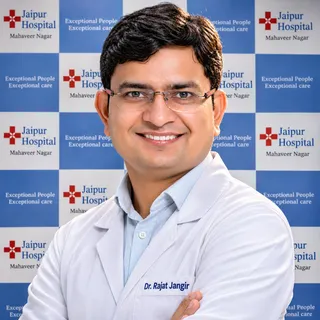
Your sports injury doctors
Explore our sports injury treatment centre in Jaipur: every treatment, the doctors and what to expect at your visit.
Frequently asked questions
Questions patients ask about slap tear repair
What does SLAP lesion repair involve?
In short
SLAP lesion repair at Jaipur Hospital is an arthroscopic operation that reattaches the torn superior labrum to the glenoid rim using suture anchors. The surgery takes one to one and a half hours under general anaesthesia with an interscalene block. You usually go home the same day or stay one night.
In detail
The surgeon inserts a small camera and instruments through two or three keyhole cuts around the shoulder. For a Type II tear, which makes up about 55 percent of SLAP injuries, the standard method is suture anchor labral repair.
The anchors hold stitches that pull the labrum back to bone so it can heal. If the biceps tendon is badly frayed or you are over 40, the surgeon may choose biceps tenodesis instead, moving the tendon to the humerus. Debridement alone is kept for stable Type I or III tears without instability.
- For a Type II tear, which makes up about 55 percent of SLAP injuries, the standard method is suture anchor labral repair.
A common belief
Many people think the labrum is simply stitched like fabric.
What actually happens
In reality the anchors grip bone and the stitches hold the labrum against it until biology heals the attachment. For older patients or a damaged biceps tendon, tenodesis is often more reliable than a repair.
Your next step at Jaipur Hospital
After surgery your arm stays in a sling for four weeks. Gentle pendulum exercises start early, then guided physiotherapy builds range and strength. Throwing or overhead sport usually resumes at six to nine months. The typical cost range in India is one lakh to two lakh twenty thousand rupees.
Which tests and scans do I need before SLAP lesion repair?
In short
Before SLAP lesion repair at Jaipur Hospital, you will need a clinical examination and an MR arthrogram or high-resolution MRI of the shoulder to confirm the tear type and check for associated injuries. Routine blood tests and a pre-anaesthesia check are also required. The imaging is done at an outside centre; the surgical team reviews the results with you.
In detail
SLAP tears comprise fewer than 10 percent of all labral tears, and Type II tears account for about 55 percent of SLAP injuries. An MR arthrogram is the preferred study because it shows the biceps anchor and labral detachment clearly.
Plain X-rays are taken to rule out bony abnormalities or arthritis. Blood work typically includes a complete blood count, kidney and liver function, coagulation profile, and screening for infections as per hospital protocol.
If you have medical conditions such as diabetes or hypertension, additional clearance from a physician may be needed. The hospital has an in-house laboratory and X-ray unit, but CT and MRI scans are performed at external imaging centres.
A common belief
A plain MRI without contrast can miss a SLAP tear, especially a Type II lesion.
What actually happens
The arthrogram — where dye is injected into the joint before the scan — gives a much clearer picture of the biceps anchor and labrum.
Your next step at Jaipur Hospital
Arrange the MR arthrogram a few days before your consultation so the surgeon can discuss the exact tear pattern and plan the procedure. Fasting and medication instructions will be given at the pre-anaesthesia visit. The typical cost range for the surgery is ₹1,00,000 to ₹2,20,000.
How painful is SLAP tear repair surgery and the early recovery?
In short
SLAP tear repair at Jaipur Hospital uses general anaesthesia with an interscalene nerve block, so you feel no pain during the operation. The block gives numbness for 12 to 24 hours after surgery. After the block wears off, shoulder pain is moderate and managed with prescribed tablets. Most patients describe the first few days as uncomfortable rather than severe.
In detail
The interscalene block numbs the shoulder nerves before you wake up. This reduces the need for strong intravenous pain medicine in the first day. The operation takes 1 to 1.5 hours through small arthroscopic cuts.
Because the labrum is stitched back to the bone with suture anchors, the shoulder is swollen and stiff for the first week.
Regular paracetamol and a short course of an anti-inflammatory or weak opioid keep pain at a level that lets you sleep and do gentle exercises. Studies show pain scores drop quickly after the first 72 hours.
A common belief
Many people expect severe pain after shoulder surgery.
What actually happens
The nerve block and keyhole technique keep it much lower than open surgery.
Your next step at Jaipur Hospital
You will wear a sling for four weeks. Take pain medicine on schedule for the first three days, then as needed. Ice packs on the dressing for 15 minutes several times a day help swelling. Keep the dressing dry. The surgical team reviews you at two weeks.
How long does recovery usually take after SLAP tear repair?
In short
After SLAP tear repair at Jaipur Hospital, you wear a sling full‑time for four weeks. Light daily activities using the operated arm can start at six weeks. Strengthening begins around three months. Return to throwing or overhead sports typically takes six to nine months. Desk workers often return to work in two to three weeks; heavy labour may need three to four months.
In detail
The four‑week immobilisation protects the suture anchors while the labrum heals to bone. Passive motion starts at two weeks, active motion at six weeks, and resisted exercises at 12 weeks.
Studies report return‑to‑sport rates of 50% to 76% after SLAP repair versus 63% to 85% after biceps tenodesis, with tenodesis patients often returning sooner. Your physiotherapist will progress you based on healing milestones, not a fixed calendar.
A common belief
Patients often expect a quick bounce‑back because the scars are small.
What actually happens
The reality is the labrum needs biological healing time, and pushing too early causes anchor failure. Biceps tenodesis patients frequently return to sport faster and at higher rates.
Your next step at Jaipur Hospital
Plan for at least one night in hospital or daycare discharge. Keep the sling on except for prescribed exercises. Attend all physiotherapy sessions; they are the main driver of timeline. Do not rush return to sport — early loading can pull anchors loose.
Can a SLAP tear heal with rehabilitation, or is an operation worth considering?
In short
A SLAP tear does not heal on its own because the labrum has a poor blood supply. Rehabilitation can reduce pain and improve function in some patients, especially those with stable Type I or III tears or low demands. For unstable Type II tears in active people, arthroscopic repair at Jaipur Hospital is usually advised to restore stability and allow return to overhead sport.
In detail
SLAP tears are less than 10% of labral tears. Type II tears account for 55% of SLAP injuries and involve detachment of the biceps anchor. Debridement alone is an option for stable Type I or III tears without instability.
Evidence shows return-to-sport rates after SLAP repair range from 50% to 76%, while biceps tenodesis gives 63% to 85%. Reoperation rates are 3% to 15% after repair versus 0% to 6% after tenodesis. In patients over 40, tenodesis is often preferred for more predictable outcomes. The surgeon decides based on tear type, age, activity level, and response to a trial of physiotherapy.
- Type II tears account for 55% of SLAP injuries and involve detachment of the biceps anchor.
A common belief
Many hope rest and exercises will reattach the labrum.
What actually happens
It lacks the blood supply to heal back to bone, so mechanical symptoms often persist without surgery.
Your next step at Jaipur Hospital
Try a guided physiotherapy programme for six to twelve weeks if the tear is stable and you are not an overhead athlete. If pain, clicking, or instability persist, surgery is discussed. Bring any previous imaging and therapy notes.
Can I continue any training safely while I recover from SLAP tear repair?
In short
During the first four weeks after SLAP repair at Jaipur Hospital, you must keep the operated arm in the sling and avoid any loading. You can maintain cardiovascular fitness with stationary cycling, walking, or lower-body exercises that do not involve the shoulder. Core and leg strength work is encouraged as long as the arm remains protected.
In detail
The sling period protects the labral healing. Any active shoulder motion, pushing, pulling, or weight-bearing risks anchor pull-out. From week four, passive and active-assisted motion begins under physiotherapy guidance. Light closed-chain exercises for scapular control start around week eight.
Upper-body cardiovascular options such as an arm ergometer are introduced only after the surgeon confirms adequate healing, usually after three months. The team will give you a written list of permitted and restricted activities for each phase. Staying fit overall helps the final return to sport, but the shoulder must not be compromised.
A common belief
Many athletes try to maintain upper-body fitness with light bands or bodyweight moves.
What actually happens
Even light active motion can stress the healing labrum. The safest approach is to keep the shoulder completely passive until the surgeon and physiotherapist advance the protocol.
Your next step at Jaipur Hospital
Ask your physiotherapist for a lower-body and core programme you can start immediately after surgery. Keep a log and review it at each follow-up.
Why might my doctor recommend SLAP lesion repair?
In short
Your doctor at Jaipur Hospital may recommend SLAP lesion repair when a Type II tear causes persistent pain, clicking, or a feeling of instability that limits overhead activity and has not improved with rest and physiotherapy. The aim is to restore a stable labral attachment so the shoulder can handle throwing or lifting again.
In detail
Type II SLAP tears are the most common subtype, making up about 55 percent of all SLAP injuries. In younger overhead athletes, suture anchor labral repair is the usual first choice because it preserves the native biceps anchor.
Evidence shows return-to-sport rates after repair range from 50 to 76 percent, while biceps tenodesis gives 63 to 85 percent.
For patients over 40 or those with a failed prior repair, tenodesis is preferred because reoperation rates after repair are higher, ranging from 3 to 15 percent versus 0 to 6 percent after tenodesis. The surgeon weighs your age, sport level, and tissue quality before advising.
- Type II SLAP tears are the most common subtype, making up about 55 percent of all SLAP injuries.
A common belief
People often assume repair is always better than tenodesis.
What actually happens
Studies show tenodesis has lower reoperation rates and similar or better return to sport, especially after age 40. The surgeon matches the procedure to your age and shoulder demands.
Your next step at Jaipur Hospital
You will have a clinical examination and usually an MRI or MR arthrogram to confirm the tear type. If surgery is advised, the typical price range is one lakh to two lakh twenty thousand rupees. Plan for four weeks in a sling and six to nine months before full throwing.
How should I prepare in the days before SLAP lesion repair?
In short
In the days before SLAP lesion repair at Jaipur Hospital, follow the pre-anaesthesia instructions, stop smoking if you can, and arrange an attendant to stay with you. Keep the shoulder skin clean and free of cuts or infections. Confirm your medication plan with the anaesthesia team, especially blood thinners or diabetic medicines.
In detail
The operation uses general anaesthesia with an interscalene block, so you will have a pre-anaesthesia check-up a day or two before surgery. Blood tests, ECG, and a chest X-ray if needed are done at the hospital's in-house laboratory and radiology unit.
You will be advised which regular medicines to continue and which to hold — typically blood thinners are stopped several days prior, while most cardiac and blood pressure medicines are taken with a sip of water on the morning of surgery.
Herbal supplements and vitamin E should be stopped at least one week before because they can increase bleeding risk. Arrange for someone to drive you home if the procedure is daycare, or to stay overnight if you are admitted for one night.
A common belief
Patients often continue fish oil, vitamin E, or herbal products thinking they are harmless.
What actually happens
These can increase bleeding during arthroscopy. Also, a cold or skin infection near the shoulder on the day of surgery may lead to cancellation, so report any illness promptly.
Your next step at Jaipur Hospital
On the evening before surgery, eat a light dinner and then follow the fasting rule (nothing by mouth after midnight for a morning case). Pack loose clothing that opens at the front and a sling if one has been prescribed. The typical cost range is ₹1,00,000 to ₹2,20,000.
What are the common side effects and the less common serious complications of SLAP tear repair?
In short
Common side effects after SLAP tear repair at Jaipur Hospital include temporary shoulder stiffness, swelling around the portals, bruising down the arm, and mild numbness near the incision sites. These usually settle within a few weeks. Less common but serious complications include infection, nerve injury, anchor loosening, recurrent instability, and the need for reoperation, which studies report in 3% to 15% of SLAP repairs.
In detail
Arthroscopic repair uses suture anchors to reattach the labrum. Stiffness is the most frequent issue because the shoulder is immobilised in a sling for four weeks. Reoperation rates after SLAP repair range from 3% to 15%, while biceps tenodesis shows 0% to 6%.
In published series, biceps tenodesis made up 78% to 100% of revision procedures after failed SLAP repair. Your surgeon will discuss how these numbers apply to your age, tear type, and activity level.
A common belief
People often focus on rare catastrophic events, but stiffness from immobilisation is the near‑certain side effect.
What actually happens
Also, reoperation after SLAP repair is notably higher than after biceps tenodesis, and most revisions end up as tenodesis anyway.
Your next step at Jaipur Hospital
Keep the dressings clean and dry, attend the two‑week wound check, and follow the physiotherapy protocol to minimise stiffness. Contact the hospital immediately if you develop increasing redness, warmth, fever above 38°C, sudden severe pain, or new numbness in the hand.
Which symptoms are expected after SLAP tear repair, and which need urgent medical attention?
In short
Expected symptoms after SLAP tear repair at Jaipur Hospital include moderate shoulder ache for the first few days, swelling around the portals, bruising tracking down the arm, stiffness from the sling, and mild numbness near the incisions. These improve steadily. Seek urgent care for fever above 38°C, increasing redness or warmth at the portals, sudden severe pain not relieved by tablets, new numbness or weakness in the hand, or bleeding that soaks the dressing.
In detail
Pain and swelling peak in the first 48 hours as the nerve block wears off. Bruising appears because arthroscopic fluid tracks down the arm. Stiffness is deliberate — the sling protects the repair. Numbness near portals comes from small skin nerves and usually resolves.
Infection occurs in under 2% of arthroscopic shoulder cases. Nerve injury is rare but can present as new hand weakness. Reoperation rates of 3% to 15% mean some patients need a second procedure for stiffness, anchor failure, or recurrent instability.
A common belief
Patients often worry about the bruising and think it is bleeding inside the joint.
What actually happens
It is usually just arthroscopic fluid tracking down. Conversely, they may dismiss a low‑grade fever as a cold, but after surgery it can be the first sign of infection.
Your next step at Jaipur Hospital
Take pain medicine on schedule for the first two days. Ice the shoulder over the dressing for 10 minutes every few hours. Keep the sling on except for prescribed exercises. Call the hospital or visit the 24×7 emergency department if any red‑flag symptom appears.
FAQ library
Questions and answers about slap tear repair
When you contact us
Consult our sports injury team in Jaipur
Contact Jaipur Hospital to discuss your shoulder symptoms and understand your surgical or non-surgical options.
- A consultation with a sports injury specialist in the OPD
- Your scans and reports reviewed, with tests done in-house if you need them (laboratory, X-ray and imaging)
- Your options explained in plain words, including whether you need surgery at all
- A cost estimate before you decide
- Help with cashless treatment under MAA Yojana, various government health care schemes and empanelled insurers and TPAs
- Follow-up visits after your treatment
Overview
SLAP Tear Repair: what to know
What is a SLAP tear and superior labrum injury
- What it is
- Tear of the top labrum from front to back
- How common
- Under 10% of all labral tears
- Main type
- Type II makes up 55% of SLAP tears
- Type II detail
- Labrum and biceps anchor pull off the bone
The shoulder is a ball-and-socket joint where the head of your upper arm bone fits into a shallow socket in your shoulder blade. Around the rim of this socket sits a ring of firm tissue called the labrum. The labrum deepens the socket and helps keep your arm bone in place.
The long tendon of your biceps muscle travels over the joint and attaches directly to the top part of this labral ring.
A SLAP tear is an injury to the superior labrum anterior and posterior, meaning the top rim of the ring is torn from front to back where the biceps tendon anchors. In clinical reports, SLAP tears comprise fewer than 10% of labral tears.
They can happen during sudden trauma, like catching yourself during a heavy fall on an outstretched hand, or from repetitive overhead pulling and throwing motions.
Surgeons group these injuries into different patterns depending on how the tissue is torn. Type II SLAP tears are the most frequently reported subtype and account for 55% of all SLAP injuries. In a Type II tear, the top ring of tissue and the biceps anchor pull away from the bone, making the attachment unstable.
Other patterns include fraying with an intact anchor, or bucket-handle tears where a piece of tissue hangs inside the joint.
Symptoms of a SLAP tear and warning signs that need urgent care
- Cannot move arm After a fall or direct blow
- Rapid swelling Severe redness or heat spreading
- Numbness or pins and needles In arm, forearm or hand
- Weak or absent pulse Cold, pale fingers
- High fever with severe pain Chills may also be present
A superior labrum injury causes deep ache inside the shoulder joint that often feels worse when you lift your arm overhead or carry heavy loads. Many people notice mechanical sensations such as catching, clicking, or popping when moving the arm in certain angles.
You may also feel a loss of throwing power, reduced strength when lifting, or a sensation that your shoulder is loose or unstable.
Some tears happen alongside other shoulder problems, while others present as a dull ache without constant sharp discomfort. A shoulder condition that causes no pain initially can still cause stiffness or reduced movement as you alter how you use your arm.
Warning signs that need urgent care the same day include:
- Sudden inability to move your arm or shoulder after a fall or direct blow
- Rapid swelling, severe redness, or heat spreading across the shoulder joint
- Loss of feeling, numbness, or pins and needles in your arm, forearm, or hand
- Weak or absent pulse in your wrist, or coldness and pale colour in your fingers
- Severe pain accompanied by high fever or chills
If you notice any of these signs, visit an emergency department immediately.
Causes of SLAP tears and who is at higher risk
- Acute injury
- Fall on outstretched hand or sudden jerk
- Repetitive overhead motion
- Sports like cricket, javelin, tennis, swimming
SLAP tears develop either from a single sudden incident or from long-term wear and tear on the shoulder joint. Acute injuries often occur when you brace yourself during a fall onto an outstretched hand, pull forcefully to stop a heavy falling object, or suffer a sudden jerk to the arm. Motor vehicle collisions or direct impacts to the shoulder can also tear the labral ring.
Repetitive overhead motions are another common cause. Overhead athletes, including cricket bowlers, javelin throwers, tennis players, and swimmers, repeatedly stress the biceps tendon anchor at the top of the socket. Over time, the repeated traction and twisting peel the labrum away from the bone.
Certain people are at higher risk of sustaining these injuries or facing complications:
- Overhead sports players and manual labourers whose daily routine requires repetitive overhead reaching or lifting
- People with loose shoulder ligaments or joint laxity that place extra strain on the labrum
- Individuals with increasing age, as older age is a notable risk factor for failed labral repair and need for revision
- Patients who have had previous shoulder dislocations or traumatic joint injuries
How a SLAP tear is diagnosed: examination and tests
- Clinical history Ask about pain onset, pops, clicking, work and activities
- Physical examination Check motion, strength, biceps traction tests
- X-ray Check for fractures, spurs, arthritis; done in-house
- MRI or MR arthrography Shows labrum and biceps anchor; done at outside centre
- Diagnostic arthroscopy Final confirmation during surgery
Your assessment begins in the orthopaedic OPD with a detailed clinical history. Your specialist doctor will ask how your shoulder pain started, whether you heard a pop during an accident, and which overhead actions bring on clicking or catching sensations. The doctor will also review your work demands and physical activities.
Next, the doctor performs a physical examination of your neck and shoulder. This includes checking your active and passive range of motion, testing muscle strength, and performing specific physical tests that place traction on the biceps tendon to see if they reproduce your pain or clicking.
Because soft tissue tears cannot be seen on plain X-rays, imaging is necessary to confirm the condition:
- Plain X-ray: Done to check for fractures, bone spurs, or joint arthritis; Jaipur Hospital provides digital X-ray services in-house.
- Magnetic resonance imaging (MRI) or MR arthrography: A specialised scan that shows soft tissues, the labral rim, and the biceps anchor; Jaipur Hospital does not have an MRI scanner, so your doctor advises the scan, you have it done at an outside imaging centre, and our surgical team reviews the images.
Diagnostic arthroscopy, where your surgeon looks inside the joint with a miniature camera during surgery, provides final confirmation of the tear type and tissue quality.
Non-surgical treatment options and when surgery is advised
Do
- Rest from overhead activities
- Apply ice packs
- Take prescribed pain medicines
- Follow structured physiotherapy
Avoid
- Platelet injections (PRF)
Treatment usually begins with conservative care for several months, especially when the tear does not cause major mechanical locking. Non-surgical measures typically include resting from overhead activities, applying ice packs to manage local swelling, and taking short courses of pain-relieving medicines advised by your doctor to settle inflammation.
Physiotherapy plays a central role in rehabilitation.
A structured programme focuses on:
- Restoring shoulder motion
- Strengthening the rotator cuff muscles
- Retraining the muscles around your shoulder blade
In studies, PRF has been shown to have no benefit in improving tendon healing rates or functional outcomes, and Jaipur Hospital does not offer platelet injections.
Surgery is typically advised when:
- Pain, catching, and weakness persist despite three to six months of dedicated conservative management and physiotherapy
- Mechanical symptoms such as painful catching, locking, or giving way interfere with routine daily tasks
- You are an active athlete or labourer whose work demands overhead arm stability that cannot be regained without structural repair
- Imaging and clinical findings confirm an unstable tear, such as a symptomatic Type II SLAP lesion
When surgery is indicated, your surgeon will discuss options such as suture anchor repair, debridement, or biceps tenodesis to restore shoulder stability and function.
Preparing for SLAP tear repair surgery
Do
- Complete blood tests, ECG, chest X-ray
- Wear loose button-front shirt
- Have an attendant accompany you
When you plan for SLAP tear repair at Jaipur Hospital, our surgical team evaluates your shoulder and overall health before the operation. Routine blood tests, an ECG, and a chest X-ray are arranged through our in-house diagnostic laboratory.
If your surgeon advises an MRI or CT arthrography to check the labrum, this scan is done at an outside imaging centre because Jaipur Hospital does not have a CT or MRI machine. Our surgical team reviews these scans with you in the OPD.
You must discuss all regular medicines with your doctor during your pre-operative assessment.
Inform your doctor if you take:
- Blood thinners
- Pain medicines
- Remedies for diabetes or blood pressure
Your doctor will advise you on which medicines to pause and which to take with a small sip of water on the morning of surgery. You should never stop or change prescribed medicines without direct guidance from your doctor.
You typically need to fast overnight before the operation. This means having no solid food, milk, tea, coffee, or water for at least six to eight hours before your scheduled theatre time. Fasting keeps your stomach empty and reduces anaesthesia risks.
On the day of admission, bring your hospital file, government identification cards, previous shoulder X-rays or MRI films, and your regular prescription slips. Wear loose clothing, such as a button-front shirt, that fits easily over a bulky shoulder dressing and sling.
An attendant should accompany you to help with registration, stay in the room, and assist you when you return home.
How SLAP tear repair is done at Jaipur Hospital
On the day of your surgery at Jaipur Hospital, our surgical team and nursing staff prepare you in the pre-operative area. Anaesthesia typically combines general anaesthesia with an interscalene nerve block. The interscalene block numbs the nerves to your shoulder and arm to help control soreness after you wake up. The operation usually takes 1 to 1.5 hours in our modular operation theatres.
Your surgeon performs the procedure arthroscopically using small incisions around the shoulder joint. A slender camera displays the joint on a screen while small instruments address the torn labrum. Several surgical techniques exist, and your surgeon will advise which option suits your shoulder tear, age, and activity level:
- Suture anchor labral repair: Standard fixation used for Type II tears. Small bone anchors with attached sutures are placed into the upper rim of the shoulder socket (glenoid) to secure the detached superior labrum back to bone.
- Biceps tenodesis: Preferred for Type II tears in patients over 40 years of age, or when a previous repair has failed. The long head of the biceps tendon is released from the torn superior labrum and reattached lower down on the arm bone (humerus) to relieve traction on the labral anchor.
- Debridement only: For stable Type I or Type III tears that do not cause joint instability. Loose, frayed labral edges are trimmed and smoothed without placing bone anchors.
Your surgeon will advise which approach is appropriate for your specific shoulder injury. After securing the tissue, the small skin cuts are closed with fine sutures and covered with a sterile dressing. A supportive shoulder sling is fitted before you are transferred to the recovery area. Hospitalisation is typically daycare or 1 night, depending on your comfort and recovery.
Risks and possible complications of SLAP tear surgery
- 3% to 15% SLAP repair reoperation
- 0% to 6% Biceps tenodesis reoperation
- 78% were biceps tenodesis in one study Revision after SLAP repair
- Notable risk factor for failed repair Older age risk
Arthroscopic shoulder surgery is generally well tolerated, but like any surgical procedure, it carries potential risks.
General risks include:
- Temporary wound swelling
- Minor bleeding
- Infection
- Stiffness in the shoulder joint
Some people may also experience temporary reactions to anaesthesia or regional nerve blocks.
In clinical research, reoperation is a recognised risk after labral surgery. In published studies, rates of reoperation ranged from 3% to 15% after SLAP repair, compared with 0% to 6% after biceps tenodesis.
Researchers also noted that patients undergoing SLAP repair had higher rates of reoperation, with three of four studies reporting no reoperations after biceps tenodesis, whereas all reviewed studies reported at least one reoperation after SLAP repair.
When a primary SLAP repair fails, a revision procedure may be needed. In published patient groups, biceps tenodesis accounted for 78% of reoperations after SLAP repair in one study, and all reoperations after SLAP repair in another series. Older age is recognised in studies as a notable risk factor for failed labral repair and the need for revision surgery.
Platelet injections such as PRF are not used in our department for shoulder repairs. Research studies show that PRF has no proven benefit in improving tendon healing rates or functional outcomes after surgery.
Recovery and aftercare for shoulder labral repair
During the first few days after surgery, you will rest your operated arm in a supportive sling. Your shoulder will feel numb while the interscalene nerve block is active, after which some aching is normal. Our doctors prescribe oral pain medicines, which you can collect from the hospital chemist.
Applying an ice pack wrapped in a clean towel over the dressing helps control local swelling. You should keep the surgical dressing dry and clean until your follow-up visit.
Recovery typically requires wearing your sling for 4 weeks. During these initial weeks, you must avoid lifting items, reaching behind your back, or raising your arm away from your body without assistance. Gentle movements of your fingers, wrist, and elbow are encouraged to prevent joint stiffness. Your surgeon will advise you when to start guided physiotherapy with our rehabilitation team.
Returning to demanding physical activities takes several months of structured rehabilitation. If you participate in throwing sports, full return typically takes 6 to 9 months, allowing the repaired labrum or transferred biceps tendon sufficient time to heal firmly.
You should contact Jaipur Hospital immediately if you notice:
- High fever
- Increasing redness or heat around the small incisions
- Persistent fluid discharge from the wounds
- Sudden chest pain
- Severe pain that does not ease with prescribed medicines
Our 24-hour emergency department is always open to assist you.
Results: how well SLAP repair works in studies
Clinical studies have examined outcomes for patients treated with arthroscopic repair or alternative procedures. Type II SLAP tears are the most frequently reported subtype and account for 55% of all SLAP injuries, while SLAP tears as a whole comprise fewer than 10% of labral tears. In clinical literature, over one-third of patients undergoing SLAP repair are reported to meet failure criteria.
In studies tracking patients younger than 40 years, postoperative pain, function, and overall satisfaction were similar between SLAP repair and biceps tenodesis. However, researchers have observed higher rates of reoperation and lower rates of return to sport after SLAP repair than after biceps tenodesis.
In published reports, rates of return to sport ranged from 50% to 76% after SLAP repair, compared with 63% to 85% after biceps tenodesis.
Biceps tenodesis has also been studied as a dependable option across different patient age groups. Research shows that biceps tenodesis can serve as an alternative in younger individuals due to comparable outcomes and its established role in revising failed SLAP repairs.
In a series of young patients under 25 years who underwent biceps tenodesis, researchers described high rates of return to sport alongside low revision rates. For patients older than 35 or 40 years, studies indicate that biceps tenodesis offers predictable outcomes, higher satisfaction, and shorter recovery periods.
Cost of SLAP tear repair and insurance in Jaipur
The cost for arthroscopic SLAP tear repair at Jaipur Hospital typically ranges from ₹1,00,000 to ₹2,20,000. This is the typical price range in India for arthroscopic shoulder procedures. You can ask our billing team in the OPD for a personalised estimate based on your planned treatment.
Several factors change the final cost of your treatment.
These include:
- Choice between labral suture anchor repair and biceps tenodesis
- Number and type of specialised surgical anchors used
- Chosen hospital room category (such as general ward, semi-private, or private room)
- Whether your admission is managed as daycare or requires an overnight hospital stay
Pre-operative blood tests, medicines from the chemist, and outpatient physiotherapy sessions following discharge also affect overall expenditure.
Jaipur Hospital is an NABH-accredited facility and honours government health schemes, including MAA Yojana, various government health care schemes. We also work with a wide panel of private health insurance companies and Third Party Administrators (TPAs) for cashless hospitalisation and reimbursement claims.
You can present your scheme card or insurance policy papers at our admission desk during OPD hours to verify your coverage.