

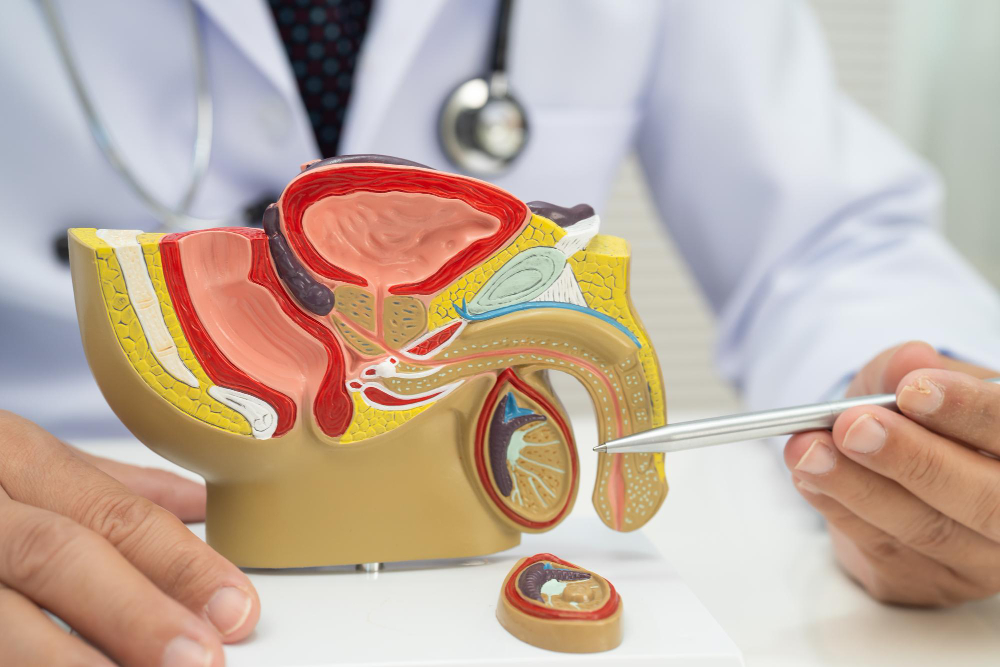
Prostate Treatment in Jaipur
The prostate gland can be affected by conditions ranging from benign enlargement to cancer, both of which become more common with age. At Jaipur Hospital, our urology team provides complete evaluation and treatment for prostate disorders, from medical management of an enlarged prostate to advanced surgical options for prostate cancer.
What is Prostate Disease Management?
Prostate disease management covers the diagnosis and treatment of conditions affecting the prostate gland, most commonly Benign Prostatic Hyperplasia (BPH), or an enlarged prostate, and prostate cancer. Both conditions can cause urinary symptoms such as difficulty urinating, frequent urges, or a weak urine flow, and require timely evaluation to determine the right treatment approach.
Conditions & Procedures We Offer
- Medical management of Benign Prostatic Hyperplasia (BPH)
- Minimally invasive surgical treatment for enlarged prostate (TURP and laser procedures)
- Laparoscopic radical prostatectomy for prostate cancer
- PSA testing and prostate cancer screening
- Post-treatment follow-up and monitoring
Our Approach to Prostate Care
Patients presenting with urinary symptoms undergo a clinical evaluation, PSA blood test, and ultrasound to assess prostate size and rule out cancer. Early-stage BPH is typically managed with medication to relax the bladder neck and shrink the prostate. When medication is not effective or symptoms are severe, we offer minimally invasive surgical options that relieve the obstruction with minimal blood loss and faster recovery. For patients diagnosed with prostate cancer, our team offers laparoscopic radical prostatectomy along with coordinated oncology support.
Advanced Diagnosis and Surgical Options
Our department uses ultrasound, uroflowmetry, and PSA testing to accurately diagnose the cause of urinary symptoms. Surgical treatment for an enlarged prostate is performed using minimally invasive techniques that reduce hospital stay and recovery time compared to traditional open surgery.
Recovery After Prostate Treatment
Patients on medical therapy for BPH usually see improvement in symptoms within a few weeks. Those undergoing minimally invasive prostate surgery are typically discharged within one to two days, with urinary symptoms improving significantly over the following weeks. Recovery after prostate cancer surgery varies and is guided by the surgical team based on individual case complexity.
Why Choose Jaipur Hospital for Prostate Treatment
Our urology team combines accurate diagnostics with a full range of treatment options, from medication to advanced laparoscopic surgery, allowing us to tailor care to each patient’s condition and stage of disease. At our Jaipur Hospital We work closely with our oncology department for patients requiring cancer treatment, ensuring coordinated, comprehensive care under one roof.
Need Emergency Assistance?
Have Any Query Regarding our Services, Contact us at the Jaipur Hospital or fix an appointment.
Get in Touch
- Gopalpura Flyover, Mahaveer Nagar, Main Tonk Road, Jaipur – 302018
- +91-7414-001-001
- jaipur.hospital@gmail.com
Need Emergency Assistance?
Have Any Query Regarding our Services, Contact us at the Jaipur Hospital or fix an appointment.
Get in Touch
- Gopalpura Flyover, Mahaveer Nagar, Main Tonk Road, Jaipur – 302018
- +91-7414-001-001
- jaipur.hospital@gmail.com
Department FAQs — Prostate Treatment
1. What are the early signs of prostate enlargement?
Common early signs include frequent urination especially at night, difficulty starting urination, a weak urine stream, and a feeling of incomplete bladder emptying.
2. Is an enlarged prostate the same as prostate cancer?
No. Benign Prostatic Hyperplasia (BPH) is a non-cancerous enlargement of the prostate. Prostate cancer is a separate condition, though both can cause similar urinary symptoms, which is why proper evaluation is important.
3. Do I need surgery for an enlarged prostate?
Not always. Many patients respond well to medication. Surgery is recommended when symptoms are severe, medication is not effective, or complications such as urinary retention or bladder stones develop.
4. How is prostate cancer diagnosed?
Prostate cancer is typically diagnosed through a combination of PSA blood testing, digital rectal examination, and, if needed, a prostate biopsy to confirm the diagnosis.
5. Is minimally invasive prostate surgery safe?
Yes. Minimally invasive procedures for prostate enlargement are well-established, safe options that generally involve less blood loss, a shorter hospital stay, and faster recovery compared to open surgery.